On the 29th of May, 1660, church bells rang across England, bonfires illuminated towns and villages, and jubilant crowds lined the streets to welcome home a king. After more than a decade of civil war, republican experiment, military rule and political uncertainty, Charles II returned from exile to reclaim the throne of his father. To many contemporaries, the Restoration appeared to mark the end of a long national nightmare. The monarchy had returned, the ancient institutions of government had been restored, and England once again possessed a king. Yet beneath the celebrations lay a profoundly altered nation. Although the Crown had been restored, it could never again command the unquestioned authority enjoyed before the Civil War. The revolution had permanently reshaped the relationship between monarchy, Parliament and the people, laying essential foundations for the constitutional state that would eventually emerge.

Terry Bailey explains.

You can read part 1 on the background to the war here, part 2 on how the English Civil War began here, part 3 on the New Model Army the turning of the tide here, part 4 on the King’s defeat here, part 5 on King Charles I’s trial and execution here, and part 6 on the English Republic here.
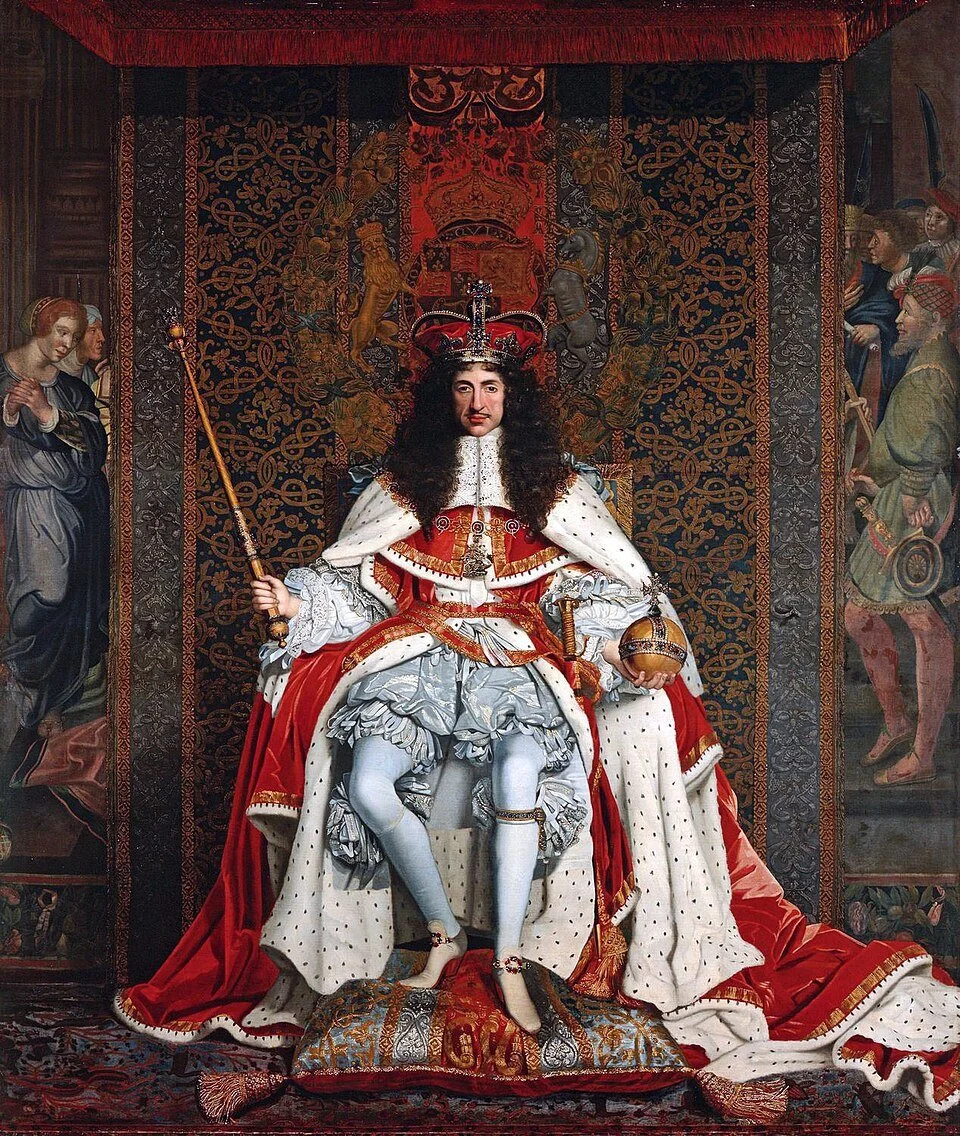
Charles II of England in Coronation robes by John Michael Wright. Source: Public domain, Royal Collection, available here.

The death of Oliver Cromwell on the 3rd of September 1658 produced a vacuum that exposed the fragility of the Commonwealth and Protectorate. Cromwell himself had become the indispensable figure holding together competing political factions, ambitious military commanders and an increasingly dissatisfied population. Although many admired his military genius and respected his personal integrity, few believed the political system he had evolved could survive without him. His passing removed the one individual capable of balancing the competing interests of the army, Parliament and the civilian administration.

Oliver Cromwell had hoped to establish stability through hereditary succession by naming his eldest surviving son, Richard Cromwell, as Lord Protector. Richard inherited the title but not his father's authority. Unlike Oliver, he possessed no distinguished military record, commanded little respect among the officers of the New Model Army and lacked the political experience necessary to navigate the dangerous divisions that threatened the regime. The very institution that had sustained the Protectorate—the army—quickly lost confidence in its new leader.

Richard Cromwell's inability to control either Parliament or the military soon became painfully evident. Financial difficulties mounted, political rivalries intensified and army officers increasingly viewed civilian government with suspicion. Parliament attempted to assert greater authority, while military leaders sought to protect their own influence. Caught between these powerful interests, Richard found himself unable to satisfy either side. After only eight months as Lord Protector, he was forced to resign in May 1659, bringing the Protectorate to an abrupt end.

The collapse of Richard Cromwell's government plunged England back into political confusion. The Rump Parliament, which had governed briefly after the execution of Charles I, was recalled but proved incapable of providing effective leadership. Factional disputes paralyzed decision-making, while competing army commanders maneuvered for power. The prospect of renewed civil conflict loomed once more. Many Englishmen, regardless of their earlier political loyalties, had grown weary of constitutional experiments and military government. The promise of republican stability had faded into frustration, uncertainty and exhaustion.

Amid this growing disorder emerged one of the most remarkable political figures of the age: General George Monck. Unlike many of his contemporaries, Monck had served both the monarchy and the Commonwealth with distinction. As commander of English forces in Scotland, he carefully observed events unfolding in London while maintaining discipline among his troops. Rather than rushing to seize power for himself, Monck demonstrated remarkable patience and political judgement, recognizing that only a broadly accepted constitutional settlement could restore lasting stability.

In January 1660, Monck marched his disciplined army south from Scotland towards London. His advance was conducted not as a military conquest but as a calculated political intervention. Upon reaching the capital, he worked to restore order while avoiding unnecessary bloodshed. Crucially, Monck supported the reinstatement of Members of Parliament who had been excluded during earlier political purges, allowing the Long Parliament finally to dissolve itself legally. New elections followed, producing what became known as the Convention Parliament, an assembly that would determine England's constitutional future.

Meanwhile, Charles Stuart remained in exile on the Continent, carefully observing developments from abroad. His advisers recognized that any attempt to regain the throne by military invasion would almost certainly reignite civil war. Instead, Charles adopted a far more conciliatory approach. On the 4th of April 1660, he issued the Declaration of Breda, a carefully crafted statement designed to reassure a nation deeply divided by years of conflict.

The Declaration of Breda demonstrated considerable political skill. Charles promised a general pardon to those who had opposed his father, subject to Parliament's approval, thereby offering reconciliation rather than revenge. He pledged to respect property acquired during the Interregnum, reducing fears of widespread confiscations. He also promised to address religious disputes with moderation and agreed that outstanding issues concerning the army would be settled by Parliament. Above all, the declaration presented Charles not as a vindictive exile seeking retribution but as a king committed to healing a fractured kingdom.

The Convention Parliament responded enthusiastically. Recognizing that republican government had failed to provide lasting stability, Members formally invited Charles to return and reclaim the throne. Rather than claiming the Crown by conquest, Charles accepted it through parliamentary invitation, an important constitutional distinction. Although royalists celebrated the restoration of hereditary monarchy, the circumstances of Charles's return acknowledged, at least implicitly, that Parliament now played a decisive role in determining legitimate government.

Charles landed at Dover on the 25th of May 1660 before making his triumphal progress to London. His entry into the capital on his thirtieth birthday became one of the greatest public celebrations in English history. Streets were decorated with flowers, triumphal arches and banners. Church bells pealed continuously while crowds cheered the returning monarch. Bonfires blazed across the country, sermons praised divine providence and public festivities continued for days. Years of political turmoil seemed, at least momentarily, to have ended in joyous reconciliation.

The Restoration extended beyond the return of the king himself. The monarchy, House of Lords and Church of England were all restored as central pillars of national life. Ancient ceremonies resumed, royal courts reopened and many traditional institutions returned to familiar routines. To outward appearances, England had returned to the constitutional arrangements that had existed before the outbreak of civil war in 1642.

Yet restoration did not mean complete reversal. The events of the previous two decades could not simply be erased from national memory. Tens of thousands had died in civil war. A king had been publicly executed. England had experienced republican government, military dictatorship and written constitutional experiments. Political debate had expanded dramatically, while pamphlets, newspapers and religious publications had transformed public opinion into an increasingly important force in national politics. Even those who welcomed the monarchy recognized that England had changed forever.

One of the most controversial questions confronting the restored government concerned the fate of the regicides—the men who had signed the death warrant of Charles I. Charles II had promised mercy, but public opinion demanded that those directly responsible for his father's execution face justice. Some regicides had already died, while others had fled abroad. Those captured were tried for high treason, condemned and subjected to the brutal punishments traditionally reserved for traitors. Even Oliver Cromwell, Henry Ireton and John Bradshaw, who had died before the Restoration, were symbolically exhumed, their bodies hanged at Tyburn and their heads displayed upon spikes outside Westminster Hall as a grim warning against rebellion.

Despite these dramatic acts of retribution, Charles II generally pursued a more moderate policy than many royalists desired. The Act of Indemnity and Oblivion granted pardons to the overwhelming majority of those who had supported Parliament during the Civil War. The king understood that endless vengeance would merely reopen old wounds. Although political divisions remained, reconciliation became an essential objective of the Restoration settlement.

Religious questions, however, proved far more difficult to resolve. During the Interregnum, numerous Protestant sects had flourished under comparatively greater religious freedom. The restored Church of England sought to re-establish episcopal authority and uniform worship through legislation such as the Act of Uniformity of 1662. Thousands of ministers who refused to conform were expelled from their livings in what became known as the Great Ejection. Although Charles himself occasionally favored greater religious toleration, Parliament remained deeply suspicious of both Catholicism and religious dissent. Consequently, many of the religious divisions that had fueled the Civil War continued well into the Restoration era.

The Civil War had also permanently altered attitudes towards military power. The New Model Army had demonstrated the effectiveness of a disciplined professional force, revolutionizing military organization and tactics. Yet its political dominance during the Protectorate left many Englishmen deeply suspicious of standing armies maintained during peacetime. Fear that soldiers might once again interfere in politics influenced constitutional thinking for generations and helped shape later demands that military forces remain under parliamentary oversight rather than personal royal control.

Perhaps the greatest legacy of the Civil War lay in the transformation of constitutional government itself. Before 1642 many monarchs had believed they possessed authority derived directly from God, answerable to no earthly institution. Charles I had governed according to this principle, insisting that kings ruled by divine right. The Civil War shattered that assumption. Although Charles II reclaimed the throne, he did so with an acute awareness that cooperation with Parliament was essential for effective government. The balance of power had shifted irrevocably.

Parliament itself emerged from the conflict with greatly enhanced prestige and authority. While disputes between Crown and Parliament would continue throughout the reigns of Charles II and his successor, James II, no future monarch could entirely ignore parliamentary opinion. The events leading to the later Glorious Revolution and the subsequent constitutional settlement built directly upon precedents established during the Civil War and Restoration. The principle that rulers governed within the law, rather than above it, steadily became embedded within the English political tradition.

The conflict also transformed political thought. Throughout the Civil War, competing visions of government had emerged with unprecedented clarity. Royalists defended hereditary monarchy, hierarchy and divine authority, while Parliamentarians increasingly argued that legitimate government depended upon law, representation and the consent of the governed. Radical groups pushed these ideas even further, advocating expanded political participation, religious liberty and legal equality. Although many of their proposals were rejected at the time, they contributed to the emergence of modern political ideology and influenced constitutional debates for centuries.

Equally significant was the role of propaganda and public opinion. The Civil War witnessed an explosion of printed pamphlets, newspapers, sermons and political literature that sought to persuade ordinary people rather than merely instruct them. Governments increasingly recognized that public support mattered. Ideas became weapons alongside muskets and cannon, and political legitimacy increasingly depended upon winning both military victories and the battle for public opinion.

Looking back across the entire conflict, it becomes clear that religion remained inseparable from politics at every stage. Battles were fought not merely over taxation or constitutional procedure but over profoundly different visions of God's relationship to government. Questions concerning bishops, liturgy, toleration and religious authority repeatedly shaped political alliances and military campaigns. The Civil War demonstrated that religious belief could mobilize entire populations, inspire extraordinary sacrifice and profoundly influence the development of national institutions.

The Restoration therefore represents both an ending and a beginning. It closed one of the most turbulent chapters in English history, restoring monarchy after years of revolution and experiment. Yet it also marked the beginning of a new constitutional reality in which kings ruled within limits that earlier generations would scarcely have imagined. England had travelled full circle in appearance, but not in substance. The Crown returned, Parliament remained stronger than before, and the lessons of revolution could never be forgotten.

The English Civil War ultimately reshaped the future British state. It challenged absolute monarchy, strengthened parliamentary government, encouraged constitutional development and transformed political culture. The struggles between Crown and Parliament, the power of religious conviction, the influence of propaganda, the evolution of military organization and the enduring question of political legitimacy combined to redefine the nature of government itself. From the execution of Charles I to the triumphant return of Charles II, England experienced a revolution that permanently altered its institutions and its understanding of authority.

By 1660, many hoped simply for peace, stability and the restoration of familiar traditions. They achieved those aims, but they also inherited something far more significant. The monarchy had survived, yet it had been fundamentally redefined. Never again would an English sovereign govern with entirely unchecked authority. The painful lessons learned through war, revolution and restoration had established principles that would shape not only Britain but constitutional government throughout much of the modern world. The Crown had returned, but England itself had been transformed forever.

Needless to say, the story of the English Civil War is far more than a chronicle of battles, political intrigue and changing governments. It is the story of a nation forced to confront one of the most fundamental questions any society can ask: where does legitimate power truly reside? For nearly two decades England experienced the collapse of long-established institutions, the trial and execution of a king, the rise of republican government, military dictatorship, constitutional experimentation and, finally, the restoration of the monarchy. Yet the nation that welcomed Charles II home in 1660 was not the same England that had watched Charles I ascend the throne thirty-five years earlier. The institutions appeared familiar, but the principles upon which they rested had been irrevocably transformed.

The Restoration demonstrated that history rarely moves in perfect circles. Although the Crown, Parliament, the House of Lords and the Church of England were restored, none returned with the absolute authority they had once claimed. The memory of civil war remained a permanent warning against the dangers of political extremism, religious intolerance and the concentration of unchecked power. Future monarchs would govern with the knowledge that Parliament possessed both the confidence and, if necessary, the means to resist arbitrary rule. Likewise, Parliament understood that effective government required cooperation rather than perpetual confrontation. Out of conflict emerged not perfect harmony, but a new constitutional balance that would continue to evolve over the centuries.

The legacy of the Civil War extended far beyond the seventeenth century. Its influence can be seen in the constitutional settlement of the Glorious Revolution of 1688, the Bill of Rights of 1689, the development of Cabinet government, and ultimately the emergence of the Westminster parliamentary system that became a model for constitutional democracies across the world. Principles such as the rule of law, parliamentary sovereignty, ministerial accountability and the limitation of executive power all owe something to the bitter lessons learned between 1642 and 1660. The struggles of that turbulent age helped establish the enduring belief that government derives its legitimacy not from divine right alone, but from law, consent and the confidence of the governed.

The conflict also transformed the English people themselves. Never before had ordinary men and women participated so actively in political debate. Pamphlets, newspapers and sermons brought constitutional questions into homes, taverns and marketplaces. Soldiers, merchants, farmers, craftsmen and clergy all became participants in a national conversation about authority, liberty, religion and justice. Ideas proved as powerful as armies, and public opinion emerged as a force that no future government could afford to ignore. In this sense, the Civil War marked not only a political revolution but also an intellectual one, heralding the gradual emergence of a more politically conscious society.

Perhaps the greatest lesson of the English Civil War is that enduring constitutional change is seldom achieved without sacrifice. The conflict claimed tens of thousands of lives, devastated communities, divided families and left deep religious and political scars that endured for generations. Yet from that suffering emerged institutions capable of adapting rather than collapsing under future crises. England did not abandon monarchy, nor did it fully embrace republicanism. Instead, it forged a uniquely British constitutional tradition, one founded upon compromise, precedent and the gradual balancing of competing powers rather than ideological absolutism.

As this series has shown, the struggle between Charles I and Parliament was never merely a contest for political supremacy. It was a profound confrontation between competing visions of authority, faith and the nature of government itself. It encompassed military innovation, religious conviction, revolutionary ideology, political propaganda and constitutional experimentation on a scale previously unseen in English history. Every battlefield, parliamentary debate and political compromise contributed to the slow evolution of a nation that would eventually become one of the world's most enduring constitutional monarchies.

The English Civil War therefore stands not simply as one of Britain's defining historical episodes, but as one of the pivotal turning points in the development of modern government. Its legacy reaches far beyond the seventeenth century, influencing democratic institutions across the globe and reminding successive generations that liberty and stability are rarely inherited without struggle. The Restoration of Charles II closed one chapter of English history, but it also opened another, one in which the Crown would continue to reign, Parliament would continue to grow in authority, and the rule of law would increasingly become the supreme foundation of the state.

History often remembers the great battles of Edgehill, Marston Moor and Naseby, the trial of Charles I, the formidable leadership of Oliver Cromwell and the triumphant return of Charles II. Yet the greatest victory of the age was not won upon any battlefield. It was the gradual emergence of a political system capable of reconciling monarchy with representative government, authority with accountability, and tradition with reform. The bloodshed of the Civil War ultimately gave birth to a constitutional settlement that, while imperfect, proved remarkably resilient. In that achievement lies the enduring significance of the English Civil War a revolution that changed England forever and, in doing so, helped shape the political foundations of the modern world.


Now read Terry’s series on King Kenry VIII and his wives here.

Finally, if you enjoyed the series, join us on X here to receive regular updates: @HistoryIsNowMag
On a cold January afternoon in 1649, the executioner's axe severed far more than the head of King Charles I. It also shattered centuries of political tradition. Never before had an English monarch been publicly tried, condemned by his own subjects and executed in the name of the people. With the monarchy abolished and the House of Lords dissolved, England stood on uncertain ground. For the first time in its history, the kingdom would attempt to govern itself without a king. The experiment would become known as the Commonwealth of England, and at its center stood one man whose influence would shape the nation for generations: Oliver Cromwell.

Terry Bailey explains.

You can read part 1 on the background to the war here, part 2 on how the English Civil War began here, part 3 on the New Model Army the turning of the tide here, part 4 on the King’s defeat here, and part 5 on King Charles I’s trial and execution here.

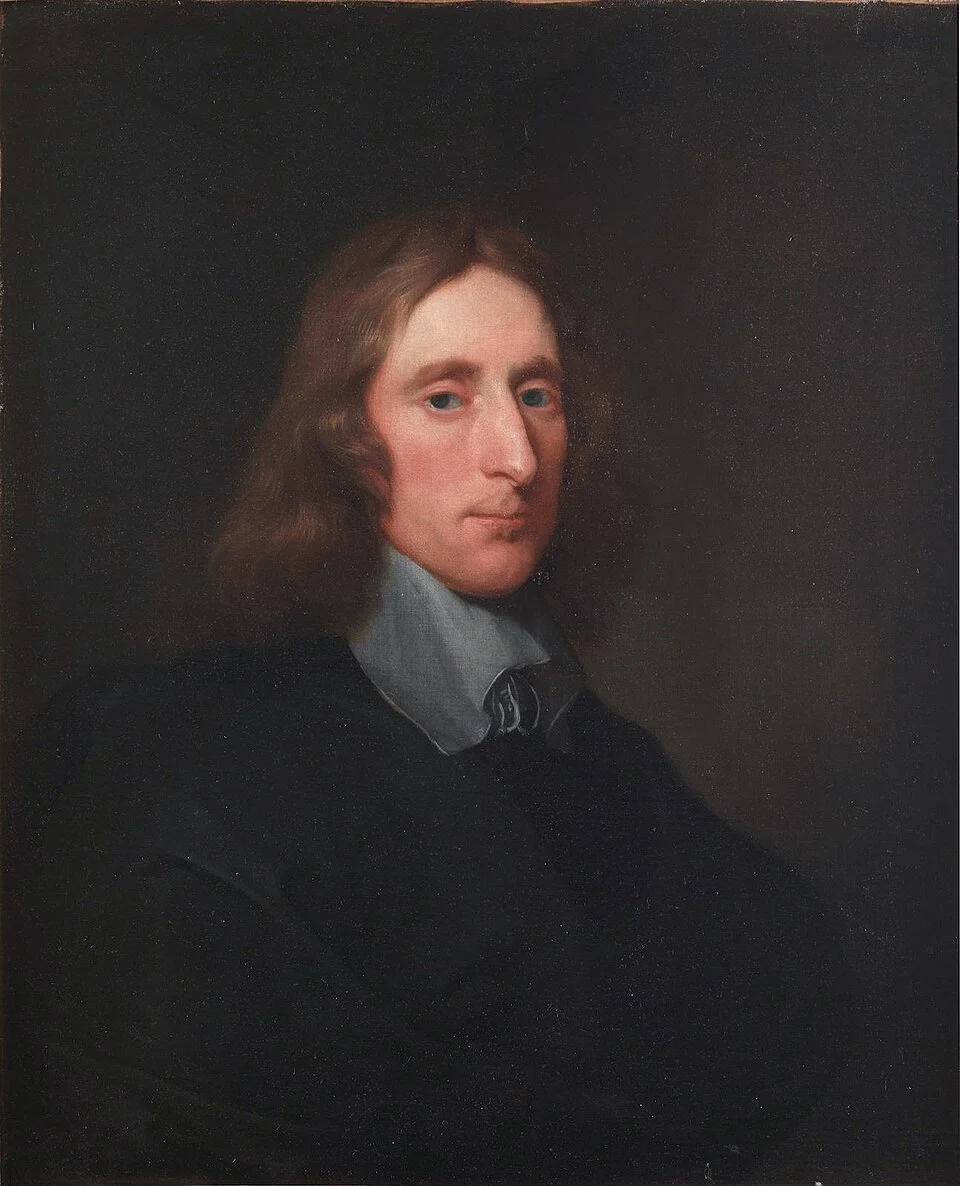
Richard Cromwell (1626-1712), Second Lord Protector by Gerald Soest. Source: Public domain, rom Theo Johns Fine Arts, London, available here.

To many contemporaries, Cromwell was the faithful servant of God who had delivered England from tyranny and sought to build a nation founded upon righteousness. To others, he was little more than a military dictator whose authority came not from law or consent but from the swords of the New Model Army. His life remains one of the most controversial in British history because it embodies one of history's great paradoxes. The man who helped destroy absolute monarchy would eventually wield powers strikingly similar to those of the kings he had overthrown.

The abolition of the monarchy in May 1649 marked a constitutional revolution without precedent. England was formally declared a Commonwealth, a republic in which sovereignty theoretically rested with the people through Parliament rather than through hereditary monarchy. The House of Commons became the sole legislative authority, while executive power rested in the Council of State. Royal titles disappeared from official documents, coins no longer bore the king's portrait, and England briefly attempted to redefine itself as a nation governed by republican principles.

Yet from the beginning, the Commonwealth faced immense challenges. Royalists refused to recognize its legitimacy, while many ordinary people regarded the abolition of the monarchy with suspicion. Throughout Europe, monarchs viewed the English experiment with horror, fearing revolutionary ideas might spread across their own kingdoms. Charles II, the executed king's eldest son, immediately claimed the throne and sought support abroad, ensuring that England's civil wars were far from over.

Religion remained inseparable from politics. The Parliamentarians had not fought merely to alter government but to invoke what many believed would be a godly nation. Cromwell, deeply influenced by Puritan theology, viewed England as a people chosen by divine providence. He believed victories in battle were evidence of God's favor and interpreted national events through the lens of Scripture. In his mind, England had entered into a covenant with God, and success depended upon national obedience to divine law.

The greatest immediate threat to the new republic emerged in Ireland. The Irish Confederate Wars, combined with Royalist alliances, had produced a dangerous base from which Charles II might reclaim England. Parliament therefore entrusted Cromwell with commanding an expedition to restore English control.

The Irish campaign of 1649 became one of the darkest chapters in British and Irish history. Cromwell landed with approximately 12,000 experienced soldiers of the New Model Army, veterans hardened by years of civil war. His first major objective was the fortified town of Drogheda. After breaching its walls, Parliamentarian forces stormed the town. Cromwell ordered that no quarter be given to many of the defenders, resulting in the deaths of several thousand soldiers and civilians.

Contemporary accounts and later historical research suggest that between 2,500 and 3,500 people were killed during the sack of Drogheda, although precise figures remain debated. Similar events followed at Wexford. Cromwell defended his actions as acts of divine judgement intended to discourage further resistance. To the Irish population, however, the massacres became enduring symbols of conquest, brutality and religious persecution. Even centuries later, Cromwell's name remains deeply controversial in Ireland.

Military success enabled Parliament to confiscate vast tracts of Irish land. Catholic landowners lost millions of acres, which were redistributed to English Protestant settlers and soldiers as payment for military service. The social, political and religious consequences transformed Ireland for generations, entrenching divisions that would continue to shape relations well into the modern era.

While Ireland was being subdued, Scotland presented another challenge. Unlike England, the Scots had proclaimed Charles II their lawful king after his father's execution. Determined to prevent a Royalist invasion, Cromwell led his army north in 1650.

The Scottish campaign demonstrated both Cromwell's military brilliance and the professionalism of the New Model Army. At the Battle of Dunbar on 3 September 1650, Cromwell found himself in an apparently hopeless position. His army of around 11,000 men was trapped between the sea and superior Scottish forces numbering perhaps 20,000 under David Leslie.

Believing the English were cornered, the Scottish commanders descended from their strong defensive position on Doon Hill in an attempt to crush Cromwell's army. During the early morning hours, Cromwell recognized that the Scottish deployment had produced fatal weaknesses. Launching a sudden and aggressive counterattack, English cavalry and disciplined infantry shattered the Scottish lines. Within hours, approximately 3,000 Scots had been killed and around 10,000 captured, while English losses remained remarkably light. Cromwell famously declared after the battle, "The Lord hath done this." To him, Dunbar represented unmistakable evidence of divine intervention.

The following year, Charles II attempted to reclaim his throne by invading England with a Scottish army. Cromwell intercepted him near the city of Worcester on the 3rd of September 1651, exactly one year after Dunbar. The resulting Battle of Worcester became the final major engagement of the English Civil Wars.

The battle demonstrated the maturity of the New Model Army as one of Europe's most effective military forces. Cromwell coordinated simultaneous assaults across multiple fronts, using disciplined infantry, mobile cavalry and artillery with exceptional precision. The Royalist army collapsed under sustained pressure. Thousands were killed or captured, while Charles II narrowly escaped, famously hiding in the branches of an oak tree before eventually fleeing to continental Europe. Cromwell later described Worcester as "a crowning mercy." The victory effectively ended organized military resistance against the Commonwealth.

These campaigns also illustrated the remarkable evolution of military organization during the civil wars. The New Model Army represented a revolutionary institution. Promotion increasingly depended upon merit rather than aristocratic birth, discipline was rigorously enforced, logistics were professionally organized, and soldiers were motivated by both religious conviction and political purpose. Military innovation had become inseparable from political revolution.

Despite overwhelming military success, governing England proved considerably more difficult than conquering it. The Commonwealth struggled with economic problems, political divisions and disagreements between Parliament and the Army. Radical groups such as the Levellers demanded expanded voting rights and greater political equality, while more conservative members feared social revolution.

Frustrated by Parliament's inability to enact reforms, Cromwell took the extraordinary step of forcibly dissolving the Rump Parliament in April 1653. According to witnesses, he entered the Commons accompanied by soldiers and declared, "You have sat too long for any good you have been doing." The experiment in parliamentary republicanism had reached an impasse.

Later that year, England adopted its first written constitution, known as the Instrument of Government. Drafted largely by Major-General John Lambert, the document established Oliver Cromwell as Lord Protector. It provided for regular Parliaments, defined executive authority and attempted to balance military power with civilian government. Although imperfect, it represented an important constitutional milestone. Britain had never before possessed a single written constitutional framework outlining the structure of national government.

As Lord Protector, Cromwell refused the title of king despite repeated invitations to accept the crown. He believed accepting monarchy would betray the principles for which so many had fought. Nevertheless, many features of his government increasingly resembled royal authority. He lived in former royal palaces, maintained elaborate state ceremonies, appointed ministers, directed foreign policy, commanded the armed forces and exercised considerable executive power.

This contradiction lay at the heart of Cromwell's rule. The revolution had abolished kingship but not the practical necessity for strong government. Faced with continual political instability, Cromwell increasingly relied upon personal authority backed by military force.

Perhaps the clearest example came with the establishment of the Rule of the Major-Generals in 1655. England and Wales were divided into eleven military districts, each governed by a Major-General responsible for maintaining order, collecting taxes and enforcing moral discipline. These officers supervised local government, monitored Royalist activity and implemented Puritan social reforms.

To supporters, the Major-Generals provided stability in a nation still recovering from civil war. To critics, they represented military dictatorship. Civil government had effectively become subordinate to army officers, raising uncomfortable questions about whether the republic truly differed from the authoritarian monarchy it had replaced.

Religion remained central to Cromwell's vision. Unlike many of his contemporaries, he believed certain forms of religious toleration were both desirable and politically necessary. Independent Protestant congregations, Baptists and other nonconformists generally enjoyed greater freedom than they had under earlier governments. Most remarkably, Cromwell permitted the formal return of Jewish communities to England in 1656 after more than three and a half centuries of exclusion following their expulsion in 1290. This decision reflected both religious conviction and practical commercial considerations.

However, Cromwell's toleration had clear limits. Roman Catholics continued to face severe legal restrictions, particularly in Ireland, where Catholic worship was often associated with political rebellion. Anglicans who supported episcopal church government likewise encountered discrimination. Cromwell believed liberty of conscience should exist only within the boundaries of Protestant Christianity and political loyalty to the Commonwealth.

Puritan ideals profoundly influenced everyday life. Many forms of public entertainment considered immoral were restricted or prohibited. Theatres remained closed, bear-baiting and certain popular festivities were discouraged, excessive drinking was condemned, and strict observance of the Sabbath was enforced. While some modern portrayals exaggerate the severity of these measures, there is little doubt that Cromwell sought to evolve a society reflecting Puritan moral values.

These reforms generated mixed reactions. Supporters argued that England was becoming a more disciplined, virtuous and orderly nation. Opponents complained that traditional customs and pleasures were being unnecessarily suppressed. The tension reflected a broader debate over whether government should shape the moral character of its citizens or simply maintain public order.

Abroad, Cromwell pursued an energetic foreign policy designed to enhance England's commercial and strategic position. The Navigation Act of 1651 required that goods imported into England or its colonies be transported primarily on English ships or vessels belonging to the exporting nation. The legislation directly challenged Dutch commercial dominance and contributed to the outbreak of the First Anglo-Dutch War.

The conflict demonstrated England's rapidly growing naval strength. Commanders such as Robert Blake transformed the navy into a highly effective fighting force. Naval tactics became increasingly sophisticated, with English fleets adopting disciplined line-of-battle formations that would dominate maritime warfare for centuries. Although the war concluded without decisive territorial gains, England emerged as a major naval power capable of challenging the wealthiest maritime republic in Europe.

Cromwell later turned his attention towards Spain, seeking both commercial opportunities and strategic advantage. English forces captured Jamaica in 1655, establishing what would become one of Britain's most valuable Caribbean colonies. The acquisition marked an important step in the development of England's overseas empire, providing economic benefits through sugar production while expanding English influence across the Atlantic.

By the late 1650s, England possessed a far stronger navy than it had before the civil wars. This expansion of naval power would prove one of Cromwell's most enduring legacies, laying foundations for Britain's future dominance of global trade and maritime warfare.

Yet despite military victories, constitutional innovation and expanding international influence, Cromwell never succeeded in securing widespread political legitimacy. Republicans criticized him for concentrating too much authority in his own hands. Royalists viewed him as a usurper. Radical reformers believed he had abandoned the revolutionary ideals of equality and parliamentary supremacy. Even many loyal supporters struggled to reconcile his immense personal power with the principles that had justified resistance to Charles I.

The irony was striking. Charles I had been condemned for governing without Parliament, relying on military force and claiming exceptional authority. Cromwell, although motivated by profoundly different ideals, increasingly governed through similar mechanisms. The forms had changed, but many contemporaries wondered whether the substance had truly altered.

Propaganda played an essential role throughout this period. Government publications portrayed Cromwell as God's chosen instrument, preserving England from anarchy and foreign enemies. Royalist writers, meanwhile, depicted him as a hypocritical tyrant whose republic merely concealed military despotism. Printed pamphlets, sermons and engravings shaped public opinion in ways that foreshadowed the increasingly influential political press of later centuries.

Underlying these debates was the larger question of legitimacy. Could governments derive authority from military victory? Did Parliament represent the people more effectively than hereditary monarchy? Was divine favor demonstrated through success in battle, or through lawful succession? These issues would continue to influence British political thought long after Cromwell's death.

Oliver Cromwell died on the 3rd of September 1658, the anniversary of both Dunbar and Worcester, a coincidence that many of his followers regarded as providential. He was sixty years old. His son, Richard Cromwell, succeeded as Lord Protector, but lacked both his father's military reputation and political authority. Within months, divisions within the Army and Parliament rendered his position untenable.

Without Oliver Cromwell's commanding personality to hold the fragile republic together, the Protectorate rapidly unraveled. Political instability returned, military factions quarreled, and confidence in republican government evaporated. By 1660, General George Monck marched south from Scotland, restored parliamentary authority and facilitated the return of Charles II. The monarchy, abolished with such revolutionary certainty only eleven years earlier, was restored with remarkably little resistance.

The collapse of the Protectorate demonstrated that institutions built upon the authority of a single individual rarely endure without broad constitutional support. Yet Cromwell's republic was far from a historical failure. It had permanently altered the relationship between Crown, Parliament and the people. The belief that kings ruled solely by divine right had been irrevocably weakened. Parliament had demonstrated that it could govern independently, while the Army had shown that political power ultimately depended upon more than hereditary succession alone.

The English Republic lasted little more than a decade, yet its influence extended far beyond its brief existence. It accelerated debates about constitutional government, religious liberty, military authority and popular sovereignty that would continue throughout the seventeenth century and beyond. Many of the constitutional questions first confronted under Cromwell would later find more durable solutions during the Glorious Revolution of 1688 and the gradual evolution of parliamentary democracy.

Oliver Cromwell remains one of history's most complex figures. He was simultaneously liberator and conqueror, reformer and authoritarian, republican and ruler. Driven by profound religious conviction, he sought to develop a nation governed by justice, godliness and constitutional order. Yet the practical realities of governing a divided country repeatedly pushed him towards centralized authority and military control. In attempting to abolish tyranny, he discovered the enduring difficulty of exercising power without becoming, in the eyes of many, a tyrant himself.

The story of Cromwell and the English Republic therefore stands as one of history's greatest political experiments. It revealed both the possibilities and the perils of revolutionary government, demonstrating that overthrowing an old order is often far easier than constructing a stable new one. England's brief republic ultimately failed to survive, but the constitutional transformations it unleashed ensured that neither monarchy nor Parliament would ever again exercise power in quite the same way. The revolution had not ended with the Restoration. It had simply entered a new and lasting phase in the long evolution of the modern British state.

Although the Commonwealth and Protectorate endured for barely eleven years, their influence upon the history of Britain has proven immeasurable. The republican experiment ultimately collapsed, and the monarchy was restored, yet England could never simply return to the world that had existed before the Civil Wars. The execution of Charles I had forever destroyed the notion that a monarch ruled by unquestionable divine authority alone. Parliament had demonstrated that it possessed the capacity to challenge, even overthrow a king, while the New Model Army had shown that military power, political ideology and religious conviction could fundamentally reshape the constitutional order of an entire nation. The old certainties had disappeared, replaced by new and often uncomfortable questions concerning sovereignty, legitimacy and the proper limits of governmental authority.

Oliver Cromwell himself remains one of the most fascinating and divisive figures in British history. To his admirers, he was a man of unwavering faith who sought to build a nation governed by biblical principles, justice and moral discipline. To his detractors, he became the very embodiment of the tyranny he had once condemned, replacing one form of concentrated power with another sustained by military force. Both interpretations contain elements of truth. Cromwell was neither the flawless champion of liberty portrayed by some nor the irredeemable despot depicted by others. Rather, he was a deeply complex leader attempting to govern a fractured nation during one of the most turbulent periods in English history. His successes and failures reveal the immense difficulty of translating revolutionary ideals into stable and enduring institutions.

The contradictions of Cromwell's rule also illuminate one of history's enduring lessons. Revolutions often succeed in destroying established systems of government, but constructing a viable alternative is infinitely more challenging. The Commonwealth abolished monarchy yet struggled to govern without concentrating power in the hands of a single individual. It championed liberty of conscience while restricting those whose beliefs were deemed dangerous. It sought constitutional government while increasingly relying upon military authority. These tensions were not unique to seventeenth-century England; they have echoed throughout countless revolutions across the world, demonstrating the delicate balance between liberty and order, idealism and practicality.

The constitutional innovations introduced during Cromwell's lifetime would resonate long after the Protectorate itself had disappeared. The Instrument of Government represented Britain's first attempt at a written constitution. The principle that government should derive its authority from institutions rather than hereditary privilege gained increasing acceptance. Parliamentary sovereignty, though not yet fully realized, had taken a decisive step forward. Future generations would continue to debate the proper relationship between Crown and Parliament, but the events of the 1640s and 1650s ensured that no English monarch could again assume absolute authority without encountering determined resistance.

Equally significant was the transformation of England into an emerging military and maritime power. The New Model Army established new standards of professionalism, meritocracy and organization that influenced military thinking for generations. Meanwhile, Cromwell's investment in naval expansion and commercial policy laid important foundations for Britain's future global influence. The victories at sea against the Dutch and Spanish, coupled with the acquisition of strategic territories such as Jamaica, marked the beginning of England's emergence as a dominant maritime nation whose influence would eventually span the globe.

Religious conflict, too, left an indelible mark upon the nation. Throughout Cromwell's rule, faith remained inseparable from politics, shaping legislation, foreign policy and everyday life. Yet the very intensity of these religious struggles gradually encouraged a growing appreciation that lasting political stability might ultimately require greater religious accommodation. Although Cromwell's own toleration remained limited by modern standards, the debates begun during his Protectorate contributed to the slow evolution of broader religious freedoms that would emerge over subsequent centuries.

Perhaps the greatest legacy of the English Republic lies not in the institutions it invoked but in the questions it forced succeeding generations to confront. Who possesses the ultimate authority to govern? Can rulers be held accountable to the people? Is political legitimacy derived from hereditary succession, military success, parliamentary consent or the rule of law? How should liberty be balanced against security, and religious conviction against political stability? These questions have remained central to constitutional democracies ever since and continue to shape political discourse across the modern world.

As England moved towards the Restoration of Charles II in 1660, many felt the revolutionary experiment had failed. In reality, the restoration of the monarchy represented not a return to the past but the beginning of a new constitutional journey. The Crown would return, but it would never again possess the unquestioned supremacy enjoyed by the early Stuart kings. Parliament had emerged as an indispensable partner in government, and the seeds of constitutional monarchy had already been planted. Over the following decades these developments would culminate in the Glorious Revolution of 1688 and eventually provide the constitutional framework that continues to influence parliamentary democracies throughout the Commonwealth and beyond.

The age of Oliver Cromwell therefore occupies a unique place in British history. It was an era of extraordinary courage and profound violence, of genuine idealism and undeniable brutality, of constitutional innovation and political contradiction. It demonstrated both the immense possibilities and the grave dangers inherent in revolutionary change. Above all, it transformed England from a kingdom founded upon the medieval doctrine of divine monarchy into a nation increasingly defined by constitutional government, parliamentary authority and the principle that political power must ultimately be accountable. In that sense, the republic may have fallen, but the revolution itself endured, shaping the course of British history long after Cromwell, his Protectorate and the Commonwealth had passed into history.


Now read the final part in the series about the restoration of the monarchy here.

Posted
AuthorHistory Is Now Magazine
CategoriesBlog Post

Before the axe fell on the cold January afternoon of 1649, England had already crossed political frontiers that few believed could ever be crossed. For centuries, kings had ruled by inherited right, anointed in sacred ceremonies that proclaimed their authority came from God rather than from the consent of those they governed. Monarchs might lose battles, be deposed by rivals or even die violently in civil wars, but the institution of monarchy itself remained untouchable. The idea that a reigning king could be placed on public trial by his own subjects, judged by a court invoked specifically for that purpose, convicted as a criminal, and deliberately executed in the name of the people was almost unimaginable. Yet this extraordinary sequence of events unfolded during the English Civil War, transforming not only England but also the political imagination of Europe. The execution of King Charles I marked one of history's greatest constitutional revolutions, challenging ancient assumptions about sovereignty, justice and the relationship between rulers and the governed.

You can read part 1 on the background to the war here, part 2 on how the English Civil War began here, part 3 on the New Model Army the turning of the tide here, and part 4 on the King’s defeat here.

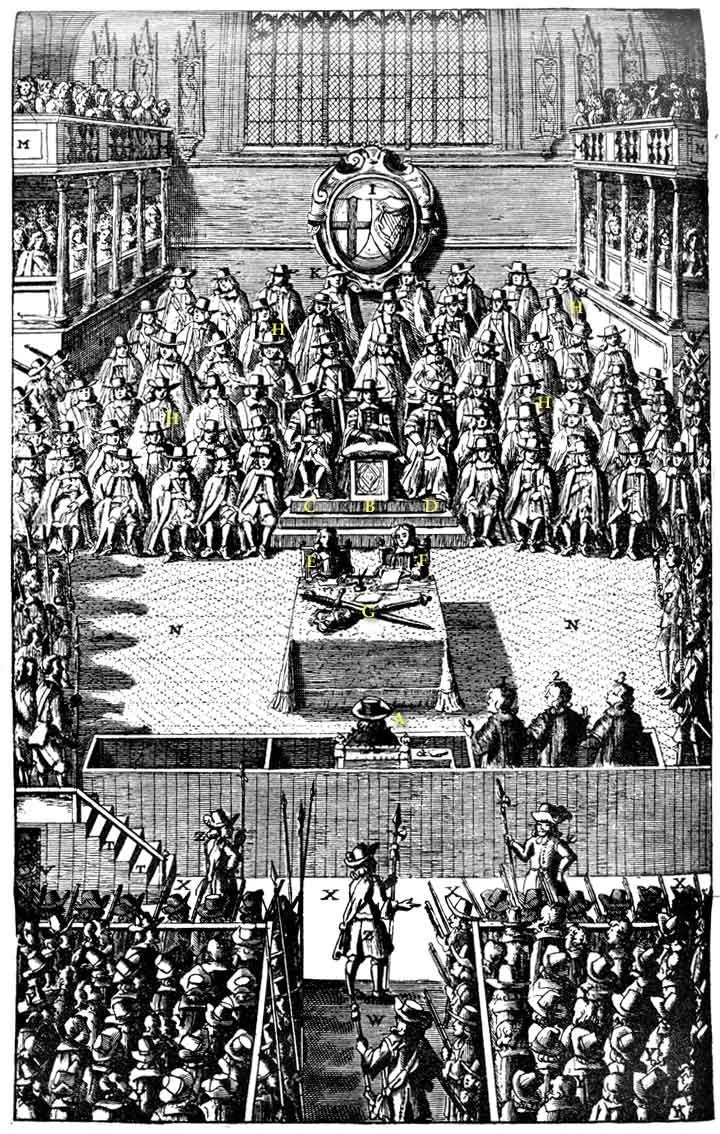
King Charles I on trial. Source: Public domain, engraving from "Nalson's Record of the Trial of Charles I" in the British Museum, available here.

The victory of the New Model Army over Royalist forces had not brought peace. Instead, it exposed profound divisions within Parliament itself. Many Members of Parliament still hoped to negotiate with Charles, believing that monarchy remained essential for national stability despite the years of bloodshed. Others, particularly senior officers within the army, had reached a very different conclusion. To them, Charles had repeatedly demonstrated that no agreement could ever be trusted. He had entered negotiations while secretly encouraging renewed conflict, sought military assistance from foreign powers, and supported a second civil war that had claimed thousands more lives after his earlier defeat. Every attempt at compromise appeared only to encourage further violence. Increasingly, influential figures within the army concluded that lasting peace could never be achieved while Charles remained alive.

The growing determination to bring the King to justice culminated in one of the most dramatic political interventions in English history. In December 1648, Colonel Thomas Pride led soldiers into Parliament and physically prevented Members who favored further negotiations with Charles from entering the House of Commons. This event, remembered as Pride's Purge, fundamentally altered England's political landscape. Those remaining formed what became known as the Rump Parliament, a much smaller body that was willing to pursue measures previously considered impossible. By excluding moderate voices, the army ensured that Parliament would no longer seek reconciliation but instead prepare the unprecedented legal machinery required to put a king on trial.

Evolving a court capable of judging the sovereign presented enormous constitutional difficulties. English law had always recognized the monarch as the ultimate source of justice. Courts operated in the King's name, judges exercised authority granted by the Crown, and legal proceedings assumed that the King himself stood above the law. There existed no legal precedent for trying a reigning monarch because the legal system itself derived its legitimacy from the monarchy. Parliament therefore established an entirely new institution, the High Court of Justice, specifically designed to hear the case against Charles I. It represented a revolutionary departure from centuries of constitutional tradition, asserting that legal authority could exist independently of the Crown.

The legal arguments advanced by the prosecution reflected equally revolutionary ideas. Rather than accusing Charles of ordinary crimes, the court charged him with being a tyrant, traitor, murderer and public enemy of the people of England. According to the indictment, Charles had abused the authority entrusted to him by waging war against his own subjects and causing immense suffering throughout the kingdom. The prosecution argued that sovereignty ultimately rested not with the monarch but with the people, represented through Parliament. By violating the trust placed in him, Charles had forfeited his right to govern. This concept overturned the traditional doctrine of divine right, replacing it with the radical proposition that rulers were accountable to those they governed.

Such reasoning reflected broader changes that had been gathering strength throughout the seventeenth century. Political thinkers increasingly questioned whether kings possessed unlimited authority simply because of birth. Religious debates about conscience, liberty and the relationship between God and government had encouraged many to reconsider long-established assumptions about power. The Civil War accelerated these developments by forcing English society to confront fundamental questions. If a king deliberately destroyed the laws he had sworn to uphold, who possessed the authority to restrain him? Could a ruler who attacked his own people still claim divine protection? These questions lay at the heart of Charles's trial.

Charles himself refused to accept the legitimacy of the proceedings from the moment he entered the courtroom. Calm, composed and maintaining the dignity expected of a monarch, he consistently challenged the authority of the judges rather than answering the charges against him. He repeatedly demanded to know by what lawful authority the court claimed jurisdiction over an anointed king. Since no recognized legal body possessed the right to try the sovereign, Charles argued that the entire process was illegal and unconstitutional. He refused to plead either guilty or innocent, believing that participation would acknowledge the court's legitimacy. Throughout the trial, he remained steadfast in defending both his personal innocence and the ancient institution of monarchy.

Observers recorded Charles's remarkable composure during the proceedings. Even political opponents acknowledged the dignity with which he conducted himself. His refusal to submit transformed the trial into a contest over constitutional principles rather than merely a criminal prosecution. Supporters viewed him as courageously defending lawful monarchy against revolutionary extremists, while his enemies interpreted his silence as further evidence of arrogance and unwillingness to recognize the rights of the nation. The courtroom therefore became not simply a place of legal judgement but a stage upon which competing visions of government confronted one another before the eyes of England and Europe.

Public reaction to the trial was deeply divided. Many ordinary people struggled to comprehend events that seemed to overturn the natural order established by centuries of tradition. Royalists regarded the proceedings with horror, believing that England had descended into lawlessness by placing God's anointed sovereign before a human tribunal. Ministers sympathetic to the Crown denounced the trial from their pulpits, warning that divine punishment would surely follow such sacrilege. Others, particularly supporters of Parliament who had witnessed years of warfare and devastation, believed justice demanded that even a king should answer for the suffering caused under his rule. Yet even among those hostile to Charles, many hesitated at the prospect of execution. Removing a monarch from power seemed one matter; deliberately putting him to death was quite another.

Printed pamphlets, sermons and newspapers played a central role in shaping public opinion throughout these extraordinary weeks. Both Royalists and Parliamentarians recognized that control of information had become a powerful political weapon. Royalist publications portrayed Charles as a Christian martyr who patiently endured persecution for defending lawful government. Parliamentary writers instead presented him as a dangerous tyrant whose ambition had plunged the nation into civil war. Woodcut illustrations, public speeches and printed declarations circulated widely, each attempting to persuade readers that history and providence favored one side or the other. The struggle for public opinion had become almost as important as the military victories that had preceded it.

On the 27th of January, 1649, the High Court pronounced Charles guilty. Three days later, on the bitterly cold afternoon of 30 January, the sentence was carried out outside the Banqueting House at the Palace of Whitehall. A specially constructed scaffold stood before a large crowd gathered in uneasy silence. Charles wore an extra shirt beneath his clothing, explaining that he wished to avoid shivering in the winter air lest observers mistake natural cold for fear. Shortly before his execution, he declared that he died "the martyr of the people," insisting that true liberty consisted not in popular government but in living under established laws administered by a lawful king. Moments later, he laid his head upon the executioner's block.

With a single stroke of the axe, centuries of constitutional tradition came to an abrupt and shocking conclusion. Contemporary accounts describe a collective groan rising from the assembled crowd as the executioner raised the severed head and proclaimed the sentence fulfilled. Many spectators wept openly, while others stood in stunned silence. Some reportedly dipped handkerchiefs into the King's blood, preserving them as relics of a man they believed had died a martyr. Regardless of political allegiance, few present could fully comprehend the enormity of what had occurred. England had executed its own sovereign by deliberate judicial process, an event without precedent in its national history.

News of the execution spread rapidly across England and throughout Europe, provoking disbelief, outrage and fascination. Continental monarchs viewed the regicide with alarm, recognizing that if an English king could be tried and executed by his subjects, then the principle of hereditary monarchy itself faced an unprecedented challenge. Royal courts issued formal condemnations, while many foreign observers regarded the English experiment as both dangerous and extraordinary. Across Europe, governments closely watched developments in England, aware that revolutionary ideas could cross national boundaries as readily as armies.

Within England, the political revolution continued at remarkable speed. Parliament formally abolished the monarchy, declaring that the office of king had become unnecessary, burdensome and dangerous to the liberty and welfare of the people. Soon afterwards, the House of Lords was also abolished because it served no useful purpose within the new constitutional order. These decisions swept away institutions that had shaped English government for centuries. What had begun as resistance to royal policies had evolved into the complete dismantling of the traditional structure of the English state.

In place of monarchy, Parliament proclaimed England to be a Commonwealth. The nation would henceforth be governed as a republic, with authority exercised in the name of the people through Parliament rather than through a hereditary sovereign. Although the practical reality remained heavily influenced by the army and its commanders, the declaration represented an extraordinary constitutional innovation. England had become one of the very few European states to reject monarchy entirely in favor of republican government. The transformation demonstrated how profoundly the Civil War had altered political thinking within less than a decade.

Yet the new Commonwealth faced immediate challenges in establishing legitimacy. Many people remained loyal to the monarchy, while Scotland proclaimed Charles II as the rightful king almost immediately after his father's execution. Ireland likewise became a center of Royalist resistance. The republic therefore emerged not into peace but into renewed conflict, requiring military campaigns to secure its authority across the British Isles. The abolition of monarchy had resolved one constitutional crisis while producing another, forcing the new government continually to defend both its existence and its principles.

Propaganda became indispensable in sustaining the revolutionary regime. Parliamentary publications celebrated the execution as an act of justice that had liberated England from tyranny, presenting the Commonwealth as the beginning of a more righteous political order. Royalist writers responded with equal determination, portraying Charles I as a saintly martyr whose death demonstrated the wickedness of the revolution. One of the most influential works, Eikon Basilike, published shortly after the King's death, depicted Charles as a deeply pious ruler betrayed by ambitious enemies. Whether genuinely written by Charles or compiled by supporters, the book became an immediate bestseller and transformed the dead king into a powerful symbol of loyalty, sacrifice and divine kingship. Parliament responded by commissioning works defending the execution, recognizing that the battle for historical memory had become almost as significant as the struggle for political power itself.

The symbolism surrounding the regicide extended far beyond England. Philosophers, theologians and political thinkers debated its meaning for generations. Some interpreted the execution as proof that rulers could be held accountable under law, laying intellectual foundations for constitutional government and popular sovereignty. Others regarded it as a dangerous precedent that threatened social order by encouraging rebellion against legitimate authority. These competing interpretations would influence political revolutions across Europe and the wider world, from the Enlightenment to the American and French Revolutions.

The trial and execution of Charles I therefore stand among the defining moments in the history of constitutional government. The event permanently altered the relationship between monarchy, Parliament and the law, demonstrating that political authority could be questioned, challenged and ultimately transformed through revolutionary action. Although the Commonwealth itself would prove short-lived, many of the ideas unleashed during these years survived long after the monarchy returned. The belief that government derives legitimacy from the consent of the governed, that rulers are accountable for their actions, and that sovereignty ultimately belongs to the nation rather than solely to a hereditary monarch would continue to shape the evolution of modern democracy.

England's constitutional revolution thus reveals far more than the death of a single king. It marks the dramatic collision between medieval concepts of sacred monarchy and emerging ideas of representative government, between inherited authority and political accountability, between divine right and parliamentary sovereignty. The execution at Whitehall shattered centuries of accepted political doctrine and forced England, and indeed Europe, to confront profound questions about power, legitimacy and justice that remain central to constitutional debate today. Even now, nearly four centuries later, the image of a king standing calmly upon the scaffold continues to symbolize one of history's most extraordinary moments, when a nation declared that no ruler, however exalted, stood beyond judgement.

Needless to say, the execution of Charles I did not bring an end to England's political upheaval; rather, it opened a new and uncertain chapter in which every assumption about government would be tested. The Commonwealth that emerged in the King's absence would soon discover that removing a monarch was considerably easier than constructing a stable republican state. Internal divisions, military authority, religious tensions and competing visions for England's future continued to shape events, ultimately leading to the rise of Oliver Cromwell as Lord Protector and, after his death, the eventual restoration of the monarchy in 1660. Yet the Restoration could not simply erase what had occurred. No subsequent English monarch could entirely ignore the lessons of the Civil War or the extraordinary fact that one of their predecessors had been called to account by his own people.

Perhaps the greatest legacy of the regicide was not the brief existence of the Commonwealth but the permanent transformation of political thought. Before 1649, the doctrine of the Divine Right of Kings had appeared almost beyond challenge. Afterwards, it could never again command unquestioned acceptance. Even those who condemned the execution of Charles I were forced to confront a new political reality: monarchy was no longer viewed by all as an institution beyond criticism or restraint. The events of the Civil War had demonstrated that political authority rested not solely upon tradition and hereditary succession, but also upon legitimacy, public confidence and the willingness of a nation to accept the exercise of power. The balance between Crown and Parliament would remain contested for decades, culminating in the Glorious Revolution of 1688 and the constitutional settlement that firmly established parliamentary supremacy.

The trial also introduced a principle that has echoed through subsequent centuries: that no ruler should be entirely beyond the reach of the law. Although the legal arguments employed against Charles I were controversial and remain debated by historians, they represented one of the earliest and most dramatic assertions that political leaders could be held personally accountable for the consequences of their actions. In this respect, the High Court of Justice foreshadowed ideas that would eventually influence constitutional government, international law and the modern expectation that even the most powerful individuals may be judged according to legal standards rather than personal status.

Equally significant was the role played by public opinion throughout these revolutionary years. The Civil War was fought not only with muskets and cannon but also with sermons, pamphlets, newspapers and books. Competing narratives sought to define Charles either as a tyrant who deserved justice or as a saintly martyr who died defending lawful government. The remarkable success of Eikon Basilike demonstrated the extraordinary power of the printed word to shape national memory, while Parliament's determined efforts to counter its influence revealed an emerging understanding that political legitimacy depended as much upon persuasion as upon military victory. In many respects, the propaganda battles of the seventeenth century anticipated the central role that public opinion continues to play in modern democratic societies.

For historians, the execution of Charles I remains one of the defining turning points in the evolution of the modern state. It encapsulates the recurring themes that have run throughout the English Civil War: the conflict between divine monarchy and parliamentary sovereignty, the powerful influence of religion upon political life, the emergence of competing political ideologies, the growing importance of propaganda, the decisive role of military innovation, and the enduring struggle to establish legitimate government. Above all, it demonstrates that constitutional change is rarely achieved without profound conflict or sacrifice.

Nearly four centuries later, the scaffold erected outside the Banqueting House at Whitehall continues to cast a long shadow across British constitutional history. The image of Charles I kneeling before the executioner's block remains one of the most enduring and symbolic moments in Western political history, not simply because a king died there, but because an ancient understanding of sovereignty died with him. From that cold January afternoon emerged new and enduring questions about liberty, accountability, representation and the limits of political power. Those questions would shape not only the future of England but also the development of constitutional government across the world. The regicide of 1649 therefore stands not merely as the dramatic conclusion to a civil war, but as one of the great watershed moments in the continuing evolution of democratic government and the rule of law.


Now read part 6 on the English Republic that became a new monarchy here.


Note:

Eikon Basilike (Greek: Εἰκὼν Βασιλική) translates into English as "The Royal Image" or, more fully, "The Image of the King."

The complete title of the book is often rendered as: Eikon Basilike: The portraiture of His Sacred Majesty in his solitudes and sufferings

Posted
AuthorHistory Is Now Magazine
CategoriesBlog Post

The defeat of King Charles I in the English Civil War marked the end of one phase of England's greatest constitutional crisis, but it did not bring the peace that exhausted soldiers and civilians alike desperately desired. Instead, victory produced a far more dangerous situation than many of Parliament's supporters had anticipated. The common enemy had been defeated, yet the coalition that had overthrown the King was itself deeply divided over what should happen next. Royal authority had collapsed, but no clear alternative existed. England found itself suspended between monarchy and republicanism, between religious uniformity and liberty of conscience, between parliamentary supremacy and military intervention. Rather than ending the revolution, the King's defeat unleashed a struggle over competing visions of England's future that would prove every bit as dramatic and consequential as the war itself.

Terry Bailey explains.

You can read part 1 on the background to the war here, part 2 on how the English Civil War began here, and part 3 on the New Model Army the turning of the tide here.

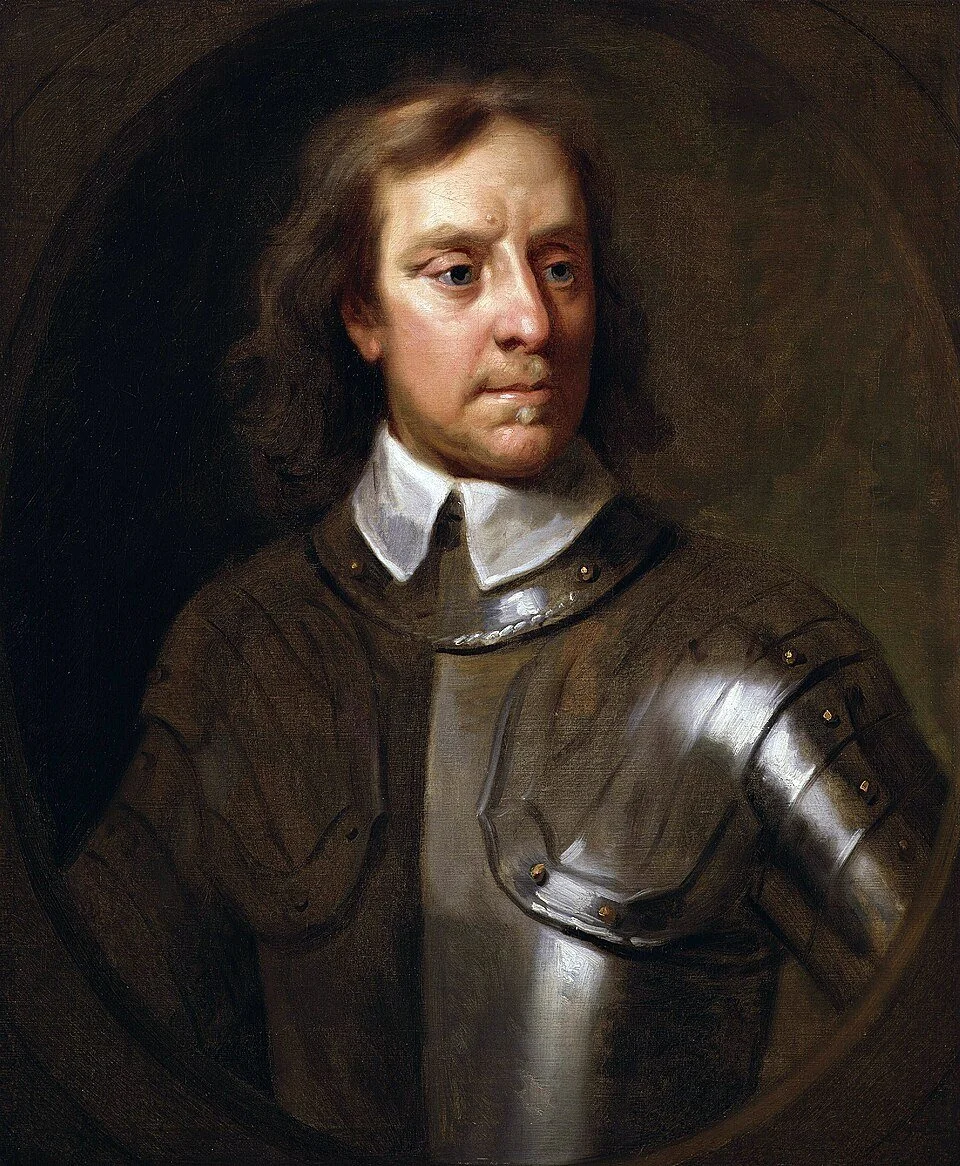
Oliver Cromwell by Samuel Cooper. Source: Public domain, National Portrait Gallery, avaialble here and here.

For centuries the English Crown had stood at the center of government, justice and national identity. Kings had ruled by hereditary right, supported by the belief that their authority ultimately derived from God. Although Parliament had steadily expanded its influence over taxation and legislation, few people had seriously imagined a nation without a functioning monarchy. The Civil War shattered those assumptions. Once Charles I had lost effective control of his kingdom, every institution that had once depended upon the Crown suddenly faced profound uncertainty.

The constitutional questions that emerged during the years 1646 to 1648 remain among the most important in British political history. Who possessed sovereignty? Could Parliament legitimately govern without the King's consent? Was military force ever justified in defending constitutional principles? Did ordinary people possess political rights independent of property ownership? Could religious diversity coexist with political stability? These questions were debated not only within Parliament but also inside churches, taverns, army camps and marketplaces throughout the kingdom. England had entered an age in which political ideas became as powerful as armies.

The revolution also transformed the nature of public discussion. The relaxation of censorship during the Civil War allowed an unprecedented flood of newspapers, pamphlets and printed sermons to circulate throughout the country. Political arguments that had previously been confined to noble households and university scholars now reached merchants, craftsmen, apprentices and common soldiers. Literacy rates had risen steadily during the early seventeenth century, enabling ordinary people to engage directly with political debate. Public opinion itself emerged as a force capable of influencing events. Propaganda became an increasingly sophisticated weapon as every faction sought to persuade the nation that God, history and justice stood on its side.

Charles believed that defeat did not necessarily mean the end of his reign. In May 1646, recognizing that Oxford could no longer withstand Parliamentary forces, he escaped in disguise and surrendered to the Scottish army at Newark rather than placing himself in English Parliamentary custody. This decision reflected both political calculation and personal conviction. Charles regarded the Scots as more likely to negotiate honorably and hoped to exploit differences within the Parliamentary alliance.

The Scots had entered the war primarily to defend Presbyterianism through the Solemn League and Covenant rather than to abolish monarchy altogether. Many Scottish leaders remained deeply loyal to the institution of kingship even while opposing Charles's religious policies. The King believed that he could persuade them to restore him to power in exchange for limited religious concessions while preserving the essential authority of the Crown.

Once in Scottish custody, Charles demonstrated the same negotiating style that had characterized his entire reign. He listened patiently to proposals but consistently avoided making firm commitments. He hoped that time itself would become his greatest ally. The longer negotiations continued, the more likely his enemies would quarrel among themselves. This strategy reflected Charles's enduring confidence that divisions within Parliament would eventually allow him to regain control without surrendering his fundamental principles.

Parliament presented the King with increasingly detailed constitutional proposals. The Newcastle Propositions demanded that Parliament should control the armed forces for twenty years, that bishops should be abolished, that Presbyterian church government should be established throughout England and that leading Royalists should face punishment. Charles regarded these demands as fundamentally incompatible with monarchy itself. To surrender military command would reduce the King to little more than a ceremonial figure. To abolish episcopal government would weaken both the Church and the Crown simultaneously.

Charles's refusal was rooted in more than political stubbornness. Throughout his reign he had sincerely believed that monarchy existed by divine appointment. The doctrine of the Divine Right of Kings taught that monarchs answered ultimately to God rather than to earthly institutions. From Charles's perspective, accepting Parliament's conditions would constitute not merely political compromise but a violation of sacred responsibility. His conscience, shaped by deeply held religious conviction, prevented him from accepting reforms that many contemporaries considered essential for lasting peace.

The Scottish leadership gradually lost patience with the King. After months of fruitless negotiation, they concluded that Charles would never accept meaningful compromise. At the same time, they faced mounting financial pressures. Parliament agreed to pay approximately £400,000 in compensation for the expenses incurred by maintaining the Scottish army during the war. In January 1647 the Scots transferred Charles into Parliamentary custody. Royalist propaganda later portrayed this event as the King being "sold" by the Scots, although the Scottish government insisted that the payment represented reimbursement for military costs rather than payment for the monarch himself.

With the King now imprisoned, attention shifted increasingly toward the growing divisions among Parliament's own supporters. The alliance that had defeated Charles had always been fragile. It united people with remarkably different political objectives. Some wished only to restore a constitutional monarchy under tighter Parliamentary control. Others sought sweeping religious reform. Still others dreamed of evolving an entirely new political order.

The largest division emerged between Presbyterians and Independents. Although both groups remained committed Protestants, they profoundly disagreed regarding the future structure of the English Church. Presbyterians advocated a centrally organized national church governed through assemblies of ministers and elders rather than bishops. They regarded religious uniformity as essential for political stability and feared that excessive toleration would encourage heresy, social disorder and religious extremism.

The Independents approached religion from a different perspective. They argued that each congregation should possess substantial autonomy and believed sincere Christians should enjoy greater freedom of worship. Many Independent leaders accepted that different Protestant denominations might coexist peacefully without threatening the nation. This comparatively tolerant outlook attracted growing support among officers of the New Model Army, including Oliver Cromwell.

Behind these theological disagreements lay fundamentally different constitutional visions. Presbyterian politicians generally wished to negotiate with Charles and restore monarchy under constitutional limitations. They regarded compromise as preferable to prolonged revolution. The Independents increasingly doubted whether Charles could ever be trusted. His repeated refusal to honor agreements convinced many that only permanent constitutional change could prevent future conflict.

As political disagreements deepened, the New Model Army itself emerged as an increasingly influential force. Invoked in 1645 as a professional national army, it had achieved remarkable battlefield success through discipline, meritocratic promotion and strong religious motivation. Yet following victory, thousands of soldiers discovered that Parliament intended to disband large sections of the army without paying the substantial wages owed to them.

Many soldiers had served continuously for several years. Some had suffered permanent injuries while others had accumulated debts supporting their families during military service. Parliament's inability or unwillingness to settle these financial obligations produced widespread resentment. Soldiers feared that once disbanded they would possess little leverage to secure payment.

Financial grievances alone, however, cannot explain the army's growing political activism. The New Model Army had developed a powerful collective identity rooted in shared sacrifice and religious purpose. Many soldiers believed they had fought not simply to defeat the King but to establish a godly commonwealth governed according to justice. Watching Parliament negotiate with Charles while ignoring the army's concerns convinced many veterans that civilian politicians were prepared to sacrifice the revolution for political convenience.

To protect their interests, regiments elected representatives known as Agitators. These men met with senior officers to coordinate the army's political response. This development represented a remarkable innovation. Ordinary soldiers were now participating directly in organized political decision-making. The army increasingly viewed itself as an independent guardian of the nation's constitutional future rather than merely Parliament's military instrument.

Oliver Cromwell occupied a uniquely difficult position during these developments. As one of Parliament's leading commanders, he wished to preserve cooperation between Parliament and the army. Yet he also sympathized with many of the soldiers' grievances. Cromwell recognized that Parliament's failure to honor its commitments risked destroying the trust that had made military victory possible. Throughout 1647 he attempted repeatedly to mediate between competing factions while preventing either side from resorting to violence.

The constitutional crisis intensified dramatically when the army seized physical control of the King in June 1647. Cornet George Joyce, acting on behalf of sections of the New Model Army, removed Charles from Parliamentary custody at Holdenby House and transferred him to army supervision. The episode illustrated the shifting balance of political power. Possession of the King's person had become synonymous with political authority.

The army hoped that Charles might now negotiate sincerely. Once again the King encouraged these hopes without making meaningful concessions. Confident that divisions among his opponents continued to widen, Charles delayed, equivocated and negotiated simultaneously with multiple factions. His political strategy remained remarkably consistent throughout captivity. He believed that patience would ultimately restore his throne.

Perhaps the most extraordinary political discussions of the seventeenth century occurred during the Putney Debates in October and November 1647. Meeting inside St Mary's Church at Putney, senior officers, elected Agitators and civilian radicals gathered to debate England's constitutional future. Never before had questions concerning political representation, voting rights and constitutional legitimacy been examined so openly by individuals drawn from such varied social backgrounds.

The debates centered upon proposals known collectively as the Agreement of the People, largely inspired by the Leveller movement. The document advocated regular Parliaments, equality before the law, expanded suffrage and constitutional guarantees protecting individual liberties. These ideas represented a revolutionary challenge to traditional assumptions regarding political authority.

Colonel Thomas Rainsborough delivered one of history's most celebrated statements supporting political equality. Arguing that every Englishman possessed inherent political rights regardless of wealth, he declared that "the poorest he that is in England hath a life to live, as the greatest he." This simple sentence encapsulated an entirely new understanding of citizenship based upon common humanity rather than inherited privilege.

Henry Ireton vigorously opposed such sweeping reforms. Although committed to constitutional government, he feared that universal political participation would undermine property rights and social stability. He argued that political power should remain connected to those possessing a permanent stake in society through land ownership. Without such restrictions, Ireton believed, transient majorities might confiscate property or dismantle established institutions.

Oliver Cromwell sought compromise between these competing positions. He recognized the moral force behind calls for broader representation while sharing concerns regarding political instability. Ultimately no agreement emerged. Nevertheless, the Putney Debates demonstrated that England's revolution had progressed far beyond opposition to royal absolutism. It had become a profound examination of democracy, constitutional government and the foundations of political legitimacy.

The Levellers emerged as perhaps the most influential radical movement of the revolutionary era. Led principally by John Lilburne, Richard Overton and William Walwyn, they developed a sophisticated program of constitutional reform rooted in natural rights and popular sovereignty. Unlike many later revolutionary movements, the Levellers did not advocate social revolution or the abolition of private property. Instead, they sought political equality within an orderly constitutional framework.

Leveller writings circulated widely through pamphlets, broadsheets and petitions. They demanded regular elections, equality before the law, freedom of religion, legal reform and significantly expanded voting rights. Although not advocating complete universal suffrage, they proposed enfranchising the overwhelming majority of adult men. These principles anticipated many elements of later democratic constitutions developed in Britain, America and elsewhere.

The movement demonstrated the growing importance of propaganda in shaping political events. Leveller pamphlets were written in accessible language intended for ordinary readers rather than learned scholars. Their publications criticized corruption, arbitrary imprisonment and governmental abuse while presenting constitutional reform as consistent with both English legal traditions and biblical principles.

Alongside the Levellers appeared an even more radical movement known as the Diggers, or True Levellers. Led by Gerrard Winstanley, the Diggers argued that political liberty could never exist while economic inequality remained extreme. Winstanley believed God had created the Earth as a common inheritance for humanity. Private ownership of land, he argued, represented the principal source of poverty, oppression and social conflict.

In April 1649 Digger communities established experimental settlements on common land at St George's Hill in Surrey and several other locations. Working cooperatively, they cultivated crops collectively while rejecting traditional notions of private property. Although these settlements survived only a few months before local landowners forcibly dispersed them, they represented one of history's earliest organized attempts to establish a communal society based upon shared ownership and economic equality.

Most contemporaries regarded both the Levellers and Diggers as dangerous extremists. Yet their ideas reflected genuine attempts to address problems exposed by civil war. They asked whether liberty could truly exist without political representation, economic opportunity and legal equality. Although their immediate influence remained limited, later generations would recognize them as pioneers of democratic and social reform.

While Parliament and the army argued over England's future, Charles I continued pursuing opportunities for restoration. In December 1647 he secretly concluded an agreement known as the Engagement with representatives of the Scottish Covenanters. Under its terms Charles promised to introduce Presbyterianism into England for three years in exchange for Scottish military assistance in restoring him to power.

This agreement directly triggered the Second English Civil War during 1648. Royalist uprisings erupted in Kent, Essex, Wales and other regions while Scottish forces crossed the border into northern England. Charles remained imprisoned, yet his willingness to encourage renewed warfare profoundly altered perceptions among many former moderates. Those who had previously favored compromise increasingly concluded that the King could never be trusted.

The Second Civil War proved considerably shorter than the first. Parliament's military organization had matured significantly while Royalist coordination remained poor. Oliver Cromwell moved rapidly to suppress rebellion in South Wales before marching north to confront the invading Scottish army.

The resulting Battle of Preston in August 1648 ranks among Cromwell's greatest military achievements. Although facing an opponent that initially outnumbered his own forces, Cromwell exploited superior intelligence, mobility and coordination. The Scottish army, stretched across many miles of road during its advance, became vulnerable to concentrated attacks against isolated sections. Cromwell defeated successive portions of the enemy before they could effectively support one another.

The campaign demonstrated the extraordinary professionalism of the New Model Army. Strict discipline, flexible command structures and experienced officers consistently outperformed more traditional military organizations. Military innovation had become inseparable from political revolution. England's most effective army increasingly viewed itself as the defender of constitutional principles rather than simply an instrument of state policy.

For Cromwell, the victory carried profound religious significance. Throughout his career he interpreted military success as evidence of divine providence. God, he believed, actively directed historical events in favor of righteous causes. The defeat of the Scottish invasion therefore reinforced his conviction that compromise with Charles represented opposition to God's revealed purpose.

The renewed bloodshed transformed political attitudes throughout Parliament and the army. Many concluded that Charles had deliberately sacrificed thousands of lives by encouraging a second civil war after generous peace negotiations had already been offered. Army leaders increasingly described the King as "that man of blood," holding him personally responsible for the suffering inflicted upon the nation.

Yet despite widespread anger, a majority within Parliament still wished to continue negotiations. Presbyterian members feared that abandoning monarchy altogether would produce permanent constitutional instability. They preferred another attempt at settlement rather than embarking upon unprecedented revolutionary measures.

The army refused to accept this approach. Convinced that Parliament intended to reverse the revolution, military leaders intervened directly. On the 6th of December 1648 Colonel Thomas Pride positioned soldiers outside the House of Commons and physically prevented many Presbyterian Members of Parliament from taking their seats. More than one hundred MPs were excluded, arrested or intimidated into withdrawing.

Known ever since as Pride's Purge, this event represented one of the most dramatic constitutional turning points in English history. Military force had determined the composition of Parliament itself. The surviving members, subsequently known as the Rump Parliament, overwhelmingly supported bringing Charles to trial.

The constitutional implications were immense. Throughout English history, Parliament had defended itself against royal interference. Now Parliament itself had been reshaped through military intervention. Supporters argued that extraordinary circumstances justified extraordinary measures. Critics warned that government sustained by armed force threatened the very liberties Parliament claimed to defend.

The purge nevertheless cleared the path toward a decision that would permanently transform English constitutional history. For the first time, a reigning monarch would be called to account before a court established by his own subjects. The doctrine that kings ruled by divine right would soon face its greatest and most dramatic challenge.

The years immediately following the King's military defeat therefore became one of the most intellectually fertile and politically turbulent periods in British history. Questions once regarded as settled became subjects of passionate public debate. Monarchy, Parliament, religious authority, military power, democracy, property rights and personal liberty all came under unprecedented scrutiny. England became a nation searching not merely for a new government but for an entirely new understanding of political legitimacy.

The struggle revealed that revolutions rarely conclude with military victory alone. Defeating an existing system is often easier than constructing a durable replacement. Parliament, the New Model Army, Presbyterians, Independents, Levellers, Diggers and Royalists each offered competing visions of England's future, yet none commanded universal support. Every solution generated new conflicts, while every compromise produced fresh divisions.

The revolution had begun as a dispute between King and Parliament over taxation, religion and constitutional authority. By the end of 1648 it had evolved into a far broader contest over the very meaning of sovereignty itself. Divine monarchy stood challenged by parliamentary supremacy; inherited privilege by popular representation; religious uniformity by liberty of conscience; traditional authority by revolutionary legitimacy. These debates would resonate far beyond seventeenth-century England, influencing constitutional development throughout the English-speaking world and laying important foundations for the emergence of the modern constitutional state.

The stage was now set for the most astonishing development of the entire English Revolution. In January 1649, England would witness an event without precedent in its own history: the public trial of an anointed king by his own subjects. The outcome would not simply determine the fate of Charles I. It would redefine the relationship between ruler and ruled, demonstrating that even a monarch might be held accountable before the law.

The years between the King's surrender in 1646 and the end of 1648 demonstrated that England's revolution had evolved far beyond a military struggle between Crown and Parliament. What had begun as a dispute over taxation, religion and the limits of royal authority had become a profound contest over the very nature of political power itself. Every traditional pillar upon which English society had rested, divine monarchy, hereditary privilege, episcopal authority and unquestioned obedience had been subjected to intense examination. No institution escaped scrutiny, and no political settlement appeared capable of satisfying the competing aspirations of the nation.

The extraordinary diversity of opinion that emerged during this period reflected both the opportunities and the dangers produced by the collapse of established authority. Presbyterians sought stability through a negotiated constitutional monarchy and a national church. Independents advocated greater religious liberty while increasingly questioning the King's sincerity. The New Model Army came to regard itself not merely as Parliament's servant but as the guardian of the revolution and the protector of what it believed to be God's providential purpose. Beyond these powerful institutions stood the Levellers, Diggers and countless lesser-known reformers, each advancing ideas that challenged centuries of accepted political and social convention. Their debates concerning representation, liberty, equality before the law and the rights of ordinary citizens introduced concepts that would continue to shape constitutional thought for generations.

Religion remained inseparable from every aspect of this struggle. Few participants viewed the conflict simply in political terms. Royalists believed they defended the sacred institution of monarchy established by divine ordinance. Parliamentarians increasingly argued that resistance to tyranny was itself consistent with God's will. Cromwell and many within the New Model Army interpreted every victory and defeat as evidence of divine providence, believing that England had been chosen to fulfil a higher purpose. Even the radical reformers grounded many of their arguments in Scripture, convinced that true political justice reflected God's design for humanity. The English Revolution therefore became not only a constitutional crisis but also a profound spiritual contest over the interpretation of divine authority.

Equally significant was the emergence of public opinion as an influential force in national politics. The explosion of pamphlets, newspapers, petitions and public debate invoked a political culture unlike anything England had previously experienced. Ideas no longer remained confined to the courts of kings or the chambers of Parliament. Soldiers debated constitutional theory beside their campfires, artisans discussed political reform in workshops, and ordinary citizens increasingly believed that they possessed both the right and the responsibility to participate in determining the nation's future. In many respects, England witnessed the birth of modern political discourse, where persuasion, printed argument and public support became as important as military strength.

Yet for all the remarkable intellectual energy of the period, the central dilemma remained unresolved. Every attempt at compromise collapsed upon Charles I's unwavering belief in the divine nature of kingship and Parliament's equally determined insistence that no ruler could remain above the law. The King's repeated negotiations, secret agreements and encouragement of renewed warfare steadily eroded confidence that any lasting settlement could be achieved while he remained on the throne. By provoking the Second English Civil War, Charles fundamentally altered the political landscape. Many who had once sought reconciliation now concluded that the preservation of peace required measures that only a few years earlier would have seemed unthinkable.

Pride's Purge marked the final collapse of the old constitutional order. By allowing military force to determine the composition of Parliament, England crossed a political threshold from which there could be no easy return. The ancient balance between Crown, Parliament and the rule of law had given way to a revolutionary reality in which legitimacy itself was fiercely contested. Parliament claimed to represent the sovereignty of the people. The Army claimed to defend the revolution from political betrayal. The King claimed authority bestowed directly by God. Each asserted a different source of lawful government, yet all believed their cause to be both just and necessary.

History often remembers revolutions by their battles, but their lasting significance lies in the ideas they unleash. The years following the First English Civil War transformed England into a laboratory of constitutional thought. Questions concerning the limits of executive power, representative government, religious toleration, civil liberties, military authority and popular sovereignty were debated with an intensity that anticipated many of the constitutional struggles of the modern world. Although many of the more radical proposals would ultimately be rejected, the intellectual foundations they established would influence political developments in Britain, Europe and North America for centuries to come.

As 1648 drew to a close, England stood at the edge of an unprecedented constitutional experiment. Never before had a reigning monarch been held personally accountable by his own subjects for waging war against his people. The decision to place Charles I on trial represented not merely the prosecution of a defeated king but a direct challenge to the doctrine of divine monarchy that had shaped European government for centuries. The outcome would determine far more than the fate of one man. It would decide whether sovereignty ultimately rested in the Crown, in Parliament, or in the nation itself.

The next chapter of England's revolution would therefore become its most dramatic. The trial, condemnation and execution of Charles I would shock Europe, abolish the monarchy, and usher in an uncertain republican experiment under the Commonwealth. In attempting to resolve one constitutional crisis, England was about to embark upon another, proving once again that revolutions rarely end with victory on the battlefield. Instead, they continue until a new political order emerges strong enough to command both authority and legitimacy. That struggle and the extraordinary consequences that followed form the next stage in the remarkable story of the English Revolution.


Now read about Terry’s series on King Kenry VIII and his wives here.

Posted
AuthorHistory Is Now Magazine
CategoriesBlog Post

By the middle years of the English Civil War, the conflict had reached a decisive crossroads. What had begun in 1642 as a bitter constitutional dispute between King Charles I and Parliament were rapidly becoming something altogether different. The early campaigns had revealed the strengths and weaknesses of both sides, exposing flaws in military organization, political leadership, and strategic planning. Neither side had achieved the swift victory that many had confidently predicted, and England found itself trapped in an increasingly destructive struggle that divided families, towns, counties, and religious communities.

Terry Bailey explains.

You can read part 1 on the background to the war here, and part 2 on how the English Civil War began here.

Cromwell in the Battle of Naseby in 1645 by Charles Landseer. Source: Public domain, Alte Nationalgalerie, available here.

Yet out of the uncertainty of these difficult years emerged one of the most remarkable military transformations in British history. Parliament abandoned the old methods of raising armies and instead developed a revolutionary fighting force whose professionalism, discipline, and ideological commitment would ultimately determine the outcome of the war. The rise of the New Model Army not only changed the balance of military power but also transformed English politics forever, helping to produce the conditions that would ultimately end the medieval concept of divine monarchy and lay the foundations of constitutional government.

When the war first erupted, Parliament possessed many significant advantages. It controlled London, the largest and wealthiest city in the kingdom, dominated England's principal commercial centers, and enjoyed access to most of the nation's navy. These advantages provided Parliament with considerable financial resources and enabled it to maintain communication with much of the country through secure sea routes. Nevertheless, these strengths did not immediately translate into success on the battlefield. Parliament's armies often struggled against Royalist forces that were smaller in number but better organized and more decisively led.

One of Parliament's greatest weaknesses lay in the way its armies had been assembled. Rather than developing a unified national force, Parliament initially relied upon county militias, local volunteers, and troops raised by influential noblemen. These regional armies frequently answered first to local political leaders before obeying central authority in Westminster. Many soldiers had enlisted primarily to defend their own counties and showed little enthusiasm for prolonged campaigns far from home. Supplies, weapons, uniforms, and training varied enormously between different armies, producing inconsistency that frequently proved costly during battle.

Leadership also presented serious difficulties. Parliament's senior commanders were often respected politicians or experienced landowners, but not necessarily gifted military leaders. Decisions were frequently delayed by committees, political disagreements, or disputes over seniority. Rival commanders occasionally refused to cooperate fully with one another, allowing Royalist armies to exploit divisions that existed within Parliament's military establishment. In contrast, King Charles I enjoyed the services of several talented commanders who were accustomed to exercising decisive authority in the field.

Foremost among these Royalist leaders was his charismatic nephew, Prince Rupert of the Rhine. Young, energetic, and possessing extensive experience gained during the Thirty Years' War in continental Europe, Rupert quickly became one of the most feared cavalry commanders in Britain. His mounted troops repeatedly demonstrated exceptional courage and aggression, charging Parliamentary formations with devastating effect. At battles such as Edgehill and numerous smaller engagements, Rupert's cavalry often swept opposing horsemen from the field and inflicted severe casualties upon inexperienced infantry.

Yet Rupert's brilliance also revealed an important weakness within Royalist tactics. His cavalry frequently pursued fleeing enemies over great distances after achieving an initial breakthrough, leaving the battlefield itself at precisely the moment their support was most needed. While this aggressive style sometimes produced spectacular victories, it also deprived the Royalist infantry of vital protection during the later stages of battle. Parliament's commanders carefully observed these recurring tactical patterns and gradually learned valuable lessons from their defeats.

Throughout 1643 and into 1644 the conflict settled into a prolonged and exhausting struggle. Neither side possessed sufficient strength to destroy the other completely. Castles and fortified towns changed hands repeatedly. Sieges became increasingly common, placing enormous burdens upon civilians who often suffered shortages of food, disease outbreaks, and destruction of property. Trade declined dramatically as roads became unsafe and agricultural production was disrupted across much of the country. The war was no longer simply fought between armies; it was becoming a national catastrophe affecting every level of English society.

These military frustrations forced Parliament to undertake a searching examination of its own shortcomings. Many members concluded that victory could never be achieved while military appointments remained heavily influenced by politics and social status. England required a professional national army rather than a loose collection of regional forces. Increasingly, reformers argued that the old military system reflected the same outdated aristocratic traditions that Parliament had originally sought to challenge. Military reform therefore became inseparable from constitutional reform.

Among the individuals who most clearly recognized this reality was Oliver Cromwell. Before the outbreak of war, Cromwell had attracted little national attention. A country gentleman from Huntingdonshire and a relatively obscure Member of Parliament, he possessed neither aristocratic title nor distinguished military background. Yet beneath his modest appearance lay remarkable organizational ability, unwavering determination, and profound religious conviction. The Civil War provided him with the opportunity to reveal talents that few had previously recognized.

Cromwell believed that successful soldiers required something deeper than military skill alone. They needed an unwavering conviction that their cause was righteous and that God Himself favored their struggle. He famously declared that he would rather command "a plain russet-coated captain that knows what he fights for" than a gentleman lacking conviction. For Cromwell, personal faith, discipline, and moral character mattered more than noble birth or social standing. This philosophy represented a revolutionary approach to military leadership in seventeenth-century England.

His first opportunity to put these ideas into practice came in eastern England, where he organized a cavalry regiment that quickly gained an enviable reputation for discipline and effectiveness. Unlike many cavalry formations of the period, Cromwell's horsemen were carefully trained to maintain formation after charging the enemy. Instead of scattering in pursuit of defeated opponents, they regrouped rapidly and returned to support their infantry. This seemingly simple tactical discipline proved enormously significant. Battles were increasingly decided not by isolated charges but through coordinated operations involving cavalry, infantry, and artillery working together.

The soldiers under Cromwell's command soon became known as the Ironsides. Their nickname reflected not only their battlefield determination but also their strict personal conduct. Drinking, gambling, looting, and disorder were actively discouraged. Officers expected soldiers to display honesty, restraint, and respect toward civilian populations. Such discipline distinguished Cromwell's regiments from many contemporary armies, whose undisciplined behavior frequently alienated the very communities they claimed to protect.

Religion lay at the heart of this discipline. The majority of Cromwell's officers and many ordinary soldiers were deeply influenced by Puritanism, a movement that sought to purify the Church of England of practices regarded as remnants of Roman Catholicism. Puritans emphasized personal Bible study, simplicity in worship, moral living, and direct accountability before God. They believed that every individual possessed a sacred responsibility to live according to Scripture and to oppose corruption wherever it appeared.

Within Cromwell's army, religious observance became woven into daily military life. Soldiers regularly attended sermons, prayed together before battle, sang psalms, and discussed Scripture around campfires. Chaplains accompanied regiments not merely to provide comfort but to reinforce the belief that the army served a divine purpose. Victory was interpreted as evidence of God's blessing, while defeat encouraged self-examination and repentance. This religious culture fostered extraordinary morale, encouraging soldiers to endure hardship with remarkable resilience.

For many Parliamentarian soldiers, the Civil War was far more than a political rebellion. They believed they were engaged in a holy struggle against tyranny, religious corruption, and ungodly governance. Charles I's support for Archbishop William Laud's religious reforms, together with his marriage to the Catholic French princess Henrietta Maria, convinced many Puritans that England faced a genuine spiritual crisis. Defending Parliament therefore became inseparable from defending Protestantism itself.

This powerful ideological commitment increasingly distinguished Parliament's forces from those of the King. While many Royalists fought out of personal loyalty to Charles or devotion to traditional monarchy, Parliament's soldiers frequently regarded themselves as participants in a providential mission ordained by God. Their military service acquired profound moral significance, giving them a sense of purpose that extended beyond ordinary political allegiance.

Recognizing the need for comprehensive military reform, Parliament introduced the Self-Denying Ordinance in 1645. This legislation required many Members of Parliament to surrender their military commands, reducing conflicts of interest and encouraging appointments based upon military competence rather than political influence. Although controversial, the measure reflected Parliament's growing willingness to place efficiency above personal ambition.

At the same time Parliament authorized the development of the New Model Army. This force represented one of the most ambitious military reforms ever attempted in seventeenth-century Europe. Instead of relying upon separate regional armies, Parliament organized a central national force of approximately 22,000 soldiers under the overall command of Sir Thomas Fairfax. The army received standardized weapons, uniforms, pay, training, and logistical support. Officers increasingly earned promotion through demonstrated ability, courage, and leadership rather than inherited social rank.

The New Model Army introduced levels of professionalism previously unknown in England. Soldiers underwent regular drill, strict discipline, and systematic instruction in battlefield maneuvers. Supply systems were carefully organized to ensure reliable provision of food, ammunition, and equipment. Uniform red coats promoted unity and fostered a common identity that transcended regional loyalties. The army became not merely an instrument of Parliament but an institution possessing its own culture, traditions, and professional standards.

Military historians often regard the New Model Army as one of the earliest examples of a truly modern standing army. Unlike temporary feudal levies or locally raised militias, it existed as a permanent national institution capable of sustained campaigning under central command. Its success demonstrated the growing importance of organization, logistics, training, and administration alongside battlefield courage. Warfare itself was becoming increasingly scientific, disciplined, and bureaucratic.

Even before the New Model Army officially entered service, Parliament achieved one of the most important victories of the war at the Battle of Marston Moor on the 2nd of July 1644. Fought near York, the battle involved approximately 45,000 soldiers, making it one of the largest engagements ever fought on English soil. Parliament's forces joined with their Scottish Covenanter allies to confront the combined Royalist armies commanded by Prince Rupert and the Marquis of Newcastle.

The battle proved decisive. Although the fighting was confused and often brutal, Cromwell's disciplined cavalry played a crucial role. After defeating the opposing Royalist horse, his regiments resisted the temptation to pursue scattered enemies. Instead, they regrouped and launched coordinated attacks against the exposed Royalist infantry. This disciplined maneuver transformed local success into complete victory. By nightfall, Royalist resistance had collapsed, leaving northern England largely under Parliamentary control.

Marston Moor carried immense strategic significance. It effectively ended Royalist hopes of dominating northern England and deprived Charles I of valuable manpower, resources, and recruitment opportunities. Equally important, it demonstrated beyond doubt that disciplined professionalism could defeat the traditional methods employed by aristocratic commanders. Cromwell emerged from the battle as one of Parliament's most respected military leaders, while support for comprehensive reform gathered unstoppable momentum.

The decisive test came the following year at the Battle of Naseby on the 14th of June 1645. Charles I recognized that the newly evolved New Model Army represented a grave threat to his cause and sought to destroy it before it could consolidate its strength. The opposing armies met near the village of Naseby in Northamptonshire under conditions that would determine the future of the kingdom.

The battle unfolded with extraordinary intensity. Prince Rupert once again launched powerful cavalry attacks that initially achieved success, but the disciplined formations of the New Model Army refused to collapse. Cromwell's cavalry maintained its cohesion, defeated the Royalist horse on the opposite flank, and then wheeled back across the battlefield to strike Charles's infantry from the rear. Parliament's infantry advanced steadily, maintaining formation despite fierce resistance. Superior discipline, effective command, and coordinated tactics gradually overwhelmed the Royalists.

By the end of the day, the King's principal field army had been virtually destroyed. Thousands of Royalist soldiers were killed, wounded, or captured, while Parliament seized artillery, ammunition, baggage trains, and vital military supplies. Even more damaging was the capture of Charles I's personal correspondence.

These private letters proved politically explosive. They revealed that Charles had secretly negotiated with Irish Confederates and sought military assistance from foreign Catholic powers while publicly presenting himself as the defender of Protestant England. Parliament quickly recognized the immense propaganda value of these documents. Published under the title The King's Cabinet Opened, the correspondence appeared to confirm long-standing accusations that Charles repeatedly negotiated in bad faith and placed his own authority above the welfare of his kingdom.

The publication of the King's letters profoundly influenced public opinion. For many English Protestants, the possibility that Charles would invite Catholic assistance against his own subjects appeared deeply shocking. Parliament skillfully presented the correspondence as undeniable evidence of royal dishonesty, arguing that constitutional compromise with such a monarch had become impossible. The battle for hearts and minds increasingly became as important as victories won upon the battlefield itself.

Following Naseby, the Royalist cause entered irreversible decline. Although isolated garrisons continued resisting and Charles attempted to raise new forces, he never again possessed an army capable of challenging Parliament in open battle. One fortress after another surrendered. Royalist recruitment declined sharply, financial resources became exhausted, and morale steadily deteriorated. By 1646 Charles surrendered himself to the Scottish army, effectively ending the English Civil War.

Military victory, however, produced an entirely new political challenge. The New Model Army had become far more than an obedient military force. Years of campaigning, religious discussion, and political debate had produced soldiers who increasingly believed they possessed a legitimate voice in shaping England's future. They had fought, suffered, and sacrificed in what they regarded as a righteous cause. Many refused to accept a simple return to the political arrangements that had existed before the war.

Within the ranks of the army, vigorous debates emerged concerning religious liberty, constitutional reform, justice, representation, and the proper limits of governmental authority. Radical religious groups flourished, encouraging unprecedented discussion about the rights of ordinary people. Although opinions varied widely, many soldiers questioned whether true liberty could ever exist while absolute monarchy remained intact.

These debates also exposed growing divisions within Parliament itself. Moderate members wished to negotiate with Charles I and restore a constitutional monarchy under carefully defined limitations. Others believed the King had repeatedly demonstrated that he could never be trusted to honor genuine constitutional agreements. The discovery of his secret correspondence reinforced these suspicions, convincing many that compromise merely postponed future conflict.

As political disagreements deepened, the relationship between Parliament and the New Model Army became increasingly complex. The army expected recognition for its sacrifices, payment of long-overdue wages, and assurance that the constitutional principles for which it had fought would not be abandoned through political compromise. Military victory had therefore produced a new and powerful political force whose influence extended far beyond the battlefield.

The transformation that occurred during these years reached far beyond military affairs. England witnessed the emergence of ideas that challenged centuries of political tradition. The doctrine of divine monarchy, which held that kings ruled directly by the will of God, increasingly collided with the principle that legitimate government required the consent of the governed through Parliament. Religion remained a powerful political force, shaping the convictions of soldiers, politicians, clergy, and ordinary citizens alike. Propaganda became an increasingly sophisticated weapon, influencing public opinion through printed pamphlets, newspapers, sermons, and political correspondence. Military innovation demonstrated the superiority of professionalism over inherited privilege, while revolutionary ideas concerning legitimacy, representation, and constitutional authority gained unprecedented influence.

The development of the New Model Army marked the moment when the English Civil War ceased to be simply a struggle between King and Parliament. It became a revolutionary movement that questioned the very foundations of political authority. The victories at Marston Moor and Naseby destroyed the military power of the Crown, while the publication of Charles I's private correspondence undermined his moral and political credibility. Yet the greatest consequence of these events was not merely the defeat of the Royalist armies. It was the emergence of a new political consciousness that would reshape England for generations to come. The nation was steadily moving away from medieval assumptions about divine kingship and inherited authority toward a future in which constitutional government, parliamentary sovereignty, and the rule of law would increasingly define the British state. The battles won by the New Model Army therefore altered far more than the outcome of a civil war, they transformed the course of English history itself.

Needless to say, the raising of the New Model Army proved that the outcome of the English Civil War would not be decided solely by numbers, wealth, or inherited privilege, but by organization, conviction, and adaptability. Parliament's willingness to reform its military institutions when faced with repeated setbacks demonstrated a capacity for innovation that the Royalists ultimately failed to match. Through disciplined training, unified command, logistical efficiency, and promotion based upon merit rather than birth, Parliament developed an army unlike any previously seen in England. The victories won at Marston Moor and Naseby were therefore not isolated battlefield successes but the visible results of a profound transformation in warfare itself. The conflict had entered a new era in which professionalism increasingly eclipsed feudal tradition, foreshadowing the development of the modern standing armies that would dominate European warfare for centuries to come.

Yet the military revolution was only one aspect of a far greater upheaval. As Parliament's soldiers marched from battlefield to battlefield, they carried with them not merely muskets and pikes but powerful ideas concerning justice, liberty, and political authority. The New Model Army became an institution in which ordinary men debated matters of government that had previously been regarded as the exclusive preserve of kings, bishops, and noblemen. For many of its soldiers, victory imposed a moral obligation to ensure that the sacrifices made during years of bitter conflict would produce lasting constitutional change rather than a simple restoration of the old order. In this sense, the army evolved into both a military and political force, capable of shaping the future of the nation long after the cannons had fallen silent.

Equally significant was the changing role of public opinion. The publication of The King's Cabinet Opened demonstrated that information could be as powerful as military force. Charles I's own correspondence undermined the trust upon which monarchy depended, revealing to many of his subjects that the King's public declarations did not always match his private diplomacy. Pamphlets, sermons, newspapers, and printed declarations increasingly became weapons of persuasion, helping to define legitimacy in the eyes of the people. The Civil War thus marked one of the earliest examples in British history of propaganda becoming an essential instrument of political conflict, a development that would shape future revolutions and constitutional struggles throughout the modern world.

Religion likewise remained inseparable from every stage of the conflict. Both Royalists and Parliamentarians believed that divine providence favored their cause, and both interpreted victory and defeat through the lens of faith. For the Puritans who filled the ranks of the New Model Army, military service became an expression of religious duty, while Charles I continued to regard his authority as sacred and ordained by God. The struggle was therefore never merely a contest over political institutions; it was also a battle over competing visions of England's spiritual identity. Questions of worship, conscience, church government, and divine authority became intertwined with debates over taxation, law, and sovereignty, ensuring that the Civil War reshaped both the political and religious landscape of the nation.

Most importantly, the years between 1644 and 1646 fundamentally altered the relationship between the Crown and Parliament. The doctrine of the Divine Right of Kings, which had dominated English political thought for generations, suffered irreversible damage as Parliament demonstrated that a monarch could be challenged, defeated, and held accountable by representatives claiming to act on behalf of the nation. Parliamentary sovereignty, though not yet fully realized, had emerged as a powerful constitutional principle that would continue to evolve long after the war itself had ended. The conflict had revealed that government derived not only from hereditary succession but also from legitimacy, trust, and the consent of those who were governed.

The victories of the New Model Army did not immediately bring peace to England. Instead, they opened an even more dramatic chapter in the nation's history. The defeat of the Royalist field armies removed the King's military power, but it did not resolve the profound constitutional, religious, and ideological divisions that had driven the kingdom into civil war. Questions concerning Charles I's future, the authority of Parliament, the influence of the army, and the very nature of English government remained fiercely contested. Rather than concluding the revolution, Parliament's triumph produced the conditions for an even greater confrontation—one that would culminate in the unprecedented trial and execution of an anointed king.

Thus, the turning of the tide was far more than a sequence of military victories; it was the moment at which England crossed a political and constitutional Rubicon from which there could be no easy return. The New Model Army transformed warfare through discipline and professionalism, revolutionized politics through its ideological convictions, and helped dismantle centuries-old assumptions about monarchy and authority. The England that emerged from these campaigns was no longer the kingdom that had marched to war in 1642. It was a nation entering a new and uncertain age, one in which the balance between Crown, Parliament, religion, and the people would be redefined forever. The next stage of the Civil War would determine whether that transformation could be reconciled with monarchy—or whether England would take the extraordinary step of bringing its own king before the judgement of the law.


Now read part 4 on the King’s defeat here.

Posted
AuthorHistory Is Now Magazine
CategoriesBlog Post

In the summer of 1642, England stood upon the edge of an abyss. Years of political confrontation, religious disputes, and constitutional arguments had brought the kingdom to a moment of unprecedented crisis. What had begun as a struggle over taxation, royal authority, and the limits of government was rapidly becoming something far more dangerous. The language of petitions and parliamentary debate was giving way to the language of muskets, cavalry charges, and battlefield commands.

Terry Bailey explains.

You can read part 1 on the background to the war here.

Portrait of a Nobleman (said to be Prince Rupert) by the Circle of Gerard van Honthorst. Source: Public domain, Bolton Museum, available here.

For generations, Englishmen had believed that their political system rested upon a delicate balance between Crown, Parliament, and the ancient laws of the realm. Few imagined that this system could collapse entirely. Yet by the time King Charles I raised his standard at Nottingham in August 1642, compromise appeared impossible. The nation fractured into rival camps, communities divided against themselves, and neighbors prepared to fight neighbors in a conflict that would ultimately reshape the political future of Britain.

The English Civil War was far more than a military contest. It was a struggle over fundamental questions of authority and legitimacy. Could a king rule by divine right regardless of parliamentary opposition? Could Parliament lawfully resist its sovereign? What role should religion play in government? These questions would not only determine the outcome of the war but would also influence the development of constitutional government for centuries to come.

The division of England into Royalist and Parliamentarian camps did not occur overnight. Throughout the 1630s and early 1640s, political loyalties remained fluid and uncertain. Many who later became committed Royalists had initially criticized Charles I's policies, while numerous future Parliamentarians still considered themselves loyal subjects of the king.

Most English people did not desire revolution. They wanted stability, prosperity, and peace. Yet events increasingly forced them to choose sides. The attempted arrest of the Five Members in January 1642 convinced many that Charles could no longer be trusted. At the same time, Parliament's growing control of government alarmed those who feared that traditional authority was being undermined. The resulting divisions cut across every level of society. Noble families split over questions of loyalty. Merchants found themselves supporting opposing causes. Clergymen preached conflicting visions of England's future. Even within individual households, husbands and wives, fathers and sons, could disagree about where their allegiance lay.

The labels that emerged reflected these divisions. Supporters of the king became known as Royalists, often referred to by their opponents as Cavaliers. The term originally implied a swaggering, aristocratic horseman and was intended as an insult, although many Royalists eventually embraced it. Parliament's supporters became known as Roundheads, a reference to the shorter hairstyles favored by many Puritans and London citizens. These labels, however, often concealed a far more complex reality. Allegiance was shaped by local circumstances, personal loyalties, religious beliefs, economic interests, and family traditions. The Civil War was not a simple contest between rich and poor, north and south, or aristocrats and commoners. It was a deeply complicated conflict that divided every layer of English society.

One of the most remarkable aspects of the crisis was the growing importance of public opinion. Previous political disputes had largely been confined to the royal court and Parliament. By the 1640s, however, political arguments were being conducted before an increasingly engaged national audience. The spread of printing played a crucial role in this transformation. Pamphlets poured from printing presses in unprecedented numbers. Political speeches were reproduced and distributed. Sermons were printed and circulated across the country. Newspapers and newsletters reported developments with growing frequency. For perhaps the first time in English history, competing political movements attempted to mobilize popular support on a national scale.

Royalist writers portrayed Charles I as the lawful sovereign whose authority had been granted by God. They argued that resistance to the king threatened the very foundations of social order. If subjects could rebel against their monarch, what would prevent the collapse of all authority?

Parliamentarian propagandists presented a very different picture. They depicted Charles as a ruler who had repeatedly violated English law and attempted to govern without regard for Parliament or the rights of his subjects. According to this view, resistance was not rebellion but a defense of England's ancient constitution.

Both sides claimed to be defending liberty.

Both sides claimed to be protecting religion.

Both sides claimed to be preserving England.

The result was one of the earliest large-scale propaganda wars in European history.

Religion lay at the heart of many political disagreements. To modern observers, it can be difficult to appreciate the intensity of religious feeling in seventeenth-century England. Questions of doctrine and worship were not regarded as private matters. They were believed to have direct consequences for the fate of the nation and the salvation of souls. Many Protestants viewed Charles's religious policies with profound suspicion. Under the influence of Archbishop William Laud, the Church of England had adopted practices that appeared, to critics, dangerously close to Roman Catholicism. Greater emphasis was placed upon ceremony, church decoration, and episcopal authority. To Puritans, these developments represented a betrayal of the Reformation.

The king's marriage to the Catholic princess Henrietta Maria only intensified these fears. Rumors circulated constantly about Catholic influence at court. Every political dispute became entangled with concerns about religion. Parliament successfully presented itself as the defender of Protestant England. This message resonated strongly among many communities, particularly in London and the southeast. For countless Parliamentarian supporters, the war became a struggle not merely for political rights but for the future of the Protestant faith itself.

Royalists, however, viewed these fears as exaggerated and often deliberately manipulated. They argued that Parliament's religious radicals threatened the established Church and the stability of the kingdom. Thus, religious concerns pushed both sides further apart, making compromise increasingly difficult.

Economic interests also shaped the emerging conflict. England in the seventeenth century was undergoing significant social and economic change. Trade was expanding, towns were growing, and commercial wealth was becoming increasingly important. Many of the kingdom's largest trading centers tended to support Parliament. London, by far the wealthiest city in England, became the financial heart of the Parliamentarian cause. The capital's merchants possessed enormous resources, and Parliament's control of London gave it access to vital loans, supplies, and manpower.

By contrast, many rural regions displayed stronger support for the Crown. The traditional social order remained influential in much of the countryside, where local gentry often exercised considerable authority and where loyalty to the monarchy retained deep roots. Yet even these regional patterns had numerous exceptions. Wealthy merchants could be found among the king's supporters, while many country gentlemen sided with Parliament. Economic considerations interacted with religious beliefs and local politics to produce a complex patchwork of allegiances. England was not divided by a single fault line. It fractured along many.

The symbolic beginning of the Civil War occurred on the 22nd of August 1642 when Charles I raised the royal standard at Nottingham Castle. The ceremony was intended to signal that the king was formally calling his loyal subjects to arms. It was a declaration that political dispute had become military conflict. The choice of Nottingham reflected strategic considerations. Located near the center of England, the town offered access to important routes and communications. Yet the ceremony itself revealed the difficulties facing the Royalist cause.

A violent storm struck shortly after the standard was raised. Strong winds reportedly tore the banner down. Many observers interpreted the incident as a divine warning regarding the king's cause. Whether viewed as a bad omen or merely an unfortunate accident, the event quickly became part of the war's mythology. More importantly, the response was initially disappointing. Fewer supporters arrived than Charles had hoped. The king possessed prestige and legitimacy, but converting loyalty into effective military power proved more difficult than expected. The Civil War had begun, but neither side yet understood how long or destructive it would become.

Unlike many continental states, England possessed no large standing army. Both sides therefore faced the immense challenge of developing military forces almost from scratch. Recruitment relied heavily upon local militias and the influence of powerful individuals. Noblemen and wealthy landowners raised regiments among their tenants and dependents. Towns organized companies of volunteers. Existing militia units were absorbed into larger military formations. The resulting armies reflected the social diversity of the kingdom.

Royalist forces generally attracted greater support from sections of the aristocracy, traditional landowners, and regions where loyalty to the monarchy remained strongest. Parliament drew heavily from London's population, commercial communities, Puritan congregations, and areas concerned about royal authority. Neither army was initially well-trained. Weapons varied widely in quality. Uniforms were inconsistent or absent. Supply systems were primitive. Officers often possessed little military experience. Many soldiers entered the war with romantic notions of honor and glory. They quickly discovered a harsher reality of exhaustion, hunger, disease, and fear.

The greatest challenge was maintaining discipline. Commanders had to transform enthusiastic volunteers into effective fighting forces capable of operating under battlefield conditions. This process would take years and would become one of the defining military stories of the war.

Among the most colorful figures of the conflict was Prince Rupert of the Rhine. Nephew to Charles I and grandson of King James I, Rupert brought valuable continental military experience to the Royalist cause. Tall, energetic, and fearless, he rapidly acquired a reputation for personal courage. His leadership of Royalist cavalry became legendary. Rupert favored aggressive attacks designed to shatter enemy formations through speed and shock. His cavalry often achieved spectacular successes. At the same time, critics argued that his impetuous nature sometimes prevented him from exploiting victories effectively.

Parliamentarian propaganda portrayed him as a ruthless foreign adventurer. Wild rumors circulated that he possessed supernatural powers and even travelled with a magical dog capable of deflecting bullets. Such stories reflected both fear and fascination. Rupert became one of the war's most recognizable figures and a symbol of the Royalist cause.

If Rupert represented military energy, John Pym represented political determination. For years, Pym had stood at the forefront of parliamentary opposition to Charles I. Through speeches, alliances, and organizational skill, he helped transform scattered grievances into a coordinated political movement. Pym understood that wars were won not only on battlefields but through administration, finance, and public support. Parliament's ability to raise money, organize resources, and maintain political cohesion owed much to his efforts. Though he never commanded troops in battle, his influence on the war's outcome would prove immense. Many historians regard him as one of the principal architects of Parliament's eventual success.

Another important figure was Thomas Fairfax. The son of a distinguished Yorkshire family, Fairfax combined personal courage with genuine military talent. During the opening campaigns, he demonstrated a capacity for disciplined leadership that would later distinguish him from many contemporaries. Unlike commanders whose authority depended largely upon social rank, Fairfax showed a willingness to learn from experience and adapt to changing circumstances. These qualities would become increasingly important as the war evolved from a conflict of enthusiastic amateurs into a struggle requiring a professional military organization. The future belonged not merely to bravery but to efficiency, discipline, and innovation.

The first major battle of the war took place at Edgehill on the 23rd of October 1642. Thousands of men assembled in the Warwickshire countryside, many experiencing combat for the first time. The atmosphere combined excitement, fear, and uncertainty. Few participants knew what to expect. Prince Rupert's cavalry launched a powerful assault against Parliament's horsemen, driving them from the field. Yet in pursuing the fleeing enemy, many Royalist riders became separated from the main battle.

Meanwhile, the infantry struggle at the center developed into a brutal contest of musket fire and pike combat. Units advanced and retreated amid confusion, smoke, and mounting casualties. As darkness approached, neither side had achieved a decisive advantage. The battle ended inconclusively.

Yet Edgehill carried enormous significance. It demonstrated that neither side could easily defeat the other. Expectations of a short war evaporated. The conflict would demand far greater sacrifices than anyone had imagined.

For ordinary civilians, the outbreak of war brought profound disruption. Armies required food, horses, carts, accommodation, and money. Communities were expected to support whichever force happened to occupy their area. Refusal could lead to punishment. Trade routes became dangerous. Markets were disrupted. Agricultural production suffered. Taxes increased as both sides sought resources for the war effort. Families often experienced the conflict in deeply personal ways. Relatives fought on opposing sides. Long-standing friendships collapsed under political pressure. Parish churches became centers of dispute as religious divisions intensified.

The psychological impact was equally severe. Rumors spread constantly. Reports of battles and atrocities circulated through towns and villages. Uncertainty became a permanent feature of daily life. For many civilians, the Civil War was not an abstract political struggle but a harsh reality that entered their homes, threatened their livelihoods, and shattered familiar certainties.

By the close of 1642, England had crossed a threshold from which there could be no easy return. The constitutional crisis that had begun with arguments over taxation and royal authority had evolved into a national civil war. The raising of the royal standard, the formation of rival armies, and the bloody confrontation at Edgehill confirmed that political compromise had given way to armed struggle.

Yet beneath the military conflict lay deeper issues that would shape the future of the English-speaking world. Questions concerning divine monarchy, parliamentary sovereignty, religious authority, and political legitimacy were now being tested in the harshest possible arena. The outcome would determine not only who governed England but also how government itself would be understood.

The kingdom had fractured into competing visions of authority and liberty. What followed would become one of the most consequential struggles in British history, a conflict that would ultimately challenge the ancient assumptions of monarchy, give birth to new political ideas, and set England upon the long and uncertain road toward constitutional government.

In conclusion, the outbreak of the English Civil War in 1642 marked the moment when political disagreement ceased to be a matter of speeches, petitions, and parliamentary maneuverings, and instead became a contest decided by the sword. The raising of the royal standard at Nottingham, the hurried development of rival armies, and the inconclusive yet bloody encounter at Edgehill all demonstrated that England's constitutional crisis had passed the point of peaceful resolution. Neither Charles I nor Parliament had anticipated the scale or duration of the struggle they had unleashed. What many believed would be a short campaign to compel negotiation instead became a prolonged conflict that would consume the kingdom for nearly a decade.

Yet the significance of these opening months extends far beyond the military events themselves. The divisions that emerged in 1642 revealed a nation wrestling with questions that had no simple answers. Was a monarch's authority truly absolute if it threatened the liberties of his subjects? Could Parliament lawfully resist the Crown without descending into rebellion? Could religious unity be maintained in a kingdom increasingly divided by competing interpretations of Protestantism? These constitutional, political, and religious dilemmas transformed the Civil War into far more than a dynastic dispute. It became a profound debate about the very nature of government, sovereignty, and the relationship between rulers and the ruled.

The conflict also demonstrated that wars are fought not only on battlefields but within the hearts and minds of ordinary people. Propaganda became a powerful political weapon, shaping public opinion through pamphlets, sermons, rumors, and newspapers. Economic interests, local loyalties, and religious convictions proved just as influential as military victories in determining where communities placed their allegiance. Families were divided, friendships dissolved, and entire regions found themselves drawn into opposing camps. England was no longer a united kingdom governed by differing opinions; it had become a nation physically, politically, and emotionally fractured.

The early campaigns likewise exposed the strengths and weaknesses of both sides. The Royalists possessed experienced commanders such as Prince Rupert and enjoyed considerable support among the traditional landed elite, yet they struggled to translate loyalty into sustained military success. Parliament, under the political guidance of men such as John Pym and with rising officers including Thomas Fairfax, increasingly recognized that victory would require efficient administration, disciplined armies, reliable finance, and effective organization as much as courage in battle. The war was already beginning to reward professionalism over privilege, and this evolution would have profound consequences for the future conduct of warfare in Britain.

Perhaps most importantly, the events of 1642 shattered centuries-old assumptions about English government. The medieval ideal that the Crown and Parliament formed complementary parts of a single constitutional order had broken down entirely. Divine right monarchy had collided with an increasingly confident Parliament that believed it possessed both legal authority and moral responsibility to restrain the king. Once these competing claims were defended by armed force rather than constitutional compromise, the kingdom entered uncharted political territory from which there could be no easy return.

As the war continued into 1643 and beyond, neither side would achieve the swift victory it had expected. Instead, the conflict would become larger, more organized, and increasingly ideological. New alliances would be forged, military reforms would revolutionize England's armies, and political ambitions would grow ever more radical. What had begun as an attempt to settle a constitutional dispute would ultimately lead to the trial and execution of a king, the temporary abolition of the monarchy, and the introduction of an English republic—developments almost unimaginable when the royal standard first fluttered above Nottingham Castle.

The opening phase of the English Civil War therefore stands as one of the great turning points in British history. It was the moment when centuries of inherited political tradition gave way to revolutionary change. The questions first asked in the summer of 1642—about authority, liberty, representation, religion, and the limits of executive power—have never entirely disappeared. They continue to resonate through modern constitutional democracies, reminding us that the struggle between power and accountability, between order and liberty, is not confined to the seventeenth century but remains one of the defining themes of political history.

The next stage of the conflict would prove even more transformative. As both sides adapted to the realities of prolonged warfare, the struggle would evolve from a contest between king and Parliament into a revolution that challenged every established institution of English society. The battles that followed would decide not only the fate of Charles I, but also the future direction of the English state itself.


Now read about Terry’s series on King Kenry VIII and his wives here.

Posted
AuthorHistory Is Now Magazine
CategoriesBlog Post

The story of the English Civil War is often told as a struggle between a tyrannical king and a liberty-loving Parliament. Yet such a simple interpretation obscures the complex reality of the man whose decisions helped plunge England into one of the most traumatic periods in its history. Charles I was neither a monster nor a fool. He was a deeply religious, conscientious, and principled ruler who sincerely believed that he was defending the rightful order of society. His tragedy was that the world around him was changing far more rapidly than he understood, and his refusal to compromise transformed political disagreements into a national crisis.

Terry Bailey explains.

Portrait of Charles I Stuart (1600-1649), king of England. By Gerard van Honthorst. Source: Public domain, available here.

When civil war finally erupted in 1642, England had experienced decades of religious upheaval and constitutional uncertainty. The Reformation had shattered old assumptions about authority. New religious movements challenged traditional structures of power. Parliament had become increasingly confident in asserting its role within government. Against this backdrop stood a king whose understanding of monarchy belonged to an older age. Charles believed that kings ruled by divine appointment and that obedience to the Crown was part of God's design for society. Increasingly, many of his subjects disagreed.

Charles Stuart was born on the 19th of November, 1600 at Dunfermline Palace in Scotland. As the second son of King James VI of Scotland and Anne of Denmark, he was never expected to inherit the throne. The young prince's early years were marked by frailty and uncertainty. He suffered from physical ailments that delayed his development and left him struggling to match the expectations placed upon royal children. Unlike his elder brother Henry Frederick, who appeared destined for greatness and enjoyed widespread popularity, Charles was shy, reserved, and introspective.

The death of Henry Frederick in 1612 dramatically altered Charles's future. Suddenly the reluctant younger son became heir to three kingdoms. The experience had a profound effect upon his personality. Throughout his life he remained cautious, private, and intensely self-controlled. Those who knew him often commented on his dignity and seriousness, qualities that could inspire respect but also produce distance between the king and his subjects. He possessed courage and conviction, yet lacked the flexibility and political instinct that often prove essential to successful leadership.

When Charles inherited the throne in 1625, he also inherited the political philosophy of his father, James VI and I. James had been one of the most articulate defenders of royal authority in Europe. He believed firmly in the Divine Right of Kings, the doctrine that monarchs derived their authority directly from God rather than from the consent of their subjects. According to this thought process, kings were accountable primarily to God and not to representative institutions such as Parliament.

James, however, had combined these beliefs with considerable political skill. Although he frequently quarreled with Parliament, he generally understood when compromise was necessary. Charles inherited the principles but not the pragmatism. To him, monarchy was not simply a political institution; it was a sacred office established by divine will. Challenges to royal authority therefore appeared not merely as constitutional disputes but as threats to the God-given order of society itself.


The king's marriage further complicated his position. Shortly after ascending the throne, Charles married Henrietta Maria of France, a Catholic princess and sister of the French king Louis XIII. In an England still haunted by memories of religious conflict, the marriage immediately generated suspicion. Protestant fears of Catholic influence remained strong, and many English subjects viewed the new queen with deep unease.

Henrietta Maria's open practice of Catholicism fueled rumors that the royal court was becoming a center of Catholic influence. While many of these fears were exaggerated, perceptions often proved more important than reality. Throughout Charles's reign, critics repeatedly pointed to the queen's religion as evidence that England's Protestant identity was under threat. The marriage therefore became a symbol of wider anxieties about the king's religious policies and political intentions.

Relations between Charles and Parliament deteriorated almost from the beginning of his reign. England became involved in a series of unsuccessful military ventures against Spain and France that required substantial financial resources. Traditionally, monarchs relied upon Parliament to grant taxes needed for such campaigns. Parliament, however, increasingly expected concessions and reforms in return for financial support.

Charles regarded these demands as unacceptable intrusions upon royal authority. Parliament, meanwhile, believed it was defending the ancient rights and liberties of English subjects. What began as disputes over taxation soon evolved into a broader constitutional struggle over the nature of government itself.

The conflict reached a significant turning point in 1628 with the presentation of the Petition of Right. This remarkable document sought to reaffirm long-established legal principles by declaring that the Crown could not impose taxes without parliamentary consent, imprison subjects without due process, or use martial law arbitrarily. Parliament regarded the Petition as a necessary safeguard against royal overreach.

Charles reluctantly accepted the measure, but his acceptance concealed fundamental disagreements. Parliament believed the Petition represented a binding constitutional settlement. Charles viewed it as a temporary political necessity. Neither side fully appreciated how incompatible their interpretations had become. The seeds of future conflict had already been planted.

In 1629 the king took a dramatic and unprecedented step. Frustrated by continual disputes, he dissolved Parliament and embarked upon a period of government without parliamentary involvement. This era, later known by critics as the Personal Rule, would last for eleven years.

The Personal Rule remains one of the most controversial periods of Charles's reign. His opponents later condemned it as an era of arbitrary government and unconstitutional behavior. Yet the reality was more complicated. England remained largely peaceful during much of the 1630s. Commerce expanded, administration functioned effectively, and many people experienced stability and prosperity. To supporters of the Crown, the absence of parliamentary conflict appeared beneficial.

Nevertheless, significant tensions simmered beneath the surface. Charles sought alternative sources of revenue that avoided dependence upon Parliament. The most controversial of these was Ship Money. Traditionally imposed on coastal communities during times of emergency, the tax was extended across the kingdom and levied during peacetime. Although courts initially upheld its legality, many subjects regarded the measure as evidence that the king intended to govern indefinitely without parliamentary consent.

At the same time, Charles became increasingly associated with religious reforms championed by William Laud, Archbishop of Canterbury. Laud believed that the Church of England should emphasize ceremony, beauty, and order in worship. Churches were renovated, altars were repositioned, and greater attention was paid to liturgical practices.

To Charles and Laud, these reforms restored dignity and reverence to religious life. To many Protestants, especially Puritans, they appeared dangerously close to Roman Catholicism. Religious disagreements quickly acquired political significance. If the king could impose controversial religious changes without consultation, many feared that no effective limits existed upon his authority.

Religion in seventeenth-century England was never merely a matter of personal belief. It shaped political loyalties, social identities, and concepts of national purpose. Consequently, opposition to Laud's reforms became intertwined with broader concerns about royal power. What Charles regarded as the promotion of unity increasingly appeared to his critics as evidence of authoritarian ambition.

The crisis finally erupted in Scotland. In 1637 Charles attempted to introduce a new prayer book into the Scottish Church. The reaction was immediate and explosive. Many Scots viewed the measure as an attack upon their Presbyterian traditions and religious independence. Riots broke out, resistance spread rapidly, and opposition soon became organized through the National Covenant.

The resulting Bishops' Wars exposed the weaknesses of Charles's position. Suppressing the Scottish rebellion required military resources that he simply could not afford. After more than a decade of ruling without Parliament, the king found himself forced to summon one.

The Parliament that assembled in April 1640 became known as the Short Parliament because it lasted only a few weeks. Rather than immediately granting funds, members focused upon grievances concerning royal policies. Frustrated by their resistance, Charles dissolved the assembly. The decision proved disastrous. Military setbacks continued, financial pressures mounted, and by November he had no choice but to summon another Parliament.

This new assembly became known as the Long Parliament, and it would fundamentally alter the balance of power within England. Members moved aggressively against the king's closest advisers. William Laud was imprisoned. Thomas Wentworth, Earl of Strafford and one of Charles's most capable supporters, was executed. New legislation sought to ensure that future monarchs could not rule without Parliament for extended periods.

The atmosphere of distrust deepened throughout 1641. News of rebellion in Ireland generated widespread fear and uncertainty. Both king and Parliament believed military action was necessary, but neither trusted the other with control of armed forces. Questions that had once seemed abstract constitutional issues now carried immediate practical consequences.

The breaking point came in January 1642. Charles entered the House of Commons with armed guards and attempted to arrest five leading parliamentary members on charges of treason. The men had already escaped, and the king's action shocked contemporaries across the political spectrum. For many English subjects, the attempted arrest confirmed their fears that Charles was prepared to use force against Parliament itself.

The incident destroyed what little trust remained between king and Parliament. Reconciliation became increasingly unlikely. Both sides began gathering supporters, stockpiling weapons, and preparing for the possibility of war. Political disagreements that might once have been settled through negotiation now seemed irreconcilable.

By the summer of 1642 England had become a nation divided. Families, communities, and counties found themselves drawn into opposing camps. Royalists believed they were defending lawful monarchy and the divinely ordained structure of society. Parliamentarians insisted they were protecting England's liberties and constitutional traditions. Both sides claimed legitimacy. Both believed God favored their cause.

When Charles raised his royal standard at Nottingham in August 1642, the English Civil War officially began. Yet the conflict was about far more than the fate of one king. It represented a profound struggle over the nature of political authority, the relationship between religion and government, and the source of legitimate power within the state.

Charles I remains one of history's most tragic rulers because his greatest virtues became the source of his downfall. His integrity, faith, and determination commanded admiration, but his inability to compromise prevented him from adapting to changing circumstances. He saw himself as a guardian of sacred principles, while his opponents increasingly viewed him as a threat to English liberty. Between these competing visions lay a gulf that neither side could bridge.

The crisis of Charles's reign would unleash forces that transformed England forever. Questions about sovereignty, representation, religious authority, and the limits of government would dominate the decades that followed. The struggle between king and Parliament would evolve into a revolution, an experiment in republican government, and ultimately the emergence of a constitutional monarchy. In many respects, the modern political world began with the failure of Charles I to understand that power in England was no longer what it had once been.

The tragic conclusion of Charles I lies not in simple villainy or incompetence, but in the collision between a deeply held belief system and a society undergoing profound transformation. He was a king shaped by the assumptions of an earlier age, convinced that monarchy was a sacred institution ordained by God and that preserving royal authority was synonymous with preserving order itself. In many respects, Charles never believed he was acting against the interests of his kingdoms. Rather, he saw himself as defending them against forces that threatened to unravel the natural and divine structure of government. Yet it was precisely this certainty that rendered compromise impossible.

Throughout his reign, every major dispute, whether over taxation, religion, military authority, or constitutional principle was intensified by a fundamental disagreement about where sovereignty ultimately resided. Charles viewed concessions as dangerous precedents that weakened the Crown's God-given authority. Parliament increasingly viewed resistance as necessary to protect the ancient rights and liberties of English subjects. Neither side initially sought revolution, yet both became trapped within a cycle of mistrust from which there seemed no escape. What began as political disagreement gradually evolved into an ideological struggle that challenged the very foundations of the English state.

Religion further deepened these divisions. In seventeenth-century England, faith and politics could not be separated. Charles's support for Archbishop Laud's reforms, his marriage to a Catholic queen, and his attempts to impose religious uniformity across his kingdoms convinced many Protestants that both their faith and freedoms were under threat. At the same time, Charles regarded religious conformity as essential to national unity and social stability. The result was a conflict in which both sides believed they were defending sacred principles, making reconciliation increasingly difficult and ensuring that political disputes acquired a moral and spiritual intensity.

The breakdown of trust between Crown and Parliament was perhaps the most decisive factor of all. By the time Charles entered the House of Commons to arrest the Five Members in January 1642, the constitutional relationship upon which English government depended had effectively collapsed. The king no longer trusted Parliament to govern responsibly; Parliament no longer trusted the king to rule lawfully. Once that trust disappeared, political institutions could no longer contain the tensions that had accumulated over decades. The resort to arms became not inevitable, but increasingly probable.

The outbreak of civil war in 1642 marked far more than a struggle between rival political factions. It represented a revolutionary moment in English history. For the first time, fundamental questions about authority, legitimacy, representation, and the nature of government would be contested not only in Parliament and royal councils, but on battlefields across the kingdom. The conflict would challenge long-established assumptions about monarchy, inspire unprecedented political debate, and ultimately lead to the trial and execution of a reigning king, an event that shocked Europe and altered the course of history.

Yet Charles's legacy extends far beyond his own lifetime. The constitutional issues raised during his reign did not disappear with his death. Instead, they continued to shape the political evolution of Britain for generations. The struggle between royal prerogative and parliamentary authority would eventually produce a constitutional settlement in which monarchs ruled with Parliament rather than above it. Ideas concerning representative government, the rule of law, and limitations upon executive power would emerge strengthened from the turmoil. In this sense, the crisis of Charles's reign became a crucial stage in the development of the modern state.

As England moved towards civil war, few contemporaries realized that they stood at the threshold of a political transformation that would reverberate far beyond their own century. The conflict that Charles helped unleash would reshape government, redefine sovereignty, and influence constitutional thought throughout the English-speaking world. His story is therefore not merely the story of a king who lost his throne. It is the story of an age in transition, when medieval concepts of divine monarchy collided with emerging ideas of parliamentary government and popular political participation.

The raising of the royal standard at Nottingham in August 1642 marked the end of one chapter in English history and the beginning of another. Ahead lay years of bitter warfare, political experimentation, religious upheaval, and revolutionary change. The questions that Charles I could not answer peacefully would now be decided by armies in the field, and the consequences would transform England forever.


Now read part 2 about the path from protest to civil war here.

What do Niccolò Machiavelli, the decapitation of King Charles I of England, and income inequality have in common? Here, Phillip Min Kong argues that it is the 1642-1651 English Civil War that binds the three together.

King Charles I of England in three positions. Painting by Sir Anthony Van Dyck.

King Charles I of England in three positions. Painting by Sir Anthony Van Dyck.

The English Civil War is one of the most notable civil wars in history, but what caused this huge war to happen, and what were its effects not only in history but also in modern society?

The English Civil War is one of the most significant civil wars in history because of the heroic acts of Parliament that changed England during the 1600s in ways that endure to today. By expanding democratic institutions, Parliament evened the gap between England’s rulers and its citizens and ushered in the start of a better monarchy and a more equal society. Why then did Charles I need to lose his head?


Background

The English Civil War started in 1642 and continued until 1651; the main issue between King Charles I and Parliament was the role of monarchy. Charles I was a strong believer of the divine rights of kings, a concept supported by Jacques Bossuet that stated the full authority of the monarchy and the right to rule came directly from God. Parliamentary forces disagreed, but though they sought increased power, they also had no intention of deposing Charles I. When the “long Parliament,” so named for their extended dismissal, was summoned by Charles I to pass financial legislation, events did not unfold as planned. Not only did Parliament ultimately win, but also the conflict led to Charles I being executed and replaced by Oliver Cromwell, who eliminated anti-Parliament forces and ensured no monarch could again rule without Parliament's power. However, in an uncanny echoing of Charles I, Cromwell soon began to dangerously take on the trappings of the monarchy, declaring himself Lord Protector of England, and even having his son installed in that position after his death. This attempt was soon thwarted by the restoration of the Long Parliament in 1659, and the restoration of King Charles II under a constitutional monarchy in 1660.


Niccolò Machiavelli

In 1513, the Italian Diplomat Niccolò Machiavelli published his book The Prince, in which he asserted that it is better to rule unscrupulously. More than one hundred years later, his theories would play out far from his home country. As history proceeded from the English Civil War, the new constitutional monarchy represented a step towards democracy when compared to the rules of Charles I and Oliver Cromwell. When Charles I was executed and the new republic of the Commonwealth of England was created, the notion that the divine rights of kings gave the monarch's full authority was directly turned on its head. Yet, a monarchy continues to this day in the United Kingdom. This relates to how the Parliament requested more power, not complete elimination of a king. The monarchy today in the United Kingdom is called a constitutional monarchy. Just as Parliament sought in the 1600s, the making and passing of legislation became strictly dependent on elected representatives. The sovereign head of state, the king or queen, could no longer make, change, and delete laws at their whim. The English king Charles I - and later Cromwell - attempted Machiavellian rule in some ways, but each was too corrupt to think of English citizens over himself; consequently, income inequality combined with social divisions, unscrupulously (or not) caused Charles to lose his head and the monarchy to lose its power.


Income inequality

However, this did not solve one of the root problems that not only contributed to the English Civil War, but also lasts to this day in modern society: income inequality. One of the main reasons for the English Civil War breaking out was England’s debt. Before King Charles’ reign, his father, James I was wasting resources for his own benefit; Charles was no different. Parliament’s consent was needed to raise taxes to pay off these debts; however, Parliament refused. Charles dismissed Parliament once again and unsuccessfully sought alternative income sources, earning only the hatred of the English people. Combined with another disagreement in the form of religious differences - the Protestant Parliament greatly disapproved of Charles’s marriage to a Catholic queen, and was worried about a potential Catholic heir to the throne - the threat to Charles was amplified and civil war ensued. While the English Civil War’s effects directly addressed some causes of the civil war, other problems, like income inequality, persisted because even though the leadership of the country started to come from Parliament, Parliament was still largely full of nobles. Since the nobles were happy with their income and life, even after the civil war, there was no need to change what was already pleasing to them.


Modern context

Therefore, there are still lessons that can be learned from the English Civil War, especially considering the current climate of income inequality and increasing political polarization in the world today. When we take into account widespread economic inequality, coupled with a president in the US who has threatened not to leave office, many of the same issues that caused the English Civil War are still prevalent in the world today. The current income inequality in the United Kingdom is growing. English democracy separates the power in a way that is healthy for the country, but must soon deal with rising economic populism, or even another kind of government system that may soon appear. The rise of economic populist political forces like Donald Trump and the UK’s Brexit vote bear resemblance to the same forces that produced political change in the English Civil War. However, thanks to democracy, while the continuing political conflict and social divisions seem likely to cause some politicians to lose power, they can thank the English Civil War that they will keep their heads.


What do you think of the article? Let us know below.

Posted
AuthorHistory Is Now Magazine
CategoriesBlog Post

In the final in the English Civil War series of articles, Myra King looks at how the English Civil War progressed, finally leading to King Charles I being put on trial by Oliver Cromwell’s government.

In this series on the English Civil War, we have previously considered the Divine Right of Kings, and Henry VIII and bloody religious change, how the Gunpowder Plot may have been a Protestant-led conspiracy, and Scotland and the lead up to the English Civil War.


“I desire you would use all your skill to paint my picture truly like me... Warts and everything,”


These were the words of Puritan leader Oliver Cromwell. This inspired the saying, “Warts and All,” meaning taking the bad with the good. Which, when looking at Cromwell, that is exactly what you have to do. Despite having no military and political training he was quickly promoted to one of the principal commanders of the Parliamentary army. He had the support of most of those in the towns and cities, while nobility and landowners backed King Charles I.

Each side gathered more supporters and more hatred until eventually tensions rose too high and complaints were too grievous.

In August 1642, in the town of Nottingham, war was declared against the King who had, one too many times, raised his royal standard and declared his intent to rule England however he saw fit.

Cromwell at the Battle of Naseby, 1645. By Charles Landseer.

Cromwell at the Battle of Naseby, 1645. By Charles Landseer.

WAR

There were only three major battles in the English Civil War: Edge Hill (1642), Marston Moor (1644) and Naseby (1645).

The battle of Edge Hill has the interesting ability to claim no victor. Both sides cried that they were winners but neither really won. The following year saw many more small engagements; the Cavaliers won more often than not. But these battles were not big enough to dent the Parliamentarian army nor make any hedge way to winning the war.

Although it did give Dr William Harvey the ability to camp on the battlefields and study the anatomy of the dead. It is thanks to the fallen soldiers and the brave doctor that we know that blood circulates through the body in a continuous loop. It was at the second major battle, Marston Moor, that the tide began to turn against the King. The Cavalier army had set up camp on a field just west of York. With only an hour left of sunlight, Prince Rupert and the rest of the dukes, settled down to dinner and expected to hunker down for the night once it was done. To them, it seemed preposterous that the Parliamentarians would attack them with the dark night so imminent. This decision proved Royalist stupidity or it showed that Parliamentarians did not practice gentlemanly war.

Either way, before the aristocracy was done with their leg of lamb, the Parliamentarians attacked. The unprepared Cavaliers were slaughtered where they stood. This was the first true victory for the Parliamentarian Roundheads.

Charles had officially lost the north of England.

But the fatal blow came in June 1645 when Cromwell desecrated any hope of victory for the Royalists. They were beaten and broken at the battle of Naseby.

They did not recover and the entire cause was lost.

Charles, ever the sneak, decided to surrender himself to the Scottish rather than Parliament. He was banking on the shaky alliance between Cromwell and the Scots collapsing under this new deceit. He did not bank on the idea that the Scottish were just as sneaky. They simply sold Charles to Parliament for £400,000 in January 1647.

Although, that brought its own problems. What on earth was parliament supposed to do with a defeated king?

Luckily for them, King Charles paved the road to doom all on his own.


RULE BRITANNIA

The song “Rule Britannia” was performed for the first time on August 1, 1740, one hundred years after Charles’s defeat. But the chorus of this patriotic song might as well have been written as the wretched king walked the land.

“Rule Britannia!

Britannia rule the waves!

Britons never, never, never shall be slaves!”


The English had had enough.

They were done with their tyrant kings who seemed to serve only themselves. The first Civil War had proved how quickly and effectively the people would take up arms against the king.

They would no longer be slaves!

But in November 1647, Charles escaped from Carisbrooke Castle on the Isle of Wight. He ran back to the Scots and begged them for an army. This led to the second Civil War. Unfortunately for Charlie, he was easily defeated.

One has to wonder why this was. Were the Scots purposely leading him to his downfall or were they simply just not all that interested in winning, since this would mean continual war with the English? Or was it a simple case of the angry English having so much firepower that the mighty Scots were no match?

Whatever it was, the result was that Charles, now twice defeated, had proved that he could not be trusted. He was tried at Westminster Hall in January 1649. He was found guilty of the crime of “traitorously and maliciously” levying war against Parliament and the people.


THE TRIAL OF THE CENTURY

He was executed on January 30, 1649. A king finally cut down for his crimes against England.

It was, of course, the most controversial trial of the century. There were no laws for the trial of a monarch. The English had to bring in a Dutch lawyer who based his work on ancient Roman law. This law stated that a military body (i.e. Parliament) could legally overthrow a tyrant (now you know why so many Roman emperors met their end at the hands of the Praetorian Guard!).

During the trial, Charles refused to recognize the legality of the court. He also refused to take off his hat as a sign of respect to the judges. We assume that he was aiming for an air of royal pride. In reality, all it did was confirm to the judges that Charles was arrogant and dangerous. He was executed on a cold Tuesday afternoon. He had been allowed a last walk through St. James’ Park with his dog. His last meal was a paltry slice of bread and glass of wine. His executioner refused the job at the last moment. And so did his replacement. And his replacement. And also his replacement. And then his replacement. Eventually someone was found and offered £100 for the job. A hefty salary, almost one hundred times the original payment. At 2pm, Charles was led to the block. He wore two shirts as he didn’t want the cold to make him shiver and have that misconstrued as fear.

Once he was dead, spectators stole his blood in superstitious belief of its healing qualities.

On February 6, 1649, the monarchy of England - something that had existed since just after the Roman period - was abolished.

The Civil War was not so much a war as it was a revolution. The beaten masses rose up as one against their tyrannical leader. Some would say that Charles was simply replaced by another tyrant as Oliver Cromwell became Lord Protector. Although the Puritan Cromwell abolished Christmas, sport and theatre, he was an extremely popular leader within his own time. He ruled England well and took it from strength to strength. Unfortunately he never had the foresight to lay down a constitution so that his ideas of government, which served the country well, were preserved. These ideas went to the grave with him. Without their Lord Protector, England was simply lost.

Although they had fought a war in order to abolish the monarchy, within years of Cromwell’s death, England invited the royal family back.

Charles’s eldest son, Charles II, became king under one condition: Parliament had the most say in every decision.


Did you enjoy this article? And would you like to read more in-depth history articles? Well, take a look at History is Now Magazine! It is available instantly and is free for at least one month if you subscribe today! And what’s more, there is no obligation to pay anything if you’re not 100% satisfied with the magazine…

Click here for information on the iOS/Apple edition

Click here for information on the Android edition

References

Slimy Stuarts by Terry Deary

www.britannica.com

www.bbc.co.uk/thebishopswar

www.battlefieldstrust.com

www.historyofwar.org

British History by Miles Kelly

Posted
AuthorHistory Is Now Magazine

In the latest in the English Civil War series of articles, Myra King looks at how a change imposed by King Charles I and the strength of Scotland put Charles in a position so weak that it would lead to war.

In this series on the English Civil War, we have previously considered the Divine Right of Kings, and Henry VIII and bloody religious change, and how the Gunpowder Plot may have been a Protestant-led conspiracy.


On July 23, 1637 Jenny Geddes threw a chair at a church minister’s head and started the English Civil War.

Edinburgh Minister Dean Hannay condemned himself by attempting to read the new English Prayer Book. This not only angered the congregation but instigated flying furniture. Jenny Geddes screamed, “Villain, dost thou say mass at my lug?” She then continued to curse him with colic and threw the three legged stool she was sitting on. This act started a riot and more chairs were soon thrown. Riots spread so quickly throughout Edinburgh that ministers were forced to arm themselves before service. In one church, the minister actually pointed a gun to his congregation while reciting the Lord’s Prayer. It was the only thing that kept his head from connecting with a chair.

King Charles I by Anthony van Dyck. 1636.

King Charles I by Anthony van Dyck. 1636.

Flying furniture, riots and guns may seem a complete over-reaction to a simple prayer book but it was, in fact, quite small compared to what that prayer book stood for. Throughout England, the spread of Protestantism meant only one thing - bloodshed! Torture, murder, mass genocide and other horrific crimes filled the land simply because the monarch decided on a different strand of Christianity. But England had always been conquered and plagued by whatever faction was strongest. Romans, Vikings, Saxons, Angles and Normans had all arrived and changed whatever they felt like - this almost always being religion and how the country was run. The monarchs were simply children of their culture.

This was not the case in Scotland however. The Picts, natives of the area we now know as Scotland, were not the people to tangle with. After England fell to the Romans, the Legions marched into Pict territory, expecting to conquer it. They came, they saw, but they most certainly did not conquer. Rather, they got slaughtered. That was the Roman introduction to Scotland. And it did not go much smoother for anybody else. The Scottish were a formidable enemy. When King James I inherited the English throne, he took the tumultuous Stuart Dynasty down to London and for the first time in centuries kept Scotland and England in a peaceful, productive truce. But the decades of peace did not soften the Bonnie Scots. When King Charles I began his campaign to bring religious change to Scotland after he ascended the throne in 1625, he expected that change would be as easy as it had been in England in prior years. He was to be in for a surprise.


THE PATH TO WAR

The Scottish knew the history of English religious genocide and they refused to go the same way. And so, when the prayer book entered their churches, the Scottish rose up as one to stop the start of a genocide. Charles I, although King of the Scots, could not control them from London and so declared war on his own people. Unfortunately he could not raise the funds or an adequate army within England. Charles, like his father, believed that he could run his kingdoms without Parliament and so didn’t call Parliamentary sessions. This meant that he could not get funding or command the armies that he needed. The men he could rally were poorly trained, under fed and improperly attired. The Scottish army was the complete opposite. There were a few minor battles between the English and the Scottish, but neither side really wanted to fight, and finally Charles agreed to a general assembly to discuss disputed topics. Without Charles’s permission, however, Scotland abolished his religion and declared itself free from royal control. Charles was furious and immediately brought back Parliament in order to raise funds for a real army and a real war.

This government, known as the ‘Short Parliament’, refused to do Charles’s bidding until he sorted out their grievances. He refused and dismissed the Parliament after only a few weeks. While Charlie was battling his government, the Scottish army crossed the River Tweed into England. The English army retreated, leaving the whole of Northumberland and County Durham, regions in the far north of England, to the Scots.

Have you noticed the strangest part of all of this? Charles was king of England, and so had to pay for the English army. But Charles was also King of Scotland, and so had to pay for the Scottish army too. This man was such an incompetent leader that he was literally paying to go to war with himself. This only gets worse with his decision to leave the two English counties in Scottish hands in order to pay the Scottish off for attacking the two counties. Up to his eyeballs in debt, Charlie reconvened Parliament in order to raise the funds he could not obtain. This government, known as the ‘Long Parliament’, attacked Charles’s advisers and actually executed his chief supporters. This showed the king that the English Parliament was most certainly not his friend. Luckily for him though, he had another government that he could turn to. And so he went up to Scotland in 1641 to give titles to the two Scottish leaders who invaded England. Interestingly, he gave them titles for fighting against him. This action won him favor with the Scottish but he was in no way their beloved king; in fact they made sure that Charlie boy accepted every one of their decisions without complaint. He was their king in name only.

This did not agree with a man who believed in ‘The Divine Rights of Kings’ and he took his frustrations out on the English. One hundred years before, Charles would have been able to do as he pleased. But too much abuse of power from his predecessors, coupled with the knowledge that the Scottish controlled their King’s strings, had made the English strong.

And just like Jenny Geddes, they were about to throw a chair.


Did you enjoy this article? And would you like to read more in-depth history articles? Well, take a look at History is Now Magazine! It is available instantly and is free for at least one month if you subscribe today! And what’s more, there is no obligation to pay anything if you’re not 100% satisfied with the magazine…

Click here for information on the iOS/Apple edition

Click here for information on the Android edition


References

Slimy Stuarts by Terry Deary

www.britannica.com

www.bbc.co.uk/thebishopswar

www.battlefieldstrust.com

www.historyofwar.org

British History by Miles Kelly