The defeat of King Charles I in the English Civil War marked the end of one phase of England's greatest constitutional crisis, but it did not bring the peace that exhausted soldiers and civilians alike desperately desired. Instead, victory produced a far more dangerous situation than many of Parliament's supporters had anticipated. The common enemy had been defeated, yet the coalition that had overthrown the King was itself deeply divided over what should happen next. Royal authority had collapsed, but no clear alternative existed. England found itself suspended between monarchy and republicanism, between religious uniformity and liberty of conscience, between parliamentary supremacy and military intervention. Rather than ending the revolution, the King's defeat unleashed a struggle over competing visions of England's future that would prove every bit as dramatic and consequential as the war itself.
Terry Bailey explains.
You can read part 1 on the background to the war here, part 2 on how the English Civil War began here, and part 3 on the New Model Army the turning of the tide here.
For centuries the English Crown had stood at the center of government, justice and national identity. Kings had ruled by hereditary right, supported by the belief that their authority ultimately derived from God. Although Parliament had steadily expanded its influence over taxation and legislation, few people had seriously imagined a nation without a functioning monarchy. The Civil War shattered those assumptions. Once Charles I had lost effective control of his kingdom, every institution that had once depended upon the Crown suddenly faced profound uncertainty.
The constitutional questions that emerged during the years 1646 to 1648 remain among the most important in British political history. Who possessed sovereignty? Could Parliament legitimately govern without the King's consent? Was military force ever justified in defending constitutional principles? Did ordinary people possess political rights independent of property ownership? Could religious diversity coexist with political stability? These questions were debated not only within Parliament but also inside churches, taverns, army camps and marketplaces throughout the kingdom. England had entered an age in which political ideas became as powerful as armies.
The revolution also transformed the nature of public discussion. The relaxation of censorship during the Civil War allowed an unprecedented flood of newspapers, pamphlets and printed sermons to circulate throughout the country. Political arguments that had previously been confined to noble households and university scholars now reached merchants, craftsmen, apprentices and common soldiers. Literacy rates had risen steadily during the early seventeenth century, enabling ordinary people to engage directly with political debate. Public opinion itself emerged as a force capable of influencing events. Propaganda became an increasingly sophisticated weapon as every faction sought to persuade the nation that God, history and justice stood on its side.
Charles believed that defeat did not necessarily mean the end of his reign. In May 1646, recognizing that Oxford could no longer withstand Parliamentary forces, he escaped in disguise and surrendered to the Scottish army at Newark rather than placing himself in English Parliamentary custody. This decision reflected both political calculation and personal conviction. Charles regarded the Scots as more likely to negotiate honorably and hoped to exploit differences within the Parliamentary alliance.
The Scots had entered the war primarily to defend Presbyterianism through the Solemn League and Covenant rather than to abolish monarchy altogether. Many Scottish leaders remained deeply loyal to the institution of kingship even while opposing Charles's religious policies. The King believed that he could persuade them to restore him to power in exchange for limited religious concessions while preserving the essential authority of the Crown.
Once in Scottish custody, Charles demonstrated the same negotiating style that had characterized his entire reign. He listened patiently to proposals but consistently avoided making firm commitments. He hoped that time itself would become his greatest ally. The longer negotiations continued, the more likely his enemies would quarrel among themselves. This strategy reflected Charles's enduring confidence that divisions within Parliament would eventually allow him to regain control without surrendering his fundamental principles.
Parliament presented the King with increasingly detailed constitutional proposals. The Newcastle Propositions demanded that Parliament should control the armed forces for twenty years, that bishops should be abolished, that Presbyterian church government should be established throughout England and that leading Royalists should face punishment. Charles regarded these demands as fundamentally incompatible with monarchy itself. To surrender military command would reduce the King to little more than a ceremonial figure. To abolish episcopal government would weaken both the Church and the Crown simultaneously.
Charles's refusal was rooted in more than political stubbornness. Throughout his reign he had sincerely believed that monarchy existed by divine appointment. The doctrine of the Divine Right of Kings taught that monarchs answered ultimately to God rather than to earthly institutions. From Charles's perspective, accepting Parliament's conditions would constitute not merely political compromise but a violation of sacred responsibility. His conscience, shaped by deeply held religious conviction, prevented him from accepting reforms that many contemporaries considered essential for lasting peace.
The Scottish leadership gradually lost patience with the King. After months of fruitless negotiation, they concluded that Charles would never accept meaningful compromise. At the same time, they faced mounting financial pressures. Parliament agreed to pay approximately £400,000 in compensation for the expenses incurred by maintaining the Scottish army during the war. In January 1647 the Scots transferred Charles into Parliamentary custody. Royalist propaganda later portrayed this event as the King being "sold" by the Scots, although the Scottish government insisted that the payment represented reimbursement for military costs rather than payment for the monarch himself.
With the King now imprisoned, attention shifted increasingly toward the growing divisions among Parliament's own supporters. The alliance that had defeated Charles had always been fragile. It united people with remarkably different political objectives. Some wished only to restore a constitutional monarchy under tighter Parliamentary control. Others sought sweeping religious reform. Still others dreamed of evolving an entirely new political order.
The largest division emerged between Presbyterians and Independents. Although both groups remained committed Protestants, they profoundly disagreed regarding the future structure of the English Church. Presbyterians advocated a centrally organized national church governed through assemblies of ministers and elders rather than bishops. They regarded religious uniformity as essential for political stability and feared that excessive toleration would encourage heresy, social disorder and religious extremism.
The Independents approached religion from a different perspective. They argued that each congregation should possess substantial autonomy and believed sincere Christians should enjoy greater freedom of worship. Many Independent leaders accepted that different Protestant denominations might coexist peacefully without threatening the nation. This comparatively tolerant outlook attracted growing support among officers of the New Model Army, including Oliver Cromwell.
Behind these theological disagreements lay fundamentally different constitutional visions. Presbyterian politicians generally wished to negotiate with Charles and restore monarchy under constitutional limitations. They regarded compromise as preferable to prolonged revolution. The Independents increasingly doubted whether Charles could ever be trusted. His repeated refusal to honor agreements convinced many that only permanent constitutional change could prevent future conflict.
As political disagreements deepened, the New Model Army itself emerged as an increasingly influential force. Invoked in 1645 as a professional national army, it had achieved remarkable battlefield success through discipline, meritocratic promotion and strong religious motivation. Yet following victory, thousands of soldiers discovered that Parliament intended to disband large sections of the army without paying the substantial wages owed to them.
Many soldiers had served continuously for several years. Some had suffered permanent injuries while others had accumulated debts supporting their families during military service. Parliament's inability or unwillingness to settle these financial obligations produced widespread resentment. Soldiers feared that once disbanded they would possess little leverage to secure payment.
Financial grievances alone, however, cannot explain the army's growing political activism. The New Model Army had developed a powerful collective identity rooted in shared sacrifice and religious purpose. Many soldiers believed they had fought not simply to defeat the King but to establish a godly commonwealth governed according to justice. Watching Parliament negotiate with Charles while ignoring the army's concerns convinced many veterans that civilian politicians were prepared to sacrifice the revolution for political convenience.
To protect their interests, regiments elected representatives known as Agitators. These men met with senior officers to coordinate the army's political response. This development represented a remarkable innovation. Ordinary soldiers were now participating directly in organized political decision-making. The army increasingly viewed itself as an independent guardian of the nation's constitutional future rather than merely Parliament's military instrument.
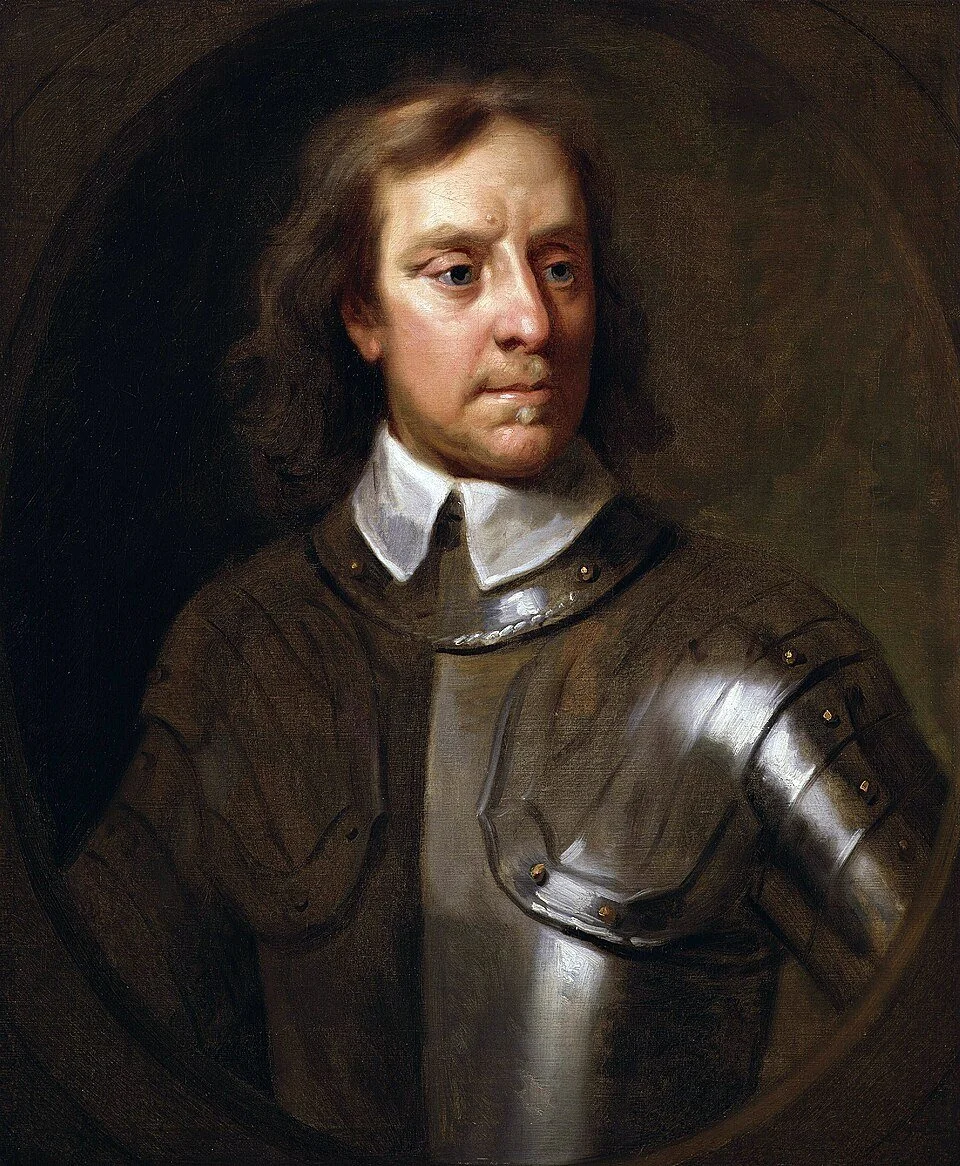
Oliver Cromwell occupied a uniquely difficult position during these developments. As one of Parliament's leading commanders, he wished to preserve cooperation between Parliament and the army. Yet he also sympathized with many of the soldiers' grievances. Cromwell recognized that Parliament's failure to honor its commitments risked destroying the trust that had made military victory possible. Throughout 1647 he attempted repeatedly to mediate between competing factions while preventing either side from resorting to violence.
The constitutional crisis intensified dramatically when the army seized physical control of the King in June 1647. Cornet George Joyce, acting on behalf of sections of the New Model Army, removed Charles from Parliamentary custody at Holdenby House and transferred him to army supervision. The episode illustrated the shifting balance of political power. Possession of the King's person had become synonymous with political authority.
The army hoped that Charles might now negotiate sincerely. Once again the King encouraged these hopes without making meaningful concessions. Confident that divisions among his opponents continued to widen, Charles delayed, equivocated and negotiated simultaneously with multiple factions. His political strategy remained remarkably consistent throughout captivity. He believed that patience would ultimately restore his throne.
Perhaps the most extraordinary political discussions of the seventeenth century occurred during the Putney Debates in October and November 1647. Meeting inside St Mary's Church at Putney, senior officers, elected Agitators and civilian radicals gathered to debate England's constitutional future. Never before had questions concerning political representation, voting rights and constitutional legitimacy been examined so openly by individuals drawn from such varied social backgrounds.
The debates centered upon proposals known collectively as the Agreement of the People, largely inspired by the Leveller movement. The document advocated regular Parliaments, equality before the law, expanded suffrage and constitutional guarantees protecting individual liberties. These ideas represented a revolutionary challenge to traditional assumptions regarding political authority.
Colonel Thomas Rainsborough delivered one of history's most celebrated statements supporting political equality. Arguing that every Englishman possessed inherent political rights regardless of wealth, he declared that "the poorest he that is in England hath a life to live, as the greatest he." This simple sentence encapsulated an entirely new understanding of citizenship based upon common humanity rather than inherited privilege.
Henry Ireton vigorously opposed such sweeping reforms. Although committed to constitutional government, he feared that universal political participation would undermine property rights and social stability. He argued that political power should remain connected to those possessing a permanent stake in society through land ownership. Without such restrictions, Ireton believed, transient majorities might confiscate property or dismantle established institutions.
Oliver Cromwell sought compromise between these competing positions. He recognized the moral force behind calls for broader representation while sharing concerns regarding political instability. Ultimately no agreement emerged. Nevertheless, the Putney Debates demonstrated that England's revolution had progressed far beyond opposition to royal absolutism. It had become a profound examination of democracy, constitutional government and the foundations of political legitimacy.
The Levellers emerged as perhaps the most influential radical movement of the revolutionary era. Led principally by John Lilburne, Richard Overton and William Walwyn, they developed a sophisticated program of constitutional reform rooted in natural rights and popular sovereignty. Unlike many later revolutionary movements, the Levellers did not advocate social revolution or the abolition of private property. Instead, they sought political equality within an orderly constitutional framework.
Leveller writings circulated widely through pamphlets, broadsheets and petitions. They demanded regular elections, equality before the law, freedom of religion, legal reform and significantly expanded voting rights. Although not advocating complete universal suffrage, they proposed enfranchising the overwhelming majority of adult men. These principles anticipated many elements of later democratic constitutions developed in Britain, America and elsewhere.
The movement demonstrated the growing importance of propaganda in shaping political events. Leveller pamphlets were written in accessible language intended for ordinary readers rather than learned scholars. Their publications criticized corruption, arbitrary imprisonment and governmental abuse while presenting constitutional reform as consistent with both English legal traditions and biblical principles.
Alongside the Levellers appeared an even more radical movement known as the Diggers, or True Levellers. Led by Gerrard Winstanley, the Diggers argued that political liberty could never exist while economic inequality remained extreme. Winstanley believed God had created the Earth as a common inheritance for humanity. Private ownership of land, he argued, represented the principal source of poverty, oppression and social conflict.
In April 1649 Digger communities established experimental settlements on common land at St George's Hill in Surrey and several other locations. Working cooperatively, they cultivated crops collectively while rejecting traditional notions of private property. Although these settlements survived only a few months before local landowners forcibly dispersed them, they represented one of history's earliest organized attempts to establish a communal society based upon shared ownership and economic equality.
Most contemporaries regarded both the Levellers and Diggers as dangerous extremists. Yet their ideas reflected genuine attempts to address problems exposed by civil war. They asked whether liberty could truly exist without political representation, economic opportunity and legal equality. Although their immediate influence remained limited, later generations would recognize them as pioneers of democratic and social reform.
While Parliament and the army argued over England's future, Charles I continued pursuing opportunities for restoration. In December 1647 he secretly concluded an agreement known as the Engagement with representatives of the Scottish Covenanters. Under its terms Charles promised to introduce Presbyterianism into England for three years in exchange for Scottish military assistance in restoring him to power.
This agreement directly triggered the Second English Civil War during 1648. Royalist uprisings erupted in Kent, Essex, Wales and other regions while Scottish forces crossed the border into northern England. Charles remained imprisoned, yet his willingness to encourage renewed warfare profoundly altered perceptions among many former moderates. Those who had previously favored compromise increasingly concluded that the King could never be trusted.
The Second Civil War proved considerably shorter than the first. Parliament's military organization had matured significantly while Royalist coordination remained poor. Oliver Cromwell moved rapidly to suppress rebellion in South Wales before marching north to confront the invading Scottish army.
The resulting Battle of Preston in August 1648 ranks among Cromwell's greatest military achievements. Although facing an opponent that initially outnumbered his own forces, Cromwell exploited superior intelligence, mobility and coordination. The Scottish army, stretched across many miles of road during its advance, became vulnerable to concentrated attacks against isolated sections. Cromwell defeated successive portions of the enemy before they could effectively support one another.
The campaign demonstrated the extraordinary professionalism of the New Model Army. Strict discipline, flexible command structures and experienced officers consistently outperformed more traditional military organizations. Military innovation had become inseparable from political revolution. England's most effective army increasingly viewed itself as the defender of constitutional principles rather than simply an instrument of state policy.
For Cromwell, the victory carried profound religious significance. Throughout his career he interpreted military success as evidence of divine providence. God, he believed, actively directed historical events in favor of righteous causes. The defeat of the Scottish invasion therefore reinforced his conviction that compromise with Charles represented opposition to God's revealed purpose.
The renewed bloodshed transformed political attitudes throughout Parliament and the army. Many concluded that Charles had deliberately sacrificed thousands of lives by encouraging a second civil war after generous peace negotiations had already been offered. Army leaders increasingly described the King as "that man of blood," holding him personally responsible for the suffering inflicted upon the nation.
Yet despite widespread anger, a majority within Parliament still wished to continue negotiations. Presbyterian members feared that abandoning monarchy altogether would produce permanent constitutional instability. They preferred another attempt at settlement rather than embarking upon unprecedented revolutionary measures.
The army refused to accept this approach. Convinced that Parliament intended to reverse the revolution, military leaders intervened directly. On the 6th of December 1648 Colonel Thomas Pride positioned soldiers outside the House of Commons and physically prevented many Presbyterian Members of Parliament from taking their seats. More than one hundred MPs were excluded, arrested or intimidated into withdrawing.
Known ever since as Pride's Purge, this event represented one of the most dramatic constitutional turning points in English history. Military force had determined the composition of Parliament itself. The surviving members, subsequently known as the Rump Parliament, overwhelmingly supported bringing Charles to trial.
The constitutional implications were immense. Throughout English history, Parliament had defended itself against royal interference. Now Parliament itself had been reshaped through military intervention. Supporters argued that extraordinary circumstances justified extraordinary measures. Critics warned that government sustained by armed force threatened the very liberties Parliament claimed to defend.
The purge nevertheless cleared the path toward a decision that would permanently transform English constitutional history. For the first time, a reigning monarch would be called to account before a court established by his own subjects. The doctrine that kings ruled by divine right would soon face its greatest and most dramatic challenge.
The years immediately following the King's military defeat therefore became one of the most intellectually fertile and politically turbulent periods in British history. Questions once regarded as settled became subjects of passionate public debate. Monarchy, Parliament, religious authority, military power, democracy, property rights and personal liberty all came under unprecedented scrutiny. England became a nation searching not merely for a new government but for an entirely new understanding of political legitimacy.
The struggle revealed that revolutions rarely conclude with military victory alone. Defeating an existing system is often easier than constructing a durable replacement. Parliament, the New Model Army, Presbyterians, Independents, Levellers, Diggers and Royalists each offered competing visions of England's future, yet none commanded universal support. Every solution generated new conflicts, while every compromise produced fresh divisions.
The revolution had begun as a dispute between King and Parliament over taxation, religion and constitutional authority. By the end of 1648 it had evolved into a far broader contest over the very meaning of sovereignty itself. Divine monarchy stood challenged by parliamentary supremacy; inherited privilege by popular representation; religious uniformity by liberty of conscience; traditional authority by revolutionary legitimacy. These debates would resonate far beyond seventeenth-century England, influencing constitutional development throughout the English-speaking world and laying important foundations for the emergence of the modern constitutional state.
The stage was now set for the most astonishing development of the entire English Revolution. In January 1649, England would witness an event without precedent in its own history: the public trial of an anointed king by his own subjects. The outcome would not simply determine the fate of Charles I. It would redefine the relationship between ruler and ruled, demonstrating that even a monarch might be held accountable before the law.
The years between the King's surrender in 1646 and the end of 1648 demonstrated that England's revolution had evolved far beyond a military struggle between Crown and Parliament. What had begun as a dispute over taxation, religion and the limits of royal authority had become a profound contest over the very nature of political power itself. Every traditional pillar upon which English society had rested, divine monarchy, hereditary privilege, episcopal authority and unquestioned obedience had been subjected to intense examination. No institution escaped scrutiny, and no political settlement appeared capable of satisfying the competing aspirations of the nation.
The extraordinary diversity of opinion that emerged during this period reflected both the opportunities and the dangers produced by the collapse of established authority. Presbyterians sought stability through a negotiated constitutional monarchy and a national church. Independents advocated greater religious liberty while increasingly questioning the King's sincerity. The New Model Army came to regard itself not merely as Parliament's servant but as the guardian of the revolution and the protector of what it believed to be God's providential purpose. Beyond these powerful institutions stood the Levellers, Diggers and countless lesser-known reformers, each advancing ideas that challenged centuries of accepted political and social convention. Their debates concerning representation, liberty, equality before the law and the rights of ordinary citizens introduced concepts that would continue to shape constitutional thought for generations.
Religion remained inseparable from every aspect of this struggle. Few participants viewed the conflict simply in political terms. Royalists believed they defended the sacred institution of monarchy established by divine ordinance. Parliamentarians increasingly argued that resistance to tyranny was itself consistent with God's will. Cromwell and many within the New Model Army interpreted every victory and defeat as evidence of divine providence, believing that England had been chosen to fulfil a higher purpose. Even the radical reformers grounded many of their arguments in Scripture, convinced that true political justice reflected God's design for humanity. The English Revolution therefore became not only a constitutional crisis but also a profound spiritual contest over the interpretation of divine authority.
Equally significant was the emergence of public opinion as an influential force in national politics. The explosion of pamphlets, newspapers, petitions and public debate invoked a political culture unlike anything England had previously experienced. Ideas no longer remained confined to the courts of kings or the chambers of Parliament. Soldiers debated constitutional theory beside their campfires, artisans discussed political reform in workshops, and ordinary citizens increasingly believed that they possessed both the right and the responsibility to participate in determining the nation's future. In many respects, England witnessed the birth of modern political discourse, where persuasion, printed argument and public support became as important as military strength.
Yet for all the remarkable intellectual energy of the period, the central dilemma remained unresolved. Every attempt at compromise collapsed upon Charles I's unwavering belief in the divine nature of kingship and Parliament's equally determined insistence that no ruler could remain above the law. The King's repeated negotiations, secret agreements and encouragement of renewed warfare steadily eroded confidence that any lasting settlement could be achieved while he remained on the throne. By provoking the Second English Civil War, Charles fundamentally altered the political landscape. Many who had once sought reconciliation now concluded that the preservation of peace required measures that only a few years earlier would have seemed unthinkable.
Pride's Purge marked the final collapse of the old constitutional order. By allowing military force to determine the composition of Parliament, England crossed a political threshold from which there could be no easy return. The ancient balance between Crown, Parliament and the rule of law had given way to a revolutionary reality in which legitimacy itself was fiercely contested. Parliament claimed to represent the sovereignty of the people. The Army claimed to defend the revolution from political betrayal. The King claimed authority bestowed directly by God. Each asserted a different source of lawful government, yet all believed their cause to be both just and necessary.
History often remembers revolutions by their battles, but their lasting significance lies in the ideas they unleash. The years following the First English Civil War transformed England into a laboratory of constitutional thought. Questions concerning the limits of executive power, representative government, religious toleration, civil liberties, military authority and popular sovereignty were debated with an intensity that anticipated many of the constitutional struggles of the modern world. Although many of the more radical proposals would ultimately be rejected, the intellectual foundations they established would influence political developments in Britain, Europe and North America for centuries to come.
As 1648 drew to a close, England stood at the edge of an unprecedented constitutional experiment. Never before had a reigning monarch been held personally accountable by his own subjects for waging war against his people. The decision to place Charles I on trial represented not merely the prosecution of a defeated king but a direct challenge to the doctrine of divine monarchy that had shaped European government for centuries. The outcome would determine far more than the fate of one man. It would decide whether sovereignty ultimately rested in the Crown, in Parliament, or in the nation itself.
The next chapter of England's revolution would therefore become its most dramatic. The trial, condemnation and execution of Charles I would shock Europe, abolish the monarchy, and usher in an uncertain republican experiment under the Commonwealth. In attempting to resolve one constitutional crisis, England was about to embark upon another, proving once again that revolutions rarely end with victory on the battlefield. Instead, they continue until a new political order emerges strong enough to command both authority and legitimacy. That struggle and the extraordinary consequences that followed form the next stage in the remarkable story of the English Revolution.
Now read about Terry’s series on King Kenry VIII and his wives here.