
Among the many stories of courage that emerged from the Second World War, the life and sacrifice of Sadao S. Munemori stands as one of the most powerful examples of devotion to duty and selfless heroism. Munemori holds a special place in American military history as the first Japanese American to receive the Medal of Honor. His bravery on the battlefield in 1945 was extraordinary in its own right, yet it also carried a profound symbolic meaning. At a time when thousands of Americans of Japanese descent were living behind barbed wire in wartime internment camps, Munemori's sacrifice offered an unmistakable testament to the loyalty and patriotism of Japanese Americans.

Terry Bailey explains.
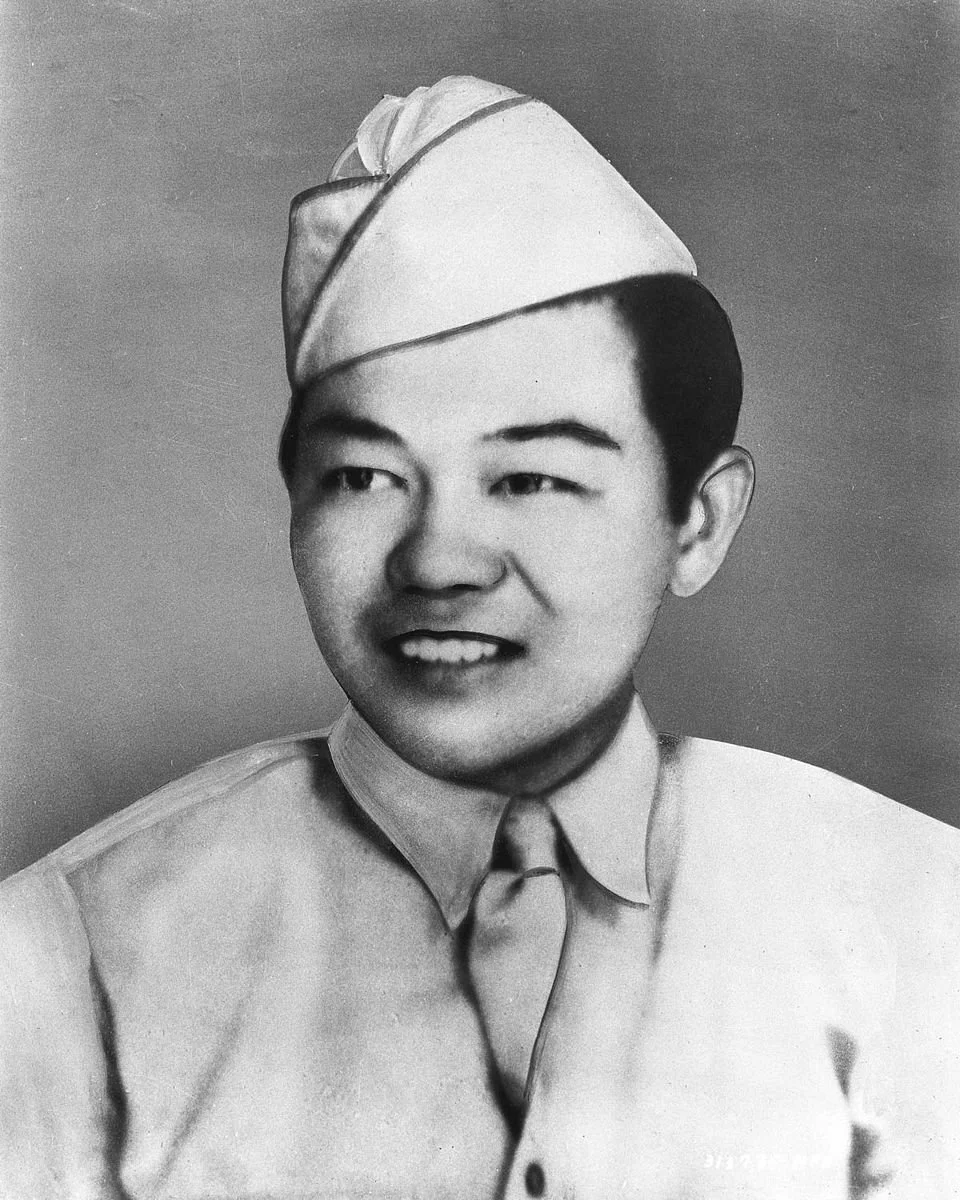
Sadao Munemori.

Sadao Saburo Munemori was born on the 17th of November, 1922, in Los Angeles, California, the son of Japanese immigrant parents. His father had come to the United States as part of the early wave of Japanese migrants seeking economic opportunity on the American West Coast. Like many second-generation Japanese Americans—known as Nisei—Munemori grew up navigating two cultural worlds. He was raised in a household that valued Japanese traditions while simultaneously embracing American life and opportunity. Friends and family remembered him as a cheerful and hardworking young man with a strong sense of responsibility. Before the war he worked in local industry and attended school in Los Angeles, living an ordinary life that was suddenly disrupted by the events of December 1941.

The Japanese attack on Pearl Harbor on the 7th of December, 1941 unleashed a wave of fear, suspicion, and prejudice across the United States. In February 1942 President Franklin D. Roosevelt signed Executive Order 9066, authorizing the forced relocation and incarceration of more than 120,000 Japanese Americans from the West Coast. Entire families were removed from their homes and placed in internment camps scattered across the interior of the country. The policy did not distinguish between immigrants and American-born citizens, and many young Nisei found themselves labelled as potential security risks in the very nation of their birth.

Despite this discrimination, thousands of Japanese American men volunteered for military service to demonstrate their loyalty to the United States. Out of this complicated and often painful moment emerged one of the most decorated units in American military history: the 442nd Regimental Combat Team. Composed almost entirely of Nisei soldiers, the 442nd became renowned for its discipline, courage, and determination. Its motto, "Go for Broke," captured the spirit of soldiers who felt they had everything to prove. The regiment fought primarily in the European theatre and would eventually become the most highly decorated unit of its size and length of service in U.S. military history.

Munemori joined the U.S. Army in 1944 and was assigned to Company A of the 100th Infantry Battalion, a unit closely associated with the 442nd Regimental Combat Team. By the time he arrived in Italy, Allied forces were engaged in a grueling struggle against entrenched German defenses in the mountainous terrain of northern Italy. One of the most formidable defensive systems facing the Allies was the Gothic Line, a series of fortified positions stretching across the Apennine Mountains. Built by German engineers and defended by experienced troops, the Gothic Line was designed to halt the Allied advance toward the Po Valley and the industrial heartland of northern Italy.

In the spring of 1945, Allied forces launched a renewed offensive aimed at finally breaking through these defenses. The fighting around the Italian town of Seravezza was especially fierce, as German troops made full use of the rugged terrain, dense forests, and fortified machine-gun positions. It was here, on the 5th of April, 1945, that Sadao Munemori would perform the acts of bravery that would define his legacy.

During an assault on heavily defended German positions near Seravezza, Munemori's platoon encountered intense fire from multiple machine-gun nests. Early in the engagement the squad leader was wounded, leaving the unit momentarily without direction amid the chaos of battle. Munemori immediately assumed command of the squad, rallying his fellow soldiers and pushing forward despite the danger. Recognizing that the enemy machine-gun positions were preventing the company from advancing, he took it upon himself to eliminate the threat.

Armed with grenades, Munemori advanced under heavy fire toward the enemy strongpoints. With remarkable determination, he destroyed two German machine-gun nests, silencing the guns that had pinned down his comrades. His actions allowed the squad to move forward and continue the assault. Yet the fighting was far from over. As the soldiers regrouped behind a small ridge, an enemy grenade landed among them after bouncing off Munemori's helmet. In that split second, he understood the danger facing the men around him.

Without hesitation, Munemori threw himself onto the grenade. By absorbing the force of the explosion with his own body, he shielded the soldiers around him from the blast. His sacrifice saved their lives and allowed the assault to continue. Inspired by his courage, the company pressed forward and successfully captured the German position, contributing to the broader Allied breakthrough along the Gothic Line.

Munemori was only twenty-two years old when he died. His bravery was quickly recognized by his commanders, and he was posthumously awarded the Medal of Honor. In the citation accompanying the award, the U.S. Army emphasized not only his gallantry in destroying enemy positions but also the ultimate sacrifice he made to protect his fellow soldiers.

Beyond the battlefield, Munemori's heroism carried immense significance for Japanese Americans across the United States. During the war, many Nisei soldiers fought while their families remained confined in internment camps. Their service became a powerful rebuttal to the suspicion and prejudice that had led to their incarceration. Munemori's Medal of Honor, the first awarded to a Japanese American, became a symbol of that loyalty and dedication. His story resonated deeply within both the military and civilian communities. For fellow Nisei soldiers of the 442nd Regimental Combat Team, Munemori embodied the spirit of sacrifice and determination that defined their unit. For many Americans at home, his courage helped challenge stereotypes and highlight the injustice faced by Japanese Americans during the war years.

In the decades that followed the war, Munemori's legacy continued to grow. His name has been commemorated in memorials, military installations, and historical accounts of the 442nd Regimental Combat Team. More importantly, his sacrifice remains a reminder that patriotism and courage often arise from communities that have faced hardship and discrimination.

Today the story of Sadao S. Munemori stands as both a wartime narrative and a broader reflection on American identity. In a moment when the nation struggled with fear and prejudice, a young soldier of Japanese descent gave his life to save his comrades and help defeat tyranny abroad. His actions on a hillside in northern Italy not only opened the path for his company's advance but also helped open a path toward greater recognition of the loyalty and contributions of Japanese Americans in the history of the United States.

In conclusion, the story of Sadao S. Munemori ultimately transcends the battlefield on which his life ended. His actions in the final weeks of the war in Italy represent the highest ideals of military service: courage in the face of overwhelming danger, devotion to comrades, and the willingness to place the lives of others above one's own. At just twenty-two years of age, Munemori displayed a level of leadership and self-sacrifice that has become synonymous with the meaning of the Medal of Honor.

His final act of throwing himself onto a grenade to save the men around him, was not simply a moment of battlefield bravery, but a profound demonstration of human character under the most extreme circumstances imaginable.

Yet Munemori's sacrifice carried a deeper resonance far beyond the immediate tactical success it helped achieve. In 1945, the United States was still grappling with the contradictions of a war fought in the name of freedom while many of its own citizens remained confined in internment camps. The courage displayed by Japanese American soldiers of the 100th Infantry Battalion and the 442nd Regimental Combat Team exposed that contradiction with undeniable clarity. Munemori's Medal of Honor became a powerful symbol of the loyalty and patriotism of Nisei soldiers who fought not only against enemy armies overseas but also against prejudice and suspicion at home.

In the years that followed the war, the story of Munemori and his fellow Nisei soldiers contributed to a gradual shift in national understanding. Their wartime service helped challenge the assumptions that had justified the internment of Japanese Americans and played a role in the broader process of recognition and redress that would come decades later. Through their bravery, the soldiers of the 442nd demonstrated that devotion to democratic ideals could flourish even in the face of injustice. Munemori's heroism thus became part of a larger narrative about the resilience of American citizenship and the capacity of individuals to uphold national ideals even when those ideals were imperfectly applied.

Today, the legacy of Sadao S. Munemori endures not only in military history but also in the broader story of the United States during one of its most turbulent periods. His name stands among those whose sacrifice helped secure victory in the Second World War, yet it also serves as a reminder of the complex social struggles that unfolded on the home front.

The young man who grew up in Los Angeles, the son of immigrant parents, ultimately gave his life in the mountains of northern Italy to save his fellow soldiers and advance the Allied cause. In remembering Munemori, one remembers more than a single act of heroism. His life illustrates the courage of a generation that fought for freedom across the world while seeking recognition and equality within their own nation. His sacrifice is a reminder that patriotism is not defined by ancestry or circumstance but by actions and principles. On that battlefield in April 1945, Sadao S. Munemori demonstrated that truth with extraordinary clarity, leaving behind a legacy that continues to inspire soldiers, historians, and citizens alike.


The site has been offering a wide variety of high-quality, free history content since 2012. If you’d like to say ‘thank you’ and help us with site running costs, please consider donating here.
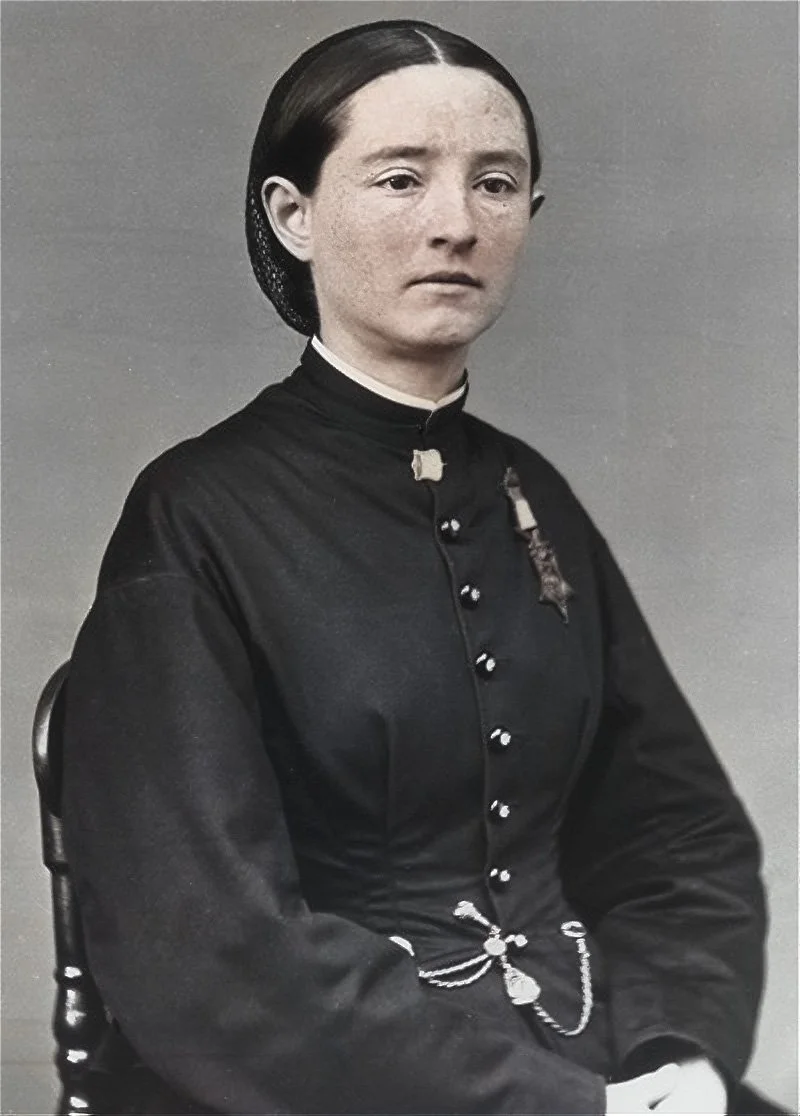
In the long and often turbulent history of the Medal of Honor, one name stands entirely alone: Mary Edwards Walker. She remains the only woman ever to have received the United States' highest military decoration, and her life was as unconventional as the distinction itself. A surgeon, reformer, prisoner of war, and tireless advocate for women's rights, Walker's story is inseparable from the upheaval of the American Civil War, a conflict that reshaped the nation and, in her case, opened a narrow but historic path into military service.

Terry Bailey explains.

Mary Edwards Walker.

Mary Edwards Walker was born in 1832 in Oswego County, New York, into a household that quietly defied many of the era's expectations. Her parents were progressive thinkers who believed firmly in education, self-reliance, and physical health. Her father, a farmer with reformist views, insisted that his daughters receive the same rigorous schooling as his sons—an unusual stance in mid-nineteenth-century America. From an early age, Mary absorbed the idea that intellectual capacity was not determined by gender. She also rejected restrictive clothing, later arguing that heavy skirts and corsets were both unhealthy and symbolic of women's social confinement.

Her determination led her to pursue a medical career at a time when female physicians were rare and frequently dismissed. She enrolled at Syracuse Medical College, one of the few institutions willing to admit women, and graduated in 1855 with a Doctor of Medicine degree. Even with credentials in hand, she struggled to establish a practice. Patients were hesitant to trust a woman doctor, and professional networks largely excluded her. Yet she persevered, convinced that her skills would eventually find their proper arena.

That arena emerged with the outbreak of civil war in 1861. As the Union and Confederate states mobilized for what would become a four-year struggle of unprecedented scale, medical services were rapidly overwhelmed. Disease—typhoid, dysentery, pneumonia—claimed more lives than bullets, and battlefield surgery was often conducted in makeshift tents or barns with limited anesthesia and rudimentary sterilization. Determined to serve, Walker travelled to Washington, D.C., and petitioned the War Department for a commission as an army surgeon. She was refused solely because she was a woman.

Undeterred, she offered her services as a volunteer and began working in Union hospitals. Over time, her persistence and demonstrated competence earned her a contract appointment as an acting assistant surgeon with the Army of the Cumberland. This placed her in the Western Theatre of the war, where campaigns through Tennessee and Georgia were marked by relentless maneuvering and ferocious engagements. The struggle for control of strategic rail hubs such as Chattanooga and the drive toward Atlanta produced waves of wounded soldiers, and medical personnel worked under constant strain.

Walker frequently placed herself near the front lines, tending not only to Union troops but, when possible, to civilians caught in the crossfire. Her medical practice was guided by both professional duty and humanitarian conviction. In April 1864, during operations connected to the Atlanta Campaign, she crossed into territory controlled by Confederate forces to treat wounded men and suffering civilians. It was a bold and dangerous act. Confederate soldiers arrested her, suspecting that a woman in modified military attire moving between lines must be a spy. She was transported to Richmond, Virginia, and held as a prisoner of war. Confinement was harsh, food scarce, and uncertainty constant. Yet Walker endured several months of captivity before being exchanged in August 1864 as part of a formal prisoner swap. Her experience gave her a rare distinction: she was one of the few women formally held as a prisoner of war during the conflict.

In 1865, after the war had drawn to a close, President Andrew Johnson signed the order awarding Mary Edwards Walker the Medal of Honor. The citation recognized her meritorious service, devotion to the wounded, and steadfastness during captivity. Although the criteria for the award were broader in the nineteenth century than they would later become, her work near the front lines and her imprisonment under enemy authority were extraordinary by any standard.

Decades later, in 1917, a review board reassessed earlier awards and rescinded hundreds of Medals of Honor deemed inconsistent with newly tightened combat requirements. Walker's medal was among those revoked. She refused to surrender it, asserting that her service had been honorable and that no bureaucratic revision could erase lived reality. She continued to wear the medal daily, a small but potent act of defiance. In 1977, long after her death, the U.S. government restored her award, reaffirming her singular place in American military history.

Walker's postwar years were as combative in their own way as her time in uniform. She became a prominent advocate for women's suffrage, lecturing across the country and arguing that the Constitution already guaranteed women the right to vote. Her reformist zeal extended to dress reform; she adopted tailored jackets and trousers, insisting that practicality and health should outweigh social convention. For this she was ridiculed and occasionally arrested for "impersonating a man," yet she remained resolute. While she sometimes clashed with more cautious leaders within the suffrage movement, her independence and courage commanded respect.

Mary Edwards Walker died in 1919, just one year before the ratification of the Nineteenth Amendment secured women's suffrage nationwide. She did not live to cast a ballot in a federal election, but her life had already redefined the boundaries of possibility. In war, she proved that medical skill and personal bravery transcended gender. In peace, she continued to challenge the assumptions that had once barred her from a commission. Her Medal of Honor—awarded, revoked, and restored—serves as more than a military decoration. It stands as a testament to endurance in the face of prejudice, to professional commitment under fire, and to a lifetime spent pressing against the limits imposed by society. In Mary Edwards Walker's story, the upheaval of civil war intersected with the broader struggle for equality, and from that intersection emerged a legacy unlike any other in American history.


The site has been offering a wide variety of high-quality, free history content since 2012. If you’d like to say ‘thank you’ and help us with site running costs, please consider donating here.
Posted
AuthorGeorge Levrier-Jones

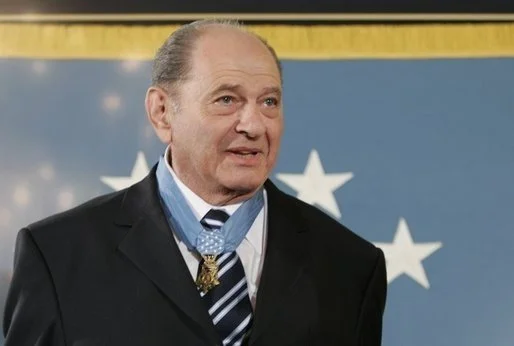
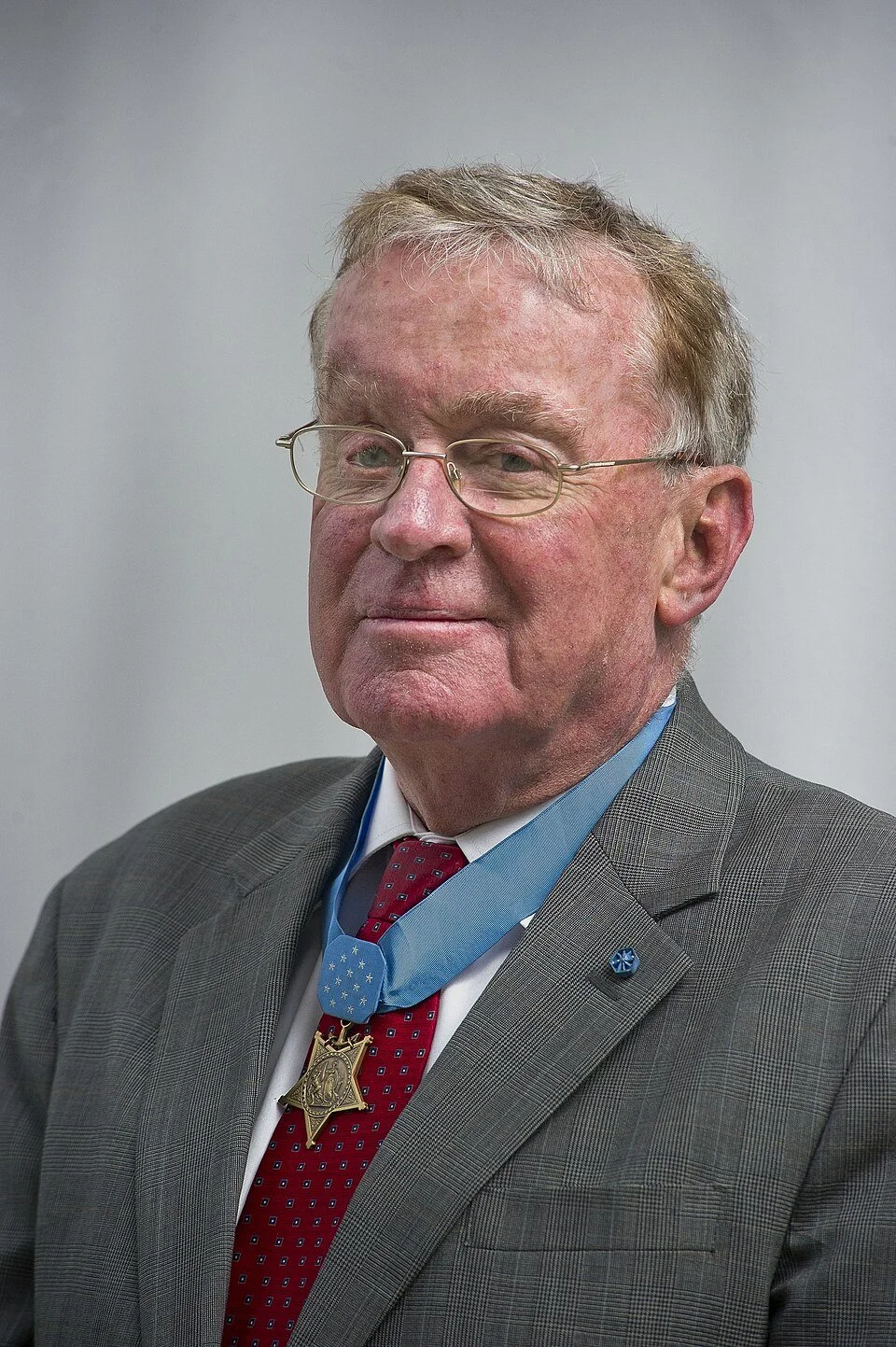
Corporal Tibor Rubin stands as one of the most compelling figures of the Korean War, a man whose life traced a harrowing path from Nazi concentration camps to the frozen hills of Korea and, ultimately, to the highest decoration the United States can bestow for valor. His story is not merely one of battlefield gallantry. It is a narrative shaped by genocide, survival, gratitude, and a long-delayed reckoning with prejudice inside the very institution he served with unwavering devotion.

Terry Bailey explains.

Tibor Rubin.

Rubin was born in 1929 in Pásztó, Hungary, into a Jewish family during a period when Europe was sliding toward catastrophe. His childhood was cut short by the rise of fascism and the spread of antisemitic laws that increasingly isolated and endangered Hungarian Jews.

Following the German occupation of Hungary, Rubin was deported to the infamous Mauthausen concentration camp in Austria. Still a teenager, he endured starvation, forced labor, brutality, and the ever-present specter of death. Thousands perished in the camp's granite quarries and barracks; Rubin survived through a combination of resilience, resourcefulness, and sheer will. When American forces liberated Mauthausen in 1945, Rubin later recalled being profoundly moved by the sight of U.S. soldiers—healthy, confident, and free. One American serviceman, he said, treated him with kindness and humanity at a moment when such gestures seemed almost unimaginable. That encounter left an indelible mark. Rubin resolved that if he ever made it to the United States, he would repay the nation that had rescued him from annihilation.

In 1948, he fulfilled that ambition. Arriving in America as an immigrant with limited English and little money, Rubin settled in New York and embraced his adopted homeland with fervor. When war broke out in Korea in June 1950, he saw an opportunity to honor his promise. He enlisted in the U.S. Army that same year, determined to serve the country he regarded as his liberator.

The Korean War erupted on the 25th of June 1950, when North Korean forces stormed across the 38th parallel in a surprise invasion of South Korea. The United States, acting under a United Nations mandate, rushed troops to defend the South. Early engagements were chaotic and costly. American and allied forces were driven into a shrinking defensive enclave known as the Pusan Perimeter. Only after General Douglas MacArthur launched the daring amphibious landing at Inchon did the tide temporarily turn. Yet by late 1950, the war shifted again as Chinese forces entered the conflict in massive numbers, launching brutal offensives that sent UN troops reeling southward through mountainous terrain and bitter winter cold.

It was during these desperate months that Rubin distinguished himself. In July 1950, near the Pusan Perimeter, his regiment came under intense North Korean assault. According to eyewitness accounts later included in his Medal of Honor citation, Rubin single-handedly manned a machine-gun position on a hill for twenty-four hours. Wave after wave of enemy soldiers attacked, but Rubin held his ground, inflicting heavy casualties and slowing the advance long enough for his unit to regroup and withdraw. His stand was not a dramatic flourish; it was a grim, grinding act of endurance, reminiscent of the tenacity that had sustained him in the camps of Europe.

Later that year, as Chinese forces surged into the war, Rubin again volunteered for a perilous task. During a chaotic withdrawal, he remained behind to cover his unit's retreat, engaging the enemy alone and allowing fellow soldiers to escape encirclement. His actions exemplified a pattern: whenever danger intensified, Rubin stepped forward rather than back. In November 1950, during fierce fighting, Rubin was captured by Chinese troops. What followed was more than two and a half years of imprisonment under appalling conditions. Food was scarce, sanitation was almost nonexistent, and medical care was minimal, with diseases that spread rapidly. Prisoners endured relentless indoctrination efforts and the psychological strain of uncertainty. Many perished from malnutrition and exposure.

For Rubin, however, captivity was tragically familiar terrain. Drawing on the survival instincts forged in Nazi camps, he refused to surrender to despair. He slipped out of the prison compound at night, risking execution if caught, to scavenge for food. He stole rice and other provisions from enemy supplies and distributed them among weaker prisoners. He nursed the sick, carried the infirm, and offered comfort to those on the brink of death. Fellow prisoners later testified that his efforts saved numerous lives. To them, Rubin was not simply a comrade but a lifeline.

When the armistice was signed in 1953 and prisoners were exchanged, Rubin returned home, gaunt but unbroken. Many of his fellow soldiers believed he would soon receive the Medal of Honor. Recommendations had been submitted during the war for his extraordinary actions in combat. Yet the award never came. Over time, it emerged that antisemitism on the part of a superior noncommissioned officer had obstructed or failed to process the necessary paperwork. In the climate of the early 1950s, such discrimination could quietly derail recognition without scrutiny. Decades later, a congressionally mandated review examined cases in which Jewish and Hispanic service members might have been denied awards due to prejudice. Rubin's case resurfaced as one of the most striking examples. Investigators confirmed that his heroism had been documented and recommended, but administrative bias had prevented proper consideration.

In 2005, more than half a century after his acts of valor, Tibor Rubin finally stood in the White House as President George W. Bush placed the Medal of Honor around his neck. The ceremony was both a personal triumph and a national acknowledgment of past injustice. The citation recognized not only his single-handed stand in combat but also his selfless courage as a prisoner of war. Rubin accepted the medal with characteristic humility. He often insisted that he had simply kept a promise—to repay America for his liberation.

In interviews, he deflected praise toward his fellow soldiers and reflected on the freedoms he cherished as an immigrant citizen. For him, the medal symbolized gratitude rather than vindication. In his postwar life, Rubin settled in California, married, and raised a family. He remained active in veterans' circles and frequently addressed schools and community groups. He spoke about resilience, about the value of liberty, and about the responsibility of memory. Having witnessed both the depths of totalitarian cruelty and the capacity for democratic self-correction, he embodied a bridge between two defining conflicts of the twentieth century.

When Tibor Rubin died in 2015, he left behind more than a record of battlefield heroism. His life formed a moral arc that stretched from the barbed wire of a concentration camp to the ceremonial dignity of the Medal of Honor. It is a story that links the Holocaust to the Korean War, illustrating how individual courage can shine even amid institutional failure. His long-delayed recognition serves as a reminder that while injustice may obscure valor for decades, truth has a stubborn endurance of its own—and, in time, can prevail.

In conclusion, Corporal Tibor Rubin represents something larger than a single act of heroism on a distant battlefield. His life is a study in moral continuity. The same resolve that sustained him in the shadow of Mauthausen concentration camp sustained him on the hills of Korea; the same gratitude he felt toward the soldiers who liberated him shaped the courage with which he defended their flag. He did not compartmentalize his past and present. Instead, he fused them into a singular commitment: to stand firm when others faltered, to give when others could not, and to endure when surrender might have seemed understandable.

His story also illuminates the complex character of the nation he chose as his own. The United States that freed him from Nazi tyranny later failed, through prejudice and neglect, to honor him promptly. Yet it was also a nation capable of confronting that failure, reopening old records, and correcting an injustice decades later. In that arc—from liberation to oversight to eventual recognition—lies the proof not only to Rubin's perseverance but to the imperfect, evolving promise of American democracy itself.

The medal placed around his neck in 2005 did more than acknowledge battlefield gallantry. It affirmed the lives he saved in frozen foxholes and prison compounds. It validated the testimony of fellow prisoners who survived because he shared stolen rice, shouldered burdens not his own, and refused to let despair claim another man. And it restored to the historical record the full measure of a soldier whose faith in his adopted country never wavered, even when its institutions faltered.

Ultimately, Rubin's journey from persecuted Hungarian Jewish youth to American war hero binds together two of the twentieth century's defining struggles: the fight against genocidal totalitarianism and the defense of fragile democratic allies during the Cold War. His life reminds us that courage is not born in a single moment of crisis but forged through repeated trials. It is a reminder that gratitude can be a powerful engine of service, that character, once tempered by suffering, can become an enduring force for good.

Remembering Tibor Rubin, it compels the seeing beyond medals and citations. It highlights a man who transformed unimaginable trauma into steadfast loyalty, who answered cruelty with compassion, and who met injustice not with bitterness but with continued devotion. His legacy endures not only in military archives or presidential ceremonies, but in the example he leaves behind: that even in the harshest landscapes of history, individual courage and conscience can prevail—and, in time, be recognized for what they truly are.


The site has been offering a wide variety of high-quality, free history content since 2012. If you’d like to say ‘thank you’ and help us with site running costs, please consider donating here.
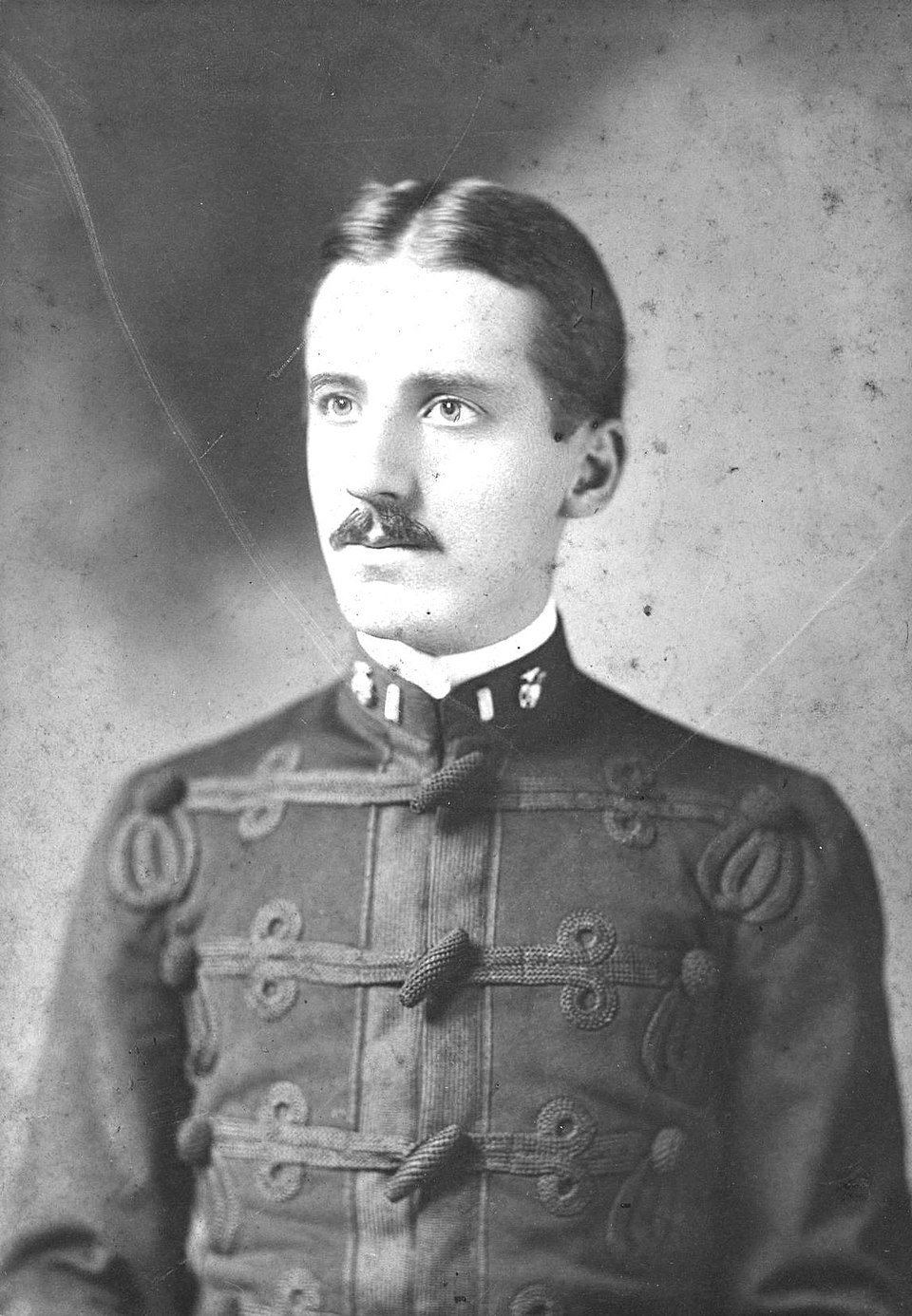
Smedley Darlington Butler stands as one of the most formidable and paradoxical figures in United States military history, a Marine whose career traced the arc of American power abroad from the age of imperial interventions to the disillusionment that followed the First World War. Born on the 30th of July, 1881 in West Chester, Pennsylvania, into a prominent Quaker family, Butler's path to martial life seemed at odds with his upbringing. His father was a U.S. congressman, and the family tradition emphasized public service, but not violence. Yet at the age of sixteen, stirred by the outbreak of the Spanish–American War and driven by a precocious sense of duty and adventure, Butler lied about his age to secure a commission as a second lieutenant in the U.S. Marine Corps. That impulsive decision began a career that would see him repeatedly at the sharp edge of American foreign policy.

Terry Bailey explains.

Smedley Butler early in his earlier years - said to be 1898. From the Smedley Butler Collection (COLL/3124), Marine Corps Archives & Special Collections, available here.

Butler's early service immersed him in the era's so-called "small wars," interventions designed to protect American interests overseas. He fought in China during the Boxer Rebellion in 1900, where multinational forces moved to relieve foreign legations besieged in Beijing. There, Butler was wounded in combat and displayed the aggressive leadership that would become his hallmark. He later returned to China during subsequent interventions, gaining firsthand experience of expeditionary warfare in unstable political environments. These deployments, along with service in the Caribbean and Central America, shaped Butler into a hardened officer who believed that personal example—leading from the front under fire—was the essence of command.

The first of Butler's two Medals of Honor was earned during the U.S. occupation of Veracruz, Mexico, in April 1914. The intervention arose from the chaotic conditions of the Mexican Revolution and a diplomatic crisis triggered by the Tampico Affair, in which U.S. sailors were briefly detained by Mexican federal forces. Determined to prevent a shipment of arms from reaching the regime of Victoriano Huerta, President Woodrow Wilson ordered the seizure of Veracruz. Butler, then a major, found himself in intense urban combat as Marines and sailors advanced street by street against determined resistance. Over two days of fighting, Butler repeatedly exposed himself to enemy fire while directing his men, maintaining momentum amid confusion and danger. His conspicuous bravery, calm leadership, and disregard for his own safety were credited with helping to secure key objectives during the assault. For this conduct, he received the Medal of Honor, recognizing his extraordinary heroism in a complex and politically sensitive operation.

Butler's second Medal of Honor came the following year during the U.S. intervention in Haiti, another campaign rooted in American concerns over political instability and foreign influence in the Caribbean. In November 1915, Butler led an attack on Fort Rivière, a stronghold held by Caco insurgents resisting the occupation. The fort, an old French structure perched atop a steep hill, was considered nearly impregnable. Rather than ordering a prolonged bombardment, Butler personally led a small assault force up the hill under fire. Discovering a narrow entrance, he and his men forced their way inside and engaged the defenders at close quarters. The sudden, aggressive attack collapsed the resistance within minutes. Butler's decision to lead the assault himself, coupled with his audacity and tactical judgement, was deemed decisive. Awarded a second Medal of Honor, he joined a very small group of Americans to have received the nation's highest military decoration twice.

During the years that followed, Butler's career continued to reflect the expanding global reach of the United States. He served on the Mexican border during the 1916 crisis sparked by Pancho Villa's raids, helping to secure frontier regions amid fears of wider conflict. When the United States entered the First World War, Butler was promoted to brigadier general and assigned logistical and training responsibilities rather than frontline combat. Most notably, he commanded the Marine base at Brest in France, where he worked to impose order and efficiency on a massive, chaotic port operation essential to sustaining the American Expeditionary Forces. Though frustrated by bureaucracy and the lack of combat command, his energy and organizational drive earned him respect and further advancement.

After retiring from the Marine Corps in 1931 as a major general, Butler underwent a profound transformation. Drawing on his decades of experience in foreign interventions, he became an outspoken critic of American militarism and corporate influence over foreign policy. His 1935 pamphlet War Is a Racket argued that many of the campaigns he had fought in served economic interests rather than national defense, a striking repudiation from one of the most decorated Marines in history. Butler spent his final years lecturing and writing, admired by some for his candor and criticized by others for his blunt attacks on the establishment. He died in 1940, leaving behind a legacy defined by extraordinary personal courage, relentless leadership in battle, and a rare willingness to question the very system he had served so ferociously.

Smedley Butler's life captures the contradictions of his age: a fearless warrior of America's overseas expansion who later became one of its sharpest internal critics. His two Medals of Honor testify to moments of undeniable heroism under fire, while his later words invite reflection on the costs and purposes of the wars that shaped him. Few American military figures embody both the triumph and the unease of U.S. power abroad as fully as Smedley Darlington Butler.

Smedley Darlington Butler's story ultimately resists any simple verdict, and it is precisely this complexity that secures his enduring significance. As a young Marine officer, he personified the aggressive confidence of a rising power, repeatedly placing himself in harm's way and earning the devotion of the men he led through sheer physical courage and uncompromising example. His two Medals of Honor were not products of chance or symbolism, but of a consistent pattern of behavior: decisive action, personal risk, and an unshakeable belief that a commander's duty was to share the dangers of those he commanded. In this sense, Butler stands comfortably among the most formidable combat leaders in American military history.

Yet it is the second act of his life that elevates him beyond the narrow confines of martial achievement. Butler's post-retirement denunciation of the very interventions that had defined his career did not erase his service; rather, it reframed it. Few figures have possessed both the authority and the moral courage to interrogate their own legacy so publicly. When Butler condemned war as a racket, he did so not as an outsider or a theorist, but as a man who had fought, bled, and commanded in the field. His critique drew its power from lived experience, forcing contemporaries—and later generations—to confront uncomfortable questions about the relationship between military force, national interest, and economic power.

In the end, Butler's legacy lies not only in the battles he fought or the decorations he earned, but in the intellectual honesty with which he confronted the meaning of those experiences. He remains a symbol of both the heights of personal bravery and the capacity for reflection and dissent within the military tradition itself. In embodying the courage to fight and the courage to question, Smedley Darlington Butler occupies a rare and uneasy place in American history—one that continues to challenge how heroism, patriotism, and power are understood.


The site has been offering a wide variety of high-quality, free history content since 2012. If you’d like to say ‘thank you’ and help us with site running costs, please consider donating here.


Notes:

Tampico Affair

The Tampico Affair was a brief but consequential diplomatic incident between the United States and Mexico in April 1914, occurring during the height of the Mexican Revolution. At the time, Mexico was deeply unstable following the overthrow and assassination of President Francisco Madero in 1913, an event that brought General Victoriano Huerta to power. The United States, under President Woodrow Wilson, refused to recognize Huerta's government, viewing it as illegitimate and born of treachery. This tense political backdrop meant that even minor incidents carried the potential for serious international repercussions.

The affair itself began on the 9th of April, 1914, when a small group of U.S. Navy sailors from the gunboat USS Dolphin went ashore at the Mexican port of Tampico to purchase fuel. They were arrested by Mexican federal troops, who suspected them of entering a restricted military area. Although the sailors were quickly released once their identity was established, the local Mexican commander failed to offer a formal apology. Rear Admiral Henry T. Mayo, commanding U.S. naval forces in the area, demanded not only an apology but also a 21-gun salute to the American flag as a public gesture of respect.

Huerta's government agreed to issue an apology but refused to authorize the salute, arguing that it would compromise Mexican sovereignty and imply submission to the United States. President Wilson seized upon the refusal as evidence of Huerta's hostility and disrespect, and he used the incident to seek congressional approval to employ armed force. The Tampico Affair thus became less about the arrest itself and more a symbolic confrontation over national honor, legitimacy, and diplomatic recognition.

The immediate consequence of the affair was the U.S. occupation of the port of Veracruz later in April 1914, aimed at preventing a German arms shipment from reaching Huerta's forces. While the occupation was not a direct response to the Tampico incident alone, the affair provided the political justification Wilson needed to escalate U.S. involvement. In the broader context of U.S.–Mexican relations, the Tampico Affair exemplified how revolutionary instability, wounded national pride, and great-power diplomacy could rapidly turn a minor local misunderstanding into an international crisis.

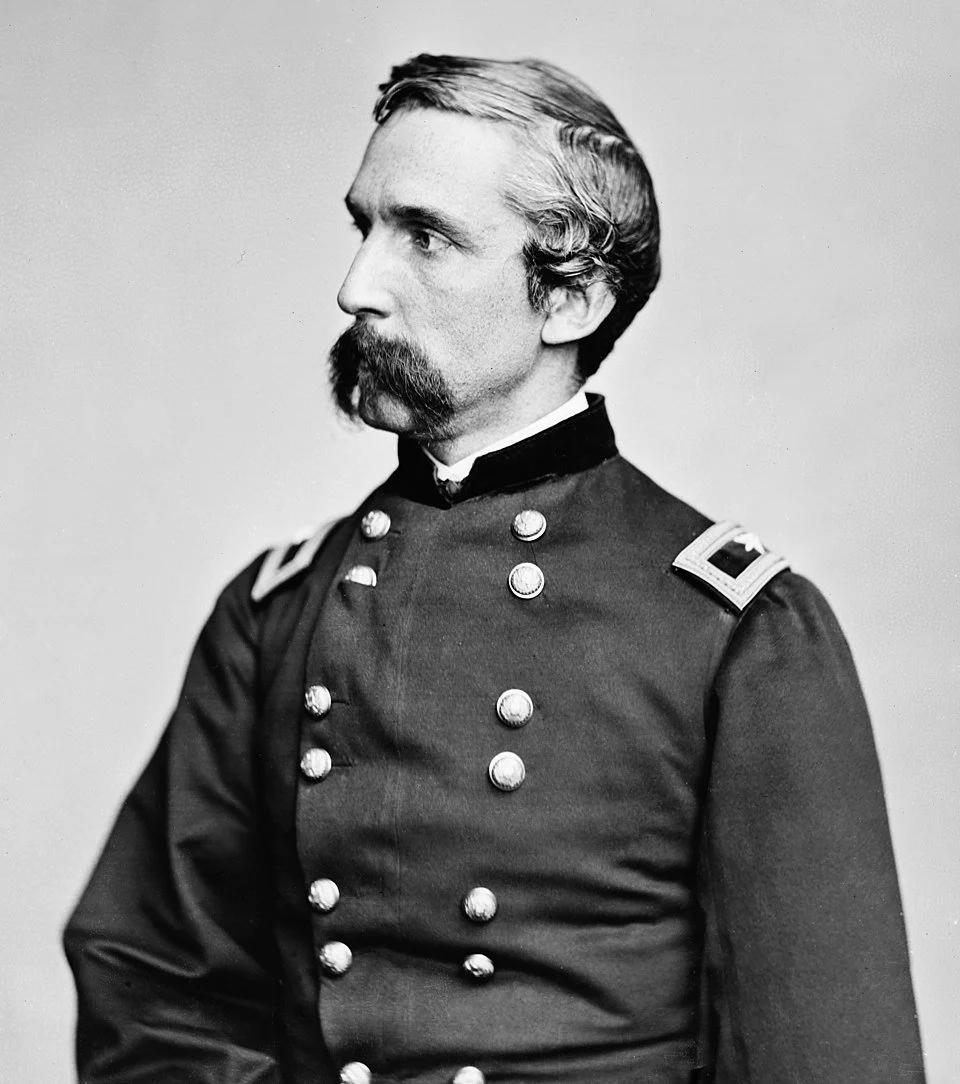
Joshua Lawrence Chamberlain stands as one of the most compelling figures of the American Civil War, not because he was a professional soldier forged in a lifetime of military service, but because he was an intellectual and educator who rose to extraordinary leadership when history demanded it. Born on the 8th of September, 1828 in Brewer, Maine, Chamberlain grew up in a deeply religious and disciplined household. His father, a stern militia officer and shipbuilder, instilled in him a sense of duty and moral responsibility, while his mother encouraged learning and faith. Chamberlain excelled academically, displaying a gift for languages and scholarship that would define his early life. He attended Bowdoin College, where he studied theology and the classics, eventually becoming fluent in multiple ancient and modern languages. By the late 1850s, he was a professor of rhetoric at Bowdoin, seemingly destined for a quiet life of scholarship rather than war.

Terry Bailey explains.

Joshua Chamberlain.

The outbreak of the Civil War in 1861 profoundly unsettled Chamberlain. Though opposed to slavery and deeply committed to the Union, he initially remained at Bowdoin, torn between his academic responsibilities and what he saw as a moral obligation to serve. In 1862, he resolved the conflict decisively. Despite lacking formal military training, he requested a leave of absence to join the army, telling Bowdoin's president that the war represented a struggle for the soul of the nation. He was commissioned as a lieutenant colonel in the 20th Maine Volunteer Infantry, a regiment composed largely of lumbermen and farmers, many of whom were older and physically tougher than their scholarly officer. Chamberlain won their respect not through bluster or harsh discipline, but through fairness, shared hardship, and a willingness to listen, qualities that would later prove critical under fire.

By the summer of 1863, Chamberlain had risen to command the 20th Maine, and his regiment found itself marching into history at Gettysburg. On the 2nd of July, 1863, the second day of the battle, the Union Army hastily extended its left flank to anchor on a rocky hill known as Little Round Top. The position was vital; if Confederate forces seized it, they could roll up the Union line and potentially decide the battle in their favor. The 20th Maine was placed at the extreme left of the Union position, with orders that could not have been clearer or more ominous: "Hold this ground at all hazards." There would be no reinforcements. If the regiment broke, the Union flank would collapse.

Throughout the afternoon, Chamberlain's men endured repeated assaults by the 15th Alabama and other Confederate units under Colonel William C. Oates. The fighting was close, chaotic, and brutal, conducted over boulders and through dense woods in sweltering heat. Each Confederate attack pushed closer to breaking the Union line, and Chamberlain was forced to stretch his regiment dangerously thin, bending his line back like a door hinge to prevent being flanked. Ammunition ran dangerously low. Men collapsed from exhaustion and heat. Chamberlain himself was everywhere along the line, steadying his soldiers, issuing calm orders, and absorbing the terror of combat without losing command of the situation.

As the final Confederate assault loomed, Chamberlain faced a grim reality. His regiment was nearly out of ammunition, and another attack would almost certainly overwhelm them. In that moment, he made one of the most audacious tactical decisions of the war. Rather than waiting passively to be overrun, Chamberlain ordered a bayonet charge. With a sweeping wheel to the left, the 20th Maine surged downhill, shouting and driving their bayonets into stunned Confederate troops who expected no such move from an exhausted and depleted enemy. The sudden offensive shattered the momentum of the Confederate attack. Many Southern soldiers were killed, wounded, or captured, and the rest fled. Little Round Top was held, the Union flank was saved, and the outcome of the Battle of Gettysburg and arguably the war itself tilted decisively in favor of the Union.

Chamberlain's actions at Gettysburg would later earn him the Congressional Medal of Honor, awarded in 1893. The citation recognized his "daring heroism and great tenacity" in holding Little Round Top against overwhelming odds. Yet the significance of his conduct lay not only in bravery, but in leadership and judgment under extreme pressure. Chamberlain demonstrated an intuitive understanding of morale, terrain, and timing, proving that decisive leadership could compensate for material disadvantage. His conduct became a textbook example of initiative at the tactical level, studied by soldiers long after the war. Chamberlain's wartime service did not end at Gettysburg, and the war would exact a terrible physical toll on him. He was promoted to brigadier general and continued to serve with distinction in the Overland Campaign of 1864. At the Battle of Petersburg, he was shot through the hip and groin, a wound so severe that he was expected to die. Grant promoted him on the battlefield as a final honor, but Chamberlain survived after months of agony and recovery. He returned to duty despite chronic pain and lasting disability, embodying the same determination that had defined his stand on Little Round Top.

In one of the war's most symbolic moments, Chamberlain played a prominent role at its conclusion. On the 12th of April, 1865, he was selected to command the Union troops receiving the formal surrender of the Confederate Army of Northern Virginia at Appomattox. In a gesture of reconciliation rather than triumph, Chamberlain ordered his men to salute the defeated Confederates as they laid down their arms. The act reflected his belief that the war had been fought to preserve the Union, not to humiliate the South, and it earned respect from former enemies, including Confederate General John B. Gordon.

After the war, Chamberlain returned to civilian life but never escaped the shadow of his service. He became president of Bowdoin College, guiding the institution through a period of reform and expansion, and later served four terms as governor of Maine. His postwar years were marked by public service, writing, and continued reflection on the meaning of the war. He authored several books and essays, offering thoughtful and often philosophical interpretations of the conflict and its moral dimensions. Though plagued by pain from his wartime wounds for the rest of his life, he remained active and engaged well into old age. Joshua Chamberlain died in 1914, one of the last prominent Civil War generals, and was the final veteran to die from wounds received in that conflict. His legacy endures not merely because of a single dramatic charge, but because his life embodied the idea of citizen-soldiership at its finest. A scholar who became a warrior, a leader who combined compassion with resolve, Chamberlain's stand at Little Round Top remains a powerful reminder of how individual courage and judgment can shape the course of history at its most critical moments.

Joshua Lawrence Chamberlain's life and legacy ultimately transcend the dramatic moments for which he is most famous. His story is not merely one of battlefield heroism, but of moral conviction carried into action, of intellect fused with courage, and of leadership rooted in principle rather than ambition. At Little Round Top, Chamberlain did more than save a tactical position; he exemplified the capacity of an ordinary citizen to rise to extraordinary responsibility when the fate of a nation hung in the balance. His decisions were shaped not by rigid military doctrine, but by empathy for his men, clarity of purpose, and a profound sense of duty to something larger than himself.

What distinguishes Chamberlain from many of his contemporaries is the continuity between his wartime conduct and his postwar life. The values that guided him in combat—discipline tempered by humanity, firmness balanced with reconciliation—were the same values he carried into education, politics, and public service. His salute to the defeated Confederates at Appomattox symbolized his belief that the war's true victory lay not in vengeance, but in the restoration of a fractured nation. This act, quiet yet powerful, reflected a deeper understanding of what lasting peace required and underscored his lifelong commitment to unity and moral responsibility.

Chamberlain's enduring significance lies in the way his life challenges simple definitions of heroism. He was not born a soldier, nor did he seek glory, yet he became one of the war's most respected leaders through resolve, adaptability, and an unwavering ethical compass. His physical suffering after the war, borne without bitterness, further reinforces the depth of his character. Even as his wounds shaped his final decades, he continued to serve, teach, write, and reflect, determined that the sacrifices of the Civil War should be understood and remembered with honesty and purpose.

In the final measure, Joshua Chamberlain represents the highest ideals of citizen leadership. His stand at Little Round Top remains a defining moment in American history, but it gains its full meaning only when viewed within the broader arc of his life, a life devoted to learning, service, reconciliation, and moral courage. Through his actions in war and peace alike, Chamberlain left a legacy that speaks not only to the past, but to the enduring power of individual conscience and leadership in shaping the course of history.


The site has been offering a wide variety of high-quality, free history content since 2012. If you’d like to say ‘thank you’ and help us with site running costs, please consider donating here.
 

Notes:

The wounds Joshua Lawrence Chamberlain received during the Civil War had a profound and lasting impact on his health, shaping the remainder of his life and ultimately contributing to his death. On the 18th of June 1864, during the Battle of Petersburg, Chamberlain was struck by a Minie ball that passed through his right hip and groin, exiting near the bladder and urethra. The injury was considered mortal at the time; blood loss was severe, infection was likely, and the medical practices of the era offered little hope of recovery. He survived only through extraordinary resilience and prolonged medical care, but the damage inflicted by the wound could never be fully healed.

In the years that followed, Chamberlain endured chronic pain, recurring infections, and serious urological complications as a direct result of the injury. The wound left him with long-term damage to his urinary system, including fistulas and strictures that caused frequent obstruction, inflammation, and bleeding. These conditions required repeated medical interventions throughout his life and often left him weak, feverish, and exhausted. Periods of relative health were frequently interrupted by painful relapses, making daily activity unpredictable and physically taxing. Despite this, Chamberlain persisted in public life, masking the severity of his condition behind an outward appearance of energy and resolve.

As he aged, the cumulative effects of the wound worsened. Recurrent infections increasingly taxed his immune system, while chronic inflammation and impaired urinary function led to progressive organ stress. By the early twentieth century, his body was less able to recover from the complications that had plagued him since the war. In 1914, nearly fifty years after being wounded, Chamberlain succumbed to complications directly linked to his Petersburg injury, making him the last Civil War veteran to die from wounds sustained in that conflict. His death served as a stark reminder that the suffering of war often extends far beyond the battlefield, lingering silently for decades after the guns have fallen silent.

Chamberlain's long struggle with his wounds adds a deeper dimension to his legacy. His postwar achievements in education, governance, and public life were accomplished not in spite of discomfort, but in the midst of persistent physical suffering. That he continued to serve with dignity and determination, even as his health steadily declined, underscores the extraordinary endurance that defined him as both a soldier and a citizen. His life stands as a testament to the hidden, lifelong costs of war and the resilience required to bear them.

Thomas Eugene Kelly was born on the 25th of December, 1919 in Worcester, Massachusetts, and grew up in an America shaped by economic hardship and the lingering trauma of the First World War. Raised during the Great Depression, Kelly belonged to a generation for whom military service was often seen as both duty and opportunity. Following the Japanese attack on Pearl Harbour in December 1941, he enlisted in the United States Marine Corps in April 1942. Like many young Marines, he was forged by demanding training and an unforgiving discipline designed to prepare men for a form of warfare unlike anything the United States had previously faced: amphibious assaults against a determined and well-entrenched enemy across the vast expanse of the Pacific Ocean.

Terry Bailey explains.

Thomas G. Kelley. Source: Johnny Bivera, MilitaryHealth, available here.

By the time Kelly reached combat, the Pacific War had evolved into a brutal contest of attrition. The early Japanese successes of 1941–1942 had been reversed through a relentless Allied counteroffensive, characterized by "island-hopping" campaigns aimed at bypassing strongholds while seizing strategically vital positions. Battles such as Guadalcanal, Tarawa, Saipan, and Peleliu had demonstrated both the effectiveness and the staggering human cost of this strategy. Japanese forces, increasingly isolated and cut off from resupply, fought with extraordinary tenacity, often to the last man, guided by a military culture that emphasized honor, sacrifice, and resistance to surrender. It was into this unforgiving environment that Kelly and the men of the 5th Marine Division were sent in early 1945.

Iwo Jima represented one of the most formidable objectives of the entire Pacific campaign. A small, barren volcanic island located roughly halfway between the Mariana Islands and Japan, it was prized for its airfields, which could support Japanese interceptors and, if captured, provide emergency landing grounds for American B-29 bombers attacking the Japanese home islands. Anticipating an invasion, Lieutenant General Tadamichi Kuribayashi, the Japanese commander on Iwo Jima, rejected traditional beach defense tactics. Instead, he oversaw the construction of an elaborate underground defensive network of tunnels, bunkers, caves, and reinforced pillboxes, allowing his approximate 21,000 defenders to survive bombardment and emerge to fight with deadly efficiency.

When U.S. Marines landed on Iwo Jima on the 19th of February, 1945 they encountered resistance far more intense than expected. The soft volcanic ash slowed movement, while hidden Japanese positions delivered overlapping fields of fire. Casualties mounted rapidly as Marines struggled to advance yard by yard against an enemy that remained largely invisible. Kelly, serving with the 3rd Battalion, 27th Marines, found himself in the midst of this hellish landscape as the battle ground on through late February, with both sides locked in a savage struggle for control of the island's rugged terrain.

On the 25th of February, 1945 Kelly's company was ordered to seize and hold a strategically vital hill that dominated the surrounding area. The position was heavily defended by Japanese troops manning well-camouflaged strongpoints, supported by machine guns and rifle fire that pinned the Marines down and inflicted serious losses. As the attack stalled and the situation grew increasingly perilous, Kelly acted with decisive courage. Without waiting for orders, he moved forward alone, deliberately exposing himself to intense enemy fire as he closed with the Japanese positions.

Armed with grenades and his rifle, Kelly assaulted one fortified position after another at close range. He destroyed enemy emplacements by hurling grenades into firing ports and engaging defenders directly, often within a few yards. During these actions, he was repeatedly wounded, yet he refused evacuation or medical treatment, continuing to advance despite blood loss and physical pain. His fearless movement across open ground drew enemy fire away from his pinned comrades and provided a rallying point for the rest of the company, which began to advance behind his example.

The Japanese soldiers Kelly faced were veteran defenders operating within Kuribayashi's carefully designed defensive system. They were disciplined, well-trained, and resolute, fighting from mutually supporting positions intended to maximize American casualties. Many were armed with machine guns, rifles, grenades, and mortars, and they exploited the terrain expertly. That Kelly was able to overrun multiple such positions single-handedly speaks to both his extraordinary bravery and the ferocity of the resistance he confronted. By neutralizing key enemy strongpoints, he played a decisive role in allowing his unit to secure the hill and hold it against further attack.

At the end of the action, Kelly had personally accounted for a significant number of enemy soldiers and silenced several critical defensive positions. His conduct under fire was not only tactically decisive but psychologically transformative, inspiring exhausted and battered Marines to press on in one of the most grueling battles of the war. For his conspicuous gallantry and intrepidity above and beyond the call of duty, Thomas Eugene Kelly was awarded the Congressional Medal of Honor. The citation emphasized his repeated solo assaults, his refusal to withdraw despite severe wounds, and the inspirational leadership he displayed under the most extreme combat conditions.

The Battle of Iwo Jima ultimately lasted more than a month and resulted in nearly 7,000 American dead and over 26,000 casualties, making it one of the bloodiest engagements in Marine Corps history. Of the roughly 21,000 Japanese defenders, almost all were killed. The battle became emblematic of the Pacific War's final phase, illustrating both the strategic necessity and the immense human cost of the campaign. Kelly's actions stand out even within this context of widespread heroism, representing the individual courage that underpinned American success in the face of fanatical resistance.

After the war, Kelly was discharged from the Marine Corps and returned to civilian life, bearing the lasting effects of his wounds. Unlike many public war heroes, he lived quietly and did not seek fame or attention for his achievements. He remained proud of his service and of the men with whom he had fought on Iwo Jima, viewing his Medal of Honor as a testament to their collective sacrifice rather than personal glory. Thomas Eugene Kelly died on the 9th of March, 1981 and was laid to rest with military honors.

The story of Kelly's actions endures as part of the broader story of the Pacific campaign, a conflict defined by endurance, sacrifice, and extraordinary acts of courage on both sides. On the shattered volcanic slopes of Iwo Jima, his determination and selflessness helped turn the tide at a critical moment, saving lives and securing ground that had been paid for in blood. His story remains a powerful reminder of the human dimension of war, and of how individual resolve can shape the outcome of history's most brutal battles.

In conclusion, Thomas Eugene Kelly's story brings into sharp focus the essential truth of the Pacific War: that its vast strategies and sweeping offensives ultimately depended on the courage of individuals willing to act under unimaginable pressure. On Iwo Jima, a battle defined by attrition, concealment, and relentless violence, Kelly's actions cut through the paralysis of fear and exhaustion at a moment when failure would have meant further loss of life and momentum. His willingness to advance alone against fortified positions, despite repeated wounds, embodied the Marine Corps ethos of perseverance and initiative, demonstrating how a single Marine's resolve could alter the course of a local engagement and, in doing so, contribute to a larger strategic victory.

Kelly's gallantry cannot be separated from the broader human cost of Iwo Jima. The hill he helped secure was not merely a tactical objective but part of a battlefield where every yard of ground was contested at staggering expense. His heroism stands as a representative example of the countless acts of bravery displayed by Marines who fought in conditions of extreme deprivation, uncertainty, and danger. That Kelly later viewed his Medal of Honor as a symbol of collective sacrifice rather than individual achievement underscores the shared burden borne by those who survived and those who did not.

In the decades since the battle, Iwo Jima has come to symbolize both the necessity and the tragedy of total war in the Pacific. Kelly's quiet post-war life, marked by humility rather than self-promotion, reinforces the enduring divide between wartime heroism and peacetime remembrance. He carried the physical and emotional scars of combat without seeking recognition, allowing his actions on the battlefield to speak for themselves. In doing so, he reflected the experience of an entire generation for whom service was a duty fulfilled, not a platform for acclaim.

Ultimately, Thomas Eugene Kelly's legacy lies not only in the Medal of Honor he received but in what his conduct reveals about courage under fire. His story reminds us that history is shaped as much by individual decisions made in moments of extreme peril as by grand strategies and commanding figures. On Iwo Jima, amid ash, steel, and relentless resistance, Kelly's determination saved lives and inspired others to endure. Remembering his actions ensures that the sacrifices of those who fought in the Pacific are neither abstracted nor forgotten, but understood through the lives of the men who bore the war at its most brutal point.


The site has been offering a wide variety of high-quality, free history content since 2012. If you’d like to say ‘thank you’ and help us with site running costs, please consider donating here.

Posted
AuthorGeorge Levrier-Jones