Among the many stories of courage that emerged from the Second World War, the life and sacrifice of Sadao S. Munemori stands as one of the most powerful examples of devotion to duty and selfless heroism. Munemori holds a special place in American military history as the first Japanese American to receive the Medal of Honor. His bravery on the battlefield in 1945 was extraordinary in its own right, yet it also carried a profound symbolic meaning. At a time when thousands of Americans of Japanese descent were living behind barbed wire in wartime internment camps, Munemori's sacrifice offered an unmistakable testament to the loyalty and patriotism of Japanese Americans.
Terry Bailey explains.
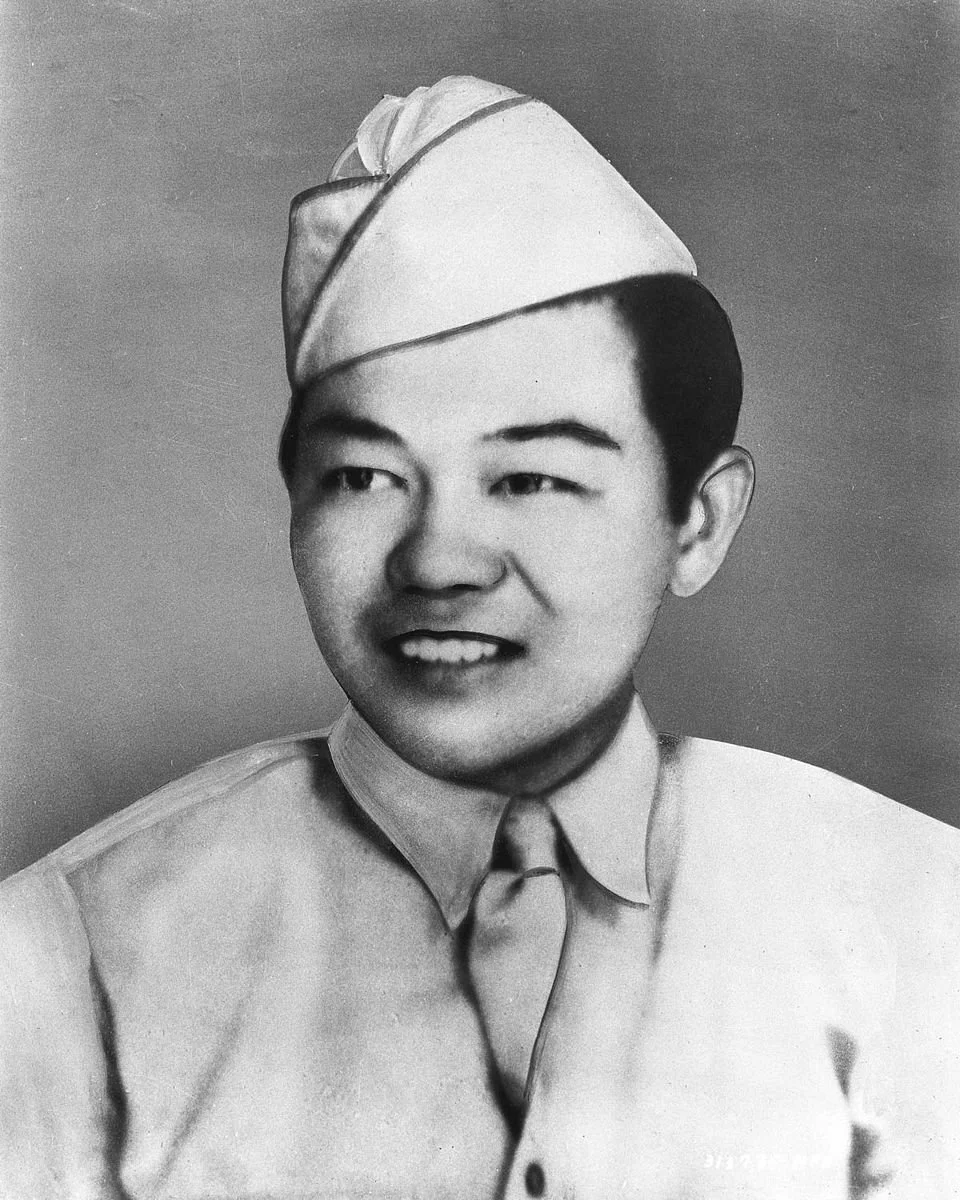
Sadao Munemori.
Sadao Saburo Munemori was born on the 17th of November, 1922, in Los Angeles, California, the son of Japanese immigrant parents. His father had come to the United States as part of the early wave of Japanese migrants seeking economic opportunity on the American West Coast. Like many second-generation Japanese Americans—known as Nisei—Munemori grew up navigating two cultural worlds. He was raised in a household that valued Japanese traditions while simultaneously embracing American life and opportunity. Friends and family remembered him as a cheerful and hardworking young man with a strong sense of responsibility. Before the war he worked in local industry and attended school in Los Angeles, living an ordinary life that was suddenly disrupted by the events of December 1941.
The Japanese attack on Pearl Harbor on the 7th of December, 1941 unleashed a wave of fear, suspicion, and prejudice across the United States. In February 1942 President Franklin D. Roosevelt signed Executive Order 9066, authorizing the forced relocation and incarceration of more than 120,000 Japanese Americans from the West Coast. Entire families were removed from their homes and placed in internment camps scattered across the interior of the country. The policy did not distinguish between immigrants and American-born citizens, and many young Nisei found themselves labelled as potential security risks in the very nation of their birth.
Despite this discrimination, thousands of Japanese American men volunteered for military service to demonstrate their loyalty to the United States. Out of this complicated and often painful moment emerged one of the most decorated units in American military history: the 442nd Regimental Combat Team. Composed almost entirely of Nisei soldiers, the 442nd became renowned for its discipline, courage, and determination. Its motto, "Go for Broke," captured the spirit of soldiers who felt they had everything to prove. The regiment fought primarily in the European theatre and would eventually become the most highly decorated unit of its size and length of service in U.S. military history.
Munemori joined the U.S. Army in 1944 and was assigned to Company A of the 100th Infantry Battalion, a unit closely associated with the 442nd Regimental Combat Team. By the time he arrived in Italy, Allied forces were engaged in a grueling struggle against entrenched German defenses in the mountainous terrain of northern Italy. One of the most formidable defensive systems facing the Allies was the Gothic Line, a series of fortified positions stretching across the Apennine Mountains. Built by German engineers and defended by experienced troops, the Gothic Line was designed to halt the Allied advance toward the Po Valley and the industrial heartland of northern Italy.
In the spring of 1945, Allied forces launched a renewed offensive aimed at finally breaking through these defenses. The fighting around the Italian town of Seravezza was especially fierce, as German troops made full use of the rugged terrain, dense forests, and fortified machine-gun positions. It was here, on the 5th of April, 1945, that Sadao Munemori would perform the acts of bravery that would define his legacy.
During an assault on heavily defended German positions near Seravezza, Munemori's platoon encountered intense fire from multiple machine-gun nests. Early in the engagement the squad leader was wounded, leaving the unit momentarily without direction amid the chaos of battle. Munemori immediately assumed command of the squad, rallying his fellow soldiers and pushing forward despite the danger. Recognizing that the enemy machine-gun positions were preventing the company from advancing, he took it upon himself to eliminate the threat.
Armed with grenades, Munemori advanced under heavy fire toward the enemy strongpoints. With remarkable determination, he destroyed two German machine-gun nests, silencing the guns that had pinned down his comrades. His actions allowed the squad to move forward and continue the assault. Yet the fighting was far from over. As the soldiers regrouped behind a small ridge, an enemy grenade landed among them after bouncing off Munemori's helmet. In that split second, he understood the danger facing the men around him.
Without hesitation, Munemori threw himself onto the grenade. By absorbing the force of the explosion with his own body, he shielded the soldiers around him from the blast. His sacrifice saved their lives and allowed the assault to continue. Inspired by his courage, the company pressed forward and successfully captured the German position, contributing to the broader Allied breakthrough along the Gothic Line.
Munemori was only twenty-two years old when he died. His bravery was quickly recognized by his commanders, and he was posthumously awarded the Medal of Honor. In the citation accompanying the award, the U.S. Army emphasized not only his gallantry in destroying enemy positions but also the ultimate sacrifice he made to protect his fellow soldiers.
Beyond the battlefield, Munemori's heroism carried immense significance for Japanese Americans across the United States. During the war, many Nisei soldiers fought while their families remained confined in internment camps. Their service became a powerful rebuttal to the suspicion and prejudice that had led to their incarceration. Munemori's Medal of Honor, the first awarded to a Japanese American, became a symbol of that loyalty and dedication. His story resonated deeply within both the military and civilian communities. For fellow Nisei soldiers of the 442nd Regimental Combat Team, Munemori embodied the spirit of sacrifice and determination that defined their unit. For many Americans at home, his courage helped challenge stereotypes and highlight the injustice faced by Japanese Americans during the war years.
In the decades that followed the war, Munemori's legacy continued to grow. His name has been commemorated in memorials, military installations, and historical accounts of the 442nd Regimental Combat Team. More importantly, his sacrifice remains a reminder that patriotism and courage often arise from communities that have faced hardship and discrimination.
Today the story of Sadao S. Munemori stands as both a wartime narrative and a broader reflection on American identity. In a moment when the nation struggled with fear and prejudice, a young soldier of Japanese descent gave his life to save his comrades and help defeat tyranny abroad. His actions on a hillside in northern Italy not only opened the path for his company's advance but also helped open a path toward greater recognition of the loyalty and contributions of Japanese Americans in the history of the United States.
In conclusion, the story of Sadao S. Munemori ultimately transcends the battlefield on which his life ended. His actions in the final weeks of the war in Italy represent the highest ideals of military service: courage in the face of overwhelming danger, devotion to comrades, and the willingness to place the lives of others above one's own. At just twenty-two years of age, Munemori displayed a level of leadership and self-sacrifice that has become synonymous with the meaning of the Medal of Honor.
His final act of throwing himself onto a grenade to save the men around him, was not simply a moment of battlefield bravery, but a profound demonstration of human character under the most extreme circumstances imaginable.
Yet Munemori's sacrifice carried a deeper resonance far beyond the immediate tactical success it helped achieve. In 1945, the United States was still grappling with the contradictions of a war fought in the name of freedom while many of its own citizens remained confined in internment camps. The courage displayed by Japanese American soldiers of the 100th Infantry Battalion and the 442nd Regimental Combat Team exposed that contradiction with undeniable clarity. Munemori's Medal of Honor became a powerful symbol of the loyalty and patriotism of Nisei soldiers who fought not only against enemy armies overseas but also against prejudice and suspicion at home.
In the years that followed the war, the story of Munemori and his fellow Nisei soldiers contributed to a gradual shift in national understanding. Their wartime service helped challenge the assumptions that had justified the internment of Japanese Americans and played a role in the broader process of recognition and redress that would come decades later. Through their bravery, the soldiers of the 442nd demonstrated that devotion to democratic ideals could flourish even in the face of injustice. Munemori's heroism thus became part of a larger narrative about the resilience of American citizenship and the capacity of individuals to uphold national ideals even when those ideals were imperfectly applied.
Today, the legacy of Sadao S. Munemori endures not only in military history but also in the broader story of the United States during one of its most turbulent periods. His name stands among those whose sacrifice helped secure victory in the Second World War, yet it also serves as a reminder of the complex social struggles that unfolded on the home front.
The young man who grew up in Los Angeles, the son of immigrant parents, ultimately gave his life in the mountains of northern Italy to save his fellow soldiers and advance the Allied cause. In remembering Munemori, one remembers more than a single act of heroism. His life illustrates the courage of a generation that fought for freedom across the world while seeking recognition and equality within their own nation. His sacrifice is a reminder that patriotism is not defined by ancestry or circumstance but by actions and principles. On that battlefield in April 1945, Sadao S. Munemori demonstrated that truth with extraordinary clarity, leaving behind a legacy that continues to inspire soldiers, historians, and citizens alike.
The site has been offering a wide variety of high-quality, free history content since 2012. If you’d like to say ‘thank you’ and help us with site running costs, please consider donating here.