The largest slave rebellion in US history took place in Louisiana in 1811. Here, Husain H. Roussel looks at the background, including the slave rebellion in Haiti, and what happened in Louisiana – and its aftermath.
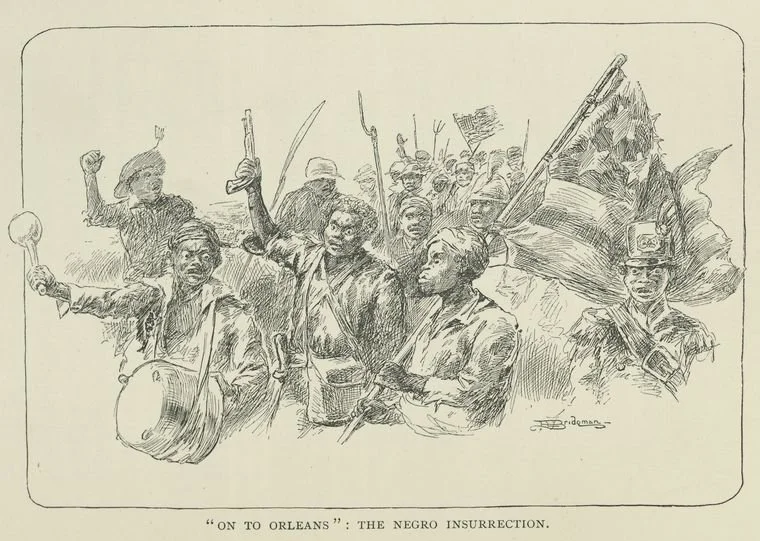
The slave rebellion, known as the 1811 German Coast Uprising. Source: Public domain, source here, image from here.

Introduction

The French planter population, what was left of them, had barely fled Haiti in 1804 during the Haitian Revolution. It left both French plantation owners and French civilians massacred with little mercy and no quarter given by former slaves during a widespread slave rebellion. The French Emperor Napoleon Bonaparte sent the best of his army along with Polish mercenaries to retake Haiti, but with little success and at great cost to the expedition forces, who suffered from disease and a relentless onslaught from the Haitian militia. A militia made up of men, women, the young and old, and free people of color unwilling to suffer the chains of slavery or the institution of slavery once again. The Polish mercenaries sent with the French Expeditionary force decided, after witnessing French cruelty during the conflict, to abandon their French allies and support the slaves in their fight against the French, making them some of the very few Europeans on the island to be both spared and given Haitian citizenship in the new republic.

The defeat of the French expeditionary force, the burning of most plantation homes, the extermination of whites in every town harboring the French citizens, and the religion of voodoo inspiring the slaves on every corner of Haiti with the beating of religious drums to take up arms against their oppressors, would witness the inevitable end for French control. The island of Santo Domingo would become the second republic in the western hemisphere, after the American Revolution, to obtain its independence from a European overlord. The difference was that this new republic would be solely controlled by former slaves and freemen of color who would now decide what course the future of Haiti would take.


News of a Slave Victory

The few French survivors who managed to escape took what they were able to carry or salvage, including Haitian slaves and newly enslaved Africans who were either loyal to their masters or forced to leave the island at gunpoint. French survivors fled to France, other French colonies in the Caribbean like Martinique and Guadeloupe, or Spanish-controlled Cuba. The French colony of Louisiana and the district of New Orleans would become another destination for many of the now recently created French refugees to settle in, and a few years later would become the next stage for the largest slave rebellion in the history of the United States of America. The news of the 1804 Haitian rebellion and their independence from France as a sovereign nation became a nightmare for all plantation owners in every country who held people of color in bondage, be they of African descent or native indigenous people.


Fear of the Southern Plantation Owners

The news of the Haitian victory over the French, not to mention a French professional army, was without a doubt the worst nightmare for every southern plantation owner in the slave-holding states of the newly established United States of America. The armed insurrection of slaves through none other than widespread rebellion was the fear they would awaken to each morning while looking out the window from the second floor of their lavish and genteel plantation homes. What if this happens here? A constant thought while watching their slaves working in brutal conditions on the plantation fields. This was also what every paid overseer who dared not be caught off guard worked hard to prevent by maintaining order as they ruthlessly whipped the slaves into obedience for any transgression, or used other brutal means to control the slaves in the unforgiving atmosphere of the southern plantation.


Slavery in French Controlled Louisiana

The French claimed the area known as Louisiana in 1682, and the territory claimed by the Kingdom of France was named in honor of the French King Louis XIV by the French explorer René-Robert Cavelier, Sieur de la Salle. The institution of slavery was initially introduced on the indigenous people of the colony around 1706. The harsh treatment of slavery, along with a lack of immunity to new diseases, led to the deaths of many indigenous people. The French would nevertheless continue to capture indigenous people for slavery throughout their control of Louisiana by military raids on native villages or enemy prisoners traded to the French who were obtained from various warring Native American tribes in the area. However, as far as the French were concerned, the use of indigenous people did not solve the problem for a wider need in slave labor, thereby witnessing the introduction of African slaves to Louisiana around 1719. While people of African descent were recorded in Louisiana census reports as living in the territory around 1712, the vast number of African slaves began to arrive in 1719.


African slaves in Louisiana

The first slave ships from Africa arrived in Louisiana in 1719, only a year after the founding of New Orleans. Around twenty-three ships or so brought slaves to Louisiana in the French period alone, almost all embarking prior to 1730. The need for labor on the large concessions proved so great that officials found themselves unable to satisfy the colonists’ demand for slaves. Thus, the large number of slaves brought over to supply colonists with free labor soon resulted in enslaved Africans outnumbering free whites. In 1741, four African slaves lived in the colony for every 1.2 free whites. The French period of control in Louisiana, due to commercial and agricultural needs for labor, continued to witness slaves becoming the majority of the population.


Spanish Controlled Louisiana

Spain obtained control of Louisiana and other French Territory as an ally of France in 1762, near the end of the Seven Years War in Europe, known as the French and Indian War in North America. The Kingdom of France agreed to the conditions of transfer under secret terms with Spain for the Louisiana territory in the Treaty of Fontainebleau. The Spanish Empire would control the territory by replacing most French authorities with some resistance by 1767, and establishing new laws and codes to govern the population of free citizens and slaves. For example, the laws on the enslavement of Native Americans had been banned by the Spanish government in Louisiana around 1769, but still allowed for the enslavement of African slaves. Spanish laws on the treatment of African slaves were less harsh than the French; however, there were still attempted slave rebellions by escaped slaves living in the swamps of New Orleans known as Maroons between the period 1780-1784. The years 1791 and 1792 witnessed two more slave uprisings, temporarily putting a halt to the slave trade in Louisiana and leading to questions about solutions for managing existing slaves in the area. The Spanish did allow enslaved people the opportunity under Spanish law to buy their freedom, regardless of whether their master was in disagreement on the purchase of their freedom. Slaves were given the opportunity to petition the court for better treatment if they were mistreated by very abusive masters. Spain would control the Louisiana territory and New Orleans until November 30, 1803, but the little fair treatment the slaves had under the Spanish administration would soon end.


Louisiana Purchase, 1803

Napoleon Bonaparte, witnessing the decisive defeat of his army by the Haitian General Jean-Jacque Dessalines in Santo Domingo at the Battle of Vertieres on November 18, 1803, and ongoing conflicts in Europe during the Napoleonic Wars, decided to disregard further attempts to establish a new French Empire in the western hemisphere. Napoleon had more pressing issues to deal with and made the decision to sell the Louisiana Territory to the United States to raise funds for his wars with Great Britain after Spain returned the territory to French jurisdiction. France formally turned over the colonial capital of New Orleans and the Louisiana Territory on December 20, 1803, at the Cabildo in the Plaza de Armas, currently named Jackson Square, to the United States Government. The United States immediately worked on a reverse of French and Spanish laws for slavery. Former laws allowing for slave self-purchase and rights for slaves to petition wrongs in court were replaced by 1806 with more brutal and harsh systems that identified more with the American plantation system of slavery already in practice in the southern states.


Liberty, Equality, and Fraternity

The spread of liberty, equality, and fraternity among the slaves on the plantations in Louisiana began with refugees, whether they were white, black, or free persons of color, who escaped Santo Domingo for New Orleans and Louisiana after the Haitian Revolution for a fresh start. The local authorities did their best to suppress the knowledge of the rebellion from reaching slaves; however, a fresh influx of slaves brought by the newly arrived French refugees began the spread of information in whispers on the successful rebellion in Haiti against brutal slave masters and the liberation of their island. The new laws against slavery formed by the United States after the Louisiana Purchase made the life of slaves more unbearable, in addition to new slave owners, especially from other southern states, who arrived in Louisiana with more strict views about punishment and justified control of slaves. This meant more radical and brutal treatment of slaves across several new plantations in Louisiana and New Orleans that finally sparked the flames for slaves to lead a rebellion, no matter the cost, in pursuit of their own liberty and equality.


The Slave Rebellion Begins

The leadership of the slave rebellion formulated their plans in secrecy on January 6, 1811. They decided to put their plan in action during the days when work was slow on the plantations and slaves were allowed some brief periods to relax. The primary leader for the rebellion was a mixed-race Creole who worked as a slave driver, a term used to describe a slave overseer of other slaves, named Charles Deslondes. Rasmussen, (2011), Charles and the other slaves on the German Coast were well armed with revolutionary ideology, and some with military training. They were conversant in the doctrines of the French Revolution, and aware of the powerful examples of the Haitian revolutionaries. He sent orders to spread the word up and down the area known as the German Coast to slaves on several plantations to get ready for the insurrection to begin. The slaves began the revolt at the Andry Plantation on January 08, 1811, with a group of 15 slaves attacking Colonel Manuel Andry, a militia leader and owner of Andry Plantation, and killing his son Gilbert Tomassin Andry. Charles Deslondes then gathered more slaves to join the rebellion from nearby plantations. The number of slaves from each plantation that joined numbered somewhere between 10 and 25 percent. The slaves gathered as many weapons as they could in the form of a few firearms, whips, sugarcane cutting knives, axes, hoes, pikes, and any other items that could be used as a weapon. The group also used flags and banners during their march to signify their organized revolt. They began to march upriver to New Orleans about 30 miles away to the sound of their own beating drums. The slaves continued a very organized march after they inflicted heavy damages on each plantation they passed and liberated more slaves during their march to New Orleans. The number of the slave rebellion reached between 200 and 500 slaves by the time the authorities were able to react and respond with a plan to end the rebellion.


Slave Owners and Officials Form a Militia

The slaves continued to search in homes for slave owners or other members of the planter class to kill during their march through the German Coast. A planter named François Trépagnier was killed with an axe by a slave named Kook as the rebellion grew in strength and more liberated slaves joined the insurrection. The rest of the white planter class in the area who were caught off guard quickly retreated across the Mississippi River as the slave army carried out more destruction on larger plantations and set others on fire. Among the planters retreating across the Mississippi River was Colonel Manuel Andry, who had survived his injuries and was heading efforts to mobilize a militia to stop the rebellion. Many of the planters were not in their plantations during the attacks due to having secondary town homes in New Orleans. A few other planters were warned by loyal slaves and managed to hide or find safety. The slaves managed to reach very close to the northwest of New Orleans after a few hours of marching. They were 15 miles away from the city before Colonel Andry had enough men in his quickly formed militia to oppose them.


The End of the Rebellion

On January 9, the Territorial Governor of Louisiana, William Charles Cole Claiborne, ordered a curfew as planters and their families began to panic while fleeing from the insurrection. Rasmussen, (2011), within hours, fleeing refugees in carts and carriages crowded the road into the city forming a traffic jam nine miles long. Governor Claiborne, along with Commodore John Shaw and General Wade Hampton, were able to assemble a small force of United States Army soldiers and United States Navy sailors to assist one part of the militia forces in suppressing the insurrection. The slaves managed on January 10th to avoid the regular military force who thought they were at the Jacque Fortier’s Plantation camping for the night. The slaves had instead already moved upriver about 15 miles close to the Bernard Bernoudy Plantation. The militia leaders, Manuel Andry, Charles Perret, and Judge St. Martin, quickly formed another militia force on the opposite side of the river to attack the slaves before they reached higher ground. The militia’s initial attack killed about 45 slaves, with the rest fleeing for safety in nearby swamps. The slaves fired their weapons, which were only accurate at short range. They fired until they were out of ammunition at the planter class militia. According to Rasmussen, (2011), angered white soldiers poured over the slave lines, shooting and bayoneting the slaves who put up resistance. The combined force of the militia and volunteer regular United States forces consisted of about 700 soldiers. On January 11th, the militia used Native American scouts to pursue the escaped slaves in the rough terrain of the nearby woods and swamps, along with hunting dogs. They captured the leader, Charles Deslondes, defeated more armed slave forces, and continued to suppress the remaining slaves in rebellion.


Trail of Decapitated Slave Heads Sends a Sadistic Message

The leaders of the militia forces identified Charles Deslondes as the ring leader of the slave rebellion. He received no trial and was immediately sentenced to death. He was tortured so other slaves hiding in the woods and swamps could hear his screams. He was shot in both legs, had his hands chopped off, shot with a nonlethal injury to his body so he could suffer more, and then set on fire before he died. The remaining leaders of the rebellion were captured and killed. Their heads were decapitated and given to Manuel Andry to put as warnings to slaves on his plantation. The rest of the slaves in the rebellion were hunted down, with 95 more slaves killed in combat or during capture. The trial consisted of more captured slaves watching their cohorts get 30 lashes from the whip, and then themselves being executed. The youngest rebel, a 13-year-old boy, received 30 lashes but was spared from execution. By the end of January, 100 decapitated heads of slaves executed from the rebel force were displayed on fence poles on the levee from the Place d'Armes in New Orleans, and throughout the River Road to the Plantation District and on the Andry's Plantation. The heads on high poles from the corpses of fallen slaves were a brutal and sadistic message to the consequences for future slaves thinking about rebellion. According to Rasmussen, (2011), in committing these atrocities the planters were using savagery to fight what they understood as savagery. They saw the imagery of heads on pikes as a language that their slaves can understand. Corpses represented a lingua franca in interactions between the colonists and the colonized, the masters and the slaves. The remaining slaves convicted of lesser crimes during the rebellion by the trial were forced back into harsh slave labor, due to the price each slave would cost in reimbursement for planters if they were executed.


Conclusion

How ironic that the Battle of New Orleans, only a few years later on January 18, 1815, witnessed the use of slaves, pirates, and freemen of color by General Andrew Jackson to protect the city from the British expeditionary force during the end of the War of 1812. In essence, this was to protect a nation that still saw them as little more than slaves and useful only in times of extreme desperation. Andrew Jackson made a promise of freedom for about 500 slaves enlisted under a conscription bond to fight the British in New Orleans, with the condition of obtaining their freedom after the war. This unfortunately did not occur when the white residents of New Orleans were alarmed at seeing slaves serving in military roles, armed with weapons and walking around freely in the city. The residents must have had the previous 1811 German Coast Uprising of 500 slaves still fresh on their minds. The fear of future uprisings with a combat-trained group of slaves was too much for the white residents to tolerate. The decision was made to disband them and return them back to their slave masters, thereby forfeiting the promise of freedom. The hope of freedom and rebellion from slavery would not die, and in 46 years, the American Civil War would finally end the brutal institution of slavery in the United States of America once and for all. The American Civil War would once again witness former slaves, freemen of color, and runaway slaves fighting as volunteer soldiers for the Union Army in this war, not only for themselves or loved ones, but for the freedom and equality of all enslaved people across the nation. The Emancipation Proclamation of 1863, issued by President Abraham Lincoln, was the defining moment enslaved people had prayed for that finally declared all enslaved people in the former Southern States of the Confederacy free from bondage.


Now read about the Louisiana Purchase here.


The author recommends this book: Rasmussen, Daniel, (2011). American uprising: The untold story of America's largest slave revolt. New York, NY: Harper.

Thomas Jefferson, the third President of the United States, played a pivotal role in one of the most famous and consequential explorations in American history – the Lewis and Clark Expedition. This expedition, also known as the Corps of Discovery, was commissioned by Jefferson in 1803 with the goal of exploring and mapping the newly acquired Louisiana Territory and finding a practical route to the Pacific Ocean. Led by Meriwether Lewis and William Clark, the expedition lasted from 1804 to 1806 and covered over 8,000 miles of uncharted territory, leaving a lasting impact on American history and geography.

Richard Bluttal explains.

Thomas Jefferson in later life. Portrait by Thomas Sully.

Thomas Jefferson's interest in the exploration of the American West can be traced back to his early years as a young surveyor and land speculator in Virginia. He understood the strategic importance of expanding American territory westward and believed in the potential for economic growth and scientific discovery in the vast wilderness beyond the Mississippi River. Jefferson's vision for the future of the United States included a nation that stretched from coast to coast, with access to valuable resources and trade routes.

In 1803, Jefferson seized the opportunity to expand the nation's territory when he negotiated the Louisiana Purchase with France, effectively doubling the size of the United States overnight. The acquisition of the Louisiana Territory presented Jefferson with a unique opportunity to explore and map the uncharted lands west of the Mississippi River, which inspired him to commission the Lewis and Clark Expedition.

Meriwether Lewis, a trusted confidant of Jefferson, was chosen to lead the expedition due to his background in the military and his experience as Jefferson's personal secretary. Lewis, in turn, selected William Clark, a seasoned frontiersman and skilled mapmaker, to serve as his co-leader. Together, Lewis and Clark assembled a diverse team of soldiers, interpreters, hunters, and tradesmen to accompany them on their journey into the unknown.


Expedition begins

The Lewis and Clark expedition began in St. Louis, Missouri, where the Corps of Discovery set out on their journey up the Missouri River. The expedition consisted of a diverse group of individuals, including soldiers, boatmen, interpreters, and hunters, as well as Sacagawea, a Shoshone woman who served as a guide and interpreter. Throughout their journey, Lewis and Clark meticulously documented their observations and discoveries, keeping detailed journals that provided valuable insights into the natural and cultural landscape of the American West.

One of the most significant achievements of the Lewis and Clark expedition was the successful establishment of diplomatic relations with Native American tribes along their route. The expedition encountered numerous Native American groups, including the Mandan, Hidatsa, and Shoshone, and engaged in trade and diplomacy with them. Sacagawea's presence was particularly valuable in facilitating communication with the Shoshone tribe, as she was able to interpret and negotiate on behalf of the expedition.


Challenges 

Lewis and Clark faced a myriad of challenges during their historic exploration of the uncharted American West. Venturing into unknown territory presented numerous obstacles that tested the resilience and resourcefulness of the Corps of Discovery. Some of the key challenges they encountered included:

1. Geographic obstacles: The American West was characterized by rugged terrain, dense forests, and wide rivers, making travel difficult and slow. The expedition had to navigate through mountain ranges, cross rivers, and traverse dense forests, often without clear paths or landmarks to guide them.

2. Harsh weather conditions: The expedition faced extreme weather conditions, including scorching heat in the summer and freezing temperatures in the winter. The unpredictable weather made travel challenging and required the expedition to adapt to changing conditions.

3. Limited supplies: The expedition had to contend with limited supplies of food, water, and ammunition, which had to be carefully rationed to ensure the survival of the group. Hunting, fishing, and foraging became essential tasks to supplement their provisions.

4. Encounters with Native American tribes: The expedition encountered numerous Native American tribes along their route, some of whom were initially hostile to the explorers. Communication barriers, cultural differences, and misunderstandings often led to tense interactions, requiring diplomacy and negotiation to maintain peace.

5. Sickness and injuries: Members of the expedition fell ill due to exposure, fatigue, and poor sanitation, with some suffering from injuries sustained during their journey. Medical supplies were limited, and the expedition had to rely on the expertise of their physician, Dr. John Potts, to treat illnesses and injuries.

6. Mapping and navigation: The expedition had to create accurate maps of the region as they traveled through uncharted territory. Lewis and Clark relied on rudimentary instruments, such as compasses and sextants, to determine their position and chart their course, a challenging task in the vast and unfamiliar landscape of the American West.


The expedition also made important scientific discoveries, documenting and collecting specimens of previously unknown plants and animals. The expedition's naturalists, including Meriwether Lewis and William Clark themselves, collected samples of flora and fauna, providing valuable information about the biodiversity of the American West. The expedition also mapped the geography of the region, creating detailed maps that would later be used by settlers and explorers.


Expedition ends

The Lewis and Clark expedition persevered and successfully reached the Pacific Ocean in November 1805. The expedition spent the winter at Fort Clatsop in present-day Oregon before beginning their journey back to St. Louis in the spring of 1806. Along the way, they retraced their steps and encountered new challenges, but ultimately returned to St. Louis in September 1806, completing their historic journey.


Enjoy that piece? If so, join us for free by clicking here.

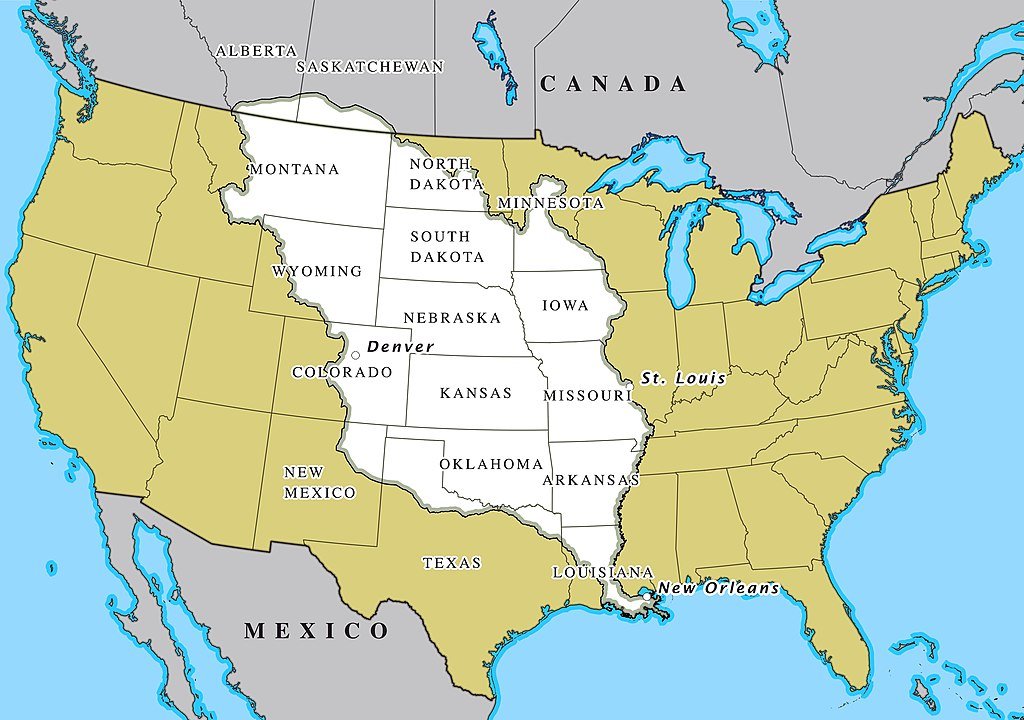
The Louisiana Purchase was the purchase of a vast area of land by the United States from Napoleonic France in 1803. While France only occupied a small amount of the territory, it comprised vast swathes of what is now the American Midwest. William Floyd Junior explains the history of the territory and how the US came to acquire it.

The Louisiana Purchase on a modern map. Source: William Morris, available here.

The first administration of Thomas Jefferson (1801-1805) basically turned on one event, the purchase of the Louisiana Territory and control of the Mississippi River. It was the river, which occupied the President’s mind along with its free navigation, which would lead to the acquisition of the vast territory of approximately 828,000 square miles. Jefferson first began contemplating his vision about the time of the Revolution. In confronting the problem of Virginia’s frontiers, he thought of his idea as “Empire of Liberty.” In his first inaugural address, Jefferson spoke of the United States as, “a chosen country, with room enough for our descendants to the hundredth and thousandth generation.”


European Exploration

The story of the Louisiana Territory began as far back as 1519, when a Spanish sea expedition explored the Gulf of Mexico. This would be the first time that Europeans would site the mouth of the Mississippi River. In 1528, there was another Spanish expedition of some three hundred men travelling inland from the coast of Florida. After a torturous expedition, four emaciated survivors would reach a Spanish settlement in Mexico after wondering through southern Louisiana and much of the southwest for eight years.

In 1541, Hernando de Soto, the newly appointed governor of Cuba, organized an expedition of six hundred soldiers for the purpose of exploring the Louisiana territory. De Soto would die the following year of yellow fever. The force would be reduced by hunger, disease, and Native American attacks to about half of its original size, causing it to sail down the Mississippi to safer surroundings.

The first European settlers to move into the Mississippi Valley were French, who would come in from the north instead of the usual southern route. Samuel de Champlain became governor of new France in 1633 and would encourage his countrymen to expand further into the interior.

When King Louis XIV became ruler of France, he moved to shut the Spanish out of North America and curb British expansion. A great Anglo-French rivalry for control of the Mississippi Valley would ensue.

Robert Cavelier, sieur de La Salle, a young adventurer-explorer would name the territory he was exploring, Louisiana after the king. On April 9, 1682, La Salle planted a column and cross-painted it with “the arms of France.” La Salle would also formulate a plan for the colonization of the lower Mississippi Valley. La Salle would be murdered by two of his own men before he could establish settlement at the mouth of the Mississippi River. In the summer of 1684, France made peace with Spain. The peace and LaSalle’s failure led the French government to abandon immediate plans for attacking New Spain by establishing colonies on the lower Mississippi.

In September 1715, after being in power for seventy-two years, Louis XIV died. He would leave France and the empire bankrupt by the cost of years of war around the world. Several years after Louis died, the rivalry between England and France would gain momentum. France would go on to claim the entire Ohio valley. English leaders looked at Louisiana along with Canada as a wall confining their colonies to the Atlantic seaboard. The French continued exploring trying to find a route to the Pacific Ocean. By 1752, they planted the French flag at the foot of the Rocky Mountains. By the early 1790s, a mass migration had started dividing the country.


1800s

By 1800, France would reign supreme in Europe and Napoleon turned his energies to rebuilding his overseas empire. Louisiana and the Floridas were major elements of his grand design centered on Santo Domingo, the richest of the colonies. In the same year, Spain ceded Louisiana to France on October 1, by the Treaty of San Ildefonso. However, Spain refused to part with the Floridas. Napoleon would now mount an expedition to take possession of Louisiana at the port of New Orleans. Jefferson became aware of the retrocession causing a shadow to fall over his administration.

Napoleon planned to build a commercial bloc in the Caribbean Basin that consisted of the strategically important West Indian Islands Martinique and Saint Dominque which would be linked with Louisiana. The French in the Mississippi Valley would be President Jefferson’s first great diplomatic crisis. He had been a long- time friend of France since his days as ambassador in Paris (1784-1789), which made him familiar with French diplomacy and politics.

Although Jefferson had never been west of the Shenandoah Valley, his attitude about the Mississippi Valley and beyond was long-standing. When news that Spain had ceded its rights to Napoleon and France, Jefferson recognized this as a fundamental shift in the strategic situation. It both threatened American security and would block western expansion.

Jefferson’s instructions to Robert Livingston, the newly appointed American ambassador to France were very direct. The fact that France would now control the Louisiana region was a major disaster that “completely reverses all the political relations with the United States and will fill a new epoch in our political course.” It constituted, he believed, the greatest challenge to American independence and national integrity since the American Revolution. Despite prior friendships with France, the moment the French occupied New Orleans, the two nations became enemies.


Monroe mission

Livingston was more than capable, but he was not a Virginian. Jefferson wanted someone in Paris whom he could trust beyond any doubt. In effect, he would order James Monroe, who was at the time Virginia’s governor, to become a special envoy to France. Monroe’s instructions authorized the purchase of New Orleans and as much of the Mississippi Valley as possible. The boundaries of the French acquisition from Spain were not clear, but Jefferson was offering up to ten million dollars.

During the winter and spring of 1803, while the outcome of the Monroe mission was yet to be decided, Jefferson’s management of the prospective crisis was both smart and shrewd. He would see to it that an old French friend, du Pont de Nemours, was provided information about America’s intentions that could be leaked in the corridors of Versailles. 

When the Spanish official governing New Orleans abruptly closed the port to American commerce, Jefferson came under considerable pressure to launch a military expedition to seize both the city and the Floridas, abandoning diplomacy in favor of war with both Spain and France. In spite of Congress authorizing the president to raise eighty thousand volunteers for a military campaign, Jefferson would reject the idea and continue to pursue a peaceful outcome. Time and demography were on America’s side, justifying Jefferson’s patient approach.

Jefferson was also lucky in that Napoleon’s decision was not to just to sell New Orleans but the entire Mississippi Valley and the modern-day American Midwest. In the early morning of April 11, 1803, Napoleon announced to his Finance Minister Barbe-Marbois that, “I renounce Louisiana.” Within hours the French were enquiring if the United States had interest in the entire territory of Louisiana. Napoleon’s abrupt decision was prompted by the resumption of the Anglo-French war. Ambassador Livingston had complained in the past that negotiating with the French was impossible: “There is no people, no Legislature, no counsellors. One man is everything. He seldom asks advice, and never hears it unasked.” This was typical of Napoleon’s all-or-nothing style. The payment that Napoleon would receive would help subsidize his European army. This worked directly to Jefferson’s advantage. Napoleon’s losing of Santo Domingo was another reason why Napoleon was willing to depart with Louisiana.


Agreement

Livingston knew what to do. “The field open to us is infinitely larger than our instructions contemplated,” Livingston would tell Madison, and the chance “must not be missed.” Livingston and Monroe, now in Paris, negotiated a treaty which gave the United States the Louisiana Territory. The area was so big that the borders were not clearly defined by either party, for about fifteen million dollars or three cents an acre.

The news of the signing of the deal that reached Jefferson on July 3, 1803, was official but not direct. The news came in a letter from the two ministers to Rufus King who got the news shortly before leaving London, brought it with him on his return home, and sent it to Madison from New York. The report of the acquisition of territory west of the Mississippi surprised the American people more than it did Jefferson or Madison. They had learned of the prospect a number of weeks earlier and had approved a larger negotiation in a private letter sent to Paris. Nevertheless, Jefferson was still surprised by the scope of the deal.

The news of the Louisiana Purchase was not accepted favorably by everyone. In Boston George Cabot wrote to his friend Rufus King, the leader of New England Federalism, regarding the recent purchase as being advantageous to France. It is like selling us a ship after she is surrounded by a British fleet,” he said. He would also write that France was, “rid of an encumbrance that wounded her pride,” while obtaining money and regaining the friendship of the United States.

As Jefferson was taking in the news, he wrote to Merriwether Lewis concerning his exploration of the newly acquired territory, “In the journey which you are about to undertake for the discovery of the course and source of the Mississipi (sic) and of the most convenient water communication from thence to the Pacific Ocean . . .” This was a letter full of optimism but also realistic. Jefferson had now done all he could to control the largely uncontrollable nature of Lewis’s dangerous mission.

The official documents concerning the deal would reach Washington on July 14 and were not made public. However, a summary of them would be given out and the financial terms made public. The terms included a payment of $11,250,000 to France in six per cent stock, redeemable for fifteen years, and the assumption by the United States of the claims of its citizens against France in the amount of $3,750,000. For a period of twelve years French and Spanish ships and merchandise were to pay no higher duties than American in the parts of the ceded territory. Finally, the inhabitants of Louisiana were to be incorporated with the United States as soon as possible, consistent with the Constitution, and were to be secure in their personal rights in the meantime. The financing was arranged with the Anglo-Dutch Merchant Banks, Barings Brothers and Hopes, which in effect bought Louisiana from France and sold it to the United States, making nearly $3,000,000 from the deal.


Constitutional matters

On January 13, 1803, Jefferson’s Secretary of the Treasury, Albert Gallatin, would write to the President explaining his constitutional position regarding the purchase of the Louisiana Territory. He would sum up his opinion by stating the following:

1st. That the United States as a nation has an inherent right to acquire territory.

2d. That whenever that acquisition is by treaty, the same constituted authorities in whom the treaty-making power is vested have a constitutional right to sanction the acquisition.

3d. That whenever the territory has been acquired, Congress have the power either of admitting into the Union as a new state, or of annexing to a State with the consent of that State, or making regulations for the government of such territory.

Later in January, Jefferson would reply to Gallatin saying, “You are right in my opinion, to Mr. L’s proposition: there is no constitutional difficulty as to the acquisition of territory, and whether where acquired it may be taken into the Union by the Constitution as it now stands, will become a question of expediency. It must be assumed at this point that the administration recognized as constitutional the acquisition of territory by treaty. The point of what should be done with it would not be answered at this point in time. For Jefferson to have suggested any difficulties to Congress at this stage would have been to invite trouble. The Senate would finally approve the treaty by a vote of 24 to 7, sealing the deal.


What do you think of the Louisiana Purchase? Let us know below.

Now read William’s article on three great early influences on Thomas Jefferson here.

Sources

1.     Merrill D. Peterson, Thomas Jefferson & the new nation (New York: Oxford University Press, 1970), 745, 746, 747, 748.

2.     Alexander De Conde, This Affair of Louisiana (New York: Charles Scribner’s Sons, 1976),  4, 5, 6, 7, 13, 15, 20. 

3.     www.loc.gov/collections/louisiana.

4.     Joseph J. Ellis, American Sphinx: The Character of Thomas Jefferson (New York: Alfred A. Knopf, 1997), 243, 244, 245, 246.

5.     Jon Meacham, Thomas Jefferson: The Art of Power (New York: Random House, 2012), 385, 387.

6.     Dumas Malone, Jefferson The President: First Term 1801-1805 (Boston: Little Brown and Company, 1970), 296, 297, 302, 312, 313.

7.     Letter from Thomas Jefferson to Merriwether Lewis, July 4, 1803, National Archives.

8.     Andrew Roberts, Napoleon: A Life (New York: Penguin Group, 2014), 324. 

This week’s image of the week takes us to the southern US - New Orleans to be exact.

20131003 Louisiana_Purchase_New_Orleans_Thure_de_Thulstrup.jpg

This patriotic painting shows the French tricolore coming down and the American stars and stripes coming up, with a beautiful sky in the background… But what is it about?

The "Hoisting of American Colors over Louisiana" is a painting depicting the raising of the US flag in New Orleans following the Louisiana Purchase, in the main plaza (now Jackson Square). The ceremony took place on March 10, 1804. It was painted by Thure de Thulstrup in 1904 on a commission to commemorate the centennial of the event. The painting has been praised for the research and historical accuracy which went into the period depiction. It is on display in the Cabildo Museum.

The image is in the public domain and available here.


Is there a history image that you love? Or a history image from your local area that you would like to share with us? If so, let us know! Click here.

George Levrier-Jones

Posted
AuthorHistory Is Now Magazine