In the winter of 1540, the court of Henry VIII once again turned toward marriage, though this time less from passion than from political necessity. England stood in a precarious position within Europe. The break from Rome had transformed the kingdom into a religious outlier, while Catholic powers such as France and the Holy Roman Empire watched England with increasing hostility. The king who had once imagined himself a great Catholic prince now faced diplomatic isolation, and the search for a new queen became inseparable from the survival of the Tudor state itself. Into this atmosphere stepped Anne of Cleves, a German noblewoman whose marriage to Henry represented not romance, but strategy. Her story would become one of the strangest and most revealing episodes of the Tudor age, exposing the fragile intersection of politics, image, gender, and royal power.

Terry Bailey explains.

Read part 1 on King Henry VIII here, part 2 on Catherine of Aragon here, part 3 on Anne Boleyn here, and part 4 on Jane Seymour here.

Anne of Cleves by Hans Holbein the Younger. Source: Public domain, available here.

The marriage negotiations were orchestrated largely by Thomas Cromwell, Henry's chief minister and the architect of many of the English Reformation's most dramatic transformations. Cromwell understood that England required powerful Protestant allies if it hoped to resist the influence of Catholic Europe. The Duchy of Cleves, situated within the politically fractured territories of the Holy Roman Empire, offered precisely such an opportunity. Anne's brother, the Duke of Cleves, belonged to a network of German Protestant princes whose cooperation might provide England with diplomatic security and strengthen the Protestant cause across northern Europe. For Cromwell, the proposed marriage was not merely advantageous; it was essential to the future direction of the English state and religion.

By this stage in Henry's reign, marriage had become an instrument of government. His unions no longer revolved primarily around affection or dynastic fertility alone, but around the broader political needs of the kingdom. The evolution of Henry's character could be seen clearly in this transition. The athletic and charismatic prince who had once dazzled the courts of Europe had become increasingly suspicious, volatile, and physically diminished. Years of political conflict, personal disappointment, and worsening health had hardened him. Yet despite this transformation, Henry still retained a deeply personal expectation from marriage: he wished not only for political advantage but also admiration, obedience, and attraction. The tragedy of Anne of Cleves lay partly in the impossibility of satisfying both the political and emotional demands of such a king.

Before meeting Anne, Henry relied upon the work of Hans Holbein the Younger, the celebrated court painter whose portraits had become essential tools of diplomacy. Holbein was dispatched to Cleves to paint Anne and her sister Amalia, allowing Henry to inspect his prospective bride from afar. The resulting portrait of Anne was elegant, dignified, and carefully composed, presenting her as calm, noble, and attractive. In an age before photography, portraits functioned as instruments of international negotiation, shaping political decisions and royal expectations alike. Holbein's image became one of the most famous paintings in Tudor history because it sat at the center of a disastrous misunderstanding that would alter the fortunes of everyone involved.

When Anne arrived in England in late 1539, Henry was reportedly disappointed upon meeting her in person. Whether his reaction was genuinely one of shock or later exaggerated to justify the collapse of the marriage remains debated by historians. Contemporary accounts were shaped heavily by politics and by Henry's own desire to distance himself from responsibility. Anne, raised in the comparatively modest court culture of Cleves, lacked the polished education and flirtatious sophistication expected within the English court. She spoke little English, possessed limited familiarity with music and courtly games, and entered a royal environment defined by intrigue and performance. Henry, increasingly self-conscious about his age and physical decline, responded with resentment rather than patience.

Their marriage was celebrated in January 1540, yet from the outset it was marked by discomfort and emotional distance. Henry quickly expressed his desire to escape the union, claiming he found Anne unattractive and insisting the marriage had never been consummated. The personal dissatisfaction of the king soon became a matter of state importance. In Tudor England, the body of the monarch could never be separated from politics. A failed marriage threatened diplomatic alliances, succession planning, and the stability of government itself. The annulment proceedings therefore unfolded not merely as a domestic dispute but as an international political crisis.

Anne's response to the situation revealed a remarkable degree of intelligence and pragmatism. Unlike Catherine of Aragon or Anne Boleyn, she chose neither resistance nor confrontation. Instead, she cooperated fully with Henry's wishes. She accepted the annulment on the grounds of non-consummation and acknowledged the legality of the king's previous pre-contract negotiations. In doing so, Anne avoided the catastrophic fates that had consumed several of her predecessors. Her compliance reflected not weakness, but a keen awareness of the dangerous political realities surrounding the Tudor court. Women in Henry's world possessed little formal power, yet survival often depended upon understanding precisely how and when to yield.

The collapse of the marriage destroyed Thomas Cromwell. Henry, humiliated by what he perceived as a failed arrangement, turned his fury against the minister who had engineered the alliance. Cromwell's enemies at court, especially conservative nobles opposed to Protestant reforms, seized their opportunity. Accused of treason and heresy, Cromwell was arrested, condemned, and executed in July 1540. His downfall demonstrated the terrifying volatility of power under Henry VIII. No service, however loyal or transformative, guaranteed safety. Cromwell had helped reshape England politically, administratively, and religiously, yet in the end, he became another casualty of the king's increasingly unpredictable authority.

Religion remained deeply entwined throughout these events. The Cleves marriage had emerged from Protestant diplomacy, while Cromwell's fall strengthened conservative religious factions at court. Yet Henry himself continued to occupy an ambiguous religious position. He had rejected papal supremacy, dissolved the monasteries, and established royal control over the Church of England, but he retained many traditional Catholic beliefs. This ambiguity defined much of the English Reformation during his reign. Religion functioned simultaneously as a matter of conviction, political survival, and royal control. The annulment of Anne's marriage therefore symbolized more than personal failure; it reflected the unstable and often contradictory religious identity of Tudor England itself.

Remarkably, Anne of Cleves adapted successfully to her altered position. Granted a generous settlement by Henry, she received estates, income, and the honorary title of the king's "beloved sister." She lived comfortably in England for the remainder of her life, outliving Henry himself as well as several of his subsequent wives. Freed from the pressures of queenship, she occupied a unique place within the Tudor court: respected, financially secure, and politically safe. In many ways, Anne achieved what none of Henry's other wives fully managed, survival combined with stability.

Her later years also reveal important truths about gender and power within Tudor society. Queens were expected to embody obedience, fertility, grace, and political usefulness simultaneously, yet their positions remained perilously dependent upon the king's favor. Anne's success came not through influence or manipulation, but through adaptability. She recognized the realities of royal authority and navigated them with caution and intelligence. In doing so, she transformed herself from a discarded foreign bride into one of the most secure women in England.

The legacy of Anne of Cleves extends beyond the brief duration of her marriage. Her story illustrates the central role of diplomacy in royal unions and the immense power of image within Renaissance politics. Holbein's portrait became symbolic of the dangers inherent in political expectations shaped by art and propaganda, while the marriage itself demonstrated how rapidly international alliances could rise and collapse around the personal desires of a monarch. At the same time, Anne's fate contrasted sharply with the violence surrounding so many Tudor queens, reminding historians that survival could itself become a form of quiet triumph.

Within the broader narrative of Henry VIII's reign, Anne's chapter marks another stage in the king's transformation. The energetic monarch who once pursued love with reckless passion had become a ruler increasingly governed by suspicion, vanity, and authoritarian power. His marriages no longer promised renewal or romantic ambition; instead, they exposed the instability of a court shaped by fear and political calculation. Yet these unions also permanently altered the English monarchy. Through Henry's marital struggles emerged a redefined relationship between crown, church, and state that would shape England for generations.

Anne of Cleves therefore occupies a unique place in Tudor history. She arrived in England as a diplomatic solution, became the victim of royal disappointment, survived the destruction of powerful men around her, and ultimately secured a peaceful existence within the very court that had once threatened to consume her. Her life reveals that in the dangerous world of Henry VIII, endurance could prove more powerful than ambition, and adaptability more enduring than passion.

In the final assessment of Anne of Cleves and her brief marriage to Henry VIII, what emerges most clearly is not failure, but revelation. Her story exposed the fragile foundations upon which Tudor power so often rested: dynastic ambition, diplomatic necessity, religious uncertainty, and the dangerous unpredictability of royal favor. Though her queenship lasted only a matter of months, the consequences of the marriage reverberated far beyond the annulment itself, reshaping political alliances, destroying one of the most powerful ministers in English history, and further revealing the increasingly unstable nature of Henry's court during the later years of his reign.

Anne's experience also illuminates the wider realities faced by women within Tudor England. Queens were expected to fulfil impossible expectations, serving simultaneously as political symbols, dynastic instruments, obedient wives, and embodiments of royal magnificence. Yet despite occupying the highest female position in the kingdom, their security remained entirely dependent upon the king's satisfaction. Anne of Cleves survived because she understood these realities with unusual clarity. Rather than allowing pride or resistance to destroy her, she adapted to circumstances that had already consumed others. In doing so, she demonstrated a quiet but formidable resilience that distinguished her from nearly every other woman connected to Henry VIII.

The political dimensions of her marriage further reflected the transformation of England itself during the Reformation. The alliance with Cleves had been conceived as part of a broader Protestant strategy designed to protect England from Catholic hostility abroad. Its collapse revealed how deeply personal desire and political calculation had become intertwined within the Tudor monarchy. Henry's private dissatisfaction carried international consequences, while the downfall of Thomas Cromwell illustrated how swiftly religious and political fortunes could shift within an atmosphere dominated by fear, factionalism, and royal absolutism. Religion during Henry's reign remained neither entirely Protestant nor wholly Catholic, but a volatile mixture shaped largely by the king's own changing priorities and insecurities.

Anne's legacy also speaks to the growing importance of image and perception in Renaissance politics. The famous portrait by Hans Holbein the Younger became far more than a work of art; it symbolized the immense power of representation in an age where diplomacy often depended upon carefully constructed appearances. The controversy surrounding the portrait reflected the dangers of political expectation, but it also revealed the increasingly theatrical nature of the monarchy itself. Tudor power relied not only upon armies and laws, but upon spectacle, symbolism, and the cultivation of royal authority through image and performance.

Within the broader narrative of Henry VIII's six marriages, Anne of Cleves occupies a uniquely paradoxical place. She was neither crowned in triumph like Catherine of Aragon, nor destroyed like Anne Boleyn or Catherine Howard. Instead, she quietly endured. In many respects, hers became the most successful outcome possible within the perilous environment of Henry's court. By surviving, maintaining dignity, and securing independence, Anne achieved a form of victory rarely available to Tudor queens.

Ultimately, the story of Anne of Cleves serves as both a personal and political mirror of Henry VIII's later reign. It reveals a king who had evolved from the celebrated Renaissance prince of his youth into a ruler increasingly isolated by power, suspicion, and vanity. His marriages had become reflections of England's own transformation, where religion, politics, and personal authority collided with consequences that would shape the monarchy for generations. Yet amid this turbulence, Anne's calm pragmatism and remarkable survival ensured that her legacy would endure not as a tragic victim of Tudor politics, but as one of its most perceptive and resilient survivors.


Now, read part 6 about Catherine Howard here.

Posted
AuthorHistory Is Now Magazine
CategoriesBlog Post

In the long and turbulent history of the Tudor dynasty, few individuals have left a mark as profound and enduring as Anne Boleyn. Her life unfolded against the glittering but dangerous backdrop of the court of Henry VIII, a world governed by ambition, ceremony, dynastic anxiety, and political calculation. To her enemies, she was a scheming temptress who destroyed England's unity for personal advancement. To her supporters, she was intelligent, cultured, reform-minded, and tragically misunderstood. Historians continue to debate her motives and character, yet there is little disagreement about her impact. Anne Boleyn became the catalyst for one of the most significant transformations in English history: the break with Rome, the birth of the English Reformation, and the reshaping of the monarchy itself.

Terry Bailey explains.

Read part 1 on King Henry VIII here, and part 2 on Catherine of Aragon here.

King Henry and Anne Boleyn Deer shooting in Windsor Forest by William Powell Frith , c1903.

When Anne emerged at court in the 1520s, England was still officially Catholic, loyal to the authority of the Pope, and outwardly stable beneath the rule of Henry VIII. The king was admired throughout Europe as the embodiment of the Renaissance prince. Athletic, educated, musically talented, and politically ambitious, Henry projected the image of a powerful monarch whose dynasty seemed secure. Yet beneath the splendor of the Tudor court lay a dangerous uncertainty. Henry's marriage to Catherine of Aragon had produced no surviving male heir. In a kingdom still haunted by the destructive memory of the Wars of the Roses, the absence of a prince threatened political instability and potential civil conflict. The survival of the Tudor line depended upon succession, and succession depended upon sons.

In Tudor England, marriage was never simply personal. Royal marriages were instruments of diplomacy, political alliance, and dynastic preservation. Queens were expected to embody virtue, loyalty, and obedience while fulfilling their most critical function: producing heirs. The pressure upon Catherine of Aragon became immense as pregnancies ended in tragedy and infant sons died young. Henry, increasingly fearful that God had cursed his marriage, began searching for both a solution and a justification. Into this atmosphere stepped Anne Boleyn.

Anne was born around 1501 into the ambitious Boleyn family, daughter of Thomas Boleyn and Elizabeth Howard. Although not of royal blood, the Boleyns were politically connected and eager to rise higher within Tudor society. Anne's upbringing differed significantly from that of many English noblewomen. Sent abroad at a young age, she spent years in the sophisticated courts of the Netherlands and France, where she received an education shaped by Renaissance culture. She learned French fluently, studied music and literature, developed refined courtly manners, and absorbed continental ideas about politics, religion, and humanism. These experiences gave Anne a cosmopolitan confidence that distinguished her sharply from many women at the English court.

The French court especially transformed her. Under the influence of figures such as Margaret of Austria and later Claude of France, Anne encountered a world where elegance, intellect, and political awareness were deeply valued. Unlike the passive image often expected of noblewomen in England, Anne developed a reputation for wit, conversation, and sharp intelligence. She was not considered a conventional beauty by the standards of the age, but contemporaries repeatedly described her charisma, dark eyes, expressive personality, and magnetic presence. She possessed something perhaps more dangerous than beauty alone: influence.

Upon returning to England, Anne entered the household of Catherine of Aragon. At court she quickly attracted attention. Men admired her sophistication and lively personality, while women copied her fashions and mannerisms. Among those captivated by Anne was Henry VIII himself. Initially, however, Anne refused to become the king's mistress. This decision altered the course of English history.

Henry had already pursued relationships outside marriage, including an affair with Anne's sister, Mary Boleyn. Yet Anne proved different. Whether motivated by personal conviction, ambition, or political calculation, she insisted that only marriage would secure her surrender to the king's desires. Henry's attraction deepened into obsession. He wrote Anne passionate letters expressing longing, frustration, and devotion, revealing a monarch increasingly consumed by personal desire and dynastic desperation. What began as a courtly romance soon evolved into a political crisis that would engulf England itself.

Henry's determination to marry Anne required the annulment of his marriage to Catherine of Aragon. The king argued that his union with Catherine violated biblical law because she had previously been married to his late brother, Arthur Tudor. Henry cited passages from Leviticus suggesting that such a marriage was cursed with childlessness. Yet Catherine fiercely denied that her first marriage had ever been consummated, and she refused to accept the annulment quietly. The dispute dragged on for years.

The situation became entangled in European politics. Catherine's nephew was the immensely powerful Holy Roman Emperor Charles V, whose armies had recently dominated much of Europe. The Pope, effectively constrained by imperial influence, hesitated to grant Henry's request. What Henry had hoped would be a relatively straightforward legal matter became a humiliating diplomatic deadlock. The king grew increasingly frustrated with the papacy and with the limitations that Rome placed upon his authority.

During these years Anne Boleyn's influence expanded dramatically. She was no passive observer of events. Anne surrounded herself with scholars, reformers, and intellectuals interested in religious renewal and critical of papal authority. She read works associated with emerging Protestant thought and encouraged the circulation of reformist texts at court. Among the ideas gaining ground was the belief that monarchs should exercise authority over their own national churches without interference from Rome.

Anne's precise theological beliefs remain debated by historians, but there is strong evidence that she sympathized with reformist ideas. She supported vernacular translations of the Bible and patronized scholars who promoted scriptural study. In this sense, Anne became intertwined with the wider religious upheaval spreading across Europe in the wake of Martin Luther and the Protestant Reformation. Yet in England religion and politics became inseparable. Henry's marital crisis was not merely spiritual; it was dynastic and constitutional. Anne's rise helped accelerate a transformation that would permanently alter England's religious identity.

The king increasingly embraced the argument that his authority derived directly from God rather than through papal mediation. Assisted by advisers such as Thomas Cromwell and Thomas Cranmer, Henry began dismantling papal authority in England. Parliamentary acts gradually severed ties with Rome, culminating in the declaration that the king was the Supreme Head of the Church of England. The English Reformation had begun.

This transformation represented one of the greatest turning points in English history. For centuries the Catholic Church had dominated religious, social, and political life. Monasteries controlled immense wealth and land, while Rome exercised spiritual authority across Christendom. Henry's break with Rome changed this balance forever. The Crown gained unprecedented control over religion, church property, and ecclesiastical appointments. Religion became both cause and consequence of Henry's marriage to Anne Boleyn.

Anne and Henry married secretly in late 1532, likely because Anne was already pregnant. In January 1533 the marriage became public, and later that year Thomas Cranmer formally declared Henry's marriage to Catherine invalid. Anne was crowned queen in a magnificent coronation ceremony at Westminster Abbey. The event was designed to project legitimacy, splendor, and divine approval. Lavish pageantry filled the streets of London as Anne processed toward her coronation surrounded by nobles, banners, musicians, and elaborate symbolism celebrating the future Tudor heir.

Yet beneath the grandeur lay deep division. Many ordinary people still regarded Catherine of Aragon as the rightful queen. Anne was widely blamed for England's religious upheaval and for the king's treatment of Catherine. Hostility toward the new queen simmered constantly. Tudor politics was intensely personal, and public opinion mattered more than rulers sometimes realized. Anne's position remained insecure because her authority depended entirely upon Henry's favor and her ability to produce a male heir.

In September 1533 Anne gave birth at the Palace of Placentia not to a son, but to a daughter: Elizabeth I. Henry attempted to conceal his disappointment, and elaborate plans for a prince's celebration were hastily altered for the arrival of a princess. Yet the birth of Elizabeth would ultimately prove one of the most consequential events in English history. The child who disappointed her father would later become one of England's greatest monarchs.

At the time, however, Anne's failure to produce a son placed her in a dangerously familiar position. Several pregnancies ended in miscarriage or stillbirth. The pressure upon queens in Tudor England was relentless. Their political value depended largely upon fertility and the production of male heirs. As Anne struggled with repeated losses, Henry's affection began to fade. Meanwhile, the king was growing increasingly attracted to Jane Seymour, a quiet and traditionally submissive court lady who contrasted sharply with Anne's outspoken personality.

Anne's sharp intelligence and political engagement, once attractive to Henry, now increasingly irritated him. She involved herself in matters of religion and patronage, argued fiercely, and challenged powerful men at court. Her enemies multiplied rapidly. Conservative nobles hated her reformist sympathies, while others feared the growing influence of the Boleyn faction. Even Thomas Cromwell, once her ally in advancing the Reformation, became her opponent amid disagreements over foreign policy and the distribution of monastic wealth seized by the Crown.

The atmosphere at court in 1536 became increasingly sinister. Following another miscarriage, reportedly of a male fetus, Henry's patience appears to have collapsed. Anne's enemies moved swiftly. In May 1536 she was arrested and charged with adultery, incest, and treason. The accusations claimed that Anne had conducted affairs with several men, including musicians, courtiers, and even her own brother, George Boleyn.

Most modern historians regard the charges as politically motivated fabrications or gross distortions. The evidence presented at trial was weak, contradictory, and in some cases impossible chronologically. Yet Tudor justice rarely protected those who had fallen from royal favor. Anne was imprisoned within the Tower of London, the same fortress through which she had once passed triumphantly before her coronation.

Her trial was a carefully orchestrated spectacle. Surrounded by hostile nobles and abandoned by many former supporters, Anne defended herself with intelligence and composure. Nevertheless, conviction was inevitable. She was condemned to death alongside the accused men, including her brother George. Henry VIII, the man who had once shattered England's religious unity to marry her, now sanctioned her destruction.

On the 19th May of 1536, Anne Boleyn was executed inside the Tower of London by a specially summoned French swordsman, considered more skillful and merciful than an English axeman. Contemporary witnesses described her final moments as calm and dignified. She proclaimed loyalty to the king even as she prepared for death. With a single stroke, her extraordinary rise ended.

Only eleven days later Henry became engaged to Jane Seymour.

Yet Anne Boleyn's influence did not die with her. In many respects, her true legacy was only beginning. Through her daughter Elizabeth, Anne became the maternal force behind one of the most celebrated reigns in English history. Under Elizabeth I, England emerged as a major Protestant power. The defeat of the Spanish Armada, the flourishing of literature and theatre, overseas exploration, and the strengthening of national identity all unfolded during Elizabeth's reign. Ironically, the daughter Henry once viewed as a disappointment secured the Tudor dynasty's greatest glory.

Anne's wider historical impact extended far beyond motherhood. Her relationship with Henry accelerated the English Reformation and permanently weakened papal authority in England. The redistribution of monastic lands transformed the economy and strengthened the Crown. Religious divisions unleashed during this period would shape English politics for generations, contributing to future conflicts, persecutions, and ideological struggles. England's evolving Protestant identity became central to its national development.

Anne also remains one of the clearest examples of the dangerous relationship between gender and power in Tudor England. She rose to extraordinary prominence in a political culture dominated by men, but her position depended almost entirely upon royal favor and reproductive success. Her downfall demonstrated how quickly women could become scapegoats within systems designed to preserve male authority. Anne's intelligence and political engagement made her influential, but also vulnerable. She challenged expectations of female silence and obedience in ways that fascinated supporters and alarmed enemies alike.

Within the broader narrative of Henry VIII's reign, Anne Boleyn marks a decisive turning point in the king's evolution. The charming and idealistic Renaissance prince of the early Tudor court increasingly transformed into a ruler capable of extraordinary ruthlessness. Through his pursuit of Anne, Henry broke with Rome, centralized royal power, and redefined the English monarchy. Through his destruction of Anne, he revealed the darker consequences of absolute authority.

Anne Boleyn's life therefore transcends romance, scandal, and tragedy. She stood at the center of a revolution that reshaped England politically, religiously, and culturally. Her rise revealed the intoxicating possibilities of influence at the Tudor court, while her fall exposed the terrifying fragility of power. Queen, reformist symbol, political casualty, and mother of Elizabeth I, Anne Boleyn remains one of the most consequential women in English history — a catalyst whose legacy transformed a kingdom and altered the future of the English-speaking world forever.

Anne Boleyn's story endures because it represents far more than the dramatic rise and fall of a queen at the Tudor court. Her life became inseparably bound to one of the greatest transformations in English history, a transformation that reshaped religion, monarchy, politics, and national identity for centuries to come. Few individuals have stood so directly at the intersection of personal ambition and historical revolution. What began as Henry VIII's desire for a new marriage ultimately evolved into a constitutional and religious upheaval that permanently altered the course of England and, by extension, the future of the English-speaking world.

Anne herself remains a figure of remarkable complexity. She was neither the purely innocent martyr imagined by some later Protestant writers nor the manipulative seductress portrayed by her Catholic enemies. Instead, she emerged from the volatile environment of Renaissance Europe as an intelligent, educated, politically aware woman whose ambition and influence challenged the traditional expectations imposed upon women in Tudor society. Her charisma, confidence, and reformist sympathies helped elevate her to unprecedented prominence, yet those same qualities also contributed to the hostility and suspicion that surrounded her. In a court governed by factional rivalry and royal favor, Anne's position was always precarious, dependent not only upon Henry's affection but upon her ability to fulfil the dynastic demands placed upon queens.

The tragedy of Anne Boleyn lies partly in the brutal irony of her fate. Henry VIII shattered England's centuries-old relationship with Rome to marry her, only to later destroy her when she failed to provide the son he desired. Her execution demonstrated the terrifying extent of Tudor royal power and revealed how quickly political favor could turn into deadly condemnation. Yet although her enemies succeeded in removing her physically, they could not erase the consequences of her existence. The religious changes accelerated during her rise continued long after her death, and her daughter Elizabeth would eventually vindicate Anne's legacy in ways that neither supporters nor enemies could have fully imagined.

Under Elizabeth I, England experienced a cultural and political flowering that secured the Tudor dynasty's place in history. The Protestant settlement, the defeat of the Spanish Armada, the expansion of English influence overseas, and the flourishing of literature and theatre all emerged from the world that developed in part through Anne Boleyn's rise and Henry's break with Rome. The daughter whose birth disappointed Henry VIII ultimately became the monarch who brought stability, prestige, and enduring strength to England. In this sense, Anne's greatest contribution to history may not have been her queenship, but the legacy carried forward through Elizabeth's reign.

Anne Boleyn also remains historically significant because her life continues to illuminate broader themes of power, gender, religion, and political transformation. Her experiences reveal the dangerous realities faced by women who exercised influence in male-dominated systems of authority. They expose the fragile nature of political survival in autocratic courts where reputation, fertility, and royal favor determined life or death. At the same time, Anne's story reflects the wider turbulence of sixteenth-century Europe, an era when religious reform, emerging national monarchies, and Renaissance ideas were reshaping the foundations of society itself.

More than four centuries after her death within the walls of the Tower of London, Anne Boleyn continues to fascinate because she cannot be reduced to a single interpretation. She was ambitious yet vulnerable, influential yet politically exposed, celebrated yet deeply hated. Her life combined romance, religion, tragedy, and revolution in a manner few historical figures can equal. Whether viewed as a reformist heroine, political victim, or catalyst of dynastic crisis, Anne Boleyn occupies a unique place in history. Her rise transformed a kingdom, her fall exposed the cruelty of Tudor power, and her legacy endured through the daughter who would lead England into one of its most defining ages.


Noe read part 4 on Jane Seymour here.

Posted
AuthorHistory Is Now Magazine
CategoriesBlog Post

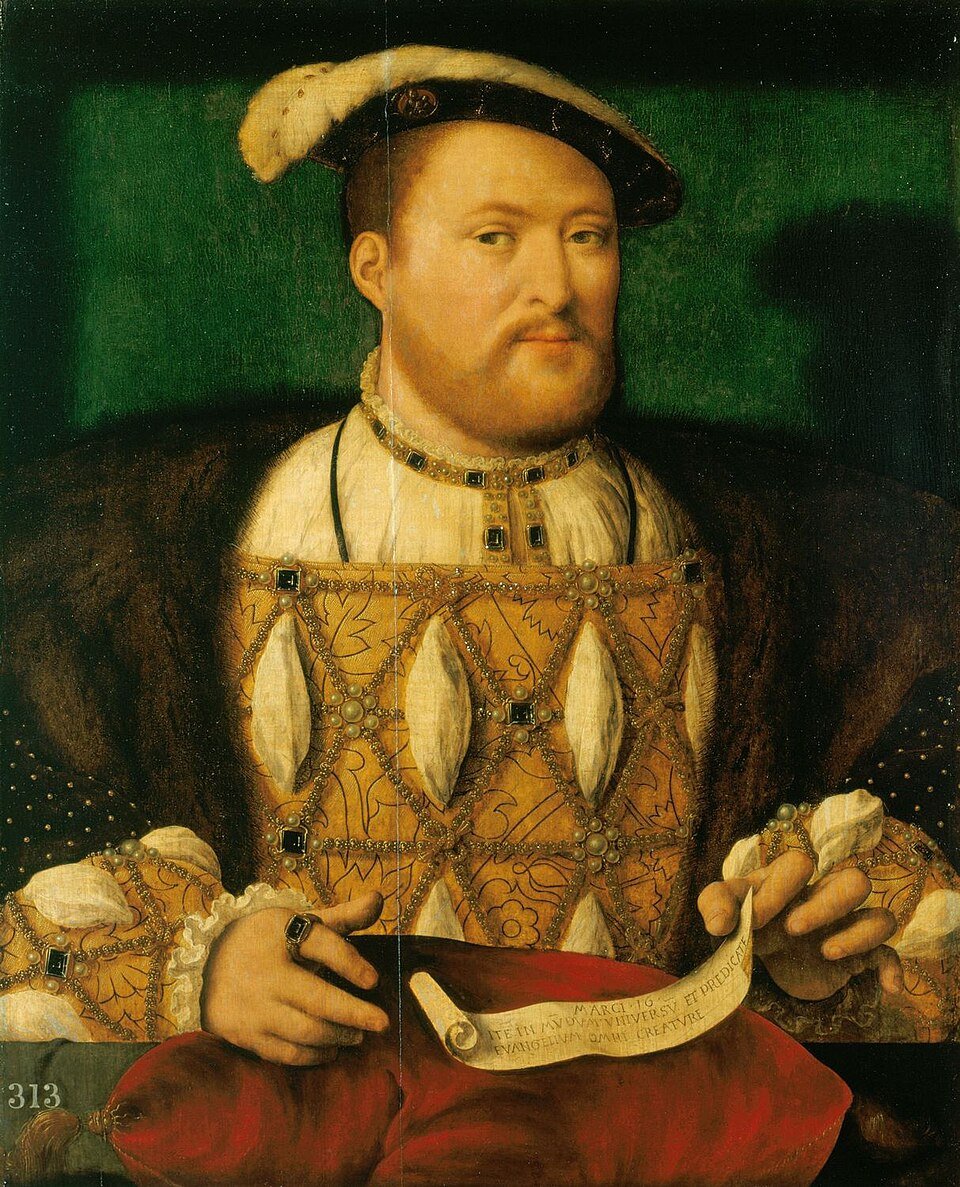
The story of King Henry VIII is often told through the dramatic rise and fall of his six wives, yet to understand those stories fully one must begin with the king himself—a ruler whose personal ambitions, insecurities, and convictions reshaped England politically, socially, and religiously. He was not born to be king, nor initially raised for the role, but circumstance and dynastic fragility propelled him onto the throne and into history as one of the most consequential monarchs in European history.

Terry Bailey explains.

King Henry VIII by Joos van Cleve .

Henry was born in 1491, the second son of Henry VII, the founder of the Tudor Dynasty. His father's reign had brought an end to the Wars of the Roses, a prolonged period of dynastic conflict that had devastated the English nobility and left the monarchy precariously balanced. As a younger son, Henry was not initially burdened with the expectations of kingship. Instead, he received the education of a Renaissance prince, immersed in theology, classical languages, music, and philosophy. He became an accomplished musician and a skilled linguist, embodying the ideals of a cultivated ruler. His upbringing instilled not only intellectual confidence but also a deep awareness of the fragility of dynastic power, a lesson that would later shape his reign in profound ways.

The sudden death of his elder brother, Arthur Tudor, altered Henry's destiny overnight. No longer a spare heir, he became the focal point of Tudor continuity. When he ascended the throne in 1509, he did so as a young man of eighteen, admired for his physical prowess and charm. Contemporary observers described him as the embodiment of kingship—tall, athletic, and charismatic, with a commanding presence that inspired loyalty and admiration. He excelled in jousting tournaments, hunting expeditions, and courtly entertainments, projecting an image of vitality and strength that reinforced his authority.

Yet beneath this image lay a more complex personality. Henry possessed a strong sense of his own importance and an expectation of obedience that would deepen over time. In the early years of his reign, he governed in collaboration with capable advisers, most notably Thomas Wolsey, whose administrative skill and diplomatic acumen helped shape England's foreign and domestic policies. Under Wolsey's guidance, Henry pursued military campaigns in France and sought to position England as a significant player in European politics. The Tudor court flourished as a center of culture and influence, attracting scholars, artists, and diplomats who contributed to its reputation as one of the most sophisticated courts in Europe.

However, Henry's desire for glory and recognition often placed a strain on the kingdom's resources. His ambitions extended beyond mere stability; he sought to rival the great monarchs of Europe, engaging in costly wars and elaborate displays of power. Court life, while dazzling, was also intensely political. Favour could be won through loyalty and service but lost just as quickly through miscalculation or perceived betrayal. This environment fostered a culture in which personal relationships were inseparable from political advancement, setting the stage for the central role that marriage would play in Henry's reign.

The defining transformation of Henry's kingship emerged from what began as a deeply personal crisis. His marriage to his first wife failed to produce a surviving male heir, a situation that threatened the stability of the Tudor line. Haunted by the memory of civil war and driven by the belief that a secure succession was essential to national stability, Henry became increasingly determined to resolve what he saw as both a personal and dynastic failure. When his request for an annulment was denied by Pope Clement VII, Henry's response set in motion one of the most significant religious upheavals in English history.

The English Reformation marked a decisive break with the authority of the Roman Catholic Church. By asserting his supremacy over the Church in England, Henry redefined the relationship between religion and the state. This was not initially a move driven by theological conviction but by political necessity and personal determination. Nevertheless, the consequences were far-reaching. The dissolution of monasteries redistributed vast amounts of wealth and land, altering the social and economic landscape of the kingdom. Religious practices and identities shifted, often causing tension and resistance among the population. Henry's actions demonstrated how deeply intertwined religion and politics had become, each shaping and reinforcing the other.

At the center of these developments was Henry's relentless pursuit of a male heir. His obsession with succession was not simply a matter of personal preference but a reflection of the precarious nature of Tudor legitimacy. Without a clear line of succession, the kingdom risked descending once again into conflict. This urgency drove Henry to make decisions that would have profound consequences for himself and those around him. His marriages became instruments of policy, alliances, and ambition, each one reflecting the intersection of personal desire and political necessity.

The evolution of Henry's character over the course of his reign is one of the most striking aspects of his story. The vibrant and charismatic young king gradually gave way to a more authoritarian and, at times, ruthless ruler. Physical injuries, including those sustained in jousting accidents, contributed to a decline in his health and temperament. As he aged, he became increasingly suspicious and less tolerant of dissent. Trusted advisers could fall from favor with alarming speed, and those who failed to meet his expectations often faced severe consequences. This transformation not only affected his governance but also had a direct impact on his wives, whose fortunes were closely tied to his changing moods and priorities.

The experiences of Henry's queens highlight the complex dynamics of power and gender in Tudor England. While queens could exert influence and play significant roles in court politics, their primary function was to secure the succession. Their value was often measured by their ability to produce a male heir, and their positions were inherently precarious. In this context, marriage was both a personal relationship and a political contract, one that could elevate a woman to the highest position in the land or lead to her downfall. The fates of Henry's wives—ranging from coronation to execution—underscore the risks inherent in a system where personal and political interests were so closely intertwined.

Henry's reign also had a lasting impact on the structure and identity of the English monarchy. By establishing the monarch as the head of the Church of England, he expanded the scope of royal authority in unprecedented ways. This shift not only strengthened the power of the crown but also set the stage for future monarchies and political developments. The legacy of his decisions would be felt in the reigns of his children, particularly Elizabeth I, whose rule would solidify many of the changes initiated during her father's time.

As the opening scene in this series, Henry's story provides the foundation for understanding the lives and experiences of his six wives. Each marriage was shaped by the king's evolving character, his political ambitions, and the broader forces at play in Tudor England. Together, these stories reveal a world in which power, religion, and personal relationships were deeply interconnected, and where the actions of a single individual could alter the course of a nation's history.

In examining Henry VIII, one encounters a figure of profound contradictions: a patron of learning and culture who could also be merciless, a defender of faith who ultimately broke from the Church, a king driven by both genuine concern for his realm and an unyielding desire for control. His reign stands as a testament to the complexity of leadership and the enduring impact of personal decisions on the broader sweep of history.

In conclusion, the reign of Henry VIII cannot be reduced to the familiar sequence of six marriages, however dramatic their outcomes. Rather, those marriages were the outward expression of deeper forces rooted in the king's character and the fragile political landscape he inherited. His life illustrates how the private anxieties of a monarch, fear of dynastic collapse, desire for legacy, and need for authority can reverberate outward, reshaping institutions, beliefs, and the lives of an entire nation. The Tudor court, for all its splendor and intellectual vitality, was ultimately an extension of Henry himself: ambitious, brilliant, unpredictable, and at times dangerously volatile.

The transformation of England during his reign was neither accidental nor inevitable, but the result of deliberate choices made under pressure. The break with Rome, the redefinition of royal supremacy, and the sweeping redistribution of wealth through the dissolution of the monasteries were all tied to Henry's determination to secure what he believed was England's future. Yet these actions came at significant cost, social upheaval, religious division, and a climate of uncertainty that would persist long after his death. In this sense, Henry's legacy is not one of simple progress or decline, but of profound and often turbulent change, driven by the intersection of personal will and political necessity.

Equally significant is the way in which his reign exposes the precarious position of those closest to power. The stories of his queens are not merely personal tragedies or triumphs; they are reflections of a system in which influence was conditional and security fleeting. Each marriage reveals a different facet of Henry's evolving priorities and temperament, as well as the broader expectations placed upon queenship in Tudor England. Through them, we see how power operated not only through institutions, but through relationships, fragile, strategic, and often perilous.

Ultimately, the enduring significance of Henry VIII lies in the scale of his impact. He did not simply rule England; he redefined what it meant to be its king. By concentrating both political and religious authority in the crown, he altered the trajectory of the English monarchy and laid the groundwork for the transformations that would follow under his children, particularly Elizabeth I. His reign stands as a pivotal moment in the transition from medieval to early modern England, where questions of authority, faith, and governance were contested and reshaped.

As this series unfolds, the lives of his six wives will bring these themes into sharper focus, each narrative illuminating the human consequences of Henry's rule. Their experiences, set against the backdrop of a changing kingdom, offer insight not only into the man himself but into the nature of power in an age of transformation. To understand them is to understand Henry and to understand Henry is to grasp how a single ruler's ambitions and fears could alter the course of history in ways that still resonate today.


Now read part 2 on Catherine of Aragon here.

The site has been offering a wide variety of high-quality, free history content since 2012. If you’d like to say ‘thank you’ and help us with site running costs, please consider donating here.

Posted
AuthorHistory Is Now Magazine
CategoriesBlog Post