By the middle years of the English Civil War, the conflict had reached a decisive crossroads. What had begun in 1642 as a bitter constitutional dispute between King Charles I and Parliament were rapidly becoming something altogether different. The early campaigns had revealed the strengths and weaknesses of both sides, exposing flaws in military organization, political leadership, and strategic planning. Neither side had achieved the swift victory that many had confidently predicted, and England found itself trapped in an increasingly destructive struggle that divided families, towns, counties, and religious communities.

Terry Bailey explains.

You can read part 1 on the background to the war here, and part 2 on how the English Civil War began here.
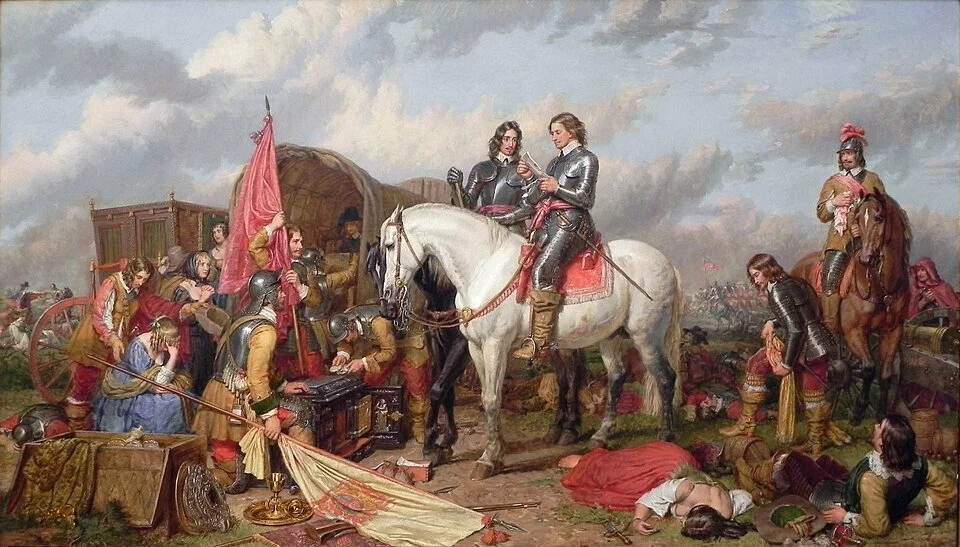
Cromwell in the Battle of Naseby in 1645 by Charles Landseer. Source: Public domain, Alte Nationalgalerie, available here.

Yet out of the uncertainty of these difficult years emerged one of the most remarkable military transformations in British history. Parliament abandoned the old methods of raising armies and instead developed a revolutionary fighting force whose professionalism, discipline, and ideological commitment would ultimately determine the outcome of the war. The rise of the New Model Army not only changed the balance of military power but also transformed English politics forever, helping to produce the conditions that would ultimately end the medieval concept of divine monarchy and lay the foundations of constitutional government.

When the war first erupted, Parliament possessed many significant advantages. It controlled London, the largest and wealthiest city in the kingdom, dominated England's principal commercial centers, and enjoyed access to most of the nation's navy. These advantages provided Parliament with considerable financial resources and enabled it to maintain communication with much of the country through secure sea routes. Nevertheless, these strengths did not immediately translate into success on the battlefield. Parliament's armies often struggled against Royalist forces that were smaller in number but better organized and more decisively led.

One of Parliament's greatest weaknesses lay in the way its armies had been assembled. Rather than developing a unified national force, Parliament initially relied upon county militias, local volunteers, and troops raised by influential noblemen. These regional armies frequently answered first to local political leaders before obeying central authority in Westminster. Many soldiers had enlisted primarily to defend their own counties and showed little enthusiasm for prolonged campaigns far from home. Supplies, weapons, uniforms, and training varied enormously between different armies, producing inconsistency that frequently proved costly during battle.

Leadership also presented serious difficulties. Parliament's senior commanders were often respected politicians or experienced landowners, but not necessarily gifted military leaders. Decisions were frequently delayed by committees, political disagreements, or disputes over seniority. Rival commanders occasionally refused to cooperate fully with one another, allowing Royalist armies to exploit divisions that existed within Parliament's military establishment. In contrast, King Charles I enjoyed the services of several talented commanders who were accustomed to exercising decisive authority in the field.

Foremost among these Royalist leaders was his charismatic nephew, Prince Rupert of the Rhine. Young, energetic, and possessing extensive experience gained during the Thirty Years' War in continental Europe, Rupert quickly became one of the most feared cavalry commanders in Britain. His mounted troops repeatedly demonstrated exceptional courage and aggression, charging Parliamentary formations with devastating effect. At battles such as Edgehill and numerous smaller engagements, Rupert's cavalry often swept opposing horsemen from the field and inflicted severe casualties upon inexperienced infantry.

Yet Rupert's brilliance also revealed an important weakness within Royalist tactics. His cavalry frequently pursued fleeing enemies over great distances after achieving an initial breakthrough, leaving the battlefield itself at precisely the moment their support was most needed. While this aggressive style sometimes produced spectacular victories, it also deprived the Royalist infantry of vital protection during the later stages of battle. Parliament's commanders carefully observed these recurring tactical patterns and gradually learned valuable lessons from their defeats.

Throughout 1643 and into 1644 the conflict settled into a prolonged and exhausting struggle. Neither side possessed sufficient strength to destroy the other completely. Castles and fortified towns changed hands repeatedly. Sieges became increasingly common, placing enormous burdens upon civilians who often suffered shortages of food, disease outbreaks, and destruction of property. Trade declined dramatically as roads became unsafe and agricultural production was disrupted across much of the country. The war was no longer simply fought between armies; it was becoming a national catastrophe affecting every level of English society.

These military frustrations forced Parliament to undertake a searching examination of its own shortcomings. Many members concluded that victory could never be achieved while military appointments remained heavily influenced by politics and social status. England required a professional national army rather than a loose collection of regional forces. Increasingly, reformers argued that the old military system reflected the same outdated aristocratic traditions that Parliament had originally sought to challenge. Military reform therefore became inseparable from constitutional reform.

Among the individuals who most clearly recognized this reality was Oliver Cromwell. Before the outbreak of war, Cromwell had attracted little national attention. A country gentleman from Huntingdonshire and a relatively obscure Member of Parliament, he possessed neither aristocratic title nor distinguished military background. Yet beneath his modest appearance lay remarkable organizational ability, unwavering determination, and profound religious conviction. The Civil War provided him with the opportunity to reveal talents that few had previously recognized.

Cromwell believed that successful soldiers required something deeper than military skill alone. They needed an unwavering conviction that their cause was righteous and that God Himself favored their struggle. He famously declared that he would rather command "a plain russet-coated captain that knows what he fights for" than a gentleman lacking conviction. For Cromwell, personal faith, discipline, and moral character mattered more than noble birth or social standing. This philosophy represented a revolutionary approach to military leadership in seventeenth-century England.

His first opportunity to put these ideas into practice came in eastern England, where he organized a cavalry regiment that quickly gained an enviable reputation for discipline and effectiveness. Unlike many cavalry formations of the period, Cromwell's horsemen were carefully trained to maintain formation after charging the enemy. Instead of scattering in pursuit of defeated opponents, they regrouped rapidly and returned to support their infantry. This seemingly simple tactical discipline proved enormously significant. Battles were increasingly decided not by isolated charges but through coordinated operations involving cavalry, infantry, and artillery working together.

The soldiers under Cromwell's command soon became known as the Ironsides. Their nickname reflected not only their battlefield determination but also their strict personal conduct. Drinking, gambling, looting, and disorder were actively discouraged. Officers expected soldiers to display honesty, restraint, and respect toward civilian populations. Such discipline distinguished Cromwell's regiments from many contemporary armies, whose undisciplined behavior frequently alienated the very communities they claimed to protect.

Religion lay at the heart of this discipline. The majority of Cromwell's officers and many ordinary soldiers were deeply influenced by Puritanism, a movement that sought to purify the Church of England of practices regarded as remnants of Roman Catholicism. Puritans emphasized personal Bible study, simplicity in worship, moral living, and direct accountability before God. They believed that every individual possessed a sacred responsibility to live according to Scripture and to oppose corruption wherever it appeared.

Within Cromwell's army, religious observance became woven into daily military life. Soldiers regularly attended sermons, prayed together before battle, sang psalms, and discussed Scripture around campfires. Chaplains accompanied regiments not merely to provide comfort but to reinforce the belief that the army served a divine purpose. Victory was interpreted as evidence of God's blessing, while defeat encouraged self-examination and repentance. This religious culture fostered extraordinary morale, encouraging soldiers to endure hardship with remarkable resilience.

For many Parliamentarian soldiers, the Civil War was far more than a political rebellion. They believed they were engaged in a holy struggle against tyranny, religious corruption, and ungodly governance. Charles I's support for Archbishop William Laud's religious reforms, together with his marriage to the Catholic French princess Henrietta Maria, convinced many Puritans that England faced a genuine spiritual crisis. Defending Parliament therefore became inseparable from defending Protestantism itself.

This powerful ideological commitment increasingly distinguished Parliament's forces from those of the King. While many Royalists fought out of personal loyalty to Charles or devotion to traditional monarchy, Parliament's soldiers frequently regarded themselves as participants in a providential mission ordained by God. Their military service acquired profound moral significance, giving them a sense of purpose that extended beyond ordinary political allegiance.

Recognizing the need for comprehensive military reform, Parliament introduced the Self-Denying Ordinance in 1645. This legislation required many Members of Parliament to surrender their military commands, reducing conflicts of interest and encouraging appointments based upon military competence rather than political influence. Although controversial, the measure reflected Parliament's growing willingness to place efficiency above personal ambition.

At the same time Parliament authorized the development of the New Model Army. This force represented one of the most ambitious military reforms ever attempted in seventeenth-century Europe. Instead of relying upon separate regional armies, Parliament organized a central national force of approximately 22,000 soldiers under the overall command of Sir Thomas Fairfax. The army received standardized weapons, uniforms, pay, training, and logistical support. Officers increasingly earned promotion through demonstrated ability, courage, and leadership rather than inherited social rank.

The New Model Army introduced levels of professionalism previously unknown in England. Soldiers underwent regular drill, strict discipline, and systematic instruction in battlefield maneuvers. Supply systems were carefully organized to ensure reliable provision of food, ammunition, and equipment. Uniform red coats promoted unity and fostered a common identity that transcended regional loyalties. The army became not merely an instrument of Parliament but an institution possessing its own culture, traditions, and professional standards.

Military historians often regard the New Model Army as one of the earliest examples of a truly modern standing army. Unlike temporary feudal levies or locally raised militias, it existed as a permanent national institution capable of sustained campaigning under central command. Its success demonstrated the growing importance of organization, logistics, training, and administration alongside battlefield courage. Warfare itself was becoming increasingly scientific, disciplined, and bureaucratic.

Even before the New Model Army officially entered service, Parliament achieved one of the most important victories of the war at the Battle of Marston Moor on the 2nd of July 1644. Fought near York, the battle involved approximately 45,000 soldiers, making it one of the largest engagements ever fought on English soil. Parliament's forces joined with their Scottish Covenanter allies to confront the combined Royalist armies commanded by Prince Rupert and the Marquis of Newcastle.

The battle proved decisive. Although the fighting was confused and often brutal, Cromwell's disciplined cavalry played a crucial role. After defeating the opposing Royalist horse, his regiments resisted the temptation to pursue scattered enemies. Instead, they regrouped and launched coordinated attacks against the exposed Royalist infantry. This disciplined maneuver transformed local success into complete victory. By nightfall, Royalist resistance had collapsed, leaving northern England largely under Parliamentary control.

Marston Moor carried immense strategic significance. It effectively ended Royalist hopes of dominating northern England and deprived Charles I of valuable manpower, resources, and recruitment opportunities. Equally important, it demonstrated beyond doubt that disciplined professionalism could defeat the traditional methods employed by aristocratic commanders. Cromwell emerged from the battle as one of Parliament's most respected military leaders, while support for comprehensive reform gathered unstoppable momentum.

The decisive test came the following year at the Battle of Naseby on the 14th of June 1645. Charles I recognized that the newly evolved New Model Army represented a grave threat to his cause and sought to destroy it before it could consolidate its strength. The opposing armies met near the village of Naseby in Northamptonshire under conditions that would determine the future of the kingdom.

The battle unfolded with extraordinary intensity. Prince Rupert once again launched powerful cavalry attacks that initially achieved success, but the disciplined formations of the New Model Army refused to collapse. Cromwell's cavalry maintained its cohesion, defeated the Royalist horse on the opposite flank, and then wheeled back across the battlefield to strike Charles's infantry from the rear. Parliament's infantry advanced steadily, maintaining formation despite fierce resistance. Superior discipline, effective command, and coordinated tactics gradually overwhelmed the Royalists.

By the end of the day, the King's principal field army had been virtually destroyed. Thousands of Royalist soldiers were killed, wounded, or captured, while Parliament seized artillery, ammunition, baggage trains, and vital military supplies. Even more damaging was the capture of Charles I's personal correspondence.

These private letters proved politically explosive. They revealed that Charles had secretly negotiated with Irish Confederates and sought military assistance from foreign Catholic powers while publicly presenting himself as the defender of Protestant England. Parliament quickly recognized the immense propaganda value of these documents. Published under the title The King's Cabinet Opened, the correspondence appeared to confirm long-standing accusations that Charles repeatedly negotiated in bad faith and placed his own authority above the welfare of his kingdom.

The publication of the King's letters profoundly influenced public opinion. For many English Protestants, the possibility that Charles would invite Catholic assistance against his own subjects appeared deeply shocking. Parliament skillfully presented the correspondence as undeniable evidence of royal dishonesty, arguing that constitutional compromise with such a monarch had become impossible. The battle for hearts and minds increasingly became as important as victories won upon the battlefield itself.

Following Naseby, the Royalist cause entered irreversible decline. Although isolated garrisons continued resisting and Charles attempted to raise new forces, he never again possessed an army capable of challenging Parliament in open battle. One fortress after another surrendered. Royalist recruitment declined sharply, financial resources became exhausted, and morale steadily deteriorated. By 1646 Charles surrendered himself to the Scottish army, effectively ending the English Civil War.

Military victory, however, produced an entirely new political challenge. The New Model Army had become far more than an obedient military force. Years of campaigning, religious discussion, and political debate had produced soldiers who increasingly believed they possessed a legitimate voice in shaping England's future. They had fought, suffered, and sacrificed in what they regarded as a righteous cause. Many refused to accept a simple return to the political arrangements that had existed before the war.

Within the ranks of the army, vigorous debates emerged concerning religious liberty, constitutional reform, justice, representation, and the proper limits of governmental authority. Radical religious groups flourished, encouraging unprecedented discussion about the rights of ordinary people. Although opinions varied widely, many soldiers questioned whether true liberty could ever exist while absolute monarchy remained intact.

These debates also exposed growing divisions within Parliament itself. Moderate members wished to negotiate with Charles I and restore a constitutional monarchy under carefully defined limitations. Others believed the King had repeatedly demonstrated that he could never be trusted to honor genuine constitutional agreements. The discovery of his secret correspondence reinforced these suspicions, convincing many that compromise merely postponed future conflict.

As political disagreements deepened, the relationship between Parliament and the New Model Army became increasingly complex. The army expected recognition for its sacrifices, payment of long-overdue wages, and assurance that the constitutional principles for which it had fought would not be abandoned through political compromise. Military victory had therefore produced a new and powerful political force whose influence extended far beyond the battlefield.

The transformation that occurred during these years reached far beyond military affairs. England witnessed the emergence of ideas that challenged centuries of political tradition. The doctrine of divine monarchy, which held that kings ruled directly by the will of God, increasingly collided with the principle that legitimate government required the consent of the governed through Parliament. Religion remained a powerful political force, shaping the convictions of soldiers, politicians, clergy, and ordinary citizens alike. Propaganda became an increasingly sophisticated weapon, influencing public opinion through printed pamphlets, newspapers, sermons, and political correspondence. Military innovation demonstrated the superiority of professionalism over inherited privilege, while revolutionary ideas concerning legitimacy, representation, and constitutional authority gained unprecedented influence.

The development of the New Model Army marked the moment when the English Civil War ceased to be simply a struggle between King and Parliament. It became a revolutionary movement that questioned the very foundations of political authority. The victories at Marston Moor and Naseby destroyed the military power of the Crown, while the publication of Charles I's private correspondence undermined his moral and political credibility. Yet the greatest consequence of these events was not merely the defeat of the Royalist armies. It was the emergence of a new political consciousness that would reshape England for generations to come. The nation was steadily moving away from medieval assumptions about divine kingship and inherited authority toward a future in which constitutional government, parliamentary sovereignty, and the rule of law would increasingly define the British state. The battles won by the New Model Army therefore altered far more than the outcome of a civil war, they transformed the course of English history itself.

Needless to say, the raising of the New Model Army proved that the outcome of the English Civil War would not be decided solely by numbers, wealth, or inherited privilege, but by organization, conviction, and adaptability. Parliament's willingness to reform its military institutions when faced with repeated setbacks demonstrated a capacity for innovation that the Royalists ultimately failed to match. Through disciplined training, unified command, logistical efficiency, and promotion based upon merit rather than birth, Parliament developed an army unlike any previously seen in England. The victories won at Marston Moor and Naseby were therefore not isolated battlefield successes but the visible results of a profound transformation in warfare itself. The conflict had entered a new era in which professionalism increasingly eclipsed feudal tradition, foreshadowing the development of the modern standing armies that would dominate European warfare for centuries to come.

Yet the military revolution was only one aspect of a far greater upheaval. As Parliament's soldiers marched from battlefield to battlefield, they carried with them not merely muskets and pikes but powerful ideas concerning justice, liberty, and political authority. The New Model Army became an institution in which ordinary men debated matters of government that had previously been regarded as the exclusive preserve of kings, bishops, and noblemen. For many of its soldiers, victory imposed a moral obligation to ensure that the sacrifices made during years of bitter conflict would produce lasting constitutional change rather than a simple restoration of the old order. In this sense, the army evolved into both a military and political force, capable of shaping the future of the nation long after the cannons had fallen silent.

Equally significant was the changing role of public opinion. The publication of The King's Cabinet Opened demonstrated that information could be as powerful as military force. Charles I's own correspondence undermined the trust upon which monarchy depended, revealing to many of his subjects that the King's public declarations did not always match his private diplomacy. Pamphlets, sermons, newspapers, and printed declarations increasingly became weapons of persuasion, helping to define legitimacy in the eyes of the people. The Civil War thus marked one of the earliest examples in British history of propaganda becoming an essential instrument of political conflict, a development that would shape future revolutions and constitutional struggles throughout the modern world.

Religion likewise remained inseparable from every stage of the conflict. Both Royalists and Parliamentarians believed that divine providence favored their cause, and both interpreted victory and defeat through the lens of faith. For the Puritans who filled the ranks of the New Model Army, military service became an expression of religious duty, while Charles I continued to regard his authority as sacred and ordained by God. The struggle was therefore never merely a contest over political institutions; it was also a battle over competing visions of England's spiritual identity. Questions of worship, conscience, church government, and divine authority became intertwined with debates over taxation, law, and sovereignty, ensuring that the Civil War reshaped both the political and religious landscape of the nation.

Most importantly, the years between 1644 and 1646 fundamentally altered the relationship between the Crown and Parliament. The doctrine of the Divine Right of Kings, which had dominated English political thought for generations, suffered irreversible damage as Parliament demonstrated that a monarch could be challenged, defeated, and held accountable by representatives claiming to act on behalf of the nation. Parliamentary sovereignty, though not yet fully realized, had emerged as a powerful constitutional principle that would continue to evolve long after the war itself had ended. The conflict had revealed that government derived not only from hereditary succession but also from legitimacy, trust, and the consent of those who were governed.

The victories of the New Model Army did not immediately bring peace to England. Instead, they opened an even more dramatic chapter in the nation's history. The defeat of the Royalist field armies removed the King's military power, but it did not resolve the profound constitutional, religious, and ideological divisions that had driven the kingdom into civil war. Questions concerning Charles I's future, the authority of Parliament, the influence of the army, and the very nature of English government remained fiercely contested. Rather than concluding the revolution, Parliament's triumph produced the conditions for an even greater confrontation—one that would culminate in the unprecedented trial and execution of an anointed king.

Thus, the turning of the tide was far more than a sequence of military victories; it was the moment at which England crossed a political and constitutional Rubicon from which there could be no easy return. The New Model Army transformed warfare through discipline and professionalism, revolutionized politics through its ideological convictions, and helped dismantle centuries-old assumptions about monarchy and authority. The England that emerged from these campaigns was no longer the kingdom that had marched to war in 1642. It was a nation entering a new and uncertain age, one in which the balance between Crown, Parliament, religion, and the people would be redefined forever. The next stage of the Civil War would determine whether that transformation could be reconciled with monarchy—or whether England would take the extraordinary step of bringing its own king before the judgement of the law.


Now read about Terry’s series on King Kenry VIII and his wives here.

Posted
AuthorHistory Is Now Magazine
CategoriesBlog Post

In the summer of 1642, England stood upon the edge of an abyss. Years of political confrontation, religious disputes, and constitutional arguments had brought the kingdom to a moment of unprecedented crisis. What had begun as a struggle over taxation, royal authority, and the limits of government was rapidly becoming something far more dangerous. The language of petitions and parliamentary debate was giving way to the language of muskets, cavalry charges, and battlefield commands.

Terry Bailey explains.

You can read part 1 on the background to the war here.

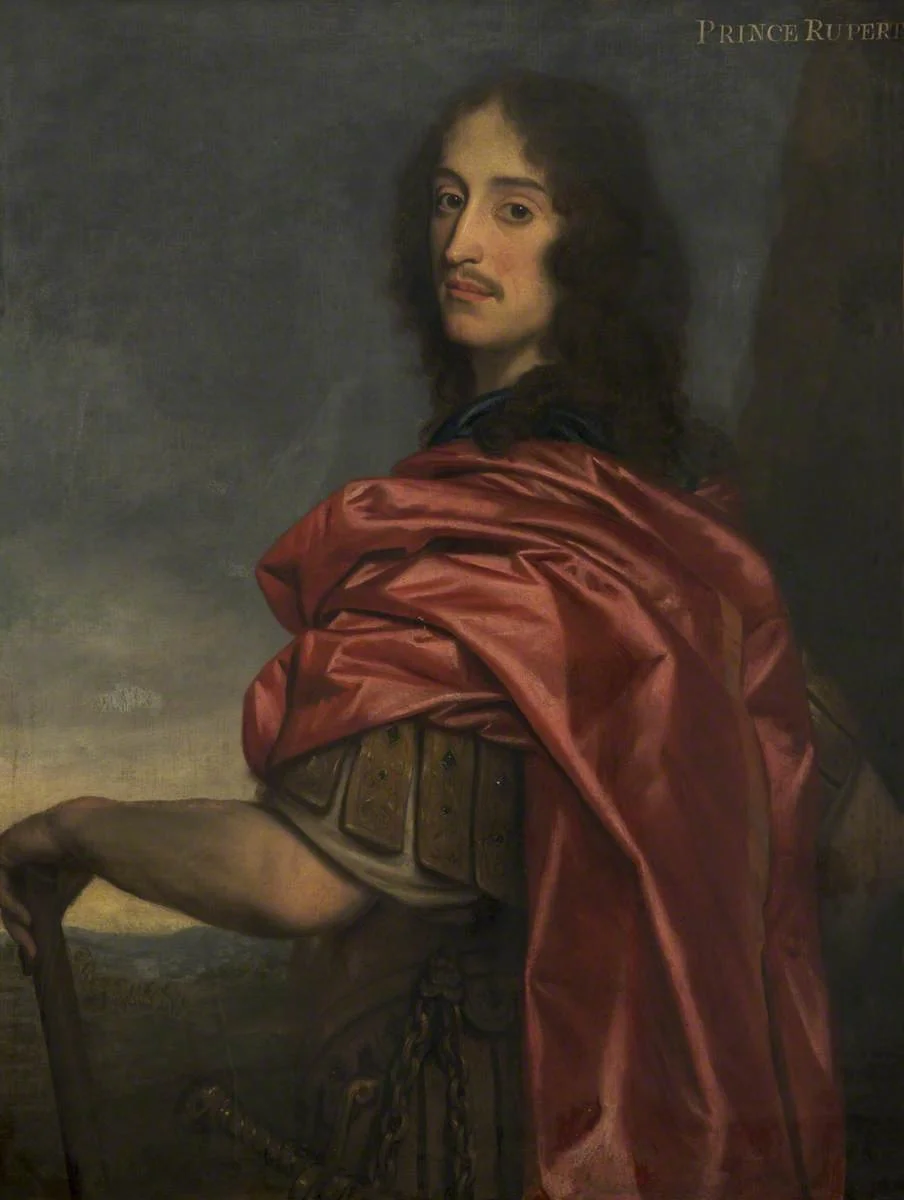
Portrait of a Nobleman (said to be Prince Rupert) by the Circle of Gerard van Honthorst. Source: Public domain, Bolton Museum, available here.

For generations, Englishmen had believed that their political system rested upon a delicate balance between Crown, Parliament, and the ancient laws of the realm. Few imagined that this system could collapse entirely. Yet by the time King Charles I raised his standard at Nottingham in August 1642, compromise appeared impossible. The nation fractured into rival camps, communities divided against themselves, and neighbors prepared to fight neighbors in a conflict that would ultimately reshape the political future of Britain.

The English Civil War was far more than a military contest. It was a struggle over fundamental questions of authority and legitimacy. Could a king rule by divine right regardless of parliamentary opposition? Could Parliament lawfully resist its sovereign? What role should religion play in government? These questions would not only determine the outcome of the war but would also influence the development of constitutional government for centuries to come.

The division of England into Royalist and Parliamentarian camps did not occur overnight. Throughout the 1630s and early 1640s, political loyalties remained fluid and uncertain. Many who later became committed Royalists had initially criticized Charles I's policies, while numerous future Parliamentarians still considered themselves loyal subjects of the king.

Most English people did not desire revolution. They wanted stability, prosperity, and peace. Yet events increasingly forced them to choose sides. The attempted arrest of the Five Members in January 1642 convinced many that Charles could no longer be trusted. At the same time, Parliament's growing control of government alarmed those who feared that traditional authority was being undermined. The resulting divisions cut across every level of society. Noble families split over questions of loyalty. Merchants found themselves supporting opposing causes. Clergymen preached conflicting visions of England's future. Even within individual households, husbands and wives, fathers and sons, could disagree about where their allegiance lay.

The labels that emerged reflected these divisions. Supporters of the king became known as Royalists, often referred to by their opponents as Cavaliers. The term originally implied a swaggering, aristocratic horseman and was intended as an insult, although many Royalists eventually embraced it. Parliament's supporters became known as Roundheads, a reference to the shorter hairstyles favored by many Puritans and London citizens. These labels, however, often concealed a far more complex reality. Allegiance was shaped by local circumstances, personal loyalties, religious beliefs, economic interests, and family traditions. The Civil War was not a simple contest between rich and poor, north and south, or aristocrats and commoners. It was a deeply complicated conflict that divided every layer of English society.

One of the most remarkable aspects of the crisis was the growing importance of public opinion. Previous political disputes had largely been confined to the royal court and Parliament. By the 1640s, however, political arguments were being conducted before an increasingly engaged national audience. The spread of printing played a crucial role in this transformation. Pamphlets poured from printing presses in unprecedented numbers. Political speeches were reproduced and distributed. Sermons were printed and circulated across the country. Newspapers and newsletters reported developments with growing frequency. For perhaps the first time in English history, competing political movements attempted to mobilize popular support on a national scale.

Royalist writers portrayed Charles I as the lawful sovereign whose authority had been granted by God. They argued that resistance to the king threatened the very foundations of social order. If subjects could rebel against their monarch, what would prevent the collapse of all authority?

Parliamentarian propagandists presented a very different picture. They depicted Charles as a ruler who had repeatedly violated English law and attempted to govern without regard for Parliament or the rights of his subjects. According to this view, resistance was not rebellion but a defense of England's ancient constitution.

Both sides claimed to be defending liberty.

Both sides claimed to be protecting religion.

Both sides claimed to be preserving England.

The result was one of the earliest large-scale propaganda wars in European history.

Religion lay at the heart of many political disagreements. To modern observers, it can be difficult to appreciate the intensity of religious feeling in seventeenth-century England. Questions of doctrine and worship were not regarded as private matters. They were believed to have direct consequences for the fate of the nation and the salvation of souls. Many Protestants viewed Charles's religious policies with profound suspicion. Under the influence of Archbishop William Laud, the Church of England had adopted practices that appeared, to critics, dangerously close to Roman Catholicism. Greater emphasis was placed upon ceremony, church decoration, and episcopal authority. To Puritans, these developments represented a betrayal of the Reformation.

The king's marriage to the Catholic princess Henrietta Maria only intensified these fears. Rumors circulated constantly about Catholic influence at court. Every political dispute became entangled with concerns about religion. Parliament successfully presented itself as the defender of Protestant England. This message resonated strongly among many communities, particularly in London and the southeast. For countless Parliamentarian supporters, the war became a struggle not merely for political rights but for the future of the Protestant faith itself.

Royalists, however, viewed these fears as exaggerated and often deliberately manipulated. They argued that Parliament's religious radicals threatened the established Church and the stability of the kingdom. Thus, religious concerns pushed both sides further apart, making compromise increasingly difficult.

Economic interests also shaped the emerging conflict. England in the seventeenth century was undergoing significant social and economic change. Trade was expanding, towns were growing, and commercial wealth was becoming increasingly important. Many of the kingdom's largest trading centers tended to support Parliament. London, by far the wealthiest city in England, became the financial heart of the Parliamentarian cause. The capital's merchants possessed enormous resources, and Parliament's control of London gave it access to vital loans, supplies, and manpower.

By contrast, many rural regions displayed stronger support for the Crown. The traditional social order remained influential in much of the countryside, where local gentry often exercised considerable authority and where loyalty to the monarchy retained deep roots. Yet even these regional patterns had numerous exceptions. Wealthy merchants could be found among the king's supporters, while many country gentlemen sided with Parliament. Economic considerations interacted with religious beliefs and local politics to produce a complex patchwork of allegiances. England was not divided by a single fault line. It fractured along many.

The symbolic beginning of the Civil War occurred on the 22nd of August 1642 when Charles I raised the royal standard at Nottingham Castle. The ceremony was intended to signal that the king was formally calling his loyal subjects to arms. It was a declaration that political dispute had become military conflict. The choice of Nottingham reflected strategic considerations. Located near the center of England, the town offered access to important routes and communications. Yet the ceremony itself revealed the difficulties facing the Royalist cause.

A violent storm struck shortly after the standard was raised. Strong winds reportedly tore the banner down. Many observers interpreted the incident as a divine warning regarding the king's cause. Whether viewed as a bad omen or merely an unfortunate accident, the event quickly became part of the war's mythology. More importantly, the response was initially disappointing. Fewer supporters arrived than Charles had hoped. The king possessed prestige and legitimacy, but converting loyalty into effective military power proved more difficult than expected. The Civil War had begun, but neither side yet understood how long or destructive it would become.

Unlike many continental states, England possessed no large standing army. Both sides therefore faced the immense challenge of developing military forces almost from scratch. Recruitment relied heavily upon local militias and the influence of powerful individuals. Noblemen and wealthy landowners raised regiments among their tenants and dependents. Towns organized companies of volunteers. Existing militia units were absorbed into larger military formations. The resulting armies reflected the social diversity of the kingdom.

Royalist forces generally attracted greater support from sections of the aristocracy, traditional landowners, and regions where loyalty to the monarchy remained strongest. Parliament drew heavily from London's population, commercial communities, Puritan congregations, and areas concerned about royal authority. Neither army was initially well-trained. Weapons varied widely in quality. Uniforms were inconsistent or absent. Supply systems were primitive. Officers often possessed little military experience. Many soldiers entered the war with romantic notions of honor and glory. They quickly discovered a harsher reality of exhaustion, hunger, disease, and fear.

The greatest challenge was maintaining discipline. Commanders had to transform enthusiastic volunteers into effective fighting forces capable of operating under battlefield conditions. This process would take years and would become one of the defining military stories of the war.

Among the most colorful figures of the conflict was Prince Rupert of the Rhine. Nephew to Charles I and grandson of King James I, Rupert brought valuable continental military experience to the Royalist cause. Tall, energetic, and fearless, he rapidly acquired a reputation for personal courage. His leadership of Royalist cavalry became legendary. Rupert favored aggressive attacks designed to shatter enemy formations through speed and shock. His cavalry often achieved spectacular successes. At the same time, critics argued that his impetuous nature sometimes prevented him from exploiting victories effectively.

Parliamentarian propaganda portrayed him as a ruthless foreign adventurer. Wild rumors circulated that he possessed supernatural powers and even travelled with a magical dog capable of deflecting bullets. Such stories reflected both fear and fascination. Rupert became one of the war's most recognizable figures and a symbol of the Royalist cause.

If Rupert represented military energy, John Pym represented political determination. For years, Pym had stood at the forefront of parliamentary opposition to Charles I. Through speeches, alliances, and organizational skill, he helped transform scattered grievances into a coordinated political movement. Pym understood that wars were won not only on battlefields but through administration, finance, and public support. Parliament's ability to raise money, organize resources, and maintain political cohesion owed much to his efforts. Though he never commanded troops in battle, his influence on the war's outcome would prove immense. Many historians regard him as one of the principal architects of Parliament's eventual success.

Another important figure was Thomas Fairfax. The son of a distinguished Yorkshire family, Fairfax combined personal courage with genuine military talent. During the opening campaigns, he demonstrated a capacity for disciplined leadership that would later distinguish him from many contemporaries. Unlike commanders whose authority depended largely upon social rank, Fairfax showed a willingness to learn from experience and adapt to changing circumstances. These qualities would become increasingly important as the war evolved from a conflict of enthusiastic amateurs into a struggle requiring a professional military organization. The future belonged not merely to bravery but to efficiency, discipline, and innovation.

The first major battle of the war took place at Edgehill on the 23rd of October 1642. Thousands of men assembled in the Warwickshire countryside, many experiencing combat for the first time. The atmosphere combined excitement, fear, and uncertainty. Few participants knew what to expect. Prince Rupert's cavalry launched a powerful assault against Parliament's horsemen, driving them from the field. Yet in pursuing the fleeing enemy, many Royalist riders became separated from the main battle.

Meanwhile, the infantry struggle at the center developed into a brutal contest of musket fire and pike combat. Units advanced and retreated amid confusion, smoke, and mounting casualties. As darkness approached, neither side had achieved a decisive advantage. The battle ended inconclusively.

Yet Edgehill carried enormous significance. It demonstrated that neither side could easily defeat the other. Expectations of a short war evaporated. The conflict would demand far greater sacrifices than anyone had imagined.

For ordinary civilians, the outbreak of war brought profound disruption. Armies required food, horses, carts, accommodation, and money. Communities were expected to support whichever force happened to occupy their area. Refusal could lead to punishment. Trade routes became dangerous. Markets were disrupted. Agricultural production suffered. Taxes increased as both sides sought resources for the war effort. Families often experienced the conflict in deeply personal ways. Relatives fought on opposing sides. Long-standing friendships collapsed under political pressure. Parish churches became centers of dispute as religious divisions intensified.

The psychological impact was equally severe. Rumors spread constantly. Reports of battles and atrocities circulated through towns and villages. Uncertainty became a permanent feature of daily life. For many civilians, the Civil War was not an abstract political struggle but a harsh reality that entered their homes, threatened their livelihoods, and shattered familiar certainties.

By the close of 1642, England had crossed a threshold from which there could be no easy return. The constitutional crisis that had begun with arguments over taxation and royal authority had evolved into a national civil war. The raising of the royal standard, the formation of rival armies, and the bloody confrontation at Edgehill confirmed that political compromise had given way to armed struggle.

Yet beneath the military conflict lay deeper issues that would shape the future of the English-speaking world. Questions concerning divine monarchy, parliamentary sovereignty, religious authority, and political legitimacy were now being tested in the harshest possible arena. The outcome would determine not only who governed England but also how government itself would be understood.

The kingdom had fractured into competing visions of authority and liberty. What followed would become one of the most consequential struggles in British history, a conflict that would ultimately challenge the ancient assumptions of monarchy, give birth to new political ideas, and set England upon the long and uncertain road toward constitutional government.

In conclusion, the outbreak of the English Civil War in 1642 marked the moment when political disagreement ceased to be a matter of speeches, petitions, and parliamentary maneuverings, and instead became a contest decided by the sword. The raising of the royal standard at Nottingham, the hurried development of rival armies, and the inconclusive yet bloody encounter at Edgehill all demonstrated that England's constitutional crisis had passed the point of peaceful resolution. Neither Charles I nor Parliament had anticipated the scale or duration of the struggle they had unleashed. What many believed would be a short campaign to compel negotiation instead became a prolonged conflict that would consume the kingdom for nearly a decade.

Yet the significance of these opening months extends far beyond the military events themselves. The divisions that emerged in 1642 revealed a nation wrestling with questions that had no simple answers. Was a monarch's authority truly absolute if it threatened the liberties of his subjects? Could Parliament lawfully resist the Crown without descending into rebellion? Could religious unity be maintained in a kingdom increasingly divided by competing interpretations of Protestantism? These constitutional, political, and religious dilemmas transformed the Civil War into far more than a dynastic dispute. It became a profound debate about the very nature of government, sovereignty, and the relationship between rulers and the ruled.

The conflict also demonstrated that wars are fought not only on battlefields but within the hearts and minds of ordinary people. Propaganda became a powerful political weapon, shaping public opinion through pamphlets, sermons, rumors, and newspapers. Economic interests, local loyalties, and religious convictions proved just as influential as military victories in determining where communities placed their allegiance. Families were divided, friendships dissolved, and entire regions found themselves drawn into opposing camps. England was no longer a united kingdom governed by differing opinions; it had become a nation physically, politically, and emotionally fractured.

The early campaigns likewise exposed the strengths and weaknesses of both sides. The Royalists possessed experienced commanders such as Prince Rupert and enjoyed considerable support among the traditional landed elite, yet they struggled to translate loyalty into sustained military success. Parliament, under the political guidance of men such as John Pym and with rising officers including Thomas Fairfax, increasingly recognized that victory would require efficient administration, disciplined armies, reliable finance, and effective organization as much as courage in battle. The war was already beginning to reward professionalism over privilege, and this evolution would have profound consequences for the future conduct of warfare in Britain.

Perhaps most importantly, the events of 1642 shattered centuries-old assumptions about English government. The medieval ideal that the Crown and Parliament formed complementary parts of a single constitutional order had broken down entirely. Divine right monarchy had collided with an increasingly confident Parliament that believed it possessed both legal authority and moral responsibility to restrain the king. Once these competing claims were defended by armed force rather than constitutional compromise, the kingdom entered uncharted political territory from which there could be no easy return.

As the war continued into 1643 and beyond, neither side would achieve the swift victory it had expected. Instead, the conflict would become larger, more organized, and increasingly ideological. New alliances would be forged, military reforms would revolutionize England's armies, and political ambitions would grow ever more radical. What had begun as an attempt to settle a constitutional dispute would ultimately lead to the trial and execution of a king, the temporary abolition of the monarchy, and the introduction of an English republic—developments almost unimaginable when the royal standard first fluttered above Nottingham Castle.

The opening phase of the English Civil War therefore stands as one of the great turning points in British history. It was the moment when centuries of inherited political tradition gave way to revolutionary change. The questions first asked in the summer of 1642—about authority, liberty, representation, religion, and the limits of executive power—have never entirely disappeared. They continue to resonate through modern constitutional democracies, reminding us that the struggle between power and accountability, between order and liberty, is not confined to the seventeenth century but remains one of the defining themes of political history.

The next stage of the conflict would prove even more transformative. As both sides adapted to the realities of prolonged warfare, the struggle would evolve from a contest between king and Parliament into a revolution that challenged every established institution of English society. The battles that followed would decide not only the fate of Charles I, but also the future direction of the English state itself.


Now read about Terry’s series on King Kenry VIII and his wives here.

Posted
AuthorHistory Is Now Magazine
CategoriesBlog Post

In the latest in the English Civil War series of articles, Myra King looks at how a change imposed by King Charles I and the strength of Scotland put Charles in a position so weak that it would lead to war.

In this series on the English Civil War, we have previously considered the Divine Right of Kings, and Henry VIII and bloody religious change, and how the Gunpowder Plot may have been a Protestant-led conspiracy.


On July 23, 1637 Jenny Geddes threw a chair at a church minister’s head and started the English Civil War.

Edinburgh Minister Dean Hannay condemned himself by attempting to read the new English Prayer Book. This not only angered the congregation but instigated flying furniture. Jenny Geddes screamed, “Villain, dost thou say mass at my lug?” She then continued to curse him with colic and threw the three legged stool she was sitting on. This act started a riot and more chairs were soon thrown. Riots spread so quickly throughout Edinburgh that ministers were forced to arm themselves before service. In one church, the minister actually pointed a gun to his congregation while reciting the Lord’s Prayer. It was the only thing that kept his head from connecting with a chair.

King Charles I by Anthony van Dyck. 1636.

King Charles I by Anthony van Dyck. 1636.

Flying furniture, riots and guns may seem a complete over-reaction to a simple prayer book but it was, in fact, quite small compared to what that prayer book stood for. Throughout England, the spread of Protestantism meant only one thing - bloodshed! Torture, murder, mass genocide and other horrific crimes filled the land simply because the monarch decided on a different strand of Christianity. But England had always been conquered and plagued by whatever faction was strongest. Romans, Vikings, Saxons, Angles and Normans had all arrived and changed whatever they felt like - this almost always being religion and how the country was run. The monarchs were simply children of their culture.

This was not the case in Scotland however. The Picts, natives of the area we now know as Scotland, were not the people to tangle with. After England fell to the Romans, the Legions marched into Pict territory, expecting to conquer it. They came, they saw, but they most certainly did not conquer. Rather, they got slaughtered. That was the Roman introduction to Scotland. And it did not go much smoother for anybody else. The Scottish were a formidable enemy. When King James I inherited the English throne, he took the tumultuous Stuart Dynasty down to London and for the first time in centuries kept Scotland and England in a peaceful, productive truce. But the decades of peace did not soften the Bonnie Scots. When King Charles I began his campaign to bring religious change to Scotland after he ascended the throne in 1625, he expected that change would be as easy as it had been in England in prior years. He was to be in for a surprise.


THE PATH TO WAR

The Scottish knew the history of English religious genocide and they refused to go the same way. And so, when the prayer book entered their churches, the Scottish rose up as one to stop the start of a genocide. Charles I, although King of the Scots, could not control them from London and so declared war on his own people. Unfortunately he could not raise the funds or an adequate army within England. Charles, like his father, believed that he could run his kingdoms without Parliament and so didn’t call Parliamentary sessions. This meant that he could not get funding or command the armies that he needed. The men he could rally were poorly trained, under fed and improperly attired. The Scottish army was the complete opposite. There were a few minor battles between the English and the Scottish, but neither side really wanted to fight, and finally Charles agreed to a general assembly to discuss disputed topics. Without Charles’s permission, however, Scotland abolished his religion and declared itself free from royal control. Charles was furious and immediately brought back Parliament in order to raise funds for a real army and a real war.

This government, known as the ‘Short Parliament’, refused to do Charles’s bidding until he sorted out their grievances. He refused and dismissed the Parliament after only a few weeks. While Charlie was battling his government, the Scottish army crossed the River Tweed into England. The English army retreated, leaving the whole of Northumberland and County Durham, regions in the far north of England, to the Scots.

Have you noticed the strangest part of all of this? Charles was king of England, and so had to pay for the English army. But Charles was also King of Scotland, and so had to pay for the Scottish army too. This man was such an incompetent leader that he was literally paying to go to war with himself. This only gets worse with his decision to leave the two English counties in Scottish hands in order to pay the Scottish off for attacking the two counties. Up to his eyeballs in debt, Charlie reconvened Parliament in order to raise the funds he could not obtain. This government, known as the ‘Long Parliament’, attacked Charles’s advisers and actually executed his chief supporters. This showed the king that the English Parliament was most certainly not his friend. Luckily for him though, he had another government that he could turn to. And so he went up to Scotland in 1641 to give titles to the two Scottish leaders who invaded England. Interestingly, he gave them titles for fighting against him. This action won him favor with the Scottish but he was in no way their beloved king; in fact they made sure that Charlie boy accepted every one of their decisions without complaint. He was their king in name only.

This did not agree with a man who believed in ‘The Divine Rights of Kings’ and he took his frustrations out on the English. One hundred years before, Charles would have been able to do as he pleased. But too much abuse of power from his predecessors, coupled with the knowledge that the Scottish controlled their King’s strings, had made the English strong.

And just like Jenny Geddes, they were about to throw a chair.


Did you enjoy this article? And would you like to read more in-depth history articles? Well, take a look at History is Now Magazine! It is available instantly and is free for at least one month if you subscribe today! And what’s more, there is no obligation to pay anything if you’re not 100% satisfied with the magazine…

Click here for information on the iOS/Apple edition

Click here for information on the Android edition


References

Slimy Stuarts by Terry Deary

www.britannica.com

www.bbc.co.uk/thebishopswar

www.battlefieldstrust.com

www.historyofwar.org

British History by Miles Kelly