
By the time Catherine Parr became the sixth wife of Henry VIII in July 1543, England had endured more than three decades of political upheaval, religious revolution, and dynastic uncertainty. The women who had preceded her had experienced exile, disgrace, execution, and death in childbirth. Catherine entered a royal court haunted by the memories of Catherine of Aragon, Anne Boleyn, Jane Seymour, Anne of Cleves, and Catherine Howard. Unlike any of them, however, she would survive the king. Her story is not merely one of personal endurance but of intellectual achievement, religious influence, and political skill. As the final chapter in Henry VIII's tumultuous marital history, Catherine Parr's life provides a fitting conclusion to a saga that transformed England forever.
Terry Bailey explains.
Read part 1 on King Henry VIII here, part 2 on Catherine of Aragon here, part 3 on Anne Boleyn here, part 4 on Jane Seymour here, part 5 on Anne of Cleves here, and part 6 on Catherine Howard here.

Catherine Parr, attributed to Master John. Source: Public domain, available here.
Catherine Parr was born around 1512 into a respected northern gentry family closely connected to the royal court. Unlike many noblewomen of her age, she received an unusually broad education. She became proficient in several languages, including French and Latin, and developed a lifelong passion for learning. Humanist ideas, which had spread throughout Europe during the Renaissance, influenced her thinking and fostered an interest in theology, literature, and religious reform. Her education distinguished her from most Tudor women and would later make her one of the most intellectually accomplished queens England had ever known.
Before becoming queen, Catherine had already experienced much of life's complexity. She was married first to Sir Edward Burgh, who died after only a few years of marriage. Her second husband, John Neville, Lord Latimer, was considerably older and placed her in the midst of the political and religious tensions that marked northern England. During the Pilgrimage of Grace, the great Catholic uprising against Henry VIII's religious policies, rebels held Catherine and her stepchildren hostage while Lord Latimer was absent. The experience exposed her to the dangers of political instability and strengthened her understanding of the consequences of religious conflict. Following Latimer's death in 1543, Catherine attracted several suitors, including the ambitious Thomas Seymour. Yet circumstances—and the king's interest—would alter her future dramatically.
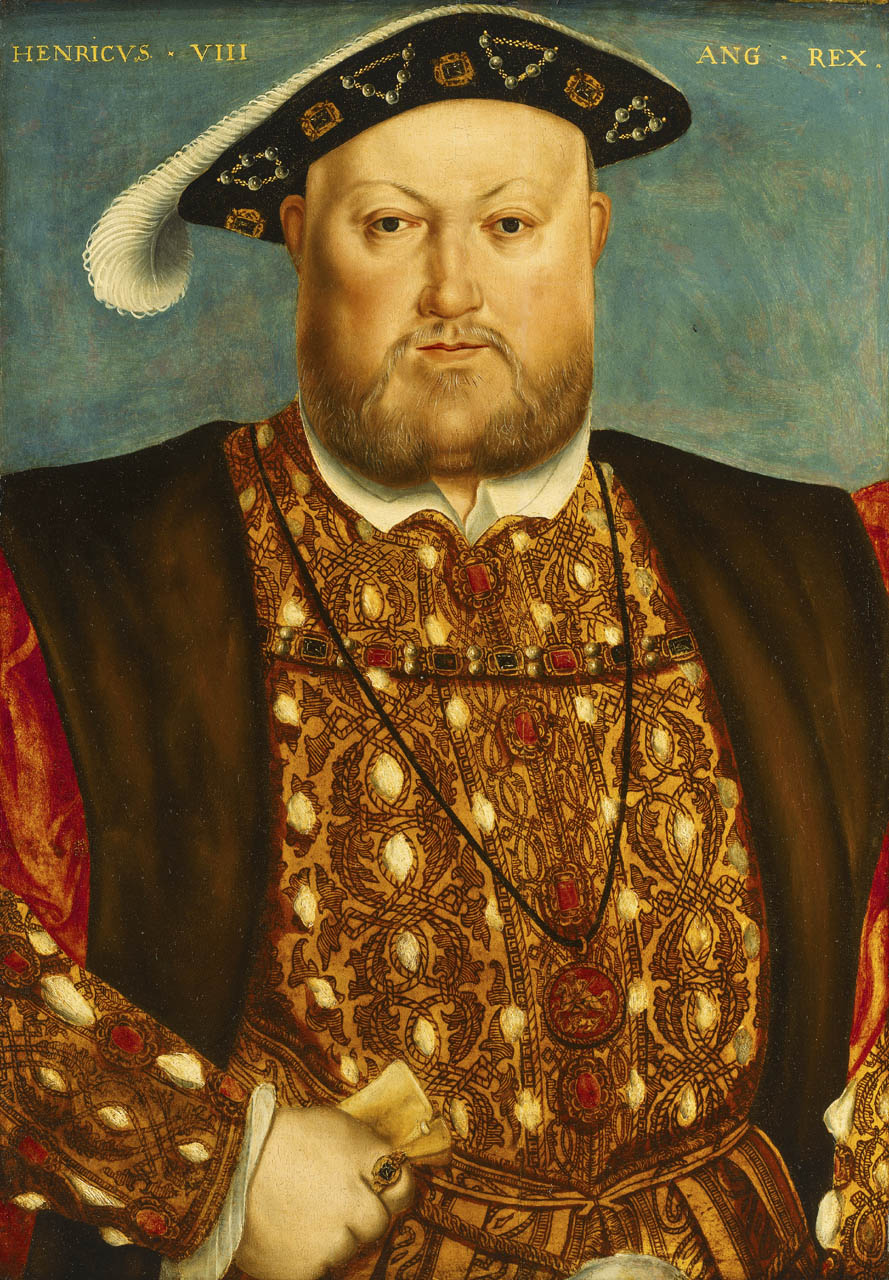
When Henry VIII proposed marriage, Catherine understood both the honor and the risks involved. The king was no longer the athletic and charismatic prince who had captivated Europe in his youth. He was aging, obese, frequently in pain from chronic leg ulcers, and increasingly suspicious of those around him. Yet Catherine accepted the proposal, likely recognizing both her duty and the opportunity to influence the kingdom's future. Their marriage took place at Hampton Court Palace on the 12th of July, 1543.
As queen, Catherine demonstrated remarkable political skill. She understood that survival required caution, diplomacy, and an ability to navigate competing factions at court. Unlike Anne Boleyn, whose rise had been closely linked to religious reform, Catherine pursued her beliefs with greater subtlety. She worked to reconcile divisions within the royal family, helping restore positive relationships between Henry and his daughters Mary and Elizabeth. Through her influence, both princesses were returned to the line of succession, a decision that would have profound consequences for English history.
Catherine's greatest political achievement came in 1544 when Henry departed for France on a military campaign. During his absence, he appointed her regent of England, entrusting her with significant governmental authority. The appointment reflected an extraordinary degree of confidence. As regent, Catherine oversaw the administration of the kingdom, signed official proclamations, managed finances, and coordinated preparations against a potential Scottish invasion. Her performance demonstrated that a woman could successfully exercise political authority at the highest level of government, even within a society that largely excluded women from formal power.
Her regency highlighted one of the central themes running throughout the story of Henry's six wives: the relationship between power and gender in Tudor England. Again and again, Henry's queens found themselves navigating a system designed by men yet dependent upon women to secure dynastic stability. Catherine Parr's success showed that women could exercise authority effectively when given the opportunity, although such opportunities remained rare and precarious.
Religion, another recurring theme throughout Henry's reign, played a crucial role in Catherine's life. By the 1540s, England's religious transformation remained incomplete. Henry had broken with Rome and established royal supremacy over the Church, yet many traditional Catholic practices remained intact. Catherine increasingly sympathized with Protestant reformers who sought further changes. She encouraged the reading of scripture, sponsored religious discussion, and surrounded herself with scholars who supported reformist ideas.
Unlike her predecessors, Catherine was also an author. She became the first English queen to publish works under her own name. Her devotional writings reflected both her personal faith and the growing influence of Protestant thought. Through books such as Prayers or Meditations and later The Lamentation of a Sinner, she contributed to the spread of religious ideas during a critical period in England's spiritual transformation.
Yet Catherine's religious interests nearly proved fatal. Conservative opponents at court, alarmed by her reformist sympathies, sought to undermine her position. They convinced Henry that the queen's theological discussions bordered on heresy. In 1546, an arrest warrant was reportedly prepared, and Catherine suddenly found herself facing a danger familiar to several of Henry's previous wives.
Her response revealed the political intelligence that had enabled her survival. Learning of the king's displeasure, Catherine approached Henry with humility and tact. She explained that their theological debates had never been intended to challenge his authority but merely to distract him from his physical suffering and allow him to display his superior knowledge. Henry, pleased by her submission and perhaps genuinely reassured, accepted her explanation. When officials later arrived to arrest her, the king angrily dismissed them. Catherine had narrowly escaped the fate that had consumed Anne Boleyn and Catherine Howard.
The incident illustrates the continuing intersection of marriage and politics within the Tudor court. Henry's queens were never simply wives. Their relationships with the king carried profound political, religious, and national consequences. Catherine's ability to survive where others had fallen reflected not only good fortune but a sophisticated understanding of power and personality.
By the final years of Henry's life, Catherine had effectively become both wife and nurse. The king's health deteriorated steadily, and his once formidable energy faded. Catherine provided companionship and care during a period marked by physical decline and growing isolation. Her experience offered a striking contrast to the youthful romance that had characterized Henry's early marriages. The king who had once dazzled Europe now depended increasingly upon the support of the woman who would become his final queen.
Henry VIII died on the 28th of January, 1547. After years of political danger, Catherine Parr had achieved what none of her predecessors except Anne of Cleves had managed: she survived her marriage to the king. Yet her story did not end there. Freed from her royal obligations, she quickly married her long-time admirer Thomas Seymour. The marriage, however, proved less happy than she may have hoped. Seymour's ambition and questionable conduct created tensions within the household, particularly concerning the young Princess Elizabeth.
In 1548, Catherine became pregnant for the first time. At approximately thirty-six years of age, she gave birth to a daughter, Mary Seymour. Tragically, complications followed. Like Jane Seymour before her, Catherine died from puerperal fever shortly after childbirth. The woman who had survived Henry VIII ultimately succumbed to one of the era's most common dangers.
Despite her relatively brief period as queen, Catherine Parr's legacy was immense. Her influence upon Elizabeth was especially significant. Through her encouragement of education, learning, and religious inquiry, she helped shape the intellectual development of the future queen. Elizabeth would later become one of England's most successful monarchs, and many historians see Catherine's household as an important influence on her formation.
Catherine also left a lasting mark on England's religious development. Her support for reform helped sustain Protestant ideas during a transitional period, contributing to changes that would accelerate under Edward VI and become firmly established during Elizabeth's reign. In this sense, religion remained both a cause and consequence of the events surrounding Henry's marriages, just as it had throughout the series.
Looking across the lives of all six wives, Catherine Parr serves as a fitting conclusion to the story. Catherine of Aragonrepresented the old medieval order and the international power of Catholic Europe. Anne Boleyn helped trigger the English Reformation. Jane Seymour secured the long-awaited male heir. Anne of Cleves demonstrated the realities of international diplomacy. Catherine Howard exposed the dangers of youth and courtly intrigue. Catherine Parr brought together the lessons of all who came before her, combining intelligence, caution, political skill, and resilience.
Her story also mirrors the evolution of Henry VIII himself. The young king who had sought glory, romance, and dynastic certainty became an aging monarch preoccupied with control, security, and legacy. Through six marriages, England witnessed not only the transformation of a king but also the emergence of a new political and religious order.
The long-term impact upon the English monarchy was profound. Henry's marital decisions reshaped the succession, altered England's relationship with Europe, transformed the national church, and redefined the powers of the crown. Catherine Parr helped ensure that the next generation of Tudor rulers inherited not only a kingdom but also the educational and intellectual foundations necessary to govern it.
In the end, Catherine Parr earned a unique place in history. She was not the most famous of Henry's wives, nor the most controversial, but she was perhaps the most accomplished. Scholar, author, regent, reformer, queen, and survivor, she stands as one of the most remarkable women of the Tudor age. Her life provides a powerful final chapter in the extraordinary story of Henry VIII and the six women whose marriages shaped the destiny of England.
Needless to say, in many respects, Catherine Parr's life encapsulates the triumphs, tragedies, and transformations that defined the Tudor age. She entered Henry VIII's court at a moment when England stood at a crossroads, shaped by decades of dynastic uncertainty, religious upheaval, and political change. Through intelligence, education, diplomacy, and remarkable personal resilience, she succeeded where so many before her had failed. Yet her significance extends far beyond the simple fact that she survived her marriage to Henry. Catherine emerged as one of the most influential and accomplished women of sixteenth-century England, leaving a legacy that would resonate long after her death.
As the final wife of Henry VIII, Catherine served not only as queen but also as mediator, counsellor, regent, scholar, and reformer. She helped restore unity within the fractured royal family, supported the education of the future rulers of England, and demonstrated that a woman could exercise authority with competence and wisdom at the highest levels of government. Her regency during Henry's absence in France remains one of the clearest examples of female political leadership in Tudor England, while her published writings established her as a pioneering voice in English religious and intellectual life.
The story of Catherine Parr also highlights the extraordinary challenges faced by women in positions of power during the sixteenth century. Throughout Henry's reign, each queen was expected to fulfil multiple roles simultaneously: wife, political partner, dynastic safeguard, and symbol of royal legitimacy. Success in one area offered no guarantee of security in another. Catherine understood these dangers better than anyone. Her survival was not merely the result of fortune but of careful judgement, emotional intelligence, and an acute understanding of the volatile court in which she lived. She recognized that influence often depended not on confrontation but on persuasion, patience, and strategic restraint.
Viewed within the broader narrative of Henry VIII's six marriages, Catherine Parr represents the culmination of a remarkable historical journey. Each queen contributed in some way to the remaking of England. Catherine of Aragon embodied the old order of Catholic Europe; Anne Boleyn helped unleash the forces of religious revolution; Jane Seymour secured the Tudor succession; Anne of Cleves reflected the complexities of international diplomacy; and Catherine Howard revealed the dangers of courtly ambition and youthful indiscretion. Catherine Parr inherited the lessons of all these experiences and, through her actions, helped guide England toward the future that would emerge under Edward VI and Elizabeth I.
Her influence upon Elizabeth in particular cannot be overstated. The future queen's love of learning, intellectual confidence, and commitment to religious moderation were nurtured within an environment that Catherine helped develop. Through education and example, she contributed to the formation of a monarch whose reign would later be celebrated as one of the greatest in English history. In this sense, Catherine's legacy extended well beyond her own lifetime, shaping the character of the Elizabethan age and the development of England as a Protestant kingdom.
The wider story of Henry VIII and his six wives remains one of the most compelling narratives in British history because it is about far more than marriage. It is a story of power, faith, ambition, survival, and national transformation. Through these six unions, England experienced a break with Rome, the emergence of royal supremacy, repeated succession crises, and profound changes in the relationship between crown, church, and people. The personal lives of the king and his queens became inseparable from the destiny of the nation itself.
Catherine Parr stands as a symbol of endurance amid uncertainty and wisdom amid turmoil. She witnessed the final years of one of history's most famous monarchs and helped shape the world that followed him. Scholar, regent, author, reformer, stepmother, and queen, she embodied many of the finest qualities of the Renaissance while navigating one of the most dangerous political environments in Europe. Her life reminds us that history is often shaped not only by kings and battles but also by those whose intellect, courage, and perseverance quietly influence the course of events.
The story of Henry VIII's six wives is ultimately the story of England's transformation from a medieval kingdom into a nation entering the modern age. Among those six remarkable women, Catherine Parr occupies a distinctive place—not because she was the last, but because she helped ensure that the legacy of the Tudor dynasty would endure. Through her influence on religion, education, government, and the next generation of rulers, she became far more than Henry VIII's final queen. She became one of the architects of England's future.
If you enjoyed this series and would like to say ‘thank you’ and help us with site running costs, please consider donating here.
Now read about the alleged secret seventh wife of Henry VIII here.



,_Queen_of_England_and_Ireland_(attributed_to_Master_John).jpg)