World War II is a period of history we all know well from our school days. We grew up learning about the devastation, the tragedy, the heroism, and the legendary missions—captivated by stories of the awe-inspiring Flying Fortresses and Allied bombers that ruled the skies over Europe and the Pacific.
Yet, standard history textbooks leave out critical chapters. Missing from those pages are the true struggles, the relentless determination, the grueling labor, and the heartbreaking losses that took place long before these aviators ever reached a combat zone. Behind every victory were the brave men of the U.S. Army Air Forces (USAAF), the pioneering women of the Women Airforce Service Pilots (WASP), and the trailblazing Tuskegee Airmen. Every single one of their stories began long before their first official combat mission.
Every hero of the sky had to face a dangerous, silent battle on home soil first. This is where our story begins: with the flight crews, and the incredible, unwritten sacrifices made during training that we were never told about.
Stephanie Otte explains.
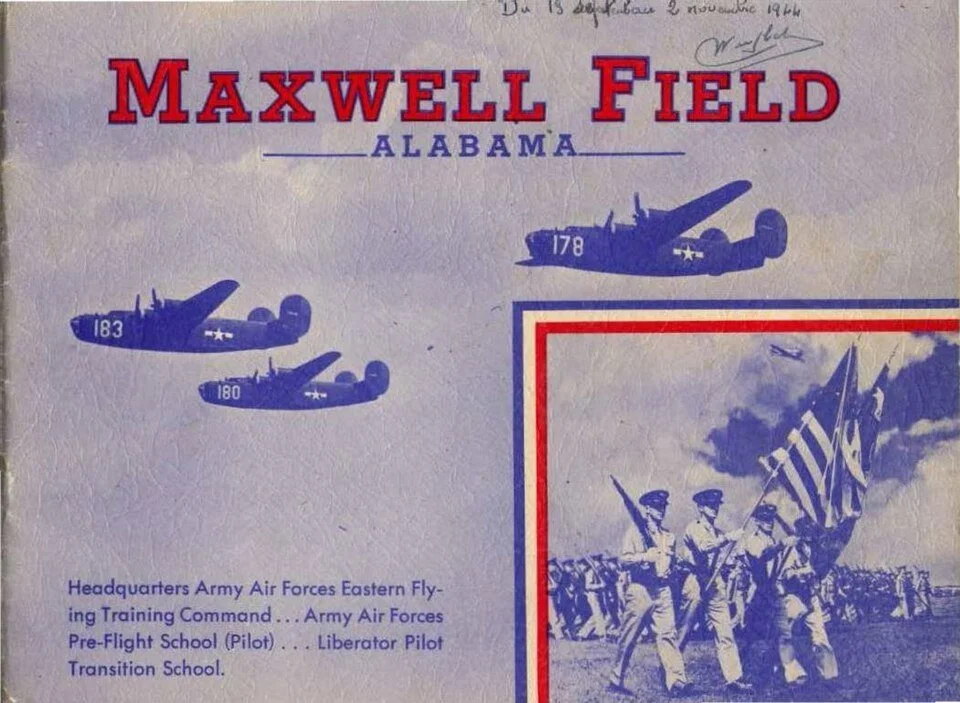
Pictorial of Maxwell Field, Montgomery, Alabama. Southeast Army Air Forces (SEAAF) Training Center. Source: Public domain, US Federal Government, available here.
The Crucible of 1941: Expansion, Rigor, and the Pre-War Pipeline
While American military aviation technically took flight before World War I—beginning with the U.S. Army Signal Corps in 1907—the rapid escalation of World War II forced a complete transformation of American air power. In June 1941, the military formally established the U.S. Army Air Forces, attempting to bridge the growing divide between traditional Army ground command and the rapidly evolving demands of military aviation.
· 1907: Signal Corps
· 1920: Air Service
· 1926: Air Corps
· 1941: USAAF
With aircraft technology advancing at a blistering pace, the nation faced an immediate, staggering bottleneck: producing tens of thousands of combat-ready pilots, navigators, and aircrews virtually overnight.
Pioneer Roots and High Entry Standards
The roots of American flight instruction stretched back to the founders of aviation. Early Army aviators had trained under the direct lineage and instruction of the Wright brothers. As the military scaled up for World War II, those foundational instruction techniques evolved into standardized, highly demanding pipelines.
Prior to Pearl Harbor, applicants were required to have completed at least two years of college education, alongside passing strict physical and cognitive evaluations. Although wartime demand forced adjustments to entry policies, the training itself became even more intense. Accepted applicants were placed into the College Training Detachment (CTD), spending approximately six months on university campuses taking academic courses taught by civilian professors—physics, higher mathematics, geography, and meteorology—while undergoing military drill and physical conditioning.
Maxwell Field and the 10-Week Screening
Following CTD, cadets moved to major pre-flight processing hubs such as Maxwell Field in Montgomery, Alabama, for an intensive 10-week screening program split evenly into two phases:
1. Weeks 1–5 (Academic & Tactical Theory): Cadets spent long hours in classrooms studying military customs, mastering Morse code, learning navigation math, and memorizing aircraft and naval silhouettes to instantly distinguish Allied from Axis forces.
2. Weeks 6–10 (Field & Marksmanship): Instruction shifted outdoors to tactical field exercises and live-fire marksmanship with .45-caliber pistols, .30-caliber carbines, and Thompson submachine guns.
Ground School and the "Blue Box" Simulator
Those who cleared pre-flight moved into 100 hours of intensive ground training. Before touching an actual aircraft, cadets were introduced to instrument flight through the Link Trainer—a hooded, pneumatic flight simulator affectionately known as the "Blue Box."
Inside the enclosed cockpit, cadets learned to navigate purely by instruments, radio signals, and blind orientation, forcing them to trust their gauges over physical instinct.
Voices from the Flight Line: The Human Weight of Cadet Life
While official manuals outlined the curriculum, the true weight of USAAF training lived in the firsthand accounts of the cadets who survived it. In The Lost Airman: The Epic Rescue of a WWII US Bomber Crew Stranded Behind Enemy Lines (2022), author Charles Stanley Jr. documented the harrowing experiences of his father, Charles Stanley Sr., who trained as a B-24 Liberator bomber pilot. His account strips away any romanticized nostalgia of wartime preparation.
"Horrible and Hard": Winter in Atlantic City
Before ever setting foot in a cockpit, cadets were subjected to basic indoctrination environments that tested physical survival just as much as military discipline. During the harsh winter in Atlantic City, New Jersey, luxury boardwalk hotels converted into stark military quarters became breeding grounds for illness and extreme exposure:
"Boot camp for Army Aviation, horrible and hard. Winter in Atlantic City, unheated quarters, lightweight short-sleeve uniforms, inoculations, drills, and sub-zero temperatures without overcoats. Many got frostbite and forced into a circle, interlocking arms, and taking turns breaking out through the arms."
Cadets endured grueling physical conditioning in inadequate gear, enduring endless rounds of medical inoculations and battling sub-zero winds that left many with lasting injuries before their flight training even began.
· College Training Detachment: 6 Months: Academics & Military Drill
· Pre-Flight: Maxwell Field: 10 Weeks: Classroom & Marksmanship
· Ground School & Link Trainer:100 Hours: Instrument Flight
· Single-Engine Track: Pursuit / Fighters. Multi-Engine Track: Bombers & Transports
Psychological Screening and the "Washout" System
The academic and psychological screening was relentless. Cadets faced exhaustive paper-and-pencil examinations, spatial reasoning tests, and invasive psychological evaluations designed to weed out candidates under intense pressure—including questions designed to eliminate anyone suspected of non-conforming traits or emotional instability.
The attrition rate was intentionally high, often reaching 30%. However, failing out of pilot school did not mean leaving the war effort; the USAAF systematically funneled washouts into other critical, high-risk aircrew specialties:
· Navigators: Mastering complex dead-reckoning and celestial navigation.
· Bombardiers: Learning the top-secret Norden bombsight.
· Radio Technicians & Gunners: Operating vital equipment and defending aircraft under live fire.
· Ground Support & Infantry: Reassigned to airfield maintenance or standard Army infantry units.
From Biplanes to Warbirds: The Lethal Leap to Advanced Pursuit
Once cadets cleared pre-flight, they were divided based on physical aptitude and test scores: single-engine tracking for pursuit (fighter) pilots, or multi-engine tracking for bomber and transport pilots.
The Primary Foundation: The PT-17 Stearman
Every cadet’s journey into the sky began in the open cockpit of a primary trainer, most notably the PT-17 Stearman biplane. Simple, rugged, and forgiving, the Stearman was built to teach fundamental airmanship.
· Dual Instruction: Cadets completed a mandatory 13 hours of dual flight instruction sitting in front of an instructor before attempting their first solo takeoff.
· Flight Time Requirements: Before a cadet could completely solo and graduate, they had to log a strict minimum of 60 total flight hours mastering stalls, spins, forced landings,
· and precision patterns.
The Shock of Advanced Pursuit: The P-38 Lightning
The transition from a gentle biplane to a front-line fighter was a dramatic shock. Cadets selected for advanced pursuit found themeselves strapped into cutting-edge warbirds like the twin-engine Lockheed P-38 Lightning.
Powered by twin Allison engines delivering over 2,500 total horsepower, the P-38 could hit straight-line speeds exceeding 400 mph. Its nose housed concentrated fixed armament capable of firing over 4,000 rounds per minute. However, with no dual-control trainer version available early on, a pilot's first flight in a P-38 was also their first time flying a twin-engine fighter completely alone. The complex engine controls, high wing-loading, aerodynamic "compressibility" in dives, and torque made it exceptionally hazardous to handle.
The Bloodbath on Domestic Soil
As historian John R. Bruning documented in Race of Aces (2020), the initial training phase for the P-38 was plagued by an alarming frequency of catastrophic accidents across stateside bases:
· April 1942: 20 major P-38 training crashes.
· May 1942: Crashes doubled to 40 in 31 days.
· June 1942: Another 30 crashes recorded.
These were not abstract statistics—they brought destruction directly to military installations and civilian neighborhoods. In Seattle, a takeoff engine malfunction sent a P-38 crashing directly into an airfield mess hall, killing the young pilot and two enlisted soldiers inside. In another incident, a stalled Lightning plunged straight into a residential home, taking the lives of both the cadet pilot and a civilian housewife.
Heavy Armor, Heavy Responsibilities: Bomber Crews and Gunnery School
For pilots assigned to twin-engine and four-engine aircraft—such as the B-25 Mitchell, B-24 Liberator, and B-17 Flying Fortress—the challenge was entirely different. They were preparing to command floating military fortresses manned by nine to ten airmen.
Command Without Leadership Training
Bomber pilots were required to master every station on the aircraft, logging hours with flight instructors, training in Link simulators, and learning flexible gunnery and electrical systems. Yet, as Charles Stanley Jr. noted, the USAAF spent months teaching cadets the intricate mechanics of a multi-engine bomber while completely ignoring how to actually lead human beings:
"The thing about the training is they never trained them to actually be leaders. They trained them on everything else about the plane, but never trained them how to be a leader of the crew."
Without formal leadership instruction, young 20-year-old pilots had to figure out on their own how to build trust, enforce discipline, and weld ten individual airmen into a single, cohesive combat unit.
The greatest hurdle in the heavy bomber pipeline was instrument training. Cadets had to log at least 40 hours of dual instruction, learning to navigate and recover from spins under a canvas hood relying entirely on cockpit gauges. The sheer mental strain of instrument flying became the single most common reason bomber pilots washed out.
The Men Behind the Guns
For many aerial gunners, their journey to the waist windows and ball turrets began after washing out of pilot school. In Inferno: The True Story of a B-17 Gunner's Heroism and the Bloodiest Military Campaign in Aviation History, author Joe Pappalardo captures this frustration through the story of Maynard Harrison Smith Sr., a 31-year-old gunner in the Eighth Air Force.
Smith described ground gunnery school as unchallenging and tedious, dominated by dry classroom lectures on trajectory math and training flights in obsolete, unbalanced aircraft like early B-26 Marauders that poorly simulated enemy fighter passes.
Despite the dull lectures, the hands-on mechanical training was brutally thorough. Gunners were forced to become master armorers of their heavy .50-caliber Browning M2 machine guns:
· Blindfolded Disassembly & Repair: Trainees were forced to strip, repair, clear simulated jams, and reassemble their weapons completely blindfolded, ensuring they could fix a jammed gun by touch alone in a freezing, smoke-filled bomber compartment.
· Flexible Gunnery Simulators: Students trained on moving target mounts, learning to calculate target "lead" and fire controlled, disciplined bursts.
The weight of that responsibility fell on airmen like B-17 gunner Rudy Ortega, who endured these exact training regimens before taking his place over Europe—where his bomber was ultimately shot down over Germany. The grueling hours spent stripping guns blindfolded on dusty American airfields were often the only reason these men survived when combat began.
The "Flying Coffins": The Unsung Courage of WWII Glider Pilots
Of all the aviators who took to the skies, none faced a more perilous mission—or received less recognition—than the combat glider pilots (MOS 1026).
Unlike the men who progressed through the traditional pursuit or bomber tracks, glider pilots bypassed standard pilot cadet pipelines, stepping onto remote airfields like South Plains Army Air Field (SPAAF) in Lubbock, Texas, or Finney Field to learn unpowered flight.
· Heavy Rope Tow Line
· WACO CG-4A Combat Glider
· C-47 Transport Tow Plane
· Unpowered Descent
· One-Way Tactical Drop Behind Enemy Lines
Built to Drop, Not to Return
The aircraft they flew—most notably the WACO CG-4A—were disposable machines constructed from light steel tubing, balsa wood, canvas fabric, and heavy-duty adhesives. They had no engines, no armor plating, and no second chances. Once released from their C-47 tow planes, glider pilots had a single opportunity to land on unpaved fields, dirt roads, or clearings behind enemy lines.
Designed to deliver infantry, jeeps, light artillery, and ammunition directly into hostile territory, every glider mission was a one-way trip. Once on the ground, the pilot's job was far from over—they picked up rifles and fought on the front lines alongside airborne troops.
High Fatality Rates and "Dead-Stick" Training
It did not take long for airmen to give these fragile wood-and-fabric crafts a grim nickname: "The Flying Coffins."
Training required pilots to master "dead-stick" forced landings—executing steep, engine-free dives in light aircraft (like L-4s and TG-4s) into small, unlit landing zones. They then scaled up to heavy CG-4A gliders, practicing night formation landings under turbulent conditions. Snapped towlines, structural collapse upon impact, and mid-air collisions were constant threats.
The Unforgiving Numbers: Domestic Bloodshed and Crash Statistics
The brutal reality of military aviation mobilization was recorded in stateside crash logs. Across World War II, the USAAFrecorded over 52,000 domestic training accidents resulting in more than 15,000 fatalities. On American soil alone, roughly 7,000 military aircraft were destroyed in non-combat incidents—a staggering statistic where stateside training hazards rivaled or exceeded the risks of combat missions.
52,000+ Total Domestic Training Accidents -> 15,000+ Airmen Fatalities and 7,000 Aircraft Destroyed
Factors Driving the High Accident Rate
· The Horsepower Gap: Cadets transitioned directly from 600-hp trainers (like the AT-6) straight into 2,000-hp warbirds (like the P-47 Thunderbolt) without dual-seat trainer variants.
· Handling & Visibility: Long noses completely blocked forward visibility during taxiing, while narrow-track landing gear made high-speed landings prone to violent "ground loops."
· Mechanical Torque: Massive radial engines produced immense torque that could flip an aircraft into an unrecoverable spin immediately upon takeoff.
· Spatial Disorientation: Inadequate instrument training left pilots vulnerable to cloud-cover disorientation, fuel exhaustion, and navigational errors during night formation flights.
Domestic Training Toll by Aircraft Type
Disaster in the Public Eye: The St. Louis Glider Tragedy
While many training crashes occurred on remote desert airfields, the inherent fragility of the glider program was brought into horrifying public view on August 1, 1943, at Lambert Field in St. Louis.
During a public demonstration flight intended to showcase the WACO CG-4A glider to military officials and civic leaders, a defective wing-support bolt failed at high altitude. Spectators watched in horror as the glider's right wing buckled and sheared completely away. The engine-less craft plunged straight into the ground, instantly killing all ten people aboard—including St. Louis Mayor William D. Becker, USAAF officers, and local civic leaders.
Honoring the Legacy Behind the Wings
The United States Air Force that we know today was forged in the trial, error, and immense sacrifice of World War II training grounds. The tens of thousands of young airmen who stepped onto dusty airfields across America faced a grueling, dangerous environment where victory was never guaranteed, and survival was fought for every single day.
Before the missions over Europe or the Pacific ever made headlines, these men and women—the USAAF aircrews, the courageous WASP, the trailblazing Tuskegee Airmen, and the daring glider pilots—proved their valor on home soil. Their determination, their struggles, and the thousands of lives lost during training remain a foundational, unwritten chapter of military aviation. It is a legacy defined not just by the missions they flew, but by the extraordinary price they paid simply learning how to take to the skies.
Special Acknowledgments & Dedication
In Memory of Rudy Ortega and His Crew
This article is dedicated with profound respect to the memory of my great-grandfather, Rudy Ortega, who served as an aerial gunner aboard a B-17 Flying Fortress.
Like thousands of young men who answered the call, Rudy endured the grueling, hazardous gauntlet of USAAF training on domestic soil before taking his station in the freezing skies over occupied Europe. When his bomber was shot down over Germany, he and his crew faced the ultimate test of survival and endurance.
This work honors Rudy, the crewmates who flew beside him, the brave men lost along the way, and the unimaginable hardships they endured in the air and on the ground. Their sacrifice, grit, and quiet courage remain an enduring inspiration.
Special Thanks
Heartfelt gratitude and special recognition are extended to the Commemorative Air Force Museum in Orchard Farm, Missouri, and the members of the Ghost Squadron.
Thank you for opening the doors to your home museum, sharing priceless historical expertise, and providing invaluable information for this article. Your dedication to preserving living history ensures that the stories, aircraft, and unwritten sacrifices of World War II aviators will never be forgotten.
Enjoyed the piece?
Join thousands of history readers getting occasional updates on new blog posts, books, and video releases — plus a free history book to get you started.
Works Cited & Resource Page
Primary Historical Accounts & Books
· Bruning, John R. Race of Aces: Gallantry, Grit, and WWII's Unsung Air War. Hachette Books, 2020. (Source for P-38 Lightning training statistics, fatality rates, and domestic crash reports).
· Pappalardo, Joe. Inferno: The True Story of a B-17 Gunner's Heroism and the Bloodiest Military Campaign in Aviation History. St. Martin's Press, 2020. (Source for aerial gunnery training experiences and Maynard Harrison Smith Sr.'s accounts).
· Stanley, Charles Jr. The Lost Airman: The Epic Rescue of WWII US Bomber Crew Stranded Behind Enemy Lines. Regnery History, 2022. (Source for Charles Stanley Sr.'s firsthand experiences in Atlantic City indoctrination, B-24 bomber pilot training, and night flight training accidents).
Archival Institutions & Historical Organizations
· Commemorative Air Force Museum & Ghost Squadron (Orchard Farm, Missouri). Onsite archival materials, aircraft exhibits, and oral history consultations.
· National WWII Glider Pilots Association (Leon B. Spencer Research Team). Training syllabus documentation, MOS 1026 flight records, and CG-4A glider pilot operational history.
· National Archives and Records Administration (NARA) / National Personnel Records Center (NPRC) (St. Louis, Missouri). WWII military personnel records, flight crew manifests, and draft documentation.
· Air Force Historical Research Agency (AFHRA) (Maxwell AFB, Alabama). Official lineage and historical statistical records of the USAAF training command.
· State Historical Society of Missouri (SHSMO). Historical newspaper archives detailing the August 1, 1943, Lambert Field glider crash in St. Louis, Missouri.
· World War II Research and Writing Centers / Domestic Accident Records. Compiled stateside military aviation casualty data and domestic aircraft loss reports (1941–1945).