
In the history of confidence tricks, there is a distinction between scams that rely on greed and those that rely on vanity. The most effective rely on both. In May 1925, inside a private suite at the Hotel de Crillon in Paris, a man who had no connection to the French government, no legal authority, and no right to be in the building convinced five of the wealthiest industrialists in France that they were about to purchase the Eiffel Tower for scrap metal. One of them paid. Six months later, the same man returned and tried to sell it again.
Sami Hashem explains.
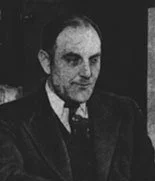
A grainy image of Victor Lustig. Source: Public domain, from a Philadelphia newspaper, available here.
Paris, Spring 1925: A Monument in Crisis
To understand why anyone could believe the Eiffel Tower was for sale, it is necessary to understand what the tower meant in 1925.
When Gustave Eiffel completed the 330-meter iron tower for the 1889 Exposition Universelle, it was intended as a temporary structure. Its permit was for 20 years. It was meant to be dismantled in 1909. It survived only because its height made it a perfect radio antenna, a military advantage the French army was reluctant to lose during the First World War.
By 1925, it was 36 years old. It had never been truly loved by Parisians. In 1887, a group of prominent artists and writers including Guy de Maupassant and Charles Garnier had published a letter calling it a "gigantic black smokestack" that would deface Paris. Its iron was rusting. Its paint — 60 tons of it — needed to be reapplied every seven years. A newspaper article in early 1925 openly discussed the escalating maintenance costs and asked whether the city could continue to afford it. The article noted that public sentiment still ran against the tower in some quarters, and that demolition was at least theoretically discussed in municipal budgets.
This was the article Victor Lustig read.
Lustig was born on January 4, 1890, in Hostinné, Bohemia, then part of the Austro-Hungarian Empire and now in the Czech Republic. By his mid-thirties, he was already one of the most notorious con men operating between Europe and America. He spoke five languages fluently — Czech, German, English, French, and Italian. He was handsome, impeccably dressed in bespoke suits, and possessed what police reports from the era describe as an almost hypnotic charm. His previous scams included posing as a government official to sell non-existent property in New York, running a highly successful "money box" con — a mahogany box that supposedly printed $100 bills, which actually contained a mechanism that dispensed two real bills before producing blank paper — and later, even swindling Al Capone out of $5,000 in a way that left Capone impressed rather than angry.
Lustig understood that the best cons do not sell a product; they sell inclusion in a secret.
The Forger and the Ministry
Lustig's plan was methodical. First, he hired a professional forger — a man known in the Parisian underworld for his ability to replicate official documents — to produce stationery for the Ministère de Postes et Télégraphes, the Ministry of Posts and Telegraphs, which technically had jurisdiction over the tower because of its radio antenna.
The stationery was perfect: the official seal, the correct typeface, the formal language of the French bureaucracy. Lustig then wrote letters to six of Paris's leading scrap iron dealers. He chose scrap dealers specifically because they would understand the value of 7,300 tons of high-grade wrought iron, and because they were accustomed to large, confidential government contracts for demolitions.
The letter was a masterpiece of bureaucratic vagueness and implied importance. It stated that the Deputy Director General of the ministry would be conducting a confidential discussion regarding the possible disposition of the Eiffel Tower due to maintenance costs. It requested the recipient's presence at the Hotel de Crillon on the Place de la Concorde at 10 a.m. on a specific date. It stressed that the matter was highly confidential due to anticipated public outcry.
He chose the Hotel de Crillon deliberately. It was not the most expensive hotel in Paris by accident — it was the most prestigious, directly associated with government negotiations and peace treaties. The Treaty of Versailles had been signed there. Meeting there signaled that this was state business of the highest level. Lustig paid for the suite in advance, in cash.
The Secret Meeting: 20 May 1925
On the morning of May 20, 1925, five of the six dealers arrived. One had declined, suspecting a hoax.
Lustig, introduced as Monsieur Lustig, Deputy Director General, was waiting in a tailored suit, with a second man acting as his secretary, taking notes. He thanked them for their discretion.
He began with a presentation that was, in fact, largely true. He discussed the tower's history, its cost, its rust, the public complaints, the municipal budget pressures. All of this was verifiable. Then he pivoted: due to these pressures, the government had concluded that demolishing the tower and selling it for scrap was the most financially responsible course. However, because of its status as a symbol of Paris, the decision had to be handled quietly to avoid public hysteria. The government wanted to award the contract to a reputable Parisian firm that could handle such a sensitive demolition discreetly.
He then invited them into a private limousine — rented for the day — and took them to the tower itself. He walked them around the base, pointing out the corrosion, discussing logistics, estimating the tonnage, calculating the scrap value in front of them, all while real government inspectors — actually just tourists — walked by. The tour was theater, but it was convincing theater.
Back at the hotel, Lustig explained that the contract would be awarded within four days. He asked them to submit sealed bids.
The trap was set.
The Sale: André Poisson
Of the five dealers, André Poisson was the most vulnerable. Unlike the others, who came from established industrial families, Poisson had only recently risen to prominence. He was ambitious, insecure in the presence of the old elite, and desperate to cement his reputation with a landmark government contract. Lustig's accomplice, who had been gathering intelligence on the dealers, identified this.
The day after the group meeting, Lustig invited Poisson to a private meeting in the same suite. He told Poisson that his bid was the strongest, but that there were political considerations. Another dealer had influential connections. To ensure fairness, Lustig suggested, the decision should be made on merit — but merit, in French government contracting, required a certain understanding.
He implied that a bribe was expected. It was not unusual, he suggested, for such a large contract. It was how things were done.
Poisson, seeing both the immense profit from 7,300 tons of iron and the social prestige of being the man who demolished the Eiffel Tower, agreed. He paid Lustig approximately 250,000 francs — at the time, about $50,000, equivalent to roughly $800,000 to $1 million today depending on the conversion method — comprised of both the bribe and a supposed deposit on the tower itself.
In return, Lustig handed over a stack of documents, all forged, transferring ownership of the Eiffel Tower to Poisson for demolition purposes, complete with official stamps and signatures.
That evening, Lustig took the Orient Express to Vienna, carrying the cash in a leather valise. His accomplice followed on a separate train.
Poisson never went to the police. He was too humiliated. He had bought the Eiffel Tower from a man who had no right to sell it. He had paid a bribe to a fake official. Lustig had correctly predicted that shame would be a more effective silencer than any threat.
For weeks, no one in the French government knew the tower had been sold.
The Second Attempt: November 1925
This silence emboldened Lustig. If one Parisian scrap dealer could be too ashamed to report the crime, perhaps another would be as well.
In November 1925, six months after the first sale, Lustig returned to Paris and repeated the entire operation verbatim: same forged stationery, same hotel, same speech, six new invitations to scrap dealers.
This time, however, the outcome was different. One of the dealers he invited, while initially interested, became suspicious before paying. The scale of the transaction, the insistence on secrecy, and perhaps a rumor that had begun to circulate in the scrap trade about a similar offer months earlier, prompted him to contact the police directly.
When the police arrived at the Hotel de Crillon, Lustig had already fled. He escaped to the United States, where he would go on to even greater notoriety.
The Downfall and the Legacy
In America, Lustig's most famous subsequent con involved a "money box" that he sold to investors for $10,000 to $46,000, claiming it could print perfect $100 bills. The machine actually contained two real $100 bills that it dispensed before producing blank paper, convincing victims that it simply needed time to print more. He even managed to con Al Capone: he borrowed $50,000 from Capone, held it for two months, then returned it claiming his deal had fallen through. Capone, impressed by his apparent honesty, gave him $5,000 as a reward — which had been Lustig's goal all along.
His final act was counterfeiting. He produced counterfeit dollar bills so convincing that the U.S. Secret Service called them "Lustig notes." They were so good that they triggered a minor economic panic in the early 1930s.
He was arrested in New York in 1935 after his mistress, jealous of his other affairs, turned him in. He was sentenced to 20 years in Alcatraz Federal Penitentiary. He died of pneumonia there on March 11, 1947, and his death certificate listed his occupation as "salesman."
The Eiffel Tower was, of course, never demolished. In 1925 it was repainted, and its lease was extended. It went on to become the most visited paid monument in the world, receiving nearly seven million visitors a year.
Why the Story Still Resonates
The Victor Lustig case endures not because people are foolish enough to believe the Eiffel Tower could be sold — no one would believe it if approached on the street — but because Lustig understood how context manufactures credibility.
He did not sell the tower; he sold the bureaucracy around the tower. The official letterhead, the luxury hotel associated with treaties, the limousine tour, the mention of confidential government budgets, the request for a bribe — which paradoxically made it seem more real, because corruption feels real — all these details created a world in which selling the Eiffel Tower felt like a plausible administrative decision rather than an absurdity.
In that sense, it is structurally identical to the Cottingley Fairies hoax that fooled Arthur Conan Doyle. In both cases, the victims were not unintelligent; they were primed. Doyle wanted to believe in fairies because of his grief. Poisson wanted to believe he had been selected for a secret, lucrative government contract because of his ambition. And in both cases, a carefully staged performance — paper cutouts on hatpins in one case, forged stationery in a hotel suite in the other — was enough to override common sense.
The fact that Lustig was able to attempt the same con twice, in the same city, using the same story, and nearly succeed again, speaks to perhaps the most enduring lesson of the scam: shame ensures silence, and silence allows the scam to be repeated.
Enjoyed the piece?
Join thousands of history readers getting occasional updates on new blog posts, books, and video releases — plus a free history book to get you started.