William Speakman stands as one of the most striking examples of individual courage in the Korean War, a conflict often overshadowed by the Second World War and the later trauma of Vietnam, yet one that produced acts of gallantry no less extraordinary. His Victoria Cross was earned during the bitter fighting of the Second Battle of Maryang-san in November 1951, when United Nations forces were locked in a relentless struggle against repeated and determined assaults by Chinese troops. Speakman's actions—charging forward under heavy fire with his pockets stuffed full of grenades—were not only physically daring but psychologically decisive, galvanizing exhausted comrades at a moment when pressure, cold, and fear threatened to overwhelm them.

Terry Bailey explains.
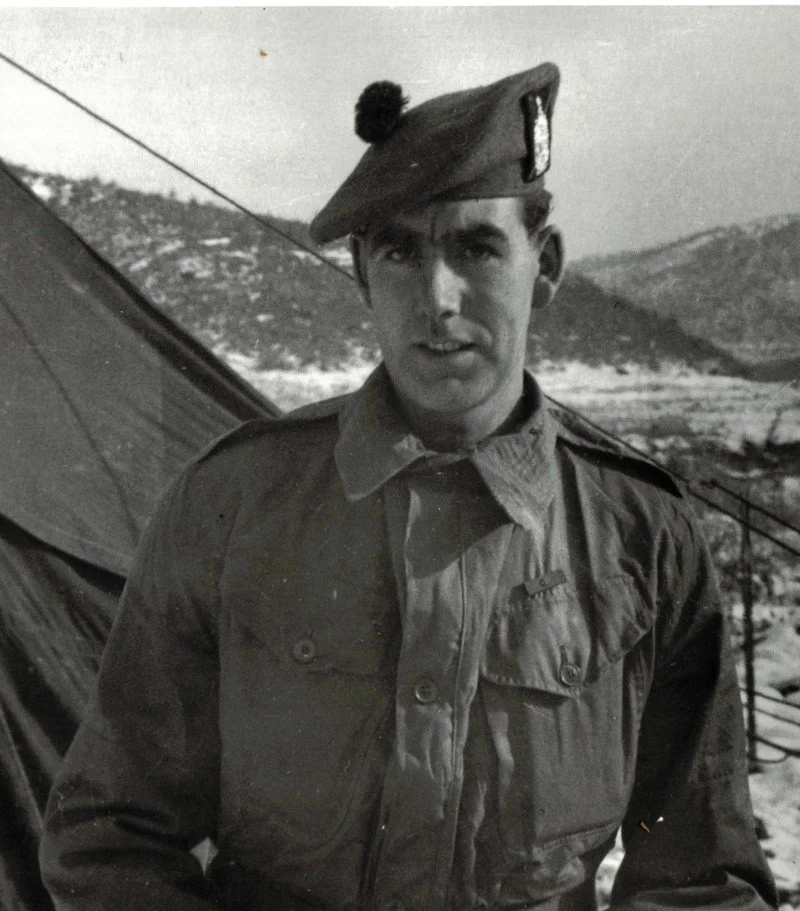
William Speakman-Pitt, Victoria Cross.

Born in 1927 in Altrincham, Cheshire, William Speakman grew up in a Britain shaped by economic hardship and looming global instability. His early life was unremarkable in the way that many working-class childhoods of the interwar years were, marked by austerity, discipline, and the formative experience of the Second World War on the home front. Air raids, rationing, and the omnipresence of uniformed men left a deep impression on an entire generation, instilling both resilience and a familiarity with sacrifice. Nothing in Speakman's youth suggested that he would one day perform an act of heroism that would be recognized at the highest level, yet his background fostered the quiet toughness and sense of duty that later defined his conduct.

In the post-war years, as Britain struggled to redefine itself amid imperial decline and economic strain, military service remained a steady path for many young men. Speakman enlisted in the army and joined the King's Own Scottish Borderers, a regiment with a long and distinguished history. For Speakman, as for countless others, the army offered structure, camaraderie, and purpose. By the time he was deployed to the Far East, he was a private soldier rather than an officer or senior non-commissioned leader, a fact that would later make his actions all the more remarkable. His courage was not the product of rank or expectation, but of individual resolve under extreme circumstances.

The Korean War began in June 1950 when North Korean forces crossed the 38th parallel and launched a surprise invasion of South Korea. The rapid collapse of South Korean defenses prompted a United Nations response, spearheaded by the United States but supported by forces from across the Commonwealth and beyond. British troops, including the King's Own Scottish Borderers, soon found themselves fighting in a conflict that was as politically complex as it was militarily brutal. The initial phase of the war was highly mobile, with dramatic advances and retreats, but this fluidity changed dramatically following the intervention of Chinese "People's Volunteer Army" forces late in 1950.

The Chinese entry transformed the war. Mass infantry attacks, often conducted at night and supported by mortars and bugle calls, pushed UN forces back and shattered any illusion of a quick victory. By 1951 the conflict had settled into a grinding stalemate, with both sides contesting rugged hills and ridgelines across central Korea. These features, often barren, steep, and exposed, dominated the surrounding terrain and supply routes, making them tactically invaluable and fiercely contested. Battles were fought not for sweeping territorial gains, but for individual hills whose names were often little more than map references, yet whose possession could decide the fate of an entire sector.

The Second Battle of Maryang-san formed part of this wider struggle for dominance in the hills north of the Imjin River. Maryang-san was not a single peak but a complex of interconnected heights, heavily fortified by Chinese troops who had dug deep defensive positions into the rocky ground. The King's Own Scottish Borderers were tasked with holding these positions against determined counterattacks once they had been taken. The conditions were appalling: freezing temperatures sapped strength and concentration, while constant shelling and small-arms fire left little opportunity for rest. Sleep was scarce, nerves were frayed, and the line between endurance and collapse grew increasingly thin.

On the 4th of November 1951, Chinese forces launched a renewed assault against positions held by Speakman's platoon. Attacking in strength and using the cover of broken ground, they pressed forward with the clear intention of overwhelming the defenders. It was during this critical moment that William Speakman's extraordinary courage came to the fore. Recognizing that the attackers were closing in and that defensive fire alone might not be enough, Speakman volunteered to carry grenades forward to the most threatened areas. Stuffing his pockets with as many grenades as he could carry, he moved out into the open, fully exposed to enemy fire.

From forward positions, Speakman hurled grenade after grenade into the advancing Chinese troops, disrupting their formations and forcing them to take cover. Each throw required him to stand, aim, and expose himself anew to small-arms and mortar fire. The physical danger was immense, but so too was the psychological strain. Yet Speakman persisted, returning to resupply and then advancing again as the pressure mounted. His actions bought precious time for his platoon, blunting the momentum of the attack at a moment when it threatened to break through.

What truly set Speakman apart was not a single moment of reckless bravery, but his repeated willingness to do it again. When another Chinese attack developed from a different direction, he once more filled his pockets with grenades and advanced alone. Again he pelted the enemy at close range, his conspicuous courage visible to all around him. Inspired by his example, other soldiers followed him forward, strengthening the defense and restoring confidence along the line. In an environment where fear and exhaustion could so easily paralyze action, Speakman's initiative transformed the psychological balance of the fight.

The official citation for William Speakman's Victoria Cross captured both the physical and moral dimensions of his conduct. It highlighted not only his gallantry under fire, but also the inspirational effect his actions had on those around him. He had no obligation, by rank or formal responsibility, to expose himself in this way, yet he did so repeatedly and deliberately, fully aware of the danger. His behavior embodied the traditional ideals of the Victoria Cross: "most conspicuous bravery" and "self-sacrifice in the presence of the enemy." In the attritional warfare of Korea, where heroism often went unseen amid artillery barrages and night fighting, Speakman's actions stood out with rare clarity.

Following the war, William Speakman returned to civilian life and later adopted the surname Speakman-Pitt. Like many veterans of Korea, he carried his experiences quietly, rarely seeking public attention despite the prestige of his award. He remained closely associated with his regiment and was deeply respected within military and veterans' communities, attending commemorative events and maintaining strong bonds with former comrades. Those who knew him often remarked on his modesty and reluctance to dwell on his own heroism, a trait shared by many recipients of the Victoria Cross.

William Speakman died in 2018, closing a life that spanned post-war Britain and one of the Cold War's most intense and unforgiving conflicts. His Victoria Cross action at Maryang-san remains inseparable from the broader story of the Korean War—a war defined by harsh terrain, extreme weather, and ferocious close-quarter fighting. Yet within that wider struggle, his courage retains a distinct clarity. Armed with little more than grenades and determination, a private soldier repeatedly stepped forward when it mattered most, turning the tide of a desperate moment and inspiring others to do the same. His story endures not simply as a tale of bravery, but as a powerful reminder that leadership and resolve can emerge from any rank when circumstances demand it.

In the final reckoning, William Speakman's story illuminates both the character of the Korean War and the enduring nature of individual courage within it. His actions at Maryang-san were not isolated feats of daring divorced from their context, but a direct response to the brutal realities of hill fighting, exhaustion, and relentless enemy pressure. In a war often reduced to statistics, diplomatic stalemate, or vague Cold War abstraction, Speakman's conduct restores the human dimension: the moment when one soldier's resolve arrests collapse, steadies frightened men, and transforms desperation into resistance. His bravery demonstrates how, even in industrialized modern warfare, the outcome of a fight can hinge on personal initiative and moral courage.

Speakman's Victoria Cross also challenges narrow assumptions about leadership and heroism. He was neither an officer issuing orders nor a seasoned veteran shaped by years of combat command, but a private soldier who recognized what the situation demanded and acted without hesitation. His leadership was instinctive rather than institutional, emerging from character rather than rank. In this sense, his actions reflect the highest traditions of the British Army and the Commonwealth forces in Korea, where cohesion, mutual trust, and example often mattered more than formal authority. The inspirational effect of his conduct, men following him forward under fire, underscores how courage can be contagious when visibly demonstrated.

Beyond the battlefield, Speakman's quiet post-war life reinforces the distinction between heroism performed and heroism advertised. Like many veterans of Korea, he returned to a society that largely moved on, carrying memories of extreme violence and hardship without public recognition commensurate with their sacrifice. That Speakman bore his fame with humility only deepens the significance of his achievement, aligning personal modesty with extraordinary public honor. His life serves as a reminder that the Victoria Cross does not celebrate aggression or glory, but selflessness under the most severe conditions imaginable.

Ultimately, William Speakman's legacy endures as both a personal testament and a wider historical symbol. His courage at Maryang-san encapsulates the intensity of the Korean War and the often-overlooked sacrifices of those who fought it. More enduring still is the lesson embedded in his story: that in moments of crisis, when fear, fatigue, and uncertainty converge, the actions of a single individual can shape events far beyond their immediate reach. In remembering Speakman, we are reminded that heroism is not confined to grand strategy or famous names, but can arise, with devastating clarity, from the determination of one soldier who refuses to yield.


The site has been offering a wide variety of high-quality, free history content since 2012. If you’d like to say ‘thank you’ and help us with site running costs, please consider donating here.
Posted
AuthorGeorge Levrier-Jones

Jack Cornwell was born on the 8th of January, 1900 in Leyton, then part of Essex, into a working-class family for whom life offered few comforts and little security. He grew up in modest surroundings and attended local schools, where he was remembered as a quiet, unassuming boy rather than an exceptional student or natural adventurer. Like many boys of his generation, Cornwell was drawn to the Royal Navy by a mixture of patriotism, the promise of steady pay, and the romance of the sea. At just fifteen years old he enlisted as a Boy Seaman in 1915, undergoing training at HMS Impregnable before being posted to active service at an age when most of his contemporaries were still in school.

Terry Bailey explains.

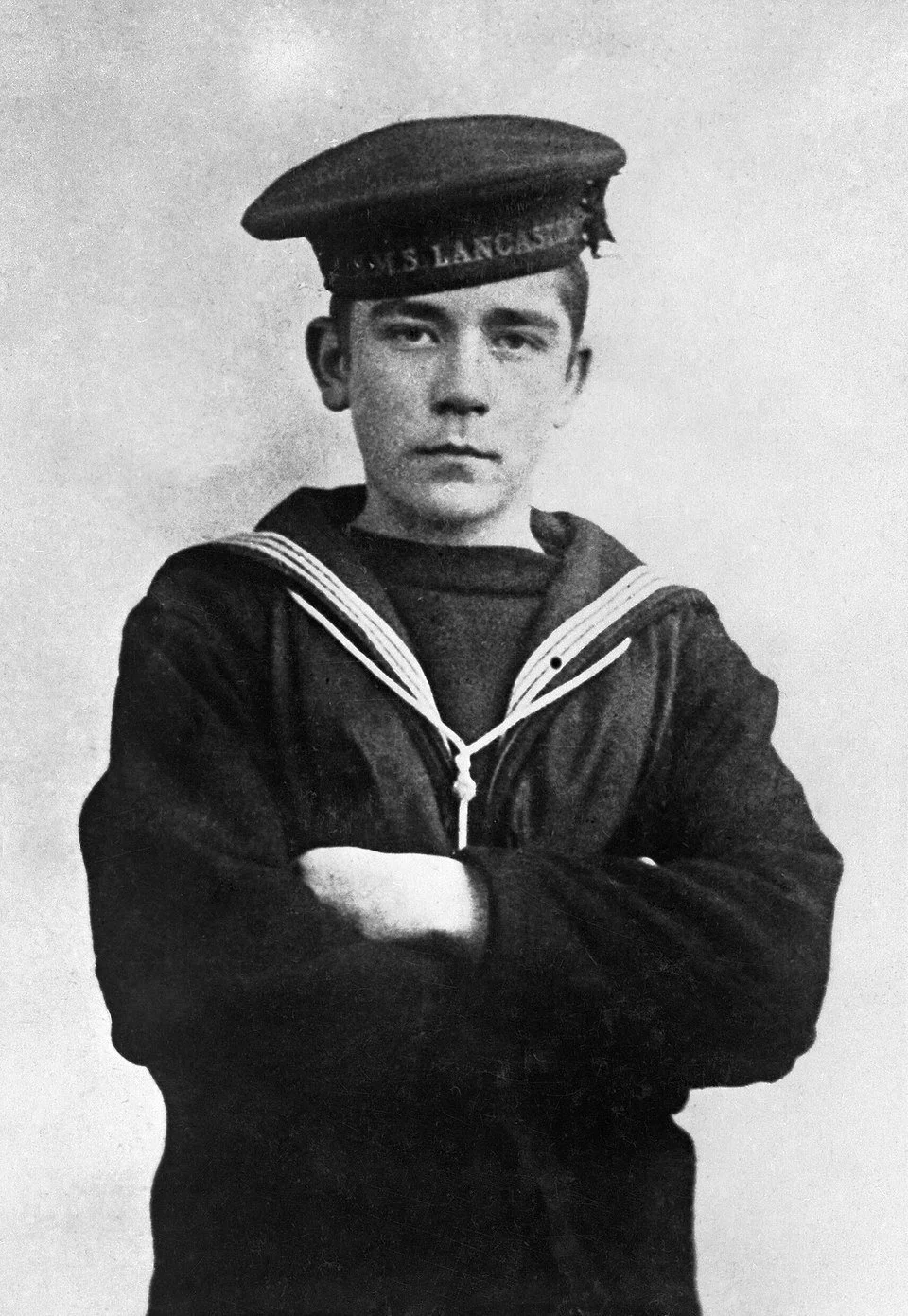
The image of Jack Cornwell as used by the press at the time of his death. It is now thought to show a younger brother.

In early 1916 Cornwell was assigned to HMS Chester, a newly commissioned light cruiser of the Royal Navy's 3rd Light Cruiser Squadron. As a Boy First Class, his duties included serving as a sight setter and loader on one of the ship's 5.5-inch guns, a demanding role that required discipline, precision, and physical stamina. Despite his youth, Cornwell adapted quickly to the routines of naval life and the responsibilities of combat readiness. By the end of May 1916, Chester was operating in the North Sea as part of the British Grand Fleet, soon to be drawn into the largest naval engagement of the First World War.

The Battle of Jutland, fought between the 31st of May and the 1st of June 1916, was the long-anticipated clash between Britain's Grand Fleet under Admiral Sir John Jellicoe and the German High Seas Fleet commanded by Vice-Admiral Reinhard Scheer. Both sides sought to gain decisive control of the North Sea, a strategic prize that would shape the course of the war. The British aimed to maintain their naval blockade of Germany, while the Germans hoped to weaken British sea power by isolating and destroying portions of the Grand Fleet. The battle unfolded amid confusion, smoke, poor visibility, and rapidly shifting tactical situations, with dozens of capital ships and cruisers exchanging fire over vast distances.

HMS Chester became engaged during the early phases of the battle when she encountered a group of German light cruisers. Outgunned and exposed, Chester came under intense and accurate enemy fire. Several German shells struck the ship, causing heavy casualties among the gun crews. One shell burst close to Cornwell's gun position, killing or disabling nearly the entire crew and inflicting severe wounds on Cornwell himself. He suffered multiple injuries to his chest and legs, wounds that would ultimately prove fatal. Despite his pain and loss of blood, Cornwell refused to leave his post. Standing alone amid the wreckage, he continued to load and aim the gun, awaiting orders and prepared to fire if commanded.

Cornwell remained at his station until the fighting subsided and Chester withdrew from the action. Only then was he discovered by officers, still upright beside the gun, gravely wounded but steadfast in his duty. He was taken to the hospital upon the ship's return to port, but his injuries were too severe. Jack Cornwell died on the 2nd of June 1916, just over a day after the battle, at the age of sixteen. His conduct, marked by extraordinary courage, discipline, and devotion to duty in the face of overwhelming danger, was soon reported to the Admiralty.

In recognition of his actions, Cornwell was posthumously awarded the Victoria Cross, the highest award for gallantry in the British and Commonwealth armed forces. The citation emphasized that he "remained standing alone at a most exposed post, quietly awaiting orders," despite being mortally wounded. His youth made his bravery all the more striking, and his story resonated deeply with a nation exhausted by war and loss. Cornwell was given a hero's funeral in London, attended by thousands, and his grave became a site of public remembrance.

The Battle of Jutland itself remains a subject of debate among historians. Tactically, the German Navy could claim a measure of success, having sunk more British ships and inflicted heavier immediate losses. However, strategically, the battle was a clear victory for Britain. The Royal Navy retained command of the sea, and the German High Seas Fleet, though not destroyed, was effectively contained. After Jutland, the German fleet rarely ventured out in strength again, conceding naval dominance to Britain and ensuring that the blockade of Germany remained intact for the remainder of the war.

Jack Cornwell's legacy endures as one of the most powerful symbols of youthful courage in British military history. He was not a seasoned warrior or a decorated officer, but a teenage sailor who, when tested under the most extreme conditions, displayed unwavering resolve and selflessness. His story embodies the quiet heroism of ordinary individuals caught in extraordinary circumstances. It serves as a reminder that courage is not measured by age or rank, but by the willingness to stand fast in the face of fear and duty.

Jack Cornwell's story endures not because it is dramatic in the conventional sense of battlefield heroics, but because of its profound simplicity. In the chaos and terror of Jutland—the smoke-filled decks, the thunder of naval guns, and the sudden loss of comrades around him, Cornwell did not perform a single spectacular act meant to turn the tide of battle. Instead, he did something far rarer and more revealing: he stayed. Mortally wounded, isolated, and fully aware of the danger, he remained at his post, embodying the quiet discipline and sense of duty instilled in him by the Royal Navy and embraced by him as a personal moral code. His courage was not impulsive or reckless, but calm, steadfast, and deeply human.

In a war often remembered for its industrial scale and impersonal slaughter, Cornwell's actions restore the individual to the center of history. He reminds us that the outcome of great events, whether a vast naval engagement like Jutland or the broader struggle of the First World War is shaped not only by admirals, strategies, and fleets, but by the conduct of ordinary men and boys placed in extraordinary circumstances. His youth, far from diminishing his heroism, underscores it, revealing how responsibility and bravery were borne by those scarcely beyond childhood during the conflict.

More than a century later, Jack Cornwell remains a symbol rather than a statistic, a name that speaks to sacrifice without bitterness and courage without bravado. His Victoria Cross represents not only gallantry under fire, but also the enduring values of duty, resilience, and selflessness in the face of overwhelming odds. In remembering Cornwell, we honor not just one young sailor, but an entire generation whose quiet endurance helped shape the course of history, and whose sacrifices continue to resonate long after the guns of Jutland fell silent.


The site has been offering a wide variety of high-quality, free history content since 2012. If you’d like to say ‘thank you’ and help us with site running costs, please consider donating here.
Lachhiman Gurung's story cannot be fully understood without appreciating the wider context of the Burma Campaign, one of the most demanding and least forgiving theatres of the Second World War. Fought across dense jungle, steep mountains, monsoon-soaked valleys, and primitive supply routes, the campaign pitted Allied forces against a Japanese army that had already demonstrated its ability to defeat larger, better-equipped opponents through mobility, surprise, and ferocious determination. Within this brutal environment, Gurung's stand in May 1945 represents not just individual heroism, but the culmination of years of attritional warfare in which endurance was often as decisive as firepower.

Terry Bailey explains.

An Inscription of Lachhiman Gurung VC's name on the "Memorial Gates", Constitution Hill, London. Source: Gorkha Warrior, available here.

Born in 1917 in the village of Chhimba in Nepal's Gorkha district, Lachhiman Gurung grew up in a society where military service was both an economic opportunity and a source of deep cultural pride. Gurkha soldiers had been recruited into the British Indian Army since the early nineteenth century, valued for their toughness, adaptability, and fierce regimental loyalty. Gurung enlisted in the 8th Gurkha Rifles, a regiment that had already seen extensive action in both world wars. By the time Japan entered the conflict in Southeast Asia in 1941, Gurkha units were among the most experienced light infantry forces available to the British Empire, well-suited to jungle warfare and long-range patrolling.

The Japanese invasion of Burma in 1942 had driven British and Indian forces into a humiliating retreat to India, but by 1944 the strategic balance had begun to shift. The failure of the Japanese offensives at Imphal and Kohima marked a turning point, after which Allied forces, reorganized and resupplied, began a relentless advance back into Burma. By 1945, the Japanese 15th Army and associated formations were exhausted, understrength, and increasingly isolated, yet they remained dangerous opponents. Japanese doctrine emphasized aggressive night attacks, infiltration, and the willingness of small units to fight to the death rather than withdraw. Defensive positions were often assaulted repeatedly at close quarters, with grenades, bayonets, and hand-to-hand combat playing a decisive role.

It was against this backdrop that Rifleman Lachhiman Gurung found himself holding a forward position near Taungdaw on the night of 12–13 May 1945. His battalion was engaged in clearing remaining pockets of Japanese resistance as Allied forces pushed southwards. Forward positions such as Gurung's were particularly vulnerable, often lightly manned and deliberately exposed to give early warning of enemy movement. Japanese troops, skilled at moving silently through jungle and darkness, frequently attempted to overwhelm such posts with sudden grenade attacks followed by a close assault.

During the night, a determined Japanese attack fell upon Gurung's trench, which he shared with two fellow Gurkhas. Grenades were hurled into the position in rapid succession. When one grenade landed directly among them, Gurung attempted to throw it clear, a reflexive act that likely saved the wider position even as it cost him dearly. The explosion tore off two of his fingers, shattered his right arm, and inflicted multiple wounds to his face and body. His two comrades were killed instantly. In most circumstances, such injuries would have rendered a soldier helpless, if not unconscious, but Gurung remained upright and aware, driven by a sense of duty that overrode shock and pain.

Alone in the trench and severely wounded, Gurung faced repeated Japanese assaults at extremely close range. The attacking soldiers were likely drawn from veteran infantry units accustomed to night fighting, armed with grenades, rifles, and bayonets, and prepared to press home attacks regardless of casualties. Gurung, unable to properly use his damaged arm, adapted with grim ingenuity. Using his remaining hand and his teeth, he picked up grenades and hurled them back at the attackers, while firing his weapon whenever possible. For several hours, he held his position, repelling one attack after another, despite loss of blood, exhaustion, and the knowledge that no immediate help could reach him.

By dawn, the Japanese attacks had ceased. The ground in front of Gurung's trench was strewn with enemy dead, grim evidence of the effectiveness of his solitary defense. More importantly, the position had not fallen. In the tightly interlinked defensive system of jungle warfare, the loss of a forward post could allow enemy forces to infiltrate behind the main line, threatening encirclement or collapse. Gurung's refusal to yield under such conditions almost certainly prevented further casualties among his unit and contributed directly to the success of the local operation.

The award of the Victoria Cross recognized not only the extraordinary courage displayed but also the broader military significance of Gurung's actions. His citation highlighted his "indomitable spirit" and "complete disregard for his own safety," qualities that epitomized the ideal of the Gurkha soldier. At a time when the Burma Campaign was approaching its conclusion, his story resonated strongly with Allied forces who had endured years of hardship in one of the war's harshest environments.

After surviving his wounds, Lachhiman Gurung was discharged from the army with a disability pension. He returned to Nepal, where, like many Gurkha veterans, he lived a modest life far removed from the battlefields that had defined his youth. Despite being one of the few Nepalese recipients of the Victoria Cross, he remained characteristically humble, rarely speaking about his wartime experiences unless pressed. In later years, he was honored at commemorative events and remembered with deep respect within Gurkha circles and beyond. Lachhiman Gurung died in 2004, leaving behind a legacy that stands as one of the most remarkable individual acts of bravery in the Second World War and a powerful reminder of the human endurance displayed during the long and punishing struggle for Burma.

In conclusion, Lachhiman Gurung's Victoria Cross stands not merely as an isolated testament to individual gallantry, but as a lens through which the wider human experience of the Burma Campaign can be understood. His actions on that night in May 1945 encapsulate the defining features of the conflict: the intimacy of jungle warfare, the relentless pressure exerted by an enemy unwilling to concede defeat, and the extraordinary physical and moral resilience demanded of ordinary soldiers. Gurung's stand was not fought on a grand battlefield before massed formations, but in a muddy trench, in darkness and isolation, where survival depended on instinct, courage, and an unyielding sense of responsibility to comrades and unit.

His story highlights the vital contribution of the Gurkhas to the Allied war effort in Asia. Recruited from remote hill villages and serving far from home, Gurkha soldiers endured conditions that tested the limits of human endurance, often with little public recognition at the time. Gurung's conduct exemplifies the ethos for which they were renowned: quiet professionalism, adaptability under fire, and a willingness to hold the line regardless of personal cost. In this sense, his bravery was both exceptional and representative, reflecting the collective sacrifice of thousands of Gurkha soldiers who fought and died in Burma's jungles.

Finally, Lachhiman Gurung's legacy endures because it speaks to something universal in the history of war. His courage was not rooted in ideology or personal ambition, but in loyalty, duty, and an instinctive refusal to abandon his post while others depended upon him. Decades after the guns fell silent in Burma, his story continues to remind us that the outcomes of vast campaigns are often shaped by moments of individual resolve. In remembering Lachhiman Gurung, we honor not only a single hero, but all those whose endurance and sacrifice underpinned victory in one of the Second World War's most arduous and unforgiving theatres.


The site has been offering a wide variety of high-quality, free history content since 2012. If you’d like to say ‘thank you’ and help us with site running costs, please consider donating here.

Posted
AuthorGeorge Levrier-Jones

The Victoria Cross stands as one of the most revered and instantly recognizable military decorations in the world. Awarded "for most conspicuous bravery … in the presence of the enemy," it has come to symbolize the highest ideal of personal courage across the British and Commonwealth armed forces. Yet its creation was not inevitable. The medal was born out of a moment of national self-reflection, forged during a war that exposed the deficiencies of Britain's honors system and the heroism of ordinary soldiers in equal measure. Its conception, minting, and enduring legacy form one of the most compelling stories in military history.

Terry Bailey explains.

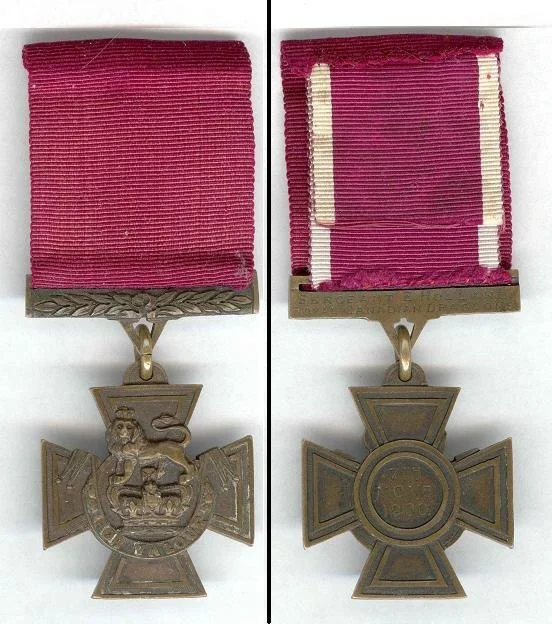
The front and back of Edward James Gibson Holland's Victoria Cross. Source: Royal Canadian Dragoons Archives and Collection, available here.

The Crimean War of 1853–1856 fundamentally reshaped Britain's approach to honoring gallantry. Prior to this conflict, no universal British award existed to recognize personal bravery on the battlefield. Instead, recognition tended to be tied to rank or social position, leaving countless acts of courage by common soldiers formally unacknowledged. The Crimean War changed this. Journalists, for the first time reporting directly from the front lines, brought stories of extraordinary heroism into Victorian homes. Reports of the Charge of the Light Brigade, the defense of the Alma, and the brutal conditions at Sevastopol stirred the public and embarrassed the government, highlighting the lack of a decoration that transcended class.

The idea for a new medal quickly took hold. Prince Albert, the Prince Consort, became one of the strongest advocates for the creation of a simple, egalitarian award. He envisioned a decoration that could be bestowed upon any serviceman—private or general—solely based on merit and bravery. Queen Victoria herself approved his vision, favoring a design that was dignified yet unpretentious. The result was a Royal Warrant issued on the 29th of January 1856, instituting a new honor: the Victoria Cross. It would be awarded sparingly and only for the most exceptional acts of valor performed in the presence of the enemy, making it a truly rare and exceptional distinction.

The first Victoria Crosses were minted in 1856, and the story of their material origin has become a key part of the medal's mystique. Tradition holds that they were made from the bronze of two Russian cannon captured during the Siege of Sevastopol. These heavy guns, relics of one of the fiercest battles of the war were transported to Woolwich, where they were broken down and melted to provide the raw material for the decoration. While later metallurgical examinations have raised questions about whether all the metal truly came from Russian guns, the symbolism of forging gallantry from captured weaponry has endured. The bronze was cast into small ingots, each used to create the distinctive cross pattée that has become synonymous with supreme bravery.

The raw material for the Victoria Cross remains a subject of fascination. A small supply of bronze, approximately 358 kilograms, has been safeguarded for more than a century and a half at the Ministry of Defence's base at Donnington. This stock is used exclusively for the casting of new medals, ensuring that each Victoria Cross shares a tangible connection to its Crimean War origins. Only a few ounces of bronze are needed for each medal, meaning the reserve is expected to last for many more generations of awards. The process of casting, finishing, and engraving each medal remains highly specialized and is carried out with deep respect for its historical lineage, preserving the continuity of tradition that began in the 1850s.

One particularly unusual feature of the first Victoria Crosses lies in their retrospective nature. Although the medal was formally instituted in 1856, the first awards recognized acts of bravery performed as far back as 1854. This meant that the earliest medals minted were created to honor deeds predating the very existence of the decoration. The inaugural investiture took place on the 26th of June 1857 in London's Hyde Park. Before a crowd of thousands, Queen Victoria herself presented sixty-two medals, many of which commemorated actions that had already become legendary in popular imagination. These first recipients set the tone for a decoration defined by humility, sacrifice, and the recognition of courage wherever it was found.

Throughout its history, the Victoria Cross has been awarded a total of 1,358 times since the medal's inception in 1856. This includes 1,355 individual recipients and three bars (second awards) for an additional act of valor. These three men, were Arthur Martin-Leake, Noel Chavasse, and Charles Upham, who all received the medal twice, earning a rare Bar for a second act of extraordinary valor. Their stories represent the pinnacle of human courage, each a testament to unwavering resolve in the face of overwhelming danger. From the trenches of the First World War, to the skies of the Second World War, to modern conflicts in the Falklands, Iraq, and Afghanistan, the medal has remained a constant, awarded sparingly to ensure its prestige and significance remain undiminished.

Today, the Victoria Cross occupies a unique place in the military culture of the United Kingdom and Commonwealth nations. Its design has remained almost unchanged since the first medal was cast. The obverse features a lion standing on the royal crown, above a scroll bearing the simple yet powerful inscription "For Valour." The crimson ribbon was selected by Queen Victoria herself, and its deep color has become iconic in its own right. The reverse of each medal is engraved with the name, rank, and unit of the recipient, as well as the date of the action for which it was awarded, personalizing each decoration as a permanent reminder of individual sacrifice.

The significance of the Victoria Cross extends far beyond its material form. It stands as a monument to the idea that bravery is not confined to rank, status, or background. Conceived at a time when society was rigidly hierarchical, the medal offered unprecedented recognition to ordinary soldiers whose courage would otherwise have gone unrecorded. Its survival into the twenty-first century speaks to the enduring relevance of its core principle: that exceptional valor deserves the highest honor a nation can bestow.

In tracing the history and conception of the Victoria Cross, from the battlefields of Crimea to the secure vaults of Donnington, a story is uncovered, not only of military decoration but of evolving national values. The medal remains a powerful symbol of courage, integrity, and humanity. It is a reminder that in the most desperate moments of conflict, individuals continue to demonstrate a level of bravery that transcends time, forging their place in history and inspiring generations to come.

The Victoria Cross endures because it represents far more than an award for bravery; it embodies a moral ideal that has remained remarkably constant despite profound changes in warfare, society, and the nature of conflict itself. From its origins in the aftermath of the Crimean War to its continued presence in modern campaigns, the medal has consistently affirmed that courage under fire is a universal human quality, worthy of the highest recognition regardless of rank, background, or circumstance. Its careful design, its symbolic material origins, and its deliberately restrictive criteria have ensured that the Victoria Cross has never been diminished by overuse or ceremony, but instead retains an almost sacred authority.

What ultimately distinguishes the Victoria Cross is its unbroken continuity. Each new award draws a direct line back to the first acts of valor recognized in the mid-nineteenth century, both materially through the bronze from which it is cast and philosophically through the values it represents. In an age where military technology and doctrine have evolved beyond anything its founders could have imagined, the essence of the medal remains unchanged: the recognition of selfless courage in the face of mortal danger. This continuity reinforces the Victoria Cross not as a relic of imperial history, but as a living tradition that continues to define the very highest standard of service and sacrifice.

In this sense, the Victoria Cross serves as a bridge between generations. It links the soldiers of Crimea with those of the world wars and the conflicts of the present day, uniting them in a shared narrative of extraordinary human resolve. Each recipient adds a new chapter to this story, yet none diminishes those that came before. Instead, the collective weight of these individual acts strengthens the medal's meaning, ensuring that it remains both a personal honor and a national symbol.

As long as courage is demanded in the service of others, the Victoria Cross will continue to hold its unique place in history. It stands as a quiet yet enduring testament to the capacity for bravery under the most extreme conditions, reminding society that while the circumstances of war may change, the values of courage, sacrifice, and integrity remain timeless.


The site has been offering a wide variety of high-quality, free history content since 2012. If you’d like to say ‘thank you’ and help us with site running costs, please consider donating here.


Note:

The ribbon of the Victoria Cross varies by service branch, with dark crimson traditionally used for the British Army and Royal Marines, (today Royal Marine Commandos, while a deep blue ribbon was originally designated for awards to the Royal Navy. In practice, the crimson ribbon has become standard across all branches since the First World War, reflecting the unification of service distinctions while preserving the medal's historic origins.