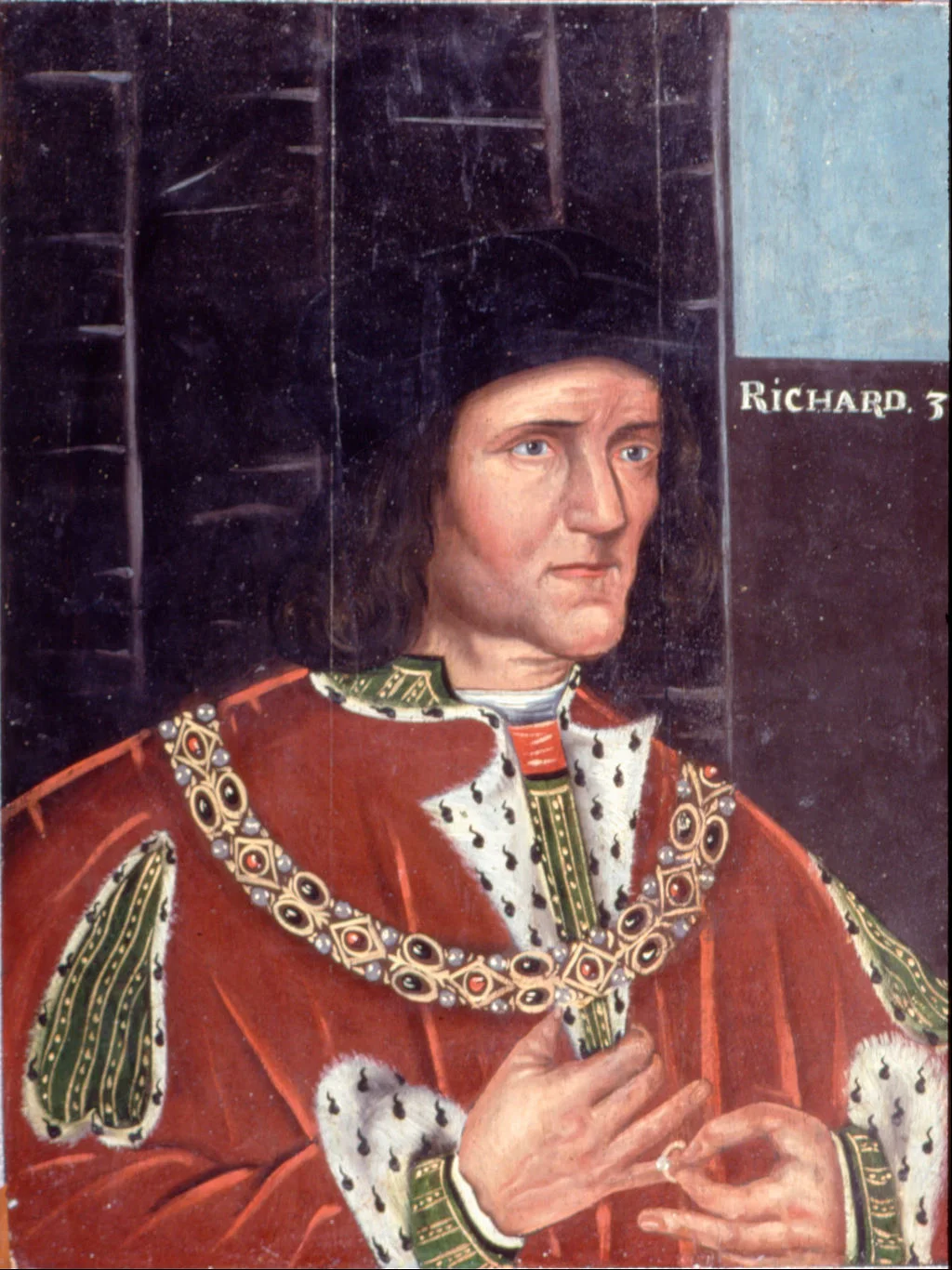
The closing chapter of the Wars of the Roses is not written solely in the blood-soaked fields of the Battle of Bosworth Field, but in the quieter, more enduring transformations that followed. When Henry VII of England emerged victorious and claimed the English throne, he inherited a realm deeply scarred by decades of intermittent civil war. The conflict had not been a continuous, unbroken struggle, but rather a series of violent convulsions that periodically destabilized the kingdom. By 1485, however, the cumulative effect was unmistakable: the old feudal order had been shaken to its foundations, and England stood at the threshold of a new political age. The Tudor dynasty, forged in the crucible of war and compromise, would reshape the monarchy into a more centralized and disciplined institution, laying important groundwork for the emergence of the early modern English state.

Terry Bailey explains.
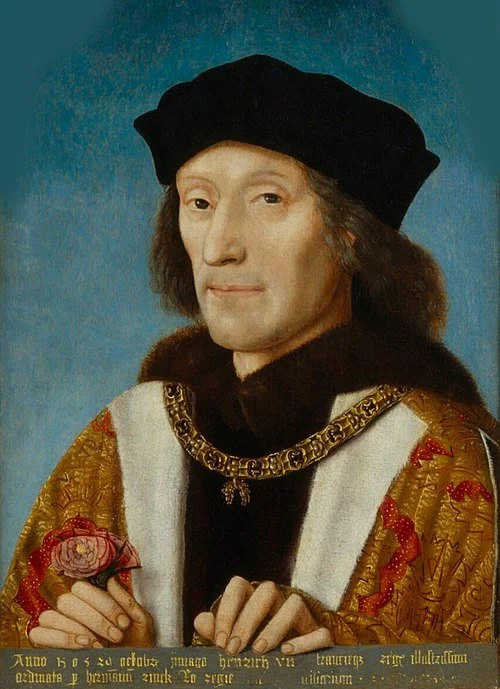
King Henry VII of England.

The destruction and weakening of the great noble houses was perhaps the most immediate and visible consequence of the wars. For generations, powerful magnates had exercised semi-autonomous authority in their regions, commanding private armies and maintaining vast networks of retainers. Yet the bitter rivalry between the House of York and the House of Lancaster led to a cycle of battles, executions, and attainders that steadily eroded the strength of these families. Prominent lineages were extinguished or reduced to shadows of their former selves, and the political landscape they had dominated was irrevocably altered. This was not merely a by-product of conflict; it became an opportunity seized upon by the new Tudor regime.   

Henry VII understood, perhaps more clearly than any of his predecessors, that the unchecked power of the nobility posed an existential threat to royal authority. His response was not to abolish the aristocracy, but to bind it more tightly to the Crown. Through financial instruments such as, he ensured that noble loyalty was not only expected but enforceable. The regulation of retaining—long a source of private military power—further curtailed the ability of nobles to act independently. Over time, this produced a more compliant aristocratic class, one whose influence was increasingly derived from royal favor rather than hereditary might. The transformation was subtle but profound: the nobility remained central to governance, yet it no longer stood as a rival power base.

This reconfiguration of noble power fed directly into the broader strengthening of central authority. Under Henry VII and his son, Henry VIII of England, the machinery of government became more efficient, more intrusive, and more firmly controlled from the center. The Crown expanded its administrative reach, relying on a growing cadre of administrators rather than feudal intermediaries. Institutions such as the Council Learned in the Law and the Court of Star Chamber were employed to enforce royal policy and discipline those who might challenge it. Justice, once unevenly administered through a patchwork of local jurisdictions, became more standardized as the authority of the monarchy extended into the provinces. In these developments, one can discern the early contours of a state that was no longer merely the personal domain of a king, but an increasingly structured entity.

The constitutional implications of the Wars of the Roses, while less immediately visible, were equally significant. The repeated deposition and replacement of monarchs during the conflict—most notably Henry VI of England and the death of Richard III of England—challenged traditional notions of divine and hereditary right. Although the ideology of kingship remained formally intact, the reality had been exposed: a king who could not command loyalty or maintain order might be removed. Legitimacy, therefore, became a more complex and negotiated concept, dependent not only on lineage but on political support and effective governance. Parliament played an increasingly important role in this process, ratifying changes of regime and providing a veneer of legality to acts of dispossession and succession. While it would be anachronistic to describe this as the birth of a constitutional monarchy, it nonetheless marked a step toward a more participatory political framework.

Beyond the structures of governance, the Wars of the Roses also left a lasting imprint on English culture and historical memory. The Tudor dynasty, keenly aware of its relatively tenuous claim to the throne, invested considerable effort in shaping the narrative of the conflict. By portraying the preceding era as one of chaos, disorder, and moral justified their own rule as a restoration of stability and justice. This interpretation found its most enduring expression in literature, particularly in the works of William Shakespeare. His play Richard III presents the last Yorkist king as a deformed and malevolent tyrant, a characterization that has profoundly influenced popular perceptions for centuries. Yet this portrayal is as much a product of Tudor propaganda as it is of historical fact.

Modern historians have increasingly sought to disentangle myth from reality, reassessing the Wars of the Roses through the careful analysis of contemporary sources. Far from depicting a nation in constant turmoil, recent scholarship suggests that much of England experienced periods of relative stability between outbreaks of conflict. Local governance often continued with remarkable continuity, and the impact of the wars on the general population may have been less severe than traditionally imagined. The conflict, in this light, appears less as a total collapse and more as a series of elite struggles, fought by and for a relatively small segment of society.

The reassessment of figures such as Richard III exemplifies this shift in perspective. Archaeological discoveries, including the identification of his remains in 2012, have provided new insight into his physical condition and reign, challenging long-held assumptions shaped by literary tradition. While he remains a controversial figure, he is now often viewed in a more nuanced light, as a capable, if ultimately unsuccessful, ruler operating within a deeply unstable environment. This willingness to revisit and revise historical narratives reflects broader trends within the discipline of history, where the emphasis has shifted toward complexity, context, and the critical evaluation of sources.

In considering the long-term legacy of the Wars of the Roses, it becomes clear that their significance extends far beyond the question of who wore the crown. They accelerated the decline of feudal structures, facilitated the rise of a more centralized monarchy, and contributed to the gradual evolution of England's institutions. At the same time, they demonstrate the power of narrative in shaping the understanding of the past. The wars have been remembered not only through chronicles and records, but through plays, legends, and national mythology, each layer adding to their enduring fascination.

As the final instalment in this series, the story of the Wars of the Roses resolves not with a simple conclusion, but with an invitation to reflection. The conflict did not merely end in 1485; it continued to shape the trajectory of English history for generations. In the hands of the Tudors, the lessons of civil war were transformed into a blueprint for stability, control, and consolidation. Yet the memory of those turbulent years, refracted through centuries of interpretation, is a reminder that history is never static. It is a dialogue between past and present, in which each generation seeks to understand not only what happened, but what it means.

In drawing this long and turbulent narrative to a close, the Wars of the Roses emerge not simply as a dynastic struggle resolved by the victory of Henry VII of England, but as a transformative period in which the very nature of English kingship and governance was redefined. The triumph at the Battle of Bosworth Field did not erase the divisions that had scarred the realm; rather, it marked the moment at which those divisions were brought under tighter control, harnessed, and gradually reshaped into a more durable political order. What followed was not the simple restoration of peace, but the careful construction of stability—an achievement as deliberate as it was fragile.

The collapse of overmighty noble power, the strengthening of central authority, and the increasing reliance on administrative governance together signaled the end of the medieval political landscape that had allowed such conflicts to flourish. Under the Tudors, the Crown ceased to be merely the apex of a feudal hierarchy and instead became part of a more integrated state. This shift did not occur overnight, nor was it free of resistance, but it fundamentally altered the balance between monarch and nobility, reducing the likelihood that private rivalries could again erupt into national conflict. In this sense, the wars achieved, through their destruction, the conditions necessary for a more stable future.

Equally significant was the subtle transformation in the concept of legitimacy. The repeated upheavals of the fifteenth century had demonstrated that kingship could no longer rely solely on hereditary right or divine sanction. The reigns of Henry VI of England and Richard III of England illustrated that authority depended increasingly on the ability to command loyalty, maintain order, and secure recognition from the populace, including Parliament. This evolving understanding did not yet constitute a constitutional monarchy in the modern sense, but it marked a significant step towards a system in which power was more contingent, negotiated, and institutionalized.

Yet if the structural consequences of the wars were profound, their legacy in memory and myth has proven equally enduring. The narratives shaped by Tudor chroniclers and immortalized by William Shakespeare ensured that the conflict would be remembered not merely as history, but as drama—populated by heroes, villains, and moral lessons. The enduring image of Richard III of England as a tyrant owes as much to this tradition as to the historical record, reminding us that the past is often filtered through the needs and perspectives of those who recount it. Modern scholarship, with its emphasis on evidence and context, has begun to peel back these layers, revealing a more complex and less sensational reality, yet the power of these older narratives remains deeply embedded in cultural consciousness.

Ultimately, the significance of the Wars of the Roses lies in their dual character as both destructive and creative forces. They brought immense suffering and instability, yet they also accelerated changes that might otherwise have taken generations to unfold. From the power of feudal magnate dominance to the rise of a more centralized monarchy with legitimacy to the gradual strengthening of institutional governance, the wars reshaped England in ways that extended far beyond the battlefield.

As this series concludes, what remains most striking is not simply how the conflict ended, but how it continued to resonate. The Tudors did not merely inherit a kingdom; they inherited the lessons of civil war, and from those lessons they forged and aided in prioritizing control, continuity, and caution. Yet the memory of those events preserved in chronicles, literature, and national myth—ensures that the Wars of the Roses remain more than a closed chapter. They endure as a reminder that history is not fixed, but continually reinterpreted, and that the meaning of the past is shaped as much by those who remember it as by those who lived it.


The site has been offering a wide variety of high-quality, free history content since 2012. If you’d like to say ‘thank you’ and help us with site running costs, please consider donating here.
Posted
AuthorHistory Is Now Magazine
CategoriesBlog Post

The spring of 1483 marked a sudden and destabilizing rupture in the fragile political order of Yorkist England. With the unexpected death of Edward IV, a ruler whose authority had finally imposed a measure of stability after decades of intermittent civil war, the kingdom was thrust once more into uncertainty. The Wars of the Roses had never truly ended; they had merely been subdued beneath the weight of Edward's personality and military success. His passing removed that stabilizing force overnight. His heir, Edward V, was only twelve years old, and his minority created a vacuum at the center of power. In a political culture where kingship was expected to be both active and martial, a child king was inherently vulnerable, and those around him inevitably became the true arbiters of authority.

Terry Bailey explains.

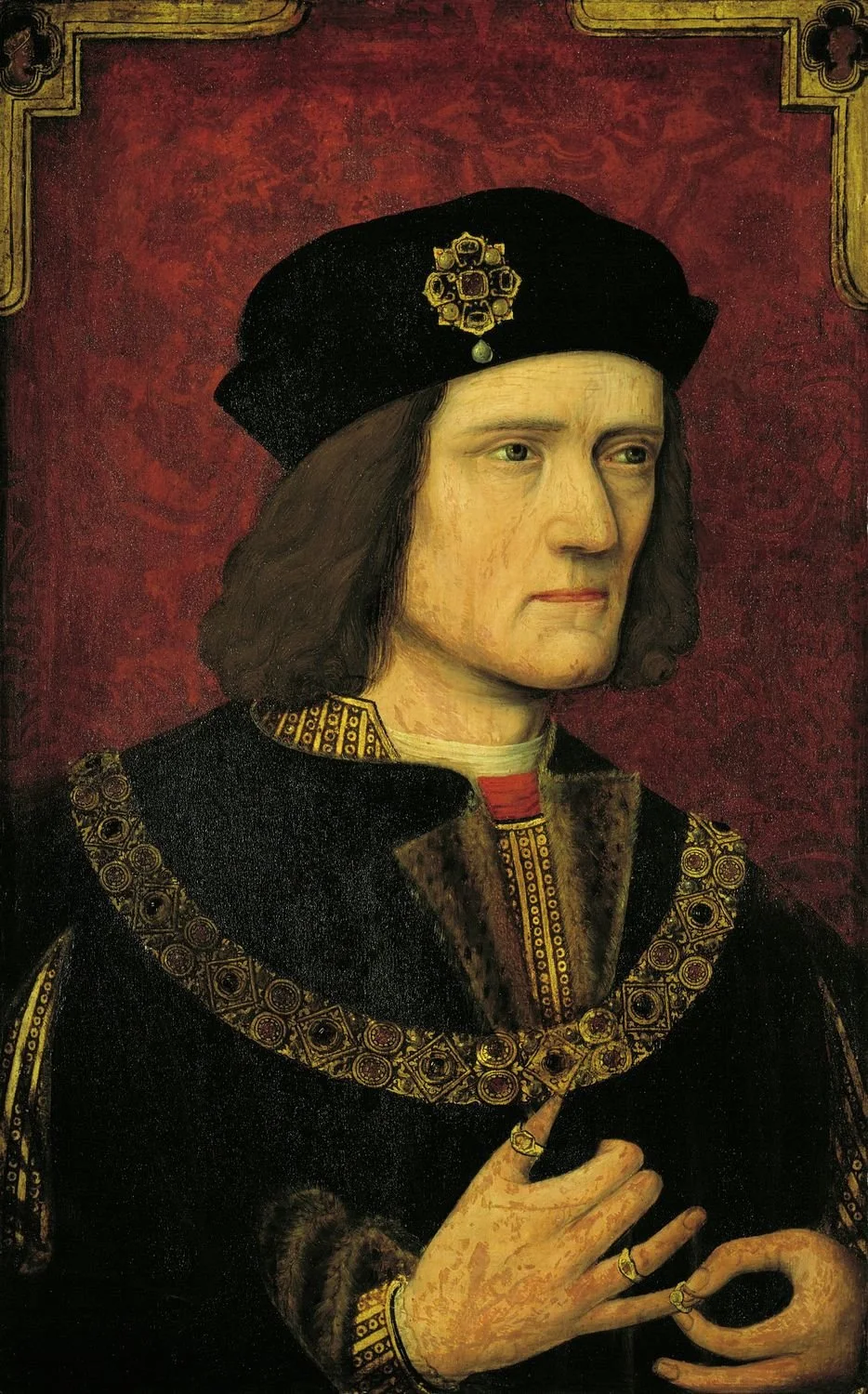
King Richard III of England.

The question of who would govern in the young king's name quickly escalated into a struggle for dominance. On one side stood the Woodvilles, the family of Edward IV's widow, Elizabeth Woodville. They had risen rapidly during Edward's reign, accumulating wealth, titles, and influence, but their ascent had bred resentment among the older nobility, who viewed them as social climbers. On the other side stood the king's uncle, Richard III, then Duke of Gloucester—a seasoned soldier, experienced administrator, and one of the most powerful magnates in the north of England.

The late king had named Richard as Lord Protector, a role intended to safeguard the young monarch's interests, yet the ambiguity of that position allowed for vastly different interpretations. Was Richard merely a caretaker, or was he the ultimate authority until Edward V reached his majority?

Richard moved with speed and precision that suggests careful preparation rather than improvisation. As Edward V travelled south from Ludlow to London, he was intercepted by Richard and his ally, the Duke of Buckingham. The young king's Woodville guardians were arrested, and control of his person passed firmly into Richard's hands. The language employed by Richard at this stage was one of loyalty and duty; he portrayed his actions as necessary to protect the king from corrupting influences. Yet the effect was unmistakable: the Woodville faction was dismantled, and the balance of power shifted decisively.

Edward V was brought to the Tower of London, a royal residence traditionally used by monarchs before their coronation. Soon after, his younger brother, Richard of Shrewsbury, joined him there. To contemporaries, this arrangement may not initially have seemed unusual. The Tower was not yet solely a prison; it was a symbol of royal authority. Yet as weeks passed and the coronation was repeatedly delayed, unease began to grow. The presence of both princes within the Tower, under the exclusive control of their uncle, began to take on a more ominous significance. The crisis deepened dramatically with the emergence of a legal argument that would transform the political landscape. It was claimed that Edward IV had entered into a binding pre-contract of marriage before his union with Elizabeth Woodville, rendering his later marriage invalid in the eyes of the Church. If true, this would mean that all of his children were illegitimate and therefore barred from succession. This argument, formalized in the parliamentary act known as Titulus Regius, provided a veneer of legality to what might otherwise have been seen as naked usurpation. Legitimacy in medieval kingship was not merely a matter of bloodline but of recognition—by the Church, by Parliament, and by the political nation. By invalidating the princes' claim, Richard repositioned himself not as a usurper, but as the rightful heir correcting an unlawful succession.

In June 1483, Richard was crowned king. The transformation was as swift as it was extraordinary: within weeks, the Lord Protector had become Richard III. Yet this seizure of the throne, however carefully justified, came at a cost. The very speed of events, combined with the dubious nature of the pre-contract claim, left many unconvinced. Doubt lingered, and in the absence of transparency, suspicion flourished. It is within this atmosphere of uncertainty that the fate of the princes became central. During the early summer, the boys were reportedly seen playing within the Tower grounds, visible to observers. By late summer, however, these sightings ceased. They vanished not only from public view but from the historical record itself. No official announcement was made, no explanation offered. Silence, in this context, was as potent as any accusation. The absence of the princes created a void that was quickly filled by rumor, speculation, and fear.

For many contemporaries, the conclusion seemed unavoidable: Richard had arranged the deaths of his nephews to secure his position. The logic was brutally simple. As long as Edward V and his brother lived, they represented a focal point for opposition. Their existence undermined Richard's claim, regardless of the legal arguments advanced. Their disappearance, therefore, removed a threat. Yet while the motive appears clear, evidence remains elusive. No contemporary account provides definitive proof of their murder, and the details of what may have happened within the Tower's walls remain unknown.

Alternative explanations have persisted across the centuries. Some have pointed to Henry Stafford, Duke of Buckingham, whose rebellion later in 1483 suggests shifting loyalties and possible independent ambition. Others have considered the role of Henry VII, who seized the throne after Richard's death and had his own interest in eliminating rival claimants. There are even theories that the princes may have survived for a time, their identities later obscured in the turbulent politics of the late fifteenth century. Yet none of these theories can be proven, and the mystery endures precisely because the available evidence is fragmentary and often partisan. What is beyond dispute is the impact of the princes' disappearance on Richard's reputation. Even in his own lifetime, it eroded trust and provided a rallying point for dissent. Rebellions against his rule invoked the fate of the princes as evidence of tyranny. Legitimacy, once questioned, proved difficult to restore. In a society deeply attuned to moral as well as legal authority, the suspicion of child murder—particularly of one's own kin—was profoundly damaging.

The aftermath of Richard's reign ensured that this perception would not merely persist but intensify. His defeat and death at the Battle of Bosworth Field brought Henry VII to power, inaugurating the Tudor dynasty. For the new regime, consolidating authority required not only victory on the battlefield but control over the narrative of the past. Richard was cast as the embodiment of disorder and illegitimacy, a tyrant whose removal had restored rightful governance. The story of the princes became central to this portrayal, serving as both moral indictment and political justification. This Tudor narrative found its most enduring expression in the cultural sphere, particularly in the work of William Shakespeare. Writing more than a century after the events, Shakespeare drew upon earlier chronicles to craft a dramatic and compelling depiction of Richard III. In his hands, Richard becomes a figure of almost theatrical villainy—physically deformed, psychologically complex, and driven by unrelenting ambition. The murder of the princes is presented not as an unresolved mystery but as a defining act of calculated cruelty. This portrayal, while shaped by the artistic and political context of the Elizabethan era, has exerted an extraordinary influence on popular perceptions of Richard ever since.

Yet history is rarely so clear-cut. Modern historians have sought to reassess Richard's reign, disentangling the layers of propaganda that have accumulated over time. They have re-examined contemporary sources, many of which were written under Tudor patronage, and questioned the reliability of their claims. Some argue that Richard's actions, though harsh, were consistent with the brutal realities of fifteenth-century politics, where the security of the state often depended on the elimination of potential rivals. Others contend that the circumstantial case against him remains compelling, even if definitive proof is lacking.

The rediscovery of Richard's remains in 2012 beneath a car park in Leicester brought renewed attention to his life and legacy. Scientific analysis provided new insight into his physical condition, challenging long-held assumptions about his appearance. His reburial, conducted with considerable ceremony, reflected a broader cultural reassessment—an acknowledgment that the man behind the myth may have been more complex than the caricature handed down through centuries. Ultimately, the crisis of 1483 encapsulates the central tensions of the Wars of the Roses. It reveals how fragile legitimacy could be in a world where lineage, law, and power were in constant negotiation. It demonstrates the potency of propaganda, capable of shaping reputations long after the events themselves have faded from living memory. And above all, it underscores the enduring power of mystery. The disappearance of the Princes in the Tower transformed a political crisis into a historical enigma, one that continues to captivate scholars and the public alike.

Whether Richard III was a calculating usurper who secured his throne through ruthless means, or a ruler whose reputation was irreparably damaged by circumstance and subsequent propaganda, remains an open question. What is certain is that the events of 1483 left an indelible mark on English history. The shadow cast by the vanished princes has never fully lifted, ensuring that Richard's name remains forever entwined with one of the most haunting and contested mysteries of the medieval world.

In the final analysis, the events of 1483 resist any simple resolution, not because the questions are poorly framed, but because the nature of power in late medieval England obscured truth as effectively as it shaped outcomes. The rise of Richard III cannot be understood solely as an act of ambition, nor can it be entirely divorced from the legal and political frameworks that enabled it. His claim, however controversial, was constructed within the accepted mechanisms of authority—Parliament, the Church, and precedent—yet it was undermined from the outset by doubt, secrecy, and the unresolved fate of Edward V and Richard of Shrewsbury. In this tension between legality and perception lies the true heart of the crisis.

The disappearance of the princes did more than cast suspicion upon a king; it exposed the fragility of legitimacy itself. In a society where dynastic right was paramount, the mere possibility that rightful heirs had been removed—by whatever hand—was enough to destabilize the entire political order. Whether they died by command, conspiracy, or circumstance may never be known with certainty, but their absence became a void into which fear, rumor, and political opportunism rushed.

That void proved far more powerful than any confirmed fact, shaping not only the fate of Richard's reign but the course of English monarchy in its aftermath.

The triumph of Henry VII ensured that this uncertainty would not fade but instead be molded into a coherent and enduring narrative. Under the Tudors, history became an instrument of statecraft, and Richard's story was sharpened into a moral lesson about tyranny and rightful rule. Through the literary genius of William Shakespeare, this interpretation was immortalized, transforming political ambiguity into dramatic certainty. Yet in doing so, it also obscured the complexities of the moment, replacing a tangled historical reality with a more accessible, if less accurate, legend.

What endures, therefore, is not simply the question of guilt or innocence, but the recognition that history itself is often shaped by those who inherit victory. The crisis of 1483 stands as a reminder that power determines not only who rules, but how events are remembered. Richard III remains suspended between two identities: the ruthless usurper of tradition and drama, and the embattled monarch of revisionist inquiry. Between these competing visions lies the unresolved truth of the Princes in the Tower—a mystery that continues to challenge historians, provoke debate, and capture the imagination.

In that sense, the story is not concluded but perpetually unfolding. Each generation revisits the evidence, reinterprets the motives, and reassesses the legacy. The silence that followed the princes' disappearance still echoes across the centuries, a testament to how absence can shape history as profoundly as presence. And it is within that silence—unanswered, elusive, and enduring—that the final judgement of 1483 remains forever just out of reach.


The site has been offering a wide variety of high-quality, free history content since 2012. If you’d like to say ‘thank you’ and help us with site running costs, please consider donating here.
Posted
AuthorHistory Is Now Magazine
CategoriesBlog Post

Our final installment in The Wars of the Roses series looks at the intrigues that led Richard and Henry to face each other and bring the wars to an end. This article follows our introduction to the Wars of the Roses available here and our article on Edward III’s descendants and the causes of the Wars of the Roses available here. Later were the battles of the war from 1455-1464, the Kingmaker, and Prince George’s treachery. Then came part 1 and part 2 of a love story. Finally, our previous article looked at how a baby ended The Wars of the Roses.


Is it possible for a man to be an uncouth barbarian but manage to be a devoted father, husband and an excellent King? Henry Tudor forces this question on us.

The young Lancastrian had a barely existent claim to the throne. He was the last in a line of bastard descendants who were legally not allowed to inherit the crown of England. This didn’t worry Henry too much. His mother, Margaret Beaufort had paved the way for his attack a full year before he made it. Margaret’s husband, Lord Stanley, was one of those men whom history calls a coward. He famously only joined sides once he knew who the victor would be. He was always neutral in politics and never took part in revolts. This has earned him the title of traitor. I think that to be an unfair analysis. From one perspective, Lord Stanley was a dangerous man. No one knew where his alliances lay. From a soldier’s point of view, he was the best commander they could have. He only joined battles at the end and only on the side of the victor. That meant his soldiers were almost guaranteed to walk away the winners, and this made Stanley a very popular lord to fight for. After all, England was built on the backs of peasants and not by the swords of their masters. Being popular with peasants was a better option than being a favorite soldier of Kings. And so, when Lady Margaret began her campaign against Richard III, Lord Stanley stayed out of it.

King Richard III at The Battle of Bosworth Field. By James Doyle.

King Richard III at The Battle of Bosworth Field. By James Doyle.

Margaret summoned rebel armies to revolt against Richard’s followers in 1483. Her plan was to overwhelm Richard with attacks while her son, Henry, snuck in through Wales. It probably would have worked, but the weather in England had never favored the Lancastrians. Once again, the River Severn flooded, preventing Henry from entering England and stopping the rebels from carrying out their revolution. Richard’s reign had been in no real danger, and because he was not allowed to punish a woman, nor would he ever have done, he simply issued a warning to Lord Stanley to better control his wife.


Whispers

Apparently Lord Stanley didn’t listen as Margaret then attempted another plot. And this time she did it as all women who had come before her had done – quietly. She simply spread enough rumors about Richard to tarnish his pristine reputation. By this point, the princes in the tower had not been seen for months. Margaret herself claimed to have staged a rescue, but had no princes to show for it. Could that “rescue” have been murder? Despite Richard’s claims to the contrary, he was blamed for the boys’ murder. Was Margaret behind it all? Well, we do know that Richard’s popularity began to dip after this point. He was no longer the beautiful King of England.

More misfortune struck Richard in 1484 when his only son and heir died. Both Richard and his wife, Anne, moved into a dark place where happiness no longer existed. Anne never came back out, and she died in March 1485. Richard was a broken man. To make matters worse, a rumor spread across England that Richard had killed his wife in order to marry Edward’s eldest daughter, Elizabeth of York. The princess would then be heir to the throne and very important. Richard denied this many times, and history backs him up. There is documented evidence that Richard was in the process of organizing a Portuguese prince for Elizabeth when Anne died, and there is no historical evidence whatsoever to back up the claim that Richard wanted to marry Princess Elizabeth. It was just another rumor. Started perhaps by Lady Margaret?

Henry Tudor, on the other hand, wanted Elizabeth. With no substantial claim to the throne, marriage to the new heir would make him the unquestioned King. History tells us that Henry was no soldier. He knew nothing about battlefields or war and even less about the country he was trying to claim. Henry did have an area of expertise though - he was extremely intelligent. He knew that it was better to make friends in high places and to let experienced soldiers call the shots. This was a trait he would pass down to his granddaughter, the later Queen Elizabeth I, who is known for just that and whose time in power was a “Golden Age.” Like Elizabeth, Henry was a great leader and wise beyond his years.


A broken man

Meanwhile, Richard was struggling. Having lost his wife, his son, his reputation, the love of his people, and his allies, he marched to intercept Henry’s newly assembled army on August 22nd, 1485.

Although Richard was emotionally beaten, the old soldier in him had not died. He was, afrer all, trained by the Kingmaker. The Yorkist troops positioned themselves atop Ambion Hill and used their advantage to tire the Lancastrians at the Battle of Bosworth Field. Henry’s troops were waning; fighting uphill was no easy task. Richard and his army were set to win. But Lord Stanley had other ideas. He and his troops had entered the battle on the side of the Yorkists, and when Richard called for reinforcements to finish the battle, Lord Stanley’s men ran downhill and attacked Richard’s army. The last words the great King ever uttered were, “treachery, treachery, treachery.” King Richard III, the last King of England to die fighting on the battlefield, was slaughtered as he fought to keep England under the protection of the House of York. He was then stripped naked, and his lifeless body abused, molested and throne in a shallow grave that would not be found for half a millennium.

It is said that Henry Tudor lifted Richard’s crown from the rose bush and crowned himself King Henry VII on the battlefield. Another one of Shakespeare’s lies. Henry, or one of his men, had actually stolen the crown from Richard’s cart before the battle. For all we know, he had fought with the stolen crown on his head.

Henry was no fool however, and he was aware that England would not take kindly to this French-speaking, Welshman who had just won the crown by conquest. So he decided to re-write history and declared that he was crowned King on August 21st – the day before the Battle of Bosworth Field. That meant that legally Richard was not defending his crown, but fighting Henry for it. This made Richard and his followers the true traitors. This also meant that Henry was legally King and did not need Princess Elizabeth. He most certainly did not mention marriage again. But Elizabeth, like her mother Elizabeth Woodville, was not someone to take lightly. Despite no repeat mention of wishing to marry her, Henry seemed to quickly change his mind and the two were hastily married in a quiet ceremony very unbefitting for a King. Eight months later, their first son and heir was born. Premature babies rarely survived in the Middle Ages, yet this child – born at only eight months – easily made it. Why is that? Could it be that Elizabeth had realized she was no longer needed and had quickly trapped Henry? Had she seduced him, become pregnant and demanded to be made Queen?

History’s lips are once again sealed.

With the marriage of Henry to Elizabeth, the two warring houses were now joined. The red Lancaster rose and the white York rose were now drawn together and called the Tudor rose. Most historians believe that the Wars of the Roses ended with the Battle of Bosworth Field, but I believe it ended with the marriage of the Lancastrian King to his Yorkist Queen and the birth of their Tudor son.

And so began the next dynasty.


By M.L King, a history enthusiast and part-time blogger. You can connect with her on Facebook here.


We would like to send a special message of thanks to M.L King for her excellent Wars of the Roses series of articles. I hope you have all enjoyed it too!


Want to read more? Go to the blog now and see what else we have for you. Click here!


References

  • British History by Miles Kelly
  • Measly Middle Ages by Terry Derry
  • www.english-heritage.org.uk
  • www.battlefieldstrust.com
  • www.learningsite.co.uk

Our latest installment in the Wars of the Roses looks at the marriage of Richard Plantagenet and Anne Neville – among many other intrigues in the Wars of the Roses. This article follows our introduction to the Wars of the Roses available here and our article on Edward III’s descendants and the causes of the Wars of the Roses available here. Later were the battles of the war from 1455-1464, the Kingmaker, and Prince George’s treachery. Most recently were part 1 and part 2 of a love story.


Historians always warn us that we should never imagine the story of Richard Plantagenet and Anne Neville to be one of romance and true love. But it is hard not to. The two had known each other since infancy and had grown together under the tutelage of the Earl of Warwick at Middleham Castle. War and the choices of the Kingmaker forced these friends onto opposite sides after a life time of watching their fathers fight side-by-side. Anne’s marriage to the Lancastrian heir, Prince Edward, had only been a few months long and had resulted in no children. After the battle of Tewkesbury, Anne was left a fifteen-year-old widow so her sister’s husband, Prince George, took her in.

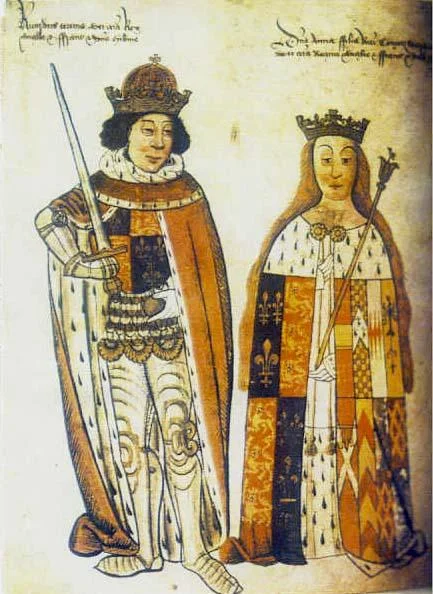
Richard Plantagenet (Richard III) and Anne Neville from the Rous Roll

Richard Plantagenet (Richard III) and Anne Neville from the Rous Roll

But George was anything but charitable. Anne was heiress to all the lands and castles in the north of England. A wonderful, rich fortune she shared with her sister. Since George had half these lands through marriage, he forcefully took the other half by keeping Anne as a prisoner in everything but name. This made George the wealthiest land owner in England. But history tells us that Anne didn’t take this lying down. According to legend, she dressed as a kitchen maid and escaped to the London home of one of George’s friends, where she continued to work in the kitchen while plotting her next move. That move would turn out to be Prince Richard Plantagenet.

The 18-year-old Duke of Gloucester had spent weeks looking for her, making a nuisance of himself in the household belonging to his brother, George. When Richard finally found our heiress, it is said that he spirited her away to a sanctuary in order to protect her from George. Legend tells us that he made it perfectly clear to Anne that his chivalrous rescue had no ulterior motives, and he wanted nothing from her. On May 14, 1472, she married him. The couple had a happy marriage lasting thirteen blissful years that gave them one son named Edward. Unlike the princes who came before and after him, Richard had no interest in London and the royal court. Richard’s heart belonged to his wife, his son and the northlands. Living mostly in Middleham castle, just as they had done as children, the couple rarely made it to London, rarely took up the mantle of royalty. Instead, they spent their days riding, commanding their farms and just generally enjoying one another’s company.

Unfortunately, life was to take one serious turn with the death of King Edward IV. Elizabeth Woodville was an enemy of Richard and an enemy of England. The Prince could not allow the unpopular Queen to crown her underage son and rule through him. Accompanied by 200 mourners, Richard kissed his wife and child good-bye and set out to London. Edward IV had made Richard the protector of the new King, but Elizabeth had sent her brother and 2,000 soldiers to fetch him before Richard could get anywhere near him. Unfortunately for Elizabeth, her brother marched his army directly into Richard’s mourners. The new young King changed guardians and entered London with his uncle and protector. Richard delivered the young King Edward V right to the Tower of London and left him there with his servants. This may sound sinister yet it was anything but. The Tower of London was the home of England’s royalty as well as a prison and even a zoo. As with all monarchs who had come before Edward V, he had been housed in the tower awaiting his coronation.

This is where history leaves us wondering. Richard, who had up until this point been unbelievably loyal to his brother, now suddenly steals the throne from his nephew and crowns himself King. What had happened to bring this about? Critics of Richard say he was simply showing his true colors by usurping a child. Richard’s supporters claim that he was pushed by his wife to take the crown, just as her father - the Kingmaker - would have done. Or that maybe Richard simply saw a chance to be King and took it. I, personally, think it is a bit more complex than that. Richard was loyal to his brother, and his brother had once been loyal to England. Then Elizabeth Woodville showed up. Was Richard, who would have still been in mourning, simply honoring his brother’s original plan? If Edward V had been King, the Woodvilles would have ruled and who knew what they would have done to the country. But if Richard ruled, he could undo all the damage the hated family had done and get England back on track. Was Richard - who hated court, hated London, hated royal life - putting his feelings and freedoms aside to become King and save England? Once again, history’s lips are sealed.

Before George had been executed, he had started a rumor about Edward IV being pre-contracted to another woman, meaning Elizabeth was not his true wife and making their children illegitimate. Richard dragged this rumor from the grave, used it as evidence and had all of Elizabeth’s children illegitimated. Richard was now heir to the throne. He was crowned Richard III on July 6 1483. Unlike Shakespeare tried to tell us, Richard was a much loved prince - if anything he was the people’s favorite prince - and London celebrated their new King and Queen with joyous excitement. After nearly thirty years of civil war, no one wanted a child King. But the idea of a decorated war hero leading the country was one they could get on board with.

So Richard toured his kingdom, with his beautiful and beloved Queen. They were joined by their son, the Prince of Wales, when his health allowed a trip with his parents. And they were happy.

If only Henry Tudor had stayed in France.


By M.L King, a history enthusiast and part-time blogger. You can connect with her on Facebook here.

The final installment in the Wars of the Roses series is available by clicking here.


Do you want to try your hand at some history writing? If so, click here for more information and then get in touch!


References

  • British History by Miles Kelly
  • Measly Middle Ages by Terry Derry
  • www.english-heritage.org.uk
  • www.battlefieldstrust.com
  • www.learningsite.co.uk
Posted
AuthorHistory Is Now Magazine

Civil War is one of the focus areas of the site. In this article, Myra-Lee discusses the intrigues behind the 1483 murder of the Princes in the Tower that led to the killing of Edward IV’s sons, an event that took place in an England that was in a period of civil war, The Wars of the Roses.


Edward IV

Edward IV

We’ve all heard the stories… King Richard III, a cruel, twisted, power-hungry maniac steals his nephews like some monster in the night, locks them up in the tower and kills them. Why? To secure the throne. Thanks to Shakespeare’s pioneering efforts, Richard’s reputation has faced six hundred years of slander. Modern historians would scoff at the thought of using Shakespeare as a historical reference, especially seeing as he wrote of the death of the Duke of Somerset at the hands of Richard when in reality the latter was only two years old. Yet some refuse to give up the claim that Richard, sensing glory, would kill his defenseless nephews for the crown. They fight tooth and nail to convict the long dead king. Others fight for Richard, claiming that his arch enemy, Henry Tudor, was responsible for their deaths.

Of course, the latter claim needs a huge leap of imagination as Henry was in Brittany at the time, had an almost non-existent claim to the throne, and had very little support and power in England. So how would he have done it? Well chances are he probably didn’t (unless he had some sort of teleporting power that history has forgotten to mention). As with all mysteries, there are other suspects, ranging from near royals to near paupers to everybody in between.

Henry Stafford, the second Duke of Buckingham, is one such suspect. Seeing his chance to inherit a throne, he murders the boys in the night (haven’t we heard this before?). In 1502, Sir James Tyrell, an ally of both Richard III and Henry VII (the world’s first double agent?), was arrested and executed. After his death a confession was found which claimed that he was responsible for the murder of the boys and was acting under orders from Richard (how convenient). It has to be noted that roughly the same time as this “confession”, there were two men alleging to be the princes. Both men had armies. Both men had to be fought off by Henry VII. And this is where the supporters of Richard III get excited… Could Henry VII have forged the confession because he knew that the boys were long dead and any pretender claiming to be one of the princes was just that, a pretender? Could he have known this because it was in fact he who killed them?


The other suspect

There are many suspects, even more theories, and a smorgasbord of unanswered questions surrounding the princes in the tower. For every question, there is a theory and for every theory there is a suspect, and for every suspect there are more questions. So in honor of this tradition, allow me to add my own suspect - Lady Margaret Beaufort.

Richard III

Richard III

Now, don’t get me wrong. I’m not saying that she snuck in like a monster in the night (maybe tripping over her skirts – those staircases in the tower are small) and killed the boys in cold blood, something that would have been quite a task seeing as they were probably bigger than her. I’m merely suggesting that maybe, just maybe, Lady Margaret was the puppet master in an attempt to get her son on the throne. It has long been known that Margaret dedicated her adult life to the pursuit of putting her only son, Henry Tudor, on the throne. Is it such a stretch of the imagination to assume that she would stop at nothing, not even murder, to get this done?

Allow me to explain. The princes were taken to the tower on April 29 1483 after the death of their father Edward IV (he died of pneumonia after a fishing trip). The boys stayed at the tower awaiting Edward V’s coronation; however, due to the political situation, that never came to pass and Richard III was crowned. Only a small group of Englishmen disputed this. One assumes that after many years of civil war, England would have rather had an accomplished warrior for a king and not a sickly 12-year-old boy. Despite what Shakespeare would have us believe, Richard was extremely popular and respected.

This all meant that England didn’t really bat an eyelid when Richard was crowned and the boys continued to live at the tower. They were frequently seen playing on the grass. This is until after July 1483. Suddenly the boys seemed to have disappeared. At this point, Henry’s supporters jumped up and said that Richard was responsible for their deaths. But why? He was already King; killing them would be like shutting the barn door after the horse had run away. Richard had no need to kill the boys - he wasn’t even in London at the time. Even the boys’ mother, Elizabeth Woodville, didn’t think Richard had harmed them - she put herself and her daughters in his custody for protection. All of this ‘Richard-blaming’ is smoke and mirrors when you think that on July 20 1483, Lady Margaret and her followers staged a rescue mission for the boys. History tells us that it was unsuccessful and Lady Margaret then changed her strategy, instead meeting with Elizabeth Woodville to offer a marriage alliance between Margaret’s son and Elizabeth’s daughter.


The Princes in the Tower by Samuel Cousins

The Princes in the Tower by Samuel Cousins

History and the truth

But what if History was lying? What if the “rescue” mission was actually a success and Lady Margaret never actually changed strategies but instead kept on the path of a most perfect plan?  Did old Maggie kill the boys in order that their elder sister, Elizabeth of York, was made heir to the throne, so allowing her son to marry Elizabeth and become King? Did Lady Margaret simply take out the competition? Sure, Richard III was king, but he had no heir meaning Elizabeth of York and her husband would have ruled whether Henry Tudor had won the 1485 Battle of Bosworth Field or not. Is it such a stretch of the imagination to assume that Lady Margaret and her rescue mission had rescued nothing but the Tudor Dynasty? Also, take another one of the suspects on board – Henry Stafford, the second duke of Buckingham. Did you know that Henry’s uncle was married to Lady Margaret for two decades? Could Lady Margaret have used her family connections to have the boys killed? And what of the other suspect, James Tyrell? Was he just a pawn in this game too? Did Henry and his mother not like these pretenders and thought it best to do away with the rumors that the boys had survived?

Throughout medieval history women had the curse – and sometimes blessing – of going unnoticed. Could a smart woman with ambition and a serious agenda use that to her advantage? Did Margaret Beaufort move in the shadows to kill the boys, arrange her son’s marriage with the new heir, and have her son crowned King while everybody watched the men? Maybe, just maybe.

We will of course never know what happened to the boys. It is one mystery that history keeps for herself and watches as we sprout new theories and suspects. We have to resign ourselves to the fact that unless we build a teleporter, we will never know for sure. In the meantime, my money is on Maggie.


Do you agree? Who do you think killed the boys?


By M.L. King, a history enthusiast and part-time blogger.

The next article in the Wars of the Roses series is an introduction to the Wars of the Roses - available here.


If you enjoyed the article, JOIN US! Click here for a world of updates, plus free books!

Selected references

Who’s who in British History by Juliet Gardiner (Published by Collins and Brown Limited)

Tudor Queens – http://www.tudor-queens.co.uk/margaret-beaufort.html

Buckinghams Retinue – http://www.bucks-retinue.org.uk/content/views/302/330

Tudor History – http://tudorhistory.org/people/beaufort