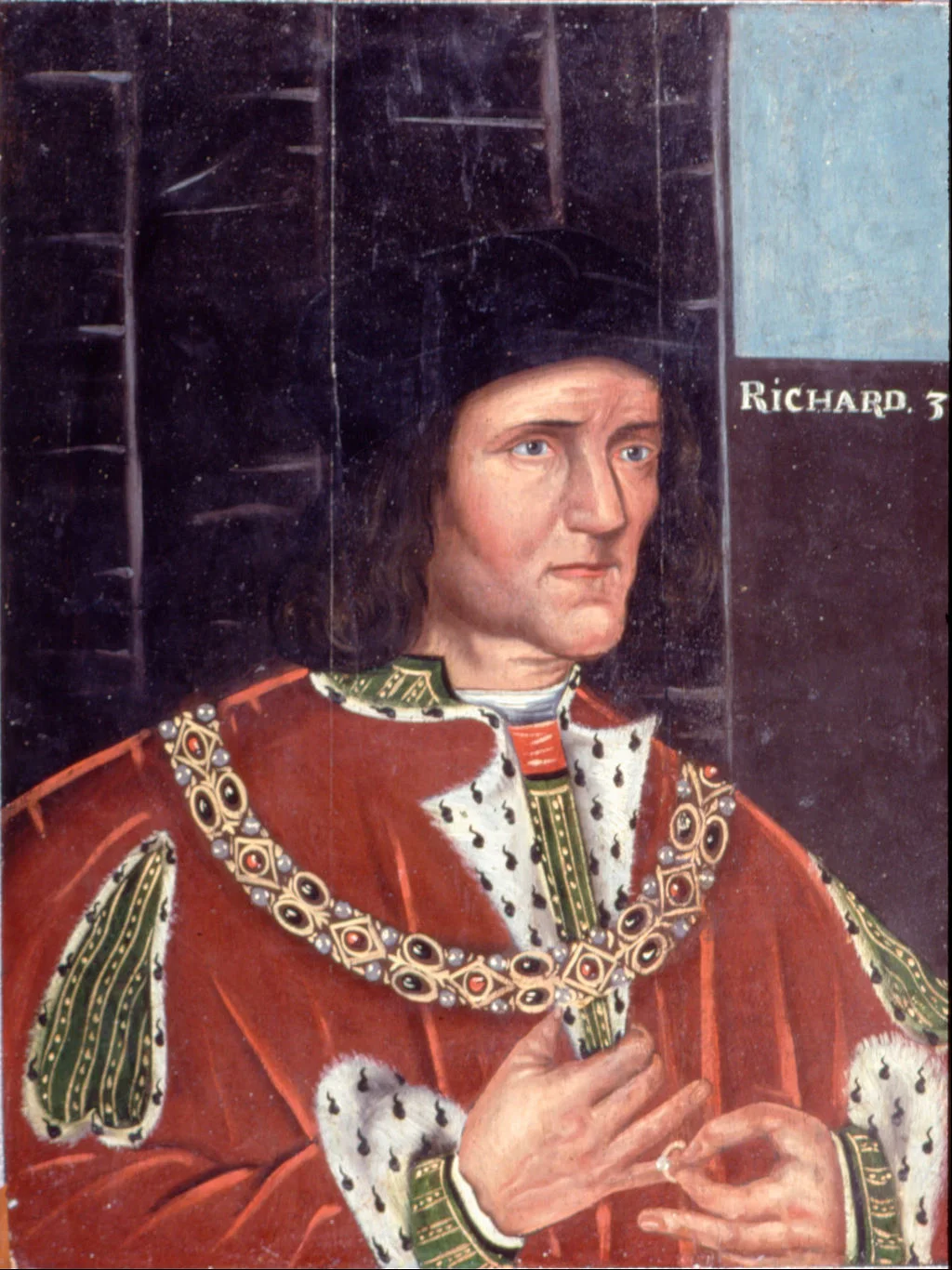
The spring of 1483 marked a sudden and destabilizing rupture in the fragile political order of Yorkist England. With the unexpected death of Edward IV, a ruler whose authority had finally imposed a measure of stability after decades of intermittent civil war, the kingdom was thrust once more into uncertainty. The Wars of the Roses had never truly ended; they had merely been subdued beneath the weight of Edward's personality and military success. His passing removed that stabilizing force overnight. His heir, Edward V, was only twelve years old, and his minority created a vacuum at the center of power. In a political culture where kingship was expected to be both active and martial, a child king was inherently vulnerable, and those around him inevitably became the true arbiters of authority.
Terry Bailey explains.
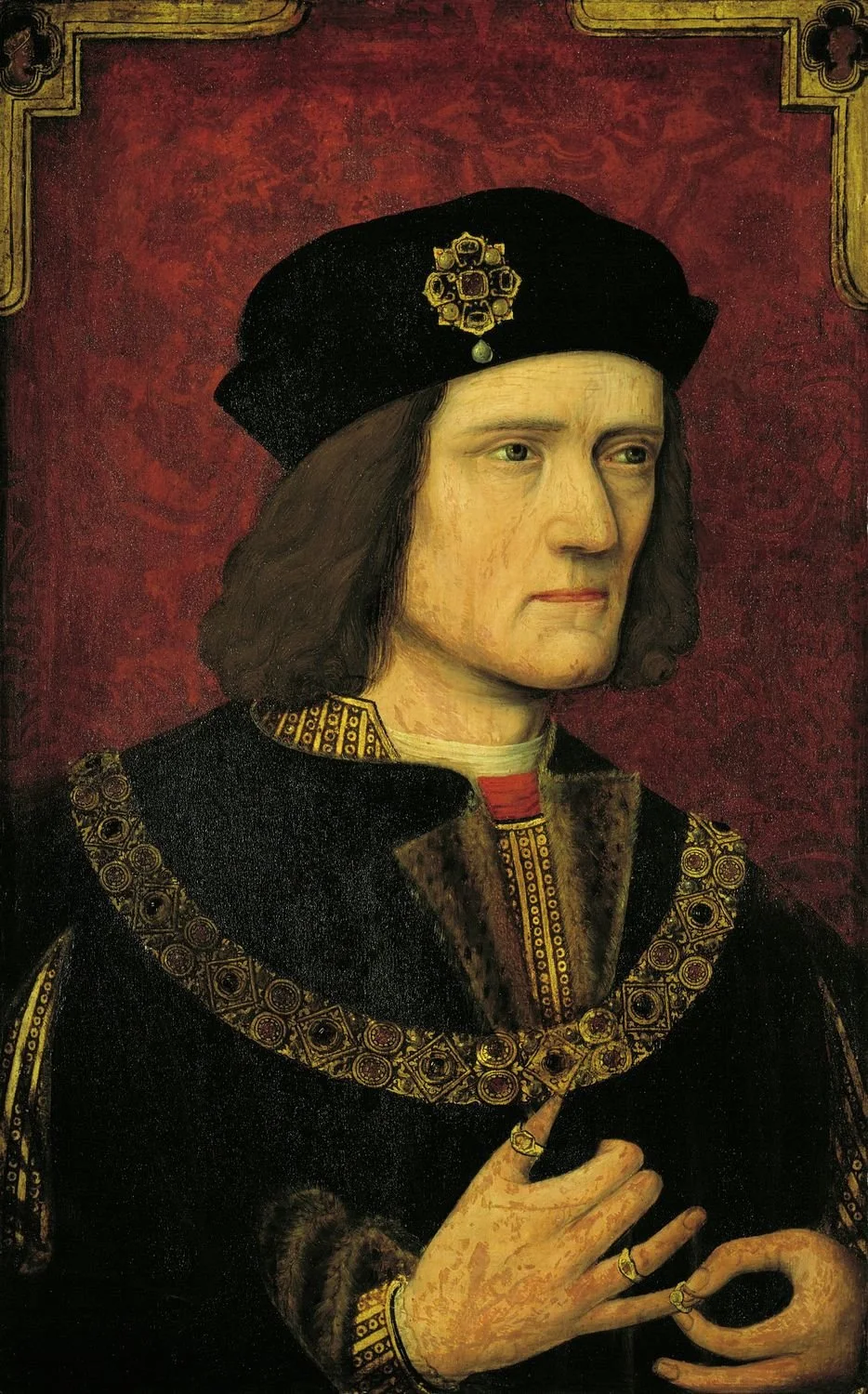
King Richard III of England.
The question of who would govern in the young king's name quickly escalated into a struggle for dominance. On one side stood the Woodvilles, the family of Edward IV's widow, Elizabeth Woodville. They had risen rapidly during Edward's reign, accumulating wealth, titles, and influence, but their ascent had bred resentment among the older nobility, who viewed them as social climbers. On the other side stood the king's uncle, Richard III, then Duke of Gloucester—a seasoned soldier, experienced administrator, and one of the most powerful magnates in the north of England.
The late king had named Richard as Lord Protector, a role intended to safeguard the young monarch's interests, yet the ambiguity of that position allowed for vastly different interpretations. Was Richard merely a caretaker, or was he the ultimate authority until Edward V reached his majority?
Richard moved with speed and precision that suggests careful preparation rather than improvisation. As Edward V travelled south from Ludlow to London, he was intercepted by Richard and his ally, the Duke of Buckingham. The young king's Woodville guardians were arrested, and control of his person passed firmly into Richard's hands. The language employed by Richard at this stage was one of loyalty and duty; he portrayed his actions as necessary to protect the king from corrupting influences. Yet the effect was unmistakable: the Woodville faction was dismantled, and the balance of power shifted decisively.
Edward V was brought to the Tower of London, a royal residence traditionally used by monarchs before their coronation. Soon after, his younger brother, Richard of Shrewsbury, joined him there. To contemporaries, this arrangement may not initially have seemed unusual. The Tower was not yet solely a prison; it was a symbol of royal authority. Yet as weeks passed and the coronation was repeatedly delayed, unease began to grow. The presence of both princes within the Tower, under the exclusive control of their uncle, began to take on a more ominous significance. The crisis deepened dramatically with the emergence of a legal argument that would transform the political landscape. It was claimed that Edward IV had entered into a binding pre-contract of marriage before his union with Elizabeth Woodville, rendering his later marriage invalid in the eyes of the Church. If true, this would mean that all of his children were illegitimate and therefore barred from succession. This argument, formalized in the parliamentary act known as Titulus Regius, provided a veneer of legality to what might otherwise have been seen as naked usurpation. Legitimacy in medieval kingship was not merely a matter of bloodline but of recognition—by the Church, by Parliament, and by the political nation. By invalidating the princes' claim, Richard repositioned himself not as a usurper, but as the rightful heir correcting an unlawful succession.
In June 1483, Richard was crowned king. The transformation was as swift as it was extraordinary: within weeks, the Lord Protector had become Richard III. Yet this seizure of the throne, however carefully justified, came at a cost. The very speed of events, combined with the dubious nature of the pre-contract claim, left many unconvinced. Doubt lingered, and in the absence of transparency, suspicion flourished. It is within this atmosphere of uncertainty that the fate of the princes became central. During the early summer, the boys were reportedly seen playing within the Tower grounds, visible to observers. By late summer, however, these sightings ceased. They vanished not only from public view but from the historical record itself. No official announcement was made, no explanation offered. Silence, in this context, was as potent as any accusation. The absence of the princes created a void that was quickly filled by rumor, speculation, and fear.
For many contemporaries, the conclusion seemed unavoidable: Richard had arranged the deaths of his nephews to secure his position. The logic was brutally simple. As long as Edward V and his brother lived, they represented a focal point for opposition. Their existence undermined Richard's claim, regardless of the legal arguments advanced. Their disappearance, therefore, removed a threat. Yet while the motive appears clear, evidence remains elusive. No contemporary account provides definitive proof of their murder, and the details of what may have happened within the Tower's walls remain unknown.
Alternative explanations have persisted across the centuries. Some have pointed to Henry Stafford, Duke of Buckingham, whose rebellion later in 1483 suggests shifting loyalties and possible independent ambition. Others have considered the role of Henry VII, who seized the throne after Richard's death and had his own interest in eliminating rival claimants. There are even theories that the princes may have survived for a time, their identities later obscured in the turbulent politics of the late fifteenth century. Yet none of these theories can be proven, and the mystery endures precisely because the available evidence is fragmentary and often partisan. What is beyond dispute is the impact of the princes' disappearance on Richard's reputation. Even in his own lifetime, it eroded trust and provided a rallying point for dissent. Rebellions against his rule invoked the fate of the princes as evidence of tyranny. Legitimacy, once questioned, proved difficult to restore. In a society deeply attuned to moral as well as legal authority, the suspicion of child murder—particularly of one's own kin—was profoundly damaging.
The aftermath of Richard's reign ensured that this perception would not merely persist but intensify. His defeat and death at the Battle of Bosworth Field brought Henry VII to power, inaugurating the Tudor dynasty. For the new regime, consolidating authority required not only victory on the battlefield but control over the narrative of the past. Richard was cast as the embodiment of disorder and illegitimacy, a tyrant whose removal had restored rightful governance. The story of the princes became central to this portrayal, serving as both moral indictment and political justification. This Tudor narrative found its most enduring expression in the cultural sphere, particularly in the work of William Shakespeare. Writing more than a century after the events, Shakespeare drew upon earlier chronicles to craft a dramatic and compelling depiction of Richard III. In his hands, Richard becomes a figure of almost theatrical villainy—physically deformed, psychologically complex, and driven by unrelenting ambition. The murder of the princes is presented not as an unresolved mystery but as a defining act of calculated cruelty. This portrayal, while shaped by the artistic and political context of the Elizabethan era, has exerted an extraordinary influence on popular perceptions of Richard ever since.
Yet history is rarely so clear-cut. Modern historians have sought to reassess Richard's reign, disentangling the layers of propaganda that have accumulated over time. They have re-examined contemporary sources, many of which were written under Tudor patronage, and questioned the reliability of their claims. Some argue that Richard's actions, though harsh, were consistent with the brutal realities of fifteenth-century politics, where the security of the state often depended on the elimination of potential rivals. Others contend that the circumstantial case against him remains compelling, even if definitive proof is lacking.
The rediscovery of Richard's remains in 2012 beneath a car park in Leicester brought renewed attention to his life and legacy. Scientific analysis provided new insight into his physical condition, challenging long-held assumptions about his appearance. His reburial, conducted with considerable ceremony, reflected a broader cultural reassessment—an acknowledgment that the man behind the myth may have been more complex than the caricature handed down through centuries. Ultimately, the crisis of 1483 encapsulates the central tensions of the Wars of the Roses. It reveals how fragile legitimacy could be in a world where lineage, law, and power were in constant negotiation. It demonstrates the potency of propaganda, capable of shaping reputations long after the events themselves have faded from living memory. And above all, it underscores the enduring power of mystery. The disappearance of the Princes in the Tower transformed a political crisis into a historical enigma, one that continues to captivate scholars and the public alike.
Whether Richard III was a calculating usurper who secured his throne through ruthless means, or a ruler whose reputation was irreparably damaged by circumstance and subsequent propaganda, remains an open question. What is certain is that the events of 1483 left an indelible mark on English history. The shadow cast by the vanished princes has never fully lifted, ensuring that Richard's name remains forever entwined with one of the most haunting and contested mysteries of the medieval world.
In the final analysis, the events of 1483 resist any simple resolution, not because the questions are poorly framed, but because the nature of power in late medieval England obscured truth as effectively as it shaped outcomes. The rise of Richard III cannot be understood solely as an act of ambition, nor can it be entirely divorced from the legal and political frameworks that enabled it. His claim, however controversial, was constructed within the accepted mechanisms of authority—Parliament, the Church, and precedent—yet it was undermined from the outset by doubt, secrecy, and the unresolved fate of Edward V and Richard of Shrewsbury. In this tension between legality and perception lies the true heart of the crisis.
The disappearance of the princes did more than cast suspicion upon a king; it exposed the fragility of legitimacy itself. In a society where dynastic right was paramount, the mere possibility that rightful heirs had been removed—by whatever hand—was enough to destabilize the entire political order. Whether they died by command, conspiracy, or circumstance may never be known with certainty, but their absence became a void into which fear, rumor, and political opportunism rushed.
That void proved far more powerful than any confirmed fact, shaping not only the fate of Richard's reign but the course of English monarchy in its aftermath.
The triumph of Henry VII ensured that this uncertainty would not fade but instead be molded into a coherent and enduring narrative. Under the Tudors, history became an instrument of statecraft, and Richard's story was sharpened into a moral lesson about tyranny and rightful rule. Through the literary genius of William Shakespeare, this interpretation was immortalized, transforming political ambiguity into dramatic certainty. Yet in doing so, it also obscured the complexities of the moment, replacing a tangled historical reality with a more accessible, if less accurate, legend.
What endures, therefore, is not simply the question of guilt or innocence, but the recognition that history itself is often shaped by those who inherit victory. The crisis of 1483 stands as a reminder that power determines not only who rules, but how events are remembered. Richard III remains suspended between two identities: the ruthless usurper of tradition and drama, and the embattled monarch of revisionist inquiry. Between these competing visions lies the unresolved truth of the Princes in the Tower—a mystery that continues to challenge historians, provoke debate, and capture the imagination.
In that sense, the story is not concluded but perpetually unfolding. Each generation revisits the evidence, reinterprets the motives, and reassesses the legacy. The silence that followed the princes' disappearance still echoes across the centuries, a testament to how absence can shape history as profoundly as presence. And it is within that silence—unanswered, elusive, and enduring—that the final judgement of 1483 remains forever just out of reach.
The site has been offering a wide variety of high-quality, free history content since 2012. If you’d like to say ‘thank you’ and help us with site running costs, please consider donating here.