The Avignon Papacy (1309-1376) was the period during which seven successive popes resided at Avignon, in modern-day southern France, rather than at Rome. It followed a bitter conflict between the papacy and King Philip IV of France, and the death of Pope Boniface VIII in 1303 marked a decisive shift in the balance of power within the Church. Talia Bega explains — and looks at where it was over for France following a series of problems.

You can read part 1 on the Church in the 13th century here, part 2 on the Rise of Philip IV and financial problems here, and part 3 on the start of the Papacy here.

A fresco of Pope Clément VI in the Chapelle Saint-Martial of the Palais des Papes by Matteo Giovanetti . Source: Public domain, Palais des Papes, available here.

The issues of France

After the death of Philip IV, France slid deeper into difficulty, weakened by a crisis of succession as his sons died one after another without surviving male heirs. In 1328 the crown passed from the House of Capet to the House of Valois under a new king, Philip VI - a shift that concentrated authority ever more firmly in French hands. As the earlier articles described, the first Avignon popes were largely creatures of these powerful French kings. Clement V, for instance, had bowed to Philip IV over the Knights Templar, whom the king had arrested in 1307 and whose order Clement went on to abolish in 1312.

Under John XXII, the papacy struggled to master the turbulent Italian states and to fend off the powerful Holy Roman Emperor, Louis IV. These popes issued a stream of decrees that kept the papacy anchored in France, at a safe remove from the conflicts that had engulfed the Church at the start of the fourteenth century. John's successor, Benedict XII, was a very different figure: an austere Cistercian and reformer who set about curbing the luxury and abuses of the papal court rather than indulging in them. His pontificate coincided with a gathering storm, as Edward III of England pressed his claim to the French throne and launched a series of campaigns to make it good.

To meet this threat, Philip VI leaned on the Church to help defend his throne against English conquest. In 1337 there began the long struggle that would reshape both kingdoms - the Hundred Years' War (1337-1453), a contest for the very survival of the French crown. Benedict XII (Jacques Fournier), who had succeeded John XXII in 1334, was French-born and had risen through a long ecclesiastical career, serving as bishop of Pamiers from 1317 and being made a cardinal in 1327. A committed reformer, he tightened discipline in the religious orders, began building the Palais des Papes, and settled a lingering theological dispute with his bull on the beatific vision (1336); he also kept up the running conflict with Louis IV, which both sides were by now anxious to resolve.


The English Issue

Clement VI (Pierre Roger) was the fourth Avignon pope in unbroken French succession, and he came to the office after a long career in the Church. A gifted scholar, he had studied and taught at Paris and held a series of ecclesiastical posts. In 1326 he became abbot of Fécamp, one of the great royal abbeys of France, a position that placed him close to the crown. He was also entrusted with important diplomatic missions, including matters touching the Duchy of Aquitaine and relations with England.

He served as a royal counsellor, becoming bishop of Arras in 1328 and then, after a spell as archbishop of Sens, archbishop of Rouen in 1330 - demanding roles in which he worked to keep the peace between the French and English crowns. He also entered the great theological debate of the day: in 1333 he defended the orthodox view of the beatific vision, that the souls of the blessed behold God immediately after death. When he was elected pope in 1342, he enjoyed strong backing from the French court - including the king's son John, the future John II - and from a conclave dominated by French cardinals, which settled on him within two days.

Crowned at Pentecost amid a throng of French supporters, Clement owed much of his standing to the French crown and to the connections he had built over the years - an alignment that would later complicate his efforts at peacemaking, even as Edward III's victories mounted in the Hundred Years' War (Gruber, 1933, 193). Among the marks of his reign was the creation of a host of new cardinals, overwhelmingly French, which bound the College still more tightly to French interests. The Black Death, which swept away perhaps a third of Europe's population between 1347 and 1351, posed a graver challenge still: Clement granted remission of sins to those who died of the plague and, when Jews were scapegoated for it, issued bulls forbidding their persecution.

Like most popes, Clement was drawn into the quarrels of princes. He backed Charles IV of Luxembourg against Louis IV in the contest for the Empire, and after Louis's death in 1347 the imperial succession remained disputed. He also cast himself as a mediator between France and England, working to shore up the French throne and to keep the peace whenever the monarchs seemed bent on renewed conflict. Clement died in 1352, leaving the Church to face deepening troubles. His reign had been a boon to France - built on the authority he had won under earlier French kings - but that advantage would not long outlast him.


So what?

For the English, it often seemed that the Church was not on their side (Gruber, 1933, 194). A succession of truces - Malestroit in 1343, Calais in 1347 - punctuated the fighting, and although the English held the military advantage in these early years, they increasingly regarded the Avignon Papacy as an instrument of the French crown (Menache, 1986, 427). They came to see it as a threat, and under Clement VI that suspicion only deepened. These first four Avignon popes are worth dwelling on before we reach 1370, for they set the stage for the upheavals that would soon convulse Europe.

France, too, was troubled in these years, wracked by internal strife and the loss of territory to England. The situation nonetheless allowed the papacy to support France quietly, without provoking the English crown by open favoritism. The real question is how France would emerge from it all: its kings often looked weak, and it remained to be seen whether the Church could survive alongside them.


Now read about the War of the Breton Succession here.


Enjoyed the piece?

Join thousands of history readers getting occasional updates on new blog posts, books, and video releases — plus a free history book to get you started.

Join History Is Now here


References

Gruber, John. “The Peace Negotiations of the Avignon Popes.” The Catholic Historical Review 19, no. 2 (1933): 190–99. http://www.jstor.org/stable/25013157.

Menache, Sophia. “The Failure of John XXII’s Policy toward France and England: Reasons and Outcomes, 1316-1334.” Church History, vol. 55, no. 4, 1986, pp. 423–37. JSTOR, https://doi.org/10.2307/3166366. Accessed 5 Aug. 2026.

Posted
AuthorHistory Is Now Magazine
CategoriesBlog Post

The Avignon Papacy (1309-1376) was the period during which seven successive popes resided at Avignon, in modern-day southern France, rather than at Rome. It followed a bitter conflict between the papacy and King Philip IV of France, and the death of Pope Boniface VIII in 1303 marked a decisive shift in the balance of power within the Church. Talia Bega explains — and looks at the rise of Philip VI and the taxation of the Church.

You can read part 1 on the Church in the 13th century here.

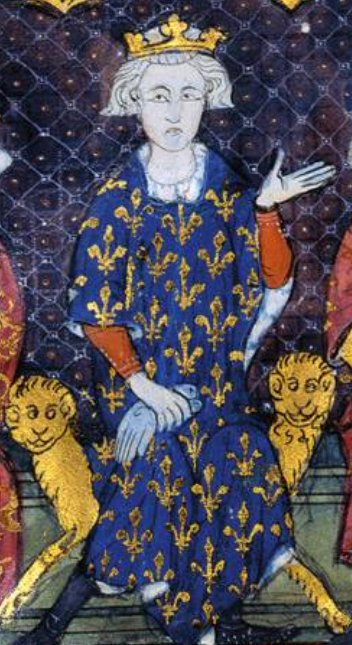
Philip IV. Source: Public domain, Bibliothèque nationale de France, available here.

The Rise of Philip IV

By the thirteenth century France had returned to the height of its power, having recovered from the Plantagenets much of the territory once held by the Angevin Empire. Kings such as Philip II Augustus and Louis VIII enlarged the royal domain and restored France to pre-eminence in western Europe. The French kings of this century were devout Catholic monarchs who leaned heavily on the Church to support their campaigns. One of them, Louis IX - better known as Saint Louis - made France a commanding center of authority through his piety and his ambition on the Seventh Crusade (MacDonald 1931, 692). That crusade ended in disaster, yet Louis's devotion never wavered. He also reformed royal government: he allowed cases to be appealed directly to the crown and abolished trial by combat, the practice of settling guilt or innocence by armed duel. His reforms shaped an enduring ideal of the just king who serves both crown and people (Davis 2010, 215).

Religion was Louis' overriding priority, and his devotion expressed itself daily - most enduringly in the building of the Sainte-Chapelle in Paris, raised in the 1240s to house the relics of Christ's Passion, above all the Crown of Thorns. He treated the defense of the faith as inseparable from justice and maintained a close bond with the Church. That reputation carried him to canonization in 1297, making him the only French king ever recognized as a saint (Marrone 1975, 208). Miracles were reported at his tomb, and the intensity of his devotion did much to hasten his elevation. His grandson, Philip IV, would prove a very different figure, whose quarrel with the Church helped usher in the Avignon Papacy and a new challenge to papal power.

Philip IV (1268-1314), known as Philip the Fair, ruled from 1285 until his death. His reign was dominated by conflict - with England, with his own nobility, and with the Church itself - and by the heavy demands his campaigns placed on the kingdom. Ambitious to the point of dynastic overreach, he sought to extend the reach of his house across Europe, much as his grandfather Louis IX had done in his own way.

The chain of events can be traced to 1293, when a brawl between sailors off the French coast set Philip on a collision course with Edward I of England. Edward held the Duchy of Aquitaine as a vassal of the French crown and owed homage for it. A settlement was negotiated - it included the betrothal of Edward to Margaret, Philip's own sister, and the temporary surrender of Gascony, to be returned once peace was secured. The arrangement collapsed: when Edward was summoned to the French court and failed to appear, Philip declared his French fiefs - Aquitaine, Gascony, and the rest - forfeit in May 1294 (Strayer 1956, 26).

The conflict became known as the Gascon War (1294-1303), and it dragged on between the two kingdoms. It also strained Philip's finances, for he was fighting on several fronts at once - allied with the Scots against England under the 1295 Auld Alliance, while Edward I in turn allied with Flanders, which had risen in revolt against French overlordship. That Flemish rising drew France into the Franco-Flemish War (1297-1305). The Gascon War itself was settled by the Treaty of Paris in 1303, which restored Aquitaine to the English and left the duchy much as it had stood before the fighting began.

This struggle over Gascony is often seen as one of the seeds of the Hundred Years' War. Flanders posed a particular problem, since the Flemish were pressing for independence from the French crown; the fighting there proved costly and inconclusive, and it brought fresh rounds of reform and heavy taxation to both sides. The pressing question - how Francecould pay for all these wars - led straight back to the Church, and what Philip did next would change the course of history.


Money and the Taxation of the Church

Watching France sink into debt, Philip turned to the wealthiest institution within reach - the Church - to fund his wars and shore up his authority. His most consequential move was to tax the French clergy, which brought him into direct conflict with Rome; in 1297, under pressure, Boniface VIII conceded that the king might tax the clergy in cases of genuine emergency (Marrone 1975, 201). Philip's ministers meanwhile mounted a sustained propaganda campaign against the pope (Powicke 1934, 313). The breach widened in 1301, when Philip arrested Bernard Saisset, bishop of Pamiers, on a charge of treason; Boniface responded by summoning the French clergy to Rome to examine the king's conduct.

 In 1302 Boniface issued the bull Unam Sanctam, the most sweeping assertion of papal supremacy over secular rulers yet made. The following year the quarrel turned violent: in September 1303 the king's agents, led by Guillaume de Nogaret, seized the aged pope at Anagni and held him for several days, demanding his resignation. Rarely had a secular ruler laid hands on the head of the Church so brazenly, and the shadow of excommunication hung over Philip throughout (Powicke 1934, 326). Boniface was rescued by the townspeople of Anagni and returned to Rome, but - broken in body and spirit by his ordeal - he died on 11 October 1303 (Powicke 1934, 325).

The assault on Boniface sent shockwaves through the Church; had he been excommunicated first, the consequences for France might have been graver still. His successor, Benedict XI, moved against the men responsible for the outrage at Anagni but died after a reign of only eight months. In 1305 the cardinals chose Bertrand de Got, archbishop of Bordeaux, who took the name Clement V; a Frenchman with strong ties to Philip, he became the first of the Avignon popes. The deeper question was why Philip had pressed so hard against the Church. He had found it at its weakest and meant to bring it to heel - but his overriding motive was money, needed to restore the French crown and fund its wars, and when the money ran out he had little choice but to reckon with the consequences himself.

Philip is remembered above all for the destruction of the Knights Templar, a military religious order founded in the early twelfth century. He cast the order as corrupt and scandal-ridden, and he saw in its suppression a way to escape the debts he owed it and to assert royal power over an institution answerable only to the pope. On 13 October 1307 he had the Templars across France arrested en masse; there followed seven years of trials, torture, and forced confessions. Under pressure from Philip, Clement V dissolved the order at the Council of Vienne in 1312, and in 1314 the last grand master, Jacques de Molay, was burned at the stake in Paris. The Templars had been difficult to control precisely because they answered to Rome alone, but Philip turned his power against them at a moment when the crusading age was fading and his need for money was most acute. Throughout the affair Clement served as Philip's instrument, yielding whenever the king required it and handing him a sweeping victory (Théry-Astruc 2016, 35).

The suppression of the Templars set the tone for Philip's reign and displayed the supreme authority France had come to wield. Under him the French crown drew the Church into its orbit and set the pattern of leadership for the next seventy years. Yet the order Philip imposed rested on unstable foundations: strong kingship could hold it together, but weaker successors would struggle to do so. From the humbling of one pope to the making of another, Philip had shown that a determined king could bend even the Church to his will - and, once bent, it would prove very hard to set right.


Now read part 3 on the start of the Avignon Papacy here.


Bibliography

Davis, Jennifer R. “The Problem of King Louis IX of France: Biography, Sanctity, and Kingship.” The Making of Saint Louis: Kingship, Sanctity, and Crusade in the Later Middle Ages; Saint Louis, by M. Cecilia Gaposchkin, Jacques Le Goff, and Gareth E. Gollrad. The Journal of Interdisciplinary History 41, no. 2 (2010): 209–25. http://www.jstor.org/stable/40785099.

MacDonald, Gregory. “Saint Louis IX of France.” The Irish Monthly 59, no. 701 (1931): 691–96. http://www.jstor.org/stable/20513139.

MARRONE, JOHN, and CHARLES ZUCKERMAN. “CARDINAL SIMON OF BEAULIEU AND RELATIONS BETWEEN PHILIP THE FAIR AND BONIFACE VIII.” Traditio 31 (1975): 195–222. http://www.jstor.org/stable/27830986.

Powicke, F. M. “POPE BONIFACE VIII.” History 18, no. 72 (1934): 307–29. http://www.jstor.org/stable/24401107.

Strayer, Joseph R. “Philip the Fair--A ‘Constitutional’ King.” The American Historical Review 62, no. 1 (1956): 18–32. https://doi.org/10.2307/1848510.

Théry-Astruc, Julien. “THE FLIGHT OF THE MASTER OF LOMBARDY (13 FEBRUARY 1308) AND CLEMENT V’S STRATEGY IN THE TEMPLAR AFFAIR: A SLAP IN THE POPE’S FACE.” Rivista Di Storia Della Chiesa in Italia 70, no. 1 (2016): 35–44. http://www.jstor.org/stable/44807473.

Posted
AuthorHistory Is Now Magazine
CategoriesBlog Post