To conclude the series on King John and the Magna Carta it is vital to review the whole, due to the extensive consequences that a short period in history had upon the future. Therefore, by, the autumn of 1216, King John's reign had become a desperate struggle for survival. The monarch who had once ruled an immense Angevin empire now faced rebellion within England, invasion from France, and the collapse of the authority he had spent years trying to preserve. His defeat was not the result of a single battle or one disastrous decision, but the culmination of military failures, political isolation, and a deepening loss of confidence among his subjects. Yet even as his kingdom appeared to be disintegrating, John remained determined to recover what he had lost. His final campaign would carry him across eastern England, through flooded landscapes and hostile territory, before illness brought his turbulent reign to an abrupt end.

Terry Bailey explains.

You can read part 1 on the cruel King who made his own enemies here, part 2 on losing an empire here, and part 3 on rebellion and Magna Carta here, part 4 on John striking back here, and part 5 on Magna Carta’s legacy here.
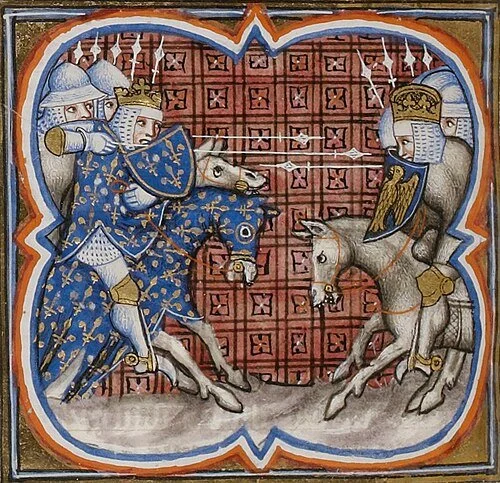
The Battle of Bouvines. Source: Public domain, Bibliothèque nationale de France, available here.

John's troubles had begun long before the rebellion of 1215. His loss of Normandy to Philip II of France in 1204 had shattered the prestige of the English crown and exposed the limitations of his military leadership. The failure to recover the duchy, followed by the disastrous defeat at Bouvines in 1214, left John politically weakened and financially exhausted. His attempts to raise further taxation and military resources only intensified resentment among the barons, while his conflict with the Church had damaged his legitimacy. By the time the rebels captured London in 1215, the king's authority had been reduced to a fragile combination of military force, royal tradition, and the loyalty of those who still believed that his rule could be preserved.

The granting of Magna Carta at Runnymede in June 1215 offered the possibility of reconciliation, but John soon demonstrated that he regarded the charter as a constraint rather than a settlement. He appealed to Pope Innocent III, who condemned the agreement and released him from its obligations. The resulting breakdown in negotiations transformed political opposition into civil war. Rebel barons invited Prince Louis of France to claim the English throne, and in May 1216 Louis landed in England with an army. His arrival gave the rebellion a powerful new dimension, turning a dispute between the king and his nobles into an international struggle for the future of the English monarchy.


Louis entered London and received the support of many barons who had lost faith in John. The king, meanwhile, attempted to regain control through a series of military campaigns. Although he succeeded in recovering some territory, his position remained precarious. The French-backed rebellion had established a rival center of authority, and the king's forces were increasingly dependent upon the loyalty of a smaller circle of supporters. John's reputation for cruelty and vindictiveness had also made it difficult for him to rebuild trust. His earlier treatment of political opponents, including the alleged starvation of Matilda de Braose and her son in Corfe Castle, had become part of a wider perception that the king was dangerous when challenged and unreliable when negotiating.

In the summer of 1216, John continued to campaign against the rebels, seeking to restore royal authority before the French could consolidate their position. His movements took him through the Midlands and eastern England, where he attempted to secure castles, recover territory, and prevent the rebellion from spreading further. Yet the campaign was increasingly shaped by the practical difficulties of medieval warfare. Armies depended upon roads, bridges, river crossings, supply routes, and the availability of food. Heavy autumn rains could transform apparently familiar terrain into treacherous marshland, while the loss of baggage and supplies could weaken an army more effectively than a battlefield defeat.

It was during this campaign that John's fortunes took one of their final and most dramatic turns. In October 1216, while travelling through the region of the Wash, the king's baggage train was caught by the incoming tide. The Wash was a dangerous area of tidal flats, shifting channels, and rapidly changing waters, and the loss of men, horses, and supplies was a serious blow to the royal expedition. Although later accounts have sometimes presented the event as a spectacular catastrophe, the precise details remain uncertain. What is clear is that John's army suffered a damaging loss, and the incident contributed to the collapse of his already fragile campaign.

The king continued southward, but his health was deteriorating. Medieval chroniclers describe him as suffering from a severe illness, sometimes associated with dysentery or another gastrointestinal disease. The exact diagnosis cannot be established with certainty, but the illness was serious enough to prevent him from continuing his military operations. John was taken to Newark Castle, where he died on the night of the 18th or 19th of October 1216, aged approximately forty-eight. His death brought an end to one of the most troubled reigns in English history, but it did not bring an immediate end to the conflict that had consumed his kingdom.

John was buried at Worcester Cathedral, where his tomb remains a reminder of the man whose reign had brought England to the brink of political collapse. His final resting place was significant, for Worcester lay within the heart of the kingdom he had struggled to preserve. The king's burial was conducted with the dignity appropriate to his position, but his death left the monarchy in a vulnerable state. His heir, Henry III, was only nine years old, and the survival of the royal government depended upon the ability of his supporters to prevent the French-backed rebellion from succeeding.

The responsibility for defending the young king fell largely upon William Marshal, Earl of Pembroke, one of the most respected and capable nobles of the age. Marshal had served under several English kings and possessed the military experience, political authority, and personal reputation necessary to unite the royalist cause. Unlike John, he was able to present the monarchy as a source of stability rather than fear. In November 1216, Henry III was crowned at Gloucester Cathedral, and Marshal assumed the role of regent. His leadership marked a decisive change in the fortunes of the royal government.

Marshal and his allies understood that the survival of the monarchy required more than military victory. They needed to recover the loyalty of the barons, reassure the Church, and present Henry III as a legitimate and comparatively innocent alternative to the unpopular John. Magna Carta was therefore reissued in 1216, with certain clauses omitted or modified, but with its central principles preserved. The charter could now be used not as a symbol of rebellion against the crown, but as a means of restoring confidence in the monarchy. This was a crucial political achievement, for it allowed the royalists to claim that they were defending lawful government rather than merely continuing John's policies.

The military struggle continued into 1217. Louis of France still claimed the English throne, and his supporters remained active in the south and east of the country. However, the royalist cause gradually strengthened. Marshal's forces won important victories, including the naval Battle of Sandwich in August 1217, which helped cut Louis off from further French reinforcements and supplies. The defeat of the French fleet was followed by the Treaty of Lambeth, under which Louis abandoned his claim to the English crown and returned to France. The civil war was effectively brought to an end, and the monarchy of Henry III survived.

The contrast between John's final years and the recovery achieved under William Marshal is striking. John had attempted to preserve royal authority through coercion, financial pressure, and military force, but his methods had alienated many of the very people upon whom his government depended. Marshal, by contrast, recognized that the monarchy could survive only by rebuilding trust and presenting itself as a lawful institution. The success of the royalists was therefore not simply a military victory; it was a political restoration that helped ensure the continuity of the English crown.

John's historical reputation has remained deeply controversial. Medieval chroniclers portrayed him as cruel, treacherous, and incompetent, and later historians often repeated these judgements. His loss of Normandy, his conflict with the Church, his treatment of political opponents, and his failure to maintain the loyalty of his barons all contributed to the image of a king whose reign was defined by disaster. Yet modern historians have also sought to place John within the difficult circumstances of his age. He inherited a vast and expensive empire, faced a formidable French monarchy, and ruled during a period when the relationship between the crown and the nobility was undergoing profound change.

Nevertheless, the argument that John was merely the victim of circumstances is difficult to sustain. His decisions repeatedly intensified the problems he faced. His financial demands were often excessive, his treatment of opponents could be ruthless, and his willingness to abandon agreements undermined confidence in his word. His failure to recognize the political consequences of his actions was particularly damaging. A medieval king could not rule by force alone; he required the cooperation of nobles, the support of the Church, and the belief that his government possessed legitimacy. John's inability to maintain that balance was one of the principal causes of his downfall.

The significance of John's reign, however, extends far beyond the story of his personal failures. His defeat helped create the circumstances in which Magna Carta survived and acquired lasting importance. Although the charter was not originally intended to establish modern democracy or universal equality, it introduced principles that would become increasingly influential in the development of constitutional government. The idea that the king was subject to law, that taxation required limits, and that certain rights could not be arbitrarily violated would gradually become central to the English political tradition.

The events of 1215 and 1216 also demonstrated that royal power was not absolute. John's attempt to overturn Magna Carta ultimately failed because the political forces opposing him were too strong and because his own actions had weakened the authority of the crown. The charter's survival was therefore not simply the result of a document being preserved; it was the consequence of a political struggle in which the monarchy was forced to acknowledge that it could not govern without restraint.

In the centuries that followed, Magna Carta would be reissued, interpreted, and transformed. Its language would influence the development of Parliament, the rule of law, and the principle that government must operate within established legal boundaries. Later generations would look back to the events of John's reign as an important stage in the long evolution of constitutional government. The charter's influence would eventually extend beyond England, contributing to political thought in Britain, the American colonies, and the wider world.

King John's reign therefore presents a paradox. He is remembered as one of England's most unsuccessful monarchs, yet the political crisis that he helped create produced one of the most enduring constitutional documents in history. His military defeats, political isolation, and personal failures weakened the authority of the crown, but they also forced the monarchy to confront limits that would become increasingly difficult to ignore. In this sense, John's legacy was not one of triumph, but of unintended consequence.

The king who had attempted to preserve absolute royal authority ultimately helped strengthen the principle that even a monarch must be governed by law. His death at Newark in October 1216 ended a reign marked by war, suspicion, and rebellion, but it also opened the way for a new political settlement under Henry III. Through the efforts of William Marshal and the survival of Magna Carta, England emerged from the crisis with a monarchy that had been weakened, but not destroyed, and with a constitutional tradition that would continue to develop for centuries.

John's story is therefore not simply the story of a failed king. It is the story of how military defeat, political misjudgment, and personal ambition can combine to transform the relationship between ruler and ruled. His reign demonstrated the dangers of power without restraint, while the survival of Magna Carta revealed the enduring strength of the principle that government must be subject to law. In the final analysis, King John's greatest historical significance lies not in what he intended to achieve, but in the constitutional legacy that emerged from his failure.


Enjoyed the piece?

Join thousands of history readers getting occasional updates on new blog posts, books, and video releases — plus a free history book to get you started.

Join History Is Now here


Now, read Terry’s series on King Kenry VIII and his wives here.
Posted
AuthorHistory Is Now Magazine
CategoriesBlog Post

When King John died in October 1216, exhausted, defeated and politically isolated, it might have seemed that the great experiment embodied in Magna Carta had ended with him. The charter had been repudiated by the king, annulled by Pope Innocent III and followed by civil war. Its original settlement had collapsed almost as quickly as it had been created. Yet John's attempt to destroy Magna Carta ultimately proved futile. The document that had been forced upon him at Runnymede survived his death, and with it survived an idea that would prove far more consequential than the political crisis that had produced it: that even a king was subject to law.

Terry Bailey explains.

You can read part 1 on the cruel King who made his own enemies here, part 2 on losing an empire here, and part 3 on rebellion and Magna Carta here, and part 4 on John striking back here.

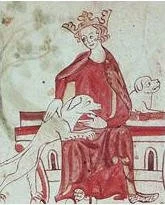
John with hunting dogs. Source: public domain, Anonymous, available here.

The survival of Magna Carta was due in considerable measure to the remarkable political judgement of William Marshal, 1st Earl of Pembroke. One of the most respected knights and statesmen of his generation, Marshal became regent for John's young son, Henry III, following John's death. England was still engulfed in the First Barons' War, with rebel forces supported by Prince Louis of France. Marshal understood that the new king could not simply continue his father's policies. Henry was a child, the kingdom was divided, and the Crown needed to recover the loyalty of the barons. The most effective way to achieve this was not to destroy Magna Carta but to embrace a revised version of it.

In 1216, Marshal therefore issued a new version of Magna Carta in the name of the nine-year-old Henry III. It was substantially shorter than the 1215 charter, with clauses that were considered inappropriate or impractical removed. A further and more important reissue followed in 1217, when the civil war was drawing to a close. Alongside Magna Carta, the government issued a separate Charter of the Forest, dealing with royal forests and restrictions upon their use. These documents helped reconcile the Crown with its opponents and demonstrated something that John had failed to understand: Magna Carta could be transformed from a symbol of rebellion into an instrument of political reconciliation.

The 1217 settlement was particularly significant because it detached Magna Carta from the personality of King John. It was no longer merely a document imposed upon an unpopular monarch at the point of a sword. It was becoming a charter associated with the government of his legitimate successor. When Henry III reissued Magna Carta in 1225, he did so as part of a negotiated arrangement involving taxation and royal government. This version became the authoritative form of the charter for subsequent generations. Although much of the original 1215 document had disappeared or been modified, its fundamental conception remained: royal government was not simply an expression of the sovereign's personal will.

The transformation was gradual. Magna Carta was never originally intended to develop modern democracy, universal equality or a comprehensive catalogue of individual rights. Most of its provisions concerned the relationship between the Crown and the political elite, particularly the barons and the Church. Nevertheless, certain principles contained within it possessed an extraordinary capacity for development. The proposition that government must operate according to established law, that justice should not simply be sold or arbitrarily denied, and that the Crown itself possessed legal limitations provided later generations with a foundation upon which much broader constitutional principles could be constructed.

Among the most enduring ideas was the concept that the ruler was subject to the law. Medieval kings commonly claimed extensive authority, but Magna Carta gave unusually powerful expression to the proposition that royal power could be constrained by established legal obligations. Over the centuries, this principle evolved into what became known as the rule of law: the idea that individuals and governments alike are subject to publicly established laws, administered through institutions capable of applying those laws independently of arbitrary political command.

This evolution was neither straightforward nor inevitable. For centuries, English monarchs continued to exercise enormous authority, and political liberty remained restricted by social status, wealth and gender. Magna Carta was repeatedly interpreted, reinterpreted and sometimes invoked selectively to support political arguments that its original authors could scarcely have imagined. Its significance therefore lies less in what every clause originally meant than in the constitutional language it provided. Later generations repeatedly returned to the charter when challenging excessive governmental authority.

The development of Parliament was closely connected to this wider transformation. Medieval kings required taxation, military support and political cooperation, making consultation with powerful subjects increasingly important. The parliamentary institution that gradually emerged was not created by Magna Carta alone, but the political culture surrounding the charter helped reinforce the principle that royal government required legitimate consent and could not operate entirely according to the monarch's private wishes. Over succeeding centuries, Parliament evolved from a gathering of nobles and representatives summoned by the Crown into the central legislative institution of the English, and later British, constitutional system.

Magna Carta also acquired profound significance in the development of individual legal protections. Its most famous surviving principle concerns imprisonment and punishment according to lawful process. The charter declared that no free man should be deprived of liberty or subjected to punishment except according to lawful judgement and the law of the land. In its original medieval context, this was a relatively narrow protection, but later constitutional thinkers interpreted it as part of a much larger principle: government should not be able to imprison or punish individuals arbitrarily.

That principle eventually became associated with due process of law. The modern concept encompasses far more than Magna Carta itself, including fair procedures, lawful authority, judicial oversight and protection against arbitrary governmental action. The development of the jury system also became intertwined with this broader tradition, although it is important not to imagine that Magna Carta instantly created the modern jury trial. Jury procedures already existed in various forms, and the sophisticated system of criminal and civil juries developed over centuries. Nevertheless, Magna Carta became an enduring symbol of the proposition that individuals should have access to established legal procedures rather than being subject solely to executive command.

The charter's constitutional reputation became particularly powerful during the seventeenth century, when Parliament increasingly challenged the authority of the Stuart monarchy. The Petition of Right of 1628 drew upon older English constitutional traditions to challenge taxation without parliamentary consent, arbitrary imprisonment and the imposition of martial law. Although the Petition of Right was a product of its own political circumstances rather than simply a direct continuation of Magna Carta, its arguments belonged unmistakably to the same constitutional tradition. The central question was increasingly not whether the king possessed power, but whether that power was legally unlimited.

The struggle intensified during the English Civil Wars and the political upheavals that followed. The eventual overthrow of James II in the Glorious Revolution of 1688 produced another landmark: the English Bill of Rights of 1689. It established important limitations upon the Crown and affirmed parliamentary privileges and certain individual protections. Once again, Magna Carta provided historical legitimacy for the proposition that the monarch was not above the law. The constitutional settlement of the seventeenth century therefore represented another stage in a much longer process in which medieval restrictions upon royal authority were transformed into principles governing modern constitutional government.

The influence of this tradition crossed the Atlantic. English colonists in North America were deeply familiar with Magna Carta and the constitutional struggles that had developed around it. American political thinkers regarded inherited English liberties as protections against arbitrary government, and these traditions contributed to the intellectual environment from which the American Revolution emerged. The United States Constitution subsequently established a system of limited government based upon a written constitutional framework, separation of powers and independent institutions. The Bill of Rights, adopted in 1791, contained particularly important protections concerning due process, unreasonable governmental intrusion, criminal proceedings and deprivation of life, liberty or property.

The connection between Magna Carta and the United States Constitution should not, however, be reduced to a simple line of direct inheritance. American constitutionalism was also shaped by seventeenth- and eighteenth-century political philosophy, colonial experience, republican ideas and the writings of thinkers such as John Locke. Nevertheless, the American constitutional tradition consciously inherited the English conception that liberty required protection against arbitrary authority. Magna Carta became an important historical ancestor within that much larger intellectual tradition.

Its influence ultimately reached far beyond Britain and the English-speaking world. After the devastation of the Second World War, representatives of different nations attempted to formulate universal principles capable of protecting human dignity and fundamental freedoms. The result was the Universal Declaration of Human Rights, adopted by the United Nations General Assembly in 1948. The Declaration was not legally descended from Magna Carta in any simple sense, and its intellectual foundations were vastly broader, incorporating natural-law traditions, Enlightenment philosophy and modern international human-rights thinking. Yet the fundamental idea that individuals possess rights that governments cannot legitimately disregard belongs to the same long historical evolution in which Magna Carta occupies a celebrated place.

The journey from Runnymede to modern human rights was therefore neither direct nor inevitable. Magna Carta did not create democracy, constitutional monarchy, judicial independence or universal civil liberties overnight. Its original protections were limited, its language was medieval and its immediate political settlement failed. What made the charter historically extraordinary was the ability of later generations to reinterpret its principles. It became a repository of constitutional memory, repeatedly summoned whenever governments were accused of exceeding legitimate authority.

This is perhaps most clearly reflected in the modern concept of constitutional monarchy. The British monarch remains the formal head of state, but political power is exercised within a constitutional framework established by legislation, convention and judicial principles. Ministers are accountable to Parliament, governments are subject to law, and courts possess an institutional role in determining whether public authorities have acted within their lawful powers. None of these institutions can be attributed solely to Magna Carta, but the charter forms part of the centuries-long historical development through which the concept of limited government emerged.

The same historical inheritance can be seen in modern civil liberties. Protection against arbitrary imprisonment, access to legal procedures, the expectation of an independent judiciary and the principle that governments must justify the exercise of coercive power are now regarded in many constitutional democracies as fundamental safeguards. These principles remain imperfectly implemented, and their protection has never been permanently guaranteed. Throughout history, governments have attempted to restrict liberties during periods of war, crisis and political instability. Magna Carta's continuing importance therefore lies partly in its reminder that legal protections are most valuable precisely when political authority is under pressure.

There is also a profound lesson in the charter's relationship with political power. John believed that his royal authority permitted him to resist the restrictions imposed upon him. In practical terms, he attempted to make Magna Carta disappear. He secured its papal annulment, repudiated its obligations and attempted to defeat its supporters militarily. Yet within a generation, the charter had returned under the authority of his own son. The king who attempted to destroy it inadvertently helped transform it into something considerably more enduring than the settlement he had rejected.

John's greatest political failure was therefore also his greatest unintended legacy. He failed to preserve the Angevin Empire, alienated his barons, lost territories in France, provoked rebellion and ultimately died while his kingdom was still at war. His attempt to repudiate Magna Carta likewise failed. Yet the document that he regarded as an intolerable restriction upon his authority survived him, was reissued by his successors and became embedded within the constitutional memory of England.

Eight centuries later, the significance of Magna Carta is not that it established the democratic world in a single dramatic moment at Runnymede. Its true importance lies in the principle that emerged from its turbulent history: power must ultimately answer to law. From medieval disputes between kings and barons came ideas that were gradually reshaped into constitutional government, parliamentary accountability, judicial protection and civil liberties. John sought to extinguish Magna Carta; instead, his resistance helped ensure that its ideas would outlive him. The king who wanted to remain above the law became, ironically, one of history's most enduring examples of why no ruler should be.

The story of Magna Carta is, ultimately, a story about the unpredictable consequences of political failure. It was born not from a grand philosophical project to create democracy, nor from a universal declaration of human freedom, but from a desperate confrontation between an increasingly isolated monarch and a political elite determined to restrain his authority. King John did not willingly surrender his power at Runnymede. He negotiated because circumstances had left him with few alternatives. The charter itself was imperfect, its provisions were predominantly concerned with the rights and interests of the medieval Church, nobility and landholders, and its original settlement collapsed almost immediately. Yet from this turbulent and distinctly medieval dispute emerged an idea whose historical significance would ultimately far exceed the intentions of those who created it.

The extraordinary achievement of Magna Carta was therefore not that it immediately transformed England. It did not. Its importance lay in the precedent it established and, perhaps even more importantly, in the language it provided for subsequent generations. The proposition that authority could be subjected to law, that established legal procedures could restrain arbitrary power and that even the sovereign possessed obligations beyond personal will became increasingly powerful as England's political institutions evolved. Magna Carta became a constitutional touchstone precisely because later generations could reinterpret its principles in response to circumstances that its original authors could never have anticipated.

Its survival after John's death was crucial. Had William Marshal and the government of the young Henry III simply abandoned the charter, Magna Carta might have remained an intriguing but short-lived episode in the political crisis of 1215. Instead, its reissues transformed it from a defeated king's reluctant concession into a continuing element of royal government. The subsequent confirmation of the charter ensured that its principles remained embedded within England's constitutional memory. What John had regarded as an intolerable infringement upon royal prerogative was gradually transformed into evidence that royal authority itself possessed boundaries.

Over the centuries, those boundaries became progressively more sophisticated. The relationship between Crown, Parliament and judiciary evolved through political conflict, legislation and constitutional practice. The Petition of Right, the struggles of the seventeenth century, the English Bill of Rights and the emergence of parliamentary government each represented distinct historical developments rather than simple extensions of Magna Carta. Yet they participated in the same much broader constitutional tradition: the conviction that legitimate government cannot be reduced to the unrestricted exercise of executive power.

The significance of this development becomes even clearer when viewed beyond Britain. The constitutional traditions inherited by the American colonies, the intellectual foundations of the American Revolution, the United States Constitution and its Bill of Rights all emerged from a complex mixture of English constitutional history, Enlightenment philosophy, colonial experience and republican thought. Magna Carta was only one element within that intellectual inheritance, but it provided a powerful historical symbol for the proposition that liberty required protection against arbitrary government. Its influence was therefore not mechanical or direct; rather, its principles were repeatedly rediscovered, adapted and expanded.

The same caution applies to modern human rights. Magna Carta did not establish universal equality, freedom of expression, religious liberty or the modern conception of human dignity. Its protections were originally restricted and its society was profoundly hierarchical. Yet the historical evolution from limitations upon medieval royal authority towards modern concepts of individual rights demonstrates how constitutional ideas can acquire meanings far greater than those originally intended. The Universal Declaration of Human Rights belongs to a vastly broader intellectual and political tradition, but its insistence that governmental authority must respect fundamental human rights reflects the culmination of a centuries-long struggle against arbitrary power.

This is why Magna Carta continues to possess such extraordinary symbolic power more than eight centuries after Runnymede. Its historical importance does not depend upon pretending that medieval England possessed modern democratic values. Quite the opposite. Its significance becomes more compelling when the document is understood within its proper context. It demonstrates how constitutional principles can emerge imperfectly from political conflict and subsequently evolve through generations of reinterpretation. Ideas do not necessarily require their creators to understand their ultimate consequences.

There is, moreover, a striking irony at the heart of the entire story. John fought to preserve what he believed to be the traditional prerogatives of kingship. He resisted his barons, challenged the restrictions placed upon him, sought papal annulment of the charter and attempted to defeat his opponents by force. Yet the more desperately he attempted to suppress Magna Carta, the more enduring its historical legacy ultimately became. His death did not end the charter. His repudiation did not erase it. His military struggle did not prevent its revival. Instead, his failure helped evolve the circumstances in which the document could be reissued, preserved and gradually transformed into a symbol of limited government.

John therefore occupies a peculiar position in constitutional history. He was not a champion of liberty, nor did he consciously seek to establish principles that would one day underpin constitutional democracy. His reign was marked by military failure, political conflict, financial pressure and a profound inability to maintain the confidence of many of his most powerful subjects. Yet his confrontation with the barons produced one of the most consequential constitutional episodes in European history. The king who attempted to preserve unrestricted royal authority inadvertently became associated with one of history's most enduring warnings about the dangers of unrestricted power.

The legacy of Magna Carta is consequently best understood not as a single moment but as an eight-hundred-year conversation about the nature and limits of authority. Runnymede was only the beginning. The charter survived because subsequent generations found within it principles that could be adapted to their own struggles: against arbitrary imprisonment, excessive taxation, unchecked executive authority and the concentration of political power. Each generation added something of its own, gradually transforming a medieval settlement between a king and his barons into part of the intellectual and constitutional heritage of the modern world.

Yet that heritage should never be regarded as permanently secured. The rule of law, constitutional government and individual liberty are not historical achievements that, once established, become immune from erosion. Political crises, wars, emergencies and powerful governments have repeatedly tested the boundaries of civil liberty throughout history. Magna Carta's continuing relevance therefore lies not merely in what it accomplished, but in the warning contained within its history: legal restraints matter most when those in power find them inconvenient.

The enduring lesson of Magna Carta is consequently both simple and profound. No ruler, however powerful, should possess authority entirely beyond the reach of law. That principle was not created fully formed at Runnymede, and it did not emerge effortlessly from the medieval world. It was contested, abandoned, revived, reinterpreted and gradually expanded across centuries of political struggle. But once articulated, it proved extraordinarily difficult to extinguish.

King John wanted Magna Carta to disappear. Instead, it outlived him, outlived his dynasty, outlived the medieval political world that invoked it and eventually became part of a global vocabulary of constitutionalism and human rights. The document forced upon an unwilling king became a symbol invoked against kings, governments and institutions that claimed excessive authority. Its journey from a muddy field beside the Thames to the foundations of modern constitutional thought is one of history's most remarkable examples of unintended consequence.

In the end, therefore, Magna Carta's greatest legacy is not any individual clause, nor even the physical documents that survive in archives today. It is the enduring principle that power must answer to law. That principle transformed a medieval political crisis into a constitutional inheritance that continues to shape modern ideas of liberty, accountability and government. John sought to demonstrate that a king could not be constrained by his subjects. History ultimately demonstrated something very different: that even kings are subject to the law, and that an idea capable of surviving its enemies can become far more powerful than the ruler who once attempted to destroy it.


Now, read the final part on the fall and death of King John here.

Enjoyed the piece?

Join thousands of history readers getting occasional updates on new blog posts, books, and video releases — plus a free history book to get you started.

Join History Is Now here


Posted
AuthorHistory Is Now Magazine
CategoriesBlog Post

By 1215, England had reached a point where opposition to King John was no longer a collection of private grievances among a handful of dissatisfied nobles. Years of military failure, heavy taxation, arbitrary government and disputes with the Church had steadily eroded confidence in the king. The loss of Normandy and much of the Angevin Empire had damaged John's prestige, while his repeated demands for money to finance further military campaigns placed an increasingly heavy burden upon his subjects. For many of the barons, the question was no longer simply whether John was a successful king. It was whether his authority could continue without restraint.

Terry Bailey explains.

You can read part 1 on the cruel King who made his own enemies here, and part 2 on losing an empire here.

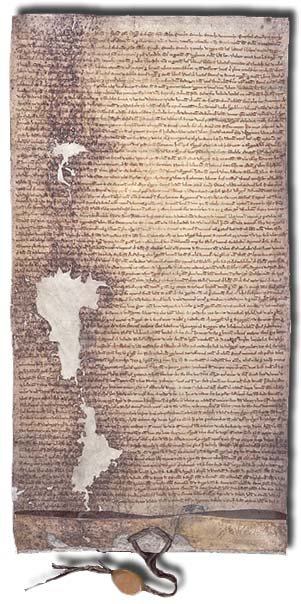
The 1225 version of Magna Carta issued by Henry III of England. Source: Public domain, National Archives, available here.

The rebellion that emerged was therefore organized rather than spontaneous. A group of powerful barons formed a coalition against John, coordinating their demands and presenting a united political front. They were not attempting to abolish the monarchy, nor were they seeking to produce a modern democracy. Their objective was to force the king to recognize that even a monarch was subject to established law and custom. In medieval England, this was a revolutionary proposition in practice, even though the rebels themselves largely expressed their demands in terms of restoring traditional rights.

The rebels understood that military pressure alone might not be enough. They needed to demonstrate that John could no longer govern effectively without their cooperation. Their campaign therefore combined armed resistance with political organization. When negotiations failed, the barons moved against royal strongholds and eventually seized London in May 1215. The capture of the capital was a decisive turning point. London was not merely England's largest and most important city; it was a center of royal finance, administration and trade. Its loss placed enormous pressure upon John and demonstrated that the rebellion had become a national political crisis.

With London in rebel hands, John was forced to negotiate. The king and the barons met at Runnymede, a meadow beside the River Thames, in June 1215. The negotiations were difficult, and neither side entirely trusted the other. The barons wanted enforceable guarantees that John would respect their liberties, while John wanted to preserve the authority of the Crown. The resulting document, eventually known as Magna Carta, was therefore not a declaration of democracy but a negotiated attempt to prevent the kingdom from descending further into civil war.

Magna Carta was sealed by John on 15 June 1215. Its immediate purpose was practical: to settle the dispute between the king and the rebel barons. Yet the document contained principles whose significance would eventually extend far beyond the circumstances in which it was produced. It established the idea that the king's authority was not unlimited and that royal government should operate according to recognized law and custom.

One of the earliest provisions concerned the Church. Magna Carta declared that the English Church should be free and possess its liberties unimpaired. This reflected the bitter struggle between John and the papacy that had dominated part of his reign, but it also reinforced the broader principle that the king could not simply treat every institution within his kingdom as an extension of his personal authority.

The charter also dealt extensively with property and inheritance. The arbitrary seizure of land, excessive financial demands and abuses of feudal authority had invoked deep resentment among the barons. Magna Carta attempted to establish clearer rules governing inheritance, debts, property and the responsibilities of royal officials. These provisions were particularly important to the aristocracy, but the underlying principle was broader: property could not simply be taken or manipulated at the king's personal whim.

Taxation was another major source of conflict. John had repeatedly demanded money from his subjects to finance his wars, including through scutage, a payment traditionally made by knights in place of military service. Magna Carta placed important restrictions on the king's ability to impose certain extraordinary financial demands without the "common counsel" of the kingdom. Although this was not parliamentary taxation in the modern sense, it represented an important step towards the principle that taxation required consultation and consent.

Perhaps the most famous principle appears in Clause 39, which addressed imprisonment, dispossession and justice. It stated that no free man was to be arrested, imprisoned, dispossessed, outlawed or exiled except by the lawful judgment of his equals or by the law of the land. The provision did not establish universal equality before the law as we understand it today, because medieval society was deeply hierarchical. Nevertheless, it placed an important conceptual limitation upon arbitrary royal power: the king could not simply punish a free man according to personal preference without reference to lawful process.

The famous phrase "law of the land" would acquire enormous importance in later centuries. Magna Carta did not invent the idea that kings should obey the law, but it gave that principle a powerful written expression. The significance of Clause 39 lies therefore not simply in what it meant to a thirteenth-century baron, but in how later generations interpreted and developed its underlying concept of due process and lawful government.

Another extraordinary provision was the security clause, Clause 61. This introduced a mechanism through which a committee of twenty-five barons could monitor the king's compliance with the charter. If John violated its terms, the barons could take action against him, including seizing royal property until the breach was corrected. In effect, the clause attempted to give the charter an enforcement mechanism rather than relying solely upon the king's goodwill.

The inclusion of Clause 61 reveals just how little trust existed between John and his opponents. The rebels clearly believed that a simple promise from the king would be insufficient. They wanted a practical means of compelling him to obey the agreement. In doing so, they were challenging one of the fundamental assumptions of medieval kingship: that royal authority ultimately rested in the person of the monarch.

Although the barons were the driving force behind the rebellion, the crisis affected a much wider section of English society. Merchants depended upon predictable laws and secure trade, while townspeople were increasingly important to the economy and administration of the kingdom. Freemen had interests in property, justice and protection from arbitrary authority, while peasants, although largely excluded from political power, were affected by the taxation, feudal obligations and administrative abuses generated by royal government.

It would therefore be misleading to portray Magna Carta as a document written for ordinary people in the modern democratic sense. Most of its immediate beneficiaries were members of the political and social elite, particularly the barons and other free men. Yet the principle that government should be constrained by law possessed a potential far greater than the intentions of those who penned it. Over succeeding centuries, lawyers, politicians and reformers would repeatedly return to Magna Carta as evidence that royal authority had limits.

This is where the events of 1215 become particularly important in the longer history of constitutional government. England did not suddenly become a constitutional monarchy when John sealed Magna Carta. There was no parliament in the modern sense, no universal suffrage and no concept of equal political rights. Nevertheless, the confrontation established a powerful precedent: the king could be compelled to recognize that his authority was subject to law and that certain decisions required consultation and established procedure.

For John, however, Magna Carta was never a settlement he genuinely intended to embrace. He had accepted the charter because the political and military circumstances had left him with little alternative. Almost immediately, both sides began preparing for the possibility that the agreement would collapse. John appealed to Pope Innocent III, who regarded the charter as an unacceptable limitation upon the authority of an anointed king. The pope subsequently annulled it, and the fragile peace of 1215 disintegrated.

England was once again plunged into civil war. The rebels had achieved an extraordinary victory at Runnymede, but they had not solved the fundamental problem of John's kingship. The charter had been sealed, but it had not been secured. The struggle between the king and his opponents would therefore continue, setting the stage for the final and most dramatic phase of John's reign.

Needless to say, the sealing of Magna Carta in June 1215 was therefore neither the end of King John's troubles nor the sudden birth of English democracy. It was the product of a profound political crisis in which military defeat, financial demands, arbitrary government and conflict with the Church had combined to undermine confidence in the Crown. The barons had forced John to accept written limitations upon his authority, but the charter remained a fragile compromise rather than a lasting peace. Its provisions were shaped by the immediate concerns of medieval society, particularly the rights of the Church, the aristocracy and free men, and they did not create equality, representative government or universal rights. Nevertheless, the principle that emerged from the confrontation was immensely significant: the king was not entirely above the law. Royal authority could be challenged, negotiated and, at least in principle, restrained by established law and custom.

Yet Magna Carta's immediate failure is as important as its later legacy. John's appeal to Pope Innocent III and the papal annulment of the charter demonstrated how little genuine trust existed between the Crown and the rebel barons. Within months, England had returned to civil war, proving that a document alone could not resolve a political struggle when neither side was prepared to accept its terms. The conflict would ultimately outlive John himself, whose reign descended into further military and political crisis before his death in October 1216. Magna Carta would also be reissued in modified forms under his successors, gradually separating the enduring principles of lawful government from the circumstances of its troubled birth.

The true importance of 1215 therefore lies not in the notion that England suddenly became free, but in the precedent established by the confrontation between John and his opponents. Magna Carta became a symbol of the proposition that government must operate within the law and that even a monarch cannot exercise power entirely according to personal will. Over the centuries, later generations would reinterpret its provisions, particularly those concerning lawful judgment, due process and taxation, giving them meanings far beyond what the barons at Runnymede could have anticipated. The rebellion of 1215 was born from medieval grievances and elite political interests, but its consequences reached into the development of constitutional government itself. In that sense, the crisis surrounding King John transformed a desperate attempt to restrain an unpopular monarch into one of the most enduring political landmarks in English history.


Now read part 4 on how John struck back here.

Posted
AuthorHistory Is Now Magazine
CategoriesBlog Post

The reign of King John entered its most dangerous phase not simply because he was unpopular, but because military failure began to undermine the very foundations of his authority. When John became king in 1199, he inherited one of the most extensive collections of territories ever assembled by an English monarch. The Angevin Empire stretched across large parts of modern-day France, from Normandy and Anjou to Aquitaine, while England itself provided the wealth and political base from which these possessions could be governed. Yet within little more than a decade, much of this vast inheritance had disappeared. The loss of these territories would have consequences far beyond the battlefield. It would damage John's reputation as a ruler, drain the English treasury, increase the financial demands placed upon his subjects and, ultimately, convince many of his most powerful nobles that the king himself had become a threat to the stability of the realm.

Terry Beiley explains.

You can read part 1 on the cruel King who made his own enemies here.

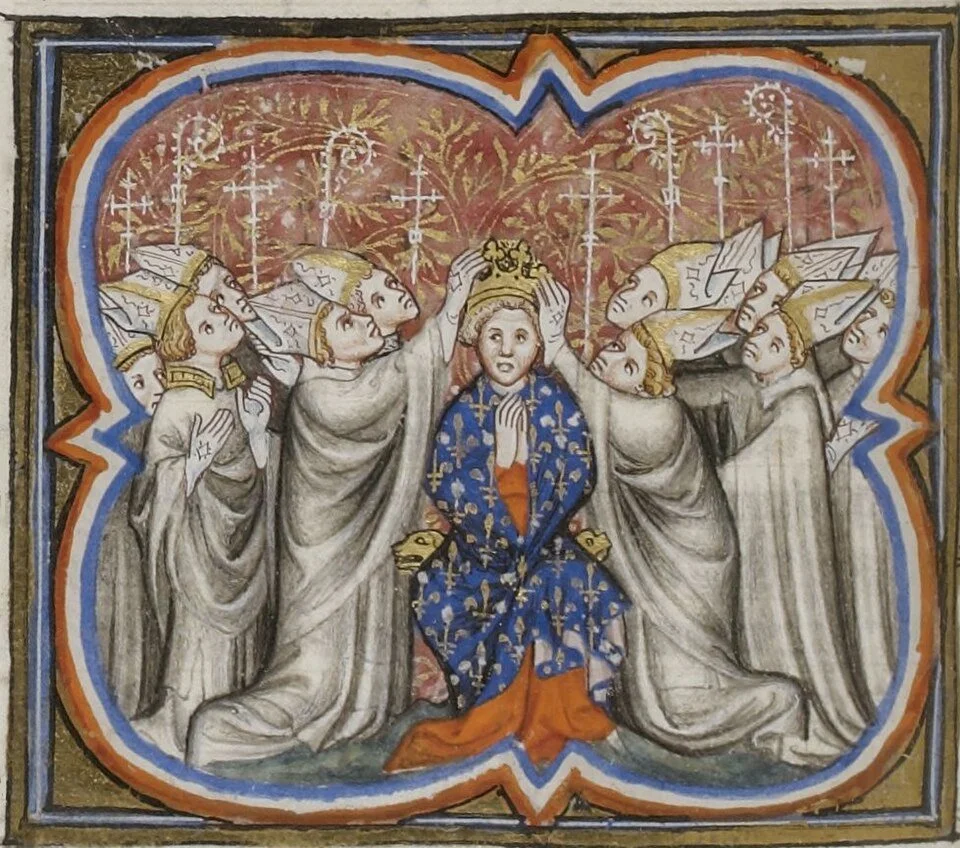
The coronation of Philip II of France. Source: Public domain, Bibliothèque nationale de France, available here.

John's difficulties began almost immediately after his accession. His claim to the French territories inherited from his brother Richard I was challenged by his nephew, Arthur of Brittany. Arthur was supported by Philip II of France, who saw an opportunity to weaken the Angevin territories that had long represented a formidable obstacle to Capetian expansion. John initially appeared capable of containing the threat, but his position deteriorated rapidly. His military response was undermined by political divisions within his French territories, and several important nobles began transferring their allegiance to Philip.

The decisive crisis came in 1203–1204 with the loss of Normandy. John had been unable to prevent Philip II from systematically attacking the duchy, while a combination of military pressure, defections and political miscalculation weakened the English position. The fall of Château Gaillard, the great fortress constructed by Richard I to guard Normandy, was particularly significant. When Château Gaillard fell in March 1204, the strategic position of Normandy became increasingly untenable. Rouen itself surrendered soon afterwards. By the end of 1204, Normandy, Anjou, Maine and Touraine had effectively been lost to the French crown.

The loss was catastrophic for John's prestige. Normandy had been under English royal control for generations and was not merely another possession across the Channel. It had been central to the political and economic power of the Norman and Angevin kings. Its loss meant that John had failed to defend one of the most important parts of his inheritance. Worse still, much of the defeat had occurred without the kind of spectacular final battle that could easily be blamed upon bad luck. Philip had gradually dismantled John's position through military pressure, diplomacy and the exploitation of John's political weaknesses.

The collapse of Normandy marked the beginning of the end of what historians commonly call the Angevin Empire. The term itself is somewhat misleading, because these territories were not a unified empire in the modern sense. They were a collection of duchies, counties and lordships held by the same ruling dynasty, each with its own traditions, laws and political relationships. Nevertheless, the territories together gave the English monarchy enormous prestige and resources. Their loss dramatically altered the balance of power between England and France.

John did not simply accept the loss. He spent much of the remainder of his reign attempting to recover the territories taken by Philip. This created a dilemma. To regain his continental possessions, John needed money. To obtain money, he had to place greater financial demands upon England. Yet the more money he extracted, the greater the resentment among the very people whose support he needed.

The king's strategy was ambitious. John attempted to build alliances against Philip and encouraged his nephew Otto IV, Holy Roman Emperor, to challenge French power. Other rulers and nobles were drawn into a broad coalition that sought to contain Philip II. In 1214, John launched a major campaign in France while his allies attacked from the north. If successful, the operation could have reversed years of French expansion and restored much of John's lost position. Instead, the campaign ended in disaster.

The crucial confrontation took place at the Battle of Bouvines in July 1214. John had already suffered a setback at La Roche-aux-Moines, where his advance into Anjou collapsed after resistance from local forces and the approach of enemy troops. Meanwhile, the allied army led by Otto IV met Philip II at Bouvines. The French king achieved a decisive victory. The defeat destroyed the coalition's immediate hopes of reversing French expansion and left John in an increasingly desperate position.

For John, Bouvines was far more than a military defeat. It represented the failure of years of diplomacy, taxation and military preparation. The enormous sums raised for the campaign had produced no corresponding victory. England had paid heavily for a war that had failed to restore the lost territories. The political consequences were therefore particularly severe.

John's attempts to finance his wars had already placed considerable pressure upon the English nobility. Medieval kings did not possess a modern taxation system capable of providing a predictable national income. The crown depended upon a mixture of traditional revenues, feudal payments, customs duties, fines, land income and extraordinary demands imposed when circumstances required additional money.

One of the most important mechanisms available to John was scutage, a payment traditionally made by knights or their lords in place of military service. In principle, scutage allowed the king to hire soldiers rather than requiring every knight owing military service to serve personally. It could therefore be a practical method of financing warfare. Under John, however, its repeated use and increasing financial burden contributed to the growing perception that the king was exploiting his feudal rights to extract as much money as possible from his subjects.

Scutage was not the only source of resentment. John imposed a range of extraordinary financial demands, fines and levies, and his administration became increasingly aggressive in collecting royal revenues. The issue was not simply that taxation existed; medieval kings had always demanded money. The problem was the scale and frequency of John's demands, particularly when the money appeared to be financing unsuccessful military campaigns.

For the barons, this produced a deeply troubling situation. They were expected to provide money to a king who had already lost enormous territories and then demanded still more resources to recover them. The argument could easily be turned against John: if his wars had repeatedly failed, why should the barons continue paying for them?

There was also a fundamental political issue beneath the financial dispute. Feudal government depended upon relationships of obligation and loyalty. A king expected service and money from his nobles, while nobles expected the king to protect their interests, respect established customs and administer justice. When either side believed the other was failing in its obligations, the relationship could begin to fracture.

John's reputation made the problem considerably worse. His military failures reinforced existing suspicions about his judgement, while his methods of government created fear and hostility among many of his subjects. His dealings with powerful nobles were frequently confrontational, and his use of financial penalties could leave wealthy men vulnerable to the king's demands. A monarch who was already distrusted could not easily impose extraordinary taxation without provoking resistance.

The Church also became increasingly hostile towards John. The dispute over the appointment of the Archbishop of Canterbury, Stephen Langton, had already brought John into conflict with Pope Innocent III. When John refused to accept the papal choice, England was placed under an interdict in 1208, suspending many public religious services. John himself was eventually excommunicated in 1209.

The dispute eventually became another source of political isolation. Although John ultimately submitted to the papacy and made substantial concessions, the episode damaged his relationship with important Church leaders. His willingness to confront the Church demonstrated the extraordinary extent to which he was prepared to resist opposition, but it also meant that he had alienated an institution possessing enormous political and social influence.

By the time John returned from his failed campaign in France in 1214, his position had become increasingly precarious. He had lost Normandy and most of the Angevin territories that had once formed the foundation of his family's continental power. His attempt to recover them had ended in failure. His treasury had been depleted by years of warfare, while the financial burden placed upon the English nobility had become increasingly difficult to justify.

The barons' dissatisfaction therefore cannot be explained simply as opposition to taxation. Their grievances were connected to a much larger question: could John still be trusted to govern effectively? A king could demand extraordinary sacrifices from his nobles if those sacrifices produced security, victory and prosperity. John was increasingly asking them to pay for failure.

This distinction was crucial. Had John won a spectacular victory over Philip II, many of his financial demands might have been remembered as the necessary price of restoring the kingdom's continental possessions. Instead, the defeat at Bouvines left the barons with little to show for the enormous resources they had provided. The king had not restored his lost empire. He had merely spent more money attempting to recover it.

John was therefore becoming politically isolated. His relationship with the barons was deteriorating, his relationship with the Church had been severely damaged, and his reputation as a military leader had suffered repeated blows. Even his eventual reconciliation with the papacy could not repair the deeper problem: too many powerful men had begun to question whether John's rule served the interests of the kingdom.

The loss of Normandy had begun as a military and territorial disaster. By 1214, however, it had developed into a constitutional and political crisis. John's inability to defend the inheritance of his dynasty had damaged his prestige; his determination to recover it had exhausted resources; and his methods of raising money had turned financial necessity into political resentment.

For an increasing number of barons, the issue was no longer simply whether John was an unpleasant or unpopular king. They were beginning to believe that his judgement, policies and methods of government were actively endangering the kingdom itself. If John could not win his wars, protect the realm, respect established political relationships or restrain his demands for money, then the traditional bonds between king and subjects were in danger of collapsing.

The stage was therefore set for open confrontation. The next crisis would not be fought primarily on the battlefields of France, but in the political heart of England, where John's opponents would attempt to force the king to accept limits upon his authority.

And it was there, in 1215, that the struggle would produce one of the most famous documents in English history: Magna Carta.

The story of John's failures in France was not simply one of lost castles, defeated armies and disappearing territories. It was the story of how military failure transformed the relationship between a medieval king and the people upon whom his authority depended.

When John inherited the throne in 1199, he inherited the vast territorial legacy of Henry II and Richard I. Within a few years, however, Normandy, Anjou, Maine and Touraine had been lost to Philip II. The fall of Château Gaillard and Rouen became powerful symbols of a king unable to defend his inheritance, fundamentally weakening his prestige.

John's response was to attempt to recover what he had lost. But war required enormous financial resources, creating the central contradiction of his reign: he needed the support of his kingdom to finance his wars, yet the taxes, scutage, fines and feudal payments used to raise that money increasingly destroyed that support.

The defeat at Bouvines in 1214 brought this contradiction into sharp focus. Despite years of taxation, preparation and alliance-building, John failed to recover his territories. His subjects were being asked to make greater sacrifices without receiving the military success that might have justified them.

The growing opposition was therefore not simply personal dislike of John. It was a crisis of trust. Medieval kingship depended upon reciprocal obligations: the king expected loyalty, military service and financial support, while his subjects expected protection, justice and respect for established customs. John was increasingly failing to uphold his side of that bargain.

Military defeat, financial demands, disputes with the nobility and conflict with the Church combined to produce a dangerous accumulation of grievances. By 1214, these problems had become interconnected: military failure required more money; more money created resentment; resentment weakened loyalty; and weakened loyalty made effective government increasingly difficult.

The question was no longer simply whether John was unpopular, but whether he could be trusted to govern within the accepted customs of the realm.

This was the crisis that led towards Magna Carta. It did not emerge suddenly because the barons disliked John, nor was it originally a declaration of democracy or modern human rights. It was a medieval attempt to resolve a political crisis by reaffirming established rights and limiting the king's ability to act beyond accepted custom.

By the end of 1214, John had lost much of his continental inheritance, failed to recover it, spent heavily attempting to do so and alienated many of the men whose cooperation was essential to his rule. The battlefield had effectively moved from France to England. The next confrontation would be fought not with siege engines and cavalry, but through political pressure, negotiation and eventually rebellion.

In 1215, John's opponents would force him to confront the consequences of years of military failure, financial demands and political miscalculation. The road to Magna Carta had begun with the loss of an empire. It would culminate in one of the first great confrontations over the limits of the English Crown.


Now read part 3 on rebellion and Magna Carta here.

Posted
AuthorHistory Is Now Magazine
CategoriesBlog Post

Few English monarchs have earned a reputation as dark and enduring as King John (reign 1199-1216). More than eight centuries after his death, his name remains synonymous with tyranny, injustice and failure. Unlike many medieval kings whose reputations have softened with the passage of time, John continues to occupy a unique place in English history as the king who alienated almost everyone around him, his family, his nobles, the Church, and ultimately his own people. His reign would culminate in one of the most significant constitutional moments in history: the sealing of Magna Carta in 1215. Yet the famous charter was not born simply from political theory or a desire for liberty. It emerged because one man's methods of ruling pushed his kingdom to breaking point.

Terry Bailey explains.

King John of England with dogs. Source: Public domain, painter unknown, available here.

John was born on the 24th of December 1166, the youngest surviving son of King Henry II of England and the formidable Eleanor of Aquitaine. He entered one of medieval Europe's most powerful dynasties, the Angevin Empire, which stretched from the Scottish borders to the Pyrenees and controlled vast territories in France. As the youngest son, however, John was never expected to inherit substantial lands. His elder brothers, Henry the Young King, Richard, Geoffrey and William, stood before him in the line of succession.

This uncertain position shaped much of John's early life. Henry II affectionately called him "Lackland" because he initially had no significant inheritance of his own. The nickname would remain with him throughout history, although later events would give it an ironic twist. While his brothers governed territories and led armies, John remained largely dependent upon his father, fostering a sense of insecurity that many historians believe influenced his later behavior. Growing up in a fiercely competitive royal household, where alliances shifted rapidly and family members frequently rebelled against one another, John learned that power depended as much upon suspicion and manipulation as it did upon loyalty.

Relations between John and his brothers were rarely harmonious. Richard, later immortalized as Richard the Lionheart, became one of the greatest military commanders of the medieval period and enjoyed enormous prestige across Europe. John lived perpetually in his brother's shadow. During Richard's reign, while the king fought during the Third Crusadeand later endured imprisonment in Germany, John attempted to increase his own influence and, at times, entered into political intrigues that appeared to undermine Richard's authority. Although popular legend often portrays John openly conspiring to seize the throne, the reality was more complex. Medieval politics encouraged opportunism, and John's actions reflected both ambition and the instability of the age. Nevertheless, these episodes damaged his reputation long before he became king.

When Richard I died in April 1199 from a wound sustained during a siege in France, John inherited the English crown. His succession, however, was far from universally accepted. Many believed that Arthur of Brittany, the teenage son of John's elder brother Geoffrey possessed a stronger hereditary claim. Although John secured the support of many English nobles and was crowned at Westminster, significant opposition remained across his French territories. From the beginning, his reign rested upon uncertain foundations.

John proved to be an intelligent and energetic administrator. Unlike Richard, who spent comparatively little time in England, John devoted considerable attention to government, finance and legal administration. He travelled extensively throughout his kingdom, supervised officials personally and kept detailed financial records. Modern historians generally agree that he possessed considerable administrative ability. Unfortunately, these talents were accompanied by serious flaws of temperament that ultimately overwhelmed his strengths.

Contemporary chroniclers consistently described John as suspicious, impulsive and deeply vindictive. He rarely forgave those who opposed him, often pursuing enemies with relentless determination long after they had ceased to pose any real threat. Whereas successful medieval kings relied heavily upon rewarding loyalty and maintaining personal relationships with powerful nobles, John frequently humiliated, intimidated or financially exploited those whose support he needed most. Trust became almost impossible within his court because few believed the king would honor promises once circumstances changed.

One event more than any other cemented John's reputation for cruelty. In 1202, during his conflict with the French king Philip II, Arthur of Brittany was captured by John's forces. The young prince disappeared while imprisoned in royal custody. Within months, rumors spread that John himself had murdered his seventeen-year-old nephew, possibly in a drunken rage before disposing of the body in the River Seine. No contemporary source provides definitive proof of exactly what happened. Some chroniclers claimed eyewitness knowledge, while others repeated stories circulating years later. Modern historians remain cautious because the evidence is inconclusive. Nevertheless, few doubt that John bore responsibility for Arthur's disappearance. Whether he personally committed the killing or merely ordered it, the political consequences were catastrophic. Across Europe, many nobles concluded that John had murdered a close relative to secure his throne, permanently staining his reputation.

Military failures compounded these personal controversies. In 1204, John lost Normandy, one of the crown's richest continental possessions to King Philip II of France. The loss represented a profound humiliation for the Angevin dynasty and forced many Anglo-Norman nobles to choose between lands held in England and those in France. John's determination to recover these territories became an obsession, and financing repeated military campaigns required enormous sums of money.

To raise the necessary funds, John pushed the medieval system of taxation to unprecedented levels. He imposed frequent scutage payments, allowing nobles to avoid military service by paying money instead, but demanded these payments far more often than previous kings. He exploited feudal customs to extract heavy inheritance fees, marriage payments and fines whenever opportunities arose. Justice itself increasingly appeared to be for sale. Wealthy individuals could purchase favorable legal outcomes or avoid punishment by paying substantial sums into the royal treasury. Although many of these practices had legal foundations within feudal law, John employed them with such relentless determination that even loyal supporters began to resent the financial burden.

His relationship with the English barons steadily deteriorated. Medieval kings depended upon cooperation with their leading nobles, who provided military service, governed local regions and advised the crown. John instead ruled through fear and financial pressure. Hostages were taken to guarantee obedience. Castles were confiscated. Lands were seized from those who fell from royal favor. Noble families found themselves subjected to crushing fines that could bankrupt entire estates. Rather than strengthening the monarchy, these measures encouraged increasingly organized resistance.

John's approach to justice also attracted widespread criticism. Royal courts expanded under his reign, but many believed legal decisions depended less upon fairness than upon the king's personal interests. Political opponents frequently found themselves prosecuted while allies escaped punishment. Property could be confiscated on questionable legal grounds, and imprisonment without meaningful recourse became an accepted instrument of royal power. Such practices undermined confidence in the very institutions that earlier Angevin kings had worked to develop.

Ordinary people fared little better. Although medieval peasants rarely played a direct role in national politics, they nevertheless experienced the consequences of John's government. Higher taxes filtered through society, while local officials often enforced royal demands with considerable severity. Forest laws, regulating access to woodland resources essential for many rural communities, were harshly applied. Merchants encountered tolls and financial demands, while villages bore the costs of supporting military campaigns. Life for the average English family was already uncertain through poor harvests, disease and local conflicts; John's relentless pursuit of revenue only deepened these hardships.

His troubles extended beyond secular politics. John's prolonged dispute with Pope Innocent III over the appointment of the Archbishop of Canterbury resulted in England being placed under an interdict in 1208, severely restricting religious services throughout the kingdom. When John refused to yield, he was excommunicated. Although he eventually submitted to papal authority and even accepted England as a papal fief, the conflict further damaged his prestige. To many contemporaries, a king condemned by the Church appeared to have lost not only political support but divine favor as well.

The overwhelmingly negative portrait of John owes much to medieval chroniclers, many of whom were monks writing within religious communities deeply affected by his policies. Writers such as Roger of Wendover and Matthew Paris described him as deceitful, greedy, immoral and cruel. Their accounts undoubtedly reflected genuine hostility, but they also carried institutional bias, particularly after John conflicted with the papacy. Modern historians therefore approach these sources carefully, recognizing both their immense value and their limitations. Even allowing for exaggeration, however, the remarkable consistency of criticism from numerous contemporary writers suggests that John's failures as a ruler were both real and widely recognized.

Yet history is rarely as simple as legend. John was not an incompetent fool. He was an able administrator, an intelligent strategist in some circumstances, and a hardworking king who understood the mechanics of government better than many of his predecessors. His tragedy lay in the fact that these strengths were undermined by profound defects of character. Suspicion replaced trust, vengeance displaced reconciliation, and financial exploitation substituted for genuine leadership. In attempting to tighten his grip upon power, he steadily weakened the foundations upon which royal authority depended.

By the second decade of the thirteenth century, England stood on the brink of open rebellion. Noble resentment had hardened into organized opposition. The monarchy's authority was increasingly questioned, while military failures and financial burdens intensified demands for reform. The stage was now set for a confrontation unlike any England had previously witnessed, a struggle that would force an unwilling king to acknowledge that even a monarch's power had limits. That confrontation would soon produce one of the most influential political documents in history: Magna Carta.

In conclusion, King John's reign serves as one of history's clearest reminders that the strength of a kingdom depends not merely upon the authority of its ruler, but upon the confidence and cooperation of those he governs. Although he inherited one of Europe's greatest realms and possessed undeniable administrative ability, his relentless pursuit of power, wealth and control steadily eroded the very foundations upon which that power rested. Through fear rather than trust, coercion rather than compromise, and punishment rather than reconciliation, John transformed political discontent into open hostility. By alienating his family, his barons, the Church and much of the wider population, he produced an alliance of opponents united by little more than a shared determination to curb the excesses of royal authority.

Yet history should resist the temptation to portray John as a one-dimensional villain. Many of the financial and legal mechanisms he employed had existed before his reign, and several would continue after his death. What distinguished John was not the invention of these methods, but the unprecedented scale, frequency and ruthlessness with which he employed them. His inability to inspire loyalty or command genuine respect meant that every military defeat, every financial demand and every perceived injustice compounded the growing belief that the king himself had become the greatest threat to the stability of his own kingdom.

The irony of John's reign is profound. In seeking to strengthen the English Crown, he instead exposed its vulnerabilities. In attempting to make royal authority absolute, he provoked demands that it be restrained by law. His failures would ultimately achieve what his successes never could: they compelled England's leading nobles to insist that even a king must govern within recognized limits. Although Magna Carta was initially conceived as a practical peace treaty between a desperate monarch and rebellious barons rather than a declaration of universal human rights, its enduring principles would echo through the centuries, influencing constitutional government far beyond medieval England.

John himself never accepted these limitations. Within weeks of sealing Magna Carta, he sought to overturn it, plunging the kingdom into civil war. The charter's immediate future appeared bleak, and few contemporaries could have imagined that this fragile agreement, born out of mistrust and conflict, would become one of the most celebrated constitutional documents in history.

The story therefore does not end with King John's failures; it begins with them. His reign illustrates how poor leadership, personal vindictiveness and unchecked authority can drive even the most powerful monarch towards political disaster. The rebellion he provoked would fundamentally alter the relationship between ruler and ruled, setting England upon a constitutional path whose consequences would eventually reach far beyond its shores.

As we continue to delve deeper into the kingdom, political opposition hardens into armed rebellion and the examination of years of mistrust erupted into the Barons' Revolt, the dramatic events leading to the meeting at Runnymede, and the extraordinary negotiations that produced Magna Carta, a document born not from idealism, but from crisis, necessity and the determination that no ruler, however powerful, should stand above the law.


Now, read part 2 on Losing an Empire - War, Defeat and a Growing Rebellion.

Posted
AuthorHistory Is Now Magazine
CategoriesBlog Post

In the quiet area of Runnymede in England, there is a small piece of land that is not quite England. In fact, if you venture onto it, then you are walking on American soil.

Steve Prout explains in this short piece about the area.

The John F. Kennedy Memorial at Runnymede. Source: Wyrdlight.com, available here.

Runnymede is a quiet town that is situated on the famous River Thames. In this town in 1215, King John signed the Magna Carta which curtailed the power of the English monarchy. Going forward 750 years, it was the site of another major event. In 1965, Queen Elizabeth II  gifted one-acre of Runnymede to the USA. This is the only land overseas that the U.S. has gained without purchase or forceful acquisition.

The gesture was born out of two intentions. One was the commemoration of John F Kennedy following his assassination two years earlier. The monument that sits there is dedicated to him, his ideals and the cause he pursued for freedom. The other was a symbol of the British-US “special relationship”, at a time when the two countries faced a very real threat as the Cold War rivalry escalated in various forms and various locations.

The 1960s, despite its prosperity and its liberating culture, had its darker tones. Not all the world enjoyed these freedoms. The Berlin Wall was erected in 1961 further dividing the east and the west and solidifying those ideological differences. Numerous proxy wars were being fought around the globe, such as in Vietnam and various former European colonies in Africa. There was also unrest in Latin America as the Cuban Missile Crisis warmed up the Cold War close to the U.S. itself.


The site

The memorial’s creator was Alan Collina and it is made of Portland stone. Its inscription is from John Kennedy’s 1961 inaugural address and sits at the top of a short climb of fifty steps, representing the 50 US states. The design was inspired by John Bunyan’s The Pilgrim’s Progress, which alludes to life as being akin to a journey. In this case, perhaps it was the symbolism of the journey of the U.S.-UK relationship at a time when they both shared common values -  but this is just the author’s interpretation. The site also promotes the scholarships of UK students wishing to study.

The site, although technically on British sovereign soil, is still regarded as belonging to the U.S. by nature of its gifting by a British monarch. This acre of land is not fenced or policed by border guards as would be expected of most national frontiers. It is maintained quietly by the British National Trust but remains in essence American soil. So, if anyone would like to visit U.S. territory in the UK without being troubled by the bureaucracy of visa applications, the long flights, and the frosty US customs officers, then an opportunity presents itself there in quiet Runnymede.

The Americans may not realise this, and many may have forgotten, but they possess yet another piece of overseas territory in a land that was once their colonial rulers. Here, amid a history that includes the Alaskan purchase from Russia in 1867 and gains from the American Spanish War of 1898, there sits an acre of land that is not only a commemoration to one of their Presidents but also a symbol of the struggle for freedom and the spirit of shared values.  Perhaps the current leaders of both countries should revisit this site to reaffirm this partly estranged relationship.


The site has been offering a wide variety of high-quality, free history content since 2012. If you’d like to say ‘thank you’ and help us with site running costs, please consider donating here.

Posted
AuthorHistory Is Now Magazine

The Magna Carta resulted from a groundbreaking agreement that King John of England submitted to in a very different age. And as we approach its 800th anniversary in 2015, Laura Taylor tells us more about it.

Page 1 of a copy of the Magna Carta. It is currently in the Library of Congress in Washington, D.C.

Page 1 of a copy of the Magna Carta. It is currently in the Library of Congress in Washington, D.C.

Whilst relating to history, and more specifically historical events, there are always particular ones that spring mind.  This can be influenced by current and topical events or historical anniversaries.

A prime example of this is the approaching 800-year anniversary of the signing of Magna Carta. This will be celebrated on June 15, 2015.  Fellow history enthusiasts will know the finer details surrounding Magna Carta, also called Magna Carta Libertatum or The Great Charter of the Liberties of England, and the events preceding its signing at Runnymede. 


Let’s take a look at the history surrounding the event…

On the surface it may seem like a group of disgruntled and rebellious Barons who conspired against King John. Magna Carta was authored over many months by the Barons in secret and anticipation in the caves at Reigate, Surrey. Magna Carta was actually rejected by many Barons. History tells us that King John was a volatile and unpredictable King with little compassion or regard for his subjects and his realm. The Barons based their rebellion around John's oppressive government. Magna Carta was the first instant of a Statute being imposed and enforced on a Monarch. Its intention was to limit King John’s powers and protect the rights of the Barons and English subjects.

King John, not wanting to relinquish any powers, which he deemed were his by divine right, tried to appease the Barons, and open up negotiations. The Barons were never going to accept John’s word as past experience proved he was not a man of his word and was selective regarding previous agreements. 

The King tried to delay, whilst waiting for support from Rome and paid mercenaries from other countries.  Further negotiations took place from January to June 1215. These resulted in the document named by historians as 'The Unknown Charter of Liberties'.

The Barons were not going to be suppressed any longer; they had the additional support from Louis the French Prince, and King Alexander II of Scotland. On the June 10, 1215 they marched on the city of London and forced King John to agree to a document known later as the 'Articles of the Barons'. Five days later the seal of King John was duly attached to the document, and in return the Barons reaffirmed their fealty to the King. Thus Magna Carta was set in law.

Twenty-five Barons stood to enforce Magna Carta, and together had the power to overrule the King if he defied any of the provisions of the Charter.

Once the Barons had left London John renounced the Charter immediately. What followed next is known as the “First Barons’ War” The Barons wished to replace King with Prince Louis of France. This was an unpopular choice with many as England and France had been at war for the last 30 years.


Magna Carta may appeared to have failed initially

However, upon the death of King John in 1216 and throughout the next 80 years, Magna Carta really came into provenance, albeit with some clauses removed or amended.  In 1225 King Henry III (King John’s son) was called upon to confirm the Charters, Henry reissued a shorter version of the Charter.  72 years later King Edward I then reissued the 1225 Charter. It is this version that remains in Statute today; obviously the majority of clauses have been repealed.


Forthcoming celebrations

There are many events planned worldwide to mark the 800-year anniversary, and currently there are copies of Magna Carta on tour in America, one of which is owned by Lincoln Cathedral, normally on display at Lincoln Castle.  We visited Lincoln Castle recently and spoke with one of the guides who explained to us that, whilst Lincolnshire’s copy of Magna Carta was currently on loan to the US, they were undergoing the task of having a new vault and display commissioned to house their copy upon its return.

Many readers will be familiar with the connection between Magna Carta and the American Bill of Rights. A prime example of this is when Maryland in 1638 sought to recognize Magna Carta as law in the province. This was not granted by the King.

One can’t help but wonder what would have been if those “disgruntled and rebellious Barons” had not rallied together and made a stand against their king? Would Magna Carta have ever happened in later years, perhaps under a different guise? One could suggest that it was all down to King John and the fact that he was despised by those he suppressed, so he bought it on himself.  History documents quite clearly the popularity of English Monarchs, their shortcomings and legacies.  There does not appear to be another monarch who was held in such disdain as John, or one whose volatile and unpredictable rule left such a legacy. So for that, should we be grateful?

If you are a descendant of the Barons who supported Magna Carta then you may be interested in the following publication: “Magna Carta Barons” 1915 – Baronial Order of Runnemede, by Charles H. Browning.

Posted
AuthorHistory Is Now Magazine
CategoriesBlog Post

In this article, we step back and take a broad-based look at history. We particularly like this article as it covers part of the reason we originally started up the site.


History is the study of mankind and its development through the ages. An awareness of the past is essential in order to provide a perspective on the problems of the present, and to understand people and societies which have been built on the foundations of our history. However, man does not always apply this knowledge to situations, condemning himself to repeat the mistakes of previous generations. George Bernard Shaw said ‘We learn from history that we learn nothing from history’; there is much truth to be found in this statement. History is saturated with bloody wars and struggles for power, many of which could have been avoided had the instigators considered the past.

Cartoon from 1878 on the Great Game in Afghanistan. Have recent Western governments learned from that war?

Cartoon from 1878 on the Great Game in Afghanistan. Have recent Western governments learned from that war?

In contrast to that view, Lord Macaulay declared that ‘The history of England is emphatically the history of progress’: our country has evolved and grown, advancing in all areas of civilization, and such developments could not have been made without considering mistakes made along the way.  There are countless instances where people have reflected on past errors and resolved that they will not occur again. For example, shipbuilders will never again assume that a boat is unsinkable after the infamous disaster of the Titanic in 1912, where 1514 people died due to a lack of lifeboats.


War – what is it good for?

Perhaps the most frequently-repeated occurrence throughout history is war. Despite the devastating consequences, man’s greed for power and inability to live harmoniously with his fellows has led to countless conflicts. Ironically, World War I was known as ‘the war to end all wars’, as it was one of the most shattering conflicts ever recorded, triggering the collapse of three major empires. However, World War II broke out just twenty-one years later. This was the deadliest and most widespread conflict in history, with around 60 million fatalities and the only use of nuclear weapons in a war. Nuclear warfare was threatened in the Cold War between America and Russia, and there are many lessons to be gained from these periods, which should be studied carefully to prevent future generations from making the same errors.  One hopes that the implications of deploying nuclear weapons, and the devastation wreaked by the two atomic bombs dropped on Hiroshima and Nagasaki, will leave a long-lasting legacy, deterring countries from considering nuclear warfare as an acceptable weapon. North Korea and Iran in particular should pay heed to this.

Religious genocides have occurred since antiquity, and are a common theme throughout history. Overall, more than 6 million Jews were believed to have died in the Holocaust, of which approximately 1.5 million were children. Despite the atrocities committed against the Jews during this time, after they had endured centuries of persecution from people such as the Assyrians, Egyptians, Romans, and French, it did not end mass killings under the pretext of religion. For example, there is the ongoing violence in Sudan and Tibet, and the ethnic cleansing in the Balkans of the late 20th century. It could be said that being human is the potential to do good and evil, and therefore, although most look back and vow never to repeat the brutalities of the past, there will always be those who disregard this with a warped view on the moral way in which to treat others.

Following the US invasion of Iraq in 2003, religious violence escalated between the Shi’a and Sunni branches of Islam to the point of a civil war that continues to this day. Iraq comprises 65% Shi’as, although dispute first arose when the Sunnis disagreed over their status as a minority. The Shi’as have suffered direct persecution at the hands of a Sunni government since 1932, especially under the reign of Saddam Hussein. The two sects have now fallen into a cycle of revenge killings, with the Sunni’s preferred methods being car bombs and suicide bombers in contrast to the Shi’as’ death squads. There is a colorful historical backdrop to the relations between Sunnis and Shi’as: since Mohammed’s death there have been many clashes between the two, often influenced by the political landscape of the time. Instead of accepting that such conflict between branches of religions ends only in bloodshed, these dissidents create renewed terror and violence, and do not embrace their theological differences, but inflict terrorism on the rest of the population. They are so blind to the error of their prejudices that they do not see the mistakes of past generations and try to make amends; instead they pursue their desire for superiority.


Colonialism

The French were beaten in the first Indochina conflict, ending in 1954, but this did not prevent the US Army from being defeated by North Vietnamese troops and their Communist allies in the following years. America did not recognize that attempting to beat the enemy on its home soil was futile, and again, this crucial factor has been overlooked in the current conflicts in Afghanistan and Iraq.

In his latest book, ‘Playing the Great Game: Britain, War and Politics in Afghanistan since 1839’, Dr. Edmund Yorke explores the tension between the political and military forces. Yorke argues that unnecessary political interference or negligence of military operations has consistently contributed to serious failures in Britain’s policy towards Afghanistan over the past 170 years. He highlights the same political and military errors that have occurred throughout the four major Anglo-Afghan wars of 1839-42, 1878-80, 1919 and the continuing conflict today. Brigadier Ed Butler, Commander of the British Forces wrote, ‘If only his book had been available in 2001 and was required reading for all government ministers, officials and senior officers’. This is a reflection of how invading armies are often doomed to repeat the same mistakes, due to the incompetence and ignorance of their leaders. There are many parallels to be found in today’s conflict in Afghanistan and previous wars, and it may be time to find a political solution to avoid any more fatalities.

Proposing that all men should share the same opinions and live peacefully together is an unrealistic demand. Wars have shaped the world in which we live, and will continue to do so: by nature, man is a belligerent species. Seeing bloodshed may teach people that fighting each other is wrong, but it will not stop them from going to war to fight for their beliefs.  It is therefore unrealistic to expect mankind always to learn from its mistakes, as conflict between people is inevitable. It is the evolution of warfare that demonstrates whether man has actually learned from his past.


Church and monarch

Conflict between the Church and monarchy is also a recurrent theme. In 1170, Archbishop Thomas Becket was brutally murdered by the knights of his former friend, King Henry II, in a culmination to a bitter quarrel that had been raging for several years. To pay penance for Becket’s murder, Henry dropped his plans for greater control over the Church and in 1174 walked barefoot through Canterbury and was whipped for his sins. Unfortunately, Henry’s son John did not learn from his father’s experience, and argued with the Pope, causing him to be excommunicated. It is not surprising that the Magna Carta of 1215 contained a clause stating that the Church should be free to obey the Pope above the monarch.

The Church was certainly one of the most powerful and influential forces in Medieval England. When the Pope forbade Henry VIII from divorcing his first wife Catherine of Aragon, Henry reacted by declaring that the Pope no longer held divine authority in England, and founded his own church, the Church of England. This led to the dissolution of the monasteries, which had significant social impacts. Although the consequences are not as severe, the Church and the state still clash, most recently with the Anglican and Roman Christian Churches in Britain rejecting the government’s plans to legalese same sex marriage.

King John was a notoriously bad king. One monk wrote of him, ‘Hell is defiled by the fouler presence of John’. He plotted the downfall of his own brother, Richard I, betrayed his father, and quarreled so bitterly with the Pope over the next Archbishop of Canterbury that he was excommunicated, and an interdict was passed over England and Wales. During his 17-year reign, he lost most of the land his country held in France. Determined to regain this, he taxed and fined his subjects heavily, imprisoning them when they could not pay their debts. When he invaded France in 1214, his army was crushed by Phillip II at the Battle of Bouvines, meaning that all his taxes had been wasted in an unsuccessful war effort. This angered his barons so greatly that they forced him to agree to a set of rules, the Magna Carta, decreeing how the country should be governed. This was a cornerstone of democracy, and the start of a monarch’s power being limited. His subjects had seen the consequences of power corrupting a king, and to this day, there are checks and balances in place to ensure no power becomes too great in Britain.

King John of England signing the Magna Carta in 1215.

King John of England signing the Magna Carta in 1215.

Democracy

Democracy has evolved from the Ancient Greeks, coming from two Greek words: ‘demos’, meaning people, and ‘kratia’, meaning rule. Many modern democracies have come into being after the population of a country rose up against its leaders with a common aim of altering the way in which its country is governed. After the English Revolution, Parliament became gradually more important, although this power still changed over the years, allowing middle-class, then working-class men to vote, and eventually permitting women to vote on equal terms with men in 1928. After the American Revolution, when thirteen American colonies declared themselves independent of Britain, a constitution ensured that no part of their new federal and state system could become too powerful. Although in the short term the French Revolution did not work, the French managed to establish a democratic republic in 1871. These revolutions demonstrate to mankind that ultimately the population of a country must be content, as they are the foundations of the nation. The Arab Spring is a recent series of uprisings in the Arab world. These have led to the deposing of the leaders of Egypt, Tunisia, Libya and Yemen, with civil uprisings in Syria and Bahrain. The subsequent violence these rebellions and protests have triggered could have been avoided if a more tolerable regime had been used in the countries.

Countries could learn from Britain’s mistakes in the 20th Century: many democratic systems were set up in ex-colonies, with Parliaments responsible to the Queen. These systems have not always fared so well, and many British Commonwealth countries have become dictatorships. The governing of a country is a precarious task, as people will always have conflicting views. By taking into account the successes and failings of past methods, disquiet can be limited to a minimum. For example, ex-British leader Margaret Thatcher would have done well to pay heed to the Peasants’ Revolt of 1381. There was excessive taxation to pay for the Hundred Years’ War, which was not of common concern, and a poll tax was introduced. This was one of the main factors that contributed to the rebelling of up to 100,000 people who marched on London and demanded audiences with Richard II. Although the revolt was a failure in the short term, in the long term many of its aims were achieved. This included the abolition of poll taxes. If Mrs. Thatcher had paid more attention to this period in history, she might not have faced riots after introducing the controversial Community Charge in 1990.


Perspectives on the past

The hypothesis of eternal recurrence, developed by Friedrich Nietzsche, theorizes history as being beyond our control.  It says that since the probability of our existence occurring is finite, and time and space are infinite, then our existence will repeat an endless amount of times. If this is the case, it suggests that all patterns and similar events through history will recur repeatedly, despite attempts to prevent this.  If this theory were true, then even if mankind were to learn from every error that has happened, any improvements would be in vain as all events will inevitably happen again.

I believe that the statement ‘Mankind has learned nothing from history’ is too indistinct a generalization of mankind to represent the billions of individual opinions and wills of people: there will be those who strive to extract all the lessons they can from history and there will also be those who follow their own beliefs, irrespective of those before them.  People’s perspective on life is also constantly changing, molded by their environment, and it is therefore unrealistic to apply the standards of the present to events in the past.  History cannot predict what will happen in the future. Historians can try to find patterns that correspond with historical evidence, but, unlike the certainty and precision of scientific laws, these can be used only as guidelines.

Isaiah Berlin’s August Compte Lecture, later published under the title ‘Historical Inevitability’, argues that human beings’ capacity to make moral decisions makes them unique. However, the historian, E.H. Carr, believed that impersonal forces such as greed defined human behavior. To assert the inevitability of past events, as Carr did, was to forsake moral obligation for our own present actions. However, the two were united in the fact that historians always look for meaning and pattern in the past: they investigate causes in order to explain what happened. Carr argued that ‘what distinguishes the historian is the proposition that one thing led to another. Secondly, while historical events were of course set in motion by the individual wills, whether of ‘great men’ or ordinary people, the historian must go behind the individual wills and inquire into the reasons which made the individuals will and act as they did, and study the ‘factors’ or ‘forces’ which explain individual behavior.’ This compelling case suggests that if we perhaps paid more attention to the work of historians, devastating historic recurrence could be avoided.  As the German scholar and philosopher, Friedrich von Schlegel observed, ‘The historian is a prophet looking backwards.’

What are your views on humans and history? Have we adequately learned the lessons of history? Comments welcome below...


By Julia Routledge

For more entertaining thoughts, Julia’s blog is here. This post originally appeared on Julia’s blog last year.

Want to hear more from Julia and others? Well, become a site member for FREE by clicking here!

Posted
AuthorHistory Is Now Magazine