In the 400-plus years since William Shakespeare’s death, multiple poets, playwrights and other creatives have indicated they are inspired by him.
Those who use common terms such as skim milk, hot-blooded and night owl, whether or not they have written a play or poem, have been influenced by Shakespeare.
But who inspired Shakespeare? Janel Miller takes a brief look at some of the individuals who inspired the man often regarded as one of the greatest in his craft.
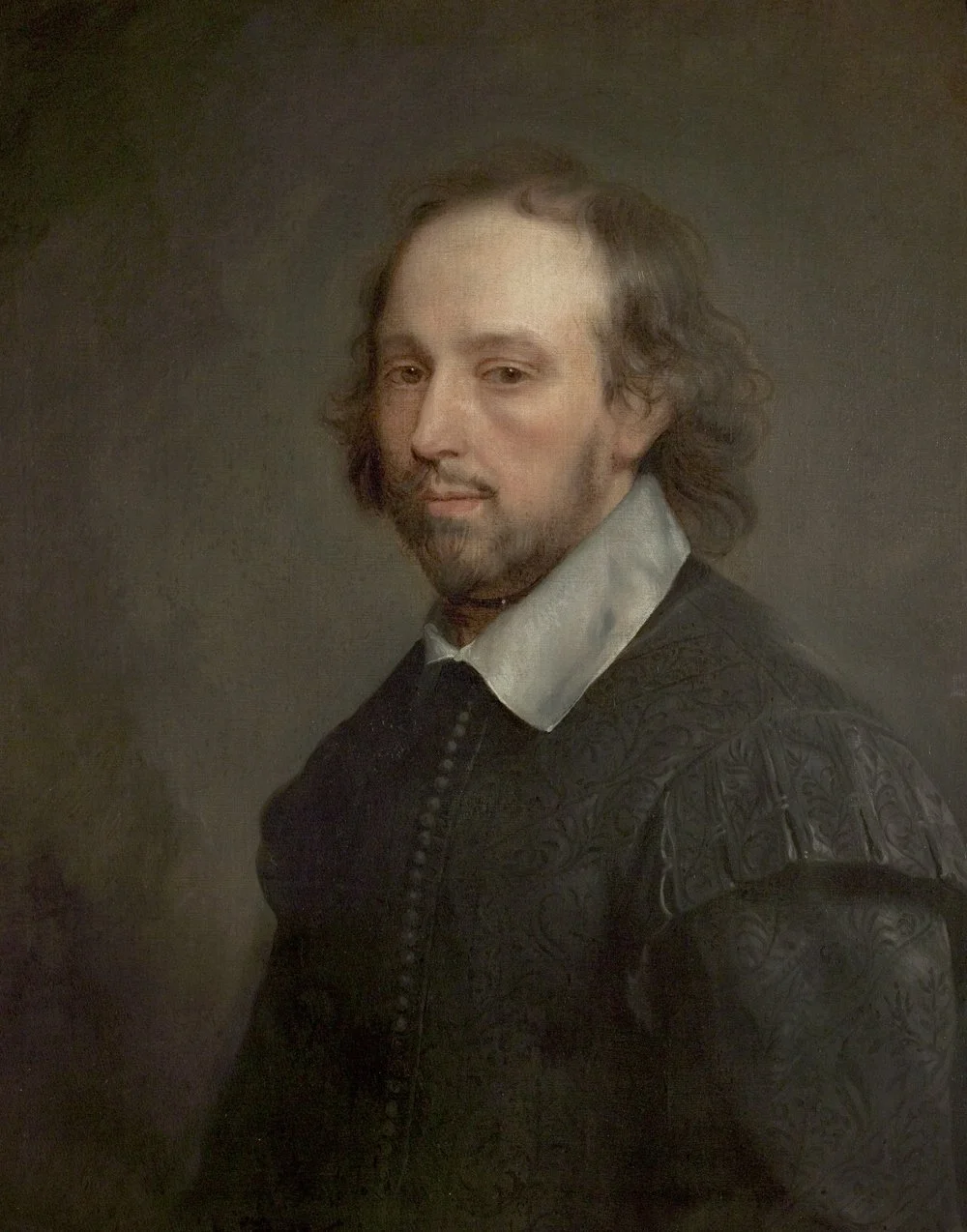
The Soest Portrait of Shakespeare, circa 1667. By Gerard Soest.
Typically, the curriculum of Elizabethan English schools like the one Shakespeare attended included courses in Latin, Greek, the art of rhetoric and play production. This is likely how Shakespeare was introduced to the Roman poet Ovid, who lived and died around the start of the Common Era.
Some of Ovid’s influence can be seen in his telling of the secret love of Pyramus and Thisbe that culminates in both committing suicide in his “Metamorphoses,” which was released in 8 A.D. Centuries later, a play within Shakespeare’s “A Midsummer Night’s Dream” retells the story of Ovid’s ill-fated lovers.
In addition, Shakespeare’s “Venus and Adonis,” which tells the story of the goddess of love’s pursuit of a male hunter, is also said to draw some of its themes from identically named characters in “Metamorphoses.”
Shakespeare was also likely influenced by “The Chronicles of England, Scotland, and Ireland,” Raphael Holinshed’s 1577 work on the history of those countries.
In Shakespeare’s “Richard III,” illustrations of Holinshed’s inspiration include some of the details surrounding Henry's wounds, the command to transport a corpse to Whitefriars and a bleak prediction regarding Rougemont.
Still another Shakespeare influence was likely Edward Hall’s 1548 work titled “The Union of the Two Noble and Illustre Families.”
Cases of this point can be seen in Shakespeare’s “Henry IV,” where a few features of the Holland plot, the situation surrounding Talbot and Chastillon’s demises and the battle at Wakefield. Other Shakespeare works featuring Henry IV, Henry V and Henry VI also use details from Hall’s work.
Comparisons can also be drawn between “Richard II” and Hall’s work, such as “when Hereford broke his mind to Norfolk, more for dolour and lamentaction” and Worchester’s reminder of the pledge Henry made at Doncaster.
In Context
The phrase “Imitation is the sincerest form of flattery” may come to mind as this essay is read (it certainly was as it was written). Shakespeare is by no means the only creative inspired by other creatives.
Examples of this can be found in various modern-day versions of Sir Arthur Conan Doyle’s 19th-century creation named Sherlock Holmes – one of the most depicted characters of all time.
For example, one of the characteristics of Mark Gatiss and Stephen Moffatt’s take on the detective in the television series “Sherlock” had the title character set in the present day and trying to quit smoking cigarettes instead of pipe tobacco.
In addition, Rob Doherty, when creating the television show “Elementary,” also chose to set the show in the present day and make Holmes’ sidekick Dr. Watson a woman, instead of a man.
While imitation from those regarded as the best may be acceptable, it can be beneficial to add personal touches.
Did you find that piece interesting? If so, join us for free by clicking here.
References
Britanica.com Editors. Britanica.com. “William Shakespeare.” William Shakespeare | Plays, Poems, Biography, Quotes, & Facts | Britannica. Accessed October 26, 2025.
Shakespeare-online.com Editors. Shakespeare-online.com. “Shakespeare's Influence on Other Writers.” https://www.shakespeare-online.com/biography/shakespearewriter.html. Accessed October 26, 2025.
Klein, C. History.com. https://www.history.com/articles/10-ways-shakespeare-changed-the-way-you-talk. “10 Ways Shakespeare Changed the Way You Talk.” Accessed October 26, 2025.
Brittanica.com Editors. Brittanica.com. “William Shakespeare.” William Shakespeare | Plays, Poems, Biography, Quotes, & Facts | Britannica. Accessed October 26, 2025.
Shakespeare.org Editors. Shakespeare.org. https://www.shakespeare.org.uk/explore-shakespeare/podcasts/lets-talk-shakespeare/was-shakespeare-educated/. “Was Shakespeare Educated?” Accessed October 26, 2025.
Brittanica.com Editors. Brittanica.com. https://www.britannica.com/biography/Ovid-Roman-poet. “Ovid, Roman Poet.” Accessed October 26, 2025.
Walsh, P. “Ovid and His Influence.” University Review, Vol. 2, No. 6, Pages 26-37. https://www.jstor.org/stable/45241810. Accessed October 26, 2025.
Penn State Centre Stage Editors. Psu.edu. https://sites.psu.edu/amidsummernightsdream/pyramus-and-thisbe/. “A Midsummer Night’s Dream.” Accessed November 2, 2025.
Walsh, P. “Ovid and His Influence.” University Review, Vol. 2, No. 6, Pages 26-37. https://www.jstor.org/stable/45241810. Accessed October 26, 2025.
Mowat, B. and Werstine, P. Folger.edu. https://www.folger.edu/explore/shakespeares-works/venus-and-adonis/about-shakespeares-venus-and-adonis/. “About Shakespeare's Venus and Adonis.” Accessed November 2, 2025.
Begg, E. “Shakespeare’s Debt to Hall and Holinshed in Richard III.” Studies in Philology. Vol. 32, No. 2, Pages 189-196. https://www.jstor.org/stable/4172274. Accessed October 26, 2025.
Brittanica Editors. Brittanica.com. “Raphael Holingshed.” https://www.britannica.com/biography/Raphael-Holinshed. Accessed November 1, 2025.
Begg, E. “Shakespeare’s Debt to Hall and Holinshed in Richard III.”” Studies in Philology. Vol. 32, No. 2, Pages 189-196. https://www.jstor.org/stable/4172274. Accessed November 1, 2025.
Royal Collection Trust Editors. Royal Collection Trust. “Edward Hall (1497-1547).” https://www.rct.uk/collection/1027621/the-union-of-the-two-noble-and-illustrate-famelies-of-lancastre-and-york-beeyng. Accessed November 1, 2025.
Zeeveld, W. G. “The Influence of Hall on Shakespeare's English Historical Plays.” ELH. Vol. 3, No. 4, Pages 317-353. https://www.jstor.org/stable/2871549. Accessed November 1, 2025.
Guinness World Record News. Guinesswordrecords.com. https://www.guinnessworldrecords.com/news/2012/5/sherlock-holmes-awarded-title-for-most-portrayed-literary-human-character-in-film-tv-41743. “Sherlock Holmes Awarded Title for Most Portrayed Literary Human Character in Film & TV.” Accessed November 1, 2025.
BBC One Editors. BBC.co.uk. https://www.bbc.co.uk/programmes/articles/3FvspTyB0YHhtN7MRns2Fm/about-sherlock. “About Sherlock.” Accessed October 26, 2025.
Peterson of Dublin Editors. https://www.peterson.ie/pipes/sherlock-holmes/. Pipes. Accessed November 1, 2025.
Sherlock Forum Editors. Sherlock Forum.com. https://www.sherlockforum.com/forum/topic/1146-sherlock-smoking/. “Sherlock Smoking.” Accessed October 26, 2025.
NPR Editors. NPR.org. “https://www.npr.org/2012/09/27/161859930/sherlocks-dr-watson-as-a-woman-is-elementary. “A Woman as Sherlock’s Dr. Watson is Elementary.” Accessed October 26. 2025.