History is an art in a sense. That is, it is not mathematically provable. The mathematician (I am one, at least through some bit of graduate studies) must prove something logically (there are certain basic rules of logic—contrary to reflections from “the squad,” et al). If he can’t prove it, it simply means it is not provable true, nor is it provable false. It may be either but it is neither, absent a deterministic logical proof. Such problems wait to see if one may ever find a proof (such as the recently and famously proven "Fermat's Last Theorem"). Many, many today fall into the yet unknown true or false class. For those interested, an excellent book for a layman’s (most) comprehension of one of the most famous problems, is John Derbyshire’s Prime Obsession, summarizing The Riemann Hypothesis.

Paul H. Yarbrough explains.

Abraham Lincoln.

The scientific method of proof (different from the mathematical proof) in the physical sciences is proved by sampling and testing to the point of reproducing such results in the laboratory. These are scientific-method determined proofs. Jonas Salk’s polio vaccine work is an example of a proof by the scientific method.  Climate change study is an example of a crock of crap.

But the historian has no logical proof of his art since history is what it was. You cannot associate an abstract thought with a concrete fact of the past in order to change the fact.  But this is exactly what “liberals” do. (The quotation marks are a tweaking of the modern definition of liberal as opposed to the once accepted and true one—but another story for another day.)

Liberals will suggest silliness (though they believe it is serious thought, perhaps) such as Lincoln was responsible for a horrible war that resulted in well over half a million deaths and billions of dollars of destruction of private property and on and on with a political wrecking ball of death by fire and murder as well as the raping and pillaging of both blacks and whites, male and female, and so on. BUT, the great defensible BUT, he was trying to save the union. This is, in fact, abstraction smothering fact.  I say "liberals will suggest" when the fact is they state it as the fact that they have proven, even though facts of history are not provable but revealed from recorded sources. 

The fact is he was no more trying to save the union than he was trying to free the slaves. He (and many, many Republican cronies), like Hamilton before him, wanted to create a national state. i.e. a nation.


Irony

How irony raises its fortuitous head from time to time? Abe Lincoln was assigned the label "Honest" Abe. However, when digging into history and available primary sources reveal the guy as a notorious liar and charlatan. If Lincoln lived today, he would be in bed with the Clintons (at least one of them) when it came to honesty. Alas, Lincoln's reputation remains largely untainted by those who worship the faux pas of some rotted theory of national conservatism. 

But another historical faux pas (of the many) that seems a lesser light of historical fiction is about a man who was president but had a more honorable reputation. Though, sadly influenced by the liar, Alexander Hamilton. 

George Washington never (contrary to modern legend) had offers to be king. The myth is that he was so well respected that a crown was offered to him. There was also a myth cultivated due to his honest character: That is, he did not lie. The myth was the one most everyone has heard: he cut down a cherry tree, then fessed up when asked. But neither tale--crown offering or cherry-tree-chopping --was true about Washington. However, most historians have recorded him as a man of integrity.

So it is that good tales are created about someone who has a good reputation for honesty. At least most of the time. But the “creation” is not a fact. It is just supposedly true.

But the real historian is like a prospector—always digging, always sifting facts from rumor and/or legend. The primary or original source (I am not a historian, but am a history student), or as close to it as one can get to begin a study is the best beginning. From the beginning of whatever historical-to-present goal is sought the trail is like the trail of evidence in a crime. That is to say that great danger can come to the truth if the trail is broken. All of the evidence may not be available, but all that is should be examined. Therefore, the trail route (the history) can be surmised with a given degree of accuracy.

Around us, primarily through online chatter, social media, and the monster maniacal media of television fame are those historian-labeled personalities, many who are promoted (many self) as PhDs of some grandiloquent history department of “XYZ” university –blah. Blah, blah. These types and their schools are worthy of the aforementioned climate change students. Many (most?) of the media-type historians are just airbags who get a nice paycheck.

Or there are the puffed-up Twitter et chirps who glorify themselves in some modern cloak of Thucydides such as the “spit and damn” clownish Kevin Levin (as just one example) who tops out as a racist of the first liberal order.  No?  His mentions of historical studies and insights of the American War Between the States are the typical Yankee sighting and portraying of the American South with its blacks as simple-minded toadies following “Massuh-Cotton-Man” to every beat of the drum because he (the black man) cannot, or even conceivably learn for himself.

Meanwhile, looming elections of great importance are nigh, and even if there is an explosive so-called Reagan Revolution or contemporarily a red wave, no histrionic magic can make fact fiction, nor vice versa.


Problem

This is the problem with the red wave, for those who seem to think that it is a robust rekindling of something called federalism—no it is not. It is simply the other side of a unitary coin, red on one side and blue on the other. The reds don't know or don't care (either is a possibility, and both a consideration) about federalism. If they did, they would not spout off constantly about their hero Abraham Lincoln and his weaker forerunner Alexander Hamilton. These two draughts of politics and statist standards are the red guys (not necessarily conservatives), the original wolves in sheep’s clothing to any honest concept of federalism. Hamilton, a New York immigrant, spoke one way at the Philadelphia Convention, and a different way when reporting back to his New York delegation.  He lied often. Possibly this was what Lincoln found as a trait in common with Hamilton. They both were notorious liars. 

The “Federalists Papers” are a defensive rupture of federalism; THAT IS. THEY ARE A SUBTLE DEFENSE OF NATIONALISM, NOT FEDERALISM. A better bet, FOR HISTORIGRAPHY, if you can find them are the Anti-Federalist Papers. These are scattered in publication but delve at length into the things Patrick Henry probably concerned himself with when he refused to attend the Philadelphia convention with his infamous: "I smell a rat," rebuff.  Think of Lincoln’s “new nation” as a stinking rat (if you are a conservative).

But not to worry, we have been saved from our corrupt past of a voluntary federal system and have come scarred and skinned by an anti-federal and ill-called “Civil War” into the 20th and 21st centuries safe in what both contemporary red and blues call “our democracy.” 

This is blue territory. Nationalism and Democracy are their game. 

That is of course the “democracy” that has given us most of that which God would not give: A central government with control over all aspects of life; an eternal number of wars, including two that were happily (or somberly) called WORLD WARS; men who are women, women who are men; children who are designated sex toys by their teachers and approved by their parents—who probably thought abortion would be legal until the child reached 18—so plenty of time to get some fun out of the kid before killing him. Old enough to fight, old enough to be aborted.

These people care no more about federalism than did Hobbes or Rousseau and a whole bunch of others, who saw little in man’s locale and locality, down to a single soul, but greater in the state of the state as his god.


History

"The States have their status in the Union, and they have no other legal status. If they break from this, they can only do so against law and by revolution. The Union, and not themselves separately, procured their independence and their liberty. By conquest or purchase, the Union gave each of them whatever of independence and liberty it has. The Union is older than any of the States, and, in fact, it created them as States." 

Abraham Lincoln--July 4th, 1861

 “It is my intention to curb the size and influence of the Federal establishment and to demand recognition of the distinction between the powers granted to the Federal Government and those reserved to the States or to the people. All of us need to be reminded that the Federal Government did not create the States; the States created the Federal Government.” (Emphasis added)

President Ronald Reagan --120 years later

What happened to Reagan? He had too many “reds” whose skin was red but whose heart was blue. 

What happened to Donald Trump? He had too many “reds” whose skin was red but whose heart was blue.

What happened to Abraham Lincoln? He had too many people who believed him to be honest.

Many conservatives (as those who voted for Reagan) knew the Cheney-type-timbre was lurking in the dark socialistic political shadows long, long before January 6, 2021.

But the key to elections and politics is history. Not the banal blathering splattered by most media types, too many talk-show chatterers, and enumerable university wags.

History, where the proof is in the facts. Where the future forms in one way or the other.


Did you find that piece interesting? If so, join us for free by clicking here.
Posted
AuthorGeorge Levrier-Jones

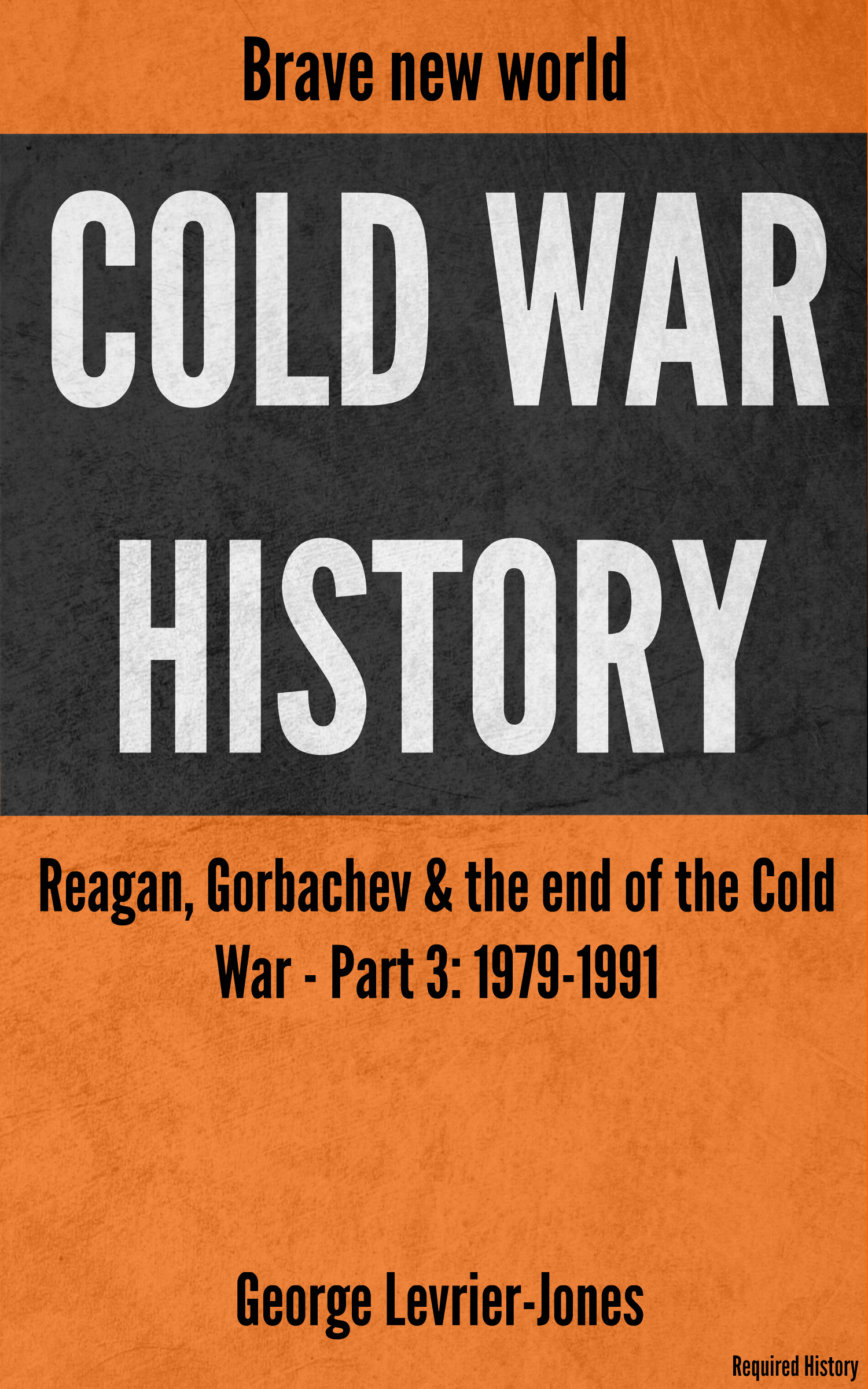
Do you know why the world nearly destroyed itself in a catastrophic nuclear war?

Two words – ‘Cold War’.

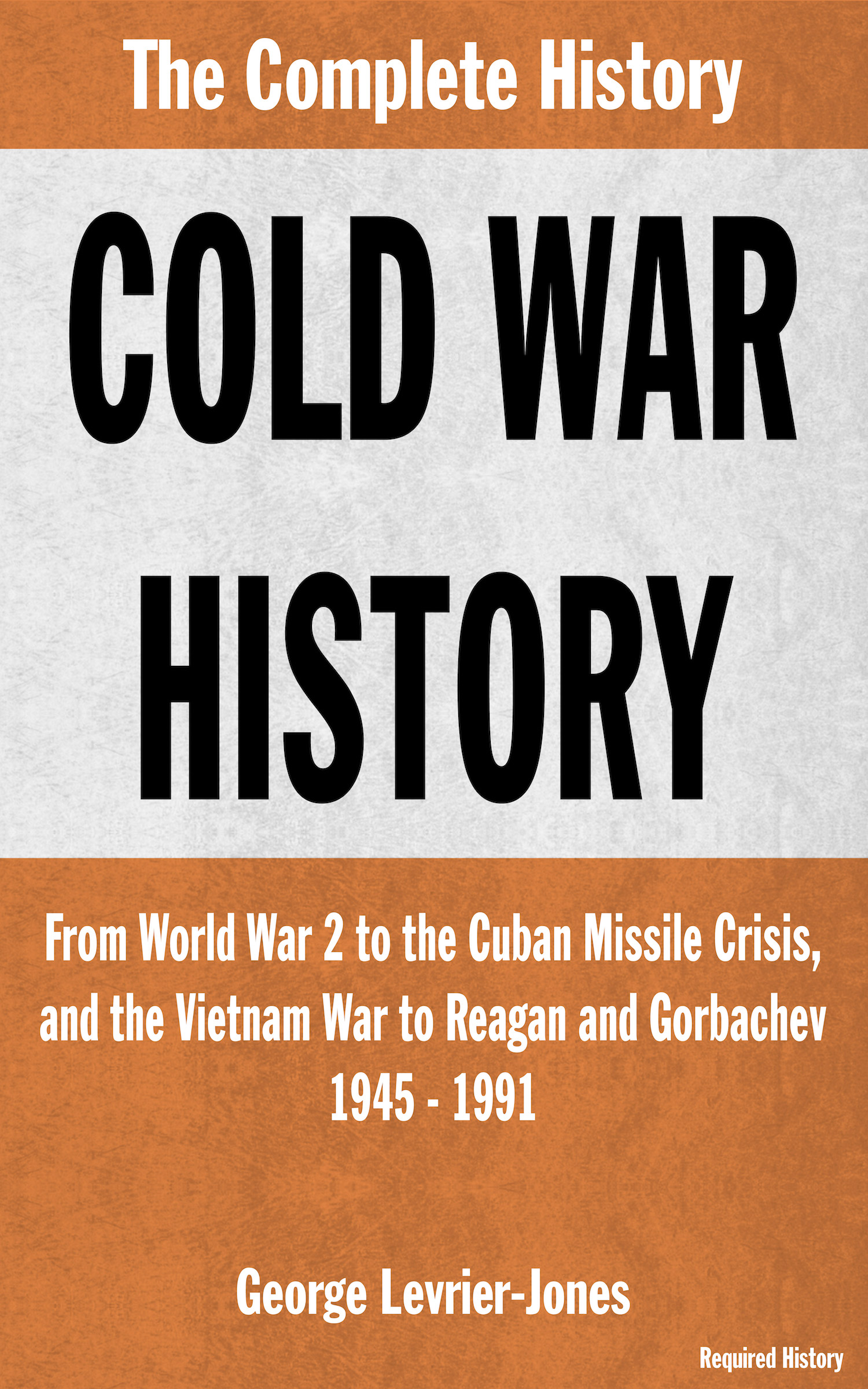
Get the book on Amazon


The Cold War was international affairs for the second half of the 20th century. Nuclear weapons testing, civil wars in all corners of the globe and the race for economic dominance were all key spheres of the Cold War, although they were just a few elements of an intriguing global puzzle. More so than the great battles between Carthage and Rome in Ancient times or the Napoleonic Wars, the Cold War defined our world. But, there was one key difference between the Cold War and earlier major wars. Due to advances in technology and communications, the Cold War touched most countries on earth.

This introduction to the Cold War tells the story of the great clash between the communist Soviet Union and the capitalist USA. It covers the period from 1945 to 1991 in one combined edition, neatly breaking the Cold War up into three parts.

Get the book on Amazon


The book starts by describing how two super-powers emerged out of the rubble of World War Two and includes the following:

·      How the Soviet Union and the USA quickly went from war-time allies to enemies

·      Events in East Asia - the Chinese Civil War and the Korean War

·      The most dangerous event of the early Cold War years, the Cuban Missile Crisis

·      The Vietnam War and its impact on the Cold War

·      The shocking power of nuclear weapons – and attempts to control them

·      Uprisings on the eastern side of the Iron Curtain

·      The super-powers as friends? Détente, Richard Nixon, and Leonid Brezhnev

·      The Soviet invasion of Afghanistan

·      The rise of Ronald Reagan and his aggression in the early 1980s

·      How Mikhail Gorbachev became Soviet leader

·      Glasnost, Perestroika, and how the Cold War ended


The approximately 250-page book is the perfect complement to the Cold War History audio series that is available as part of the ‘History in 28-minutes’ podcasts.

So come and join the past – get the book now!

Required History

The aim of the 'Required History' book series is to create approachable, succinct written introductions to some of the most interesting topics in history. They are designed for those:

·      That want to quickly learn about some of the world’s major historical events

·      Studying history. The books act as a perfect complement and overview to those undertaking high school and introductory college courses in history

·      Who enjoyed the audio podcasts and want to reinforce and further their knowledge

·      Learning English. The language and level of detail in the books are perfect for those in advanced English classes

All of the Required History books are designed to build on the audio podcasts available on the publisher’s website. They provide an extra layer of detail to the major historical events that the audio podcasts cover.

Just how did the Cold War end?


We reveal all in the fascinating conclusion to the Cold War series.


The Cold War was international affairs for the second half of the 20th century. Nuclear weapons testing, civil wars in all corners of the globe and the race for economic dominance were all key spheres of the Cold War, although they were just a few elements of a very complex global puzzle. More so than the great battles between Carthage and Rome in Ancient times or the Napoleonic Wars, the Cold War defined our world. But, there was one key difference between the Cold War and earlier major wars. Due to advances in technology and communications, the Cold War touched most countries on earth.

Get the book on Amazon


This introduction to the end of the Cold War tells the story of the great clash between the communist Soviet Union and the capitalist USA. It considers events at a time of ever-faster change. Following the relative calm of the Détente years, the world became much more dangerous. After the Soviet invasion of Afghanistan a new and very assertive US president arrived who would seek to radically alter the international order. And soon enough a new Soviet leader would arrive and lead a great change in the international system. The biggest change since World War Two…


Get the book on Amazon


The topics in the book include:

·      The Soviet invasion of Afghanistan

·      The rise of US President Ronald Reagan and his aggression in the early 1980s

·      How Mikhail Gorbachev became Soviet leader

·      The most important nuclear treaties made during the Cold War

·      The surprising friendship between Ronald Reagan and Mikhail Gorbachev

·      Great internal changes in the Soviet Union and wider Eastern Bloc

·      How the Cold War ended


The approximately 90-page book is the perfect complement to the Cold War History audio series that is available as part of the ‘History in 28-minutes’ podcasts.

So come and join the past – get the book now!

Required History

The aim of the 'Required History' book series is to create approachable, succinct written introductions to some of the most interesting topics in history. They are designed for those:

·      That want to quickly learn about some of the world’s major historical events

·      Studying history. The books act as a perfect complement and overview to those undertaking high school and introductory college courses in history

·      Who enjoyed the audio podcasts and want to reinforce and further their knowledge

·      Learning English. The language and level of detail in the books are perfect for those in advanced English classes

All of the Required History books are designed to build on the audio podcasts available on the publisher’s website. They provide an extra layer of detail to the major historical events that the audio podcasts cover.

Ronald Reagan is well known for being an arch anti-communist. Indeed, many consider his administration to be the most anti-communist of all Cold War American governments. In the new issue of History is Now Magazine we look at relations between Reagan and a regime that was also strongly anti-communist – but, in a fascinating twist, one that Reagan’s administration opposed.

 The new issue of History is Now magazine is out now.

To find out more, take up a free trial of the magazine for up to 2 months and download your free copy of our interactive digital magazine for iPad, iPhone and Android today!

Click here for information on iPad/iPhone | Click here for information on Android

Here is what our editor has to say…

You know, while undertaking the early edits of the magazine this month, I felt truly privileged at being the first person who was able to read such marvelous articles. I just hope that after reading this month’s magazine, you agree that the articles are extremely interesting. Here is what we have in the magazine…

We start with an article on Ronald Reagan and right-wing Chilean Dictator Augusto Pinochet. It is often thought that Ronald Reagan, an arch anti-communist, would support any leader who opposed communism. But, as this article shows, Reagan did at times value other ideals above that of opposing communism. Secondly, we take a look at the topic of crime and insanity in Victorian Britain. An author of a recently published book about a dark crime in 1850s London tells us about how attitudes towards criminal insanity changed – or didn’t change – in conservative nineteenth century Britain. Thirdly, there is a piece on slavery in America. The article considers slave rebellions and Southern slaveholder paranoia, as well as how songs and poetry were important in the struggle for slaves to be freed – and in the postbellum years.

In what can only be described as our most varied issue yet, we then look at the story of Shap ’ng Tsai, a Chinese pirate who sailed on the high seas in the years after the British defeated China in the First Opium War. Following that is a piece on the Mississippi Bubble. Last month we set the scene for the Bubble, and this month we tell the dramatic story of how fortunes were made, before the whole of France came crashing back to earth with an all mighty thump. Finally, we’re going outside of our usual period of focus by taking a look at the history of castles in Scotland – and how changes in castle design evolved in to the modern age. And as ever, we have included videos and a podcast in the magazine. This month’s podcast is on the Spanish Civil War.

Click here for information on iPad/iPhone | Click here for information on Android


All that is left to say is that I hope you enjoy reading our digital magazine.

Click on one of the links below to enjoy the magazine today for free…

Click here for information on iPad/iPhone | Click here for information on Android


George Levrier-Jones

As people who follow the site will know, our main focus to-date on the site has been on the Cold War. That war’s intrigues made the second half of the 20th century.

From the Berlin Crisis to the Vietnam War, and the Korean War to the Soviet invasion of Afghanistan, that war defined nearly 50 years of world history and continues to impact our world.

We’ve previously released a few books on the early and middle years of that war, and one more will come later in the year.

Captured Communist flags during the Vietnam War, 1968

Captured Communist flags during the Vietnam War, 1968

That book will focus on a particularly volatile period in the Cold War, the years from 1979 to the end of the Cold War. In our last book, you may have read that relations between the super-powers collapsed as the 1970s came to an end. A more assertive Soviet Union led to many in the US fearing that the Soviet Union planned to seriously challenge them for global hegemony once more. In the 1970s, the Soviets strongly supported various regimes in Africa, improved their missiles, and finally launched an offensive in Afghanistan on Christmas Day, 1979.

A worried US then underwent tumultuous change, and the outcome was that Ronald Reagan became President in 1981. Something akin to a paradigm shift then occurred in US-Soviet relations. Reagan’s administration massively increased defense spending, and with it, the world abounded in danger; however, a second paradigm shift then occurred as a very new and different Soviet leader emerged.

Ultimately it would be the actions of these two men that caused the Cold War to end.


While you wait..

You’ll have to wait a few months for the book, but while you wait for it, we’ve got some educational materials to share with you.

The first of these looks at the origins of the Cold War. It is widely held that the Cold War began in the mid-to-late 1940s – 1945 is generally the most popular choice. In our podcast series, we considered 1945 to be the start year; however this article looks back at the pre-1945 world and considers different times in which the Cold War could have started. As you will see, some think it started with the Communists gaining power in Russia during the 1917 Russian Revolution. After that revolution, many in the West, such as Winston Churchill, were keen to crush Communism as they feared its spread across Europe and the world.

Get the article.


The second of these materials considers the Cold War in its entirety by looking at the main events in three different periods. If you’ve listened to the podcasts or read one of our books, this is a great analytical took that recaps some of the main points and asks some key questions about the war’s events.

Get the article.


PS – you’ll have seen that the blog has been more active this week. And we plan to keep it that way! We’re always looking for new contributors, so if you’re interested get in touch. Or, click here to find out more.

George Levrier-Jones


The materials are supplied courtesy of our friends at www.explaininghistory.com.

You can find out more about the Cold War by going to our Cold War page – click here.