Since 1917, following the Revolution that swept through Russia, the country’s Imperial family, the Romanovs, had been placed under house arrest and then exiled to Siberia. By July 1918 they were residing in the Ural town of Ekaterinburg, in a building called the Ipatiev House, where they were well guarded by Soviet soldiers. Early on the morning of July 17, Tsar Nicholas, his wife Alexandra, and their five children, Olga, Tatiana, Maria, Anastasia and Alexei, along with four members of their staff, were brutally murdered in the basement. Their bodies were roughly disposed of in the nearby forest and a veil of secrecy fell across their fates.

The Soviets admitted to killing the Tsar, but remained close lipped about what had happened to the rest of his family. Almost immediately rumours began to circulate that at least one of the children had escaped. Claimants soon appeared, the most common ‘survivor’ was the then seventeen-year-old Anastasia, the youngest Romanov daughter.

Erin Bienvenu explains.
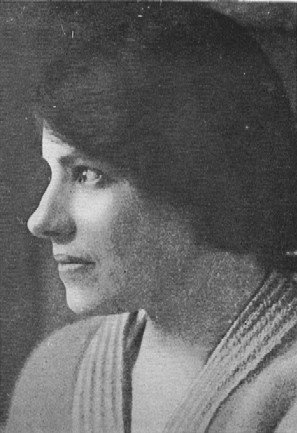
Anna Anderson in 1922.

Miss Unknown

On February 27 1920, a young woman tried to commit suicide by jumping from a bridge in Berlin. She was taken by a policeman to a hospital, but when she refused to give any details, she was admitted as Fräulein Unbekannt (Miss Unknown). She was then admitted to a mental hospital, and remained there for the next two years, speaking little, and spending much of her time in bed.

She did make one friend, fellow patient Clara Peuthert, who became convinced that Miss Unknown was in fact Grand Duchess Tatiana. When Clara was released, she went in search of people who could confirm her suspicions. There was a large Russian emigre population living in Berlin, members of the aristocracy and upper classes who had managed to escape the Revolution. A friend of the Tsarina, Zinaida Tolstoy, went to visit Miss Unknown and confirmed that she was Grand Duchess Tatiana. The Tsarina’s former lady-in-waiting, Sophie Buxhoeveden however was adamant that she was not the Grand Duchess, upon seeing the patient she exclaimed, “She’s too short for Tatiana,” and left. Miss Unknown would go onto say, “I did not say I was Tatiana.” Clara wasn’t willing to drop her story, and so if Miss Unknown was too short to be Tatiana, then she must be the shortest of the Romanov girls, Anastasia. Miss Unknown continued to speak little, and neither confirmed or denied these claims.

Interest in her story began to grow and she was released from the asylum to live with Baron Arthur von Kleist and his wife, Maria, also exiles from Russia.

It was whilst staying with the von Kleists that something of a story began to form, the young woman allegedly claimed she was Grand Duchess Anastasia, but wanted to be called Anna. She said she had been rescued the night of her family’s murder by one of the soldiers, Alexander Tschaikovsky. He took her to Romania where they married and had a son, Alexei. When Tschaikovsky was killed Anna came to Berlin, leaving her son in a Romanian orphanage.


Royal Visitors


Over the next several years Anna was in and out of numerous hospitals and met numerous members of the Russian enclave living in Berlin, though she was usually uncommunicative, and frequently hid beneath her bed clothes. Anastasia’s Aunt, Irene, met with Anna and claimed she was a fraud. This did not detract her growing number of supporters. Anna was in poor health and was often seriously ill, at one time with tuberculosis. She was painfully thin and had lost most of her teeth, her frail appearance no doubt helped to trick some of her visitors.

Anna certainly knew a lot about the Romanov’s and their extended circle, but this was probably from being coached by emigres, extensive reading, and in some cases, pure luck.

Eventually three people who had known Anastasia well paid Anna a visit. Pierre Gilliard, the Grand Duchesses French tutor, his wife, Shura, who had been Anastasia’s nursemaid, and the Grand Duchess Olga, the Tsars sister and Anastasia’s godmother.

Anna’s emaciated appearance and lack of conversation made identification difficult, and both Olga and the Gilliard’s expressed sympathy for the young woman. Anna’s supporters latched onto this sympathy as proof that they recognised her, but Olga was convinced that Anna was not her beloved niece, and the Gilliard’s agreed.  

In the coming years Anna resided with several benefactors, but usually fell out with them. She had a prickly personality, was argumentative and could be cruel.  Anna’s supporters excused most of Anna’s bad behaviour as a result of trauma and amnesia.  They frequently commended her Royal bearing and haughty nature, somewhat ironically because Anastasia was often said to be the least ‘royal’ of her siblings, she was not known for her deportment or elegance.


Franziska or Anastasia?

Meanwhile Anastasia’s maternal uncle, the Grand Duke of Hesse, had hired a private investigator to establish Anna’s true identity. The detective claimed that Anna was really a Polish factory worker by the name of Franziska Schanzkowska. Further attempts to establish this proved as contradictory as the attempts to prove Anna was Anastasia. She met with Franziska’s brother, but he was noncommittal as to her identity.

Then Anna met Tatiana and Gleb Botkin, the children of court physician Evgeny Botkin, who had been murdered with the Imperial family. They had known Anastasia as children and were utterly convinced that Anna was the Grand Duchess. Gleb in particular became her most vocal supporter and arranged for her to travel to America in 1928. Here she was registered in a hotel under the name Anna Anderson.

Gleb wanted Anna to inherit what was left of the Romanov fortune, and accused legitimate family members of denying Anna so that they could claim the legacy. The scattered members of the Romanov family, and their extended European relatives, some who had known Anastasia, and some who had not, remained bitterly divided over Anna’s true identity.

Anna remained in America until 1931 when her increasingly erratic behaviour led to her being admitted to an asylum back in Germany.

Eventually Anna was put into her own home by supporters, and was visited again by members of the Schanzkowska family. Franziska’s brothers, Valerian and Felix, and her sisters, Gertrude and Maria, met with Anna in 1938. The brothers denied she was their sister, but Gertrude was adamant she was.


Going to Court

Confusion continued to reign, Anastasia’s English teacher, Charles Sydney Gibbes, stated that Anna was a fraud, but her mother’s close friend, Lili Dehn, believed she was Anastasia.

Over the following years her story continued to divide people, and eventually made its way to court, where a lengthy legal battle ensued. In an attempt to prove, or disprove, her identity she was subjected to hand writing tests, language tests, and her face and body were intently studied for any likeness to Anastasia. Particular attention was paid to her ears, which were said by some to bear a close resemblance to the missing Grand Duchess. As usual Anna was not forthcoming during interviews, and it was difficult to establish just what languages she knew. It seemed she wasn’t fluent in any, though she claimed she refused to speak Russian due to the trauma. Anastasia had spoken Russian, English, French and German, the latter two not as well as the first. Eventually the court case was thrown out, her identity could not be conclusively proved.

Anna was then living in squalor with innumerable cats who were euthanised due to their poor condition. Following this she returned to America and married Jack Manahan, an eccentric history teacher who was a friend of Gleb Botkin’s, and was eighteen years her junior. Jack was equally as unconventional as Anna and their home was soon overrun by poorly cared for cats and dogs, neighbours frequently complained about the smell coming from the house, and its wildly unkempt garden. Over time Anna’s stories had grown increasingly muddled and contradictory, it could not be said that she was a reliable witness, but still people believed her and supported her

In 1979 Anna was admitted to hospital for an operation that would remove a blockage in her lower intestine. A sample was kept by the hospital for their records, which would later be the key that unlocked the secrets of her identity.


The Truth is Revealed

Anna died in 1984, asserting right to the end of her life that she was the Grand Duchess Anastasia.  In the decade that followed the remains of five of the Romanov’s were discovered in a forest near Ekaterinburg. DNA testing confirmed their identities. The bodies of Alexei, and either Maria or Anastasia, remained unaccounted for until they too were found in 2007.

The advancement of DNA testing also made it possibly to establish the truth about Anna. The piece of her intestine that had been removed during surgery was tested against the DNA of the Tsar and Tsarina. The DNA was not a match. Anna Anderson was no relation of the Romanovs; she was not Anastasia.

Her DNA however did match that of Karl Maucher, the grandson of Gertrude Schanzkowska, the sister of Franziska.

Franziska’s family remembered that their sister had always had aspirations above her station, she was an avid reader who had cultivated a refined air and wanted to be an actress. She was engaged to a German man who was killed during the First World War, and had then been involved in an accident at the factory where she worked. She had accidentally dropped a grenade which killed a foreman, following this her mental health deteriorated. Her family last heard from her shortly before Anna’s suicide attempt in Berlin.

As to why the Schanzkowsa’s never definitively identified her, it is possible that Anna convinced them that her life was better than it would have been as a Schanzkowsa, and they were happy to allow her this bit of make believe.


Anna’s motives remain unknown, did she really come to believe she was Anastasia? Was she easily led, or a cunning deceiver?

It seems the answer lies somewhere in the middle, it is likely Anna did not come up with the idea of ‘playing’ Anastasia herself. When her resemblance was suggested to her by others, it seems she simply went along with the ruse. It allowed her to live a fairy-tale, and to socialise with the rich and famous, opportunities that would never have been available to a poor factory worker. It’s also likely that due to her poor mental health she was able to convince herself that she was Anastasia. She seemed to believe her own lies wholeheartedly.

In a tale stranger than fiction, a Polish factory worker had somehow managed to convince half the world that she was in fact a Russian Grand Duchess.


The site has been offering a wide variety of high-quality, free history content since 2012. If you’d like to say ‘thank you’ and help us with site running costs, please consider donating here.


References

King, Greg & Wilson, Penny (2003), The Fate of the Romanovs. New Jersey: John Wiley & Sons

Klier, John & Mingay, Helen (1995), The Quest for Anastasia: Solving the Mystery of the Lost Romanovs. London: Smith Gryphon

Welch, Frances (2007), A Romanov Fantasy. New York: W. W. Norton & Company

Posted
AuthorGeorge Levrier-Jones

The Roman Dynasty ruled Russia from 1613 to 1917. Here, author Ellen Alpsten tells us of her fascination with Russian history and how she started to write her series on the Tsarinas.

Catherine I, one of the Russian Tsarinas. She was empress from 1725-27.

Catherine I, one of the Russian Tsarinas. She was empress from 1725-27.

If ever there was a walk on the wild side, the early Romanovs in the 17th and 18th century took it. The wild and unbridled world of the Russian Baroque gives me the perfect backdrop for my novels of the ‘Tsarina’ series: epics cloaked in ice and snow, personal passions ruthlessly push on in the quest for power, resulting in the birth of the nation we know today.

My family’s stance on Russia is ambivalent – my father grew up in the German Democratic Republic (GDR), or East Germany. Forced to learn Russian he felt free to hate the Soviets. My cousin, however, runs a small, highbrow publishing house, which works with latter-day Russian intellectuals. I myself discovered this geographical behemoth and historical riddle when reading a book called ‘German and Russians’ by author Leo Sievers. It introduced me to the larger-than-life characters of Ivan the Terrible, the ‘Times of Troubles’ and finally the rulers of the young Romanov dynasty, who had been voted into office. I fell in love, head over heels, with these lives, fascinated by their uncompromising fullness.

But how to find out more about the shadowy figures that captured me the most: the women who dared to rise against the oppressing patriarchy in the world’s largest and wealthiest realm? The first century of Romanov rule was largely female-dominated. If the fact had not been ignored, research centered on Russian’s final Tsarina, Catherine the Great, who was not even a Romanov by blood, but a German Princess. Instead, I hoped to surprise and tell something new. Yet where to start? 


Growing fascination

Nikita Romanov said it in 1666: ‘We are as cursed – our men are as meek as maidens, and our women as wild as wolverines.’ Dwelling deeper on such a quote did not allow for half-measures. I read voraciously, and such divers oeuvres ranging from Tolstoy, Pushkin, Gogol, and Dostoyevsky to modern sociological studies such as the deeply disturbing ‘The unwomanly face of war’ by Svetlana Alexeyevich, Biographies like ‘Young Stalin’ by Simon Sebag Montefiore and also the lost, genteel worlds of the few that came at the expense of millions in Vladimir Nabokov’s ‘Speak, Memory’. How else should a foreigner grasp a culture as complex as the Russian? My interest morphed into a passion: I watched Russian films such as ‘Battleship Potemkin’ and the experimental ‘Russian Ark’ movie. And, lucky me, there were fascinating original sources galore, such as the diary of the German merchant Adam Olearius, who visited Tsar Mikhail Romanov’s court, stunned by a people ‘hardly better than animals.’ Invaluable, too, were letters of foreigners at the Russian Court such as the British Mrs Rondeau, and reports by the Dutch ambassadors and his colleagues sent by Princes of German nationality. Rounding off things with Robert Massie’s and Henri Troyat’s biographies about Peter the Great was unavoidable. Last but not least, Professor Lindsey Hughes of the ‘London School of Slavonic Studies’ tome 'Russia in the time of Peter the Great' turned out to be my bible as I dwelled deeper and deeper into the strange, shocking, sensuous world of both Russian history and its soul. It combines seemingly insurmountable contrasts casually, a lack of compromise that is fascinating. Finally, I even read Russian myths and fairy tales, which disclose so much about the imagination of a people.  

It took me a year to dare write the first word of my then debut, ‘Tsarina.’ The series is like threading a loom to weave a story as rich as any tapestry covering the walls of the Winter Palace. The novels attempt an answer to what my heroines’ lives were really like, flying in the face of a brutal patriarchy, and taking Russia from backward nation to beginnings of the modern superpower. Fleshing out those bare bones forced me to consider a myriad of aspects. 


Writing

The Russians are a communal people – the word for happiness -‘shast’ye’- means being part of something bigger. Neither ‘Tsarina’ nor ‘The Tsarina’s Daughter’ ever surrendered to fate’s blows but made the best of a given situation. Their minds were not academically trained, they acted with courage, care and cunning, counting on people and rewarding family, friendship, and loyalty. Whatever obstacle there was to overcome, they dusted themselves off and saw another day, ready to be surprised by its gifts. This makes ‘The Tsarina’s Daughter’ a very modern book. 

The strict framework of dates, events and details of the Russian Baroque and the Petrine era set of the beauty of my hitherto hidden historical heroines the better. If I was free to construct ‘my’ characters, every aspect had to be correct, from the clothes they wore, to the food they ate, the beliefs they held and how houses, roads, villages, carts etc. looked. As for the dramatic curve, I followed advice that the best-selling French author Benoîte Groult had once given me when I worked as her assistant: ‘To wish our hero well, the reader needs to see her/him sink low.’ Elizabeth, ‘The Tsarina’s Daughter’, falls from riches to rags and rises from rags to Romanov! 

After all this research I hope that nobody, who has read ‘Tsarina’ or ‘The Tsarina’s Daughter’, will ever forget my heroines again; and I hope for my writing to be as raw and unafraid as their lives were. Any writer dreams of finding such unspoiled, unexploited characters as the ‘Tsarina’ series. 

If an artist has a central theme to his creation, they are mine.


The Tsarina’s Daughter by Ellen Alpsten (Amazon), published by Bloomsbury, is out in hardback on July 8, and Tsarina, Ellen’s first book, is out in paperback now (Amazon US | Amazon UK).

Posted
AuthorGeorge Levrier-Jones
CategoriesBlog Post
2 CommentsPost a comment

Russian history has been beset with a number of seismic changes. Here, Daniel McEwen considers four key ‘resets’ in Russian history – the start of the Romanov dynasty, two early 20th century revolutions, and the end of the Cold War.

Vladimir Lenin, a beneficiary of one of Russia’s ‘resets’. A 1920 depiction by artist Isaak Brodsky.

Vladimir Lenin, a beneficiary of one of Russia’s ‘resets’. A 1920 depiction by artist Isaak Brodsky.

“Reset” was the buzzword on speakers’ lips this past January during [an online version of] the annual World Economic Forum in Davos, Switzerland. In words as lofty as the Alps in the background, Klaus Schwab, the event’s impassioned founder hailed the Covid pandemic as “a rare but narrow window of opportunity to reflect, re-imagine, and reset our world." 

Ironically, his idea was swept overboard by Covid’s next wave and hasn’t returned, perhaps because its advocates have since checked their history books. Resets have a chequered track record at best, with the 1789 French Revolution revered as the most notable, the Russian Revolution as the most execrable. And it was only one of that country’s four attempts to exploit a “rare but narrow window of opportunity to reflect, re-imagine, and reset their world ". Their failure explains why journalist Vladimir Pozner arguing Russia has never really been a democracy.


Reset #1 - 1613

Ivan the Terrible is dead. One third of the fledgling nation’s population has been wiped out in the internecine warfare known as “The Time of Troubles”. Weak and leaderless, the country is beset by enemies on all borders. Desperate to end the violence, the Zemsky Sobor, an assembly of the realm’s elites, gather to reset their system of governance. 

This was a mountaintop moment in the country’s history, never to be repeated; a singular chance for Russians to shrug off the yoke of autocracy and rule themselves. But not one of the gathered could spell democracy let alone run one. Self-rule sounded like a lot of work. Had Fyodor Dostoevsky lived then, no doubt he would have been heard telling his countrymen that: “to go wrong in one's own way is better than to go right in someone else's.” Not that anyone would have listened. Instead of a reset, they rebooted the old system. 

Historian Abraham Pailtsyn listened in on this assembly and was struck by what he didn’t hear – there was nobody speaking up for running the country for the people. Easier to just hand things over to the Romanov clan, the least objectionable of several candidates for the job. It was led by a 16 year-old teenager. His first official act was to hang a rival for the throne and his eight-year-old son, setting the tone for the next three hundred years.

Pailtsyn blamed this fateful lethargy on a deep national apathy.

Indeed it was. The appalling inhumanity of serfdom under the Romanov’s thumb approached can be compared to slavery. Nine tenths of the population lived in squalor, worked like beasts of burden to generate the unconscionable wealth enjoyed by the other one tenth. Little wonder the largest country in the world could do no better than a GDP barely equal to Spain’s! Quaintly embarrassing at first, this state-sponsored feudalism threatened the empire’s very survival when the forces of technological, social and political change began shifting the tectonic plates of world power. 

Had it been the best of times, czarist Russia would still have needed Paladins of Enlightenment to guide it along the perilous path to modernization. But it was the worst of times - disingenuous czars, amply aided and abetted by motley crews of corrupt cabinet ministers, sadistic secret police and a supine nobility used brutality and repression to manipulate modernization to their exclusive benefit.  

Typical of their tactics was the subverting of the abolition of serfdom, often depicted as the country’s ‘Great Leap Forward‘ to social and economic modernity. Some leap. Russia’s Emancipation Act of 1860 improved the quality of life for serfs about as much as the American Emancipation Act three years later improved the quality of life of slaves there. The czar and his minions retroactively limited, diluted and prolonged their people’s emancipation. At least freed American slaves did not have to pay compensation to their owners for the loss of their labor as was required of Russian serfs. In the end, emancipation offered the overwhelming majority of Russians basically two career options: over-worked, underpaid farmer or over-worked, underpaid factory worker.


Reset #2 - 1905

Still considered by many to be the ‘real’ Russian Revolution, this aborted reset was the high-water mark of Romanov duplicity. Japan had sent Czar Nicholas’ grand vision of a Pacific Empire to the bottom of Tsushima Bay in a naval defeat so shameful it nearly cost him his throne. Humiliated, he was forced to agree to a constitutional monarchy. Bells rang throughout the kingdom, people partied in the streets, and newspaper editors rhapsodized about the dawning on a new age of freedom. 

All the man had to do was keep his word and he, his family and some hundred million Russians would have lived happily ever after, never having heard of Vladimir Lenin. But always more a ruler than a leader, Nicholas stayed true to his family colors and cravenly reneged on the deal, dismissing the reformers behind it as deluded dreamers. Egged on by a witless wife in the thrall of a charlatan monk, Nicholas all but dedicated the last twelve years of his reign to giving those dreamers even more reasons to want to him gone – dead or alive!


Reset #3 - 1917

Three years into World War One, two million Russian soldiers are dead and five times that number of peasants have died of starvation or disease. Millions more face the same fate, caught between the scorched earth policy of their own retreating soldiers and the pillaging by the advancing German troops. In the cities, people are starving to death, if they don’t freeze first, awaiting trains of wheat that rarely arrive. Ever bereft of empathy or wisdom, Nicholas felt not the slightest obligation to feed his own people, breaking their three-hundred year near-religious faith in the Czar as an all-knowing, all-caring ‘Little Father’. Not surprisingly, none of them felt the slightest obligation to save him when mutinous troops stopped his train. He went without a whimper. The bang was still to come.

Free at last of their Romanov masters, there was none of the apathy of 1613 and no going back like in 1905. This time rank and file Russians knew exactly what they wanted: participation in power, a fairer share of the nation’s wealth and no more czars! Unlike 1613, this time there was lots of talk. And talk. And talk. And so enters a man author/historian Edward Crankshaw described as “one more bacillus let loose to spread infection in a tottering and exhausted Russia.” 

How Russians ended up with Vladimir Lenin and the tyrannical czars of Bolshevism is a question a library of books have attempted to answer. The most charitable explanation seems to be that a destitute, disillusioned people were simply too cold and too hungry to read the fine print on their deal with the Devil. 

However it happened, Vladimir Lenin played a ghastly game of bait-and-switch, promising ‘Peace, Bread, Land’, but delivering war, terror and death. For this unwitting lapse of judgment, another ten million citizens would perish in the civil war that followed World War One. Its hapless survivors were condemned to seventy years in the gulag of Soviet-style socialism, notorious for short trials and long bread lines. Tellingly, the USSR’s GDP did not rise above a third that of arch-rival America’s.


Reset #4 - 1991

The catastrophic Chernobyl nuclear disaster in 1986 opened Russians’ eyes to the true magnitude of the corruption and incompetence inherent in the Soviet system. Profoundly shocked, they began publicly questioning their leaders’ fitness for office. Five years later the Berlin Wall fell, burying Leninism in the rubble. At that time, per capita GDP was $23,000 in the United States, $16,000 in Western Europe and $6,800 in the rapidly dissolving ‘workers’ paradise’.

The Soviet Union was formally dissolved on December 26, 1991 but much to their dismay, the long-suffering proletariat were no sooner free of the iron grip of communism than Mikhail Gorbachev attempted to shackle them to unregulated capitalism – and barely escaped with his life for his trouble! When the dust of Glasnost had settled, Vladimir Putin and his oligarch friends had installed themselves in the Kremlin. While he labors mightily to restore the nation to a dubious former glory, its inglorious GDP has now shrunk to one-fifteenth that of United States.


What’s next?

Speculation about when and how Reset #5 will occur keeps pundits’ tongues wagging. Incredibly, the notion persists that Russians actually like strongman rulers. No one likes being bullied, surely the Russians least of all.  


What do you think of Russia’s ‘resets’? Let us know below.