
In Ancient Rome, an insula was typically a type of apartment building that housed the lower and middle classes. It was often several stories high. They typically had shops on the ground floor and living spaces above. Here, William McGrath explains how a Roman insula night does not arrive gently on the upper floors.
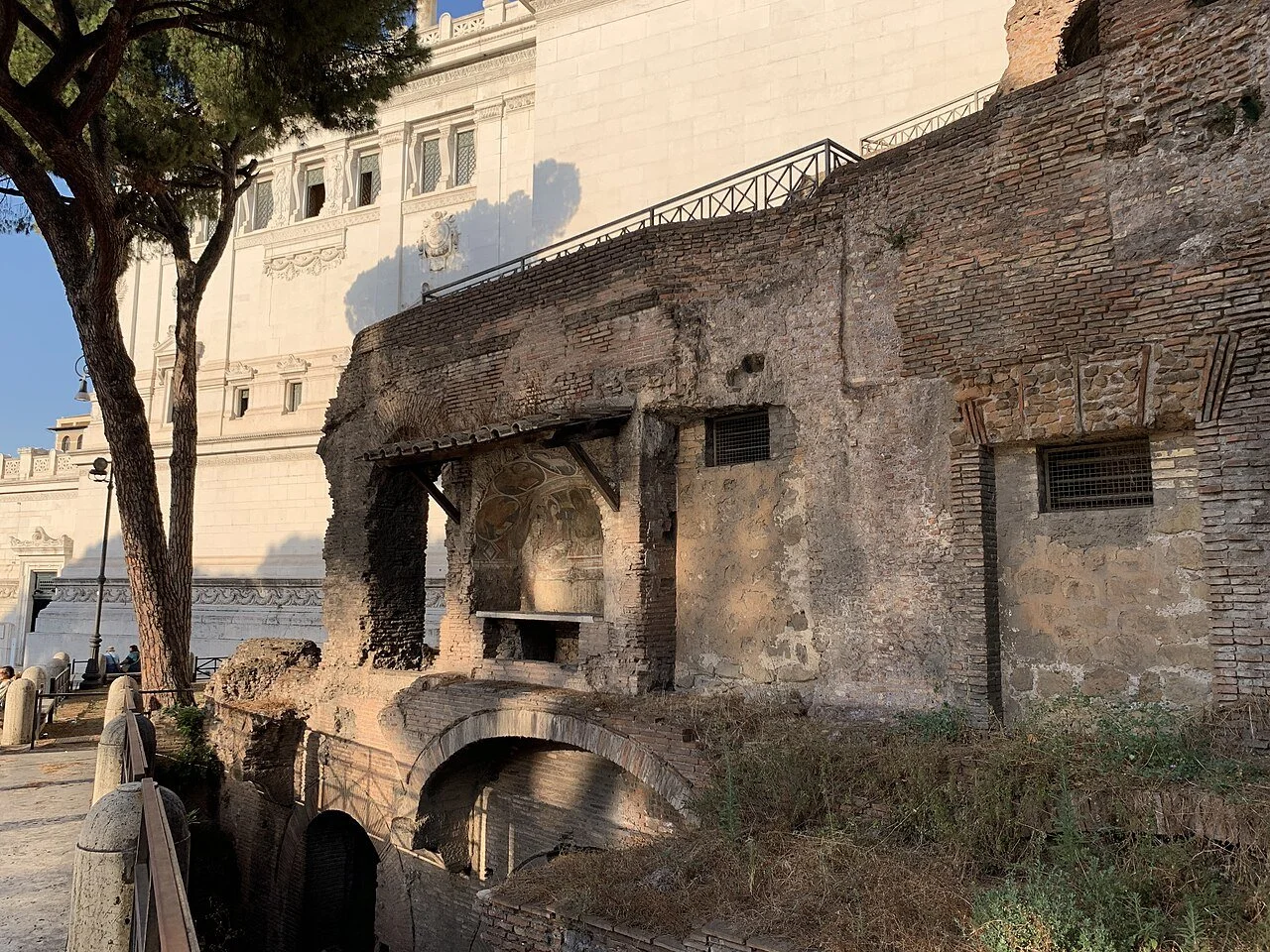
Remains of the top floors of an insula near the Capitolium and the Insula dell'Ara Coeli in Rome. Source/credit: Chabe01, available here.
It creeps upward from the street, carrying the heat of the day and the noise that never fully fades. Below, Rome is still awake. Bakers work late, their ovens breathing out warmth and the sweet, heavy smell of bread. Butchers clean their blocks. Taverns spill laughter and argument into the street. Carts rattle over stone. Life presses on, loud and close.
Above it all, families settle for the night.
The rooms are small, their walls thin, the air slow to move. A mother smooths a blanket over a sleeping child, brushing hair from a warm forehead. A father sits nearby, listening to the sounds below, knowing them too well. Every shout, every sudden noise carries upward, amplified by fear learned over time.
They know the danger of living so high.
Fire always starts below, but it climbs. Smoke rises faster than flame, filling stairways long before anyone can see what burns. Families on the upper floors understand this better than anyone. They sleep lightly. They keep what little they own close. They teach their children where to go, what to do, how to shout for help. Love here is watchful. It never fully rests.
Rent is cheaper the higher you climb, and so they climb. Past the shops and workshops at street level, past the noise and smell and bustle that keeps Rome fed, they carry water upward step by step. They live close together, sharing space, sharing risk, sharing the quiet understanding that tonight must be endured.
A child turns in sleep. Someone coughs in the next room. From below comes the hiss of cooling ovens and the last voices of the day. The family lies still, listening for the sounds that matter most. The crackle that means fire. The shout that means run.
Why They Live So High
No one chooses the upper floors because they want to.
They choose them because they must.
Closer to the street, life is safer but costly. Stone walls hold longer. Water is nearer. Escape is possible. Those rooms belong to men with coin, to shopkeepers who live above their trade. For everyone else, the stairs decide their fate.
Each step upward lowers the rent and raises the risk.
Families climb because bread must be bought and children fed. They climb carrying what they own in baskets and bundles, breath shortening with every level. By the time they reach the top, the street feels far away, and help farther still.
Up here, heat gathers in summer and lingers beneath roofs baked all day by the sun. In winter, wind finds its way through cracks and loose boards. Cooking is done carefully, if at all. Fire is both necessity and threat, held at arm’s length but never trusted.
Parents lie awake thinking of stairways.
They picture smoke rising silently in the dark, filling the steps before anyone wakes. They teach their children not to panic, though panic lives close. They speak softly of neighbours who jumped and survived, and others who did not. These stories are not meant to frighten, but to prepare.
Still, there is life here.
Neighbours share water, food, and watchfulness. A cry in the night brings doors opening at once. In a place where danger is constant, community grows strong. Love extends beyond blood. It has to.
Living Ready
Preparation becomes habit long before it becomes fear.
There is no hearth built into the wall, no place for a steady flame. Meals come from below. Bread still warm from the baker. Lentils ladled from a steaming counter. Food carried up the stairs carefully, eaten quickly before the heat fades.
Inside the room, water waits.
A bucket sits near the door, always filled. Another rests beneath the window. It is there because the vigiles say it must be. Children are taught not to touch it. Parents check it before sleep, lifting it slightly, reassured by the slosh within.
Sand is kept too, gathered from the street and carried up in sacks. Fire feeds on air. Sand smothers. Everyone knows this.
They practice without calling it practice.
A mother shows her daughter how to lift the bucket without spilling. A father explains which cloth must never be left near a lamp. These lessons are given softly, folded into ordinary days, so fear does not take root too early.
They live ready, not in panic, but in awareness.
When the Smoke Comes First
Their greatest fear is realised when the fire does come.
Not with flame, but with a smell, thin and bitter, slipping into the room before anyone is fully awake. Smoke creeps along ceilings and stairwells. A cough breaks the night. Someone sits up too quickly, heart already racing.
The stairway is checked first. Always.
A hand presses against the door, feeling for warmth. Smoke seeps through the cracks. Below, something crackles. A shout rises from the street, sharp and urgent. The city is waking to danger.
Families move fast now. Buckets are lifted. Sand dragged closer. Children are pulled from sleep and wrapped tight.
From the street comes the sound of order.
The vigiles arrive with purpose. A pump is dragged into place, its handles working hard as water is forced upward. Buckets pass hand to hand, splashing onto stone and wood. Inside, heat grows uneven. A vinegar-soaked blanket is pressed against a doorway, the sharp smell burning the nose as it smothers flame.
Hooks bite into timber.
Walls are torn away not in anger, but necessity. Better to lose a room than a street. Wood cracks. A section gives way before fire can claim it.
People cling to walls, to ropes, to each other.
A child is passed down into waiting arms. A man lowers himself slowly, fingers scraping plaster, eyes squeezed shut against smoke. And then, slowly, the fire begins to lose.
Water hisses. Smoke thins. The crackle fades into wet ash. The night exhales.
When the Street Falls Quiet Again
What remains is coughing, crying, the sound of bodies touching ground again.
Water drips from walls and doorways. Smoke clings to clothes and hair. People stand in small groups, counting heads again and again.
Neighbours move toward one another. A blanket is offered. A cup of water passed hand to hand. Words feel unnecessary.
The vigiles remain apart.
Helmets dark with soot, tunics wet and heavy, they check walls for hidden heat. They do not accept thanks. People keep their distance. Respect mixes with fear. These are men who break doors and pull down walls if fire demands it.
Slowly, the street empties.
Families gather what they can and move away from the smoke. The vigiles turn and walk on, sandals leaving wet marks on stone that fade as the night dries.
Dawn Above the Roofs
Dawn reaches the upper floors first.
Light spills gently into rooms still smelling of smoke and damp stone. What burned is revealed clearly now. Families wake stiff and tired. Children ask questions that parents answer softly.
From above, the street looks unchanged.
Vendors return. Doors open. Rome resumes its rhythm as if nothing happened. The city is practiced at forgetting.
Those who live high do not forget so easily.
Buckets are refilled. Sand is gathered again. Lamps are checked. Life reshapes itself around risk and care. Somewhere below, the vigiles have already moved on.
Above the street, families hold their children a little closer as the sun climbs.
Rome survives on stone and order.
They survive on love.
Did you find that piece interesting? If so, join us for free by clicking here.


_-_2021-08-27_-_2.jpg)