Corporal Tibor Rubin stands as one of the most compelling figures of the Korean War, a man whose life traced a harrowing path from Nazi concentration camps to the frozen hills of Korea and, ultimately, to the highest decoration the United States can bestow for valor. His story is not merely one of battlefield gallantry. It is a narrative shaped by genocide, survival, gratitude, and a long-delayed reckoning with prejudice inside the very institution he served with unwavering devotion.

Terry Bailey explains.
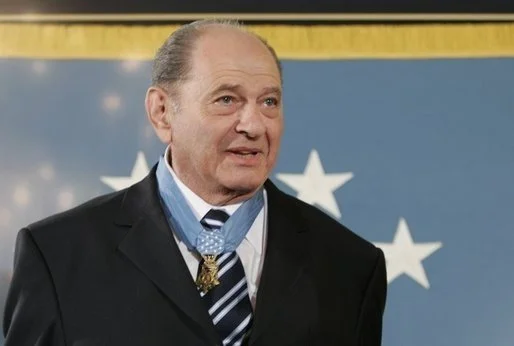
Tibor Rubin.

Rubin was born in 1929 in Pásztó, Hungary, into a Jewish family during a period when Europe was sliding toward catastrophe. His childhood was cut short by the rise of fascism and the spread of antisemitic laws that increasingly isolated and endangered Hungarian Jews.

Following the German occupation of Hungary, Rubin was deported to the infamous Mauthausen concentration camp in Austria. Still a teenager, he endured starvation, forced labor, brutality, and the ever-present specter of death. Thousands perished in the camp's granite quarries and barracks; Rubin survived through a combination of resilience, resourcefulness, and sheer will. When American forces liberated Mauthausen in 1945, Rubin later recalled being profoundly moved by the sight of U.S. soldiers—healthy, confident, and free. One American serviceman, he said, treated him with kindness and humanity at a moment when such gestures seemed almost unimaginable. That encounter left an indelible mark. Rubin resolved that if he ever made it to the United States, he would repay the nation that had rescued him from annihilation.

In 1948, he fulfilled that ambition. Arriving in America as an immigrant with limited English and little money, Rubin settled in New York and embraced his adopted homeland with fervor. When war broke out in Korea in June 1950, he saw an opportunity to honor his promise. He enlisted in the U.S. Army that same year, determined to serve the country he regarded as his liberator.

The Korean War erupted on the 25th of June 1950, when North Korean forces stormed across the 38th parallel in a surprise invasion of South Korea. The United States, acting under a United Nations mandate, rushed troops to defend the South. Early engagements were chaotic and costly. American and allied forces were driven into a shrinking defensive enclave known as the Pusan Perimeter. Only after General Douglas MacArthur launched the daring amphibious landing at Inchon did the tide temporarily turn. Yet by late 1950, the war shifted again as Chinese forces entered the conflict in massive numbers, launching brutal offensives that sent UN troops reeling southward through mountainous terrain and bitter winter cold.

It was during these desperate months that Rubin distinguished himself. In July 1950, near the Pusan Perimeter, his regiment came under intense North Korean assault. According to eyewitness accounts later included in his Medal of Honor citation, Rubin single-handedly manned a machine-gun position on a hill for twenty-four hours. Wave after wave of enemy soldiers attacked, but Rubin held his ground, inflicting heavy casualties and slowing the advance long enough for his unit to regroup and withdraw. His stand was not a dramatic flourish; it was a grim, grinding act of endurance, reminiscent of the tenacity that had sustained him in the camps of Europe.

Later that year, as Chinese forces surged into the war, Rubin again volunteered for a perilous task. During a chaotic withdrawal, he remained behind to cover his unit's retreat, engaging the enemy alone and allowing fellow soldiers to escape encirclement. His actions exemplified a pattern: whenever danger intensified, Rubin stepped forward rather than back. In November 1950, during fierce fighting, Rubin was captured by Chinese troops. What followed was more than two and a half years of imprisonment under appalling conditions. Food was scarce, sanitation was almost nonexistent, and medical care was minimal, with diseases that spread rapidly. Prisoners endured relentless indoctrination efforts and the psychological strain of uncertainty. Many perished from malnutrition and exposure.

For Rubin, however, captivity was tragically familiar terrain. Drawing on the survival instincts forged in Nazi camps, he refused to surrender to despair. He slipped out of the prison compound at night, risking execution if caught, to scavenge for food. He stole rice and other provisions from enemy supplies and distributed them among weaker prisoners. He nursed the sick, carried the infirm, and offered comfort to those on the brink of death. Fellow prisoners later testified that his efforts saved numerous lives. To them, Rubin was not simply a comrade but a lifeline.

When the armistice was signed in 1953 and prisoners were exchanged, Rubin returned home, gaunt but unbroken. Many of his fellow soldiers believed he would soon receive the Medal of Honor. Recommendations had been submitted during the war for his extraordinary actions in combat. Yet the award never came. Over time, it emerged that antisemitism on the part of a superior noncommissioned officer had obstructed or failed to process the necessary paperwork. In the climate of the early 1950s, such discrimination could quietly derail recognition without scrutiny. Decades later, a congressionally mandated review examined cases in which Jewish and Hispanic service members might have been denied awards due to prejudice. Rubin's case resurfaced as one of the most striking examples. Investigators confirmed that his heroism had been documented and recommended, but administrative bias had prevented proper consideration.

In 2005, more than half a century after his acts of valor, Tibor Rubin finally stood in the White House as President George W. Bush placed the Medal of Honor around his neck. The ceremony was both a personal triumph and a national acknowledgment of past injustice. The citation recognized not only his single-handed stand in combat but also his selfless courage as a prisoner of war. Rubin accepted the medal with characteristic humility. He often insisted that he had simply kept a promise—to repay America for his liberation.

In interviews, he deflected praise toward his fellow soldiers and reflected on the freedoms he cherished as an immigrant citizen. For him, the medal symbolized gratitude rather than vindication. In his postwar life, Rubin settled in California, married, and raised a family. He remained active in veterans' circles and frequently addressed schools and community groups. He spoke about resilience, about the value of liberty, and about the responsibility of memory. Having witnessed both the depths of totalitarian cruelty and the capacity for democratic self-correction, he embodied a bridge between two defining conflicts of the twentieth century.

When Tibor Rubin died in 2015, he left behind more than a record of battlefield heroism. His life formed a moral arc that stretched from the barbed wire of a concentration camp to the ceremonial dignity of the Medal of Honor. It is a story that links the Holocaust to the Korean War, illustrating how individual courage can shine even amid institutional failure. His long-delayed recognition serves as a reminder that while injustice may obscure valor for decades, truth has a stubborn endurance of its own—and, in time, can prevail.

In conclusion, Corporal Tibor Rubin represents something larger than a single act of heroism on a distant battlefield. His life is a study in moral continuity. The same resolve that sustained him in the shadow of Mauthausen concentration camp sustained him on the hills of Korea; the same gratitude he felt toward the soldiers who liberated him shaped the courage with which he defended their flag. He did not compartmentalize his past and present. Instead, he fused them into a singular commitment: to stand firm when others faltered, to give when others could not, and to endure when surrender might have seemed understandable.

His story also illuminates the complex character of the nation he chose as his own. The United States that freed him from Nazi tyranny later failed, through prejudice and neglect, to honor him promptly. Yet it was also a nation capable of confronting that failure, reopening old records, and correcting an injustice decades later. In that arc—from liberation to oversight to eventual recognition—lies the proof not only to Rubin's perseverance but to the imperfect, evolving promise of American democracy itself.

The medal placed around his neck in 2005 did more than acknowledge battlefield gallantry. It affirmed the lives he saved in frozen foxholes and prison compounds. It validated the testimony of fellow prisoners who survived because he shared stolen rice, shouldered burdens not his own, and refused to let despair claim another man. And it restored to the historical record the full measure of a soldier whose faith in his adopted country never wavered, even when its institutions faltered.

Ultimately, Rubin's journey from persecuted Hungarian Jewish youth to American war hero binds together two of the twentieth century's defining struggles: the fight against genocidal totalitarianism and the defense of fragile democratic allies during the Cold War. His life reminds us that courage is not born in a single moment of crisis but forged through repeated trials. It is a reminder that gratitude can be a powerful engine of service, that character, once tempered by suffering, can become an enduring force for good.

Remembering Tibor Rubin, it compels the seeing beyond medals and citations. It highlights a man who transformed unimaginable trauma into steadfast loyalty, who answered cruelty with compassion, and who met injustice not with bitterness but with continued devotion. His legacy endures not only in military archives or presidential ceremonies, but in the example he leaves behind: that even in the harshest landscapes of history, individual courage and conscience can prevail—and, in time, be recognized for what they truly are.


The site has been offering a wide variety of high-quality, free history content since 2012. If you’d like to say ‘thank you’ and help us with site running costs, please consider donating here.
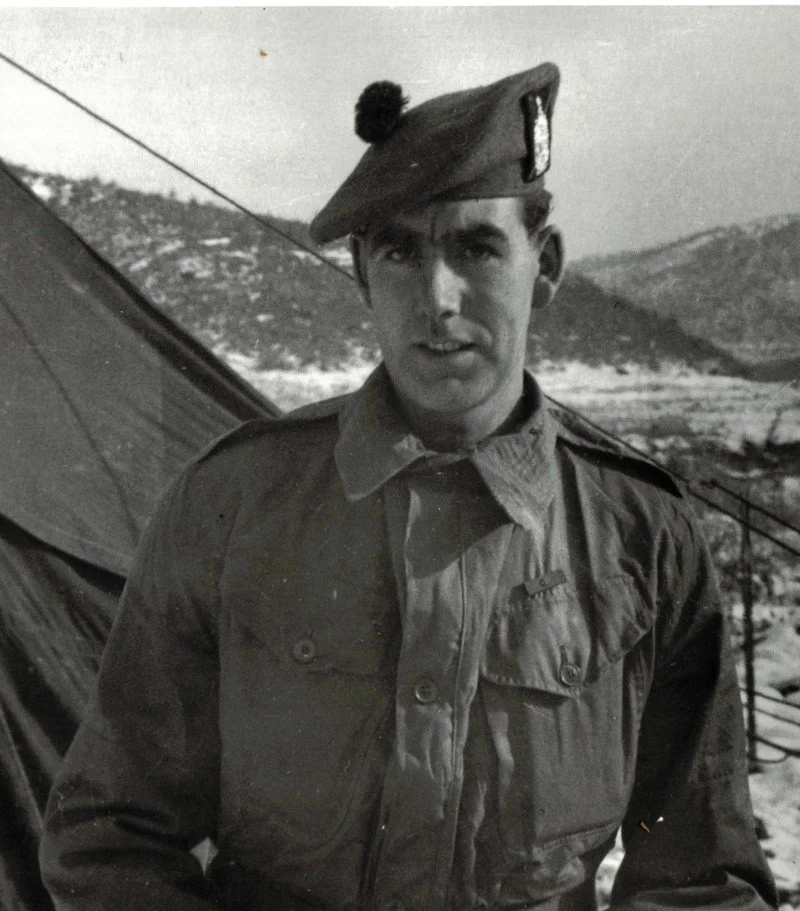
William Speakman stands as one of the most striking examples of individual courage in the Korean War, a conflict often overshadowed by the Second World War and the later trauma of Vietnam, yet one that produced acts of gallantry no less extraordinary. His Victoria Cross was earned during the bitter fighting of the Second Battle of Maryang-san in November 1951, when United Nations forces were locked in a relentless struggle against repeated and determined assaults by Chinese troops. Speakman's actions—charging forward under heavy fire with his pockets stuffed full of grenades—were not only physically daring but psychologically decisive, galvanizing exhausted comrades at a moment when pressure, cold, and fear threatened to overwhelm them.

Terry Bailey explains.

William Speakman-Pitt, Victoria Cross.

Born in 1927 in Altrincham, Cheshire, William Speakman grew up in a Britain shaped by economic hardship and looming global instability. His early life was unremarkable in the way that many working-class childhoods of the interwar years were, marked by austerity, discipline, and the formative experience of the Second World War on the home front. Air raids, rationing, and the omnipresence of uniformed men left a deep impression on an entire generation, instilling both resilience and a familiarity with sacrifice. Nothing in Speakman's youth suggested that he would one day perform an act of heroism that would be recognized at the highest level, yet his background fostered the quiet toughness and sense of duty that later defined his conduct.

In the post-war years, as Britain struggled to redefine itself amid imperial decline and economic strain, military service remained a steady path for many young men. Speakman enlisted in the army and joined the King's Own Scottish Borderers, a regiment with a long and distinguished history. For Speakman, as for countless others, the army offered structure, camaraderie, and purpose. By the time he was deployed to the Far East, he was a private soldier rather than an officer or senior non-commissioned leader, a fact that would later make his actions all the more remarkable. His courage was not the product of rank or expectation, but of individual resolve under extreme circumstances.

The Korean War began in June 1950 when North Korean forces crossed the 38th parallel and launched a surprise invasion of South Korea. The rapid collapse of South Korean defenses prompted a United Nations response, spearheaded by the United States but supported by forces from across the Commonwealth and beyond. British troops, including the King's Own Scottish Borderers, soon found themselves fighting in a conflict that was as politically complex as it was militarily brutal. The initial phase of the war was highly mobile, with dramatic advances and retreats, but this fluidity changed dramatically following the intervention of Chinese "People's Volunteer Army" forces late in 1950.

The Chinese entry transformed the war. Mass infantry attacks, often conducted at night and supported by mortars and bugle calls, pushed UN forces back and shattered any illusion of a quick victory. By 1951 the conflict had settled into a grinding stalemate, with both sides contesting rugged hills and ridgelines across central Korea. These features, often barren, steep, and exposed, dominated the surrounding terrain and supply routes, making them tactically invaluable and fiercely contested. Battles were fought not for sweeping territorial gains, but for individual hills whose names were often little more than map references, yet whose possession could decide the fate of an entire sector.

The Second Battle of Maryang-san formed part of this wider struggle for dominance in the hills north of the Imjin River. Maryang-san was not a single peak but a complex of interconnected heights, heavily fortified by Chinese troops who had dug deep defensive positions into the rocky ground. The King's Own Scottish Borderers were tasked with holding these positions against determined counterattacks once they had been taken. The conditions were appalling: freezing temperatures sapped strength and concentration, while constant shelling and small-arms fire left little opportunity for rest. Sleep was scarce, nerves were frayed, and the line between endurance and collapse grew increasingly thin.

On the 4th of November 1951, Chinese forces launched a renewed assault against positions held by Speakman's platoon. Attacking in strength and using the cover of broken ground, they pressed forward with the clear intention of overwhelming the defenders. It was during this critical moment that William Speakman's extraordinary courage came to the fore. Recognizing that the attackers were closing in and that defensive fire alone might not be enough, Speakman volunteered to carry grenades forward to the most threatened areas. Stuffing his pockets with as many grenades as he could carry, he moved out into the open, fully exposed to enemy fire.

From forward positions, Speakman hurled grenade after grenade into the advancing Chinese troops, disrupting their formations and forcing them to take cover. Each throw required him to stand, aim, and expose himself anew to small-arms and mortar fire. The physical danger was immense, but so too was the psychological strain. Yet Speakman persisted, returning to resupply and then advancing again as the pressure mounted. His actions bought precious time for his platoon, blunting the momentum of the attack at a moment when it threatened to break through.

What truly set Speakman apart was not a single moment of reckless bravery, but his repeated willingness to do it again. When another Chinese attack developed from a different direction, he once more filled his pockets with grenades and advanced alone. Again he pelted the enemy at close range, his conspicuous courage visible to all around him. Inspired by his example, other soldiers followed him forward, strengthening the defense and restoring confidence along the line. In an environment where fear and exhaustion could so easily paralyze action, Speakman's initiative transformed the psychological balance of the fight.

The official citation for William Speakman's Victoria Cross captured both the physical and moral dimensions of his conduct. It highlighted not only his gallantry under fire, but also the inspirational effect his actions had on those around him. He had no obligation, by rank or formal responsibility, to expose himself in this way, yet he did so repeatedly and deliberately, fully aware of the danger. His behavior embodied the traditional ideals of the Victoria Cross: "most conspicuous bravery" and "self-sacrifice in the presence of the enemy." In the attritional warfare of Korea, where heroism often went unseen amid artillery barrages and night fighting, Speakman's actions stood out with rare clarity.

Following the war, William Speakman returned to civilian life and later adopted the surname Speakman-Pitt. Like many veterans of Korea, he carried his experiences quietly, rarely seeking public attention despite the prestige of his award. He remained closely associated with his regiment and was deeply respected within military and veterans' communities, attending commemorative events and maintaining strong bonds with former comrades. Those who knew him often remarked on his modesty and reluctance to dwell on his own heroism, a trait shared by many recipients of the Victoria Cross.

William Speakman died in 2018, closing a life that spanned post-war Britain and one of the Cold War's most intense and unforgiving conflicts. His Victoria Cross action at Maryang-san remains inseparable from the broader story of the Korean War—a war defined by harsh terrain, extreme weather, and ferocious close-quarter fighting. Yet within that wider struggle, his courage retains a distinct clarity. Armed with little more than grenades and determination, a private soldier repeatedly stepped forward when it mattered most, turning the tide of a desperate moment and inspiring others to do the same. His story endures not simply as a tale of bravery, but as a powerful reminder that leadership and resolve can emerge from any rank when circumstances demand it.

In the final reckoning, William Speakman's story illuminates both the character of the Korean War and the enduring nature of individual courage within it. His actions at Maryang-san were not isolated feats of daring divorced from their context, but a direct response to the brutal realities of hill fighting, exhaustion, and relentless enemy pressure. In a war often reduced to statistics, diplomatic stalemate, or vague Cold War abstraction, Speakman's conduct restores the human dimension: the moment when one soldier's resolve arrests collapse, steadies frightened men, and transforms desperation into resistance. His bravery demonstrates how, even in industrialized modern warfare, the outcome of a fight can hinge on personal initiative and moral courage.

Speakman's Victoria Cross also challenges narrow assumptions about leadership and heroism. He was neither an officer issuing orders nor a seasoned veteran shaped by years of combat command, but a private soldier who recognized what the situation demanded and acted without hesitation. His leadership was instinctive rather than institutional, emerging from character rather than rank. In this sense, his actions reflect the highest traditions of the British Army and the Commonwealth forces in Korea, where cohesion, mutual trust, and example often mattered more than formal authority. The inspirational effect of his conduct, men following him forward under fire, underscores how courage can be contagious when visibly demonstrated.

Beyond the battlefield, Speakman's quiet post-war life reinforces the distinction between heroism performed and heroism advertised. Like many veterans of Korea, he returned to a society that largely moved on, carrying memories of extreme violence and hardship without public recognition commensurate with their sacrifice. That Speakman bore his fame with humility only deepens the significance of his achievement, aligning personal modesty with extraordinary public honor. His life serves as a reminder that the Victoria Cross does not celebrate aggression or glory, but selflessness under the most severe conditions imaginable.

Ultimately, William Speakman's legacy endures as both a personal testament and a wider historical symbol. His courage at Maryang-san encapsulates the intensity of the Korean War and the often-overlooked sacrifices of those who fought it. More enduring still is the lesson embedded in his story: that in moments of crisis, when fear, fatigue, and uncertainty converge, the actions of a single individual can shape events far beyond their immediate reach. In remembering Speakman, we are reminded that heroism is not confined to grand strategy or famous names, but can arise, with devastating clarity, from the determination of one soldier who refuses to yield.


The site has been offering a wide variety of high-quality, free history content since 2012. If you’d like to say ‘thank you’ and help us with site running costs, please consider donating here.
Posted
AuthorGeorge Levrier-Jones

The 1950-53 Korean War involved a US-backed South Korea against a communist-backed North Korea. But what lessons can the US learn from the war today? Here, Michael Cho considers this question in the context of the Afghanistan and Iraq Wars of the 21st century.

Members of a M24 tank crew besides the Naktong River front during the Korean War on August 17, 1950.

The Korean War was a war fought between South Korea, formally known as the Republic of Korea, and North Korea, also known as the Democratic People’s Republic of Korea. On June 25, 1950, seventy-five thousand North Korean soldiers crossed the 38th parallel, the line dividing South and North Korea, to spread communist ideals to South Korea. In launching this attack, North Korean troops found South Korea completely unaware and, in many ways, powerless to fight back. Initially, South Korean troops had been driven far south by the North Koreans until the United States assisted them by providing necessary men and supplies through a United Nations sanctioned policing mission.

The Korean War was one of the proxy wars in the Cold War and was fought in an attempt to stop the growth of communism, but when examining the overall cost of the Cold War, while the United States bore a heavy material cost, proxy states like South Korea disproportionately paid the human cost. At the intersection of ideology, commerce and conflict, sits the Korean War and its lessons about the application of power in foreign policy and the costs and consequences of America’s role in the world.


Proxy wars

In many ways, the Korean War became a microcosm of the larger Cold War dynamics that dominated the twentieth century. By engaging in proxy wars across the globe, the United States was able to break down trade barriers and open up different regions of the world to American investment and influence. Ideologically, the United States prevented a possible Soviet global takeover by spreading fear of a communist global takeover; geopolitically, the US implemented their anti-communist strategy through the Truman Doctrine in 1947. The Domino theory, a theory growing out of the Truman Doctrine and the Marshall Plan, stated that if the United States allowed any country to fall to communism, other adjacent countries would soon follow, resulting in a world ruled by communism. The Domino theory thus became a primary justification for United States foreign policy interventions because it predicted a global communist takeover if the United States took no action. Consequently, the United States was active globally “saving” many countries from falling to communism by fighting communism in South Korea. The Truman Doctrine and the Marshall Plan provided the strategy and the tactics to implement the American Cold War mindset globally. In the Domino theory, the United States found a reason to defend democracy in Korea and demonstrate to itself and other democratic allied countries that the United States would not allow communism to threaten their societies; in so doing, proxy wars served to strengthen international commitment to American-led institutions of global governance.


Military aid

The material cost of waging this proxy was significant and represented a strategic shift by the United States to enlarge the scope of its Cold War response under the umbrella of “humanitarian aid.” Prior to the Korean War, the Marshall Plan applied only to economic aid and support; the Marshall Plan did not cover military aid until the commitment to the Korean War was made. By supplying South Korea, who had few supplies and a scarce supply of troops, with imperative supplies and troops to win, the United States helped South Korea hold back communism. South Korea stopped North Korea’s advance in the war and reclaimed lost territory up to, and briefly beyond, the 38th parallel where the initial invasion had started. The United States heavily supplied, manned, and funded the South Koreans. It spent thirty billion dollars during the Korean War and supplied the South Koreans with vehicles such as M4 Sherman tanks, 1,000,000 personnel (consisting of mostly United States soldiers) to the mere South Korean military who had 100,000 personnel and were facing an army of 1,200,000 Chinese and North Korean soldiers.  Now heavily supplied, South Korea’s ability to win the war improved dramatically and contrasted sharply with the previous South Korea who had a limited amount of supplies and troops. As the Korean War progressed, the war turned more into a war of attrition, and South Korea was successful because it was the better supplied belligerent.


A trade-off

The Korean War represents a unique glimpse into answers to the question of how much evil is it acceptable to engage in when attempting to do good. The first is that when confronting challenges in foreign policy, nation-states often have only a series of bad options when conducting foreign policy. By fighting for South Korea, the United States successfully stopped the growth of communism in South Korea, but the war ended with around five million Korean casualties and approximately 33,000 American casualties, which highlights the significant human cost that is borne by the peoples living in the geographic region in which the proxy war occurs. Many at the time debated the proper course and conduct of the Korean War, most famously Douglas MacArthur and President Truman; regardless, the decision came down to an abandonment of core humanitarian ideals or a massive cost of human life. As recent events in Afghanistan have shown that dynamic still exists, but with the Cold War context to unify American public opinion, it is unclear to what extent, if any, the United States will make those same choices in the 21st century.

When the United States and South Korea made the choice that the material and human cost was worth the price, it used morality and the language of a humanitarian effort to explain that cost. The United States’ involvement in the Korean War proved a military necessity because US funding was the force driving South Korea forward in the war. In this situation, the United States’ aid was essential because South Korea would have lost the war after the first invasion without support from the United States. However, it was the development of a thriving economy in South Korea (often through very undemocratic means under a series of dictators in the 50s, 60s, and 70s) that created the South Korea of the 21st century. This highlights that the key component that made the American mission to defend the world from the threat of communism successful might have been the investments made in the host-proxy’s economy via the Marshall Plan. The lack of any kind of Marshall Plan-style investment into Afghanistan or Iraq following the invasions of 2001 and 2003, respectively, indicates a lack of willingness to make the same kind of commitment in the 21st century. 


In the context of today

The United States’ mission in the world has never been less certain. President Trump’s “America First” foreign policy began deconstructing elements of the WWII alliances the Truman Doctrine and Marshall Plan were built upon. Additionally, at a time when Congress is deadlocked surrounding physical and human infrastructure investment in the domestic United States, the willingness of the United States to make the investments overseas that are truly vital to implementing its foreign policy vision is debatable at best. However, while the outcome might be uncertain and the loss of life could be great, the fate of the two Koreas offers interesting and informative lessons for the United States in the 21st century. South Korea represents a positive example of what can happen when the choice is made to uphold human rights and core democratic ideals despite the human and material cost being high and the outcome uncertain. Based upon the thriving democratic capitalist society now present in South Korea and the stark contrast with the poverty and oppression in North Korea, perhaps the true cost of leadership and the price of freedom becomes apparent. Korea serves as a useful case study for the necessary costs, successful tactics and strategies and consequences of proxy wars in defense of democratic principles. 


What do you think are the key lessons for the US from the Korean War? Let us know below.

Posted
AuthorGeorge Levrier-Jones

The Korean War (1950-53) saw UN forces, led by the South Koreans and US, fight against communist backed forces, led by North Korea and China. Here, Denise Emille Duque explains the story of one of the countries that formed part of the UN force – the Philippines. In particular he looks at the feats of the Filipino forces against Chinese troops in the 1951 Battle of Yultong.

Filipino soldiers preparing their munitions and weapons for the Battle of Yultong. Source: JamesKillsFour, available here.

Filipino soldiers preparing their munitions and weapons for the Battle of Yultong. Source: JamesKillsFour, available here.

"Give me 10,000 Filipinos and I will conquer the world." – General Douglas MacArthur


Artillery shells rained down upon the UN forces occupying the hills of Yultong. It was the opening salvos of the Chinese Spring offensive. The 10th BCT of the Philippine Expeditionary Force sent to Korea braced itself for what seemed to be an incessant typhoon of death and destruction. This is the story of 900 Filipino Soldiers who defeated 40,000 Chinese and North Korean forces on the hills of Yultong.

To understand our story let's travel back to how this war started. On 25th June 1950, 75,000 North Korean troops with Soviet and Chinese support invaded South Korea to capture its capital city, Seoul. In response, the newly established United Nations passed UN Security Council Resolution 83 to urge the UN member states to restore peace and order to the Korean Peninsula through the repulsion of Communist forces by military action.


The Philippines in Korea

One of the UN member states that heeded the call to arms was the Republic of the Philippines, which at the time was still recovering from the scars brought by the Imperial Japanese forces during the Second World War. Philippine President Elpidio Quirino urged Congress to approve the Republic Act 573 to deploy 7,420 Filipino troops to the Korean Peninsula. The President saw this as a commitment to help a friend and as a part of a larger battle to defeat communism. He gave these words when he addressed the PEFTOK soldiers: "Poor as we are, this country is making a great sacrifice in sending you there, but every peso invested in you is a sound investment for the perpetuation of our liberty and freedom."

First to dock in Pusan, South Korea was the 10th Battalion Combat Team of the Philippine Expeditionary Force to Korea (PEFTOK) on September 19, 1950, shortly after General MacArthur's successful Incheon Landing. The men of the 10th BCT, the heroes of our tale, were made up of 64 Officers and 1,303 Enlisted men led by Lt. Col. Dionisio S. Ojeda. They were supposed to be a motorized unit operating tanks, but none arrived with them, so they were turned into a heavy weapons unit. 

Images of ruined cities, refugees, and famine welcomed the battalion. All these were familiar and bitterly nostalgic to the Filipino troops. After all, those were the same sights they saw in their home countries a few years back. Korean refugees quickly ran to them upon sight to beg for food, and the battalion obliged.


Initial fighting

After the melancholic welcome, the Filipino force was assigned to join the Turkish Brigade and the US/Puerto Rican 65th Infantry Regiment into the 3rd Infantry Division.  Soon after, the 3rd Infantry Division faced the Communist North Koreans at the Battle of Miudong, which resulted in their victory. That was the first battle won by Filipinos in a foreign land.

In the spring of 1951, the 3rd infantry division was deployed along the area of the Imjin River. The 3rd and 2nd Battalions of the US 65th Infantry Regiment positioned facing west along the river, with the Turkish Brigade occupying the east flank, and the 10th BCT was at the center. Unbeknown to these men, a storm was brewing under their noses in the form of the Chinese Spring Offensive. 

40,000 Communist Chinese troops of the 44th Division of the Chinese People's Volunteer Army under Commander Peng Dehuai planned to attack and surround the 3rd Infantry Division. He deployed the 15th Army in a narrow zone between the Imjin River and Route 33. The 12th and 60th Armies were deployed to attack the positions held by the 10th BCT and the Turkish Brigade through the Pogae-san ridges.


Chinese Spring Offensive

20:00, 22/04/1951 – Artillery shells, mortar fire, machine gun, and small arms fire greeted the Turks at the start of the battle. At 23:00, waves of Chinese soldiers assaulted the 10th BCT positions and engaged in a series of close-quarter confrontations.

Continuous artillery bombardment and some friendly fire cut the communications between troops in the 3rd Infantry Division. Fortunately, communications returned at 00:30, and the Turkish Brigade received an order to retreat to a position on the line south of Hantan River. Intensifying Chinese assaults forced the 65th Infantry Regiment to retreat several hundred yards to regroup and reorganize. The 10th BCT was surrounded and left alone to brave the ocean of Communist Chinese forces.

The 10th BCT non-combatants such as the chaplain, clerks, medics, cooks, and drivers threw themselves into the fray to bolster the strength of their outnumbered battalion. Men of the 10th fought dispersed and confused because of the lack of communication between the hills. The fighting went on and on where some men were wounded, killed, or captured. Among the captured was Lt. Tomas G. Batilo of the Able Company of the 10th.

Then Lt. Jose Artiaga Jr. led the Baker (B) Company to defend the strategic hill of Yultong but they were pushed back by the unrelenting Chinese forces. At 03:00, enemy forces penetrated deep into the formation and reached the position of the Charlie Company in the reserves. Unfortunately, the company suffered heavy losses including Lt. Artiaga. 

While all this was happening, Lt. Col. Dionisio S. Ojeda received an order to withdraw and all units complied except Captain Conrado Yap's Heavy Weapons Company. Captain Yap led his men to counterattack to rescue the wounded and to retrieve the dead. He opened the hatch of his tank and shot at the Chinese with the mounted machine gun with his gun crew firing as fast as they could. Chinese soldiers fell one by one at the rate of 17 to 1 in favor of the 10th. The Heavy Weapons Company succeeded but at the price of Captain Yap's life.

The 12th President of the Philippines Fidel Ramos, who was also a PEFTOK soldier for the 20th BCT, commented about Captain Yap's actions in his speech during the 42nd Anniversary of the Battle of Yultong: "Captain Yap—his mission accomplished—now ordered a withdrawal. While making a headcount of his boys and directing the withdrawal, he was hit by machinegun fire."

The 10th held their ground until dawn and by this time the Chinese attack slowed down and this allowed the 3rd Infantry Division to retreat. Then the C Company of the 10th, supported by two M24 Chaffee light tanks of the Recon Company and allied artillery, led a counterattack to restore the lost area of B Company. The Filipinos fought until midday when General Robert Soule fell back to Line Kansas, to a position in Anhung-ri.


Aftermath

The battle ended with over 500 dead Chinese soldiers lying dead on the battlefield and 2 of them were captured. On the other hand, the 10th BCT lost only 12 people with 38 wounded and 6 missing. It was a victory for the ‘Fighting Filipinos’.

For the act of valiance performed by Captain Conrado Yap, he was posthumously awarded the Philippine Medal of Valor, the US Distinguished Service Cross, and was awarded the First Taeguk Cordon of the Order of the Military Merit on the 65th Anniversary of the Korean Armistice Agreement on July 27, 2018. Lieutenant Jose Artiaga Jr. was posthumously awarded the Philippine Distinguished Service Cross. 

This battle, which saved the 3rd Infantry Division, ultimately helped in turning the war in favor of the United Nations. After the war ended in July of 1953, the Philippines and South Korea cemented a great friendship that even stands to this day. UN forces were so impressed with the 10th BCT's valiance that they were nicknamed "The Fighting Filipinos".

To this day the story of the Fighting Filipinos is a source of national pride among Filipinos because they showed that despite poverty, the Filipino people could rise.


What do you think of the Philippines’ role in the Korean War? Let us know below.


Note: General Douglas MacArthur quote at the start of the article also here: https://www.warhistoryonline.com/world-war-ii/the-fighting-filipinos.html

The Korean War (1950-53) pitted the capitalist South Korea, backed by the U.S., against communist North Korea. A major offensive by South Korea ultimately led to Communist China becoming involved in the war.

Here, Victor Gamma considers how failures in the U.S. understanding of China’s intentions and over-confidence that China would not intervene led to the U.S. backed forces moving ever closer to China and the eventual Chinese counter-attack.

If you missed it, part 1 on how the U.S. backed forces moving very close to the Chinese border is here.

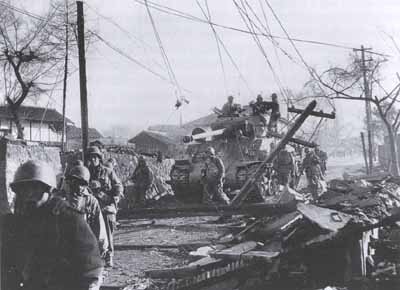
U.S. soldiers with a tank make their way through the streets of Hyesanjin in November 1950.

U.S. soldiers with a tank make their way through the streets of Hyesanjin in November 1950.

“Home for Christmas”

UN forces continued their advance into North Korea, Pyongyang falling to South Korean troops on October 20. MacArthur quickly ordered his forces to continue their advance toward the border with China. The Eighth Army under General Walker advanced along the West Coast and the X Corp moved up the eastern side of the peninsula. The Chinese watched this advance warily. They decided that the UN's goal was now to invade China and overthrow the communist government. For his part, MacArthur demonstrated his complete disregard of Chinese capacity to disrupt his plans by neglecting basic rules of military science. He allowed his forces to become divided and advance toward a potentially significantly larger enemy army. The Chinese, in fact, had up to 500,000 troops massed in Manchuria. The potential enemy was close to his base of supplies, while his own men had now outrun their own.  In addition, the Eighth Army and X Corps were divided by a thirty-mile gap of extremely hilly terrain that made communications by phone impossible. Despite this, MacArthur urged his men forward until some units began to reach the Yalu River. The Chinese commander, General Lin Piao, now gathered his strength and waited for the UN forces to come within striking distance. In late October, 1950, the Chinese launched a series of probing attacks to gauge enemy strengths and reactions. The positive results convinced the Chinese that they could be successful in a major offensive. They withdrew their forces, giving the illusion of a retreat. American commanders accepted this as a fact, noting the drubbing the 7th Regiment gave to the Chinese and assumed they were in headlong retreat back to China. The reduction of fighting convinced many that the war was over. The misgivings of General Walker, commander of the Eighth Army concerning the supply situation, which was becoming critically short of needs for his widely scattered forces, were ignored.    

Also reflecting the lack of concern over the Chinese, the contingency plans of the UN failed to follow sound principles of military intelligence. The enemy's capabilities, not his possible or probable intentions, are supposed to form the basis for contingency plans. By the time the Chinese had begun to infiltrate troops into North Korea to begin their First Phase Offensive, the United States-dominated UN command decided that if the Chinese had wanted to intervene, they would have done so earlier.  By the time UN forces approached the Yalu River, it was held that the Chinese had missed their chance. The monitoring for possible Chinese intervention was therefore reduced. The capability of the Chinese to intervene was not considered. The massive buildup in Manchuria and the infiltration into North Korea was mostly missed by intelligence. In late October the first clashes with Chinese units occurred. However, this did not result in a major revision of contingency plans.Increasing reports of a Chinese buildup were spurned by senior intelligence and higher level commanders. American generals were focused on the Yalu River and ending the war. They did not want to consider the possibility of a protracted conflict. On November 24 MacArthur visited the front and repeated his promise that the troops would be home for Christmas once they reached the Yalu. Coupled with this massive failure of intelligence were the considerable abilities of the Chinese to remain unobserved. The Chinese secretly infiltrated divisions into the barren wastes of North Korea to the tune of 100,000, undetected by the UN forces. This success owed much not merely to American intelligence failings but Chinese skill at concealing their movements. Chinese troops had been trained to avoid any movement at the sight of enemy aircraft. They moved mostly at night. They moved mostly by foot. Since they did not use motorized vehicles on a large-scale, they were harder to spot. In contrast, UN units raised huge clouds of dust with even one vehicle as they moved along the unpaved roads of Korea. 


The End Result 

For the location of the attack, the Chinese wisely chose an area that would reduce the technical superiority of UN forces: the rugged terrain between the divided UN forces. The Eighth Army and X Corps should have been linked in a strong defensive line, but MacArthur deemed such a plan overly cautious. Additionally, the Supreme Commander believed that this terrain was too rugged for military operations. The battle was fought in a terrain that made communications and operations difficult. Ch'ongch'on River valley features a landscape so hilly that a mechanized army was effectively hindered in its movements. Thus, the UN superiority in equipment was largely overcome. The lack of flat places made setting up command posts or medical stations difficult or impossible. The endless hills also blocked vision and hearing. It became almost impossible for units to effectively support one another. Units often fought in isolation. UN forces also had not been trained to cope with harsh winter conditions. Many made the mistake of crossing streams or rivers in their pants. As a result some units had to have their clothing cut off because it had frozen solid. 

The UN forces began to encounter Chinese tactics as they neared the Yalu River. The Chinese tactics were the result of the conditions in China. They were hopelessly outgunned by UN forces, lacking equipment both in quality and quantity. Many Chinese soldiers attacked without a firearm and were expected to obtain captured or abandoned equipment from the enemy. Some even fought with spears improvised from enemy vehicles. However, they made up for these deficiencies with a number of devices. First and foremost, the Chinese took full advantage of their enormous reserves of manpower. They favored attacks by masses of men who rushed a smaller enemy unit from all sides. The Chinese 'human wave' was a reflection of manpower strength and a disregard for human life the UN forces found shocking. 

On November 24 MacArthur ordered a general offensive toward the Yalu River of his already tired and battered forces. In defiance of President Truman's specific orders, American units were ordered to advance along with Republic of Korea (ROK) forces. Forward units of the Eighth Army, including the American Second Division, began crossing the Ch'ongch'on River on the morning of November 24th. Due to the difficult terrain and probable overconfidence, they left most of their supplies south of the River including extra grenades and overcoats. On November 25-26 the Chinese attacked along the entire Korean front. As a part of a larger Chinese operation termed the Second Phase Campaign Western Sector, the People's Volunteer Army (PVA) 40th Army attacked across the Ch'ongch'on. These forces were reconstituted to avoid official war with the United States - officially, they were “volunteers” helping the North Koreans. At this time the Eighth Army was not in a good defensive posture. The advance units attacked by the Chinese were strung out. The ROK division on the right flank of the Eighth Army disintegrated and was now in danger of envelopment. A halt order was given to the Eighth Army but a panicked retreat soon developed. Despite this, the Eighth Army command continued to underestimate the seriousness of the situation and so failed to take effective counter measures such as ordering retreating troops to strategic points. Air attacks against the Chinese took a huge toll but did not stop the retreat. On November 27, the U.S. divisions retreated south of the Ch'ongch'on River and ultimately south of the 38th Parallel.


Long-term consequences

The battle permanently ended hopes for an early victory to the Korean conflict. A conflict limited to the Korean Peninsula now involved the world's most populous nation, threatening to explode into global war. Politically the battle led to the abandonment of United Nations efforts to achieve a unified Korea and a subsequent proposal to continue the division of the peninsula along the 38th Parallel to the Chinese by December 11. Had UN forces been expecting a large-scale Chinese attack and had the officials in charge taken measures to prepare for it, the battle either would not have occurred or at least the magnitude of the disaster could have been reduced. Possibly, the on-going difficulties with the North Korean regime would not exist. Nor would the presence of so many U.S. forces be necessary.

In retrospect, senior U.S. military and political leaders often failed in their ability to evaluate and act on quality intelligence. A soldier is often only as good as his commanding officers. The men closest to the action, including field commanders such as General Walker of the Eighth Army and General Almond of X Corps and their troops, had a much more accurate view of the situation, but their repeated warnings were dismissed. The same condition existed in intelligence with excellent information being interpreted as a bluff or simply ignored.


Now, you can also read Victor’s article on Henry VIII’s divorce of Catherine of Aragon here.

Finally, why do you think many in the U.S. did not think China would join the Korean War? Let us know below.

References

Aid, Matthew. The Secret Sentry, the Untold History of the National Security Agency. New York: Bloomsbury Press, 2009.

Alexander, Bevin R.  Korea: The First War We Lost. New York, NY: Hippocrene Books, 1986.

Bacharach,  Deborah. The Korean War. San Diego: Lucent Books, 1991.

Conway, John Richard. Primary Source Accounts of the Korean War. Berkeley Heights: Enslow Publishers, Inc., 2006.

Fehrenbach, T.R. This Kind of War: A Study in Unpreparedness. New York: The Macmillan Company, 1963.

Halberstam, David. The Coldest Winter: America and the Korean War. New York: Hyperion, 2007.

Halberstam, David. The Fifties. New York: Fawcett Books, 1993.

Hammel. Eric Chosin: Heroic Ordeal of the Korean. New York: The Vanguard Press. 2018.

Harry S. Truman, ed. by Laura K. Egendorf. San Diego: Greenhaven Press, 2002. 

Hastings, Max. The Korean War. New York: Simon and Schuster, 1987.

Hammel, Eric. Chosin: Heroic Ordeal of the Korean. New York: The Vanguard Press,1981.

Kaufman, Burton I. The Korean War: Challenges in Crisis, Credibility and Command. McGraw-Hill Publishing Company, 1997. 

Litai, John and Xue . Uncertain Partners, (Stanford University Press), 1995.

Paul Lashmar, New Statesman & Society; 2/2/96, Vol.9 Issue 388, p24, 2p, 1bw

Truman, Harry S. Memoirs by Harry S Truman: Year of Decisions. New York: Doubleday and Company, 1955. 

Truman, Margaret, editor. Where the Buck Stops: The Personal and Private writings of Harry S. Truman. New York: Warner Books, 1989.

"Analysis:The Foreign Interventions:Stalin and USSR" www.mtholyoke.edu/~park25h/classweb/worldpolitics/analysisstalin.html‎) 

The Korean War (1950-53) pitted the capitalist South Korea, backed by the U.S., against communist North Korea. A major offensive by South Korea ultimately led to Communist China becoming involved in the war.

Here, Victor Gamma considers how failures in the U.S. understanding of China’s intentions and over-confidence that China would not intervene led to the U.S. backed forces moving very close to the Chinese border.

You can also read Victor’s article on Henry VIII’s divorce of Catherine of Aragon here.

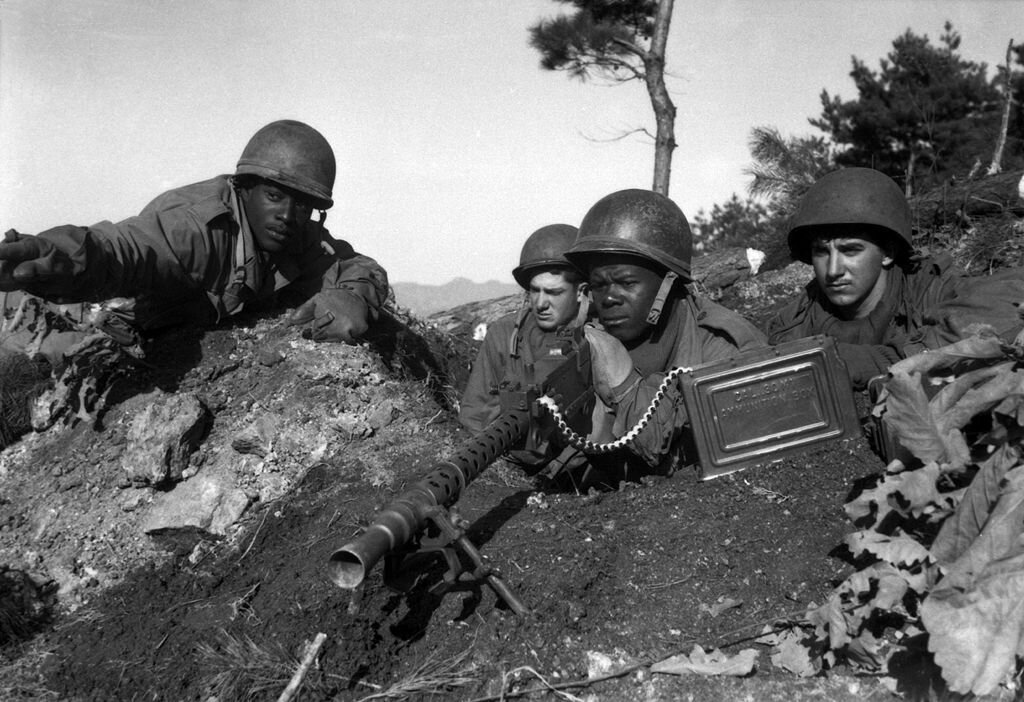
Fighting with the 2nd Inf. Div. north of the Chongchon River, Sfc. Major Cleveland, weapons squad leader, points out an enemy position to his machine gun crew. November 20,1950.

Fighting with the 2nd Inf. Div. north of the Chongchon River, Sfc. Major Cleveland, weapons squad leader, points out an enemy position to his machine gun crew. November 20,1950.

Seventy years ago, on June 25, 1950 the Cold War turned hot when North Korean forces launched a surprise attack across the 38th Parallel. The communist attempt to violently take-over the entire peninsula was thwarted by the firm U.S. response and General Douglas MacArthur's brilliant counterattack at Inchon that September. Now it was the turn of the U.S.-led UN and South Korean forces to attempt the unification of the Korean Peninsula on their terms. UN forces moved towards the Yalu River and victory seemed within sight. This objective, however, was shattered when massive, skillfully handled attacks by Chinese forces beginning on November 25 caused a disastrous defeat for UN forces, including the longest retreat in U.S. military history. The attacks on what the Chinese called the Western Sector came to be called the battles of the Ch'ongch'on River. These were among the most decisive in the post-World War Two era. How could the world’s premier superpower be taken by surprise? How could the nation with arguably the best intelligence-gathering capacity in the world be completely fooled? The answer is complex. It includes persistent miscalculations from the American military and political leadership, preconceived assumptions regarding communist China, ignorance regarding local conditions and China's interests, the refusal of American officials to deal with the Communist Chinese or to take their government seriously, and the on-going failure to correctly interpret intelligence.


Mistrust and Misunderstanding

Part of the problem can be traced to the atmosphere of heightened tension and suspicion that existed between East and West. This suspicion led to a breakdown in communications and effectively clouded understanding. The West viewed the communist world in a monolithic sense. The bickering between China and the Soviets was unknown to Western decision-makers. The Korean attack was viewed as an attempt by Russia to gain advantage and it was to the Russians the United Nations had to resist. The West's suspicions are understandable; had not Kim Il-Sung been an officer in the Red Army? Hadn't the Soviets accumulated a track record of forcing 'friendly' regimes on every state that came under their dominance? Hadn't the Red Army left behind a hardline communist state devoid of free elections in North Korea? However, documents declassified in 1992 fail to support the contention that Kim Il-Sung was merely a puppet acting under Stalin's orders. In contrast, the post-Cold War research revealed that although Stalin ultimately gave his approval and was willing to aid Kim, he was not the initiator of it. Valentin Pak, Kim's translator who read Stalin's communications to Kim, stated emphatically that Stalin did not encourage an attack on the South.

Dr. Katherine Weathersby examined declassified Soviet documents and affirmed that Stalin thought it unwise to initiate hostilities in Korea. This knowledge was unknown to U.S. policy-makers because American intelligence failed utterly to investigate the nature of the Soviet-Korean relationship. The reasons for Stalin's final go-ahead to Kim are still unclear. Whatever he may have hoped to gain by a communist victory, his contribution to the effort was relatively meager and he did not want to associate himself too closely with it.  U.S. intelligence failed completely to investigate the relationship between the Soviets and Kim. Instead, the Americans went into the conflict viewing Kim as a Soviet proxy. 

At first, China did not appear strongly concerned. The Chinese had several motives for intervening in Korea. First, they were alarmed by the rise of anti-communist sentiment in the West and thought the UN advance toward Manchuria was a military expression of this. North Korea was also deemed vital to the Chinese leadership, which had plans for large-scale industrial growth. Hydroelectric resources in North Korea were deemed essential to these plans.  U.S. officials failed to grasp these local conditions and took little interest in Korea beyond the view of Korea as merely one more piece in the massive chess game against Soviet expansionism. 

                  But rather than conduct talks with the Chinese, the animosity and mistrust that characterized East-West relations not only thoroughly poisoned any attempt at accommodation but effectively disrupted clear interpretations of Chinese or Soviet intentions. Throughout the period before open Chinese intervention (June 25 - November 25, 1950), communication between China and the West was hampered by the fact that there were no formal relations with Communist China. Any knowledge about Chinese intentions had to be gathered from reading the cables of foreign ambassadors stationed in China or by Signal Intelligence (SIGIN). The Armed Forces Security Administration (AFSA) had the responsibility for intelligence gathering. Information collected would then be passed on to the appropriate officials for evaluation. These leaders would then act on the information accordingly. There was sufficient intelligence during the summer and autumn of 1950 to alert Western officials that China had a vital interest in Korea and would back up their interests with force. China had communicated its approval of a pro-Western regime in Korea if it did not involve direct Western intervention and if it occurred at the expense of the Russians. This communication was ignored or misunderstood.  Cable traffic to and from the office of the Indian Ambassador at Beijing, Dr. Kavalm Madhava Panikkar, was being read by the Armed Forces Security Agency (AFSA). Dr. Panikkar was probably the most well informed diplomat in Beijing and had built good relations with high-ranking Chinese officials. He was thus a quite valuable source of information regarding Chinese diplomacy. In July and August 1950, cables revealed that Panikkar had been informed that China would not intervene in Korea. However, decrypted cables began to reveal a dramatic change following the Inchon landing and the turn of the tide against North Korea. For example, the cables of the Burmese ambassador now revealed that China intended to intervene militarily. A week later, on September 25, Panikkar cabled New Delhi that China would intervene if UN forces crossed the 38th Parallel. This information was transmitted to Washington, where officials dismissed it due to Panikkar's supposed pro-Chinese sympathies. Less than a week later, on October 1, 1950, Mao Tse Tung publicly declared: "The Chinese people will not tolerate foreign aggression and will not stand aside if the imperialists wantonly invade the territory of their neighbor". Mao continued by warning that if non-Korean forces crossed the 38th Parallel, the Chinese "will send troops to aid the People's Republic of Korea." That same day South Korean troops crossed the 38th parallel. Accordingly, on the following day the Chinese Politburo made the decision to intervene in Korea. Mao Tse Tung ordered 260,000 troops to cross into Korea by October 15.


The Die is Cast

On October 2 the Indian ambassador was roused from sleep shortly after midnight and ordered to meet with Chou En-lai, China's premier and foreign minister.  Chou informed the Indian Ambassador of China's intentions regarding Korea, which information was passed to the West on October 3. Additionally, the Dutch charge d' affaires also cabled The Hague quoting Chou en Lai's comments that China would fight if U.S. forces crossed the 38th Parallel. These warnings were dismissed in Washington as a bluff. 

Meanwhile the first U.S. forces crossed the 38th Parallel on October 5 and advanced on Pyongyang.  MacArthur had not been totally incognizant of the possibility of Chinese intervention. In fact, in the days and weeks following Inchon, he repeatedly inquired of his subordinates if any sign of Russians or Chinese had been noted. Since no reports of their presence were forthcoming, he assumed that the Soviets and Chinese had decided to withdraw at America's demonstration of will. The United Nations mandate of June 27 read in part; "furnish such assistance to the Republic of Korea as may be necessary to repel the armed attack and to restore international peace and security in the areas." It was widely held that the only way to accomplish this objective was the complete removal of the Kim regime as a threat to the south by occupying the north and reunifying the entire peninsula. 

Not everyone shared this sanguine hope, however. Several doubts about an advance into the north had been voiced. The Policy Planning Staff in Washington had also expressed grave doubts about the ability to invade the north without provoking a war with China. In addition, a National Security Council 81 report was circulated on September 1 emphasizing the risk involved but also pointed out the unlikeness of Soviet intervention. It recommended that only Republic of Korea (ROK) forces should cross the 38th Parallel. 

MacArthur harbored no such doubts, though, and the advance continued with non-Korean forces in support. On October 15 Chinese General Pen Dehuai received the order from Mao Tse Tung to begin moving his forces across the Yalu River into Korea. That night, the 372 Regiment of the 42nd Army crossed into Korea. Before long, more than 300,000 Chinese troops moved into North Korea, completely undetected by AFSA. However, other warnings did occur. SIGINT observed changes in Soviet, Chinese and North Korean military activity, indicating some kind of major operation was impending. The CIA sent a top secret coded memo (still only partially declassified) to President Truman. The memo stated that intelligence sources indicated that the Chinese would intervene to protect their interests in the Suiho Hydroelectric complex in North Korea. The memo also noted an increase in fighter aircraft in Manchuria. On October 21 AFSA reported from Chinese radio traffic that no less than three Chinese armies had been deployed along the Yalu River and reported heavy troop train movement from Shanghai to Manchuria. All of this information was dismissed because it contradicted the dominant opinions of the U.S. intelligence community. For an example of this view, an article in The Review of the World Situation dated October 18, stated: "Unless the USSR is ready to precipitate global war, or unless for some reason that Peiping does not think that war with the U.S. would result from open intervention in Korea, the odds are that Communist China, like the USSR, will not openly intervene in North Korea."  In Tokyo, Lieutenant Colonel Morton Rubin went over the intelligence indicating Chinese intentions to intervene with General MacArthur and his intelligence chief General Charles Willoughby. Neither MacArthur nor Willoughby was convinced of the reality of the threat. In fact, the UN side also suffered from an atmosphere that discouraged healthy challenges to official decisions. Surrounding MacArthur, especially after Inchon, was an aura of infallibility that effectively wilted any suggestions for greater vigilance against possible Chinese action. In this atmosphere, the disregarding of the Chinese threat became the “party line” and a healthy exchange of views was discouraged.  Matthew Ridgway, who was soon to replace MacArthur, added: "the great fault over there was poor evaluation of the intelligence that was obtained. They knew the facts but they were poorly evaluated. I don't know just why this was. It was probably in good part because of MacArthur's personality. If he did not want to believe something, he wouldn't." 


Now, read part 2 on how the U.S. backed forces moved ever closer to China and the eventual Chinese counter-attack here.

Why do you think many in the U.S. did not think China would join the Korean War? Let us know below.

Sources

Aid, Matthew. The Secret Sentry, the Untold History of the National Security Agency. New York: Bloomsbury Press, 2009.

Alexander, Bevin R.  Korea: The First War We Lost. New York, NY: Hippocrene Books, 1986.

Bacharach,  Deborah. The Korean War. San Diego: Lucent Books, 1991.

Conway, John Richard. Primary Source Accounts of the Korean War. Berkeley Heights: Enslow Publishers, Inc., 2006.

Fehrenbach, T.R. This Kind of War: A Study in Unpreparedness. New York: The Macmillan Company, 1963.

Halberstam, David. The Coldest Winter: America and the Korean War. New York: Hyperion, 2007.

Halberstam, David. The Fifties. New York: Fawcett Books, 1993.

Hammel. Eric Chosin: Heroic Ordeal of the Korean. New York: The Vanguard Press. 2018.

Harry S. Truman, ed. by Laura K. Egendorf. San Diego: Greenhaven Press, 2002. 

Hastings, Max. The Korean War. New York: Simon and Schuster, 1987.

Hammel, Eric. Chosin: Heroic Ordeal of the Korean. New York: The Vanguard Press,1981.

Kaufman, Burton I. The Korean War: Challenges in Crisis, Credibility and Command. McGraw-Hill Publishing Company, 1997. 

Litai, John and Xue . Uncertain Partners, (Stanford University Press), 1995.

Paul Lashmar, New Statesman & Society; 2/2/96, Vol.9 Issue 388, p24, 2p, 1bw

Truman, Harry S. Memoirs by Harry S Truman: Year of Decisions. New York: Doubleday and Company, 1955. 

Truman, Margaret, editor. Where the Buck Stops: The Personal and Private writings of Harry S. Truman. New York: Warner Books, 1989.

"Analysis: The Foreign Interventions: Stalin and USSR" www.mtholyoke.edu/~park25h/classweb/worldpolitics/analysisstalin.html‎)

The Chief Nurse for the US in the Korean War, Eunice Coleman, played a vital role in bringing a range of innovations in troop treatment, some of which put nurses in great danger. Matt Goolsby continues his series on Nurses in War and tells us about Eunice Coleman.

The previous articles in the series are on US Civil War nurses Clara Barton (here) and Cornelia Hancock (here), World War One nurse Julia Catherine Stimson (here), and World War Two nurse Reba Z. Whittle (here).

The innovative Mobile Army Surgical Hospital (or MASH) in Wonju, Korea. 1951.

The innovative Mobile Army Surgical Hospital (or MASH) in Wonju, Korea. 1951.

Prelude to the Cold War

When World War II ended, the allies who had fought the war against the Axis Powers – Germany, Japan, and Italy – ultimately divided into two ideological camps. 

The first were the United States, Canada, Britain, Western Europe, Australia, and other like-minded nations. These would be the powers who believed in freedom through the rule of law as republics.

The second camp was made up of two large nations, both of whom believed that communism was the way to solve man’s problems. These two nations were: The former Soviet Union and China. 

As these two camps began to divide up the spoils of war in Europe and Asia, a coming ideological storm was looming.


Ideological warfare becomes the Cold War

Ever strategic in their control of power, Joseph Stalin and Mao Zedong looked to gain geographic strongholds - one in Eastern Europe and the other in Asia. Their interests were in expanding communism throughout as much of the world as possible through brute force and oppression.

During the post-war occupation, Germany was divided into Western and Eastern zones. The Western zone was administered by the United States and the Eastern by the Soviet Union. This would ultimately be the symbolic demarcation of the Cold War.

In China, Mao Zedong and the Communist Party of China resumed their dormant civil war with the nationalists led by Chiang Kai-Shek. Ultimately Mao Zedong and his revolutionaries would prevail, thus spreading communism through a vast swathe of Asia. 

The empire of Japan, in ruins after World War II, had occupied and controlled Korea during and prior to the war. Korea was now divided between the Soviet Union controlling the North, and the United States controlling the South.

The ones who suffered the most in these ongoing conflicts were those who had been caught in the middle with either no way of escape or very limited ability to flee.

After World War II, survivors of the Holocaust and other nations wanted to have a refuge for the Jewish people who had been so severely abused during the worldwide conflict. The State of Israel was established by the United Nations in 1947 with Israel itself propelled into an Israeli-Arab war in 1948. This led to conflict in the Middle East that has continued to this day.

By the start of the 1950s, international tension was again escalating.


Into War again

Korea was now a divided nation with separate republics each stating that theirs was the legitimate claim.

As tensions continued to escalate into 1950 between the North and South, North Korea, with the assistance of China and the Soviet Union, invaded South Korea. It hoped to take control of the peninsula, after the attack on June 25th, 1950.

The United Nations, now a full-fledged worldwide body, adopted UN Security Council Resolution 82 on the same day. This condemned the North Korean aggression. 

Two days later, UN Security Council Resolution 83 was adopted authorizing the use of military force to stop the invasion of a sovereign country. 

Acting on the adoption of these resolutions, President Harry Truman asked Congress for approval of funds to fight on the Korean peninsula and received approval in August of 1950. 

America and much of the world were again at war.


The ‘Lucky 13’

The U.S. found itself ill-prepared to go to war in Korea, but had learned a lot from its experiences only 5 years earlier, particularly in terms of trauma care. 

The US Army had drawn down much of its military to such minimum levels that getting nurses to take up the mantle took maximum effort. Most of those brought into active duty status were part of the Army Nurse Corps (ANC).

Deploying with the Army’s 7thInfantry Division were thirteen nurses who worked at the 1stMobile Army Surgical Hospital (M.A.S.H.) on September 15th, 1950. The Army had learned that the key to survival for severe injuries was to have a trauma team located close to their position. 

This led to added danger in the conflict, but the rate of fatalities from severe injuries was reduced to 2.5% from 4.5% during World War II.  

Upon deploying to Incheon and then moving to Pusan, the nurses who had journeyed with the infantry came under enemy fire and were forced to take cover. On October 9th, 1950, Chief Nurse Major Eunice Coleman wrote: “The whole sky was lit up by gunfire and burning vehicles. About sun-up we got out of the ditch and started treating the wounded. All that day, until 1500, we worked on the roadside; operating and treating for shock. We lost eight men and quite a number of supplies and vehicles. When all was clear, the convoy started again and arrived at Pusan by midnight.” After this event they began calling themselves the ‘Lucky Thirteen’.

Eunice Strange Coleman was born on March 21st, 1903 in Wilbarger County, Texas to Leonard Alvin and Mary Elizabeth Coleman. She was the 3rdof five children. 

She received her Bachelors of Science degree at the University of Minnesota and had been stationed in Duke, Oklahoma prior to the war.

As with many of the other nurses throughout the history of U.S. war, there’s no record of her ever marrying. She dedicated her life to serving others through the Army Nurse Corps.


Saving Lives at the front

When the Korean War started, only a small contingent of nurses were working in the combat theater. 

As the war progressed, it’s estimated that more than 1,500 nurses served on the Korean peninsula, all of them women since men were not allowed to serve as nurses in the Army Corps until 1955. 

Even though the women stationed in Korea were not trained or required to fight in combat, they still had to be ready to in case the fight came to them. 

As Mary C. Quinn, a First Lieutenant who served alongside Chief Nurse Coleman in the 1stM.A.S.H. unit said: “The nurse must be armed to fight just as the soldier, sailor, or marine. The nurse’s weapons are knowledge and skills that can be employed to wage war on disease and injury wherever these calamities have laid low a man, woman, or child."

Chief Nurse Coleman learned this lesson and many others during her tour in Korea. 

Having had her nurses treat 360 wounded when their capacity had been 60 and surviving their ‘Lucky Thirteen’ roadside episode, Major Coleman, a devout Catholic, was asked why she stayed in the Korean conflict. She answered: “Because if we are to impress Christianity on anybody out here, we must also live it.” Even the Chinese and Korean prisoners of war were amazed at how they were treated.

The Korean War led to great innovations for saving lives. 

The first was the use of helicopters to transfer wounded soldiers back to M.A.S.H. units.

The aircraft used in the majority of transfers was the UH 13 Helicopter called the ‘Sioux’. This method was a rapid way to assist traumatized and wounded patients to the mobile units. 

In fact, not only were American and allied UN soldiers transported, but also North Korean and Chinese prisoners of war were convoyed back where they could be cared for.

The nurses would often work twelve-hour shifts, only to continue on once their shift was over due to the numerous casualties coming into their units.

The second advancement in trauma care treatment was the transport of blood and blood banks to where it was needed most. It was in this conflict that the Army started using plastic instead of bottles to transport, store, and administer blood. 

Storage of blood in bottles often led to breakage in transfer or hemolysis, the destruction of red blood cells, because the bottles had to be stored in refrigerators prior to use.

The third major advancement came in vascular surgery. This led to a reduced level of amputations due to trauma from 49.6% in World War II to 20.5% in Korea. This was a significant reduction in long-term injury care.

The fourth and final advancement came in renal dialysis (kidney). Nurses were the ones to first use dialysis to save lives of those who had hemorrhagic fever thus keeping the severely wounded alive long enough for surgery.

Even while saving lives, Chief Nurse Coleman found humor. 

As the nurses were huddling in the roadside ditch in Pusan, Major Coleman called out their names twice for a response. One of her thirteen ‘Army Nightingales’, as they were fondly called, 1stLieutenant Marie Smarz didn’t answer.

Finally, Major Coleman went down the line touching each one to make sure they were safe. Why hadn’t Nurse Smarz answered? “I was afraid the Reds would hear me,” she replied. 

Major Coleman would go on to be awarded the Bronze Star with V bar for Army Nurse Corps valor. She would also go on to serve at the Kansas City General Hospital School of Nursing. 

Eunice Strange Coleman passed away on August 15th, 1983, living to the age of 80,having served her country for many years in the Army Nurse Corps. 

She exemplified the caring and nurturing spirit that the nurses in our military demonstrate to those in greatest need. The following nurses’ prayer is a testament to what these ‘Army Nightingales’ demonstrated during this conflict.

May they never be forgotten.


What do you think of the article? Let us know below.


The Army Nurse Corps Prayer

The Prayer of an Army Nurse.

The Prayer of an Army Nurse.

References

Mary M Roberts, RN, “The Army Nurse Corps, Yesterday and Today”, United States Army Nurse Corps, 1955.

Margaret (Zane) Fleming Collection, Gift of Frances Zane, Women's Memorial Foundation Collection, “The Lucky Thirteen”, Pacific Stars and Stripes, Tom Hamrick, 1951 and other associated articles. (Many thanks to the Women’s Memorial Curator Britta Granrud for her assistance.)

Do you know why the world came to the brink of nuclear war?

Two words – ‘Cold War’.

The Cold War was international affairs for the second half of the 20th Century. Nuclear weapons testing, civil wars in all corners of the globe and the race foreconomic dominance were all key spheres of the Cold War, although they werejust a few elements of a very complex global puzzle. More so than the greatbattles between Carthage and Rome in Ancient times or the Napoleonic Wars, the Cold War defined our world. But, there was one key difference between the Cold War and earlier major wars. Due to advances in technology and communications, the Cold War touched most countries on earth.

Get the Book on Amazon

This introduction to the early years of the Cold War is the debut book from George Levrier-Jones. He tells the story of the great clash between the Communist Soviet Union and thecapitalist USA. George’s fast-paced, concise writing style will allow you to quickly learn about the key events of the Cold War, and to find out how the world came to the cusp of nuclear annihilation.

Get the Book on Amazon

The topics in the book include:

  • The origins of the Cold War and why the USSR and USA emerged from World War 2 as super-powers
  • How the Soviet Union and the USA quickly went from war-time allies 
  • to enemies
  • The key changes in post-war Europe
  • The Berlin blockade and the building of the Berlin Wall
  • Events in East Asia - the Chinese Civil War and why the Korean War became integral to the Cold War
  • Nuclear weapons development
  • Uprisings and revolutions in Eastern Europe in the 1950s, including the Hungarian revolution
  • The most dangerous event of the early Cold War years, the Cuban Missile Crisis

The approximately 80-page book is the perfect complement to the Cold War History audio series that is available as part of the ‘History in 28-minutes’ podcasts.

The Cold War between the Soviet Union and United States defined much of the latter half of the twentieth century in international relations. But was the only time that the superpowers actually came to blows when they were allies in World War Two? Mykael Ray explains.

An image reflective of the Cold War. Source: Anynobody, available here.

An image reflective of the Cold War. Source: Anynobody, available here.

As history shows us, there is limited adhesive holding America and Russia together. Though there has been peace between them for many years, there have been a number of occasions in which tensions ran much higher than is comfortable between the two countries.

Simply mentioning the Cold War is enough to make this point, but even now, there is “The Mutual-Hostage Relationship between America and Russia”, which is described by Wolfgang K. H. Panofsky as essentially a nuclear standoff between the two nations that creates a system of balance and fear based peace in the world.

With both countries having their hands on the most powerful weapons, other nations can be kept in a state of unwillingness to act on a large scale - just in case one of the triggers gets pulled.

Despite the amount of tension found between the two, direct conflict has never truly ensued.

Or has it?


Friendly fire?

On October 7, 1944, American P-38 Lightning pilots bombed ground troops near Nis in Yugoslavia on their way to assist Soviet troops. What actually happened was that the American fighters rained down upon the Soviets themselves. Out of response to the situation, the Soviets put their own Yak fighters in the air, which resulted in a 15-minute dogfight between the two supposed allies.

US planes must have realized the error a little too late, or maybe not even at all. Or, for all anybody truly knows, they could have realized it from the start and followed through anyway. On the other hand, instead of trying to call off the attacking Americans, the Soviets fought back at full strength, killing an undisclosed number of American airmen.

Accounts vary greatly as to how the friendly fire fight happened. Some believe that the Americans strayed up to 400 kilometers off course, and misidentified the Soviet fleet as hostile German forces. Others claim that the Americans were due to meet up with the Soviets to provide air support, but the Soviets traveled faster than anticipated, putting them 100 kilometers ahead of schedule, leading to the same end result.

Regardless of whose fault it was, both countries are keeping their records of the situation classified, and speculation will continue to be the only explanation for the “misunderstanding”. Even with certain facts regarding the incident being omitted, there are aspects of the battle that bring up a resounding question about the relationship between the two superpowers.

Was there some sort of bad blood between the two powers in south-eastern Europe at the time? Assuming that it was actually a case of mistaken identity, once the Soviets put their planes into action, the American pilots would have instantly been made aware of the true identity of their targets after seeing the blaring red star being brandished on the side of the airplanes. At that point, an unwavering ally would have ceased the attack and pulled away from the area. Instead, the battle extended 15 minutes after Soviet pilots were in the air.


So what happened?

Why do we not know the details? The embarrassment surrounding the situation must be shared equally between the two countries. We do not know the exact facts about what happened because both governments have classified as much information about it as possible, leading to much speculation that either both parties regret the event in its entirety, or that there is a mutual benefit to both of them in keeping it secret.

Of course, this was not the only time that the two countries faced each other in battle in the twentieth century. In 1950, during the Korean War, the Soviets provided the Chinese and North Koreans with their MiGs 15 fighters and pilot training. Soon after, evidence revealed that Soviet pilots actually flew against American fighters.

However, the Russian military to this day deny involvement in any direct confrontation in Korea. And with the Russians not taking responsibility (or credit) for the accusations, Nis remains the only direct confrontation between the two powers in which both admit to having participated in.

The debate around Nis will have to continue until the documents are declassified and made public. Whether it was a secret government conspiracy, or an embarrassment swept under the rug, there is an irony in the details.

Over 70 years later, despite many decades of tension between these two superpowers, one of the few times that the the Soviets and Americans actually came to blows was potentially due to a simple case of mistaken identity - and shortly after their alliance during World War Two, the Cold War began.


Did you enjoy this article? If so, tell the world! Tweet about it, like it, or share it by clicking on one of the buttons below!

Sources

Wolfgang K. H. Panafsky “The Mutual-Hostage Relationship between America and Russia” http://www.foreignaffairs.com/articles/24463/wolfgang-k-h-panofsky/the-mutual-hostage-relationship-between-america-and-russia

Norwich University “10 Largest Air to Air Battles in Military History” http://militaryhistory.norwich.edu/10-largest-air-to-air-battles-in-military-history/

www.ww2today.com, “USAAF Lightnings vs Soviet Yaks over Yugoslavia 1944” http://ww2today.com/7-november-1944-usaaf-lightnings-vs-soviet-yaks-over-yugoslavia

Posted
AuthorGeorge Levrier-Jones

Hello Everybody,

The man who authorized the use of the atomic bomb against Japan in World War 2, and the man in charge when the Cold War began, is the focus of this episode of Cold War People - former US President Harry S Truman.

Episode 3 - Truman_v2.jpg

rss feed | iTunes | History Podcasts Page

Truman was President of the USA over the years 1945-1953, the years when the Cold War really got going. In Cold War History, we saw how instrumental Truman was as Europe became divided in the post-war years and during the Korean War, but in this episode we shall look at Truman’s wider life.

rss feed | iTunes | History Podcasts Page

Enjoy!

George Levrier-Jones

Posted
AuthorGeorge Levrier-Jones