
Ernest Shackleton remains one of the most remarkable figures of the Heroic Age of Antarctic Exploration, not for the discoveries he made, but for the indomitable spirit, endurance, and leadership he displayed in the face of seemingly impossible odds. Born on the 15th of February, 1874, in Kilkea, County Kildare, Ireland, Shackleton grew up in a large Anglo-Irish family. His father, a doctor, moved the family to London when Ernest was ten. Though bright, Shackleton found school confining and left at sixteen to join the merchant navy. The sea suited his restless temperament, and he quickly earned his officer's certificate, gaining valuable experience in navigation and leadership—skills that would later define his Antarctic career.

Terry Bailey explains.
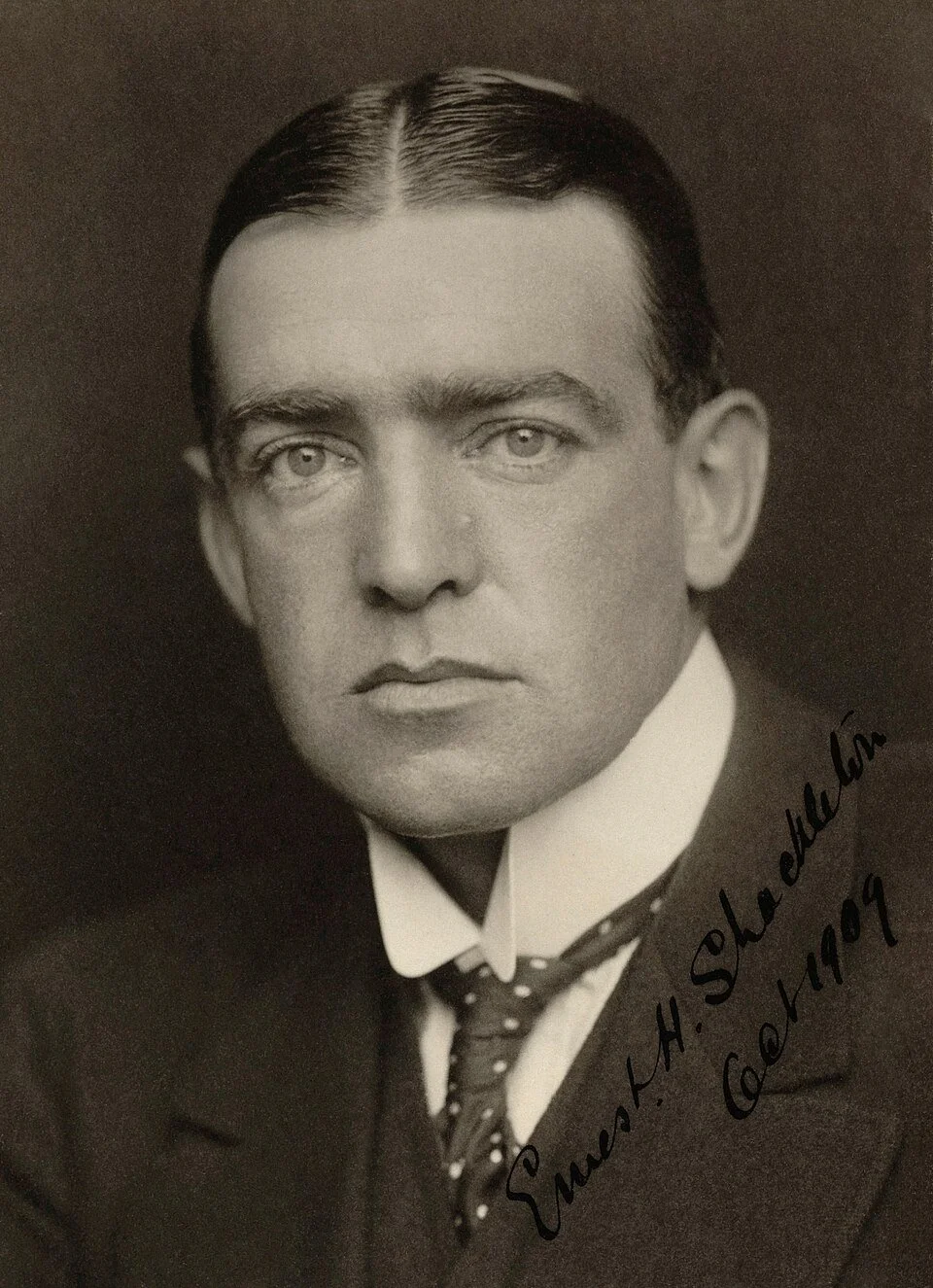
Ernest Shackleton.

Shackleton's first encounter with the frozen continent came as a member of Captain Robert Falcon Scott's Discovery expedition (1901–1904). The journey awakened in him an enduring fascination with Antarctica and a drive to reach further than anyone before. However, illness forced Shackleton's early return home, an experience that left him determined to lead his own expedition. In 1907, he fulfilled that ambition with the Nimrod Expedition. Pushing further south than any man before him, Shackleton and his small team came within just 97 miles of the South Pole before turning back, a decision that demonstrated both his courage and his prudence. His choice to prioritize his men's lives over fame would become a hallmark of his leadership philosophy.

The most extraordinary test of Shackleton's resolve came with the Imperial Trans-Antarctic Expedition of 1914–1917, an ambitious plan to cross the Antarctic continent from sea to sea via the South Pole. His ship, Endurance, left England just as the First World War began, and by January 1915 it had become trapped in the Weddell Sea's thick pack ice. For months, the crew watched helplessly as the pressure of the shifting ice slowly crushed their ship, until Endurance finally sank in November 1915. Stranded on drifting ice floes hundreds of miles from land, Shackleton and his 27 men faced the ultimate test of survival. In conditions of unimaginable cold and constant hunger, they camped on the ice for months, enduring blizzards, dwindling supplies, and the continual threat of the ice breaking beneath them.

When the ice finally disintegrated, Shackleton ordered his men into three open lifeboats, which they navigated through frigid, storm-tossed seas to the desolate Elephant Island. For the first time in over a year, they stood on solid ground—but rescue was still nearly impossible. Realizing that help would not come to them, Shackleton made one of the most daring decisions in the history of exploration. With five companions, he set out across 800 miles of the most dangerous ocean on Earth in a 22-foot lifeboat, the James Caird, bound for South Georgia Island. After 16 harrowing days battling hurricane winds, freezing spray, and monstrous waves, they reached the island's uninhabited southern coast. Shackleton and two others then undertook an unprecedented 36-hour trek across glaciers and mountains to reach a whaling station on the northern shore. From there, Shackleton organized rescue missions, and after several failed attempts, he finally succeeded in bringing every one of his men home alive. Not a single life was lost—a testament to his exceptional leadership, courage, and unyielding will.

The Endurance expedition did not achieve its original geographic goal, yet it became one of the greatest survival stories ever told. Shackleton's calm authority, compassion for his men, and ability to maintain morale under the bleakest conditions made him a model of leadership studied to this day. His mantra, "By endurance we conquer," perfectly encapsulated both his expedition and his character.

In his later years, Shackleton struggled to find purpose in a world that had moved on from the age of exploration. He lectured, wrote, and tried to raise funds for new ventures, but his health began to fail. In 1921, he set out once again for the Antarctic, this time leading the Shackleton–Rowett Expedition aboard the ship Quest. However, before the journey could begin in earnest, Shackleton died of a heart attack on the 5th of January, 1922, at South Georgia—ironically the very island that had marked his greatest triumph. His body was buried there at Grytviken, at the edge of the world he loved so deeply.

Ernest Shackleton's legacy endures not in the discoveries he made, but in the spirit he embodied. His Endurance expedition remains a timeless tale of survival, teamwork, and leadership in adversity. Shackleton's story speaks to the unbreakable strength of human will when confronted with the raw power of nature, and his name continues to inspire adventurers, explorers, and leaders alike more than a century after his death.

In the final measure of history, Ernest Shackleton stands not merely as an explorer of frozen frontiers, but as a navigator of the human spirit. His expeditions, though often thwarted by the merciless forces of nature, revealed the deeper triumphs of character that outshine geographical success. Shackleton's courage, empathy, and unshakeable belief in the possibility of survival transformed desperate endurance into a shared act of hope. He led not through conquest, but through compassion, reminding the world that true greatness lies not in discovery alone, but in the preservation of life and the perseverance of purpose. His achievements demonstrated that leadership in its purest form is not about domination or fame, but about service, loyalty, and the ability to inspire others when all seems lost.

The ordeal of the Endurance was more than a tale of polar hardship, it was a study in human resilience and moral strength. Shackleton's steadfast optimism in the face of catastrophe kept despair at bay and gave his men something far more valuable than comfort: belief. His decisions, often made in the most perilous circumstances, consistently placed the welfare of his crew above personal ambition. This selflessness, rare among leaders of his era, turned what could have been a tragedy into one of the most celebrated rescues in the annals of exploration. In his insistence that every man would live, Shackleton embodied the ideal that leadership means responsibility for others, not authority over them.

Even after his death on the shores of South Georgia, Shackleton's influence did not fade. His story has become a moral compass for explorers, adventurers, and leaders in every field, those who face the metaphorical ice and darkness of their own challenges. The principles he lived by, courage under pressure, unwavering resolve, and care for one's companions remain timeless lessons in endurance, applicable not only to the extremes of Antarctica but to all human endeavor. Modern leadership studies, military academies, and business institutions still turn to Shackleton's example as a model for crisis management and team unity. His methods of fostering morale, maintaining purpose, and balancing discipline with empathy have proven as effective in boardrooms and classrooms as they once were on the drifting floes of the Weddell Sea.

In this way, Shackleton transcended his age and the icebound world that defined it. While many explorers sought glory through conquest or discovery, Shackleton's fame rests upon something more enduring: his humanity. He understood that exploration was not only about charting the unknown, but also about confronting one's own limitations and drawing from within the strength to persevere. His legacy, therefore, is not frozen in the past but alive in every act of determination, every instance where the human spirit refuses to yield to despair.

Ernest Shackleton's life is a reminder that greatness can emerge not from reaching a destination, but from the journey itself, the endurance, the compassion, and the unbroken will to carry others safely through the storm. As long as there are frontiers to face, whether of ice, space, or spirit, Shackleton's example will continue to guide and inspire. His name endures, not as a relic of the Heroic Age of Antarctic Exploration, but as a timeless symbol of leadership, humanity, and the unconquerable power of hope.


Did you find that piece interesting? If so, join us for free by clicking here.

In the last of our top posts of the year, here we remind you of the story of Ernest Shackleton’s fascinating expedition to Antarctica on the Endurance and his very lucky escape.


The Imperial Trans-Antarctic Expedition, sometimes called the Endurance Expedition, under Sir Ernest Shackleton was finally under way. After many days of careful planning the first steps toward the great feat of crossing the continent of Antarctica were being made. Just days after World War I broke out, Endurance set sail from England on August 8, 1914. After Shackleton joined the ship in Buenos Aires, Endurance was put on a course for the Antarctic. But by November she was lingering at a South Georgia whaling station. The ice conditions that year were somewhat hazardous and the locals recommended that Shackleton wait for conditions to improve. And so Endurance remained for a month. On December 5 she departed for Weddell Sea. Despite the wait, the ice remained obstinate; much was encountered and at times there was no other alternative but to plow through the large floes. Throughout January Endurance struggled onwards - at times stuck in the ice and awaiting an opening in the floe… She was not always successful and soon she was icebound. 

Photograph of the ship Endurance in Antarctica taken during the British Imperial Trans-Antarctic Expedition, 1914-1917. Source: State Library of New South Wales.

Photograph of the ship Endurance in Antarctica taken during the British Imperial Trans-Antarctic Expedition, 1914-1917. Source: State Library of New South Wales.

Efforts to cut away the ice which held Endurance captive proved fruitless. And so the expedition members settled into routine, shipboard life. Morale generally ran high. The living quarters were renovated to form a number of tiny cubicles which served as rooms; they were dubbed “The Ritz”. Morale had to be kept up and Shackleton made every effort to ensure that it was. Frank Worsley, captain of Endurance, wrote, “Our free time we spent playing hockey and football on the ice.” In addition to that there were other activities, among them caring for the 60-odd sled dogs Endurance carried. A little village was built on the ice for them where they were housed in dogloos.

But for all the good spirits Endurance was in danger. All around her pressure plates were pressing together causing ice to be pushed up until they reached large heights. If Endurance was ever caught in a severe case she could easily be damaged to the point of being irreparable. In one case, the dogs narrowly missed a breakup in which their dogloos were destroyed. In the days leading up to October 24, the pressure damaged the rudder, the ship’s beam buckled and other damage was sustained. At one point, Endurance took on a list of 30° as the ice pushed her on her side. Thankfully it was corrected. But October 24, 1915 was to prove a fateful day. As ice pushed from three different directions converging at one point, which happened to be where Endurance sat, the ship shuddered as she was twisted. And then she began to take on water. If they wanted to save Endurance, the crew would have to move fast. The water was pumped out, but try as they might, saving Endurance was a lost cause. An evacuation that took place three days later was well managed though. The dogs and other supplies were taken off as well as three lifeboats which would later be used to sail for land. In temperatures that plunged below zero (-18°C) and where 29°F (-2°C) was a heat wave, the group disembarked. For those who had called the little ship home for so many months, it was a sorry thing to see her go.

Once off the ship, Shackleton decided they would try to make for land 300 miles away. It was a task easier said than done. “We all discarded everything save the barest necessities,” Worsley wrote. Three of the puppies who had been born on the voyage, the carpenter’s cat and one dog had to be destroyed before setting out on the journey. It was a sad task no one relished. Slogging across the ice and snow proved too much and to walk 300 miles to land was virtually impossible. A few days after leaving Endurance Shackleton decided to make camp. In all that time they had made little progress and the broken Endurance could still be seen in the short distance - she would eventually sink on November 21.

Frank Hurley and Ernest Shackleton at camp. This photograph was published in the United States in Ernest Shackleton's book, South, in 1919.

Frank Hurley and Ernest Shackleton at camp. This photograph was published in the United States in Ernest Shackleton's book, South, in 1919.

By late December the party was on the move again. Shackleton decided they would march as the floe they now camped on, was carrying them farther away from a potential landing spot. Just like before, the march made little progress.

1915 turned into 1916. It seemed it would be an eternity before the floes finally broke up. And with food supplies shrinking the last of the dogs were also destroyed. Morale plunged. While Shackleton tried to maintain an optimistic outlook those under him were beginning to grow more concerned about their situation. When land was finally sighted on March 23, the castaway could not set sail because the ice still had them pinned in. But the floes were growing thinner; so much, in fact, that one of the members grew seasick from the motion.

On April 9, the three boats were launched. At last they were making for land. Providing all went well. The first night they camped out on a small floe only to have two sleeping men dumped into the water where the ice had cracked under them. Shackleton was able to pull one man out while the other climbed back onto the ice. The days dragged on. Seasickness, dysentery, exhaustion and saltwater boils were all part of the package. Some of the men had gone slightly mad after living under the constant strain and horrible conditions. When they finally landed on Elephant Island on April 15 it was beyond a doubt a welcome pleasure. Since their month-long stay in South Georgia, not one of them had set foot on land. But life on Elephant Island wasn’t a picnic either. The weather was particularly harsh and there were other contributing factors that made life on the ice floe seem much more comfortable.

Just days after landing, Shackleton was on the move again. One of the lifeboats, James Caird, was made more seaworthy and loaded with supplies in anticipation of a voyage to South Georgia where help could be reached. With five other men Shackleton set sail on April 24. Frank Wild, his second in command, was left behind to oversee the rest of the party. If they failed to reach South Georgia, Wild was to take the two lifeboats and leave for the whaling grounds of Deception Island in the spring. For those left behind, Wild attempted to keep everyone on their toes while establishing a routine. It would be a difficult time on the island. Food sources in the form of seal and penguin could not always be relied on and much had to be set back should a spring voyage prove necessary. It was going to be a challenge.

On James Caird it was, as to be expected, tough and miserable going. The six men each “stood” their own watch as the little boat sallied forth on her nonstop journey. With water constantly washing over Caird the boat grew heavily laden with ice which had to be chipped away. On another occasion a tidal wave - which Worsley theorized had been created by a capsizing iceberg - nearly sunk Caird. It was an exhausted party that landed on an uninhabited part of South Georgia on May 10. That was a remarkable feat in itself.

In Sight of Our Goal - Nearing South Georgia. This artwork was published in the United States in Ernest Shackleton's book, South, in 1919.

In Sight of Our Goal - Nearing South Georgia. This artwork was published in the United States in Ernest Shackleton's book, South, in 1919.

Just nine days later, Shackleton, Worsley and Thomas Crean were off on an overland trek for Stromness, where they arrived on May 20. Worsley wrote “I learnt afterwards that we had crossed the island during the only interval of fine weather that occurred that winterProvidence had been with us.” The trio was taken to Thoralf Sørlle, whom they had met with in 1914. Now as Shackleton stood before him, Sørlle had no idea who he was. When Shackleton introduced himself it came as quite a shock!

Plans were soon underway to rescue those left on Elephant Island. But in the meantime a ship was sent back to pick up the other three men who waited on the other side of South Georgia. Worsley was aboard when they fetched the men and when he landed the men grumbled about how none of their own had come back for them and had left it to the Norwegians. “Well, I’m here, am I not?” Worsley said. They hadn’t recognized him since he had cleaned up.

The rescue of the men on Elephant Island was to prove very problematic. Vessel after vessel was forced to turn back as the ice prevented them from landing near the island. The disappointments wore heavily on Shackleton. To Worsley, the ordeal seemed to have aged the revered leader a great deal. To Chile went the credit for success, however. They sent a tug and on August 25 Shackleton, with Worsely and Crean, were finally steaming for Elephant Island.

On August 30, the men on the island were going about their everyday routine when a vessel was sighted. They hoisted a jacket as a makeshift flag and the vessel responded with a Chilean ensign. Shackleton and Crean came ashore as their excited comrades greeted them. It was a happy reunion to say the least. Not one soul had been lost from the original Endurance party that had set sail in August 1914. They had failed the expedition true, but they had made an enormous journey that would not be soon forgotten.


By J.G. Burdette, the owner of the fascinating blog http://jgburdette.wordpress.com/


For more great articles like this as well as a free book and exclusive podcasts, join us. Just click here!


References

Alexander, Caroline. The Endurance: Shackleton’s Legendary Antarctic Expedition.

Worsley, F. A. Endurance: An Epic Polar Adventure.

Lansing, Alfred. Endurance: Shackleton’s Incredible Voyage.

The Imperial Trans-Antarctic Expedition, sometimes called the Endurance Expedition, under Sir Ernest Shackleton was finally under way. After many days of careful planning the first steps toward the great feat of crossing the continent of Antarctica were being made. Just days after World War I broke out, Endurance set sail from England on August 8, 1914. After Shackleton joined the ship in Buenos Aires, Endurance was put on a course for the Antarctic. But by November she was lingering at a South Georgia whaling station. The ice conditions that year were somewhat hazardous and the locals recommended that Shackleton wait for conditions to improve. And so Endurance remained for a month. On December 5 she departed for Weddell Sea. Despite the wait, the ice remained obstinate; much was encountered and at times there was no other alternative but to plow through the large floes. Throughout January Endurance struggled onwards - at times stuck in the ice and awaiting an opening in the floe… She was not always successful and soon she was icebound.

Photograph of the ship Endurance in Antarctica taken during the British Imperial Trans-Antarctic Expedition, 1914-1917. Source: State Library of New South Wales.

Photograph of the ship Endurance in Antarctica taken during the British Imperial Trans-Antarctic Expedition, 1914-1917. Source: State Library of New South Wales.

Efforts to cut away the ice which held Endurance captive proved fruitless. And so the expedition members settled into routine, shipboard life. Morale generally ran high. The living quarters were renovated to form a number of tiny cubicles which served as rooms; they were dubbed “The Ritz”. Morale had to be kept up and Shackleton made every effort to ensure that it was. Frank Worsley, captain of Endurance, wrote, “Our free time we spent playing hockey and football on the ice.” In addition to that there were other activities, among them caring for the 60-odd sled dogs Endurance carried. A little village was built on the ice for them where they were housed in dogloos.

But for all the good spirits Endurance was in danger. All around her pressure plates were pressing together causing ice to be pushed up until they reached large heights. If Endurance was ever caught in a severe case she could easily be damaged to the point of being irreparable. In one case, the dogs narrowly missed a breakup in which their dogloos were destroyed. In the days leading up to October 24, the pressure damaged the rudder, the ship’s beam buckled and other damage was sustained. At one point, Endurance took on a list of 30° as the ice pushed her on her side. Thankfully it was corrected. But October 24, 1915 was to prove a fateful day. As ice pushed from three different directions converging at one point, which happened to be where Endurance sat, the ship shuddered as she was twisted. And then she began to take on water. If they wanted to save Endurance, the crew would have to move fast. The water was pumped out, but try as they might, saving Endurance was a lost cause. An evacuation that took place three days later was well managed though. The dogs and other supplies were taken off as well as three lifeboats which would later be used to sail for land. In temperatures that plunged below zero (-18°C) and where 29°F (-2°C) was a heat wave, the group disembarked. For those who had called the little ship home for so many months, it was a sorry thing to see her go.

Once off the ship, Shackleton decided they would try to make for land 300 miles away. It was a task easier said than done. “We all discarded everything save the barest necessities,” Worsley wrote. Three of the puppies who had been born on the voyage, the carpenter’s cat and one dog had to be destroyed before setting out on the journey. It was a sad task no one relished. Slogging across the ice and snow proved too much and to walk 300 miles to land was virtually impossible. A few days after leaving Endurance Shackleton decided to make camp. In all that time they had made little progress and the broken Endurance could still be seen in the short distance - she would eventually sink on November 21.

Frank Hurley and Ernest Shackleton at camp. This photograph was published in the United States in Ernest Shackleton's book, South, in 1919.

Frank Hurley and Ernest Shackleton at camp. This photograph was published in the United States in Ernest Shackleton's book, South, in 1919.

By late December the party was on the move again. Shackleton decided they would march as the floe they now camped on, was carrying them farther away from a potential landing spot. Just like before, the march made little progress.

1915 turned into 1916. It seemed it would be an eternity before the floes finally broke up. And with food supplies shrinking the last of the dogs were also destroyed. Morale plunged. While Shackleton tried to maintain an optimistic outlook those under him were beginning to grow more concerned about their situation. When land was finally sighted on March 23, the castaway could not set sail because the ice still had them pinned in. But the floes were growing thinner; so much, in fact, that one of the members grew seasick from the motion.

On April 9, the three boats were launched. At last they were making for land. Providing all went well. The first night they camped out on a small floe only to have two sleeping men dumped into the water where the ice had cracked under them. Shackleton was able to pull one man out while the other climbed back onto the ice. The days dragged on. Seasickness, dysentery, exhaustion and saltwater boils were all part of the package. Some of the men had gone slightly mad after living under the constant strain and horrible conditions. When they finally landed on Elephant Island on April 15 it was beyond a doubt a welcome pleasure. Since their month-long stay in South Georgia, not one of them had set foot on land. But life on Elephant Island wasn’t a picnic either. The weather was particularly harsh and there were other contributing factors that made life on the ice floe seem much more comfortable.

Just days after landing, Shackleton was on the move again. One of the lifeboats, James Caird, was made more seaworthy and loaded with supplies in anticipation of a voyage to South Georgia where help could be reached. With five other men Shackleton set sail on April 24. Frank Wild, his second in command, was left behind to oversee the rest of the party. If they failed to reach South Georgia, Wild was to take the two lifeboats and leave for the whaling grounds of Deception Island in the spring. For those left behind, Wild attempted to keep everyone on their toes while establishing a routine. It would be a difficult time on the island. Food sources in the form of seal and penguin could not always be relied on and much had to be set back should a spring voyage prove necessary. It was going to be a challenge.

On James Caird it was, as to be expected, tough and miserable going. The six men each “stood” their own watch as the little boat sallied forth on her nonstop journey. With water constantly washing over Caird the boat grew heavily laden with ice which had to be chipped away. On another occasion a tidal wave - which Worsley theorized had been created by a capsizing iceberg - nearly sunk Caird. It was an exhausted party that landed on an uninhabited part of South Georgia on May 10. That was a remarkable feat in itself. 

In Sight of Our Goal - Nearing South Georgia. This artwork was published in the United States in Ernest Shackleton's book, South, in 1919.

In Sight of Our Goal - Nearing South Georgia. This artwork was published in the United States in Ernest Shackleton's book, South, in 1919.

Just nine days later, Shackleton, Worsley and Thomas Crean were off on an overland trek for Stromness, where they arrived on May 20. Worsley wrote “I learnt afterwards that we had crossed the island during the only interval of fine weather that occurred that winterProvidence had been with us.” The trio was taken to Thoralf Sørlle, whom they had met with in 1914. Now as Shackleton stood before him, Sørlle had no idea who he was. When Shackleton introduced himself it came as quite a shock!

Plans were soon underway to rescue those left on Elephant Island. But in the meantime a ship was sent back to pick up the other three men who waited on the other side of South Georgia. Worsley was aboard when they fetched the men and when he landed the men grumbled about how none of their own had come back for them and had left it to the Norwegians. “Well, I’m here, am I not?” Worsley said. They hadn’t recognized him since he had cleaned up.

The rescue of the men on Elephant Island was to prove very problematic. Vessel after vessel was forced to turn back as the ice prevented them from landing near the island. The disappointments wore heavily on Shackleton. To Worsley, the ordeal seemed to have aged the revered leader a great deal. To Chile went the credit for success, however. They sent a tug and on August 25 Shackleton, with Worsely and Crean, were finally steaming for Elephant Island.

On August 30, the men on the island were going about their everyday routine when a vessel was sighted. They hoisted A jacket as a makeshift flag and the vessel responded with a Chilean ensign. Shackleton and Crean came ashore as their excited comrades greeted them. It was a happy reunion to say the least. Not one soul had been lost from the original Endurance party that had set sail in August 1914. They had failed the expedition true, but they had made an enormous journey that would not be soon forgotten.


By J.G. Burdette

J.G. Burdette is the owner of the fascinating blog http://jgburdette.wordpress.com/


For more great articles like this as well as a great bonus, join usJust click here!


References

Alexander, Caroline. The Endurance: Shackleton’s Legendary Antarctic Expedition

Worsley, F. A. Endurance: An Epic Polar Adventure

Lansing, Alfred. Endurance: Shackleton’s Incredible Voyage