
By the seventh inning of a baseball game, the ritual is as dependable as a close play at first base. Fans rise, stretch their legs, and sing words that have echoed through grandstands for more than a century: “Take me out to the ball game / Take me out with the crowd…”
It is one of the most recognizable songs in American life, a tune so embedded in the national pastime that it can feel as old as baseball itself. Yet the man who wrote the lyrics, Jack Norworth, remains a fascinating footnote in both sports and entertainment history—a vaudeville performer, prolific songwriter, serial romantic, and a figure forever attached to one of popular culture’s great ironies: the longstanding claim that he wrote baseball’s anthem despite never having attended a game.
Like many good American legends, the truth is a little murkier—and more interesting.
Brian D’Ambrosio explains.
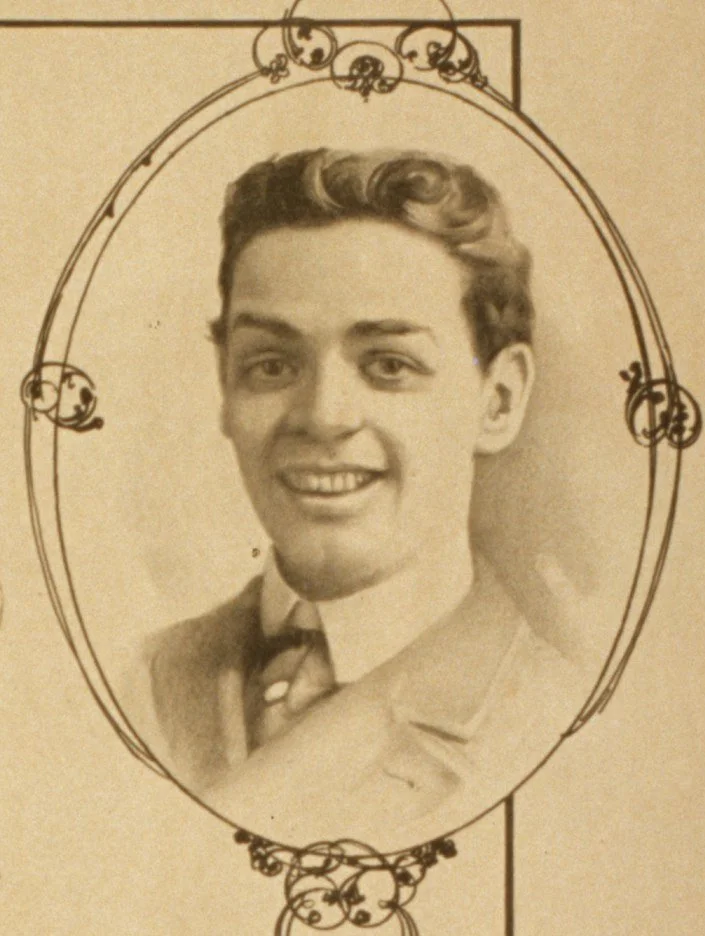
Jack Norworth. Source: Public domain, US Library of Congress, available here.
Jack Norworth was born John Godfrey Knauff on January 5, 1879, in Philadelphia. His family had ties to the theater world, and he gravitated toward performance early in life. As a teenager, he joined vaudeville, the rough-and-tumble entertainment circuit that dominated American popular culture before radio and film transformed the industry.
Vaudeville performers had to do a little of everything—sing, dance, act, improvise, and survive endless travel schedules. Norworth proved adaptable. He became both a performer and lyricist, eventually changing his name because “Jack Norworth” sounded more theatrical and marketable than John Knauff.
By the early 1900s, he was working in New York during the heyday of Tin Pan Alley, the bustling district where songwriters churned out hits for sheet music publishers. This was an era when hit songs traveled not through streaming services or radio playlists, but through family pianos and sheet music sales. A catchy tune could sweep the country.
In 1908, inspiration struck in famously ordinary fashion. According to the most widely repeated story, Norworth was riding a subway train in Manhattan when he noticed a sign advertising a baseball game at the Polo Grounds between the New York Giants and Chicago Cubs. He grabbed an envelope and quickly scribbled lyrics.
The opening chorus became instantly immortal:
Take me out to the ball game/Take me out with the crowd/Buy me some peanuts and Cracker Jack/I don’t care if I never get back.
The song’s lesser-known verses are equally charming—and far less remembered by modern fans. They center on Katie Casey, a young fan thoroughly obsessed with baseball:
Katie Casey was baseball mad/ Had the fever and had it bad.
When her suitor invites her to a show, Katie rejects the idea entirely. She wants baseball.
It was a clever twist for 1908: Katie Casey is portrayed as the true fanatic in the relationship. She understands where she wants to be and what matters.
She also delivers what may be baseball’s most enduring command:
Root, root, root for the home team/If they don’t win it’s a shame.
That line perfectly captures baseball loyalty. Your team may disappoint you repeatedly, but allegiance remains.
Norworth brought in composer Albert Von Tilzer to write the music. Ironically, Von Tilzer reportedly knew little about baseball himself. Together, the pair created a song that neither could have imagined would become permanently stitched into American sporting culture.
The famous claim that Norworth had never attended a baseball game when he wrote the song remains difficult to fully verify. He often admitted he was not a devoted baseball follower at the time, which helped fuel the legend. Later in life, however, he attended games regularly and embraced his connection to the sport.
The song became an immediate success in sheet music form in 1908, but its transformation into a baseball ritual took decades. For many years, it remained simply a popular song among many others.
Its biggest revival came through broadcaster Harry Caray, who famously led fans in singing it during the seventh-inning stretch while calling games for the Chicago White Sox and later the Chicago Cubs. Caray’s exuberant performances helped turn the tune into a permanent stadium tradition nationwide.
Today, the song is inseparable from baseball itself. It echoes through historic venues and modern ballparks alike, sung by generations of fans who may know only the chorus while remaining unaware of Katie Casey altogether.
Norworth’s life extended well beyond one song. He wrote dozens of compositions during his career and remained active in entertainment for decades. He was married several times, most notably to vaudeville star Nora Bayes, one of the era’s most prominent performers. Their marriage was often turbulent and frequently made headlines.
His life reflected the instability and glamour of early show business—equal parts ambition, reinvention, and spectacle.
Norworth died on September 1, 1959, in Laguna Beach, California, at age 80. By then, his place in American cultural history was secure.
What makes “Take Me Out to the Ball Game” endure is not simply its familiarity. The song captures baseball’s atmosphere as much as the game itself: noisy crowds, snack vendors, hope, heartbreak, and the communal optimism that arrives every season.
Baseball has changed dramatically since 1908. Ballparks are larger. Salaries are astronomical. Analytics shape strategy. Rules evolve.
Yet during the seventh inning, everything briefly slows. Fans stand. Voices rise.
And a songwriter who may not have fully understood baseball gave America one of its most lasting traditions.
That may be the most fitting baseball story of all.
You can read about the role of baseball in the US Civil War here.
Brian D'Ambrosio is the author of Montana Eccentrics, New Mexico Eccentrics, and Italian-Americana: Explorers, Entertainers, and Eccentrics. Available here: Amazon US | Amazon UK
He is currently working on a volume of American Eccentrics: Mavericks, Misfits, and Visionaries.
Sources:
Library of Congress: https://guides.loc.gov/baseball-music/take-me-out-to-the-ball-game
Songwriters Hall of Fame: https://www.songhall.org/profiles/jack-norworth
Various Obituaries, Newspapers.com
Baseball Hall of Fame: https://baseballhall.org/discover/baseballs-anthem-began-as-tin-pan-alley-hit

.jpg)