
The Kellogg Brothers founded a powerful and impactful cereal company in 1906. They were also innovators in the health and wellness fields and were members of organizations that were ahead of their time - and fought against what was then considered a healthy lifestyle. The Kellogg Brothers left a lasting positive legacy on the health and wellness industry.
Daniel Boustead explains.
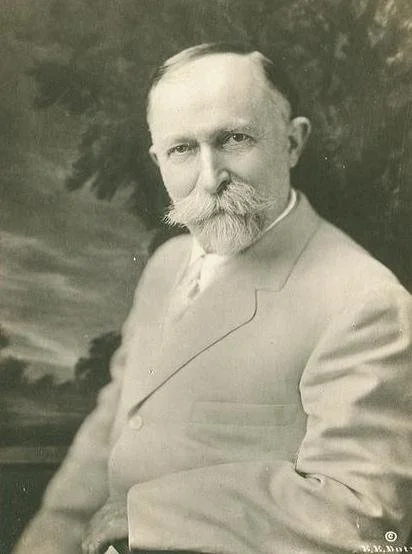
John Harvey Kellogg.
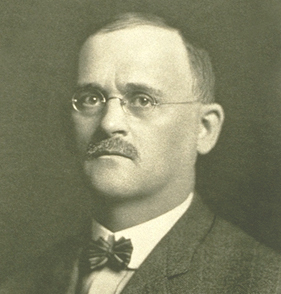
William Keith Kellogg.
The Kellogg brothers’ longest-lasting contribution to the Health industry is their product, Kellogg’s Cornflakes. Dr. John Harvey Kellogg’s (1852-1943) trek towards Kellogg’s Cornflakes began as a search for a breakfast substitute to help treat his patients at the Battle Creek Sanitarium who were suffering from stomach problems.[1] This was a consistent complaint of his patients. A disabled gastrointestinal system caused the patient’s stomach problems. Dr. Kellogg discovered that the half-baked breakfast mush he had previously been serving patients was causing dyspepsia. He also felt that the replacement should also be “pre-cooked”. The creation of Kellogg’s Corn Flakes involves conflicting accounts, in which, in the end, Dr. Kellogg, his wife, Ella, and Dr. Kellogg’s brother, Will (1860-1951), should receive some credit for its creation.[2]
Dr. John Harvey Kellogg applied to the U.S. Patent Office for his patent on “Flaked Cereal and Process for Preparing the Same”(No.558,399) on May 31st, 1895.[3] The U.S. Patent Office granted Dr. Kellogg this patent on April 14th, 1896. In the patent itself, Dr. Kellogg included flakes made of oats, corn, barley, and other grains in addition to wheat flakes to protect his patent.
In the summer of 1895, Will and Dr. Kellogg introduced the Corn Flakes at the General Conference of the Seventh-Day Adventists at the Battle Creek Sanitarium.[4] The dish became a hit with conference attendees, who would add milk, cream, or yogurt to it.
Company formed
In 1906, Will Kellogg founded the Battle Creek Toasted Corn Flake Company.[5] In 1907, he changed the company’s name to the Kellogg Toasted Corn Flake Company.[6] In the late summer to early fall of 1907, Kellogg’s Cornflakes made its official debut to the American public.[7] It was under Will Kellogg’s leadership that, during the Great Depression in 1933, the Kellogg company made a gross profit of $6 million (about $110 million in today’s money).[8] This was at a time when many companies were going bankrupt or struggling to maintain a profit. In 1939, Will Kellogg retired as the company's head.
Dr. Kellogg was also a trailblazer in other ways in the field of health and wellness. The Battle Creek Sanitarium began in 1866 as the Health Reform Institute.[9] “Sister” White presented her ideas about Christian biblical healthy living at the Seventh-day Adventist General Conference on May 20th, 1866. The General Conference approved the creation of an institute for health reform.[10] It was the governing body of the Seventh-day Adventist Church. The organization opened its doors for business as The Western Health Reform Institution on September 5th, 1867.[11] On October 1st, 1876, Dr. Kellogg became the medical director of the Western Health Reform Institute.[12] The Western Health Reform Institute became the Battle Creek Sanatorium on September 15th, 1910.[13] On the same date, Dr. Kellogg told this audience how the new institution should be called Sanitarium or San, because he felt it better suited the mission. From 1876 to 1943, Dr. Kellogg was at the head of the Western Health Reform Institute, later known as the Battle Creek Sanitarium.[14] Several years before his death, Dr. Kellogg estimated that his work at the Sanitarium brought him into contact with approximately 250,000 persons.[15]
At the Battle Creek Sanitarium, if a patient were suffering from the “blues,” they would be placed under an electric light cabinet to help them get sunlight. There was not much natural sunlight in southeastern Michigan during the Fall.[16] In this field, Dr. Kellogg was years ahead of his time in terms of medical treatment for seasonal affective disorder or SAD.
In 1916, at the Battle Creek Sanitarium, patient meals were also served with a card attached that specified the proper ratio of calories, proteins, carbohydrates, and fats to be consumed at the meal.[17] An example of this document is dated from May 19th, 1916. This was unheard of in the field of dieting and nutrition at the time.
Also at the Battle Creek Sanitarium, Dr. Kellogg would lead aerobics and calisthenics with the patients, backed by a brass band.[18] This was so popular that, in 1923, the Columbia Gramophone Company released 10 78-RPM shellac discs of Dr. Kellogg’s class, complete with a booklet. The album was entitled “John Harvey Kellogg’s HEALTH LADDER”. In the booklet, there were exercises for the back, abdomen, legs, and arms that Dr. Kellogg recommended for his patients at the Battle Creek Sanitarium. This was decades ahead of the exercise craze led by Jack Lalanne, Richard Simmons, and other such international figures.
Although Dr. Kellogg never received credit for this, he encouraged his patients at the Battle Creek Sanitarium, after surgery, to get up, move, and perform graded, deep-breathing exercises. [19] This was in stark contrast to the standard procedure of the day, which was to have patients confined to hospital beds for several days to weeks at a time. In the present day, medical procedures, early ambulation, and breathing exercises are the backbone of most recovery protocols after surgery.
Patents & Pioneers
In 1934, Dr. Kellogg received a patent for his “Soy Acidophilus Milk”.[20] Dr. Kellogg devised this concoction to deal with babies who couldn’t deal with cow’s milk-based formulae, as well as his patients at the San who were suffering colitis, duodenal or gastric ulcers, babies who rejected their mom’s breast milk, constipation, and excessive flatulence. This was a step forward in addressing digestive and gastric health compared to the treatments of the day. By 1935, patients at the Battle Creek Sanitarium were consuming over 200 gallons a week of Dr.Kellogg’s “Soy Acidophilus Milk”. The Battle Creek Sanitarium’s patients’ favorite way to enjoy Dr. Kellogg’s “Soy Acidophilus Milk” was with ripe bananas and a side of soy milk. This predated the soy milk craze that you see today all over the world.
Dr. Kellogg and Will Kellogg were pioneers in the fight against tobacco and its harmful effects. Dr. Kellogg had discovered through increasing medical evidence that tobacco smoke caused heart disease, lung disease, digestive disorders, infections, and neurological problems.[21] In 1922, Dr. Kellogg published a successful book entitled Tobaccoism, or How Tobacco Kills. Along with Henry Ford’s book, The White Slaver, these books became a cornerstone of the progressive movement’s failed anti-smoking campaign. Will Kellogg considered smoking to be so dangerous that he demanded that his workers at his factory either quit or he would fire them. He thought tobacco was more dangerous than drinking alcohol.[22]
Dr. Kellogg also thought that tobacco products interfered with proper muscular and growth development, caused gastric ulcers, unduly taxed the liver and kidney systems, injured the brain and nervous systems, and also impaired judgment and moral sensibility.[23] All of Dr. Kellogg’s claims have subsequently been supported by medical science, medical doctors, and research studies, except for the moral sensibility claim.
In the aftermath of World War I, Dr. Kellogg was the president of the Michigan Anti-Cigarette Society and the Committee of Fifty to Study the Tobacco Problem.[24] Henry Ford was also a prominent member of the Committee of Fifty to Study the Tobacco Problem. Dr. Kellogg, with the help of this group, also produced the very first motion picture to address the dangers of tobacco smoking. He and his brother Will were pioneers in their opposition to tobacco products at a time when the tobacco companies were powerful and used their influence to suppress knowledge about the dangers of their products.
In the USA, the dangers of tobacco products did not reach the Federal level until January 11th, 1964, when the Surgeon General issued the 1964 Report on Smoking and Health.[25] In this report, it linked smoking to the cause of emphysema, chronic bronchitis, coronary heart disease, and increased statistical risk of lung cancer. The effects of this report were featured in television and radio reports in the USA and in foreign countries. The Kellogg Brothers knew about the dangers of smoking long before the US government did.
Conclusion
In conclusion, the Kellogg Brothers founded an important cereal company that shaped America’s idea of breakfast. They were also innovators in medical science and wellness. Dr. Kellogg and his brother Will’s opposition to tobacco products was well ahead of its time. The Kellogg Brothers' beliefs also went against the American and foreign understanding of tobacco and its adverse effects. This was a time when the tobacco Industry held a stranglehold on the public consciousness in America and elsewhere. The Kellogg Brothers’ courage in publicizing their findings left a legacy on health and wellness concepts that are still felt today.
Did you find that piece interesting? If so, join us for free by clicking here.
Works Cited Page
Markel, Howard. The Kelloggs: The Battling Brothers of Battle Creek. New York: New York. Vintage Books. 2017.
National Library of Medicine: Profiles in Science, Reports of the Surgeon General, The 1964 Report on Smoking and Health. Accessed on November 26th, 2025, https://profiles.nlm.nih.gov/spotlight/nn/feature/smoking.
Schwartz, Richard W. John Harvey Kellogg: Pioneering Health Reformer. Hagerstown: Maryland. Review and Hearld Publishing Association.2006.
Wilson, Brian C. Dr. John Harvey Kellogg: And the Religion of Biologic Living. Bloomington & Indianapolis. Indiana University Press. 2014.
[1] Markel, Howard. The Kelloggs: The Battling Brothers of Battle Creek. New York: New York. Vintage Books. 2017. 20 and 112.
[2] Markel, Howard. The Kelloggs: The Battling Brothers of Battle Creek. New York: New York. Vintage Books. 2017. 20 and 129 to 133.
[3] Markel, Howard. The Kelloggs: The Battling Brothers of Battle Creek. New York: New York. Vintage Books. 2017. 133.
[4] Markel, Howard. The Kelloggs: The Battling Brothers of Battle Creek. New York: New York. Vintage Books. 2017. 134.
[5] Markel, Howard. The Kelloggs: The Battling Brothers of Battle Creek. New York: New York. Vintage Books. 2017.XIV.
[6] Markel, Howard. The Kelloggs: The Battling Brothers of Battle Creek. New York: New York. Vintage Books. 2017.279.
[7] Markel, Howard. The Kelloggs: The Battling Brothers of Battle Creek. New York: New York. Vintage Books. 2017. 280.
[8] Markel, Howard. The Kelloggs: The Battling Brothers of Battle Creek. New York: New York. Vintage Books. 2017. 264.
[9] Schwartz, Richard W. John Harvey Kellogg: Pioneering Health Reformer. Hagerstown: Maryland. Review and Hearld Publishing Association.2006.62.
[10] Markel, Howard. The Kelloggs: The Battling Brothers of Battle Creek. New York: New York. Vintage Books. 2017. 89.
[11] Markel, Howard. The Kelloggs: The Battling Brothers of Battle Creek. New York: New York. Vintage Books. 2017. 90.
[12] Markel, Howard. The Kelloggs: The Battling Brothers of Battle Creek. New York: New York. Vintage Books. 2017. 92.
[13] Markel, Howard. The Kelloggs: The Battling Brothers of Battle Creek. New York: New York. Vintage Books. 2017. 95.
[14] Markel, Howard. The Kelloggs: The Battling Brothers of Battle Creek. New York: New York. Vintage Books. 2017. 95; Wilson, Brian C. Dr. John Harvey Kellogg: And the Religion of Biologic Living. Bloomington & Indianapolis. Indiana University Press. 2014. XI.
[15] Schwartz, Richard W. John Harvey Kellogg: Pioneering Health Reformer. Hagerstown: Maryland. Review and Hearld Publishing Association.2006.62.
[16] Markel, Howard. The Kelloggs: The Battling Brothers of Battle Creek. New York: New York. Vintage Books. 2017. 187.
[17] Markel, Howard. The Kelloggs: The Battling Brothers of Battle Creek. New York: New York. Vintage Books. 2017. 187 to 188.
[18] Markel, Howard. The Kelloggs: The Battling Brothers of Battle Creek. New York: New York. Vintage Books. 2017. 190 to 191.
[19] Markel, Howard. The Kelloggs: The Battling Brothers of Battle Creek. New York: New York. Vintage Books. 2017. 195 and 200.
[20] Markel, Howard. The Kelloggs: The Battling Brothers of Battle Creek. New York: New York. Vintage Books. 2017. 330 to 331.
[21] Markel, Howard. The Kelloggs: The Battling Brothers of Battle Creek. New York: New York. Vintage Books. 2017. 224.
[22] Markel, Howard. The Kelloggs: The Battling Brothers of Battle Creek. New York: New York. Vintage Books. 2017. 224 to 225.
[23] Schwartz, Richard W. John Harvey Kellogg: Pioneering Health Reformer. Hagerstown: Maryland. Review and Hearld Publishing Association.2006. 59.
[24] Schwartz, Richard W. John Harvey Kellogg: Pioneering Health Reformer. Hagerstown: Maryland. Review and Hearld Publishing Association.2006. 107.
[25] National Library of Medicine: Profiles in Science, Reports of the Surgeon General, The 1964 Report on Smoking and Health. Accessed on November 26th, 2025, https://profiles.nlm.nih.gov/spotlight/nn/feature/smoking.