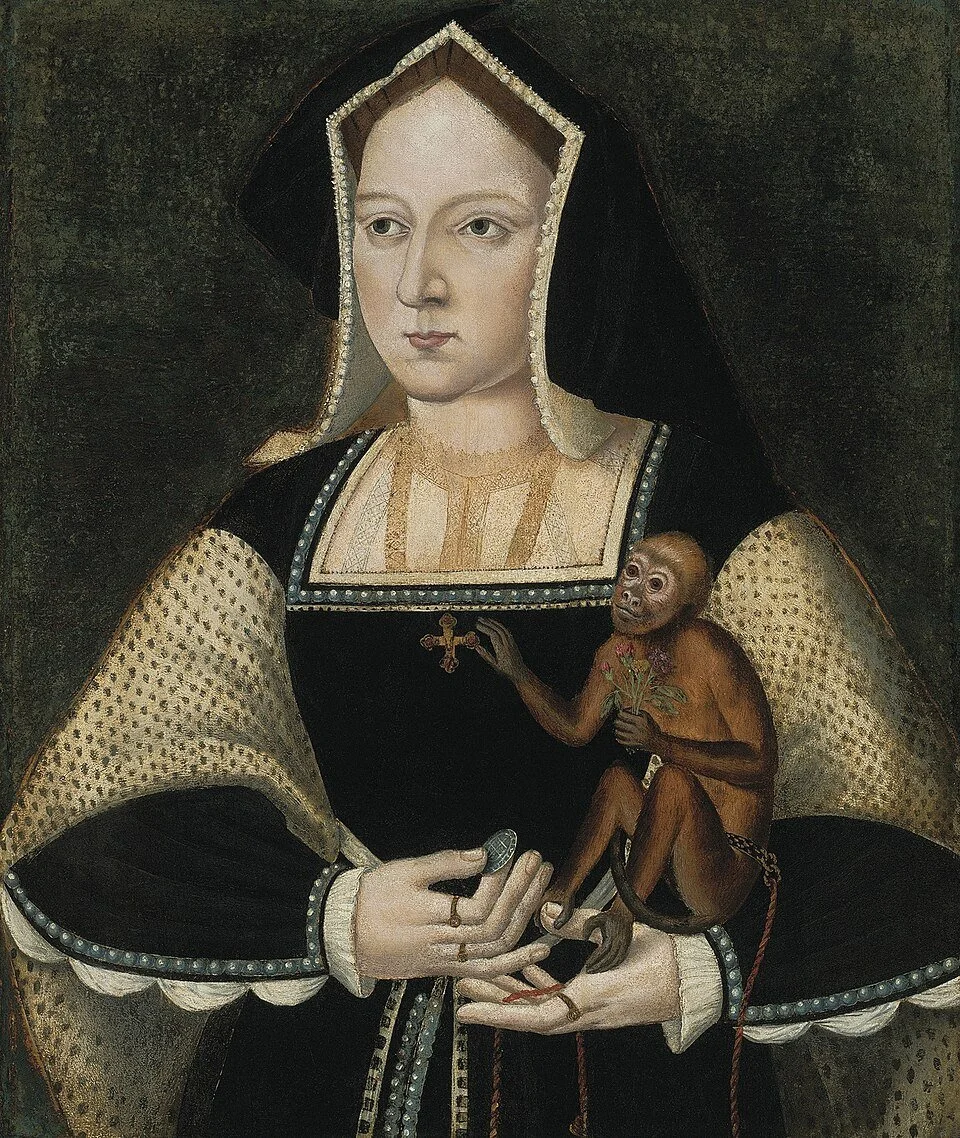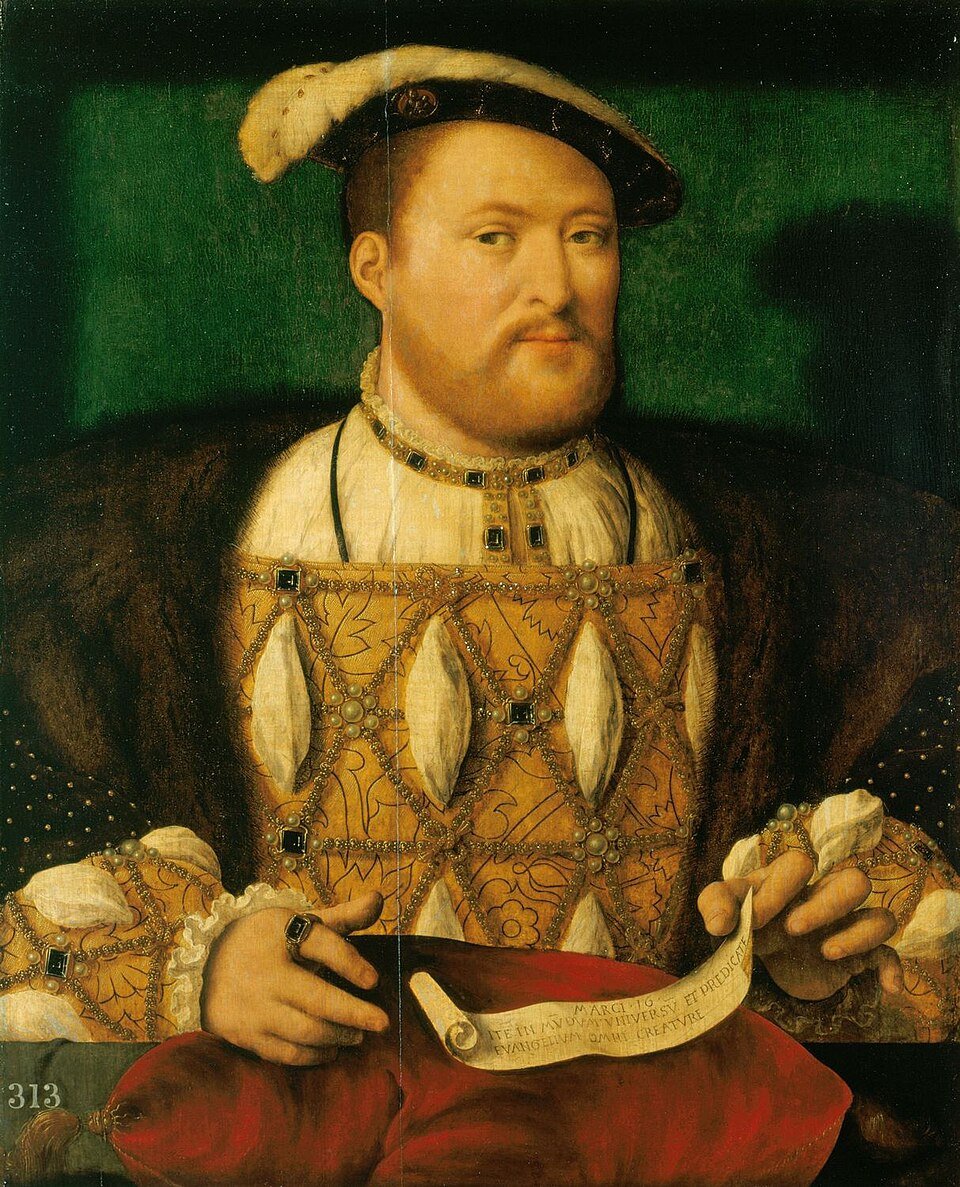
By the time Catherine Parr became the sixth wife of Henry VIII in July 1543, England had endured more than three decades of political upheaval, religious revolution, and dynastic uncertainty. The women who had preceded her had experienced exile, disgrace, execution, and death in childbirth. Catherine entered a royal court haunted by the memories of Catherine of Aragon, Anne Boleyn, Jane Seymour, Anne of Cleves, and Catherine Howard. Unlike any of them, however, she would survive the king. Her story is not merely one of personal endurance but of intellectual achievement, religious influence, and political skill. As the final chapter in Henry VIII's tumultuous marital history, Catherine Parr's life provides a fitting conclusion to a saga that transformed England forever.

Terry Bailey explains.

Read part 1 on King Henry VIII here, part 2 on Catherine of Aragon here, part 3 on Anne Boleyn here, part 4 on Jane Seymour here, part 5 on Anne of Cleves here, and part 6 on Catherine Howard here.

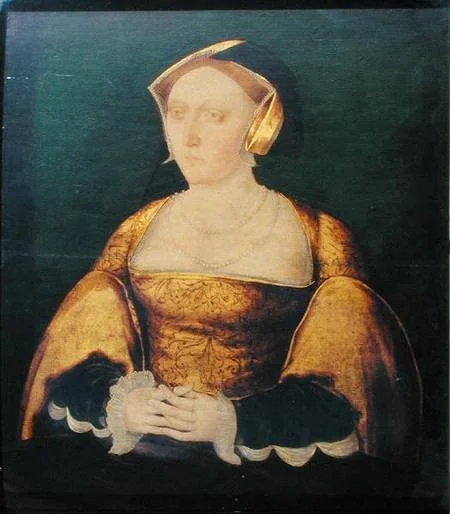
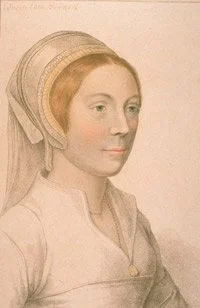
Catherine Parr, attributed to Master John. Source: Public domain, available here.

Catherine Parr was born around 1512 into a respected northern gentry family closely connected to the royal court. Unlike many noblewomen of her age, she received an unusually broad education. She became proficient in several languages, including French and Latin, and developed a lifelong passion for learning. Humanist ideas, which had spread throughout Europe during the Renaissance, influenced her thinking and fostered an interest in theology, literature, and religious reform. Her education distinguished her from most Tudor women and would later make her one of the most intellectually accomplished queens England had ever known.

Before becoming queen, Catherine had already experienced much of life's complexity. She was married first to Sir Edward Burgh, who died after only a few years of marriage. Her second husband, John Neville, Lord Latimer, was considerably older and placed her in the midst of the political and religious tensions that marked northern England. During the Pilgrimage of Grace, the great Catholic uprising against Henry VIII's religious policies, rebels held Catherine and her stepchildren hostage while Lord Latimer was absent. The experience exposed her to the dangers of political instability and strengthened her understanding of the consequences of religious conflict. Following Latimer's death in 1543, Catherine attracted several suitors, including the ambitious Thomas Seymour. Yet circumstances—and the king's interest—would alter her future dramatically.

When Henry VIII proposed marriage, Catherine understood both the honor and the risks involved. The king was no longer the athletic and charismatic prince who had captivated Europe in his youth. He was aging, obese, frequently in pain from chronic leg ulcers, and increasingly suspicious of those around him. Yet Catherine accepted the proposal, likely recognizing both her duty and the opportunity to influence the kingdom's future. Their marriage took place at Hampton Court Palace on the 12th of July, 1543.

As queen, Catherine demonstrated remarkable political skill. She understood that survival required caution, diplomacy, and an ability to navigate competing factions at court. Unlike Anne Boleyn, whose rise had been closely linked to religious reform, Catherine pursued her beliefs with greater subtlety. She worked to reconcile divisions within the royal family, helping restore positive relationships between Henry and his daughters Mary and Elizabeth. Through her influence, both princesses were returned to the line of succession, a decision that would have profound consequences for English history.

Catherine's greatest political achievement came in 1544 when Henry departed for France on a military campaign. During his absence, he appointed her regent of England, entrusting her with significant governmental authority. The appointment reflected an extraordinary degree of confidence. As regent, Catherine oversaw the administration of the kingdom, signed official proclamations, managed finances, and coordinated preparations against a potential Scottish invasion. Her performance demonstrated that a woman could successfully exercise political authority at the highest level of government, even within a society that largely excluded women from formal power.

Her regency highlighted one of the central themes running throughout the story of Henry's six wives: the relationship between power and gender in Tudor England. Again and again, Henry's queens found themselves navigating a system designed by men yet dependent upon women to secure dynastic stability. Catherine Parr's success showed that women could exercise authority effectively when given the opportunity, although such opportunities remained rare and precarious.

Religion, another recurring theme throughout Henry's reign, played a crucial role in Catherine's life. By the 1540s, England's religious transformation remained incomplete. Henry had broken with Rome and established royal supremacy over the Church, yet many traditional Catholic practices remained intact. Catherine increasingly sympathized with Protestant reformers who sought further changes. She encouraged the reading of scripture, sponsored religious discussion, and surrounded herself with scholars who supported reformist ideas.

Unlike her predecessors, Catherine was also an author. She became the first English queen to publish works under her own name. Her devotional writings reflected both her personal faith and the growing influence of Protestant thought. Through books such as Prayers or Meditations and later The Lamentation of a Sinner, she contributed to the spread of religious ideas during a critical period in England's spiritual transformation.

Yet Catherine's religious interests nearly proved fatal. Conservative opponents at court, alarmed by her reformist sympathies, sought to undermine her position. They convinced Henry that the queen's theological discussions bordered on heresy. In 1546, an arrest warrant was reportedly prepared, and Catherine suddenly found herself facing a danger familiar to several of Henry's previous wives.

Her response revealed the political intelligence that had enabled her survival. Learning of the king's displeasure, Catherine approached Henry with humility and tact. She explained that their theological debates had never been intended to challenge his authority but merely to distract him from his physical suffering and allow him to display his superior knowledge. Henry, pleased by her submission and perhaps genuinely reassured, accepted her explanation. When officials later arrived to arrest her, the king angrily dismissed them. Catherine had narrowly escaped the fate that had consumed Anne Boleyn and Catherine Howard.

The incident illustrates the continuing intersection of marriage and politics within the Tudor court. Henry's queens were never simply wives. Their relationships with the king carried profound political, religious, and national consequences. Catherine's ability to survive where others had fallen reflected not only good fortune but a sophisticated understanding of power and personality.

By the final years of Henry's life, Catherine had effectively become both wife and nurse. The king's health deteriorated steadily, and his once formidable energy faded. Catherine provided companionship and care during a period marked by physical decline and growing isolation. Her experience offered a striking contrast to the youthful romance that had characterized Henry's early marriages. The king who had once dazzled Europe now depended increasingly upon the support of the woman who would become his final queen.

Henry VIII died on the 28th of January, 1547. After years of political danger, Catherine Parr had achieved what none of her predecessors except Anne of Cleves had managed: she survived her marriage to the king. Yet her story did not end there. Freed from her royal obligations, she quickly married her long-time admirer Thomas Seymour. The marriage, however, proved less happy than she may have hoped. Seymour's ambition and questionable conduct created tensions within the household, particularly concerning the young Princess Elizabeth.

In 1548, Catherine became pregnant for the first time. At approximately thirty-six years of age, she gave birth to a daughter, Mary Seymour. Tragically, complications followed. Like Jane Seymour before her, Catherine died from puerperal fever shortly after childbirth. The woman who had survived Henry VIII ultimately succumbed to one of the era's most common dangers.

Despite her relatively brief period as queen, Catherine Parr's legacy was immense. Her influence upon Elizabeth was especially significant. Through her encouragement of education, learning, and religious inquiry, she helped shape the intellectual development of the future queen. Elizabeth would later become one of England's most successful monarchs, and many historians see Catherine's household as an important influence on her formation.

Catherine also left a lasting mark on England's religious development. Her support for reform helped sustain Protestant ideas during a transitional period, contributing to changes that would accelerate under Edward VI and become firmly established during Elizabeth's reign. In this sense, religion remained both a cause and consequence of the events surrounding Henry's marriages, just as it had throughout the series.

Looking across the lives of all six wives, Catherine Parr serves as a fitting conclusion to the story. Catherine of Aragonrepresented the old medieval order and the international power of Catholic Europe. Anne Boleyn helped trigger the English Reformation. Jane Seymour secured the long-awaited male heir. Anne of Cleves demonstrated the realities of international diplomacy. Catherine Howard exposed the dangers of youth and courtly intrigue. Catherine Parr brought together the lessons of all who came before her, combining intelligence, caution, political skill, and resilience.

Her story also mirrors the evolution of Henry VIII himself. The young king who had sought glory, romance, and dynastic certainty became an aging monarch preoccupied with control, security, and legacy. Through six marriages, England witnessed not only the transformation of a king but also the emergence of a new political and religious order.

The long-term impact upon the English monarchy was profound. Henry's marital decisions reshaped the succession, altered England's relationship with Europe, transformed the national church, and redefined the powers of the crown. Catherine Parr helped ensure that the next generation of Tudor rulers inherited not only a kingdom but also the educational and intellectual foundations necessary to govern it.

In the end, Catherine Parr earned a unique place in history. She was not the most famous of Henry's wives, nor the most controversial, but she was perhaps the most accomplished. Scholar, author, regent, reformer, queen, and survivor, she stands as one of the most remarkable women of the Tudor age. Her life provides a powerful final chapter in the extraordinary story of Henry VIII and the six women whose marriages shaped the destiny of England.

Needless to say, in many respects, Catherine Parr's life encapsulates the triumphs, tragedies, and transformations that defined the Tudor age. She entered Henry VIII's court at a moment when England stood at a crossroads, shaped by decades of dynastic uncertainty, religious upheaval, and political change. Through intelligence, education, diplomacy, and remarkable personal resilience, she succeeded where so many before her had failed. Yet her significance extends far beyond the simple fact that she survived her marriage to Henry. Catherine emerged as one of the most influential and accomplished women of sixteenth-century England, leaving a legacy that would resonate long after her death.

As the final wife of Henry VIII, Catherine served not only as queen but also as mediator, counsellor, regent, scholar, and reformer. She helped restore unity within the fractured royal family, supported the education of the future rulers of England, and demonstrated that a woman could exercise authority with competence and wisdom at the highest levels of government. Her regency during Henry's absence in France remains one of the clearest examples of female political leadership in Tudor England, while her published writings established her as a pioneering voice in English religious and intellectual life.

The story of Catherine Parr also highlights the extraordinary challenges faced by women in positions of power during the sixteenth century. Throughout Henry's reign, each queen was expected to fulfil multiple roles simultaneously: wife, political partner, dynastic safeguard, and symbol of royal legitimacy. Success in one area offered no guarantee of security in another. Catherine understood these dangers better than anyone. Her survival was not merely the result of fortune but of careful judgement, emotional intelligence, and an acute understanding of the volatile court in which she lived. She recognized that influence often depended not on confrontation but on persuasion, patience, and strategic restraint.

Viewed within the broader narrative of Henry VIII's six marriages, Catherine Parr represents the culmination of a remarkable historical journey. Each queen contributed in some way to the remaking of England. Catherine of Aragon embodied the old order of Catholic Europe; Anne Boleyn helped unleash the forces of religious revolution; Jane Seymour secured the Tudor succession; Anne of Cleves reflected the complexities of international diplomacy; and Catherine Howard revealed the dangers of courtly ambition and youthful indiscretion. Catherine Parr inherited the lessons of all these experiences and, through her actions, helped guide England toward the future that would emerge under Edward VI and Elizabeth I.

Her influence upon Elizabeth in particular cannot be overstated. The future queen's love of learning, intellectual confidence, and commitment to religious moderation were nurtured within an environment that Catherine helped develop. Through education and example, she contributed to the formation of a monarch whose reign would later be celebrated as one of the greatest in English history. In this sense, Catherine's legacy extended well beyond her own lifetime, shaping the character of the Elizabethan age and the development of England as a Protestant kingdom.

The wider story of Henry VIII and his six wives remains one of the most compelling narratives in British history because it is about far more than marriage. It is a story of power, faith, ambition, survival, and national transformation. Through these six unions, England experienced a break with Rome, the emergence of royal supremacy, repeated succession crises, and profound changes in the relationship between crown, church, and people. The personal lives of the king and his queens became inseparable from the destiny of the nation itself.

Catherine Parr stands as a symbol of endurance amid uncertainty and wisdom amid turmoil. She witnessed the final years of one of history's most famous monarchs and helped shape the world that followed him. Scholar, regent, author, reformer, stepmother, and queen, she embodied many of the finest qualities of the Renaissance while navigating one of the most dangerous political environments in Europe. Her life reminds us that history is often shaped not only by kings and battles but also by those whose intellect, courage, and perseverance quietly influence the course of events.

The story of Henry VIII's six wives is ultimately the story of England's transformation from a medieval kingdom into a nation entering the modern age. Among those six remarkable women, Catherine Parr occupies a distinctive place—not because she was the last, but because she helped ensure that the legacy of the Tudor dynasty would endure. Through her influence on religion, education, government, and the next generation of rulers, she became far more than Henry VIII's final queen. She became one of the architects of England's future.


If you enjoyed this series and would like to say ‘thank you’ and help us with site running costs, please consider donating here.

Now read about the alleged secret seventh wife of Henry VIII here.
Posted
AuthorHistory Is Now Magazine
CategoriesBlog Post

For Henry VIII, the years following the death of Jane Seymour marked a period of increasing uncertainty. The king who had once dazzled Europe as a vigorous Renaissance prince was now entering middle age, burdened by ill health, political anxieties, and the growing consequences of the religious revolution he had unleashed. His brief and disastrous marriage to Anne of Cleves had ended in embarrassment, but it also opened the way for a new queen. Into this atmosphere stepped Catherine Howard, a young woman whose beauty and vivacity seemed to offer Henry a glimpse of his lost youth. Yet her rise from obscurity to the throne of England would end not in triumph, but in one of the most tragic episodes of Tudor history.

Read part 1 on King Henry VIII here, part 2 on Catherine of Aragon here, part 3 on Anne Boleyn here, and part 4 on Jane Seymour here.

Unknown woman engraved as Catherine Howard, 1797, by Francesco Bartolozzi after Hans Holbein. Public domain, available here.

Catherine Howard was born into one of the most powerful noble families in England. She belonged to the influential Howard dynasty, headed by the powerful Thomas Howard, one of the kingdom's most prominent aristocrats. The Howards were deeply conservative in religion and had watched with concern as the Reformation transformed England under Henry's rule. Through Catherine, they saw an opportunity to restore their influence at court and strengthen the position of traditional Catholic interests. Yet despite her prestigious lineage, Catherine's childhood was far from privileged. Raised largely in the household of her step-grandmother, the Dowager Duchess of Norfolk, she received only a limited education and grew up in an environment that lacked the strict supervision expected of young noblewomen. The experiences of her youth would later become central to the accusations that destroyed her.

When Henry first encountered Catherine, he was captivated. She was perhaps in her late teens, while the king was approaching fifty and suffering from chronic health problems, including the painful leg ulcers that increasingly limited his mobility. Contemporary observers described Catherine as attractive, cheerful, and energetic. To Henry, she represented a refreshing contrast to the politically arranged marriage with Anne of Cleves. Their wedding took place in July 1540, only weeks after Anne's marriage had been annulled. The speed of the union reflected both Henry's infatuation and the determination of the Howard faction to place one of their own at the center of royal power.

The marriage initially appeared to bring new life to the aging monarch. Henry lavished gifts and affection upon his young queen, referring to her as his "rose without a thorn." Foreign ambassadors noted the king's obvious devotion and remarked upon the renewed enthusiasm he displayed in court ceremonies and entertainments. For a brief period, Catherine seemed to embody the ideal Tudor queen: youthful, charming, and capable of providing emotional comfort to a ruler increasingly isolated by age and authority. Yet beneath the glittering surface of court life lay dangerous tensions that would soon erupt into scandal.

The Tudor court was a place where personal relationships and political ambitions were inseparable. Every conversation, friendship, and romantic attachment could have political consequences. Catherine entered this world with little preparation. Unlike her predecessors, she lacked extensive education and political experience. Her youth and inexperience left her vulnerable to manipulation by those around her, while the immense scrutiny directed toward a queen made every aspect of her past a matter of state concern.

Rumors began to circulate concerning Catherine's conduct before her marriage to Henry. Investigations revealed previous intimate relationships, most notably with her music teacher, Henry Manox, and later with Francis Dereham. In modern terms, these relationships occurred before she became queen and might have attracted little attention. In Tudor England, however, such matters carried enormous significance. Questions arose regarding whether Catherine had entered into a pre-contract of marriage with Dereham, a circumstance that could potentially invalidate her marriage to the king. What might otherwise have remained private indiscretions became political weapons in a court where rivals constantly sought opportunities to weaken one another.

The situation became even more dangerous when allegations emerged concerning Catherine's conduct after becoming queen. Attention focused on her relationship with Thomas Culpeper, a gentleman of the king's household who enjoyed Henry's trust. Evidence suggested secret meetings between the pair, although the precise nature of their relationship remains debated by historians. Whether the relationship was romantic, emotional, or physically intimate, the appearance of impropriety alone was devastating. In a monarchy built upon dynastic legitimacy, any suggestion that a queen had been unfaithful threatened not only personal honor but also the stability of the royal succession.

Once the allegations reached the king, events moved rapidly. Henry was reportedly devastated by the accusations. Having endured the failures of multiple marriages, he now faced the possibility that another queen had betrayed him. An extensive investigation followed, conducted with the same determination that had characterized earlier royal inquiries. Witnesses were interrogated, confessions extracted, and evidence assembled. The process reflected both the legal mechanisms of Tudor government and the ruthless realities of court politics. Former acquaintances who might once have protected Catherine instead became liabilities, while political enemies found opportunities to advance their own interests.

Catherine was stripped of her royal status and confined while Parliament prepared legislation enabling her punishment. Unlike Anne Boleyn, whose downfall had involved charges of conspiracy and treason, Catherine's destruction rested upon allegations of sexual misconduct and betrayal of royal trust. Nevertheless, the outcome was equally final. On the 13th of February, 1542, Catherine Howard was executed at the Tower of London. According to later tradition, she declared that she died a queen but would rather have died the wife of Thomas Culpeper, though the authenticity of this statement remains uncertain. What is certain is that she faced death at an age when many young women were only beginning their adult lives.

Catherine Howard's fall illustrates the profound imbalance of power between men and women in Tudor England. Queens occupied positions of immense visibility and influence, yet their security often depended upon standards of behavior that were applied far more harshly to women than to men. A queen's body, reputation, and conduct were considered matters of national importance because they were directly linked to the legitimacy of future heirs. Catherine's tragedy reveals how little room existed for error within this system and how vulnerable even the highest-ranking women could be when caught in political struggles beyond their control.

Her story also highlights the continuing intersection of marriage and politics that shaped Henry's reign. Just as Catherine of Aragon's marriage had been tied to international diplomacy, Anne Boleyn's to religious transformation, and Anne of Cleves' to foreign alliances, Catherine Howard's marriage reflected factional competition within England itself. The Howard family hoped to secure influence through their young relative, but her downfall instead weakened their position and demonstrated the dangers of tying political fortunes too closely to royal favor.

Religion continued to cast a shadow over events as well. Although Catherine herself played only a limited role in religious debates, her rise occurred during a period of intense struggle between conservative Catholics and reformers at court. Her marriage strengthened conservative hopes, while her destruction removed a figure associated with that faction. The episode demonstrated how religious and political rivalries remained deeply intertwined in the years following England's break with Rome.

For Henry VIII, Catherine's execution marked another stage in his personal transformation. The athletic and charismatic prince who had once sought admiration increasingly ruled through suspicion and fear. Each failed marriage seemed to deepen his mistrust of those around him. The emotional devastation caused by Catherine's alleged betrayal reinforced a growing tendency toward harshness that characterized the later years of his reign. The king who had once pursued love and dynastic security through marriage now appeared increasingly isolated within the very system of power he had created.

The consequences extended beyond Henry's lifetime. The repeated rise and fall of queens during his reign altered perceptions of monarchy and royal authority. Future generations would remember Catherine Howard as a symbol of the dangers lurking behind the splendor of the Tudor court. Her story became a warning about the risks of political ambition, the fragility of favor, and the devastating consequences that could follow personal mistakes in an environment where private lives were inseparable from affairs of state.

Today, Catherine Howard remains one of the most tragic figures among Henry VIII's wives. Unlike Anne Boleyn, she left no enduring political movement, and unlike Catherine of Aragon, she became no symbol of religious resistance. Instead, her legacy rests in the stark contrast between youthful promise and catastrophic downfall. Her brief reign serves as a cautionary tale about power, vulnerability, and innocence confronted by the unforgiving realities of Tudor politics. As Henry's fifth queen, she occupied the throne for only a short time, yet her story continues to illuminate the human cost of a monarchy in which personal relationships could determine the fate of nations.

Needless to say, in many ways, Catherine Howard's story represents the final collapse of the romantic ideals that had once driven Henry VIII's search for marital happiness and dynastic security. What began as a union seemingly founded upon affection and renewed vitality ended in accusation, fear, and death. Her rise and fall exposed the harsh realities of Tudor power, where personal relationships were inseparable from political ambition and where a queen's private life could become a matter of national consequence. Catherine's youth, inexperience, and inability to navigate the dangerous currents of court politics ultimately left her vulnerable in a world that offered little mercy to those who misjudged its rules.

Her tragedy also serves as a powerful lens through which to view the broader themes that defined Henry's reign. The unequal balance of power between men and women, the use of marriage as a political instrument, and the continuing religious tensions unleashed by the English Reformation all converged in her brief queenship. Catherine became both a participant in and a victim of forces far larger than herself, illustrating how individual lives could be shaped—and destroyed—by the ambitions of powerful families, rival court factions, and the demands of monarchy.

For Henry VIII, the loss of Catherine Howard further accelerated the transformation of the king from the charismatic prince of his youth into an aging and increasingly distrustful ruler. The optimism that had accompanied his early marriages had long since faded, replaced by suspicion and disappointment. Catherine's execution deepened the atmosphere of uncertainty that surrounded the later Tudor court and reinforced the perception that proximity to royal power could be as dangerous as it was desirable.

Viewed from the perspective of history, Catherine Howard remains one of the most poignant figures of the Tudor age. She was neither a great political strategist nor a religious reformer, yet her fate continues to resonate because it reflects the human cost of living within one of the most powerful and unforgiving courts in Europe. Her story is a reminder that beneath the splendor of palaces, pageantry, and royal ceremony were individuals whose lives could be irrevocably altered by a single accusation or a shift in political fortune.

As this series approaches its final chapter, Catherine Howard's life stands as a somber turning point in the story of Henry VIII and his queens. The promise of youth and renewal had ended in tragedy, leaving a king more isolated than ever and a kingdom still grappling with the political and religious upheavals of his reign. Yet one marriage remained. Henry's sixth and final queen would bring neither scandal nor execution, but something that had become increasingly rare in the Tudor court: stability. In Catherine Parr, the aging king would find a companion capable of guiding his fractured household through its final years and helping to shape the future of the Tudor dynasty long after Henry himself was gone.


Now, read part 7 on Catherine Parr here.

Posted
AuthorHistory Is Now Magazine
CategoriesBlog Post

In the dramatic and dangerous world of the Tudor court, few figures appear as restrained and enigmatic as Jane Seymour. Where Anne Boleyn had dazzled with wit, ambition, and controversy, Jane emerged as a figure of silence, modesty, and traditional femininity. Yet beneath this calm exterior lay a woman whose brief reign would alter the future of England more profoundly than many queens who sat upon the throne for far longer. Jane Seymour's significance did not arise from political brilliance or religious revolution, but from the simple and immense fact that she succeeded where Henry's previous marriages had failed: she gave the king a legitimate male heir. In doing so, she secured her place forever within the turbulent history of the Tudor dynasty.

Terry Bailey explains.

Read part 1 on King Henry VIII here, part 2 on Catherine of Aragon here, and part 3 on Anne Boleyn here.

Jane Seymour. Attribution: Hans Holbein workshop, available here.

Jane was born around 1508 into the ambitious but comparatively restrained Seymour family of Wiltshire. Unlike Anne Boleyn, whose years at the sophisticated courts of the Low Countries and France had shaped her into a cosmopolitan and intellectually confident woman, Jane's upbringing was more traditional and conservative. She was educated primarily in the domestic accomplishments expected of noblewomen in Tudor England: household management, embroidery, music, and religious devotion. She lacked Anne's sharp political instincts and dazzling conversational abilities, yet in the climate that followed Anne's downfall, these very qualities became advantages. Henry VIII had grown exhausted by conflict, public controversy, and the relentless political storms surrounding his second marriage. Jane appeared to offer something entirely different, peace, obedience, and stability.

The contrast between Jane and Anne was carefully cultivated both by Henry and by those at court eager to distance themselves from the fallen queen. Anne had become associated in the minds of many English subjects with upheaval: the break from Rome, the destruction of old certainties, and factional court politics. Jane, by comparison, dressed conservatively, behaved modestly, and projected humility. She rarely intervened openly in matters of state and deliberately avoided the intellectual flamboyance that had characterized Anne's queenship. Yet this quieter image should not obscure the reality that Jane was still operating within one of the most dangerous political environments in Europe. Tudor queenship was inseparable from power, and every royal marriage carried immense political implications.

Henry's courtship of Jane began while Anne Boleyn's position was already collapsing. By early 1536, the king's frustrations with Anne had deepened due to miscarriages, political tensions, and his growing infatuation with Jane herself. Jane reportedly refused to become Henry's mistress, presenting herself instead as a virtuous woman who would surrender only through marriage. Whether this reflected genuine personal morality or calculated political wisdom remains debated by historians, but the effect upon Henry was significant. At a time when the king increasingly viewed women through the lens of loyalty and obedience, Jane embodied the idealized image of feminine submission that he now desired.

The speed with which events unfolded revealed both Henry's ruthlessness and the precarious nature of queenship in Tudor England. Anne Boleyn was executed in May 1536 on charges of adultery, incest, and treason, accusations many historians regard as politically motivated or exaggerated. Astonishingly, Henry became formally engaged to Jane Seymour the day after Anne's execution and married her less than two weeks later. The rapid transition from one queen to another shocked foreign ambassadors and demonstrated how completely personal desire, dynastic anxiety, and political authority had merged within Henry's monarchy.

As queen, Jane Seymour consciously attempted to heal the divisions that had fractured both the royal family and the kingdom itself. One of her most important acts was seeking reconciliation between Henry and his eldest daughter, Mary I of England. Mary had been declared illegitimate following Henry's divorce from Catherine of Aragon and had endured years of humiliation and political isolation under Anne Boleyn's ascendancy. Jane treated Mary with kindness and encouraged Henry to restore relations with his daughter. Though Mary was not fully restored to legitimacy, the gradual thaw in relations marked an important moment in the rebuilding of the Tudor family.

Jane's queenship unfolded during a period of continuing religious tension. England remained deeply divided by Henry's break with the authority of the papacy. Although Henry had rejected Rome and established himself as Supreme Head of the Church of England, the religious identity of the kingdom remained uncertain. Jane herself appears to have retained conservative Catholic sympathies. She reportedly interceded with Henry on behalf of participants in the Pilgrimage of Grace, the major northern rebellion against religious reforms and the dissolution of monasteries in 1536. Henry reacted furiously, warning Jane not to meddle in political affairs by reminding her of the fate of previous queens who had overstepped their boundaries. The incident revealed the narrow limits placed upon female authority in Tudor England. A queen might influence the king privately, but direct intervention in matters of policy remained dangerous territory.

This tension between gender and power forms one of the defining themes of Henry VIII's marriages. Queens were expected to embody obedience and fertility while simultaneously serving as dynastic instruments and political symbols. Their value depended heavily upon their ability to produce sons, maintain alliances, and avoid threatening male authority. Jane Seymour succeeded largely because she appeared to understand these unwritten rules better than her predecessor. Yet even her apparent conformity reflected the harsh constraints placed upon women at the Tudor court, where failure could mean exile, disgrace, or death.

The defining moment of Jane Seymour's life came in October 1537 when, after a difficult labor lasting several days, she gave birth to a healthy son at Hampton Court Palace: the future Edward VI of England. Across England, church bells rang in celebration. Henry VIII, after nearly three decades of anxiety, disappointment, and political turmoil, finally possessed the legitimate male heir he had long desired. The birth transformed Jane's status immediately. More than any previous queen, she had fulfilled the essential dynastic duty expected of a Tudor consort.

The importance of Edward's birth cannot be overstated. Henry's obsessive pursuit of a male heir had reshaped England politically, religiously, and socially. His desperation had led to the rejection of papal authority, the establishment of the Church of England, the dissolution of monasteries, and the concentration of royal power on an unprecedented scale. Jane Seymour's success therefore appeared almost providential to contemporaries. To many observers, she became the embodiment of ideal queenship precisely because she delivered the son that justified, in Henry's mind, the sacrifices and upheavals of the previous years.

Yet triumph quickly turned to tragedy. Jane Seymour fell gravely ill shortly after childbirth, likely suffering from puerperal fever, a common and often fatal infection following delivery in the pre-modern world. On the 24th of October 1537, less than two weeks after Edward's birth, she died at the age of approximately twenty-eight. Her death plunged Henry into genuine grief. Unlike his reactions to several of his later wives, the king appears to have mourned Jane deeply and sincerely. He withdrew from public life for a period and wore black for months afterward. Significantly, Henry chose to be buried beside Jane after his own death in 1547, suggesting that he regarded her as his "true" wife — the queen who had given him the son and dynastic security he had pursued for so long.

Jane Seymour's posthumous reputation benefited enormously from her early death. Because she died before political tensions or personal conflicts could damage her standing with Henry, she remained frozen in royal memory as the virtuous and successful queen. Unlike Catherine of Aragon, she did not endure rejection; unlike Anne Boleyn, she did not suffer destruction; unlike later wives, she was not associated with scandal, disappointment, or political embarrassment. Death preserved her image at its most idealized moment.

Her legacy, however, extends beyond her role as mother to Edward VI. Jane's queenship illustrated the increasingly transactional nature of monarchy in Tudor England, where marriage functioned simultaneously as a personal relationship, political institution, and religious battleground. Through her, one can observe the evolution of Henry VIIIhimself. The young Renaissance prince who had once pursued romance and glory had become a hardened ruler shaped by suspicion, dynastic fear, and the burden of absolute authority. Jane represented not passion but reassurance, a retreat into the comforting image of traditional queenship after the chaos unleashed by Anne Boleyn's rise and fall.

The long-term consequences of Jane Seymour's brief reign would reverberate far beyond her lifetime. Edward VI inherited the throne as a child in 1547 and presided, through his regents, over the acceleration of Protestant reform in England. Ironically, the male heir whose birth had seemed to stabilize the Tudor dynasty would rule for only six years before dying young, plunging the succession once again into crisis. Yet without Jane Seymour, the entire trajectory of English history might have unfolded differently. The Tudor succession, the religious identity of England, and the future of the monarchy itself were all shaped by the short life of the quiet queen who succeeded where others had failed.

In the broader story of Henry VIII and his six wives, Jane Seymour occupies a uniquely paradoxical position. She was perhaps the least politically flamboyant of Henry's queens, yet arguably the most consequential. Her reign lacked the dramatic confrontations associated with Catherine of Aragon or Anne Boleyn, but her impact upon the Tudor dynastyproved immense. In a court where women were judged by their usefulness to male power, Jane Seymour achieved the highest success possible and paid for it with her life, through a possible post-pregnancy-based illness.

In conclusion, Jane Seymour's story remains one of the most revealing and tragic episodes within the history of the Tudor monarchy. Although her queenship was short, its consequences shaped the political and religious future of England for generations. In many ways, Jane embodied the ideal Tudor queen as Henry VIII understood it: obedient, modest, fertile, and loyal to both husband and dynasty. Yet the very qualities that elevated her in Henry's eyes also expose the harsh realities faced by women at the Tudor court, where a queen's security depended almost entirely upon her ability to satisfy dynastic expectations. Jane achieved what Catherine of Aragon and Anne Boleyn could not by producing a legitimate male heir, but the cost of that success was ultimately her own life.

Her brief reign also highlights the deeply fragile nature of power in Henry VIII's England. Beneath the ceremonies, splendor, and outward stability of monarchy lay a court governed by fear, faction, and the constant pressure of succession. Jane's careful caution, her avoidance of open political confrontation, and her deliberate presentation as a traditional and virtuous consort were not simply reflections of personality, but survival strategies within a system that could swiftly destroy even the most powerful individuals. The memory of Anne Boleyn's execution lingered over Jane's queenship, serving as a constant reminder of the dangers surrounding royal favor and female influence.

At the same time, Jane Seymour's life reveals the deeply personal dimension of Tudor politics. Henry VIII's marriages were never merely private relationships; they shaped the religious identity, political structure, and dynastic future of the kingdom itself. Through Jane's successful delivery of Edward VI, the king finally secured the succession he had pursued with obsessive determination for decades. Yet history would ultimately reveal the bitter irony of this triumph. Edward's short reign failed to bring lasting stability, and the Tudor succession crises continued after his death, leading eventually to the reigns of Mary I and Elizabeth I, whose legacies would eclipse even that of the long-desired male heir.

Jane's enduring reputation owes much to the fact that her life ended before disappointment, scandal, or political conflict could tarnish her image. She became immortalized as Henry's "perfect" queen largely because she died at the height of her success. In death, she was transformed into a symbol of peace and dynastic fulfilment, preserved forever in contrast to the dramatic rises and catastrophic falls that characterized so many of Henry's other marriages. Yet reducing Jane merely to the role of obedient wife or mother of Edward VI risks overlooking the broader significance of her place in history. Her queenship reflects the expectations placed upon women in Renaissance monarchy, the limitations of female authority, and the dangerous intersection of gender, politics, religion, and dynastic ambition in sixteenth-century England.

Ultimately, Jane Seymour occupies a uniquely important position in the story of the Tudors. She neither transformed England through ideology nor dominated the political stage through force of personality, yet her influence upon the course of English history was immense. Quiet where others were confrontational, cautious where others were ambitious, Jane nevertheless altered the destiny of the Tudor dynasty more decisively than almost any queen consort before or after her. Her life serves as both a testament to the immense power of queenship and a reminder of its terrible human cost in the age of Henry VIII.


Now read part 5 on Anne of Cleves here.

Posted
AuthorHistory Is Now Magazine
CategoriesBlog Post

The story of Catherine of Aragon unfolds as one of the most compelling intersections of personal conviction and political consequence in Tudor history. Born into the formidable courts of Spain, the youngest daughter of Ferdinand II of Aragon and Isabella I of Castile, Catherine was raised at the heart of a newly unified and deeply Catholic kingdom. Her parents had completed the Reconquista and positioned Spain as a dominant European power, and from them Catherine inherited a worldview in which monarchy was divinely sanctioned and duty to God inseparable from duty to the crown. Exceptionally well educated for a woman of her time, she studied theology, languages, and classical literature, cultivating both intellect and piety. These qualities would later define her queenship, but they would also place her on a collision course with the shifting ambitions of her second husband.

Terry Bailey explains.

Read part 1 on King Henry VIII here.

Catherine of Aragon.

Her journey to England began as a diplomatic mission. In 1501, she married Arthur Tudor, heir to the English throne, in a union designed to cement an alliance between two powerful Catholic monarchies. Yet the promise of that alliance was cut short when Arthur died just months after their wedding. Catherine, still a teenager, found herself stranded in a foreign land, her future uncertain and her status diminished. For several years she lived in a kind of political limbo, her fate tied to ongoing negotiations between England and Spain. Ultimately, a solution was reached that would have far-reaching consequences: she would marry Arthur's younger brother, the future Henry VIII.

When Henry ascended the throne in 1509 and married Catherine soon after, their union appeared to embody harmony between personal affection and political necessity. Contemporary accounts suggest that Henry admired Catherine deeply, valuing her intelligence and sharing in her religious devotion. She, in turn, embraced her role with seriousness and grace, quickly becoming a respected queen. During Henry's absence on campaign in France, Catherine served as regent, demonstrating political acumen and leadership. Her oversight coincided with England's victory at the Battle of Flodden, a moment that reinforced her capability and strengthened her standing at court. For a time, theirs was a partnership that seemed to fulfill the ideals of Tudor monarchy: stable, devout, and effective.

Yet beneath this stability lay an issue that would grow into a national crisis. Catherine's repeated pregnancies ended in heartbreak, with miscarriages, stillbirths, and infant deaths undermining the couple's hopes for a male heir. Only one child, Mary I of England, survived into adulthood. In Tudor England, the absence of a male successor was not simply a personal tragedy but a political threat. Memories of the Wars of the Roses lingered, and the fear of dynastic instability haunted the court. As the years passed and Catherine's chances of bearing a son diminished, Henry's concern turned to urgency, and eventually to obsession.

It was in this atmosphere that the "Great Matter" emerged, transforming a private marital difficulty into a defining episode of English history. Henry became convinced that his marriage to Catherine was invalid in the eyes of God, citing a biblical prohibition against marrying a brother's widow. Whether this conviction stemmed from genuine religious anxiety, political calculation, or his growing desire to marry Anne Boleyn remains a subject of historical debate. What is certain is that Henry sought an annulment from the Pope, expecting compliance from a Church that had long been intertwined with European monarchies.

Catherine's response altered the course of events in profound ways. She refused to accept the annulment, maintaining that her marriage to Arthur had never been consummated and that her union with Henry was therefore lawful. Her stance was not merely defensive but principled, rooted in her deep religious conviction and her understanding of her role as queen. In a dramatic moment before a papal court in England, she appealed directly to Henry, kneeling before him and asserting the validity of their marriage. It was a powerful display of dignity and resolve, one that captured public sympathy and underscored the moral weight of her position.

In the context of Tudor England, Catherine's resistance was extraordinary. As a queen, she was expected to be obedient and accommodating, yet she navigated the limited avenues of female power with remarkable skill. She leveraged her reputation for piety, her status as a foreign princess, and her support among the English people to challenge the king's will. Her defiance highlights one of the central tensions of the period: the constrained yet potent role of women within a patriarchal system. Catherine could not command armies or legislate, but her moral authority proved formidable.

The failure to secure papal approval for the annulment pushed Henry toward a radical solution. Frustrated by delays and political complications—particularly the influence of Catherine's nephew, the Holy Roman Emperor—Henry began to assert greater control over the English Church. This process culminated in the break with Rome and the establishment of the Church of England, a transformation that would reshape the religious landscape of the nation. While Henry's motives were complex, Catherine's refusal to yield was a critical catalyst. In this sense, her personal stand became a turning point in the history of European Christianity.

For Henry, the episode marked a significant evolution in character. The king who had once been celebrated as a defender of the Catholic faith began to redefine his authority, placing himself at the head of both state and church. This shift not only resolved his immediate marital dilemma but also expanded the power of the monarchy in unprecedented ways. It set a precedent for future rulers and altered the relationship between the crown and religion for generations to come.

Catherine's final years were marked by isolation and hardship. Stripped of her title as queen and separated from her daughter, she was relegated to a diminished status, yet she never relinquished her claim to be Henry's rightful wife. Her correspondence reveals a woman of unwavering faith and resilience, committed to her principles despite personal suffering. Even in decline, she maintained the dignity that had defined her life, earning the respect and admiration of many who witnessed her ordeal.

Her legacy is both deeply personal and broadly political. Catherine of Aragon represents the ideal of queenship rooted in duty, faith, and integrity, yet her story also illustrates the limitations imposed on women in positions of power. At the same time, her resistance played a pivotal role in one of the most significant religious transformations in English history. Through her, power, gender, politics, and religion intertwine in a narrative that is as consequential as it is compelling.

Catherine's story casts a long shadow. It sets the stage for the rise of Anne Boleyn and the further evolution of Henry's reign, while also foreshadowing the enduring impact of his decisions on the English monarchy. In Catherine, we can see not only a queen of duty, but a figure whose steadfastness helped to reshape a nation, proving that even within the constraints of her time, conviction ultimately altered the course of history.

Catherine of Aragon's life closes not with the triumph of her cause, but with the quiet endurance of a woman who refused to separate conscience from identity. In the end, she lost her crown, her position at court, and the companionship of her daughter, yet she preserved something far more enduring: the integrity of her beliefs. Where Henry sought resolution through power, Catherine remained anchored in principle, embodying a form of resistance that did not rely on force, but on moral certainty. This contrast between authority and conviction lies at the heart of her story and explains why her legacy has outlived the political settlement that displaced her.

Her significance extends well beyond the personal tragedy of a discarded queen. Catherine's refusal to concede forced a reckoning that exposed the fragile balance between monarchy and the Church, revealing how deeply intertwined faith and governance had become in early modern Europe. By standing firm, she inadvertently compelled Henry to pursue a course that would permanently alter England's religious identity. The English Reformation, often framed as the will of a determined king, cannot be fully understood without acknowledging the immovable figure of Catherine at its center, her resistance transforming what might have been a quiet annulment into a seismic historical rupture.

At the same time, her story offers a powerful lens through which to examine the nature of female agency in a rigidly patriarchal society. Catherine did not wield conventional power, yet she influenced events at the highest level of statecraft. Her authority was expressed through intellect, piety, and an unyielding sense of duty, tools that allowed her to challenge a king without ever stepping outside the boundaries of her role. In doing so, she redefined what strength could look like in a queen, leaving behind a model of leadership grounded not in dominance, but in steadfastness.

There is also an enduring poignancy in the personal cost of her stand. Catherine's later years, marked by separation and declining health, reflect the human consequences of political transformation. Yet even in isolation, she remained resolute, never acknowledging the legitimacy of the annulment or Henry's subsequent marriage. This unwavering position ensured that, in the eyes of many contemporaries, she remained the true queen of England until her death. It is a testament to her character that, despite her fall from power, she retained the loyalty and sympathy of the people an intangible but powerful form of victory.

Ultimately, Catherine of Aragon's story is not simply one of loss, but of influence. She stands as a pivotal figure whose personal convictions intersected with and helped to shape one of the most transformative periods in English history. Her life illuminates the complexities of power, the limits imposed by gender, and the profound impact of individual resolve within larger historical forces. As Henry VIII moves forward to new marriages and further upheaval, it does so in the shadow of Catherine's example, a reminder that even in defeat, steadfast conviction can leave an indelible mark on the course of history.


Now read part 3 on Anne Boleyn here.

Read more on Catherine of Aragon here: Who had the better case in the divorce with Henry?

The story of King Henry VIII is often told through the dramatic rise and fall of his six wives, yet to understand those stories fully one must begin with the king himself—a ruler whose personal ambitions, insecurities, and convictions reshaped England politically, socially, and religiously. He was not born to be king, nor initially raised for the role, but circumstance and dynastic fragility propelled him onto the throne and into history as one of the most consequential monarchs in European history.

Terry Bailey explains.

King Henry VIII by Joos van Cleve .

Henry was born in 1491, the second son of Henry VII, the founder of the Tudor Dynasty. His father's reign had brought an end to the Wars of the Roses, a prolonged period of dynastic conflict that had devastated the English nobility and left the monarchy precariously balanced. As a younger son, Henry was not initially burdened with the expectations of kingship. Instead, he received the education of a Renaissance prince, immersed in theology, classical languages, music, and philosophy. He became an accomplished musician and a skilled linguist, embodying the ideals of a cultivated ruler. His upbringing instilled not only intellectual confidence but also a deep awareness of the fragility of dynastic power, a lesson that would later shape his reign in profound ways.

The sudden death of his elder brother, Arthur Tudor, altered Henry's destiny overnight. No longer a spare heir, he became the focal point of Tudor continuity. When he ascended the throne in 1509, he did so as a young man of eighteen, admired for his physical prowess and charm. Contemporary observers described him as the embodiment of kingship—tall, athletic, and charismatic, with a commanding presence that inspired loyalty and admiration. He excelled in jousting tournaments, hunting expeditions, and courtly entertainments, projecting an image of vitality and strength that reinforced his authority.

Yet beneath this image lay a more complex personality. Henry possessed a strong sense of his own importance and an expectation of obedience that would deepen over time. In the early years of his reign, he governed in collaboration with capable advisers, most notably Thomas Wolsey, whose administrative skill and diplomatic acumen helped shape England's foreign and domestic policies. Under Wolsey's guidance, Henry pursued military campaigns in France and sought to position England as a significant player in European politics. The Tudor court flourished as a center of culture and influence, attracting scholars, artists, and diplomats who contributed to its reputation as one of the most sophisticated courts in Europe.

However, Henry's desire for glory and recognition often placed a strain on the kingdom's resources. His ambitions extended beyond mere stability; he sought to rival the great monarchs of Europe, engaging in costly wars and elaborate displays of power. Court life, while dazzling, was also intensely political. Favour could be won through loyalty and service but lost just as quickly through miscalculation or perceived betrayal. This environment fostered a culture in which personal relationships were inseparable from political advancement, setting the stage for the central role that marriage would play in Henry's reign.

The defining transformation of Henry's kingship emerged from what began as a deeply personal crisis. His marriage to his first wife failed to produce a surviving male heir, a situation that threatened the stability of the Tudor line. Haunted by the memory of civil war and driven by the belief that a secure succession was essential to national stability, Henry became increasingly determined to resolve what he saw as both a personal and dynastic failure. When his request for an annulment was denied by Pope Clement VII, Henry's response set in motion one of the most significant religious upheavals in English history.

The English Reformation marked a decisive break with the authority of the Roman Catholic Church. By asserting his supremacy over the Church in England, Henry redefined the relationship between religion and the state. This was not initially a move driven by theological conviction but by political necessity and personal determination. Nevertheless, the consequences were far-reaching. The dissolution of monasteries redistributed vast amounts of wealth and land, altering the social and economic landscape of the kingdom. Religious practices and identities shifted, often causing tension and resistance among the population. Henry's actions demonstrated how deeply intertwined religion and politics had become, each shaping and reinforcing the other.

At the center of these developments was Henry's relentless pursuit of a male heir. His obsession with succession was not simply a matter of personal preference but a reflection of the precarious nature of Tudor legitimacy. Without a clear line of succession, the kingdom risked descending once again into conflict. This urgency drove Henry to make decisions that would have profound consequences for himself and those around him. His marriages became instruments of policy, alliances, and ambition, each one reflecting the intersection of personal desire and political necessity.

The evolution of Henry's character over the course of his reign is one of the most striking aspects of his story. The vibrant and charismatic young king gradually gave way to a more authoritarian and, at times, ruthless ruler. Physical injuries, including those sustained in jousting accidents, contributed to a decline in his health and temperament. As he aged, he became increasingly suspicious and less tolerant of dissent. Trusted advisers could fall from favor with alarming speed, and those who failed to meet his expectations often faced severe consequences. This transformation not only affected his governance but also had a direct impact on his wives, whose fortunes were closely tied to his changing moods and priorities.

The experiences of Henry's queens highlight the complex dynamics of power and gender in Tudor England. While queens could exert influence and play significant roles in court politics, their primary function was to secure the succession. Their value was often measured by their ability to produce a male heir, and their positions were inherently precarious. In this context, marriage was both a personal relationship and a political contract, one that could elevate a woman to the highest position in the land or lead to her downfall. The fates of Henry's wives—ranging from coronation to execution—underscore the risks inherent in a system where personal and political interests were so closely intertwined.

Henry's reign also had a lasting impact on the structure and identity of the English monarchy. By establishing the monarch as the head of the Church of England, he expanded the scope of royal authority in unprecedented ways. This shift not only strengthened the power of the crown but also set the stage for future monarchies and political developments. The legacy of his decisions would be felt in the reigns of his children, particularly Elizabeth I, whose rule would solidify many of the changes initiated during her father's time.

As the opening scene in this series, Henry's story provides the foundation for understanding the lives and experiences of his six wives. Each marriage was shaped by the king's evolving character, his political ambitions, and the broader forces at play in Tudor England. Together, these stories reveal a world in which power, religion, and personal relationships were deeply interconnected, and where the actions of a single individual could alter the course of a nation's history.

In examining Henry VIII, one encounters a figure of profound contradictions: a patron of learning and culture who could also be merciless, a defender of faith who ultimately broke from the Church, a king driven by both genuine concern for his realm and an unyielding desire for control. His reign stands as a testament to the complexity of leadership and the enduring impact of personal decisions on the broader sweep of history.

In conclusion, the reign of Henry VIII cannot be reduced to the familiar sequence of six marriages, however dramatic their outcomes. Rather, those marriages were the outward expression of deeper forces rooted in the king's character and the fragile political landscape he inherited. His life illustrates how the private anxieties of a monarch, fear of dynastic collapse, desire for legacy, and need for authority can reverberate outward, reshaping institutions, beliefs, and the lives of an entire nation. The Tudor court, for all its splendor and intellectual vitality, was ultimately an extension of Henry himself: ambitious, brilliant, unpredictable, and at times dangerously volatile.

The transformation of England during his reign was neither accidental nor inevitable, but the result of deliberate choices made under pressure. The break with Rome, the redefinition of royal supremacy, and the sweeping redistribution of wealth through the dissolution of the monasteries were all tied to Henry's determination to secure what he believed was England's future. Yet these actions came at significant cost, social upheaval, religious division, and a climate of uncertainty that would persist long after his death. In this sense, Henry's legacy is not one of simple progress or decline, but of profound and often turbulent change, driven by the intersection of personal will and political necessity.

Equally significant is the way in which his reign exposes the precarious position of those closest to power. The stories of his queens are not merely personal tragedies or triumphs; they are reflections of a system in which influence was conditional and security fleeting. Each marriage reveals a different facet of Henry's evolving priorities and temperament, as well as the broader expectations placed upon queenship in Tudor England. Through them, we see how power operated not only through institutions, but through relationships, fragile, strategic, and often perilous.

Ultimately, the enduring significance of Henry VIII lies in the scale of his impact. He did not simply rule England; he redefined what it meant to be its king. By concentrating both political and religious authority in the crown, he altered the trajectory of the English monarchy and laid the groundwork for the transformations that would follow under his children, particularly Elizabeth I. His reign stands as a pivotal moment in the transition from medieval to early modern England, where questions of authority, faith, and governance were contested and reshaped.

As this series unfolds, the lives of his six wives will bring these themes into sharper focus, each narrative illuminating the human consequences of Henry's rule. Their experiences, set against the backdrop of a changing kingdom, offer insight not only into the man himself but into the nature of power in an age of transformation. To understand them is to understand Henry and to understand Henry is to grasp how a single ruler's ambitions and fears could alter the course of history in ways that still resonate today.


Now read part 2 on Catherine of Aragon here.

The site has been offering a wide variety of high-quality, free history content since 2012. If you’d like to say ‘thank you’ and help us with site running costs, please consider donating here.

Posted
AuthorHistory Is Now Magazine
CategoriesBlog Post

Divorced, beheaded, died. Divorced, behead, survived. Six women reduced to a simple sentence. Yet those few words oversimplify Anne Boleyn. Anne a woman who spent her entire life defying labels and social expectations that were forced upon her, first as a woman and later as Queen of England.

Anne’s story has often been simplified as a one of love, loss, and betrayal. However, this version fails to mention the woman who dared to defy the patriarchy — a woman whose ambition and passion once turned the head of King Henry VIII — a relationship that would end with her being tried, imprisoned, and later executed by the axe. Does labelling Anne as a traitor, temptress or tragic Queen limit our understanding of who she was?

Sophie Riley explains.

A painting of Anne Boleyn.

The Temptress: How Anne Boleyn captivated a King

Anne Boleyn was unlike any woman that the English court and Henry VIII had ever seen — her wit, charm and intelligence made her irresistible and dangerous. Far from the delicate obedient ladies in court, Anne was the least likely contender to be Queen due to her family’s unconventional rise to power.

When she first stepped into the court at 21 Anne was hard to ignore, not one to rely on Tudor softness and submission, her musicality, intelligence, and fashion set her worlds apart from the traditional English court.

Anne’s unconventional behaviour came from a decade spent in France, during her early years she served as a lady in waiting to Mary Tudor who was briefly married to King Louis XII of France. After that she remained in France serving as a maid of honour to Queen Claude. Her exposure to French culture, language and belief systems would later influence both her rise and inevitable downfall in her later life.

Upon her return to the English court Anne was transformed into a sophisticated and cultured woman who would attract the attention of Henry Percy (Earl of Northumberland), Sir Thomas Wyatt, and later King Henry VIII.

Her power lay not just in her intelligence, but in her refusal to be Henry’s mistress —a decision that gave her unprecedented influence over the King and the court. Unlike her sister Mary who was Henry’s mistress, Anne set her standards higher and in doing so she became the unattainable prize — a challenge that fuelled Henry’s obsession.

Anne’s reputation as a temptress has continued long after her death, her ambition, confidence and passion were reduced to a sexist stigma.  As her influence over the King and the Court grew, so did the danger she posed to the men in power such as Thomas Cromwell. The very qualities that once made her irresistible to the men around her, now marked her as a threat, a vixen that was destined to fall from grace. The other Boleyn girl who captivated the King with her wisdom and beauty would be soon cast into the shadows as a traitor to the King.


The Traitor

The very foundation of Anne Boleyn’s rise and inevitable fall from grace entwines with Henry VIII's desperation for a male heir. Prior to their marriage Anne Boleyn promised him the son he desperately wanted that his previous marriage could not give him. Yet despite her dedication and will power she failed to secure the future of the Tudor dynasty which in turn would solidify her position as Queen of England. The pressure to produce a male heir mixed with Henry’s shifting desires made Anne a target. Anne’s status was attacked both personally and politically as Henry’s quest for a son continued., and her failure to fulfil would mark the beginning of her end.

Despite several failed pregnancies and the birth of her daughter Elizabeth, the King’s frustration grew. Influential courtiers such as Thomas Cromwell and Anne’s own Uncle Thomas Boleyn fuelled the fire. Cromwell saw Anne’s failure as an opportunity to orchestrate charges of adultery, incest, and treason against her. Beyond her issues with delivering an heir, it was Anne’s intelligence and assertiveness in court that fuelled her enemy’s hatred towards her. Her downfall is a warning to any woman daring to have power in a patriarchal society.

With Annes failures and the charges in place a public trial was inevitable- and Thomas Cromwell ensured the system worked to transform the Queen’s religious ambition into a criminal act in eyes of a patriarchal court. Anne Boleyn was a woman who spoke with influence, she was also a vocal supporter of Protestant reform, aligning herself with a faith that was radicalised unsettled the catholic court. Her promotion of protestant beliefs and reformist teachings stemmed from her early years in France where she was exposed to them. These views in turn with her refusal to be a passive queen made her many enemies within the traditional court that was based on patriarchal beliefs. To men like Cromwell, Anne’s qualities made her dangerous, by painting her as morally and politically corrupt. Cromwell weaponised Anne’s gendered defiance and her reformed ideology all under the guise of loyalty to the King.

In the afternoon of May 2nd, 1536, Anne Boleyn was taken from Greenwich Palace to the Tower of London on the charges of adultery, incest, and treason. These charges against her were extreme by design she was accused of committing adultery twenty times with five different men including incest with her own brother George Boleyn. Furthermore, she was accused of plotting to kill her husband the King. The charges were deliberately designed to destroy her morally, politically, and personally. Adultery by a Queen in Tudor England questioned the legitimacy of the heir to the throne as it endangered the royal line. Meanwhile incest added to the horror that ensured public outrage towards Anne. The case was backed by questionable evidence; confessions extracted under torture, inconsistent dates that would frequently change or be retracted by men who would later die in disgrace.  But the whole truth was never expected in this case. The accusations were branding tools in a propaganda campaign that would lay the groundwork for Annes inevitable downfall.


The Tragic Queen

Anne Boleyn’s fall from grace was not simply because of failed pregnancies or court rivalries — it was the tragic consequence of a woman who was determined to defy social and gender expectations in a traditional patriarchal society that was not ready for a powerful woman like her. A woman who would pay the ultimate price with her life — a life cut short by a world that demanded their Queens to be silent and submissive, Anne’s intelligence, wit and reformist ideas made her into a dangerous and revolutionary figure.

As Henry’s eyes began to wander and his affections towards Anne shifted so did her alliances as her position became increasingly unstable. The most shocking came from her own family her uncle Thomas Howard showed no hesitation in turning against his niece for his own self-preservation. Her fellow courtiers who had once benefited from her favours and support also retreated to protect their own status. In a world were allegiance dictated survival, Anne was left alone to defend herself. Her own father remained silent throughout the trial and even after the execution he retreated to his home in Heaver castle with his wife.

Even in death, Annes legacy refused to be diminished — all her wit, charm and intellect was passed onto her daughter Elizabeth I who would be one of England’s most influential Queen’s. Elizabeth would have a long reign despite her father who believed that women should not rule on their own.

 Over the years Anne Boleyns legacy has been retold, reimagined, and reinterpreted — transforming her from a tragic Queen into one of the most compelling figures in English history. A legacy that includes triggering the English reformation, giving birth to the future Queen Elizabeth I, and becoming a symbol of endurance and dignity in the face of injustice. Once condemned as a traitor and a temptress, vilified by all in Tudor England, she is now portrayed across the media as powerful women ahead of her time


Conclusion

Anne’s life cannot be reduced to a single label, word, or tragic ending. She was a woman who was too complex for a male Tudor England too understand. Her complexity was shown through her determination to not be another submissive woman within the court but to be an intelligent and politically astute Queen. Though history tried to define her as a temptress that seduced the King or a traitor who betrayed their King and country. None of these labels fully capture the woman who reshaped the English monarchy and left a legacy through one of its greatest rulers Queen Elizabeth I.

Her story forces us to confront the uncomfortable truths around how women in power were treated in comparison to their male counterparts. Anne’s rise and fall from grace reflects the unattainable expectations and harsh limitations that are placed on women from a patriarchal society — and the dangers they are faced with when challenging it. In the end it was the court of male Tudor opinion that destroyed her not her feminine flaws.

So, we must now ask ourselves when we consider Anne Boleyn as a traitor, temptress, or a tragic Queen, are we understanding her — or simply repeating the same patterns that tried to silence her in life?


The site has been offering a wide variety of high-quality, free history content since 2012. If you’d like to say ‘thank you’ and help us with site running costs, please consider donating here.

Posted
AuthorHistory Is Now Magazine
CategoriesBlog Post

Because she played her cards right, Anne of Cleves, as the fourth wife of King Henry VIII of England, managed to escape the wrath he inflicted on two of his previous wives and lived a privileged life on good terms with the king after their separation.

C. M. Schmidlkofer explains.

Anne of Cleves. Painitng by Barthel Bruyn the Younger.

It seems unfair that Anne of Cleves, the fourth wife of King Henry VIII, is known throughout history as the “ugly” wife (out of the six total he had) when in reality, it was her wit and intellect that makes her remarkable.

Born in Dusseldorf in 1515, Anne of Cleves was the daughter of Maria of Julich-Berg and Johan III, Duke of Cleves. Her marriage to Henry in Jan. 6, 1540, right from the start was fraught with disappointment and misunderstanding.

First, at the tender age of 24, she was invited to become Henry’s fourth bride based on a painting the king commissioned of her countenance which he later said looked nothing like her. But that came a bit later.

The marriage was a political arrangement fostered by Henry’s “fixer,” Chief Minister Thomas Cromwell who sought to temper the power plays of Spain and France while boosting Protestant influence with the union.


First meeting

The first meeting between the king and his bride was a massive fail, as Anne rejected Henry’s surprise meeting wearing a disguise and the relationship went downhill from there.

The complaints began in earnest then as the king complained she did not look like the commissioned portrait.

He called her a “Flanders Mare,” said she smelled, and reportedly refused to have marital sex with her.

Anne was a fish out of water in Tudor Court. Her upbringing did not include dancing and music, the heart of Tudor life, but was focused on learning duties of a noblewoman she was expected to become along with household skills.

In an attempt to integrate herself into life with Henry, perhaps nervous over what lay ahead, she had the foresight to socialize with her English travelers to learn customs and social skills as well as learning the king’s favorite card games during her voyage to meet him.

There is little known about Anne’s feelings about the marriage but she was keenly aware that two of Henry’s first three wives were either banished or beheaded and that the purpose of any union was to produce a male heir for the king.


And although Henry had his coveted son through his third wife, Jane Seymour, who died shortly after giving birth, he was forging ahead with the fourth marriage to secure another.


End of marriage

Seven months after his marriage to Anne, who served as queen consort, Henry notified his bride their marriage was to be annulled three days hence. His reasoning was the marriage was never consummated and for good measure threw in questions about Anne’s relationship years ago with her brief engagement to Francis the Duke of Bar in 1527.

Wisely, Anne knew that arguing or pleading to continue the marriage would not be successful and instead fully cooperated with the king’s wishes. Certainly, she had nothing to lose and as it turned out she gained beautifully.

Henry, possibly relieved over Anne’s cooperation, awarded her with a generous settlement, granted her the title of “the King’s Sister” as long as she remained in England and bestowed upon her large tracts of properties, such as Hever Castle – the former childhood home of Henry’s second wife, Anne Boleyn, whom he had beheaded in 1536.

Unlike Henry’s first wife, Catherine of Aragon, who resisted the king’s demand for annulment on religious grounds, ending up banished from court until her death in 1536, Anne was allowed to keep her jewels, her metal plate and her dresses, and received a generous annual stipend along with revenue from other properties.

She willingly turned over her wedding ring to Henry, asking that it be destroyed “as a thing which she knew of no force or value.”

Henry seemed to value Anne’s counsel after their separation and continued a cordial relationship with her until he died in 1547.


Later years

At that point Anne lost her title of the “King’s Sister” and she moved away from court, leading a quiet life until Mary I, Henry’s daughter with his first wife, Catherine of Aragon, and Anne’s stepdaughter, took the throne in 1553. Anne briefly came under suspicion when a plot to depose the queen and place Elizabeth I on the throne was investigated because Anne also had a close relationship with Elizabeth I, the daughter of the king and Anne Boleyn.

She escaped a charge of treason and remained cordial with Mary I until her death in 1557 at the age of 41 after a brief illness in Chelsea Old Manor, her home and former home of Catherine Parr, Henry’s sixth and last wife.


The site has been offering a wide variety of high-quality, free history content since 2012. If you’d like to say ‘thank you’ and help us with site running costs, please consider donating here.


References

https://www.thirteen.org/wnet/sixwives/meet/ac_handbook_children.html

https://www.theanneboleynfiles.com/the-death-of-anne-of-cleves/

https://www.historytools.org/stories/anne-of-cleves-the-unwanted-queen-who-survived-and-thrived

https://www.english-heritage.org.uk/visit/inspire-me/blog/blog-posts/henry-viii-and-anne-of-cleves/

https://www.britannica.com/biography/Anne-of-Cleves-queen-of-England

Sir Thomas More (1478-1535) was influential during the reign of King Henry VIII of England. During his reign he held many influential positions, and also wrote the classic book Utopia, published in 1516. In the book he discusses an ideal - utopian - model of society. Ezra Cox explains.

An illustration for the first edition of Utopia in 1516.

The book Utopia, otherwise known as “a little, true book, not less beneficial than enjoyable, about how things should be in a state and about the new island Utopia”, is a monograph which is a work of fiction and a socio-political satire. The monographs author is Sir Thomas More. More was an important statesman, lawyer, and humanist under the rule of King Henry VIII. More is widely known for his refusal to take the Oath of Supremacy, the oath that made the King the supreme head of the church, and this had More summarily executed for treason as More was a devote Catholic.

Regarding the monograph's time of completion, More published the book in 1516. Furthermore, More’s reason for publishing Utopia has been theorized by numerous historians. For instance, in historian J.H Hexter’s book About Utopia, Hexter argues that “More wanted his readers to take seriously the community of life and property that he ascribed to the commonwealth of the Utopians”(1), while David M Bevington argues that More created two personas to say different sides of the usefulness of Utopia as a state and how Utopia can be a blueprint for a nation.(2) Bevington argues that the character Raphael Hythloday’s “platform is the common ownership of property and specifies that Hythloday refuses to concede the feasibility of gradual reform”.(3), and More’s persona argues in favour of gradual changes within practical politics.(4)  The two arguments from Hexter and Bevington comment upon the topic of Tudor society. The two arguments correlate as Hexter and Bevington speak of no property and More’s intention to spread the way of living in his Utopia. Whereas the targeted audience could be Henry VIII, as More addressed the greatness of Henry at the beginning of Utopia, “Henry VIII, the unconquered King of England, a prince adorned with all the virtues that become a great monarch”.(5) The praise for Henry and More’s creation of two personas in his monograph demonstrates how More did not want to be seen as criticising his King but the two personas gave him some leeway into delivering his thoughts on a ‘perfect state’.

Civic humanism

More’s Utopia is a useful and important piece of fiction because it explores ideas of civic humanism. Civic humanism is a form of republicanism that involves the fusion of political engagement with classical learning.(6) The first instance of More’s humanism comes from when his Greek and most important character Hythloday utters that “Rome did not leave anything important besides the writings of Seneca and Cicero”.(7) Secondly, More’s Utopia has several references to Plato’s imaginary republic.(8) The monograph illustrates a perfect republic, in which its society is equal, there is no King or Emperor, no private property and no individual cares about the need for wealth or riches. This idea at the time is similar to an alien-like nation because, during the sixteenth century, the majority of nations were controlled primarily by their King. Hence More’s political thinking and thoughts on politics at the time can be attributed to a conversation between Hythloday, persona More and Peter Giles. Hythloday says, “Friends should not expect that for their sake I should enslave myself to any king whatsoever”.(9) Peter articulates, “I do not mean that you should be a slave to any king, just so you can assist them”, Raphael “The change of the word does not alter the matter”.(10) The small conversation taken from More’s Utopia puts into reference More’s political awareness at the time. More had meant that any advisor to a King would be a slave as no King would listen to proper reason. This could have been More’s thoughts on becoming an advisor and future chancellor under Henry as More had already stated in his monograph that “each King has many wise men in his ear”.(11)

Additionally, More’s idea of no private property and equality in society can be likened to the idea of Communism. More’s book and name invoked the support of the Soviet states, as well as in support of the anti-communist position of the papacy as stated by Bevington.(12) As well as Brendan Bradshaw's quote “Utopia is not simply an imaginative reconstruction of society as it might have been in a state of perfect nature, it is rather More’s conception of how a just society could be created, human nature being what it is”(13), both Bradshaw and Bevington interpret how More conceived the idea of a perfect and equal state but Bevington argues how Utopia has been viewed through time as its ideas have linked with modern-day communism. This is because communism as an ideology reiterates the need for no private property and no social order. Thus, More’s Utopia is a key piece of literature because it can be used and read for its ideas of a republic that would not be seen in Europe until the twentieth century.

More’s theory of a perfect state in Utopia has been contested and compared in other contemporary monographs, such as Sir Thomas Smith’s De Republica Anglorum. A major similarity between More and Smith's works is the displacement of a King or ruler. Smith explains the “Continuance of rule, from the kings of Rome to the consuls, to the triumvirates, to the direct rule of Scylla and Caesar”(14), and “For the usurping of the rascality can never long endure but necessarily breadth and quickly bring forth a tyrant”.(15) Whilst Smith remarks how a ruler would eventually become a tyrant or dictator, in More’s Utopia there is no King but a Prince who does not have control and would be removed from office if he tried to control the populace of Utopia.(16) A contrast between Smith and More is how Smith sees the family in a commonwealth - he argues how women would take care of the family whilst the husband would be the main breadwinner.(17) More inversely remarks that men, women, and children would be accustomed to agriculture, therefore women have a role that would contribute to society.(18) The two monographs have interesting comparisons and were completed at similar times. As for Smith’s opinion on women, he was not in favour of the other sex and thought they should not meddle in affairs of government and ought to remain at home to take care of the home.(19)

What do you think of Thomas More’s Utopia? Let us know below.

Bibliography

Smith, Thomas Sir, De Republica Anglorum, a discourse on the Commonwealth of England (London, 1583).

More, Sir Thomas, Utopia (London, 1516).

Hexter, J. H, ‘Intention, words, and meaning: The Case of More’s Utopia’, New Literary History vol 6, no 3, History and Criticism: II (1975), 529-541.

Fokkema, Douwe, ‘The Utopia of Thomas More’, Amsterdam University Press (2011), 31-48,

Caudle, Mildred Witt, ‘Sir Thomas More’s “Utopia”: Origins and Purposes’, Social Science vol 45, no 3 (1970), 163-169.

Bradshaw, Brendan, ‘More on Utopia’, The Historical Journal vol 24, no 1 (1981), 1-27.

Bevington, M. David, ‘The Dialogue in “Utopia”: The Two Sides to the Question’, Studies in Philology vol 58, no 3 (1961), 496-509.

References

1 J.H Hexter, ‘Intention, words, and meaning: The Case of More’s Utopia’, New Literary History vol 6, no 3, History and Criticism: II (1975), 529-541 (534).

2 David. M Bevington, ‘The Dialogue in “Utopia”: The Two Sides to the Question’, Studies in Philology vol 58, no 3 (1961), 496-509 (496).

3 Bevington, ‘The Dialogue in “Utopia”: The Two Sides to the Question’, 496.

4 Bevington, ‘The Dialogue in “Utopia”: The Two Sides to the Question’, 496.

5 Sir Thomas More, Utopia (London, 1516), 1.

6 Mildred Witt Caudle, ‘Sir Thomas More’s “Utopia”: Origins and Purposes’, Social Science vol 45, no 3 (1970), 163-169 (164).

7 More, Utopia, 2.

8 Douwe Fokkema, ‘The Utopia of Thomas More’, Amsterdam University Press (2011), 31-48 (32).

9 More, Utopia, 5.

10 More, Utopia, 5.

11 More, Utopia, 8.

12 Bevington, ‘The Dialogue in “Utopia”: The Two Sides to the Question’, 496.

13 Brendan Bradshaw, ‘More on Utopia’, The Historical Journal vol 24, no 1 (1981), 1-27 (5).

14 Sir Thomas Smith, De Republica Anglorum, a discourse on the Commonwealth of England (London, 1583), 12.

15 Smith, De Republica Anglorum, a discourse on the Commonwealth of England, 12.

16 More, Utopia, 8.

17 Smith, De Republica Anglorum, a discourse on the Commonwealth of England, 22.

18 More, Utopia, 10.

19 Smith, De Republica Anglorum, a discourse on the Commonwealth of England, 19.

Posted
AuthorHistory Is Now Magazine
CategoriesBlog Post

It is rumored in folklore that if one were to say “Bloody Mary” thirteen times into a mirror, a screaming ghostly apparition will appear, covered in blood. While there is debate over whether this myth is truly inspired by the Tudor monarch Mary I, it is for certain that Mary is vilified in popular culture, yet was she really as bad as many believe? Jeremiah Puren explains.

Mary I or Bloody Mary in 1554. Painting by Hans Eworth.

The case for a ‘Bloody’ Mary I

To understand why Mary is viewed as a tyrant, a brief context of the Tudor period prior to her coronation must be understood. Mary’s father, Henry VIII had famously (and infamously) broken with Rome in 1534, severing England from the control of the Catholic church, and introducing Protestant ideas from the likes of Martin Luther and John Calvin to the English population. Thus, many began to view the Catholic church as a greedy and corrupt institution. Included among those raised on Protestant ideas was Henry’s son, and Mary’s half-brother, Edward VI, who ascended to the throne on February 20, 1547 at the age of nine following Henry VIII’s death. Edward had little control of the nation due to his young age, yet he managed to further the Protestant transformation of England with the help of adamant reformer and Archbishop Thomas Cranmer. Edward approved of and legally enforced Cranmer’s new Protestant liturgy, “The Book of Common Prayer”, which allowed traditionally Latin prayers to be read in English and removed much Catholic dogma surrounding marriage and baptism. This was in line with Protestant ideas that everyone should have access to heaven through faith alone, and that everybody should be free to interpret and access the bible, as Latin was not spoken by the common people. Edward unexpectedly died at the age of 15 on July 6 1553, allowing Mary to gain the crown the same year following a brief competition for ascendency with the Protestant Lady Jane Grey.

With this religious timeline of the Tudor period in mind, it is now possible to see how one may believe Mary was truly regressive. Mary had never been convinced by the Protestant ideas sweeping the nation and desperately wished to revert England to what she perceived as the one true faith: Catholicism. One could argue that, by attempting to suddenly undo her predecessor's changes, she was thrusting England into a state of religious instability. In her first year on the throne, Mary passed her first Act of Repeal, undoing all legislation passed under Edward enforcing Protestantism in an attempt to reinstate the Catholic tradition. However, when ideas settle into certain hearts and minds, it is not a simple endeavor to strip them away. Despite Mary’s legal attempts at flushing out Protestantism, Church services continued in English, Books of Common Prayer continued to circulate and notable Protestant figures continued to preach. This led to Mary resorting to harsher measures. During her short reign of five years, over 300 Protestants were executed by being burned at the stake, with large crowds amassing to witness their dying screams. Most notable of all the executions was the aforementioned Thomas Cranmer, the former Archbishop who had been the architect behind the English Reformation, who dramatically announced: “as for the pope, I refuse him, as Christ’s enemy and antichrist, with all his false doctrine” before being set alight. It is for this perceived injustice that Mary has been most hated throughout history, and is the justification used for her title of “Bloody Mary”.

Was this truly the case?

Throughout medieval history, executions were far from uncommon. Monarchs tended to execute potential rivals and dissidents upon their ascension to preemptively solve potential issues in their reign, as well as to display power and strength. Mary I especially needed to show such strength, as it is important to note that she was the first female monarch of England in a heavily patriarchal society. Thus, the execution of Protestant dissenters, while seemingly unjust by today's standards, was justified at the time, and Mary's subjects would have been largely indifferent considering public executions were a common affair. For example, over the course of the Tudor period, there were roughly 80,000 executions, with nearly 60,000 being during the reign of Mary’s father, Henry VIII. This puts into perspective the normality of executions in this period and shows us that Mary’s burning of Protestants was relatively tame compared to other Tudor monarchs. Mary was also surprisingly lenient with those she persecuted. She gave those she executed numerous chances for repentance of Protestantism, and many were given the opportunity to leave England for mainland Europe. It was only those who stoically stuck to Protestantism such as Cranmer who faced being burned, yet Mary gave more chances than other Tudors.

While one could argue Mary’s policy was ruining years of religious change, causing disarray among the lower classes who had become accustomed to Protestantism, it is necessary to note that the majority of the population were not theologians. The rapid reversion to Catholicism would not have caused chaos among the peasantry, who were the bulk of churchgoers, as while it is true that the ability to read Latin would not be found among this social class, the ability to read English would be similarly rare. The common weekly attendee of the Church would not care for the theological disputes, and thus would not have cared about Mary’s religious policy. In fact, the Protestant attacks on the church, such as Henry VIII’s dissolution of the monasteries, which had stripped Churches of wealth and deconstructed many places of worship, caused great social discontent, as the Church was the center of local communities in this period. It not only acted as a place of worship but a social space, a charity and school simultaneously. Mary’s refusal to continue the dismantling of this institution would have thus been regarded as positive by commonfolk.

Interpreting history

The question then arises: why do we think of Mary as so Bloody? This is a question with an answer which has a scope expanding beyond Tudor studies. For hundreds of years following the Tudor period, much of British historical study was done under the ‘Whig’ tradition. ‘Whig’ historians viewed history as a story of Protestant progress towards freedom and parliamentary democracy. It makes sense then, that these historians would defile the Catholic Mary, as they looked to clearly biased sources as evidence for Mary’s flaws, such as John Foxe’s work of Protestant propaganda circulated in Mary’s successor Elizabeth I’d reign, the “Book of Martyrs”. Foxe’s work included sensationalist rhetoric and twisted the events to ensure all of those killed were seen as martyrs, being killed by an autocratic and immoral Catholic queen. Such a defamation project by historians is incompatible with the evidence previously mentioned that Mary was no worse than other Tudors, shining light on the common mistake made by historians: letting personal views and hindsight hinder the pursuit of the truth. One would hope this no longer happens, and history is viewed from an objective perspective, yet it begs the question. Is it possible to interpret history without an agenda?

What do you think of Bloody Mary? Let us know below.

References

Hanson, Marilee. "Archbishop Thomas Cranmer Death By Execution" https://englishhistory.net/tudor/thomas-cranmer-death/

Heather Y Wheeler. “How Many People Were Executed by the Tudors?” https://www.tudornation.com/how-many-people-were-executed-by-the-tudors/

Posted
AuthorHistory Is Now Magazine
CategoriesBlog Post
2 CommentsPost a comment

History has portrayed Thomas Cromwell (circa 1485 to 1540) as the ambitious fixer of King Henry VIII of England. Here, C. M. Schmidlkofer looks at Cromwell’s life, including five interesting aspects.

Thomas Cromwell, 1530s. Painting attributed to Hans Holbein the Younger.

Thomas Cromwell, 1530s. Painting attributed to Hans Holbein the Younger.

Born a commoner, Cromwell reached unheard of heights of political power under Henry Tudor, who bestowed upon him numerous titles typically reserved for English royalty. By the end of his life in 1540, Cromwell was the most powerful person under the King.

An attorney by trade, Cromwell came into the King’s service after the Lord Chancellor Cardinal Wolsey fell from the King’s grace. Cromwell assisted Wolsey in dissolving numerous monasteries to fund the Cardinal College and The King’s School, Ipswich.

Cromwell was already a member of the Privy Council in 1531 and was subsequently awarded offices starting with Master of the King’s Jewel House in 1932 to Earl of Essex in 1540.

Cromwell worked behind the scenes to pave the way for Lady Anne Boleyn to become Henry’s second wife and queen, to removing her six years later and ultimately to her beheading and arranging Henry’s fourth marriage to Anne of Cleves, which led to his downfall (Henry didn’t like Anne, although he married her anyway, divorcing her not long afterwards). 

But writers such as Hilary Mantel – author of the Wolf Hall trilogy - have dug deep into old letters and documents of the time, resulting in what one may call a “softer” side of this complex and mysterious man.


1.     Cromwell may have had a “thing” for Mary Tudor

There is evidence that Cromwell worked on behalf of King Henry VIII’s displaced first daughter, Mary Tudor, when the King divorced her mother, Queen Catherine of Aragon, after 24 years to marry Anne Boleyn.

Because Mary refused to acknowledge the second marriage and her new status as an illegitimate offspring, displeasing King Henry, she was placed in the service of Boleyn’s aunt as well as her toddler half-sister, Elizabeth, and refused access to her imprisoned mother who refused to accept the divorce. 


Numerous letters between Mary and Cromwell during this time indicate he sometimes acted as an intermediary between Mary and Henry when it came to Catherine’s imprisonment and Mary’s banishment from court. The overall tone indicates a level of compassion and possibly affection.

Once father and daughter reconciled (by Mary finally conceding to Henry’s wishes after Catherine’s death), rumors swirled that Cromwell had an interest in marriage to Lady Mary, which did not please King Henry and concerned Cromwell’s ever-present detractors.

Historians speculate that Lady Mary was godmother to Cromwell’s first child, which would have fit into his plans to secure future postings from the king for his family.

In addition, there is some thought among historians that Lady Mary was godmother to Cromwell’s first grandchild, born in 1537. 


2.     Cromwell was generous 

According to historians, Cromwell was a devoted and loving parent. And he used his powerful positions under King Henry VIII to promote and protect his family, friends and those in service in his enormous household.

Thomas Cranmer was one helped by Cromwell, who engineered Cranmer’s rise to archbishop, thus paving the way for Henry to be created Leader of the Church of England, ultimately leading to Henry’s divorce from Queen Catherine to marry Lady Mary Boleyn. 

When Thomas More, the former Lord Chancellor, was imprisoned in the Tower, it was Cromwell who made sure he had the basic necessities and, according to Mantel, gently tried coaxing his old friend to support the King’s efforts to save his life. More would not abandon his religious leanings, however, and ended up being executed for treason.

It is estimated Cromwell fed from his own kitchen up to 200 people who appeared at his gates daily. He took in the unfortunate and waifs, providing shelter, food and employment and, when not busy with the King’s work, created social and economic reforms to improve conditions for the less fortunate. 


3.     Cromwell’s new laws had some benefits

Cromwell is credited for most of the foundations for England’s departments of state, many of which are still in place today.

His reformations made each parish responsible for its own poor and instituted the practice of registering events such as marriages, deaths and baptisms in parish records. 


His new laws helped cities with sewage and water distribution as well.

While raiding the monasteries, abbeys and nunneries of their wealth to line the King’s pockets, Cromwell also created laws requiring parishes to help the homeless and jobless and new tax laws requiring merchants and noblemen to help fund almshouses.

By founding two courts of Wards and Surveyors, he created a more efficient way for taxation and leasing, and by extending sovereign authority into northern England, Wales and Ireland, he created a politically integrated kingdom.


4.     Cromwell had Protestant Leanings

Despite Cromwell’s devotion to Cardinal Wolsey, he took risks for Protestantism and skillfully promoted Reformers into the Cardinal’s service.

Those promotions consisted of young scholars who were well-paid staff on Wolsey’s Oxford College, now known as Christchurch, and were found to be Protestants to everyone’s surprise.

According to Cromwell’s friend, John Fox, Cromwell was introduced to the Reformation after reading a new translation of the Bible. Erasmus translated the Bible into new Latin from Greek, which created interest in people to look at religion in a new way, and Fox believes that is what started Cromwell on the road to Reformation.

Ultimately, Fox pointed to Cromwell’s final words at the scaffold in 1540, which included no references to the prevailing Catholic beliefs mandated by King Henry.

While he started his speech stating he was dying as a Catholic, he did not request prayers or masses for his soul when he died, which was unusual enough for witnesses to note.

His final prayer indicated Lutheran leanings – which his judgment by God would be by faith alone rather than following the Catholic protocol.


5.     Cromwell was multilingual

In a time when travel outside of the country was highly unusual for the common man, Cromwell spoke fluent French and Italian, and perhaps Greek and Spanish.

Historians credit Cromwell’s stint in the French army and years spent in Italy for learning those languages, but it is unclear how he learned Greek and Spanish, only that he may have thought being able to speak those languages would be useful to him at some point. It is generally agreed Cromwell learned Latin through schooling or reading.


What do you think of Thomas Cromwell? Let us know below.

Posted
AuthorHistory Is Now Magazine
CategoriesBlog Post