He rode through a 19th century West of thirst, dust, hunger, and hard bargains, where cattle were money on the hoof and a man could spend a week smelling of sweat, horse, smoke, and sour coffee.
Brian D’Ambrosio considers the life of Charles Goodnight.
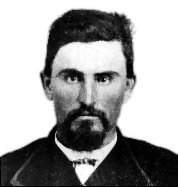
Charles Goodnight. Source: Public domain, PBS, available here.
Charles Goodnight came to Texas as a boy and grew into the sort of plainsman who seemed to have been manufactured by the country itself: lean on schooling, heavy on experience, suspicious of comfort, and possessed of a memory for trails, water holes, cattle, and weather.
Born March 5, 1836, in Macoupin County, Illinois, Goodnight arrived in Texas with his family late in 1845. He was nine years old. His formal education amounted to six months, but the prairie supplied another curriculum. He learned hunting and tracking from a man called Caddo Jake, hired out to neighboring farms at eleven, worked with livestock, freighted with ox teams, and by his early twenties had begun building the knowledge that would carry him across some of the hardest country in the American West.
The frontier made no allowance for romantic notions. A cattleman needed grass, water, a good horse and a tolerance for misery. Goodnight acquired all four.
During the Civil War he served as a scout and guide with the Texas Frontier Regiment. He ranged across country that later became central to his cattle operations, learning the contours of the Llano Estacado and the western plains. After the war, Texas was awash in cattle and short of profitable markets. Goodnight and Oliver Loving understood that the hungry military posts and Indian agencies of New Mexico represented an opportunity.
In the spring of 1866, they drove their first herd from the Fort Belknap region toward Horsehead Crossing on the Pecos and then north to Fort Sumner. Eighteen cowhands made the trip, among them Bose Ikard, Robert Clay Allison, and One-Armed Bill Wilson. The route became the Goodnight-Loving Trail, eventually extending north through New Mexico and Colorado.
It was a journey measured in miles, blisters, bad water, dust and the temperament of cattle.
And somewhere in the middle of all that came the wagon.
The Chuckwagon Rolls Into History
Goodnight's great practical contribution to the cattle drive was not glamorous. It was a kitchen.
As drives grew longer, cowboys could no longer conveniently carry enough provisions on horseback. In 1866, Goodnight converted a surplus Army wagon into a mobile kitchen. He fitted a pantry box onto the rear, equipped with shelves and drawers, and made its hinged door serve as a table. A lower compartment, called the boot, held heavier cooking gear such as cast-iron skillets and a Dutch oven. The wagon carried much more than food: tools, sewing supplies, first-aid necessities, bedrolls, firewood and water.
It was a simple solution to a brutal logistical problem.
The chuckwagon became the nerve center of the cattle drive. The cook did not merely fry bacon and boil coffee. He drove the wagon, established camp, maintained supplies and often became the outfit's unofficial barber, doctor, dentist and banker. Three hot meals a day were expected, which meant that somebody had to make civilization appear on a patch of dirt where there was no civilization within fifty miles.
Imagine the evening… The herd is settling. Horses steam in the cooling air. Dust hangs over the cattle like dirty gauze. A man swings down from his saddle with his legs stiff from riding. His shirt is crusted with sweat. His mouth tastes of alkali. Somewhere behind the herd comes the smell that matters most: wood smoke, coffee and supper.
The chuckwagon arrives.
Beans, beef, biscuits, coffee—plain food, hard food, food built to survive distance. The Dutch oven becomes a little iron planet over the coals. Tin cups pass through hands. For a few minutes, men who have spent the day watching cattle and the horizon can watch one another instead.
That is why the chuckwagon outlived the cattle drives.
The open range disappeared beneath barbed wire, railroads, farms and highways, but the mobile kitchen remained. Its descendants survive in ranching demonstrations, Western museums, historical programs and competitive chuckwagon cooking. Clarendon, near Goodnight's later ranch, still stages the Colonel Charles Goodnight Chuck Wagon Cook Off. The event has become a living piece of the culture Goodnight helped create, keeping the wagon, the cookfire and the old camp meal in public memory.
Perhaps that is the most revealing monument to Goodnight: not a bronze statue, but a kitchen built to move.
From Cattle Drive to Panhandle Institution
Goodnight's life after the first cattle drives became almost as consequential as the journeys themselves.
In 1867 Oliver Loving was mortally wounded during a drive. Goodnight remained with him as he lingered at Fort Sumner and honored Loving's final request that his body be returned to Texas. After Loving died, Goodnight arranged for his remains to be carried home for burial. The partnership ended in death, but their names became permanently attached to the route.
Goodnight later pushed into the Palo Duro country with about 1,600 cattle. He reached the canyon in 1876 and established the operation that became the JA Ranch with John G. Adair in 1877. His first quarters were a rough dugout, and the early ranch stood amid a landscape of canyon walls, buffalo, old Indian paths and grassland. The Palo Duro-Dodge City cattle route later carried JA herds north toward the Kansas railhead.
The country around Goodnight is still marked by his passage.
The Charles and Mary Ann Goodnight Ranch State Historic Site preserves the couple's 1887 ranch house near Goodnight, Texas. The restored home, visitor center and grounds tell the story of the ranching operation and the Goodnights' preservation of a remnant Southern Plains bison herd. Descendants of that herd remain nearby.
The Charles Goodnight Memorial Trail and the highway toward Palo Duro Canyon State Park follow or approximate portions of the country Goodnight traveled. Near the highway is a restored dugout thought to have been his first 1876 quarters. His papers and artifacts are preserved at the Panhandle-Plains Historical Museum in Canyon, where the Charles Goodnight Memorial Trail marker also recalls the route he used to bring his cattle into the Palo Duro country.
Farther north, Capulin Volcano National Monument in New Mexico preserves another piece of the story. Goodnight used the region during his cattle operations, and after becoming dissatisfied with tolls at Raton Pass, he used Trinchera Pass west of Capulin Mountain on his 1867 route toward Colorado. The old cattle country survives there not as a preserved trail, but in the landscape itself—the volcanic ground, distant mountains and immense sky that Goodnight and his cattle once crossed.
Goodnight spent his later years breeding cattle, experimenting with bison and agricultural projects, supporting education and watching the old frontier become something else. With Mary Ann's encouragement, he preserved a domestic bison herd when the wild Southern Plains herds had been devastated. The couple also established Goodnight College in 1898.
Mary Ann died in 1926. Goodnight, already ninety, married Corinne Goodnight on his ninety-first birthday in 1927. They later moved to Clarendon. He spent his final winter in Phoenix and died there on December 12, 1929, at ninety-three. He was buried beside Mary Ann in the Goodnight community cemetery.
By then the cattle drives were gone.
The routes had become roads, markers and memories. The hungry riders had become photographs. The enormous herds had been divided by wire.
But the chuckwagon remained.
It had begun as a crude answer to a problem: men needed to eat while cattle moved across hundreds of miles of unforgiving country. It became something larger—a symbol of the working West, of meals taken beside a fire when there was nowhere else to go, of the stubborn human habit of making a home wherever night happened to fall.
Indeed, Goodnight's most lasting invention was not really a wagon.
It was the idea that even on the longest road, somebody ought to bring supper.
Brian D'Ambrosio is the author of Montana Eccentrics, New Mexico Eccentrics, Italian-Americana: Explorers, Entertainers, and Eccentrics, and American Eccentrics: Mavericks, Misfits, and Visionaries. Available here: Amazon US | Amazon UK
Enjoyed the piece?
Join thousands of history readers getting occasional updates on new blog posts, books, and video releases — plus a free history book to get you started.
Primary Sources:
· Texas Historical Commission: Goodnight Ranch History | Texas Historical Commission
· The Charles Goodnight Memorial Trail: Texas Historical Marekrs Database: Charles Goodnight | Humanities Texas
· National Parks Service: Charles Goodnight - Capulin Volcano National Monument (U.S. National Park Service)