
In Ancient Rome the dead were laid to rest in different ways. Here, William McGrath looks at how funerals occurred in different parts of Roman society.
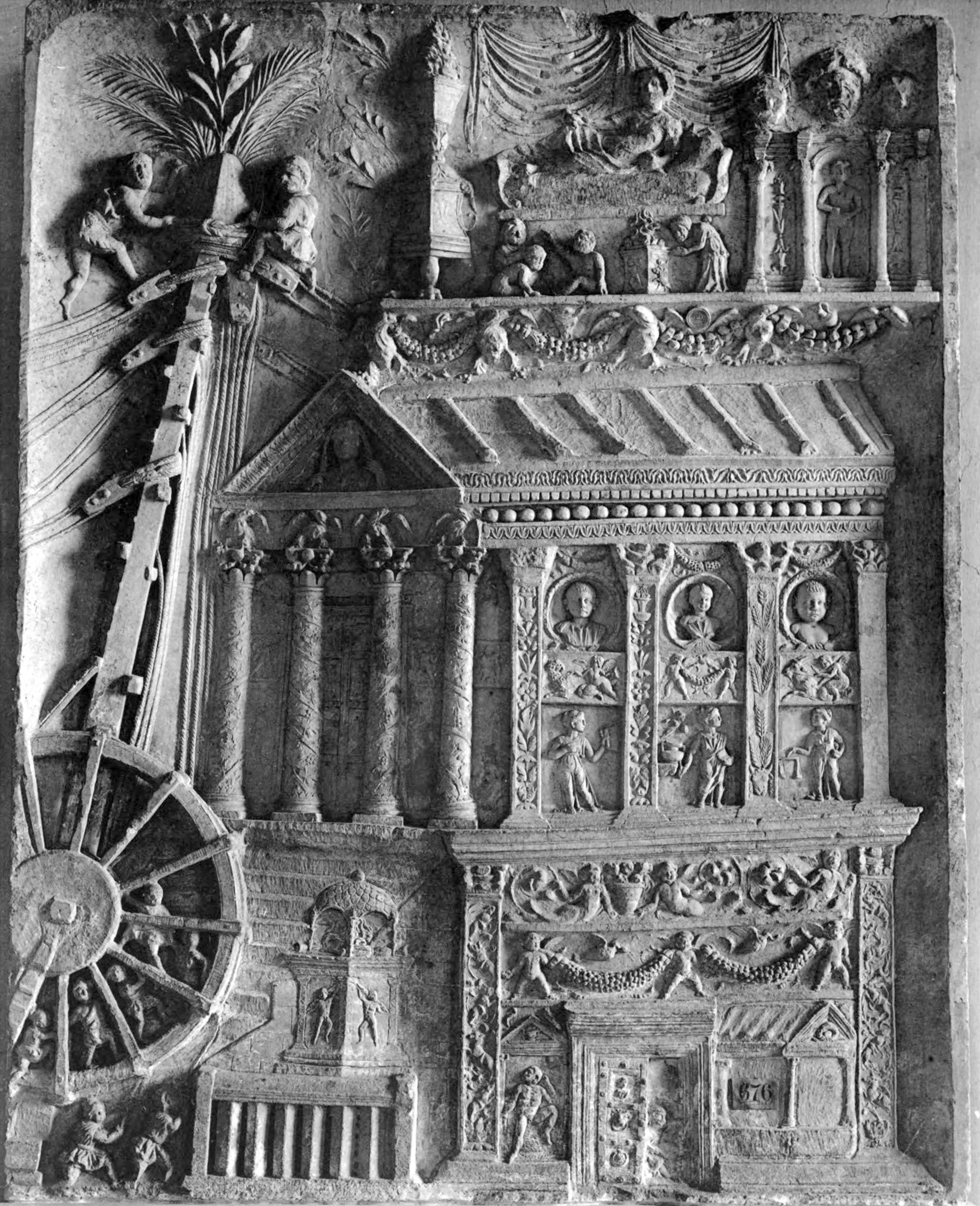
Crane relief from the Tomb of the Haterii on Via Labicana, Rome. Source: Public domain, Vatican Museums, available here.
The insula
The cart came from nowhere, or so it seemed to those who saw it after. Livia had crossed a hundred streets like this one, stepping stone to stepping stone, the way every girl in the Subura learned before she could properly walk. She was thinking of bread. Of whether there would be enough coin left after today to buy it, or whether her mother would have to trade the last of the oil instead. She stepped down off the crepido a heartbeat too soon.
The mule did not even startle. The driver did not even look back until the shouting started behind him. Livia lay where she fell, her temple against the raised stone edge of the walkway, and did not move again.
By the time her mother reached her, kneeling in the filth of the street with her daughter's head in her lap, the blood had already gone dark and thick in Livia's dark hair. There was no time to grieve properly, not yet. There was only the question of what came next, and how a family with nothing would find the coin to bury a daughter who had died with nothing in her hands but the empty basket she'd been sent out to fill.
The domus
Two miles away, in a house with heated floors and painted walls, Aemilia was laughing.
She had been in the caldarium since the ninth hour, skin flushed pink from the heat, her hair pinned up by a slave girl who had done it a hundred times before. The marble floor beneath her feet, wet from the steam and the splashing of the pool, had always been treated with the easy confidence of someone who had never once thought about falling on it.
She was reaching for a cup of watered wine when her foot went out from under her. It happened the way these things always happen, too fast to catch, too ordinary to seem dangerous even as it was killing her. Her head struck the edge of the marble step down into the pool, and she was still, quite suddenly, the only sound left in the room the steady drip of water and the low murmur of the hypocaust below the floor.
The slave girl found her within moments, and screamed for help immediately. It made no difference. Aemilia had struck her head in exactly the way any woman might, on wet stone, in a moment's carelessness, and the wealth of the house around her, the heated floors, the painted walls, the slave standing ready at her side, had not been enough to stop it.
The insula
There was no one to hire. Livia's mother washed her daughter herself, on the same table where they ate, water carried up six flights of stairs by a neighbour who did not ask for anything in return. Her hands shook so badly that she spilled half of it on the first attempt, and she had to stop, kneel on the floor, and simply breathe before she could try again. She used what oil they had, the last of it, rubbing it into skin that had never known perfume in life and would only know it now, at the end, because there was nothing else left to give. She kept whispering her daughter's name, quietly, as though saying it enough times might call her back.
There was no white toga to dress her in, only her own tunic, the good one she wore for festivals, mended so many times at the hem that the thread no longer matched. Her mother combed her hair the way she had every morning since Livia was small, and found herself doing it long after there was any need to, simply because her hands did not know how to stop, and because stopping meant admitting there would never be a morning after this one.
A single coin was placed beneath her tongue, borrowed that afternoon from a woman two floors down who had lost a son the previous winter and understood, without needing to be asked, why it mattered. Charon would not row a girl across for nothing, even a girl who had nothing. Her mother pressed her lips to her daughter's forehead and stayed there a long moment, tears rolling silently down her cheeks, as if she could pour everything unsaid into that single point of contact before it was too late to say any of it at all.
The domus
In the domus, the pollinctores arrived within the hour, professional layers-out of the dead, paid well to make grief look dignified. They washed Aemilia in water scented with nard and cinnamon, anointed her with oils her family had bought in bulk for exactly this purpose long before they ever imagined needing them, and dressed her in a stola so fine it had likely never been worn.
Her mother did not wash her. That was not a mother's task in a house like this. She stood in the doorway instead, one hand pressed hard against the frame to keep herself upright, watching strangers prepare her daughter's body with practised, careful hands. She wanted to push past them, to do it herself, to be the one touching her daughter for the last time instead of paid strangers who had never known her laugh or her temper or the particular way she used to burst into a room. Tears rolled down her cheeks, and she let them fall without wiping them away, uncaring for once who saw. But that was not how things were done, not in a house like this, and so she stood, and watched, and silently hated the marble floor, the painted walls, and every luxury that had failed to keep her daughter alive.
There was a coin for Charon too, of course, a proper one, freshly minted, placed with ceremony rather than desperation. It did nothing to loosen the grip in her mother's chest.
An imago, a wax death mask, was already being discussed for the family's collection before the body had even cooled. Aemilia would join the ancestors on the wall, paraded at funerals for generations of her family, long after anyone living had known her laugh. Her mother heard the discussion happening quietly behind her and thought, with a kind of numb fury, that she did not want her daughter remembered as wax on a wall. She wanted her daughter alive.
The insula
There was no procession, not really, just Livia's mother, her father, and a handful of neighbours who left their own work to help carry her. She was wrapped in a plain shroud, carried on a simple bier borrowed from the same neighbour who had loaned the water, and taken on foot through streets that did not stop for her. Carts still rattled past. Vendors still called out their prices. Nobody in the Subura had the luxury of pausing for every death that passed through it, and so the small group walked, heads down, past a city entirely indifferent to their grief, toward the common burial ground outside the walls where the poor of Rome were laid to rest without ceremony, without a name carved anywhere that would outlast the season.
The domus
Aemilia's procession filled the street. Hired mourners, praeficae, wailed and tore at their hair with practised grief, paid to perform sorrow so the family did not have to bear the full weight of showing their own in public. Musicians played. Slaves carried the imagines of ancestors long dead, their waxen faces bobbing above the crowd as though the whole family history had turned out to walk her to her grave. At the front, her father delivered a eulogy in the Forum itself, his voice carrying over a crowd of mourners and the merely curious alike, praising a daughter whose life, he said, had been full of joy, and grace, and promise cut short.
The procession moved slowly, deliberately, blocking the very road that led toward the burial ground beyond the walls. It would take the better part of the afternoon to pass.
Which meant that somewhere behind it, delayed at the city gate by a wealthy family's grief, a much smaller group waited with a body they could not yet bury.
The gate
Livia's mother stood at the back of the small crowd gathered at the city gate, her daughter's body resting on its borrowed bier in the dust, and watched the wealthy procession crawl past without end. Musicians. Mourners paid to weep louder than she had wept all morning. A father's voice still echoing faintly from the Forum behind them, praising a life that had lasted exactly as long as her own daughter's, eighteen years, not one more.
She did not resent the girl. She could not, looking at the small crowd around that other family and understanding, in some tired part of herself, that a mother was a mother whatever the width of the road between them. But she resented the wait. The sun was climbing, and Livia had been dead since dawn, and still they stood, small and silent, while Rome made way for someone else's grief before it would make way for theirs.
It was Aemilia's mother, walking at the rear of the procession with her hand still pressed white against her own chest, who saw them first. A handful of people at the roadside, no mourners hired, no wailing, just a girl on a plain bier and a mother standing over her with the exact same stillness Aemilia's mother recognised from her own reflection that morning.
Their eyes met across the width of the road, across every difference Rome had built between them, and for one moment neither woman was rich or poor. They were only two mothers who had buried a daughter of eighteen on the same day, in the same city, for reasons that would not matter to either of them by nightfall.
Aemilia's mother lowered her head, very slightly, to the woman on the other side of the road. It was not much. It cost her nothing. But it was the first time all day that anyone in that procession had acknowledged the small crowd waiting at the gate, and Livia's mother, exhausted and grieving and furious in equal measure, found she could not hate her for it.
The procession passed. The road cleared. And at last, far too late in the day for it to feel like anything other than an afterthought, Livia was carried through the gate to be buried.
After
Livia was buried without ceremony, without a mask, without a name that would last beyond the memory of those who loved her. Her mother stayed at the graveside long after her father had turned to walk home, until the light began to fail and there was nothing left to do but leave her there and carry on living, because that, in the end, was what the poor of Rome were always asked to do.
Two miles away, behind the walls, Aemilia's name would be spoken at family funerals for generations, her wax face carried through the streets by descendants who never knew her voice. She would be remembered, in a manner of speaking, forever.
But on that single afternoon, in that single city, both mothers walked home to empty rooms, and Rome, indifferent as ever to the two rooms it had emptied, went on exactly as it had before.
Did you enjoy the piece? Join us on X here to receive regular updates: @HistoryIsNowMag
Will McGrath is a historical writer based in South Gloucestershire, drawn to the everyday, sensory details of life in the ancient world. He is the self-published author of two novels, The Emperor's Lament, set in Hadrian's Rome, and Neptune: God of the Horses, exploring Roman chariot-racing culture. His work can be found at amazon.com/stores/Will-McGrath/author/B0D86PZKJ8.