The Confederate victory at Second Manassas, August 28-30, 1862, followed victories in the Valley Campaign and the Peninsula. The casualties incurred by the Army of the Potomac included 14,000 killed or wounded of 62,000 engaged, compared to about half of that for the Army of Northern Virginia. Then, on September 1, Stonewall Jackson defeated a Union cohort retreating from the battlefield at Chantilly. General Pope was relieved of command and sent to Minnesota to deal with the Sioux, and was never again involved in the Civil War. Pope would blame Fitz-John Porter for the loss, even though that wasn’t the case; Porter would be heard from again at Antietam but would go through a devastating court martial soon after. One of Pope’s generals said of him, “Suffice to say ... that more insolence, superciliousness, ignorance, and pretentiousness were never combined in one man.”

In this multi-part series, here Lloyd W Klein looks at what happened during the Battle of Antietam itself.

Read part 1 on the background here, part 2 on General McClellan’s Response to Finding the Lost Order here, and part 3 on the battle itself here.
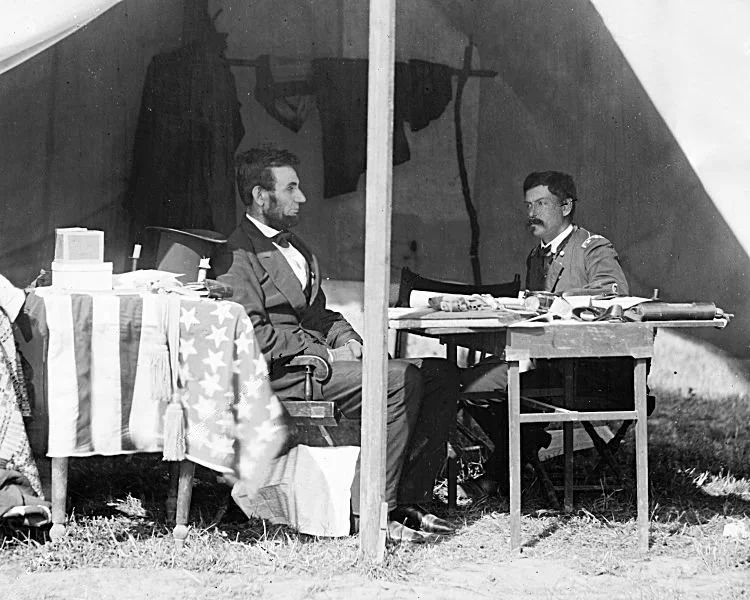
Abraham Lincoln and George B. McClellan at Antietam, Maryland, October 3, 1862. Source: Public domain, United States Library of Congress's Prints and Photographs division under the digital ID cwpb.04351., available here.

Aftermath

The battle was over by 5:30 pm. When the smoke cleared and the guns fell silent, Antietam had inflicted an unprecedented toll: estimated total casualties reached 22,717 men—killed, wounded, missing, or captured—making it the bloodiest single‐day engagement in American history. More Americans died in battle on September 17, 1862, than on any other day in the nation's history. The bloodiest battle in American history was Gettysburg, but its more than 46,000 casualties occurred over three days. Antietam ranks fifth in terms of total casualties in Civil War battles.

The devastation to both armies was profound. Officers, enlisted men & horses were destroyed in huge numbers. The dead and wounded littered the field, and it would take months for the dead to be buried. For years after, and even to this day, the remains of soldiers are still being found, evidence of the battle resurfacing in the form of bullets, cannonballs, horseshoes, and other detritus.

The battle is traditionally considered a tactical draw but a strategic Union victory. Modern scholarship suggests Antietam was both a Federal tactical and strategic victory. The battle inflicted terrible casualties on the Army of Northern Virginia, which was already in the process of disintegrating from straggling. Federal troops broke Confederate lines five times during the fighting, and at no point did Southern forces regain the line they occupied before the battle started. Lee remained in place for another day out of the refusal to abandon his campaign, but that amounted to nothing more than posturing.

Lee stayed on the battlefield overnight He prepared to defend against a renewed assault, which never came. Strategically, the battle was a disaster for Lee. The casualties were catastrophic for an army of his size. The ANV retreated to Virginia, McClellan did not pursue despite myriad orders to do so, and was relieved for the second time as commander.

The figures are staggering. Union losses totaled 12,401 (including 2,108 killed, 9,540 wounded, and 753 missing or captured), while Confederate losses amounted to 10,316 (with 1,546 killed, 7,752 wounded, and 1,018 missing or captured). Britannica additionally notes that officer casualties were especially severe: six generals (three Union, three Confederate) fell in the battle, and about a dozen more were wounded.

Looking at the troops actually committed, roughly 56,000 Federal soldiers engaged on key fronts suffered 12,400 casualties (~22%), while about 37,400 Confederates incurred 10,300 casualties (~27.5%)—meaning nearly one in four combatants on the field was killed, wounded, or went missing. When set against the full armies present (approximately 132,000 Union and 87,000 Confederate), these figures translate to overall casualty rates of about 9% and 12%, respectively—figures that belie the ferocity experienced by frontline units.

In terms of casualty composition, of the 22,717 total:

3,654 men were killed (≈16.1%)

17,292 were wounded (≈76.1%)

1,771 were missing or captured (≈7.8%)  

This breakdown roughly mirrors the broader Civil War norm—where about 20% of battle casualties were deaths and 80% were wounds—but Antietam’s sheer scale set a grim benchmark, producing the highest single‐day body count in U.S. military history.


Every historian includes or excludes various units, which may or may not be considered to be part of the battle. Sears, for example, gives lower figures. The desertion rate of the Confederate forces is another major area of contention. According to the Washington Post, these traditional figures are skewed. In his after-action report, McClellan claimed that his men buried 2,700 Confederates on the Antietam battlefield and captured 6,000 more. He could only guess at the number of wounded, but he estimated it was 18,742 men, using the ratio of killed to wounded for his own troops.

This stands in stark contrast to Confederate reports, which claimed losses of 1,674 dead, 2,292 missing and 9,451 wounded — a total of 13,417. Even discounting the wounded, the discrepancy between the two reports is almost 5,000 casualties.


Which is right? The burial grounds would indicate that McClellan’s number is closer to the truth. More than 3,300 dead rebels specifically associated with the Antietam campaign can be found buried in the Confederate cemeteries in Hagerstown, Frederick, Shepherdstown and Winchester. This number is larger than McClellan’s because it includes bodies buried by the Confederates themselves as well as those who died shortly after the battle.

Perhaps the most important misconception is the number of troops Lee brought with him during his invasion. Most historians cite McClellan as having had 87,000 men and Lee around 40,000. These numbers are often used for the entire three-week campaign, with the Confederates sometimes credited with as many as 55,000 men, 15,000 of whom straggled off before the battle. But there are no complete returns for Lee’s army until Oct. 10, 1862. Every historian’s count is merely a best-guess estimate.

Lee filed his first return five days after the battle, noting the count is “very imperfect” and does not include cavalry or artillery. It states that on Sept. 22, he had at least 36,418 infantry. Adding a conservative number of 5,000 for the missing cavalry and artillery units would bring his total to about 41,000 troops at the end of the campaign.

Eighteen days later, on Oct. 10, Lee filed his first complete report, which showed 64,273 present for duty. This number is significant because Lee had not received a single new regiment to replace his losses; nor did he receive many, if any, recruits because the February draft law had already pulled every eligible man into the army by early summer. If we add Lee’s reported campaign losses of 13,417 (which, as already noted, are too low), it would show that Lee started the campaign with at least 75,000 men. My final answer is that a lot of people died or were wounded, but we really will never know exactly.

IF this is true, McClellan’s supposed outsized numerical advantage is overstated, and his potential to have annihilated Lee is exaggerated. The army he drove back was not much smaller than his own. He did it without proper cavalry support, with his superiors hoping to oust him and with a significant portion of his army untrained. And as it turns out, he inflicted more damage on Lee’s army than anyone suspected.


Lee’s Retreat

Lee was just lucky to have gotten out of Antietam intact. It was a horrible day for him. He had divided his army numerous times and had not planned to be attacked while Jackson was at Harpers Ferry and Longstreet was at Suffolk.  Losing armies in retreat are by definition at their most vulnerable, but for that very reason, at their most dangerous.

On September 18, the armies remained in their positions without fighting. By this point, Lee was highly vulnerable. His army had its back to the Potomac River, just a few miles away, and a quarter of his force had been lost in the previous day’s battle. And after more than two weeks of marching, his men were tired. McClellan, on the other hand, welcomed thousands of additional troops on September 18. But, although he outnumbered Lee’s troops by almost three times, McClellan did not pursue Lee. In fact, despite constant urging from President Abraham Lincoln and Chief of Staff Henry Halleck, McClellan did not move toward Virginia for over a month. McClellan overestimated the size of Lee’s force, assuming that Lee had nearly 100,000 troops in his command, and insisted that the fall of Harpers Ferry, Virginia, on September 15 allowed an additional 40,000 Confederate troops, in his inflated estimation, to fight at Antietam.

Once again, though, modern scholarship has shifted this traditional view. The newest thought points out that McClellan did not pursue Lee because his own army was in no position to give battle. They note that this Union force was in reality four separate commands and that with the battlefield losses, it lacked a unified command structure to organize a movement. The Battle of Shepherdstown, in which just a small part tried to pursue at Shepherdstown (or Botelers) Ford the next 3 days, resulted in a small-scale disaster. Undoubtedly, the units engaged were in bad shape: on September 17th, the 1st Corps suffered 27 % casualties, the Second 31%, the 9th 20 %, and, lastly, the 12th Corps lost 22%. Antietam NPS ranger Keith Snyder has stated that during the battle, there were, in both armies, at least 300 corps, division, brigade, and regimental command changes. In the Federal army alone, there were close to 600 officers, below the rank of colonel, who were either killed or wounded. Not only were the rank and file slaughtered, the command structure was decimated as well.

The post-Antietam messages and reports in the Antietam Official Records contain numerous requests for supplies ranging from ammunition, blankets, shoes, rations, and food. Horses were a major problem. Union horses had also suffered severe casualties. Although Lincoln famously pooh-poohed this concern ("What have your horses done that they are fatigued?”), the Union Army couldn’t move anywhere without the replenishment of the major transportation modality.

Lee retreated across the Potomac River at Shepherdstown Ford, also called Boteler’s Ford: After several days of maneuvering and skirmishing with Union forces, Lee's army crossed the Potomac River at Shepherdstown Ford on September 19-20, 1862. This crossing allowed them to retreat back into Virginia after the Battle of Antietam.

The Battle of Shepherdstown on September 20th. There were 624 casualties—363 Union and 261 Confederate. The Battle of Shepherdstown is one of the largest engagements fought in the modern state of West Virginia (it was still Virginia at the time of the battle in 1862). It was largely inconsequential in the course of the Antietam Campaign because it essentially harassed, but did not stop, Lee’s retreat.
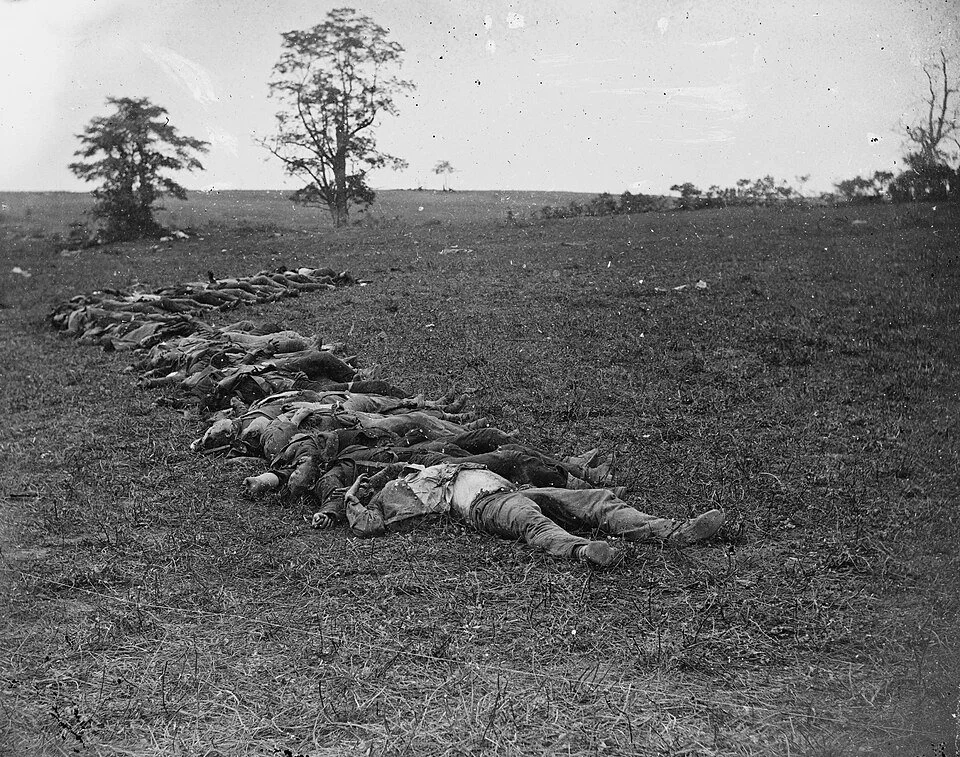
Bodies of Confederate dead gathered for burial after the Battle of Antietam. Source: Public domain, United States Library of Congress's Prints and Photographs division under the digital ID cwpb.01094, available here.

Lincoln Pays a Visit

Meanwhile, President Lincoln was severely disappointed in McClellan's performance both during and after the battle. He believed that McClellan's overly cautious and poorly coordinated actions in the field had caused the battle to be a tactical draw rather than the overwhelming Confederate defeat it really should have been. The president was even more astonished that from September 17 to October 26, despite repeated entreaties from the War Department and the president himself, McClellan declined to pursue Lee across the Potomac, citing shortages of equipment and the fear of overextending his forces.

Famously, President Lincoln came to visit General McClellan on October 3rd. As you can clearly see from the photo, the temperature of the meeting was frosty. As these stiff poses suggest, the personal relationship between the general and the president remained awkward. Abraham Lincoln spent four days travelling over the field, just two weeks after the guns fell silent. He met with McClellan, trying to prod his young Napoleon into action, met with other generals, and with thousands of wounded soldiers, including both Union and Confederate. His trip was well-documented, and the photos of his visit are among the most famous of the entire war.

The biggest winner of all was President Lincoln, absolutely. He had won a victory in time for the November election, to show that progress in the war was being made. The Republicans kept the Senate, gaining an additional seat, and also the House, although they lost 27 seats. Despite inflation, new taxes, a longer and deadlier war than expected, and a midterm election, Lincoln had pulled out a victory of his own.

Lincoln, the master politician, turned Antietam into a political windfall. He used the victory as a cover to issue the Emancipation Proclamation, redefining the purpose of the war and turning it into a moral struggle, not a cultural one. With one victory, he showed Congress and the voters that he had control over how the war would progress and what it was about. Moreover, the English Parliament dropped any discussion of bringing the combatants together for negotiations.


What had seemed just a few weeks before like the biggest crisis in the existence of the country up to that time was resolved by a president who chose the best man available for the predicament at hand, not necessarily the one he got along with or liked best or could manipulate: a far cry from what passes for executive decision making these days. Lincoln showed by his decision how to keep one’s eyes on the prize. This is a lesson numerous hospital administrators I know could learn. Lincoln was the greatest President, and his management of this crisis must forever be regarded as brilliant and exemplary of his genius.

Other winners include all subsequent generations of Americans, because Lincoln used McClellan’s victory to issue the Emancipation Proclamation, the critical first step for redefining what liberty and freedom could mean. The 4 million enslaved Americans were also victors. Although a pure wartime measure, it meant that slavery was on the road to extinction; Allen Nevins has pointed out that within weeks, slaves were leaving their masters’ plantations. The common Federal soldiers were victors. The battle showed that they WERE capable of defeating Massa Robert.

This photograph waw taken by Alexander Gardner., working for Mathew Brady. Lincoln wrote his wife that he was about to sit for the famous photographer with Little Mac: “If we can sit still long enough, which should be no problem for the general.” Lincoln was a sharp, quick-witted man, all right. He was highly critical of McClellan for allowing Lee to get away.


The Dead of Antietam

Mathew Brady exhibited a series of 97 photographs taken immediately after the Battle of Antietam. These images were the first to show the dead bodies of soldiers still on the battlefield.  The impact of this exhibit changed how non-combatants viewed war, and indeed, war news reporting, ever since.

"Mr. Brady has done something to bring home to us the terrible reality and earnestness of war. If he has not brought bodies and laid them in our dooryards and along the streets, he has done something very like it." So wrote a correspondent for The New York Times after visiting Mathew Brady's Manhattan gallery in October 1862 to view the famed photographer's latest exhibit, "The Dead of Antietam."

The accompanying photographs are the two best-known Antietam photographs and are immediately recognizable to every Civil War enthusiast. The top image shows Confederate dead at the Dunker Church. The photographer was standing in what is today the Visitors Center Parking Lot. The second, entitled “View in the Field, on the west side of Hagerstown road, after the Battle of Antietam,” shows the dead by a fence in a road that still exists. The ease of modern accessibility to these locations and their banality add to our sense of horror.  The 95 others are graphic and disturbing even by modern standards, several of which I used in the past week.

The Times review continued:

"You will see hushed, reverent groups standing around these weird copies of carnage," the review noted, "bending down to look in the pale faces of the dead, chained by the strange spell that dwells in the dead men's eyes."


Harper’s Weekly, the leading news weekly, devoted the center spread of its October 18, 1862, issue to images of the Antietam dead. Although the technology did not yet exist to reproduce actual photographs in newspapers and news weeklies, the periodical published woodcut engravings of eight photos, including six showing the dead.

Challenge: Two photographers Brady hired to document the war produced these images at Antietam. Who were these men who took these incredible photographs that changed war reporting forever?

Matthew Brady decided to move on from studio portraits and cartes-de-visite to document the war, and, with permission from President Lincoln, he organized and self-financed a team of photographers who took thousands of photographs documenting camp life and battlefield scenes. One of these photographers on Brady’s team, Alexander Gardner, took all the photographs featured, and James Gibson assisted.

In 1862, Brady’s exhibit The Dead of Antietam showed the public the first ever photographs of a battlefield before the dead had been removed. The exhibition took place at Brady’s studio on Broadway in New York City. In modern society, we often see live battlefield scenes on television news and movie images of graphic content, and have become somewhat desensitized to the violence of warfare. It is hard for us today to fully comprehend the shocking impression this exhibit made.

Gardner arrived on the battlefield on September 19, 1862, two days after the battle had ended. He photographed the dead and the living who handled their remains, demonstrating without protecting the viewer from the sight, those who had grisly wounds, those who fell over rocks in their final moments, and the bodies bloating under the hot sun.

Gardner and Brady knew they were capturing history with their cameras, but their primary reason for taking battlefield images was that they knew they would sell. Civil War photos and stereo views sold well during and after the war. Their popularity is evidenced by the dozens of original views available today at online auction sites or from antique photograph dealers. Brady’s stereographs and Album Gallery Cards cost 50 cents each during the war. That’s $10.67 in 2020 dollars, putting them in the same general price range as a video or movie today.

These images received extensive media attention. They shocked and fascinated, and saddened those who saw them. And to this day, they remain some of the most graphic images of American war casualties ever published. Unlike the battle images of Vietnam, these images did not create an anti-war backlash. Instead, they convinced the public that the soldiers fighting for their country were indeed brave, and that war was not the glorious spectacle of fairy tales.

The New York Times review conveys the impact of these photos, perhaps as well as the photos themselves:

“The living that throng Broadway care little perhaps for the Dead at Antietam, but we fancy they would jostle less carelessly down the great thoroughfare, saunter less at their ease, were a few dripping bodies, fresh from the field, laid along the pavement. There would be a gathering up of skirts and a careful picking of way; conversation would be less lively, and the general air of pedestrians more subdued. As it is, the dead of the battlefield come up to us very rarely, even in dreams. We see the list in the morning paper at breakfast, but dismiss its recollection with the coffee.”


Enjoyed the piece?

Join thousands of history readers getting occasional updates on new blog posts, books, and video releases — plus a free history book to get you started.

Join History Is Now here


References

·       Sears Stephen. Landscape Turned Red: The Battle of Antietam, Houghton Mifflin, 1983.

·       Rossino, Alexander & Thorp, Gene. The Tale Untwisted: George McClellan and the Discovery of Lee's Lost Orders, September 13, 1862. El Dorado Hills, CA: Savas Beatie.

·       Rossino, Alexander. Their Maryland: the Army of Northern Virginia from the Potomac Crossing to Sharpsburg in September 1862. Savas Beatie. 2021.

·       Rossino, Alex. Calamity at Frederick: Robert E. Lee, Special Orders No. 191, and Confederate Misfortune on the Road to Antietam. Savas Beattie, 2023.

·       Hartwig, D Scott. I Dread the Thought of the Place: The Battle of Antietam and the End of the Maryland Campaign. Johns Hopkins University Press, 2023.

·       https://emergingcivilwar.com/2022/02/24/who-lost-the-lost-order/

·       https://www.rebellionresearch.com/special-order-191-ruse-of-war-part-1

·       https://www.theodysseyonline.com/the-insignificance-of-special-order-191

·       https://alexanderrossinocom.wordpress.com/wp-content/uploads/2023/09/ns-lees-beaver-creek-plan-june-2022.pdf

·       Rossino, Alexander B. Reset in Maryland. America’s Civil War Winter 2024 pp 22-31.

·       Rossino, Alexander. Lecture: Before September: The Origin of the 1862 Maryland Campaign. Antietam Institute, July 7, 2025.

·       https://antietaminstitute.org/2025/01/10/before-september-the-origin-of-the-1862-maryland-campaign-dr-alex-rossino/

·       https://www.washingtonpost.com/lifestyle/style/in-defense-of-mcclellan-at-antietam-a-contrarian-view/2012/09/06/79a0e5cc-f131-11e1-892d-bc92fee603a7_story.html

·       https://www.washingtonpost.com/wp-srv/special/artsandliving/civilwar/mcclellan-graphic/

·       Marcel D'Aoust. https://www.historynet.com/little-mac-not-dawdle/

·       https://www.washingtonpost.com/lifestyle/style/in-defense-of-mcclellan-at-antietam-a-contrarian-view/2012/09/06/79a0e5cc-f131-11e1-892d-bc92fee603a7_story.html

·       https://www.battlefields.org/learn/civil-war/battles/shepherdstown

·       https://civildiscourse-historyblog.com/blog/2021/3/15/retreat-from-antietam-the-battle-of-shepherdstown-september-19-20-1862

·       https://www.nytimes.com/1862/10/20/archives/bradys-photographs-pictures-of-the-dead-at-antietam.html
Posted
AuthorHistory Is Now Magazine

The Confederate victory at Second Manassas, August 28-30, 1862, followed victories in the Valley Campaign and the Peninsula. The casualties incurred by the Army of the Potomac included 14,000 killed or wounded of 62,000 engaged, compared to about half of that for the Army of Northern Virginia. Then, on September 1, Stonewall Jackson defeated a Union cohort retreating from the battlefield at Chantilly. General Pope was relieved of command and sent to Minnesota to deal with the Sioux, and was never again involved in the Civil War. Pope would blame Fitz-John Porter for the loss, even though that wasn’t the case; Porter would be heard from again at Antietam but would go through a devastating court martial soon after. One of Pope’s generals said of him, “Suffice to say ... that more insolence, superciliousness, ignorance, and pretentiousness were never combined in one man.”

In a multi-part series, here Lloyd W Klein looks at the background to Antietam and the Maryland Campaign.

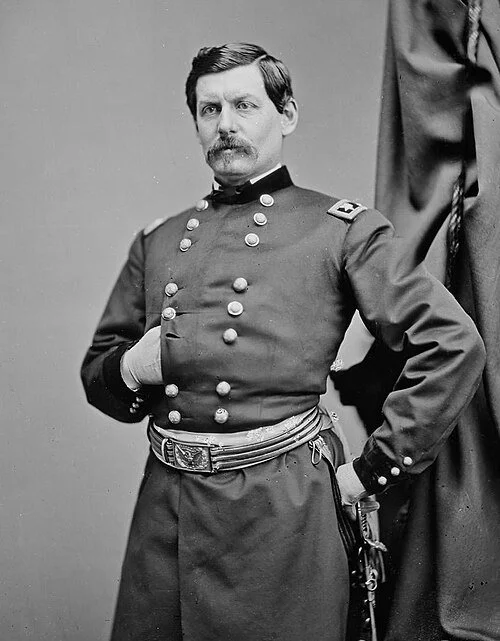
General George B. McClellan. Source: Public domain, available here.

Situation: The Union

It would be hard to imagine what President Lincoln was going through after these battlefield defeats. After a year and a half of fighting, none of his generals had ever defeated the Rebels in the Eastern Theater, although General Halleck had done well enough in the west, thanks in large part to a crazy general named Sherman and a drunken one named Grant. The backbiting in the army was at full swing, the blockade was having only a moderate effect, and his diplomat to Britain, Charles Francis Adams, was afraid that PM Gladstone would force negotiations to end the conflict. The soldiers who had been enlisted for one year had now swerved their commitment, unless they wanted to re-enlist. Casualties were high, and there was a pervasive sense of incompetence at the top of the military leadership.

And even worse, General Lee was rumored to have crossed the Potomac on September 3rd. The United States was being invaded, the Union army had no commander, and the national mid-term elections were coming up in 2 months. No other POTUS has ever faced a crisis this serious, but then, no other president was Abraham Lincoln.

Lincoln had removed McClellan as general-in-chief after the Peninsula Campaign and brought in John Pope from the west. McClellan had remained Commanding General of the AoP. In the early stages of his command, McClellan was able to build the Union army into a more powerful unit than the Confederacy had faced at Bull Run. He was a brilliant administrator, and he had created a well-trained and supplied army, had planned a clever strategy to take Richmond, and his army greatly admired him. Despite these organizational successes, his apparent slowness, almost an unwillingness, to fight a battle slowed the war beyond what Lincoln could politically accept. His repeated unforced retreats in the Peninsula led to a lack of confidence. Moreover, McClellan had shown great disrespect for Lincoln. Most presidents would not have made this decision. But now, Lincoln needed a general to meet an imminent threat, and he went back to McClellan as the best man available. McClellan was very popular among the soldiers and the officers. The parallels are very interesting with the one at the onset of the Gettysburg campaign, when Hooker was dismissed on the eve of battle during an invasion following a devastating loss in Virginia. But now, 6 months later, Lincoln grudgingly gave McClellan command of the full eastern theater. Give Lincoln credit: he chose the best man available, even though they didn’t mesh well.

Some believe that McClellan purposely withheld his men from helping Pope at Second Manassas.  In late August, two full corps of the Army of the Potomac had arrived in Alexandria, but McClellan would not allow them to advance to Manassas because of what he considered inadequate artillery, cavalry, and transportation support. He was accused by his political opponents of deliberately undermining the Pope's position. But he is especially criticized by historians for his letter to his wife on August 10, "Pope will be badly thrashed within two days & ... they will be very glad to turn over the redemption of their affairs to me. I won't undertake it unless I have full & entire control." He told Abraham Lincoln on August 29 that it might be wise "to leave Pope to get out of his scrape, and at once use all our means to make the capital perfectly safe". After his severe defeat, Pope was relieved of command, and McClellan was reinstated. Lee invaded Maryland. Antietam occurred just 3 weeks later.


Situation: General Lee

After Second Manassas, General Lee enjoyed widespread popular acclaim in the South, and the confidence of the president and his cabinet. He had thus far turned every battle into a victory, even those where he lost more men percentage-wise, defeating two Union commanders in just a few months. While supplies and armaments were in short supply, at this stage they seemed adequate.  It was a propitious moment to plan an invasion of the north. But with Autumn coming, Lee had to move quickly and efficiently.

He had two excellent Corps Commanders in Longstreet and Jackson. His division commanders were highly competent, but they were also high-spirited, and their personalities clashed with their superiors. Lee was a highly perceptive judge of people. Lee recognized that Stonewall Jackson thrived on independent action, especially attack situations, and he would place him in that position in the campaign. He also saw Longstreet as embodying an attacking defender, and used him for the main base of the army for that purpose.

After Second Manassas, the ANV could not be supplied by the farms in Northern Virginia. The Orange and Alexandria RR did not have the capacity; critical bridges were down. The Manassas Gap was nonfunctional from Front Royal in the Valley. A large Army could not be sustained any longer on the land of northern Virginia. Lee had to go somewhere else. Lee had these objectives with an invasion of the North:

·       to move the focus of fighting away from the South and into Federal territory, to feed and clothe the troops.

·       To forage for supplies

·       To recruit in western Maryland and bring secession-leaning citizens hope

·       Achieve a military victory in the north: Lee believed he could outwit McClellan on any battlefield, and that the right opportunity would show itself.

·       Confederate success would also influence impending Congressional elections in the North, perhaps forcing a negotiated settlement

·       Persuade European nations to recognize the Confederate States of America. 


His objectives were political and logistical, not military. Lee did not have on his immediate agenda an attempt to raid or capture Baltimore or Washington, D.C. This makes it appear as if Lee was merely wandering aimlessly around western Maryland. But there were insufficient resources to take and hold any northern city. In an insurgency, it isn’t necessary to do so.

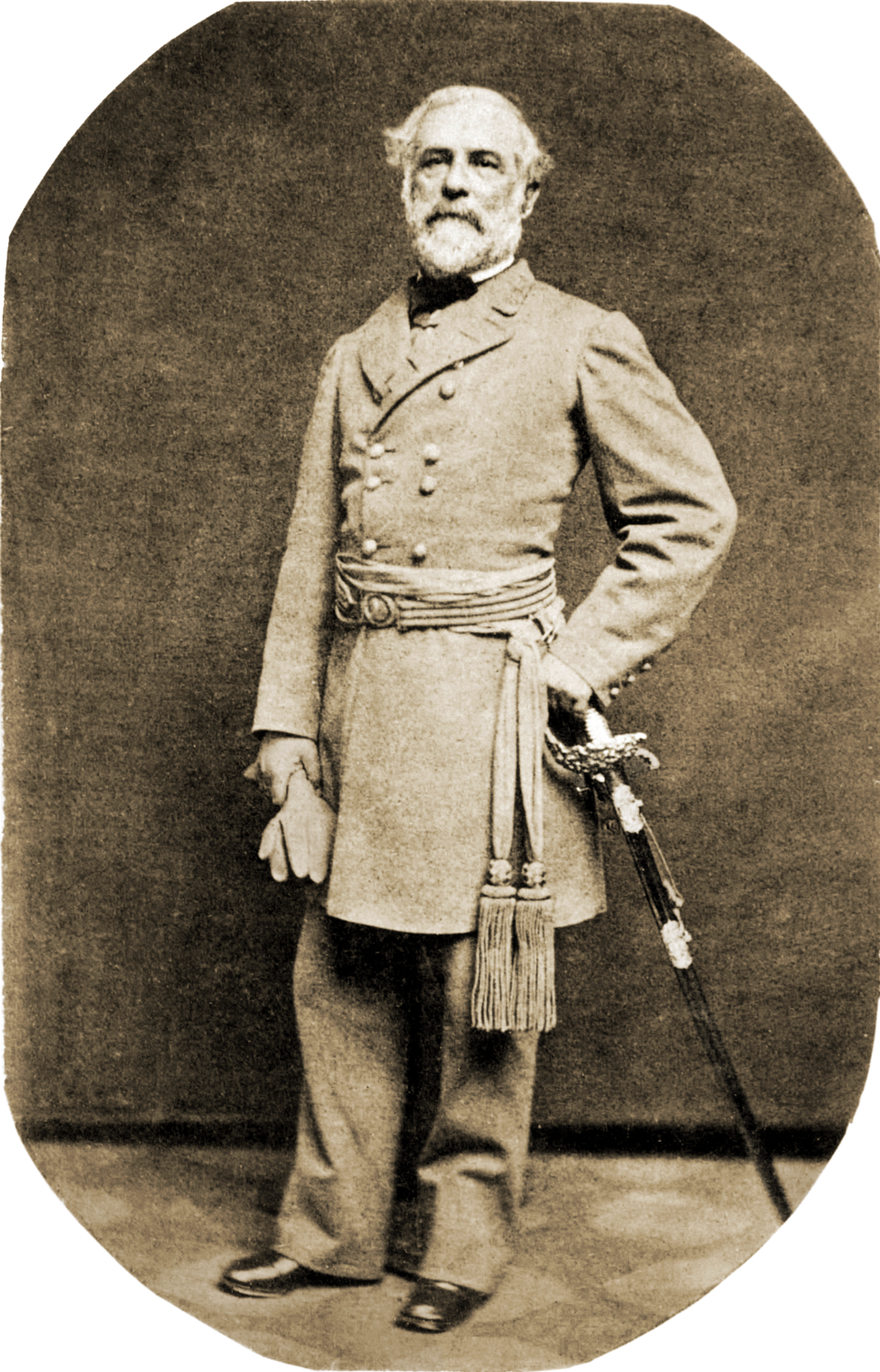
Robert E Lee. Source: Public domain, available here.

Traditionally, General Lee has been given the credit for planning. Rossino has recently found evidence that the campaign was the culmination of planning that had been discussed at the highest levels in Richmond since June-July 1861, and that the invasion was ordered by Jefferson Davis to fulfill a mandate issues by the Confederate Congress in December 1861.


Although the idea for the invasion was well-conceived, many modern-day civil war enthusiasts think this was a terrible idea because the Confederacy should have stayed on defense, not fritter away its resources. But the period after 2nd Manassas was the single moment of the war that was their best window for a chance at achieving a military victory, when Lee was truly in the ascendancy. Indeed, if he hadn’t tried, history would judge him harshly. This likely was the real high-watermark of the Confederacy, a moment when another Confederate victory might have brought huge dividends.

Lee crossed the Potomac at two fords west of Washington.  His army moved to Frederick, camping in a field 2 miles south of the town at Best’s Farm. Lee started on September 4 by sending D.H. Hill’s division across the Potomac about 5 miles north of Leesburg. Stonewall Jackson followed Hill across the river on September 5, and led the march to Frederick, near which he camped on September 6.

As far as anyone knows, Lee didn’t have a defined military objective for the campaign. His issuance of a movement order after reaching Frederick is the only existing tactical plan. The rest is speculation, and he may well have thought that the Union Army was so disorganized that he could run wild in western Maryland for a long while. The Army of Northern Virginia’s objectives at the time of the Maryland operation included feeding and clothing the troops, in addition to attracting recruits from among Marylanders sympathetic to the Confederacy. General Lee also initially planned to forage for supplies in southern Pennsylvania until winter brought an end to the campaigning season, but he abandoned that goal within 48 hours of crossing the Potomac River.

Militarily speaking, Lee endeavored to draw the Federals out of Virginia by threatening Washington from the northwest. This he accomplished by forcing George McClellan to shift his men from northern Virginia to positions around D.C. above the Potomac. Lee then hoped to engage the Federals in a clash that would decide the end of the war.

These are the goals that Lee and others wrote about, but there was yet another overriding objective - pulling Maryland out of the Union. The Confederate government had made accomplishing this an explicit political goal in December 1861, when it passed a resolution relating to Maryland which Jefferson Davis signed. Lee also appears to have initially believed - as did many in his army - that simply marching into Maryland would encourage Secessionists in the state to rise up against the Lincoln administration.

The invasion was made based on tactical considerations only. Lee believed he could easily flank the enemy by crossing the Potomac upriver from Washington and marching the Army of Northern Virginia through Maryland. A short thrust into Union territory would not be enough; a prolonged, several-month stay would be the key to Confederate success. Lee hoped to keep his army on United States soil through much of the autumn, not to capture and hold territory but to gather resources and create chaos before returning to Virginia as winter approached.


Lee Invades the North

Lee wanted to use Leesburg as his stepping-off point to get to Frederick. The turnpike leading out of Snickers Gap goes to Leesburg. This turnpike was an old Indian trail that white settlers had widened and had become the main thoroughfare between the Shenandoah and Loudoun County. Up to this point, Lee was using main roads for supply lines, which was clever strategically, as there were no railroads except as connected to Harper’s Ferry.

Frederick, Maryland, is centrally placed between Washington and Baltimore. The Baltimore and Ohio Railroad  set up a supply line to that town. It is also well located to Harper’s Ferry. And, it was the new capital of Maryland when it was removed from Baltimore. There is good water nearby at the Monocacy River, and there is abundant farmland, so it is a great base.

In September 1862, Confederate forces crossed the Potomac River at several places. Here are the main crossing points utilized by Lee's army before the Battle of Antietam:

·       White's Ford: Located near Leesburg, Virginia, White's Ford was the major crossing point used by Lee's army as they entered Maryland (see drawing). They crossed the Potomac River here on September 4-6, 1862, and began their advance into Union territory.

·       Cheek’s Ford: Upstream of White’s Ford, was used by DH Hill’s forces.

·       Noland's Ferry: Situated downstream from White's Ford, Noland's Ferry was another crossing point used by Lee's forces. They crossed the Potomac here on September 7-8, 1862, continuing their movement into Maryland.


McClellan Responds

General McClellan assumed command of an army that was truly leaderless. Lincoln had intentionally diffused power so that no single mistake could be ruinous, but that had led to no one being capable of bold action. When McClellan took charge of the Union forces on Sept. 2, he inherited four separate armies, thousands of untrained recruits, and numerous other small commands that needed to be made ready in a hurry. To further complicate matters, three of the AoP’s senior commanders had been relieved of duty, charged with insubordination.

McClellan knew that Lee was in his northwest and moved in that direction. By the time he arrived in Frederick on September 13, Lee had been gone for 4 days. Classic histories portray McClellan's army as moving lethargically, averaging only 6 miles a day.

Lee was moving west to attack Harpers Ferry, which is west of Frederick. He was not moving east to advance on the big eastern cities. Had General Lee attacked any of the major cities, his lack of resources would have been immediately obvious. His supply lines were too tenuous to try: he couldn’t have held these cities, in any case. His goal was to goad Union generals into battles.

Harpers Ferry was a critical strategic point early in the war. It was the north-south crossroads from the Shenandoah Valley to Western Maryland, and the joining of the Potomac and Shenandoah Rivers. It contained a large arsenal and was a concentration for military manufacturers. All of these factors played key roles in why it was a crucial military goal. In fact, control of the town changed 8 times during the war, remaining in Union control for most of it.

Surrounded on three sides by steep heights, the terrain surrounding the town made it nearly impossible to defend; all one had to do with take the heights and shell the town until it surrendered. Stonewall Jackson once said he would rather “take the place 40 times than undertake to defend it once.”

The Baltimore and Ohio Railroad and the Chesapeake and Ohio Canal were crucial supply lines connecting the east with the west, and they ran right through town. These assets were the real reasons why Harpers Ferry was so strategically important.  If you take Harpers Ferry, the railroad is cut in half and supplies can’t be moved to the west without a large detour. And most importantly, Lee could then use this town as his supply depot for further operations deeper into Maryland.

McClellan commanded in theory 28 cavalry regiments. But the disastrous Manassas campaign had worn out the horses of almost half the Union regiments, while most of the remainder were stranded at Hampton Roads by gale-force winds. For the first week of the campaign, McClellan could only count on perhaps 1,500 cavalry from two regiments and a few scattered squadrons from his old army to challenge some 5,000 Confederate cavalry soldiers screening Lee’s army.General Franklin’s Sixth Corps troops captured the signal station atop Sugar Loaf Mountain on September 11. By that time, information had already come in from other sources, including Governor Andrew Curtin of Pennsylvania, reporting that Lee’s army had marched away from Frederick in the direction of Hagerstown. McClellan knew within 24 hours, or perhaps even less, that Lee’s army was on the move.

First Battle of Bull Run (First Manassas), Virginia, 1861. Source: Public domain, available here.

Special Order Number 191

Lee and a large part of the Confederate Army bivouacked on the Best Farm, about 4 miles south of Frederick, near the Monocacy River. This site would 2 years later be the location of the Battle of Monocacy, but on September 9, 1862, the Union army was not close to Frederick. General Lee set up headquarters in an oak grove on the farm and dictated orders to a subordinate who laid out the campaign for the next week. Numbered Special Order No. 191, headquarters distributed these orders using couriers who brought copies to the commanders of the army’s wings and divisions.

General Robert E. Lee issued Special Order No. 191, known as “The Lost Order”, on September 9, 1862, during the Maryland Campaign to his corps commanders directing their movements. In Special Order #191, General Lee outlined the routes to be taken and the timing for the attack of Harpers Ferry. It provided specific details of the movements his army would take during the invasion of Maryland.


******************************************************************************

“Special Orders, No. 191

Hdqrs. Army of Northern Virginia

September 9, 1862


The citizens of Fredericktown being unwilling while overrun by members of this army, to open their stores, to give them confidence, and to secure to officers and men purchasing supplies for benefit of this command, all officers and men of this army are strictly prohibited from visiting Fredericktown except on business, in which cases they will bear evidence of this in writing from division commanders. The provost-marshal in Fredericktown will see that his guard rigidly enforces this order.

Major Taylor will proceed to Leesburg, Virginia, and arrange for transportation of the sick and those unable to walk to Winchester, securing the transportation of the country for this purpose. The route between this and Culpepper Court-House east of the mountains being unsafe, will no longer be traveled. Those on the way to this army already across the river will move up promptly; all others will proceed to Winchester collectively and under command of officers, at which point, being the general depot of this army, its movements will be known and instructions given by commanding officer regulating further movements.

The army will resume its march tomorrow, taking the Hagerstown road. General Jackson's command will form the advance, and, after passing Middletown, with such portion as he may select, take the route toward Sharpsburg, cross the Potomac at the most convenient point, and by Friday morning take possession of the Baltimore and Ohio Railroad, capture such of them as may be at Martinsburg, and intercept such as may attempt to escape from Harpers Ferry.

General Longstreet's command will pursue the same road as far as Boonsborough, where it will halt, with reserve, supply, and baggage trains of the army.

General McLaws, with his own division and that of General R. H. Anderson, will follow General Longstreet. On reaching Middletown will take the route to Harpers Ferry, and by Friday morning possess himself of the Maryland Heights and endeavor to capture the enemy at Harpers Ferry and vicinity.

General Walker, with his division, after accomplishing the object in which he is now engaged, will cross the Potomac at Cheek's Ford, ascend its right bank to Lovettsville, take possession of Loudoun Heights, if practicable, by Friday morning, Key's Ford on his left, and the road between the end of the mountain and the Potomac on his right. He will, as far as practicable, cooperate with General McLaws and Jackson, and intercept retreat of the enemy.

General D. H. Hill's division will form the rear guard of the army, pursuing the road taken by the main body. The reserve artillery, ordnance, and supply trains, &c., will precede General Hill.

General Stuart will detach a squadron of cavalry to accompany the commands of Generals Longstreet, Jackson, and McLaws, and, with the main body of the cavalry, will cover the route of the army, bringing up all stragglers that may have been left behind.

The commands of Generals Jackson, McLaws, and Walker, after accomplishing the objects for which they have been detached, will join the main body of the army at Boonsborough or Hagerstown.

Each regiment on the march will habitually carry its axes in the regimental ordnance—wagons, for use of the men at their encampments, to procure wood &c.

By command of General R. E. Lee

R.H. Chilton, Assistant Adjutant General”

******************************************************************************

The point of these movement orders was to put Lee’s invasion into motion. Jackson was to take Harpers Ferry while the rest of Lee's army was posted at Boonsboro under the command of Maj. Gen. James Longstreet. DH Hill was designated to guard the rear. General Longstreet was to encircle the towns and roads leading to Harpers Ferry. The places where parts of the army were sent controlled the roads into and out of Harpers Ferry. Martinsburg holds the road across from Whites Ford. Boonsboro hold the road north of Harpers Ferry.  Once Lee’s various divisions were in place, Harpers Ferry was in essence surrounded.

Lee hoped that after taking Harper's Ferry to secure his rear, he could create chaos in western Maryland, wrecking the Monocacy aqueduct, before turning his attention to Baltimore, Philadelphia, or Washington, D.C. itself. Lee did not expect to be attacked by McClellan at this vulnerable moment. He was hiding at Boonsboro precisely to keep McClellan guessing. He could not know that McClellan knew where he was. Lee is not looking to bring on a large battle, and he knew McClellan must be somewhere behind him, so he was going in the opposite direction. What Lee would like is to operate surreptitiously and attack bits and pieces of the Union Army.


The Lost Order

Soldiers of the Union Army found a copy of this order in a field on September 13. The military intelligence gained allowed General George McClellan to advance his army with confidence, and thus was a decisive element in the Battles of South Mountain and Antietam.

In Special Order #191, General Lee outlined the routes to be taken and the timing for the attack on Harpers Ferry. It provided specific details of the movements his army would take during the invasion of Maryland. The crucial point was that Lee divided his army, which he planned to regroup later.  The order directed Major General Stonewall Jackson to move his corps to Martinsburg while McLaws's and Walker's divisions "endeavored to capture Harpers Ferry." Major General James Longstreet was to move his corps northward to Boonsborough. Major General DH Hill's division was to act as rearguard on the march from Frederick.

DH Hill’s camp was just over one mile to the southwest of Lee’s HQ, along a small watercourse named Ballenger’s Creek. To be clear, there is no evidence that Lee’s HQ sent a courier to Hill bearing a copy of Special Orders No. 191. The traditional story differs greatly from what recent scholarship by Alex Rossino has more recently uncovered.

Traditional Story: Lieutenant Colonel Robert H. Chilton, Lee’s assistant adjutant general (chief of staff), wrote out 8 copies of the order, 1 to each of the generals named and 1 to President Davis. At the time that Special Order #191 was written, Hill was under the command of Jackson, his brother-in-law. Jackson personally copied the document for Hill because once the army crossed into Maryland, the order specified that Hill was to exercise independent command as the rear guard. For this reason, Jackson copied and sent Hill the order because he didn’t know if Chilton had done so. But, since Special Order #191 conveyed Hill’s having an independent command once entering Maryland, Chilton had in fact sent Hill a copy. DH Hill received only the copy from General Jackson, in the general’s writing, and never received the copy written by Chilton. Since he had received his orders, no one was concerned at the time that a copy had been lost. The traditional story is that somewhere in that 1 mile ride, a courier delivering Lee’s order to DH Hill somehow lost it.

Updated Version Uncovered by Dr Rossino: Contrary to the assertions found in numerous texts, the lost copy was not dispatched by Lee. It is claimed that McClellan verified its authenticity based on the signature of Robert Chilton, which would have originated from Lee's headquarters. The version sent by Jackson successfully reached its destination, enabling Hill to understand his directives; however, this also contributed to the Confederates' unawareness of the lost copy from Lee. The lost document consisted of movement orders for D.H. Hill issued from army headquarters but was never transmitted. Research by Rossino indicates that the copy was likely created by Armistead L. Long rather than Robert Chilton, as the handwriting and signature on the lost document do not correspond with the official records that Chilton authored and signed. The reason for the creation of this additional copy remains unclear, although it is posited that Long either prepared it for Jeb Stuart or was instructed by Lee to do so when the cavalry commander visited headquarters on the afternoon of September 9. Stuart subsequently misplaced the order on September 12, yet he was not held accountable for this oversight since Hill's name was affixed to the document.

Np one really knows who lost the order found by the Union soldiers. In the traditional story, only Chilton’s courier, Hill’s staff, or Hill himself could have been the culprit who lost the orders. A frequently postulated possibility is that Hill did receive both orders and lost one of them.  After the war, this was the standard belief, but Hill always denied it. He even sent a letter to General Lee after the war detailing the events and asking for clarification, as he did not know what happened. Hill defended himself after the war vociferously. He knew his orders would come from Jackson, so the fact that none came from Lee did not surprise him. Hill famously carried the copy he had received in his pocket to show to everyone that he, indeed, had kept his copy of the orders. He claimed that he had pinned his version in his pocket, knowing of its importance. His chief of staff always maintained that only one version was received.

It seems self-evident that the critical clue is this: How did such an important document end up in a field wrapped around three cigars, still in the original envelope? A logical conclusion is that the last person to possess these items must have been a cigar smoker, which DH Hill was not. Several individuals, including myself, have speculated that Henry Kyd Douglas, a courier on Jackson’s staff, is the most likely suspect; he was known to smoke cigars and was present in Lee’s camp. However, in his memoirs, he made no mention of that particular day. Ultimately, this identification hinges on the existence of a courier.

That morning, the 27th Indiana rested in a meadow which had served as the site of a Confederate camp a few days before. It was there that the infamous envelope was discovered. Two Union soldiers, Corporal Barton W. Mitchell and First Sergeant John M. Bloss of the 27th Indiana Volunteer Infantry, found an official-looking envelope wrapped around 3 cigars. Around noon on September 13, a Union soldier on a skirmish line found an envelope. On opening it, Corporal Barton W. Mitchell of the 27th Indiana Volunteers, part of the Union XII Corps, found 3 cigars inside wrapped in a note. Mitchell did not read every word, but he noticed that it concluded with the phrase "By command of General Robert E. Lee” and was signed “R.H. Chilton, Assistant Adjutant General".

Mitchell recognized the significance of the document and showed it immediately to Sergeant John M. Bloss. The note was elevated up the 27th Indiana's chain of command: to Captain Peter Kop, Colonel Silas Colgrove, then to Brigadier General Alpheus Williams, commander of the 1st Division,  XII Corps. I told you we would hear from him again. And we are not yet done with his contributions.

Now read part 2 on General McClellan’s response to the Lost Order here.

The site has been offering a wide variety of high-quality, free history content since 2012. If you’d like to say ‘thank you’ and help us with site running costs, please consider donating here.