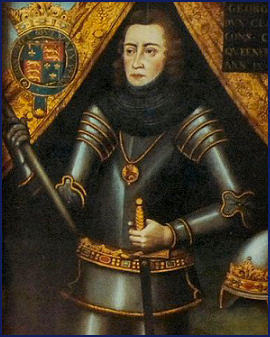
The closing chapter of the Wars of the Roses is not written solely in the blood-soaked fields of the Battle of Bosworth Field, but in the quieter, more enduring transformations that followed. When Henry VII of England emerged victorious and claimed the English throne, he inherited a realm deeply scarred by decades of intermittent civil war. The conflict had not been a continuous, unbroken struggle, but rather a series of violent convulsions that periodically destabilized the kingdom. By 1485, however, the cumulative effect was unmistakable: the old feudal order had been shaken to its foundations, and England stood at the threshold of a new political age. The Tudor dynasty, forged in the crucible of war and compromise, would reshape the monarchy into a more centralized and disciplined institution, laying important groundwork for the emergence of the early modern English state.

Terry Bailey explains.
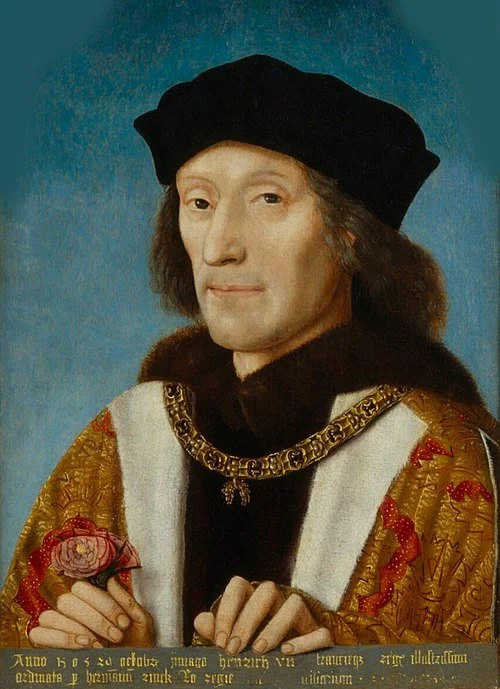
King Henry VII of England.

The destruction and weakening of the great noble houses was perhaps the most immediate and visible consequence of the wars. For generations, powerful magnates had exercised semi-autonomous authority in their regions, commanding private armies and maintaining vast networks of retainers. Yet the bitter rivalry between the House of York and the House of Lancaster led to a cycle of battles, executions, and attainders that steadily eroded the strength of these families. Prominent lineages were extinguished or reduced to shadows of their former selves, and the political landscape they had dominated was irrevocably altered. This was not merely a by-product of conflict; it became an opportunity seized upon by the new Tudor regime.   

Henry VII understood, perhaps more clearly than any of his predecessors, that the unchecked power of the nobility posed an existential threat to royal authority. His response was not to abolish the aristocracy, but to bind it more tightly to the Crown. Through financial instruments such as, he ensured that noble loyalty was not only expected but enforceable. The regulation of retaining—long a source of private military power—further curtailed the ability of nobles to act independently. Over time, this produced a more compliant aristocratic class, one whose influence was increasingly derived from royal favor rather than hereditary might. The transformation was subtle but profound: the nobility remained central to governance, yet it no longer stood as a rival power base.

This reconfiguration of noble power fed directly into the broader strengthening of central authority. Under Henry VII and his son, Henry VIII of England, the machinery of government became more efficient, more intrusive, and more firmly controlled from the center. The Crown expanded its administrative reach, relying on a growing cadre of administrators rather than feudal intermediaries. Institutions such as the Council Learned in the Law and the Court of Star Chamber were employed to enforce royal policy and discipline those who might challenge it. Justice, once unevenly administered through a patchwork of local jurisdictions, became more standardized as the authority of the monarchy extended into the provinces. In these developments, one can discern the early contours of a state that was no longer merely the personal domain of a king, but an increasingly structured entity.

The constitutional implications of the Wars of the Roses, while less immediately visible, were equally significant. The repeated deposition and replacement of monarchs during the conflict—most notably Henry VI of England and the death of Richard III of England—challenged traditional notions of divine and hereditary right. Although the ideology of kingship remained formally intact, the reality had been exposed: a king who could not command loyalty or maintain order might be removed. Legitimacy, therefore, became a more complex and negotiated concept, dependent not only on lineage but on political support and effective governance. Parliament played an increasingly important role in this process, ratifying changes of regime and providing a veneer of legality to acts of dispossession and succession. While it would be anachronistic to describe this as the birth of a constitutional monarchy, it nonetheless marked a step toward a more participatory political framework.

Beyond the structures of governance, the Wars of the Roses also left a lasting imprint on English culture and historical memory. The Tudor dynasty, keenly aware of its relatively tenuous claim to the throne, invested considerable effort in shaping the narrative of the conflict. By portraying the preceding era as one of chaos, disorder, and moral justified their own rule as a restoration of stability and justice. This interpretation found its most enduring expression in literature, particularly in the works of William Shakespeare. His play Richard III presents the last Yorkist king as a deformed and malevolent tyrant, a characterization that has profoundly influenced popular perceptions for centuries. Yet this portrayal is as much a product of Tudor propaganda as it is of historical fact.

Modern historians have increasingly sought to disentangle myth from reality, reassessing the Wars of the Roses through the careful analysis of contemporary sources. Far from depicting a nation in constant turmoil, recent scholarship suggests that much of England experienced periods of relative stability between outbreaks of conflict. Local governance often continued with remarkable continuity, and the impact of the wars on the general population may have been less severe than traditionally imagined. The conflict, in this light, appears less as a total collapse and more as a series of elite struggles, fought by and for a relatively small segment of society.

The reassessment of figures such as Richard III exemplifies this shift in perspective. Archaeological discoveries, including the identification of his remains in 2012, have provided new insight into his physical condition and reign, challenging long-held assumptions shaped by literary tradition. While he remains a controversial figure, he is now often viewed in a more nuanced light, as a capable, if ultimately unsuccessful, ruler operating within a deeply unstable environment. This willingness to revisit and revise historical narratives reflects broader trends within the discipline of history, where the emphasis has shifted toward complexity, context, and the critical evaluation of sources.

In considering the long-term legacy of the Wars of the Roses, it becomes clear that their significance extends far beyond the question of who wore the crown. They accelerated the decline of feudal structures, facilitated the rise of a more centralized monarchy, and contributed to the gradual evolution of England's institutions. At the same time, they demonstrate the power of narrative in shaping the understanding of the past. The wars have been remembered not only through chronicles and records, but through plays, legends, and national mythology, each layer adding to their enduring fascination.

As the final instalment in this series, the story of the Wars of the Roses resolves not with a simple conclusion, but with an invitation to reflection. The conflict did not merely end in 1485; it continued to shape the trajectory of English history for generations. In the hands of the Tudors, the lessons of civil war were transformed into a blueprint for stability, control, and consolidation. Yet the memory of those turbulent years, refracted through centuries of interpretation, is a reminder that history is never static. It is a dialogue between past and present, in which each generation seeks to understand not only what happened, but what it means.

In drawing this long and turbulent narrative to a close, the Wars of the Roses emerge not simply as a dynastic struggle resolved by the victory of Henry VII of England, but as a transformative period in which the very nature of English kingship and governance was redefined. The triumph at the Battle of Bosworth Field did not erase the divisions that had scarred the realm; rather, it marked the moment at which those divisions were brought under tighter control, harnessed, and gradually reshaped into a more durable political order. What followed was not the simple restoration of peace, but the careful construction of stability—an achievement as deliberate as it was fragile.

The collapse of overmighty noble power, the strengthening of central authority, and the increasing reliance on administrative governance together signaled the end of the medieval political landscape that had allowed such conflicts to flourish. Under the Tudors, the Crown ceased to be merely the apex of a feudal hierarchy and instead became part of a more integrated state. This shift did not occur overnight, nor was it free of resistance, but it fundamentally altered the balance between monarch and nobility, reducing the likelihood that private rivalries could again erupt into national conflict. In this sense, the wars achieved, through their destruction, the conditions necessary for a more stable future.

Equally significant was the subtle transformation in the concept of legitimacy. The repeated upheavals of the fifteenth century had demonstrated that kingship could no longer rely solely on hereditary right or divine sanction. The reigns of Henry VI of England and Richard III of England illustrated that authority depended increasingly on the ability to command loyalty, maintain order, and secure recognition from the populace, including Parliament. This evolving understanding did not yet constitute a constitutional monarchy in the modern sense, but it marked a significant step towards a system in which power was more contingent, negotiated, and institutionalized.

Yet if the structural consequences of the wars were profound, their legacy in memory and myth has proven equally enduring. The narratives shaped by Tudor chroniclers and immortalized by William Shakespeare ensured that the conflict would be remembered not merely as history, but as drama—populated by heroes, villains, and moral lessons. The enduring image of Richard III of England as a tyrant owes as much to this tradition as to the historical record, reminding us that the past is often filtered through the needs and perspectives of those who recount it. Modern scholarship, with its emphasis on evidence and context, has begun to peel back these layers, revealing a more complex and less sensational reality, yet the power of these older narratives remains deeply embedded in cultural consciousness.

Ultimately, the significance of the Wars of the Roses lies in their dual character as both destructive and creative forces. They brought immense suffering and instability, yet they also accelerated changes that might otherwise have taken generations to unfold. From the power of feudal magnate dominance to the rise of a more centralized monarchy with legitimacy to the gradual strengthening of institutional governance, the wars reshaped England in ways that extended far beyond the battlefield.

As this series concludes, what remains most striking is not simply how the conflict ended, but how it continued to resonate. The Tudors did not merely inherit a kingdom; they inherited the lessons of civil war, and from those lessons they forged and aided in prioritizing control, continuity, and caution. Yet the memory of those events preserved in chronicles, literature, and national myth—ensures that the Wars of the Roses remain more than a closed chapter. They endure as a reminder that history is not fixed, but continually reinterpreted, and that the meaning of the past is shaped as much by those who remember it as by those who lived it.


The site has been offering a wide variety of high-quality, free history content since 2012. If you’d like to say ‘thank you’ and help us with site running costs, please consider donating here.
Posted
AuthorHistory Is Now Magazine
CategoriesBlog Post

The long and violent struggle known as the Wars of the Roses did not end with a gradual fading of hostilities, nor with a negotiated peace between exhausted rivals. Instead, it concluded in a single, decisive moment of shock and finality on the 22nd of August 1485, at the Battle of Bosworth Field. Here, amid the marshy terrain and uncertain loyalties of Leicestershire, the fate of England was determined not only by arms, but by allegiance, timing, and the calculated risks of two very different men. The outcome would extinguish the Plantagenet dynasty and usher in the Tudor age, but the peace it promised would prove far more fragile than it first appeared.

Terry Bailey explains.

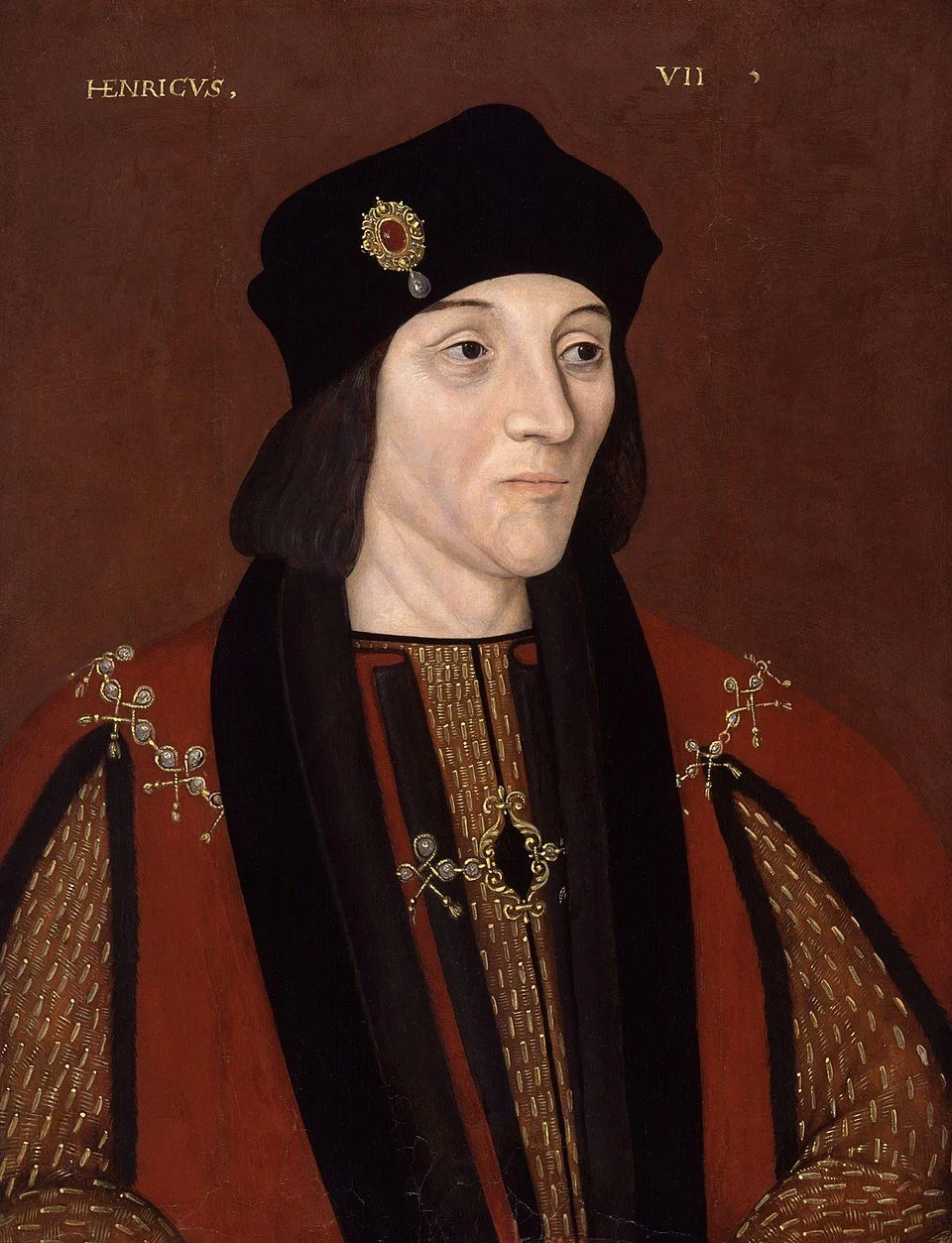
King Henry VII.

By the summer of 1485, the Yorkists' hold on England, though seemingly secure, was built upon uneasy foundations. Richard III had seized the throne in 1483 following the death of his brother, Edward IV, declaring Edward's sons illegitimate and assuming the crown himself. His reign, however, was immediately shadowed by controversy. The disappearance of the young princes in the Tower of London cast a long and damaging pall over his legitimacy, fueling rumors and alienating potential supporters. While Richard demonstrated administrative competence and military capability, he struggled to command the unqualified loyalty that his position required in such a volatile political climate.

Across the Channel, a claimant with a far weaker but symbolically potent claim was prepared to challenge him. Henry VII, then Henry Tudor, had spent much of his life in exile, primarily in Brittany and France. His claim to the throne came through his mother, Margaret Beaufort, a descendant of John of Gaunt through the Beaufort line—legitimized but originally born out of wedlock and barred from succession. In purely legal terms, Henry's right to rule was tenuous at best. Yet in the context of a kingdom exhausted by war and disillusioned with Yorkist leadership, his claim offered something more compelling: the possibility of change, and perhaps stability.

Henry's invasion in August 1485 was not the beginning of a vast campaign, but rather a calculated gamble. Landing in Wales, he gathered support as he advanced into England, drawing to his cause those disaffected with Richard's rule. His army, though smaller and less experienced than that of the king, was bolstered by a sense of purpose and by the expectation—never entirely certain—that powerful nobles might shift their allegiance at the decisive moment. Among these were the Stanley family, whose loyalties would prove critical.

The battlefield at Bosworth was not a grand stage prepared for a set-piece engagement, but a landscape shaped as much by uncertainty as by strategy. Richard III commanded the larger force and occupied a strong defensive position. Confident in his military experience, he sought to bring the matter to a swift conclusion. Henry, by contrast, relied heavily on his commanders, particularly the experienced John de Vere, Earl of Oxford, to manage the tactical realities of the engagement. The tension that morning was palpable, not merely because of the impending clash, but because of the unknown intentions of the Stanleys, whose forces remained conspicuously detached from the initial fighting.

As the battle unfolded, Richard seized the initiative in a move that has since become legendary. Spotting Henry on the field, he launched a direct cavalry charge aimed at killing his rival and ending the contest in one decisive stroke. It was a bold and characteristically aggressive maneuver, reflecting both Richard's confidence and the precariousness of his position. For a brief and electrifying moment, success seemed within his grasp. Yet warfare in this period was rarely governed by courage alone. At the critical juncture, the Stanleys intervened—not in support of their king, but against him. Their forces closed in, surrounding Richard and cutting off his retreat.

What followed was brutal and final. Richard III was unhorsed and killed in the thick of the fighting, becoming the last English monarch to die on the battlefield. With his death, organized resistance collapsed, and the Yorkist cause effectively disintegrated. According to tradition, his crown was recovered from the field and placed upon Henry's head, a symbolic act that transformed a contested claimant into a king by right of conquest. Yet victory on the battlefield was only the beginning of Henry's challenge. His claim to the throne, while now backed by force, required careful reinforcement. Conscious of the need for legitimacy, Henry moved swiftly to consolidate his position. He dated the start of his reign to the day before Bosworth, thereby technically rendering those who fought against him guilty of treason. More importantly, he fulfilled a key promise that had helped secure support for his invasion: his marriage to Elizabeth of York. As the daughter of Edward IV, Elizabeth represented the Yorkist line, and their union symbolized the reconciliation of the rival houses.

From this marriage emerged one of the most enduring symbols in English history: the Tudor rose, combining the red of Lancaster and the white of York. It was more than mere heraldry; it was a carefully constructed message of unity and renewal. Henry VII understood the power of symbolism in shaping perception, and he deployed it effectively to present his reign as the culmination of peace rather than the continuation of conflict. Despite these efforts, the years following Bosworth were far from tranquil. The underlying tensions that had fueled decades of civil war did not simply vanish with the death of Richard III. Yorkist sympathies persisted, and they soon found expression in a series of challenges to Tudor authority. The first major threat came in the form of Lambert Simnel, a boy presented as the Earl of Warwick, who attracted significant support both within England and abroad. This rebellion culminated in the Battle of Stoke Field, where Henry's forces secured a decisive victory, effectively ending large-scale Yorkist resistance.

A more prolonged challenge emerged in the figure of Perkin Warbeck, who claimed to be one of the lost princes. Supported at various times by foreign courts, Warbeck represented not merely a military threat, but a symbolic one, reviving the unresolved questions surrounding the legitimacy of Richard III and, by extension, Henry VII. Henry's response to these threats was measured and pragmatic. He combined firm military action with diplomatic efforts to isolate his opponents, while also employing an increasingly sophisticated network of intelligence and surveillance to detect and neutralize plots.


Central to Henry's success was his determination to curb the power of the nobility, whose private armies and shifting loyalties had been a defining feature of the Wars of the Roses. Through legal and financial mechanisms, he sought to enforce loyalty and limit the capacity of magnates to act independently of the crown. At the same time, he worked to restore the financial stability of the monarchy, rebuilding royal revenues and reducing dependence on Parliament. This careful consolidation of power marked a significant step toward a more centralized and controlled system of governance. And yet, for all his achievements, Henry VII's reign retained an undercurrent of caution, even suspicion. The memory of civil war lingered, shaping both his policies and his outlook. Trust was a rare commodity in a kingdom that had seen allegiances shift with deadly consequences, and Henry governed accordingly, favoring stability over grandeur and security over risk.

The Battle of Bosworth Field thus stands not merely as the end of a conflict, but as a moment of profound transformation. It marked the close of the medieval era of feudal dynastic struggle and the beginning of a new phase in English history, one characterized by stronger central authority and the gradual emergence of the modern state. The fall of the Plantagenets and the rise of the Tudors reshaped the political landscape, setting the stage for the sweeping changes of the sixteenth century.

Bosworth was both an ending and a beginning. It brought to a close the bloody contest between Lancaster and York, but it also revealed how fragile the resulting peace would be. Henry VII's triumph was not simply a matter of victory in battle; it was the foundation of a dynasty that would endure, adapt, and ultimately transform England. Yet that foundation, laid in the uncertainty of war and secured through careful strategy, would always carry the imprint of the conflict from which it emerged.

In the final reckoning, the Battle of Bosworth Field must be understood not as a neat conclusion to the Wars of the Roses, but as a decisive rupture that forced England onto an entirely new trajectory. The death of Richard III did more than end a reign; it extinguished the last vestiges of Plantagenet rule and closed a chapter of English history defined by feudal loyalties, dynastic fragmentation, and the persistent fragility of kingship. In his place, Henry VII emerged not as the obvious heir to a settled crown, but as a pragmatic survivor who recognized that victory in battle alone could never secure a throne so long contested.

Henry's achievement, therefore, was not merely in winning Bosworth, but in what followed: the careful, deliberate construction of legitimacy in a kingdom still haunted by division. His marriage to Elizabeth of York, the symbolic unification of Lancaster and York, and his systematic suppression of rebellion were all part of a broader effort to transform conquest into continuity. Yet the very need for such measures underscores a central truth of the post-Bosworth world—peace was not inherited, but manufactured, and always under threat. The pretenders, conspiracies, and lingering Yorkist sympathies that defined the early Tudor years reveal how close England remained to renewed instability, even as the outward symbols of unity took hold.

What ultimately distinguishes this moment in history is the shift it represents in the nature of English monarchy. The lessons of the preceding decades were not lost on Henry VII. Where earlier kings had relied on personal loyalty and martial prowess, Henry cultivated control—over finances, over nobility, and over the mechanisms of governance itself. In doing so, he laid the groundwork for a more centralized state, one less vulnerable to the centrifugal forces that had torn the realm apart. The crown, under Tudor rule, would become not merely the prize of noble contention, but the focal point of an increasingly structured and enduring authority.

And yet, Bosworth's legacy is inseparable from the violence that birthed it. The Tudor dynasty, for all its future grandeur, was founded upon uncertainty, opportunism, and the brutal calculus of survival. Its early stability was hard-won and carefully maintained, always mindful of the past that threatened to resurface. In this sense, Bosworth was not a clean break from history, but a moment in which the old world gave way reluctantly to the new, its shadows lingering long after the war had fallen silent.

Thus, Bosworth stands as both culmination and commencement: the final act of a dynastic struggle that had defined a generation, and the opening scene of a new order that would redefine England itself. From the blood-soaked ground of Leicestershire emerged not just a king, but a dynasty whose influence would extend far beyond the immediate aftermath of civil war. The Tudors would go on to shape the political, religious, and cultural identity of the nation, but their story—like that of Henry VII himself—began in uncertainty, forged in conflict, and secured only through vigilance, calculation, and an unyielding determination to ensure that the chaos of the past would never again so easily return.


The site has been offering a wide variety of high-quality, free history content since 2012. If you’d like to say ‘thank you’ and help us with site running costs,please consider donating here.

In the turbulent landscape of fifteenth-century England, where bloodlines alone could not secure a crown and loyalty shifted as swiftly as the winter wind, few men wielded power as effectively—or as dangerously—as Richard Neville, Earl of Warwick. Remembered in history as "the Kingmaker," Warwick occupied a position unique in the political fabric of his age. He was not a king, nor did he seek the crown for himself, yet he possessed the wealth, influence, and military authority to determine who would wear it. In an era defined by dynastic instability and civil war, Warwick became the living embodiment of political power untethered from kingship. His rise alongside Edward IV of England would mark one of the most dramatic and consequential partnerships of the Wars of the Roses—one that would ultimately collapse into betrayal and bloodshed.

Terry Bailey explains.

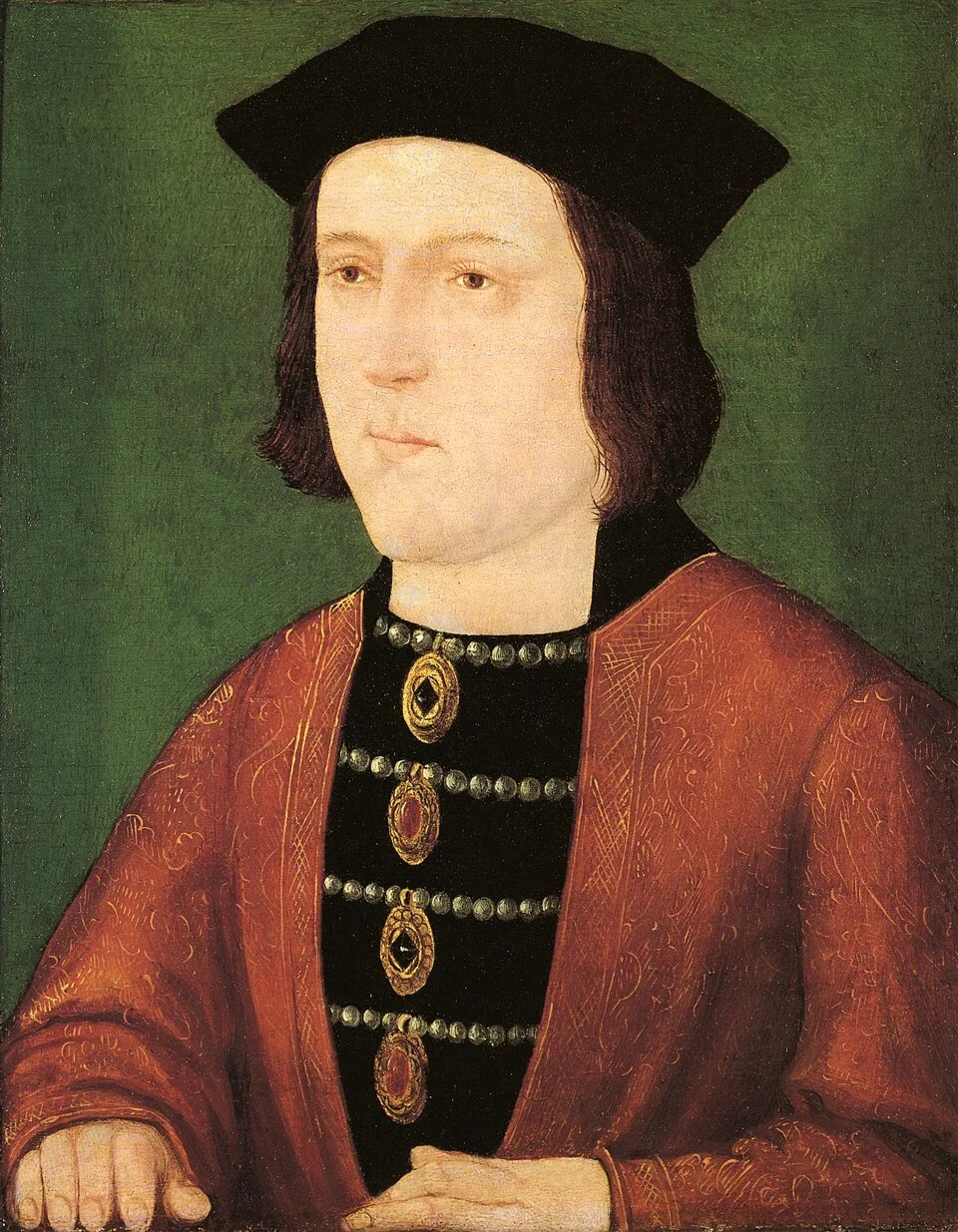
King Edward IV.

The turning point came in the brutal winter of 1461, at the Battle of Towton, a confrontation so savage that it still stands among the bloodiest ever fought on English soil. Snow fell relentlessly across the battlefield, driven into the faces of Lancastrian troops by a bitter wind that favored the Yorkist advance. Arrows darkened the sky, and the fighting descended into a chaotic melee of steel and desperation. Contemporary accounts suggest that tens of thousands fought, and thousands died, their bodies later found frozen where they fell or swept into the nearby river. It was a battle not merely for victory, but for survival.

Warwick's role in the campaign was indispensable. A seasoned commander and political strategist, he had already laid the groundwork for Yorkist success through alliances, recruitment, and careful positioning. Yet Towton belonged, in spirit and in consequence, to Edward. Barely out of adolescence, Edward demonstrated a ferocity and confidence that electrified his troops. Standing tall above most men, he was both a physical and symbolic presence on the battlefield, rallying his forces with a determination that left no doubt as to his fitness to rule. When the Lancastrian lines finally broke and Henry VI of England fled into exile, the crown effectively changed hands amidst the snow and slaughter. Edward's coronation soon followed, but it was Towton that truly made him king.

In the years immediately following his accession, Edward IV appeared to justify every expectation Warwick had placed upon him. Unlike the gentle and pious Henry VI, whose inability to command had contributed so heavily to the outbreak of civil war, Edward possessed an instinctive grasp of kingship. He understood the necessity of strength, the importance of rewarding loyalty, and the need to project authority in a fractured realm. Under his rule, a measure of stability returned to England, and for a time, Warwick stood at the center of this restored order. Acting as the king's chief advisor and diplomat, he directed foreign policy, negotiated alliances, and maintained a delicate balance among the powerful nobles whose ambitions could so easily reignite conflict.

Yet this partnership, so formidable at its height, contained within it the seeds of its own destruction. Warwick had grown accustomed to dominance, to shaping policy and influencing the direction of the realm. Edward, however, was no puppet. As he matured, he began to assert his independence, making decisions that increasingly sidelined his former mentor. The breaking point came not on the battlefield, but in the realm of marriage and diplomacy. In 1464, Edward secretly wed Elizabeth Woodville, a widow of comparatively modest rank. The decision sent shockwaves through the political elite. Warwick, who had been negotiating a prestigious marriage alliance with a foreign power, found himself publicly undermined and privately humiliated.

The consequences of this union extended far beyond personal affront. The Woodville family, suddenly elevated by the king's favor, began to accumulate wealth, titles, and influence at a remarkable pace. Marriages were arranged, offices distributed, and positions secured, often at the expense of established noble families. For Warwick, this represented not merely a loss of prestige, but a direct threat to his authority. The court, once his domain, was becoming increasingly dominated by rivals whose loyalty lay not with him, but with the queen and her kin.

What followed was a slow and inexorable drift toward rebellion. Warwick's frustration hardened into resentment, and resentment into action. By the late 1460s, he had begun to conspire against Edward, seeking allies among those disaffected by the king's policies. In a striking reversal of allegiance, he turned to the Lancastrians, forging an alliance that would have seemed unthinkable only years earlier. Central to this new strategy was his relationship with George Plantagenet, Duke of Clarence, the king's ambitious and discontented brother. Through marriage and intrigue, Warwick sought to reshape the political landscape once more, this time not to elevate Edward, but to replace him.

The rebellion reached its zenith in 1470, when Warwick achieved the extraordinary feat of restoring Henry VI to the throne during the Readeption of Henry VI. It was a moment rich in irony and fraught with instability. The Kingmaker, who had once dismantled Lancastrian rule, now resurrected it in a bid to reclaim his influence. Yet the restoration was built on fragile foundations. Henry VI remained as incapable of effective rule as ever, and it was Warwick who wielded real authority behind the scenes. The kingdom, however, had already endured too much turmoil to accept such arrangements indefinitely.

Edward IV, driven into exile by this sudden reversal, proved once again that he was not easily undone. Regrouping abroad, he gathered support and returned to England in 1471 with renewed purpose. His campaign was swift, calculated, and ruthless. The decisive confrontation came at the Battle of Barnet, fought under conditions as chaotic as Towton had been a decade earlier. Fog shrouded the battlefield, leading to confusion and fatal miscalculations. Amid the disorder, Warwick's forces faltered, and the Kingmaker himself was killed while attempting to flee. His death marked the end of one of the most powerful political careers of the age.

Edward's victory did not end at Barnet. Weeks later, he secured his position definitively at the Battle of Tewkesbury, where the remaining Lancastrian forces were crushed. The death of their leaders and the subsequent elimination of Henry VI extinguished the immediate threat to Yorkist rule. Edward was restored to the throne, this time with a clearer understanding of the dangers posed by overmighty subjects and shifting loyalties.

The events of 1470–1471 laid bare the precarious nature of kingship during the Wars of the Roses. Authority rested not solely on lineage or divine right, but on the ability to command loyalty, maintain alliances, and navigate the treacherous currents of noble ambition. Warwick's rise and fall illustrated this reality with stark clarity. He had possessed the power to make kings, yet not the means to secure lasting stability. His ambitions, once aligned with Edward's success, ultimately contributed to the very instability he sought to control. For Edward IV, the lessons were profound. His second reign would be marked by greater caution and a more deliberate consolidation of power. No longer would he rely so heavily on magnates whose influence rivalled his own. Instead, he sought to strengthen the monarchy by balancing competing interests and asserting his authority more directly. The scars of betrayal, however, remained a defining feature of his kingship.

The legacy of Richard Neville, Earl of Warwick is one of striking contradiction. He was at once a loyal servant and a dangerous adversary, a creator of kings and a destroyer of regimes. His life encapsulates the volatile interplay of ambition, loyalty, and betrayal that defined the Wars of the Roses. Through his actions, the crown of England was won, lost, and won again, each transition marked by bloodshed and uncertainty. The story of the Kingmaker is therefore not merely a tale of individual ambition, but a reflection of a kingdom in crisis—a realm where the structures of power were in flux and the boundaries of authority constantly tested. In such an environment, even kings could not stand alone, and those who raised them could just as easily cast them down.

In the final reckoning, the story of Richard Neville, Earl of Warwick is not simply that of a man who rose to unparalleled influence and fell spectacularly, but of an age in which the very nature of power was uncertain, contested, and dangerously fluid. His life reveals the inherent instability of a political system in which personal ambition could rival royal authority, and where the bonds of loyalty were so essential to medieval governance and as fragile as they were expedient. Warwick's ability to elevate Edward IV of England to the throne, and later to unseat him in favor of Henry VI of England, demonstrates not only his extraordinary capability but also the perilous weakness of the crown itself during the Wars of the Roses.

Yet for all his power, Warwick ultimately proved unable to control the forces he helped to unleash. His shifting allegiances, driven by wounded pride and political necessity, deepened the very divisions he had once sought to manage. In attempting to dominate the machinery of kingship, he exposed its vulnerabilities and, in doing so, ensured that his own position could never be secure. His death at the Battle of Barnet was therefore more than the fall of a single magnate; it marked the end of an era in which overmighty subjects could so directly shape the fate of the realm.

For Edward IV, the lessons were indelible. His restoration and subsequent reign reflected a more cautious and calculated approach to governance, one shaped by the recognition that unchecked noble power posed an existential threat to royal authority. The king who emerged after 1471 was no longer the young warrior of Towton. Still, a monarch tempered by betrayal, determined to consolidate his rule and prevent the re-emergence of figures like Warwick. In this, the Kingmaker's legacy endured, not in continued influence, but in the structural changes his rise and fall compelled.

Ultimately, Warwick's career stands as both proof of individual capability and a warning about its limits. He could create kings, but he could not create stability; he could command armies, but not lasting loyalty; he could reshape the political landscape, but not control its consequences. His life encapsulates the paradox at the heart of the Wars of the Roses: that power, when divorced from legitimacy and balance, becomes as destructive as it is formidable. In the shifting, blood-soaked theatre of fifteenth-century England, the Kingmaker proved that to hold the fate of kings in one's hands was not to master destiny, but to be consumed by it.


The site has been offering a wide variety of high-quality, free history content since 2012. If you’d like to say ‘thank you’ and help us with site running costs, please consider donating here.

Posted
AuthorHistory Is Now Magazine
CategoriesBlog Post

The fragile peace that lingered in England after the long and commanding reign of Edward III of England could not endure indefinitely. His rule had projected strength, military prestige, and a sense of dynastic certainty, yet beneath this surface lay unresolved questions of succession and governance. By the mid-fifteenth century, the crown rested upon the shoulders of his grandson, Henry VI of England, a man whose temperament could not have been more ill-suited to the demands of kingship in a turbulent age. Gentle, devout, and introspective, Henry embodied the ideals of Christian piety rather than the ruthless decisiveness expected of a medieval monarch. Where earlier kings had inspired obedience through authority and fear, Henry inspired doubt. His reign would come to be defined not by strength, but by hesitation, and by a gradual, dangerous erosion of royal power.

Terry Bailey explains.

Henry VI enthroned. From the Talbot Shrewsbury Book.

Henry's early years offered little indication of the crisis that would later engulf his kingdom. Crowned as an infant, he ruled through a regency dominated by experienced nobles and councilors who sought to maintain continuity in governance. Yet this arrangement also sowed the seeds of future instability. Powerful magnates grew accustomed to exercising authority in the king's name, and factions began to form around competing interests. When Henry eventually assumed personal rule, he proved unable to reassert control over these entrenched power structures. His preference for peace over conflict, admirable in principle, proved disastrous in practice—particularly as his reign coincided with the final, humiliating stages of the Hundred Years' War.

The loss of England's French territories, culminating in the collapse of its long-held possessions, was not merely a military failure but a profound political shock. Territories won through the campaigns of Henry V of England were surrendered within a single generation, undermining confidence in the crown and fueling anger among the nobility. Many blamed Henry's advisers, while others questioned the king's own judgment. The financial strain of prolonged warfare, coupled with the erosion of national prestige, intensified domestic unrest. In such an atmosphere, the monarchy ceased to function as a stabilizing force and instead became the focal point of dissatisfaction and ambition.

At the heart of this instability was Henry's inability to manage rival factions within his court. Noble families, bound by networks of loyalty and rivalry, increasingly pursued their own interests at the expense of the realm. Disputes that might once have been contained through royal arbitration were allowed to fester, transforming political disagreements into personal vendettas. Law and order weakened as magnates maintained private armies, and the authority of the crown diminished amid competing power centers. England, though not yet at war, was drifting toward fragmentation.

The crisis reached its most dramatic and consequential turning point in 1453, when Henry suffered a catastrophic mental collapse. For more than a year, the king withdrew entirely from the world around him, unable to speak or respond to external stimuli. He did not recognize those closest to him, not even his own infant son and heir, Edward of Westminster. This episode, often linked by historians to hereditary illness through his maternal line—particularly his grandfather Charles VI of France—left the kingdom effectively without a functioning monarch. In a political system so heavily dependent on the personal authority of the king, this absence created a vacuum that could not remain unfilled.

It was in this vacuum that Richard, Duke of York rose to prominence. Possessing a strong claim to the throne through descent from Edward III, York was both a legitimate guardian of the realm and a potential rival to the Lancastrian line. Appointed Protector of the Realm during Henry's incapacity, he attempted to restore order and assert central authority. Yet his position was inherently precarious. To his supporters, he represented stability and reform; to his enemies, he was an opportunist seeking to usurp the crown.

Foremost among those who opposed York was the king's queen, Margaret of Anjou. Intelligent, determined, and politically astute, Margaret refused to accept York's dominance. In the absence of an effective king, she emerged as the driving force behind the Lancastrian cause, working tirelessly to protect her husband's authority and secure the succession of her son. Her involvement marked a profound transformation in English politics. No longer confined to ceremonial roles, the queen became a central actor in the power struggle, rallying allies and orchestrating resistance with remarkable energy.

The rivalry between York and Margaret deepened existing divisions within the nobility, transforming factional competition into outright hostility. Alliances hardened, and loyalties became increasingly defined by dynastic allegiance. The realm grew polarized, with powerful families aligning themselves with either the Lancastrian or Yorkist cause. Political discourse gave way to suspicion and intrigue, while the presence of armed retainers signaled an ominous shift toward violence. The mechanisms of governance were no longer sufficient to contain the ambitions of those who sought power.

When Henry recovered his faculties in 1454, there was a brief and fragile hope that reconciliation might still be possible. Yet the damage had already been done. Trust between factions had eroded beyond repair, and the underlying causes of conflict remained unresolved. York was removed from his position, Margaret's influence grew stronger, and both sides prepared—quietly but unmistakably—for confrontation. England stood at the edge of civil war, its political system strained to breaking point.

The inevitable clash came in 1455 in the town of St Albans, a seemingly unremarkable location that would become the site of a transformative event. The First Battle of St Albans marked the moment when political rivalry erupted into open warfare. Forces loyal to York confronted those of the Lancastrian court in a sudden and violent engagement. Though small in scale compared to later battles, its importance lay in its symbolism: this was no longer a struggle confined to council chambers and court intrigue, but a conflict to be decided by arms.

The battle itself was swift and brutal. Yorkist forces, including the experienced and formidable Richard Neville, Earl of Warwick, launched a determined assault on the town, breaking through Lancastrian defenses with surprising speed. Fighting raged through the narrow streets, where the confined space intensified the chaos and bloodshed. Key Lancastrian leaders, including prominent nobles, were cut down in the fighting, leaving their faction leaderless and disorganized. The king himself, caught in the turmoil, was wounded and subsequently taken into Yorkist custody.

The aftermath of St Albans was as decisive as the battle itself. Henry, though still king in name, was now effectively under the control of his rivals, his authority further diminished by his inability to command events. York and his allies emerged triumphant, their power enhanced by military success. Yet this victory came at a cost. The bloodshed made reconciliation increasingly unlikely, hardening attitudes on both sides and setting a precedent for further violence. What had once been a contest for influence within the framework of royal government had now become something far more dangerous.

For Margaret of Anjou, defeat at St Albans did not signal the end of resistance but the beginning of a more determined struggle. Driven by a fierce commitment to her son's inheritance, she regrouped her supporters and prepared to continue the fight. York, emboldened by his victory, found himself in a position of unprecedented strength, his claim to authority no longer merely theoretical but backed by force of arms. The stage was set for a prolonged and devastating conflict.

Thus, the reign of Henry VI of England became the crucible in which the Wars of the Roses were forged. His personal weaknesses, compounded by structural flaws within the English political system, created the conditions for civil war. The ambitions of powerful nobles, the unyielding determination of Margaret of Anjou, and the calculated assertiveness of Richard, Duke of York combined to shatter the fragile unity of the kingdom. The First Battle of St Albans was not merely an isolated clash, but the opening act of a dynastic struggle that would engulf England for decades, reshaping its monarchy and leaving an enduring mark on its history.


The site has been offering a wide variety of high-quality, free history content since 2012. If you’d like to say ‘thank you’ and help us with site running costs, please consider donating here.
Posted
AuthorHistory Is Now Magazine
CategoriesBlog Post

Our latest installment in the Wars of the Roses looks at the marriage of Richard Plantagenet and Anne Neville – among many other intrigues in the Wars of the Roses. This article follows our introduction to the Wars of the Roses available here and our article on Edward III’s descendants and the causes of the Wars of the Roses available here. Later were the battles of the war from 1455-1464, the Kingmaker, and Prince George’s treachery. Most recently were part 1 and part 2 of a love story.


Historians always warn us that we should never imagine the story of Richard Plantagenet and Anne Neville to be one of romance and true love. But it is hard not to. The two had known each other since infancy and had grown together under the tutelage of the Earl of Warwick at Middleham Castle. War and the choices of the Kingmaker forced these friends onto opposite sides after a life time of watching their fathers fight side-by-side. Anne’s marriage to the Lancastrian heir, Prince Edward, had only been a few months long and had resulted in no children. After the battle of Tewkesbury, Anne was left a fifteen-year-old widow so her sister’s husband, Prince George, took her in.

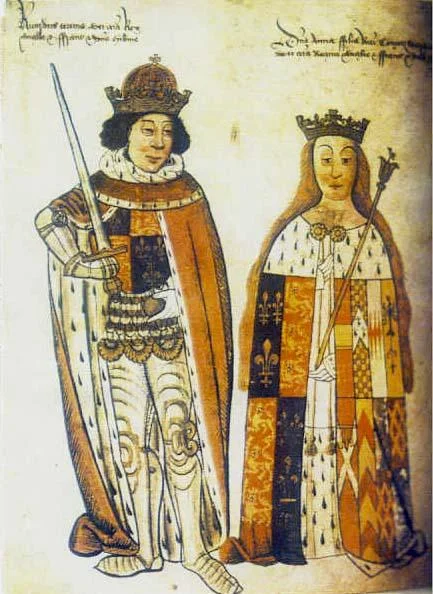
Richard Plantagenet (Richard III) and Anne Neville from the Rous Roll

Richard Plantagenet (Richard III) and Anne Neville from the Rous Roll

But George was anything but charitable. Anne was heiress to all the lands and castles in the north of England. A wonderful, rich fortune she shared with her sister. Since George had half these lands through marriage, he forcefully took the other half by keeping Anne as a prisoner in everything but name. This made George the wealthiest land owner in England. But history tells us that Anne didn’t take this lying down. According to legend, she dressed as a kitchen maid and escaped to the London home of one of George’s friends, where she continued to work in the kitchen while plotting her next move. That move would turn out to be Prince Richard Plantagenet.

The 18-year-old Duke of Gloucester had spent weeks looking for her, making a nuisance of himself in the household belonging to his brother, George. When Richard finally found our heiress, it is said that he spirited her away to a sanctuary in order to protect her from George. Legend tells us that he made it perfectly clear to Anne that his chivalrous rescue had no ulterior motives, and he wanted nothing from her. On May 14, 1472, she married him. The couple had a happy marriage lasting thirteen blissful years that gave them one son named Edward. Unlike the princes who came before and after him, Richard had no interest in London and the royal court. Richard’s heart belonged to his wife, his son and the northlands. Living mostly in Middleham castle, just as they had done as children, the couple rarely made it to London, rarely took up the mantle of royalty. Instead, they spent their days riding, commanding their farms and just generally enjoying one another’s company.

Unfortunately, life was to take one serious turn with the death of King Edward IV. Elizabeth Woodville was an enemy of Richard and an enemy of England. The Prince could not allow the unpopular Queen to crown her underage son and rule through him. Accompanied by 200 mourners, Richard kissed his wife and child good-bye and set out to London. Edward IV had made Richard the protector of the new King, but Elizabeth had sent her brother and 2,000 soldiers to fetch him before Richard could get anywhere near him. Unfortunately for Elizabeth, her brother marched his army directly into Richard’s mourners. The new young King changed guardians and entered London with his uncle and protector. Richard delivered the young King Edward V right to the Tower of London and left him there with his servants. This may sound sinister yet it was anything but. The Tower of London was the home of England’s royalty as well as a prison and even a zoo. As with all monarchs who had come before Edward V, he had been housed in the tower awaiting his coronation.

This is where history leaves us wondering. Richard, who had up until this point been unbelievably loyal to his brother, now suddenly steals the throne from his nephew and crowns himself King. What had happened to bring this about? Critics of Richard say he was simply showing his true colors by usurping a child. Richard’s supporters claim that he was pushed by his wife to take the crown, just as her father - the Kingmaker - would have done. Or that maybe Richard simply saw a chance to be King and took it. I, personally, think it is a bit more complex than that. Richard was loyal to his brother, and his brother had once been loyal to England. Then Elizabeth Woodville showed up. Was Richard, who would have still been in mourning, simply honoring his brother’s original plan? If Edward V had been King, the Woodvilles would have ruled and who knew what they would have done to the country. But if Richard ruled, he could undo all the damage the hated family had done and get England back on track. Was Richard - who hated court, hated London, hated royal life - putting his feelings and freedoms aside to become King and save England? Once again, history’s lips are sealed.

Before George had been executed, he had started a rumor about Edward IV being pre-contracted to another woman, meaning Elizabeth was not his true wife and making their children illegitimate. Richard dragged this rumor from the grave, used it as evidence and had all of Elizabeth’s children illegitimated. Richard was now heir to the throne. He was crowned Richard III on July 6 1483. Unlike Shakespeare tried to tell us, Richard was a much loved prince - if anything he was the people’s favorite prince - and London celebrated their new King and Queen with joyous excitement. After nearly thirty years of civil war, no one wanted a child King. But the idea of a decorated war hero leading the country was one they could get on board with.

So Richard toured his kingdom, with his beautiful and beloved Queen. They were joined by their son, the Prince of Wales, when his health allowed a trip with his parents. And they were happy.

If only Henry Tudor had stayed in France.


By M.L King, a history enthusiast and part-time blogger. You can connect with her on Facebook here.

The final installment in the Wars of the Roses series is available by clicking here.


Do you want to try your hand at some history writing? If so, click here for more information and then get in touch!


References

  • British History by Miles Kelly
  • Measly Middle Ages by Terry Derry
  • www.english-heritage.org.uk
  • www.battlefieldstrust.com
  • www.learningsite.co.uk
Posted
AuthorHistory Is Now Magazine

We follow-up last week’s post and look at a deadly love story involving George, Elizabeth, Edward and Richard. This article follows our introduction to the Wars of the Roses available here and our article on Edward III’s descendants and the causes of the Wars of the Roses available here. Later were the battles of the war from 1455-1464 and the Kingmaker. The most recent article was on Prince George’s treachery.


George’s fate was finally sealed by the Queen.

18 February 1478 saw the legal execution of a Prince of the realm. This was the first for the Plantagenets who preferred to send their enemies to France (or murder them in the night). Thanks to Shakespeare we now think George was drowned in a barrel of wine as punishment for challenging Queen Elizabeth. On general principle, most historians disagree with anything Shakespeare said, but could there be some truth to this story? Royals in the tower were known to bath in the barrels. Could an executioner have come up behind the Duke mid-bath and drowned him? History tells us nothing.

Anthony Woodville, Earl Rivers and William Caxton present the first printed book in English to King Edward IV of England

Anthony Woodville, Earl Rivers and William Caxton present the first printed book in English to King Edward IV of England

Richard had seen first-hand what happened to men who tangled with the Queen, so perhaps that was why he spent the remainder of his life distrusting Elizabeth and working to protect himself and England from her.

By the time Elizabeth had given Edward ten children, his mistresses had given him five. That we know of. There were probably many, many more. Edward never let his marriage vows stop him from filling his bed with the pretty maids at court. And there was no end to pretty maids. There was an end to Elizabeth’s youth though. By the time she was middle-aged, something new was happening in England. A new mistress named Elizabeth Shore saw Edward more than the Queen did and the King’s favorite brother, Richard, had won a battle against the Scots making him the most popular man at court. So popular in fact, that Edward seemed to be ignoring Elizabeth and only listening to Richard. Was Elizabeth finally losing control of her husband?

And then Edward died in April 1483.

The official story is that Edward died of either pneumonia or typhoid, although this has been frequently brought into question. Edward had in no way taken care of his health. He had more than let himself go in the peaceful years of his reign. But he was merely unhealthy, not sickly. For him to suddenly take ill and die within days and for his physicians to be utterly clueless as to what was wrong is highly suspicious. Despite what Hollywood would have us believe, the medical professionals of the past weren’t as utterly useless as they are portrayed. Pneumonia and typhoid were known illnesses. Had Edward had one of those, his physicians would have said so. Heart attacks and strokes were also a known affliction. If Edward had had one of those, his physicians would have said so. The fact that his medical records state that he died of a mysterious illness suggests that something was quite wrong. Was he poisoned? And if so, by whom?

We know that Elizabeth is famous for her “quick action” after her husband’s death. This quick action being the arrangements of an army of 2,000 men escorting her son back to London. The sweet, newly widowed Queen should have been in mourning, not organizing an army. How sweet of her to sacrifice. Although one needs to wonder why she was organizing an army to bring the Prince to London. What was she fearing? And how did she rustle up 2,000 soldiers in a matter of days? And why then did she run into hiding when Richard and 200 mourners began their journey south? Could it be that the soldiers were arranged before the King’s death because the King’s death was actually planned? Did the Prince need an army to escort him because Elizabeth feared that the English would rise up against this Prince who would now be King but controlled by the highly unpopular Woodvilles? Did she go into hiding because she feared Richard? Why did she fear Richard? Plantagenet women, even unpopular ones, were never harmed. The worst that would have happened to Elizabeth had she been caught was exile. But people often don’t see things as they truly are. Did Elizabeth run because she assumed that Richard would have killed her, as she would have killed him if roles were reversed? History refuses to tell us what happened to Edward or why Elizabeth ran when Richard posed no obvious threat - we can only speculate and assume.

Officially Edward died of pneumonia or typhoid, but the circumstances are suspicious. Elizabeth’s actions are suspicious. Did the Queen finally lose control of the King and so poisoned him? Did she plan to rule through her son? He was only 12; he needed a protector to rule until he was 16. Edward ordered Richard to be this protector. Why not his wife and her brother? Did he know something we didn’t?

As ever, there are few answers, but many questions. All we know is that 1483 was one frantic year.


By M.L King, a history enthusiast and part-time blogger. You can connect with her on Facebook here.

Click here to read the next in the series - how a baby ended The Wars of the Roses.


Do you want to try your hand at some history writing? If so, click here for more information and then get in touch!


Selected references

  • www.thewarsoftheroses.com
  • British History by Miles Kelly
  • www.britannica.com
  • www.battlefieldstrust.com
Posted
AuthorHistory Is Now Magazine

In the next in our series on the Wars of the Roses, this article looks at the terrible Prince George and his role in the downfall of the Kingmaker, The Earl of Warwick.

It follows our introduction to the Wars of the Roses available here and our article on Edward III’s descendants and the causes of the Wars of the Roses available here. Later were the battles of the war from 1455-1464 and most recently the Kingmaker.


Prince George – the Duke of Clarence – was the worst type of man. Born the third son, he was never happy with his lot in life. Unlike his younger brother, Richard, who was loyal to the Plantagenets through thick and thin, George supported his family only when it suited him best. After years of watching his lecherous brother, King Edward IV, run England’s monarchy and nobility into the ground, George began to get rather restless.

Prince George, Duke of Clarence

Prince George, Duke of Clarence

Queen Elizabeth Woodville had still not given the King a son despite being pregnant every year of marriage. This made Prince George heir to his brother’s throne. But it was a shaky arrangement as Elizabeth was almost supernaturally fertile and it was only a matter of time before she bore a boy and bumped George further down the line. This the turncoat Prince could not allow. When the Earl of Warwick began sniffing around for a new ally against the King, George jumped at the chance. In a secret wedding in Calais, the Duke of Clarence married Isabelle Neville – Warwick’s eldest daughter. This went against the King’s wishes. The plan was to kill the King and put George and Isabelle on the throne. Had George been a smarter, less egotistical man he would have understood that Warwick was using him, plain and simple. But George honestly believed that he deserved to be King and Warwick was simply helping him along. And so, on July 26 1469 at the Battle of Edgecote Moor, George captured his brother and took him prisoner. It took King Edward IV eight months to escape and rally an army to counter-attack his treacherous brother and Warwick. Edward’s army defeated his enemy so thoroughly that the rebels shed their coats as they retreated. Hence the name of the battle – Losecote Field.

After Warwick’s humiliation, he and George fled to Calais, leaving Edward back in charge. The rebels planned to make an alliance with their former enemy, Margaret of Anjou – the wife of mad King Henry VI and mother to the Lancastrian heir. In order to achieve this new alliance, Warwick had to literally beg on his knees. Margaret was not convinced, but she was in a precarious position as she was living on the charity of the French court and her household was becoming a drain on the French King. The French King is also believed to have encouraged the alliance. But Margaret wanted more than promises and apologies from a kneeling man. She wanted an emblem. Warwick suggested the marriage of Margaret’s son, Prince Edward, to Warwick’s youngest daughter, Anne Neville. Margaret accepted, although some historians believe that she was only using Warwick for his army and planned to put Anne aside as soon as Prince Edward was King.

This is where Warwick made his final mistake - he backed the wrong horse.  He simply put his plans with George aside and married his youngest daughter to Henry VI’s son. His new plan was to put Henry back on the throne, wait until he died (or kill him) and rule through the new King.

Although Warwick was a brilliant soldier, he was lacking in common sense. Simple truths were lost on him; most notably the truth that if George betrayed his brother, he would surely betray the kingmaker too.


The return of Warwick

Armed with his new ally, Warwick returned to England and led an army against Edward. But he forgot one vital little piece in this jigsaw puzzle of deceit He had trained Edward. The King was a great fighter just like him. We can, of course, never know what Warwick was expecting from his adversaries, but we do know that he severely under-estimated Edward and Richard. Edward and Richard’s Yorkists crept up slowly and silently in the night, hidden by mist and darkness. On the morning of April 14 1471, while the Lancasters were rising from slumber, the Yorkists attacked. In the confusion and fog, some of Warwick’s soldiers actually stabbed each other. When the word, “treachery” ricocheted across the battle, even more Lancastrians killed one another. And as for Warwick himself, the mighty Earl was pulled off his horse, had his armor pried open and was stabbed in the neck. Warwick was so influential that without him the Lancasters were simply lost. Those that weren’t mauled on the battlefield retreated and ran for their lives. The body of the kingmaker was hanged for four days to quell rumors of his survival and to further break the Lancastrian spirit. This battle, the Battle of Barnet, marks the downfall of the House of Lancaster.

It took three weeks for Margaret of Anjou and her son to get to England. They had been held back by winds across the channel. The news of the defeat and death of Warwick was such a blow that Margaret ordered the tired army to march to Wales in order to recruit more men. And where was George in all of this? He had gone back to his brother, begging forgiveness. Edward was said to have known that his brother would return with his tail between his legs. The three brothers then marched to Wales, hoping to intercept the Lancastrian army before they made it over the River Severn and joined the angry Welshmen on the other side.

Margaret of Anjou, her son, his new bride and all the Lancastrians they could summon, made it as far as Tewkesbury before England herself decided to end the pointless war. The River Severn was flooded; no one could get across. The army was trapped between drowning and the Yorkists. The Lancastrians were choice-less; they had to do battle in their starving and fatigued state. The Yorkists weren’t any better off; they had had to march at a run, recruiting soldiers as they passed through villages. May 4 1471 saw two exhausted armies make one more stand for the crown. Henry VI’s son, Prince Edward, was no stranger to battlefields despite being only 18, but he was no leader; he could not rally his troops nor control them. The Yorkists, being led by the Plantagenet brothers, had better command. Richard, also aged 18, had led the army at the Battle of Barnet. He was well respected, well trained and very clever. And under him the Yorkists walked away from Tewkesbury victorious. Prince Edward died in battle and his mother was taken as prisoner. Prince Edward’s new widow should have been taken hostage with Margaret but she was taken to the house of the Duke of Clarence, where she was kept as prisoner in everything but name by her sister and brother-in-law. That is, until Prince Richard snuck her away and married her.

The battle of Tewkesbury saw the end of the Lancastrian claim to the crown. Henry VI “mysteriously” died some weeks later in the tower. Was he murdered? And if so, by whom? History’s lips are sealed.

And so the Yorkists returned to a somewhat peaceful reign knowing that the Lancastrians had no heir to fight for ... Except for that distant relative called Henry Tudor who lived in France. But the Plantagenets didn’t seem too bothered about him.

Edward once again returned to his throne which he would pass on to his baby son once he was old enough. If only Edward had lived long enough for that to happen.


By M.L King, a history enthusiast and part-time blogger. You can connect with her on Facebook here.

The next article in The Wars of the Roses series is about a love story during the war - available here.


Do you want to try your hand at some history writing? If so, click here for more information and then get in touch!


References 

In the next in our series on the Wars of the Roses, this article looks at the key battles in the early years of the war. It follows our introduction to the Wars of the Roses available here and our article on Edward III’s descendants and the causes of the Wars of the Roses available here.

The grand old Duke of York, he had 3,000 men, he marched them toward London in order to fight for his right to be King.

Richard Plantagenet had an unbroken male line all the way to Edward III and so assumed he was more entitled to rule England than the mad king and his infant son. On May 22, 1455 Richard, leading the Yorkist army, marched on London. King Henry VI, leading the Lancastrian force, marched to intercept it and halted at St. Albans thinking an ambush would be in his benefit. He was wrong; the Yorkists defeated the Lancaster force in 30 minutes. Henry was now a prisoner and his Queen and their son were in exile. This was the first battle of the Wars of the Roses; its brutality would set the stage for the war that changed the face of England and changed the way the nation fought. It was also the first battle where Richard Neville – the Earl of Warwick – put fear in the enemy. Warwick would go on to have a near perfect battle record - his presence was like a secret elixir spurring the Yorkists to victory. That alone must have helped break the Lancastrian spirit as it took them four years to rally an army and stage a counter-attack. The battle of Ludford Bridge left the Yorkist army desecrated and running into the night. Indeed, there was a full scale retreat in the morning led by Richard of York, who fled to Ireland. As you can imagine, the Earl of Warwick did not attend this battle. Could that be why the Yorkists deserted in the night and why the Lancasters walked away with victory?

Shakespeare's King Henry VI, part III, act II. Warwick, Edward and Richard at the Battle of Towton

Shakespeare's King Henry VI, part III, act II. Warwick, Edward and Richard at the Battle of Towton

Nine months later, the Earl of Warwick, his father and the Earl of March led their army north to attack a Lancastrian army marching south. When the two armies met, Warwick chose discussion rather than battle and spent hours trying to reach a settlement with the King. Then finally, out of frustration, the Yorkist force attacked and won. The crown was now clearly under Yorkist control. England believed the civil war was over but the mad King’s Queen was assembling an army and planned to fight for her heir.

The battle of Wakefield is considered to be the end of chivalrous warfare. Until that point, those in retreat were not killed. Nor were nobles. There were rules to war. On December 30, 1460 those rules came to an end. Richard of York travelled to the city of York and took up a defensive position at Sandal Castle. For some unknown reason, Richard left his stronghold and directly attacked the Lancastrian force even though it was twice the size of his army. The Yorkists were brutalized; retreating soldiers were slaughtered as they ran. And Richard of York, the man who fought to call himself King, was killed in cold blood. The Lancastrians walked away victorious and to show their victory, they captured the Earl of Warwick’s father and brother and executed them. Nobles were not meant to be slain; those were not the ways of chivalrous warfare. Were the Lancastrians so desperate that they ignored chivalry or were the murders of Warwick’s father and brother a sign to him?

There were three more battles before the battle of Towton - one of the most important of the civil war. These three little engagements fuelled the fires of anger in both camps, especially since the Lancastrians managed to win one more battle. Interestingly enough, the Earl of Warwick was present at this engagement. Knowing full well what happened to his brother and father, Warwick fled, leaving his hostage King Henry VI under a tree. The sad old King was to be finally reunited with his Queen and son.

On March 29, 1461, the Yorkist forces attacked in a driving snowstorm, on a sloping hill at Towton. Using the snow and wind as an aid, the Yorkist archers were able to shoot further than their adversaries. The Lancastrians, believing that their best strategy was to charge, managed to weaken the Yorkist force. After hours of intense fighting, the Duke of Norfolk arrived with reinforcements which helped to defeat the Lancasters. Having lost their army, their weapons and their spirit, King Henry VI, his Queen and their son fled to Scotland, leaving a victorious Earl of March to be crowned King Edward IV. There were two more battles at Hedgeley Moor and Hexham over the next few years, but they did nothing more than further break the Lancastrian cause.

Edward IV may have been a ferocious and clever fighter but as a King and politician he was severely lacking. The Cousin’s War would have ended on the day he was crowned and the Plantagenets would more than likely still have been on the throne decades, if not centuries, later had Edward kept his nose clean and ruled the way he was advised to. But alas, fate had other ideas. And so after only eight years of peace, Edward’s own policies forced the civil war to rise from the dead. He forced the house of York and the house of Lancaster to once again do battle.

And as Shakespeare said, England hath long been mad and scarred herself; the brother blindly shed the brother’s blood, the father rashly slaughtered his own son; the son, compelled, been butcher to the sire: all this divided York and Lancaster.


What battle from The Wars of the Roses most intrigues you?


By M.L King, a history enthusiast and part-time blogger.

The next article in The Wars of the Roses series is the Kingmaker, the Earl of Warwick - available here.


Join the debate and hear about the next in the series! JOIN US and we’ll keep you updated! Click here.


References

Encyclopaedia Britannica: http://www.britannica.com/EBchecked/topic/509963/wars-of-the-roses

http://www.warsoftheroses.com

The Road to Bosworth Field by Trevor Royle (published by Little, Brown)


This article follows our introduction to the Wars of the Roses available here.


What is the best way for a King to secure his throne?

Have a son.

What is the best way for a King to plunge his kingdom into years of brutal civil war?

Have too many sons.

One such King was Edward III, who had no less than eleven legitimate children. Five males grew to adulthood, leaving Edward with what he thought would be a strong reigning family. Instead, he got a long-line of feuding male descendants who all believed they belonged on the throne.


Edward III proudly receives his son, Edward the Black Prince, after success in the 1346 battle of Crécy. Edward the Black Prince did not survive his father though. Source: public domain image.

Edward III proudly receives his son, Edward the Black Prince, after success in the 1346 battle of Crécy. Edward the Black Prince did not survive his father though. Source: public domain image.

Edward’s eldest son and heir died before he did, leaving a child as the new heir. Edward himself died when this new heir, Richard, was only ten years old. This left England in the dangerous position of being under the rule of a King who hadn’t reached puberty yet. Richard’s uncles, especially John of Gaunt, ruled the country until Richard was old enough and wise enough to exile the men trying to rule through him. John of Gaunt’s son then led an army against Richard, kicked him off the throne, and ruled as Henry IV. Which just goes to show, when it comes to the throne of England, family loyalty does not exist. This incident was also the starting point of a strong belief that would continue for centuries – ‘if there is a weak King and you have some sort of claim to the throne, you are permitted to fight for that throne.’ It was a belief that would savage England, kill many innocent people and make anyone with royal blood a would-be murderer.

England at this time was involved in a very expensive war with France - The Hundred Years War. For five generations English soldiers were shipped over to France where they were trained to be as brutal and blood-thirsty as possible. When the war ended with France winning and re-claiming all of her territory, 116 years of violence and war-lust was returned and set loose upon England. Suddenly fifth generation soldiers with advanced degrees in torture were expected to be farmers, tailors, blacksmiths… peaceful people. Under the rules of Henry IV and Henry V, England had been full of happy warriors fighting for land, fighting to make England rich. It was, to them, almost like the golden days of Arthur and Camelot. Unfortunately, the loss of French territory, coupled with the crippling of the Royal treasury, meant Camelot was quickly replaced by a broken country. The feeble-minded Henry VI only added fuel to the fires of unrest that burned across the land.

When the black plague struck in 1348, the majority of the labor force was wiped out. This caused severe inflation of labor and products which did little to quell the unrest. The lack of man-power meant a shift in England’s ruling class. Small landowners could now buy up more land from the dead, creating more wealth for themselves. For the first time, the land owners were now richer than the King. This put the Royal Family in a precarious position as the land owner could call on their tenants to take up arms and fight at any time. A smart King would then need friends in the right places; alas, Henry VI was not a smart King. He kept company with very unpopular Dukes who were descendants of Edward III, as well as cousins of the King and his enemies. When madness struck the King – possibly caused by the loss of French territory - the unpopular Dukes were happy to step in and rule through him.

A shaky peace existed between 1450 and 1453 as the mad King had no heir and was expected to die soon. The next in line for the throne would be a cousin of Henry VI, the popular and respected Richard Plantagenet, the Duke of York. Richard had an unbroken male line all the way to Edward III. England was just playing a waiting game.

The birth of Henry VI’s heir in 1453 complicated matters. If the mad King were to die, he would leave a baby on the throne and the unpopular Dukes would surely rule through him. And so, the Duke of York and his followers took matters into their own hands. Remember those fifth generation soldiers schooled in brutality that came home to England with nothing to do? The House of York found a new job for those soldiers. And so began the Wars of the Roses, also known as ‘The Cousin’s War’. On May 22, 1455, the battle of St. Albans kicked off thirty years of war between the male descendants of Edward III.


By M.L King, a history enthusiast and part-time blogger.

The next article in The Wars of the Roses series is about the death of gentlemanly war and the battles from 1455-1464 - available here.


Join the debate and hear about the next in the series! JOIN US and we’ll keep you updated! Click here.


References

Britannica.com - http://www.britannica.com/EBchecked/topic/509963/wars-of-the-roses

Luminarium.org:

http://www.luminarium.org/encyclopedia/albans1.htm

http://www.luminarium.org/encyclopedia/warsoftheroses.htm

http://www.luminarium.org/encyclopedia/roseswarcauses.htm

Who’s Who in British History by Juliet Gardiner (published by Collins and Brown Limited)

Richard III: The Maligned King by Annette Carson (published by The History Press)

Posted
AuthorHistory Is Now Magazine

Civil War is one of the focus areas of the site. In the first in a series, and following our article on the Bloody Tower Plot, here we introduce the Wars of the Roses.

King Richard III at the Battle of Boswoth Field by James Doyle

King Richard III at the Battle of Boswoth Field by James Doyle

The term ‘War of the Roses’ usually brings up Alice in Wonderland-like images of cards fighting for the Red Queen’s approval. The beautiful name does not do justice to the brutality that existed in England from 1455-1485. The Wars of the Roses were a series of gruesome battles fought for the ultimate prize – the throne of England.

The name was only coined in Victorian England when most were taking a heated interest in days gone by. Its original name was, ‘The Cousin’s War’. Blood relatives fought and killed each other, sold their daughters into slave-marriages to form unholy alliances, and moved in moonlight to suffocate a mad king locked away in a tower.

The wars were fought between two rival houses, the Lancasters and the Yorks. Both houses had roses for their emblems – red for the Lancasters and white for the Yorks.  Both houses were direct descendants of a King who had ruled nearly 200 years before. The Lancasters, who had held the throne since 1399, would probably have continued to reign in relative peace had they not had the misfortune of their strong Arthur-like King prematurely dying and leaving a baby on the throne. This baby then grew to be a feeble-minded king who lost French territory, allowed his Queen to rule and suffered bouts of insanity to the point of paralysis and amnesia.

The house of York seized their chance to fight for the throne. The battle of St. Albans was short but brutal and left the Yorks with the mad king hostage and the right to rule. This didn’t last long, as four years later, in the battle of Ludford Bridge, the Lancasters fought for and won their crown back.

And so it went on and on; battle after battle, just like games of checkers – Lancasters win, Yorks win, Lancasters win, Yorks win.

Wars are made by clever soldiers and none was more deserving of that title than Richard Neville, the Earl of Warwick. The Earl was nicknamed, “The Kingmaker”. His alliance with the house of York put a young Edward IV on the throne and his amazing battle strategies and ruling mind crippled the Lancastrian force and strengthened the York claim to the throne.

With the Kingmaker backing the ruling house, England settled down to Edward’s rule and assumed the mighty York dynasty would lead the war-torn kingdom to peace and prosperity.  Well, it would have, if young Edward had not gone against the Kingmaker’s orders and married a gold-digging commoner, disrupted the government, and angered the very men who fought to put him on the throne.

The Yorks would have continued to rule without trouble had the Kingmaker not changed sides, married his daughter to the Lancastrian heir and fought the King he had put on the throne. If only the king had listened to the kingmaker, then the Wars of the Roses – the Cousin’s war – would not have continued. Nor would the king have been forced to order his brother’s execution; nor would he have broken all trust in him; or torn his Kingdom apart after fighting to unite it. The Princes would never have been in the tower and met certain death. The Lancasters would never have grown stronger. More unholy alliances formed, murder, poison, deceit – none of that would have happened. If only Edward had listened to the Kingmaker.

One would assume that the Lancasters, with their new alliance with the Earl of Warwick, were on their way to glory. One would assume wrong. For you see, the Kingmaker forgot one crucial point in this plot. He had trained the York brothers… They were his protégés. The Kingmaker’s skills weren’t so special when pitted against themselves. Not to mention, the armies were tired, the numbers were dwindling. The best soldiers had already been lost in former battles. The towns were by then almost empty of able-bodied men thanks to those battles. The leaders had to recruit what was left of the men at a run as flustered armies marched long and hard to meet other distraught armies. And England herself seemed sick of this war as she flooded the river Severn, stopping the Lancasters from crossing and forcing the exhausted armies to meet unprepared.

Both sides, the cousins – Lancasters and Yorks, both possessing the skills of the Kingmaker, both willing to fight to the death… Both unprepared, tired, starving, at the mercy of themselves and each other, both Yorks and Lancasters marched to certain doom.


By M.L. King, a history enthusiast and part-time blogger.

The next article in the series is on Edward III's descendants and the chaos that emerged in England - available here.


Where are we going next in this series? Intrigued by this article? Then JOIN US by clicking here and we’ll keep you updated on future articles!


References


Posted
AuthorHistory Is Now Magazine