In the dramatic and dangerous world of the Tudor court, few figures appear as restrained and enigmatic as Jane Seymour. Where Anne Boleyn had dazzled with wit, ambition, and controversy, Jane emerged as a figure of silence, modesty, and traditional femininity. Yet beneath this calm exterior lay a woman whose brief reign would alter the future of England more profoundly than many queens who sat upon the throne for far longer. Jane Seymour's significance did not arise from political brilliance or religious revolution, but from the simple and immense fact that she succeeded where Henry's previous marriages had failed: she gave the king a legitimate male heir. In doing so, she secured her place forever within the turbulent history of the Tudor dynasty.

Terry Bailey explains.

Read part 1 on King Henry VIII here, part 2 on Catherine of Aragon here, and part 3 on Anne Boleyn here.

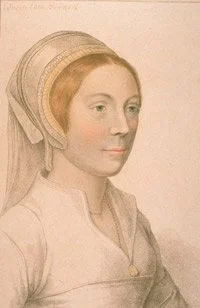
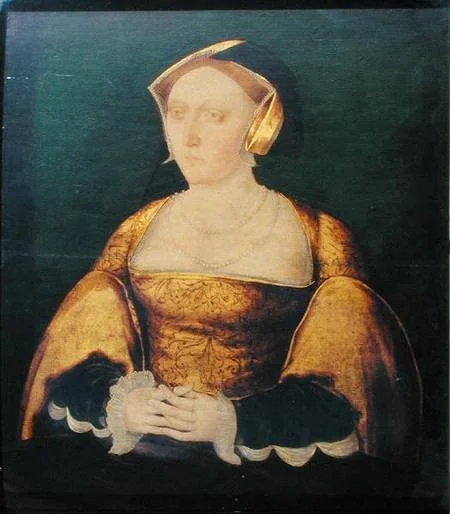
Jane Seymour. Attribution: Hans Holbein workshop, available here.

Jane was born around 1508 into the ambitious but comparatively restrained Seymour family of Wiltshire. Unlike Anne Boleyn, whose years at the sophisticated courts of the Low Countries and France had shaped her into a cosmopolitan and intellectually confident woman, Jane's upbringing was more traditional and conservative. She was educated primarily in the domestic accomplishments expected of noblewomen in Tudor England: household management, embroidery, music, and religious devotion. She lacked Anne's sharp political instincts and dazzling conversational abilities, yet in the climate that followed Anne's downfall, these very qualities became advantages. Henry VIII had grown exhausted by conflict, public controversy, and the relentless political storms surrounding his second marriage. Jane appeared to offer something entirely different, peace, obedience, and stability.

The contrast between Jane and Anne was carefully cultivated both by Henry and by those at court eager to distance themselves from the fallen queen. Anne had become associated in the minds of many English subjects with upheaval: the break from Rome, the destruction of old certainties, and factional court politics. Jane, by comparison, dressed conservatively, behaved modestly, and projected humility. She rarely intervened openly in matters of state and deliberately avoided the intellectual flamboyance that had characterized Anne's queenship. Yet this quieter image should not obscure the reality that Jane was still operating within one of the most dangerous political environments in Europe. Tudor queenship was inseparable from power, and every royal marriage carried immense political implications.

Henry's courtship of Jane began while Anne Boleyn's position was already collapsing. By early 1536, the king's frustrations with Anne had deepened due to miscarriages, political tensions, and his growing infatuation with Jane herself. Jane reportedly refused to become Henry's mistress, presenting herself instead as a virtuous woman who would surrender only through marriage. Whether this reflected genuine personal morality or calculated political wisdom remains debated by historians, but the effect upon Henry was significant. At a time when the king increasingly viewed women through the lens of loyalty and obedience, Jane embodied the idealized image of feminine submission that he now desired.

The speed with which events unfolded revealed both Henry's ruthlessness and the precarious nature of queenship in Tudor England. Anne Boleyn was executed in May 1536 on charges of adultery, incest, and treason, accusations many historians regard as politically motivated or exaggerated. Astonishingly, Henry became formally engaged to Jane Seymour the day after Anne's execution and married her less than two weeks later. The rapid transition from one queen to another shocked foreign ambassadors and demonstrated how completely personal desire, dynastic anxiety, and political authority had merged within Henry's monarchy.

As queen, Jane Seymour consciously attempted to heal the divisions that had fractured both the royal family and the kingdom itself. One of her most important acts was seeking reconciliation between Henry and his eldest daughter, Mary I of England. Mary had been declared illegitimate following Henry's divorce from Catherine of Aragon and had endured years of humiliation and political isolation under Anne Boleyn's ascendancy. Jane treated Mary with kindness and encouraged Henry to restore relations with his daughter. Though Mary was not fully restored to legitimacy, the gradual thaw in relations marked an important moment in the rebuilding of the Tudor family.

Jane's queenship unfolded during a period of continuing religious tension. England remained deeply divided by Henry's break with the authority of the papacy. Although Henry had rejected Rome and established himself as Supreme Head of the Church of England, the religious identity of the kingdom remained uncertain. Jane herself appears to have retained conservative Catholic sympathies. She reportedly interceded with Henry on behalf of participants in the Pilgrimage of Grace, the major northern rebellion against religious reforms and the dissolution of monasteries in 1536. Henry reacted furiously, warning Jane not to meddle in political affairs by reminding her of the fate of previous queens who had overstepped their boundaries. The incident revealed the narrow limits placed upon female authority in Tudor England. A queen might influence the king privately, but direct intervention in matters of policy remained dangerous territory.

This tension between gender and power forms one of the defining themes of Henry VIII's marriages. Queens were expected to embody obedience and fertility while simultaneously serving as dynastic instruments and political symbols. Their value depended heavily upon their ability to produce sons, maintain alliances, and avoid threatening male authority. Jane Seymour succeeded largely because she appeared to understand these unwritten rules better than her predecessor. Yet even her apparent conformity reflected the harsh constraints placed upon women at the Tudor court, where failure could mean exile, disgrace, or death.

The defining moment of Jane Seymour's life came in October 1537 when, after a difficult labor lasting several days, she gave birth to a healthy son at Hampton Court Palace: the future Edward VI of England. Across England, church bells rang in celebration. Henry VIII, after nearly three decades of anxiety, disappointment, and political turmoil, finally possessed the legitimate male heir he had long desired. The birth transformed Jane's status immediately. More than any previous queen, she had fulfilled the essential dynastic duty expected of a Tudor consort.

The importance of Edward's birth cannot be overstated. Henry's obsessive pursuit of a male heir had reshaped England politically, religiously, and socially. His desperation had led to the rejection of papal authority, the establishment of the Church of England, the dissolution of monasteries, and the concentration of royal power on an unprecedented scale. Jane Seymour's success therefore appeared almost providential to contemporaries. To many observers, she became the embodiment of ideal queenship precisely because she delivered the son that justified, in Henry's mind, the sacrifices and upheavals of the previous years.

Yet triumph quickly turned to tragedy. Jane Seymour fell gravely ill shortly after childbirth, likely suffering from puerperal fever, a common and often fatal infection following delivery in the pre-modern world. On the 24th of October 1537, less than two weeks after Edward's birth, she died at the age of approximately twenty-eight. Her death plunged Henry into genuine grief. Unlike his reactions to several of his later wives, the king appears to have mourned Jane deeply and sincerely. He withdrew from public life for a period and wore black for months afterward. Significantly, Henry chose to be buried beside Jane after his own death in 1547, suggesting that he regarded her as his "true" wife — the queen who had given him the son and dynastic security he had pursued for so long.

Jane Seymour's posthumous reputation benefited enormously from her early death. Because she died before political tensions or personal conflicts could damage her standing with Henry, she remained frozen in royal memory as the virtuous and successful queen. Unlike Catherine of Aragon, she did not endure rejection; unlike Anne Boleyn, she did not suffer destruction; unlike later wives, she was not associated with scandal, disappointment, or political embarrassment. Death preserved her image at its most idealized moment.

Her legacy, however, extends beyond her role as mother to Edward VI. Jane's queenship illustrated the increasingly transactional nature of monarchy in Tudor England, where marriage functioned simultaneously as a personal relationship, political institution, and religious battleground. Through her, one can observe the evolution of Henry VIIIhimself. The young Renaissance prince who had once pursued romance and glory had become a hardened ruler shaped by suspicion, dynastic fear, and the burden of absolute authority. Jane represented not passion but reassurance, a retreat into the comforting image of traditional queenship after the chaos unleashed by Anne Boleyn's rise and fall.

The long-term consequences of Jane Seymour's brief reign would reverberate far beyond her lifetime. Edward VI inherited the throne as a child in 1547 and presided, through his regents, over the acceleration of Protestant reform in England. Ironically, the male heir whose birth had seemed to stabilize the Tudor dynasty would rule for only six years before dying young, plunging the succession once again into crisis. Yet without Jane Seymour, the entire trajectory of English history might have unfolded differently. The Tudor succession, the religious identity of England, and the future of the monarchy itself were all shaped by the short life of the quiet queen who succeeded where others had failed.

In the broader story of Henry VIII and his six wives, Jane Seymour occupies a uniquely paradoxical position. She was perhaps the least politically flamboyant of Henry's queens, yet arguably the most consequential. Her reign lacked the dramatic confrontations associated with Catherine of Aragon or Anne Boleyn, but her impact upon the Tudor dynastyproved immense. In a court where women were judged by their usefulness to male power, Jane Seymour achieved the highest success possible and paid for it with her life, through a possible post-pregnancy-based illness.

In conclusion, Jane Seymour's story remains one of the most revealing and tragic episodes within the history of the Tudor monarchy. Although her queenship was short, its consequences shaped the political and religious future of England for generations. In many ways, Jane embodied the ideal Tudor queen as Henry VIII understood it: obedient, modest, fertile, and loyal to both husband and dynasty. Yet the very qualities that elevated her in Henry's eyes also expose the harsh realities faced by women at the Tudor court, where a queen's security depended almost entirely upon her ability to satisfy dynastic expectations. Jane achieved what Catherine of Aragon and Anne Boleyn could not by producing a legitimate male heir, but the cost of that success was ultimately her own life.

Her brief reign also highlights the deeply fragile nature of power in Henry VIII's England. Beneath the ceremonies, splendor, and outward stability of monarchy lay a court governed by fear, faction, and the constant pressure of succession. Jane's careful caution, her avoidance of open political confrontation, and her deliberate presentation as a traditional and virtuous consort were not simply reflections of personality, but survival strategies within a system that could swiftly destroy even the most powerful individuals. The memory of Anne Boleyn's execution lingered over Jane's queenship, serving as a constant reminder of the dangers surrounding royal favor and female influence.

At the same time, Jane Seymour's life reveals the deeply personal dimension of Tudor politics. Henry VIII's marriages were never merely private relationships; they shaped the religious identity, political structure, and dynastic future of the kingdom itself. Through Jane's successful delivery of Edward VI, the king finally secured the succession he had pursued with obsessive determination for decades. Yet history would ultimately reveal the bitter irony of this triumph. Edward's short reign failed to bring lasting stability, and the Tudor succession crises continued after his death, leading eventually to the reigns of Mary I and Elizabeth I, whose legacies would eclipse even that of the long-desired male heir.

Jane's enduring reputation owes much to the fact that her life ended before disappointment, scandal, or political conflict could tarnish her image. She became immortalized as Henry's "perfect" queen largely because she died at the height of her success. In death, she was transformed into a symbol of peace and dynastic fulfilment, preserved forever in contrast to the dramatic rises and catastrophic falls that characterized so many of Henry's other marriages. Yet reducing Jane merely to the role of obedient wife or mother of Edward VI risks overlooking the broader significance of her place in history. Her queenship reflects the expectations placed upon women in Renaissance monarchy, the limitations of female authority, and the dangerous intersection of gender, politics, religion, and dynastic ambition in sixteenth-century England.

Ultimately, Jane Seymour occupies a uniquely important position in the story of the Tudors. She neither transformed England through ideology nor dominated the political stage through force of personality, yet her influence upon the course of English history was immense. Quiet where others were confrontational, cautious where others were ambitious, Jane nevertheless altered the destiny of the Tudor dynasty more decisively than almost any queen consort before or after her. Her life serves as both a testament to the immense power of queenship and a reminder of its terrible human cost in the age of Henry VIII.


Read more about Anne Boleyn here.

Posted
AuthorHistory Is Now Magazine
CategoriesBlog Post

In the long and turbulent history of the Tudor dynasty, few individuals have left a mark as profound and enduring as Anne Boleyn. Her life unfolded against the glittering but dangerous backdrop of the court of Henry VIII, a world governed by ambition, ceremony, dynastic anxiety, and political calculation. To her enemies, she was a scheming temptress who destroyed England's unity for personal advancement. To her supporters, she was intelligent, cultured, reform-minded, and tragically misunderstood. Historians continue to debate her motives and character, yet there is little disagreement about her impact. Anne Boleyn became the catalyst for one of the most significant transformations in English history: the break with Rome, the birth of the English Reformation, and the reshaping of the monarchy itself.

Terry Bailey explains.

Read part 1 on King Henry VIII here, and part 2 on Catherine of Aragon here.

King Henry and Anne Boleyn Deer shooting in Windsor Forest by William Powell Frith , c1903.

When Anne emerged at court in the 1520s, England was still officially Catholic, loyal to the authority of the Pope, and outwardly stable beneath the rule of Henry VIII. The king was admired throughout Europe as the embodiment of the Renaissance prince. Athletic, educated, musically talented, and politically ambitious, Henry projected the image of a powerful monarch whose dynasty seemed secure. Yet beneath the splendor of the Tudor court lay a dangerous uncertainty. Henry's marriage to Catherine of Aragon had produced no surviving male heir. In a kingdom still haunted by the destructive memory of the Wars of the Roses, the absence of a prince threatened political instability and potential civil conflict. The survival of the Tudor line depended upon succession, and succession depended upon sons.

In Tudor England, marriage was never simply personal. Royal marriages were instruments of diplomacy, political alliance, and dynastic preservation. Queens were expected to embody virtue, loyalty, and obedience while fulfilling their most critical function: producing heirs. The pressure upon Catherine of Aragon became immense as pregnancies ended in tragedy and infant sons died young. Henry, increasingly fearful that God had cursed his marriage, began searching for both a solution and a justification. Into this atmosphere stepped Anne Boleyn.

Anne was born around 1501 into the ambitious Boleyn family, daughter of Thomas Boleyn and Elizabeth Howard. Although not of royal blood, the Boleyns were politically connected and eager to rise higher within Tudor society. Anne's upbringing differed significantly from that of many English noblewomen. Sent abroad at a young age, she spent years in the sophisticated courts of the Netherlands and France, where she received an education shaped by Renaissance culture. She learned French fluently, studied music and literature, developed refined courtly manners, and absorbed continental ideas about politics, religion, and humanism. These experiences gave Anne a cosmopolitan confidence that distinguished her sharply from many women at the English court.

The French court especially transformed her. Under the influence of figures such as Margaret of Austria and later Claude of France, Anne encountered a world where elegance, intellect, and political awareness were deeply valued. Unlike the passive image often expected of noblewomen in England, Anne developed a reputation for wit, conversation, and sharp intelligence. She was not considered a conventional beauty by the standards of the age, but contemporaries repeatedly described her charisma, dark eyes, expressive personality, and magnetic presence. She possessed something perhaps more dangerous than beauty alone: influence.

Upon returning to England, Anne entered the household of Catherine of Aragon. At court she quickly attracted attention. Men admired her sophistication and lively personality, while women copied her fashions and mannerisms. Among those captivated by Anne was Henry VIII himself. Initially, however, Anne refused to become the king's mistress. This decision altered the course of English history.

Henry had already pursued relationships outside marriage, including an affair with Anne's sister, Mary Boleyn. Yet Anne proved different. Whether motivated by personal conviction, ambition, or political calculation, she insisted that only marriage would secure her surrender to the king's desires. Henry's attraction deepened into obsession. He wrote Anne passionate letters expressing longing, frustration, and devotion, revealing a monarch increasingly consumed by personal desire and dynastic desperation. What began as a courtly romance soon evolved into a political crisis that would engulf England itself.

Henry's determination to marry Anne required the annulment of his marriage to Catherine of Aragon. The king argued that his union with Catherine violated biblical law because she had previously been married to his late brother, Arthur Tudor. Henry cited passages from Leviticus suggesting that such a marriage was cursed with childlessness. Yet Catherine fiercely denied that her first marriage had ever been consummated, and she refused to accept the annulment quietly. The dispute dragged on for years.

The situation became entangled in European politics. Catherine's nephew was the immensely powerful Holy Roman Emperor Charles V, whose armies had recently dominated much of Europe. The Pope, effectively constrained by imperial influence, hesitated to grant Henry's request. What Henry had hoped would be a relatively straightforward legal matter became a humiliating diplomatic deadlock. The king grew increasingly frustrated with the papacy and with the limitations that Rome placed upon his authority.

During these years Anne Boleyn's influence expanded dramatically. She was no passive observer of events. Anne surrounded herself with scholars, reformers, and intellectuals interested in religious renewal and critical of papal authority. She read works associated with emerging Protestant thought and encouraged the circulation of reformist texts at court. Among the ideas gaining ground was the belief that monarchs should exercise authority over their own national churches without interference from Rome.

Anne's precise theological beliefs remain debated by historians, but there is strong evidence that she sympathized with reformist ideas. She supported vernacular translations of the Bible and patronized scholars who promoted scriptural study. In this sense, Anne became intertwined with the wider religious upheaval spreading across Europe in the wake of Martin Luther and the Protestant Reformation. Yet in England religion and politics became inseparable. Henry's marital crisis was not merely spiritual; it was dynastic and constitutional. Anne's rise helped accelerate a transformation that would permanently alter England's religious identity.

The king increasingly embraced the argument that his authority derived directly from God rather than through papal mediation. Assisted by advisers such as Thomas Cromwell and Thomas Cranmer, Henry began dismantling papal authority in England. Parliamentary acts gradually severed ties with Rome, culminating in the declaration that the king was the Supreme Head of the Church of England. The English Reformation had begun.

This transformation represented one of the greatest turning points in English history. For centuries the Catholic Church had dominated religious, social, and political life. Monasteries controlled immense wealth and land, while Rome exercised spiritual authority across Christendom. Henry's break with Rome changed this balance forever. The Crown gained unprecedented control over religion, church property, and ecclesiastical appointments. Religion became both cause and consequence of Henry's marriage to Anne Boleyn.

Anne and Henry married secretly in late 1532, likely because Anne was already pregnant. In January 1533 the marriage became public, and later that year Thomas Cranmer formally declared Henry's marriage to Catherine invalid. Anne was crowned queen in a magnificent coronation ceremony at Westminster Abbey. The event was designed to project legitimacy, splendor, and divine approval. Lavish pageantry filled the streets of London as Anne processed toward her coronation surrounded by nobles, banners, musicians, and elaborate symbolism celebrating the future Tudor heir.

Yet beneath the grandeur lay deep division. Many ordinary people still regarded Catherine of Aragon as the rightful queen. Anne was widely blamed for England's religious upheaval and for the king's treatment of Catherine. Hostility toward the new queen simmered constantly. Tudor politics was intensely personal, and public opinion mattered more than rulers sometimes realized. Anne's position remained insecure because her authority depended entirely upon Henry's favor and her ability to produce a male heir.

In September 1533 Anne gave birth at the Palace of Placentia not to a son, but to a daughter: Elizabeth I. Henry attempted to conceal his disappointment, and elaborate plans for a prince's celebration were hastily altered for the arrival of a princess. Yet the birth of Elizabeth would ultimately prove one of the most consequential events in English history. The child who disappointed her father would later become one of England's greatest monarchs.

At the time, however, Anne's failure to produce a son placed her in a dangerously familiar position. Several pregnancies ended in miscarriage or stillbirth. The pressure upon queens in Tudor England was relentless. Their political value depended largely upon fertility and the production of male heirs. As Anne struggled with repeated losses, Henry's affection began to fade. Meanwhile, the king was growing increasingly attracted to Jane Seymour, a quiet and traditionally submissive court lady who contrasted sharply with Anne's outspoken personality.

Anne's sharp intelligence and political engagement, once attractive to Henry, now increasingly irritated him. She involved herself in matters of religion and patronage, argued fiercely, and challenged powerful men at court. Her enemies multiplied rapidly. Conservative nobles hated her reformist sympathies, while others feared the growing influence of the Boleyn faction. Even Thomas Cromwell, once her ally in advancing the Reformation, became her opponent amid disagreements over foreign policy and the distribution of monastic wealth seized by the Crown.

The atmosphere at court in 1536 became increasingly sinister. Following another miscarriage, reportedly of a male fetus, Henry's patience appears to have collapsed. Anne's enemies moved swiftly. In May 1536 she was arrested and charged with adultery, incest, and treason. The accusations claimed that Anne had conducted affairs with several men, including musicians, courtiers, and even her own brother, George Boleyn.

Most modern historians regard the charges as politically motivated fabrications or gross distortions. The evidence presented at trial was weak, contradictory, and in some cases impossible chronologically. Yet Tudor justice rarely protected those who had fallen from royal favor. Anne was imprisoned within the Tower of London, the same fortress through which she had once passed triumphantly before her coronation.

Her trial was a carefully orchestrated spectacle. Surrounded by hostile nobles and abandoned by many former supporters, Anne defended herself with intelligence and composure. Nevertheless, conviction was inevitable. She was condemned to death alongside the accused men, including her brother George. Henry VIII, the man who had once shattered England's religious unity to marry her, now sanctioned her destruction.

On the 19th May of 1536, Anne Boleyn was executed inside the Tower of London by a specially summoned French swordsman, considered more skillful and merciful than an English axeman. Contemporary witnesses described her final moments as calm and dignified. She proclaimed loyalty to the king even as she prepared for death. With a single stroke, her extraordinary rise ended.

Only eleven days later Henry became engaged to Jane Seymour.

Yet Anne Boleyn's influence did not die with her. In many respects, her true legacy was only beginning. Through her daughter Elizabeth, Anne became the maternal force behind one of the most celebrated reigns in English history. Under Elizabeth I, England emerged as a major Protestant power. The defeat of the Spanish Armada, the flourishing of literature and theatre, overseas exploration, and the strengthening of national identity all unfolded during Elizabeth's reign. Ironically, the daughter Henry once viewed as a disappointment secured the Tudor dynasty's greatest glory.

Anne's wider historical impact extended far beyond motherhood. Her relationship with Henry accelerated the English Reformation and permanently weakened papal authority in England. The redistribution of monastic lands transformed the economy and strengthened the Crown. Religious divisions unleashed during this period would shape English politics for generations, contributing to future conflicts, persecutions, and ideological struggles. England's evolving Protestant identity became central to its national development.

Anne also remains one of the clearest examples of the dangerous relationship between gender and power in Tudor England. She rose to extraordinary prominence in a political culture dominated by men, but her position depended almost entirely upon royal favor and reproductive success. Her downfall demonstrated how quickly women could become scapegoats within systems designed to preserve male authority. Anne's intelligence and political engagement made her influential, but also vulnerable. She challenged expectations of female silence and obedience in ways that fascinated supporters and alarmed enemies alike.

Within the broader narrative of Henry VIII's reign, Anne Boleyn marks a decisive turning point in the king's evolution. The charming and idealistic Renaissance prince of the early Tudor court increasingly transformed into a ruler capable of extraordinary ruthlessness. Through his pursuit of Anne, Henry broke with Rome, centralized royal power, and redefined the English monarchy. Through his destruction of Anne, he revealed the darker consequences of absolute authority.

Anne Boleyn's life therefore transcends romance, scandal, and tragedy. She stood at the center of a revolution that reshaped England politically, religiously, and culturally. Her rise revealed the intoxicating possibilities of influence at the Tudor court, while her fall exposed the terrifying fragility of power. Queen, reformist symbol, political casualty, and mother of Elizabeth I, Anne Boleyn remains one of the most consequential women in English history — a catalyst whose legacy transformed a kingdom and altered the future of the English-speaking world forever.

Anne Boleyn's story endures because it represents far more than the dramatic rise and fall of a queen at the Tudor court. Her life became inseparably bound to one of the greatest transformations in English history, a transformation that reshaped religion, monarchy, politics, and national identity for centuries to come. Few individuals have stood so directly at the intersection of personal ambition and historical revolution. What began as Henry VIII's desire for a new marriage ultimately evolved into a constitutional and religious upheaval that permanently altered the course of England and, by extension, the future of the English-speaking world.

Anne herself remains a figure of remarkable complexity. She was neither the purely innocent martyr imagined by some later Protestant writers nor the manipulative seductress portrayed by her Catholic enemies. Instead, she emerged from the volatile environment of Renaissance Europe as an intelligent, educated, politically aware woman whose ambition and influence challenged the traditional expectations imposed upon women in Tudor society. Her charisma, confidence, and reformist sympathies helped elevate her to unprecedented prominence, yet those same qualities also contributed to the hostility and suspicion that surrounded her. In a court governed by factional rivalry and royal favor, Anne's position was always precarious, dependent not only upon Henry's affection but upon her ability to fulfil the dynastic demands placed upon queens.

The tragedy of Anne Boleyn lies partly in the brutal irony of her fate. Henry VIII shattered England's centuries-old relationship with Rome to marry her, only to later destroy her when she failed to provide the son he desired. Her execution demonstrated the terrifying extent of Tudor royal power and revealed how quickly political favor could turn into deadly condemnation. Yet although her enemies succeeded in removing her physically, they could not erase the consequences of her existence. The religious changes accelerated during her rise continued long after her death, and her daughter Elizabeth would eventually vindicate Anne's legacy in ways that neither supporters nor enemies could have fully imagined.

Under Elizabeth I, England experienced a cultural and political flowering that secured the Tudor dynasty's place in history. The Protestant settlement, the defeat of the Spanish Armada, the expansion of English influence overseas, and the flourishing of literature and theatre all emerged from the world that developed in part through Anne Boleyn's rise and Henry's break with Rome. The daughter whose birth disappointed Henry VIII ultimately became the monarch who brought stability, prestige, and enduring strength to England. In this sense, Anne's greatest contribution to history may not have been her queenship, but the legacy carried forward through Elizabeth's reign.

Anne Boleyn also remains historically significant because her life continues to illuminate broader themes of power, gender, religion, and political transformation. Her experiences reveal the dangerous realities faced by women who exercised influence in male-dominated systems of authority. They expose the fragile nature of political survival in autocratic courts where reputation, fertility, and royal favor determined life or death. At the same time, Anne's story reflects the wider turbulence of sixteenth-century Europe, an era when religious reform, emerging national monarchies, and Renaissance ideas were reshaping the foundations of society itself.

More than four centuries after her death within the walls of the Tower of London, Anne Boleyn continues to fascinate because she cannot be reduced to a single interpretation. She was ambitious yet vulnerable, influential yet politically exposed, celebrated yet deeply hated. Her life combined romance, religion, tragedy, and revolution in a manner few historical figures can equal. Whether viewed as a reformist heroine, political victim, or catalyst of dynastic crisis, Anne Boleyn occupies a unique place in history. Her rise transformed a kingdom, her fall exposed the cruelty of Tudor power, and her legacy endured through the daughter who would lead England into one of its most defining ages.


Noe read part 4 on Jane Seymour here.

Posted
AuthorHistory Is Now Magazine
CategoriesBlog Post

History has portrayed Thomas Cromwell (circa 1485 to 1540) as the ambitious fixer of King Henry VIII of England. Here, C. M. Schmidlkofer looks at Cromwell’s life, including five interesting aspects.

Thomas Cromwell, 1530s. Painting attributed to Hans Holbein the Younger.

Thomas Cromwell, 1530s. Painting attributed to Hans Holbein the Younger.

Born a commoner, Cromwell reached unheard of heights of political power under Henry Tudor, who bestowed upon him numerous titles typically reserved for English royalty. By the end of his life in 1540, Cromwell was the most powerful person under the King.

An attorney by trade, Cromwell came into the King’s service after the Lord Chancellor Cardinal Wolsey fell from the King’s grace. Cromwell assisted Wolsey in dissolving numerous monasteries to fund the Cardinal College and The King’s School, Ipswich.

Cromwell was already a member of the Privy Council in 1531 and was subsequently awarded offices starting with Master of the King’s Jewel House in 1932 to Earl of Essex in 1540.

Cromwell worked behind the scenes to pave the way for Lady Anne Boleyn to become Henry’s second wife and queen, to removing her six years later and ultimately to her beheading and arranging Henry’s fourth marriage to Anne of Cleves, which led to his downfall (Henry didn’t like Anne, although he married her anyway, divorcing her not long afterwards). 

But writers such as Hilary Mantel – author of the Wolf Hall trilogy - have dug deep into old letters and documents of the time, resulting in what one may call a “softer” side of this complex and mysterious man.


1.     Cromwell may have had a “thing” for Mary Tudor

There is evidence that Cromwell worked on behalf of King Henry VIII’s displaced first daughter, Mary Tudor, when the King divorced her mother, Queen Catherine of Aragon, after 24 years to marry Anne Boleyn.

Because Mary refused to acknowledge the second marriage and her new status as an illegitimate offspring, displeasing King Henry, she was placed in the service of Boleyn’s aunt as well as her toddler half-sister, Elizabeth, and refused access to her imprisoned mother who refused to accept the divorce. 


Numerous letters between Mary and Cromwell during this time indicate he sometimes acted as an intermediary between Mary and Henry when it came to Catherine’s imprisonment and Mary’s banishment from court. The overall tone indicates a level of compassion and possibly affection.

Once father and daughter reconciled (by Mary finally conceding to Henry’s wishes after Catherine’s death), rumors swirled that Cromwell had an interest in marriage to Lady Mary, which did not please King Henry and concerned Cromwell’s ever-present detractors.

Historians speculate that Lady Mary was godmother to Cromwell’s first child, which would have fit into his plans to secure future postings from the king for his family.

In addition, there is some thought among historians that Lady Mary was godmother to Cromwell’s first grandchild, born in 1537. 


2.     Cromwell was generous 

According to historians, Cromwell was a devoted and loving parent. And he used his powerful positions under King Henry VIII to promote and protect his family, friends and those in service in his enormous household.

Thomas Cranmer was one helped by Cromwell, who engineered Cranmer’s rise to archbishop, thus paving the way for Henry to be created Leader of the Church of England, ultimately leading to Henry’s divorce from Queen Catherine to marry Lady Mary Boleyn. 

When Thomas More, the former Lord Chancellor, was imprisoned in the Tower, it was Cromwell who made sure he had the basic necessities and, according to Mantel, gently tried coaxing his old friend to support the King’s efforts to save his life. More would not abandon his religious leanings, however, and ended up being executed for treason.

It is estimated Cromwell fed from his own kitchen up to 200 people who appeared at his gates daily. He took in the unfortunate and waifs, providing shelter, food and employment and, when not busy with the King’s work, created social and economic reforms to improve conditions for the less fortunate. 


3.     Cromwell’s new laws had some benefits

Cromwell is credited for most of the foundations for England’s departments of state, many of which are still in place today.

His reformations made each parish responsible for its own poor and instituted the practice of registering events such as marriages, deaths and baptisms in parish records. 


His new laws helped cities with sewage and water distribution as well.

While raiding the monasteries, abbeys and nunneries of their wealth to line the King’s pockets, Cromwell also created laws requiring parishes to help the homeless and jobless and new tax laws requiring merchants and noblemen to help fund almshouses.

By founding two courts of Wards and Surveyors, he created a more efficient way for taxation and leasing, and by extending sovereign authority into northern England, Wales and Ireland, he created a politically integrated kingdom.


4.     Cromwell had Protestant Leanings

Despite Cromwell’s devotion to Cardinal Wolsey, he took risks for Protestantism and skillfully promoted Reformers into the Cardinal’s service.

Those promotions consisted of young scholars who were well-paid staff on Wolsey’s Oxford College, now known as Christchurch, and were found to be Protestants to everyone’s surprise.

According to Cromwell’s friend, John Fox, Cromwell was introduced to the Reformation after reading a new translation of the Bible. Erasmus translated the Bible into new Latin from Greek, which created interest in people to look at religion in a new way, and Fox believes that is what started Cromwell on the road to Reformation.

Ultimately, Fox pointed to Cromwell’s final words at the scaffold in 1540, which included no references to the prevailing Catholic beliefs mandated by King Henry.

While he started his speech stating he was dying as a Catholic, he did not request prayers or masses for his soul when he died, which was unusual enough for witnesses to note.

His final prayer indicated Lutheran leanings – which his judgment by God would be by faith alone rather than following the Catholic protocol.


5.     Cromwell was multilingual

In a time when travel outside of the country was highly unusual for the common man, Cromwell spoke fluent French and Italian, and perhaps Greek and Spanish.

Historians credit Cromwell’s stint in the French army and years spent in Italy for learning those languages, but it is unclear how he learned Greek and Spanish, only that he may have thought being able to speak those languages would be useful to him at some point. It is generally agreed Cromwell learned Latin through schooling or reading.


What do you think of Thomas Cromwell? Let us know below.

Posted
AuthorHistory Is Now Magazine
CategoriesBlog Post

The Tudors monarchs were a very important part of English history for over 100 years. The Tudor kings and queens ruled from 1485 to 1603. Here, Anthony Ruggiero follows his article on Tudor Queen Mary I (here), and considers how the Tudors took power in England and the importance of the reigns of King Henry VII and King Henry VIII. The article includes a consideration of England’s relationship with France and Spain.

Portrait of King Henry VIII of England,

Portrait of King Henry VIII of England,

Throughout the sixteenth century, the monarchs of the Tudor dynasty each left a mark on England. For example, King Henry VII reorganized a country that was in disarray after years of civil war, while his son, King Henry VIII, established precedence through forming the Church of England. The Protestant Reformation also greatly affected the country. The Reformation challenged the practices of the Catholic Church, as well as the Pope’s authority in Rome. Many English people were critical of the Roman Catholic Church and embraced the Reformation. While religion was one of the most important and persistent issues, the Tudor monarchs also handled foreign relations with two prominent Catholic and Western European nations at the time, Spain and France. These two countries engaged in an on-and-off rivalry during the sixteenth century, with Tudor England being placed in the middle. England’s involvement with Spain and France would have both negative and positive impacts on the country, such as war, marriage, and trade.


The Tudor Rise – King Henry VII

Prior to the Tudors, the political and social state of England during the fifteenth century was in disarray. The country was divided in a civil war between multiple noble families who were all vying for the English crown. Fifteenth century England was a “prison-house,” where any progression seemed impossible to achieve due to the country’s political issues.[1]Church officials, nobles, and knights controlled a majority of the aggregate land. For example, between 60 and 170 barons, earls, and dukes controlled the land.[2]These nobles produced two-thirds of revenue in the country.  Additionally, there were between 9,000 and 10,000 Church parishes in England.[3]Resources produced on these manors were primarily being sold in local markets. Additionally, foreign advances in trade and alliances were scarce, despite England controlling lands such as Calais in France.[4]

The year 1485 was a pivotal year in England’s history as it resulted in the rise of one of England’s most significant dynasties, the Tudors. Throughout the fifteenth century, the English crown was primarily divided between the ruling houses of Lancaster and York, which fought in a civil war known as “The War of the Roses.” By 1485 the York house had been restored, and King Richard III ruled over England. Despite the restoration, the country was still engaged in a civil war, now between King Richard III and Henry Tudor. Henry’s claim to the throne came through his mother, Lady Margaret Beaufort, who was a descendant of King Edward III. Although his claim was questionable, Henry staunchly fought for his right to the throne.[5]The two engaged in battle at Bosworth Field, where on August 22nd, 1485, Richard III was slain, and Henry, later styled King Henry VII, emerged as the new king of England, effectively ending the War of the Roses.[6]During his reign, Henry VII managed to have multiple positive impacts on the country that helped move England from a decentralized, medieval state towards a stable nation. For example, Henry managed to unite the feuding houses in England through his popular marriage to Elizabeth of York, who was viewed as having a strong claim to the throne in her own right. Henry VII was also responsible for printing books, building more chapels and monasteries, helping reorganize Parliament, and establishing trading relations with the Netherlands and Spain. The latter two resulted in more revenue for England, such as obtaining more trade products in cloth and access to fisheries to increase English food supply and trade circulation.[7]The Spanish treaty also resulted in the marriage of Spanish princess, Catherine of Aragon, to Henry’s son Arthur, and after Arthur’s death in 1502, to Henry’s younger son, Henry. [8]England under Henry VII experienced political stability, economic expansion and a royal marriage that addressed decades of animosity with Spain.


King Henry VIII

Following Henry VII’s death in 1509, his then seventeen-year-old son, who would ultimately become one of England’s most famous and notorious monarchs, Henry VIII, inherited the throne. Henry VIII would ultimately be remembered for breaking away from the Catholic Church; however, prior to these events Henry was a devout Catholic, raised with a strong knowledge of theology. Earlier in his reign, when German priest Martin Luther spoke out against the practices of the Catholic Church that sparked the Protestant Reformation, Henry defended Catholic traditions and was declared “Defender of the Faith,” by Pope Leo X in 1521.[9]However, after the papacy refused to grant him a divorce from Catherine of Aragon in order to remarry to produce a male heir to the throne, Henry sought autonomy from the Catholic Church and decided to break from the Church in what would be known as the English Reformation between 1532 and 1534. During this time, Henry and Parliament devised a series of acts that ultimately fashioned Henry as the Supreme Head of the newly-created Church of England.[10]The Act of Restraint Annates, devised in 1532, forced the clergy in England to stop paying taxes to the church in Rome and required them to pay taxes to the Church of England, which ultimately meant the crown.[11]That same year Parliament would also pass the Submission of the Clergy Actthat would force them to deny the authority of the Pope or face confiscation of their landholdings.[12]Finally, the Act of Royal Supremacy in 1534 officially recognized Henry as the head of the Church of England.[13]Although many of these changes shared similarities with Protestantism, Henry’s new church possessed many Catholic traditions. For example, under the publication of his Six Articlesin 1539, the clergy were recommended to take vows of chastity, which contradicted the Protestant views that the clergy should be allowed to marry. This publication also declared private mass and Holy Communion valid, and any denial of these decrees was subject to excommunication and execution.[14]Henry VIII had a lasting legacy and effect on England through his establishment of the Church of England. Despite these reforms religion would remain a controversial and divisive issue through the reigns of Henry’s three children: Edward VI, Mary I, and Elizabeth I. 


Foreign Policy – France & Spain

England’s involvement with two of the major European powers, Spain and France, would have significant impacts throughout the Tudor period. During the 1490s and early 1500s, Spain prospered from multiple explorations and the accumulation of resources from the New World. During this time, King Charles ruled over the Catholic Spain and would later be created Emperor Charles V.[15]Despite both countries maintaining the Catholic faith, Spain would often clash with France. Ruled by the Valois family, particularly under King Francis I, France plunged itself into war with Spain over claimed lands in Italy, known as the Italian Wars, throughout the sixteenth century.[16]During this time both countries made attempts to rally England behind them; these alliances would alter throughout the fifteenth century and inevitably lead to conflicts between each country. Under both Henry VII and Henry VIII’s regimes England’s relationship with both countries regularly shifted. England’s treaty with Spain earned the country revenue and resulted in the marriage between Catherine of Aragon and the later King Henry VIII. England and France would engage in battle 1513 and would attempt to negotiate a treaty in the years that followed, including at the Field of the Cloth of Gold, which resulted in the betrothal of Henry VIII’s daughter, Mary, to the dauphin of France.[17]However, Henry’s pro-French policies quickly soured, the betrothal of Mary to the dauphin was canceled, and Henry once again turned his attentions towards Spain. This new alliance also resulted in the betrothal of Mary to Charles V who was sixteen years her senior. However, the age gap was an issue for Charles, who ultimately called off the betrothal in favor of a matured bride. This angered Henry who again looked to France for an alliance.[18]This back and forth would ultimately continue through Henry’s reign, but would also occur throughout the reign of his three children.


In Conclusion

The Tudors had significant impact on England during their reign over England in the fifteenth and sixteenth centuries. Henry VII brought stability to England following years of warfare. Although Henry VIII may be remembered by some due to his six marriages, his religious changes ushered in the English Reformation, impacting England for years to come. Furthermore, through Henry VIII’s three children: Mary I, Elizabeth I, and Edward VI, England would continue to experience various changes that would ultimately result in the country emerging as a world power.


What do you think of the importance of King Henry VII and King Henry VII in the rise of England as a global power? Let us know below.


[1]Feiling, England Under The Tudors and Stuarts,8.

[2]Peter Turchin and S. A. Nefedov, Secular Cycles(Princeton, NJ: Princeton University Press, 2009), 83.

[3]Turchin and Nefedov, Secular Cycles, 84.

[4]Feiling, Keith. England under the Tudors and Stuarts. New York: H. Holt and, 1927, 7-8.

[5]Feiling, England Under The Tudors and Stuarts, 19.

[6]Sharpe, Kevin. Selling the Tudor Monarchy: Authority and Image in Sixteenth-century England. New Haven: Yale University Press, 2009, 61-62.

[7]Feiling, England Under The Tudors and Stuarts, 27.

[8]Sharpe, Selling the Tudor Monarchy: Authority and Image in Sixteenth-century England, 62-64.

[9]Jones, Whitney R. D. The Mid-Tudor Crisis: 1539-1563. London: Macmillan, 1973, 75.

[10]Jones, The Mid-Tudor Crisis: 15.

[11]Conrad Russell, The Crisis of Parliaments: English History, 1509-1660(Oxford: Oxford University Press, 1988), 94.

[12]Russell, The Crisis of Parliaments: English History, 1509-1660, 98-99.

[13]Russell, The Crisis of Parliaments: English History, 1509-1660, 100-101.

[14]Jones, The Mid-Tudor Crisis: 1539-1563, 77.

[15]Thomas, Hugh. The Golden Empire: Spain, Charles V, and the Creation of America. New York: Random House, 2010, 2-4.

[16]Titler, The Reign of Mary I, 77.

[17]D. M. Loades, The Reign of Mary Tudor: Politics, Government, and Religion in England, 1553-1558(New York: St. Martin's Press, 1979), 6, 8.

[18]Loades, The Reign of Mary Tudor: Politics, Government, and Religion in England, 1553-1558, 8-9.

The life of women in Tudor society was scrupulously controlled – from the way they dressed, their education and what they did in their spare time. Even under the two female rulers of the Tudor era, not much changed, but perhaps Queen Elizabeth I of England’s reign (1558-1603) can be assessed as the birth of the first British feminist icon. Kaiya Rai explains.


The Ermine Portrait of Elizabeth I of England.

The Ermine Portrait of Elizabeth I of England.

Education

Though very few boys received proper formal education, virtually no girls did either. Those who were poor learnt skills from their mothers and grandmothers, and girls from rich families received an education in things such as managing a household, needlework and meal preparation. Moreover, domestic skills were essential for a woman in her future married life, as one contemporary writer commented that a woman who could not cook had essentially broken her marriage vows - “she may love and obey, but she cannot serve and keep him with that true duty which is ever expected.”

At the beginning of the 16th century it became more common for girls to attend schools alongside their male peers, and by the 1560s even the very poorest girls underwent some form of education. Most of this education, however, was dominated by Christian dogma and doctrinal teaching, such as William Barber’s school in London, who taught ‘further learning’ of the Bible. Since the Bible was used by the Church and the patriarchs in society to justify the inferiority of women, this almost added to their lack of independence, no matter the fact that they were being educated. The exceptions in education began emerging during the Reformation, when humanists, such as Thomas More, actively sought to give their daughters an excellent education. Humanists paved the way for the Enlightenment era of the 17th and 18th century, as they believed in self-understanding of the Bible, and drawing conclusions for oneself as opposed to passively listening to and believing everything the Church taught. Thus, their emergence in the education stage of Tudor England was of a similar nature - to try and reform stereotypical attitudes towards knowledge.


Marriage and patriarchy

There was no legal age for a woman to be married and so for many families, it was a matter of urgency to try and find a husband for their daughters, who would have no choice in the matter. Many believed that if a girl passed the age of 14 unmarried, she would become a burden to the family as it was an extra mouth to feed with no extra income, and many first met their spouse on the wedding day, much like Anne of Cleves and Henry VIII did. For some, such as Elizabeth Howard, daughter of the Earl of Surrey, marriage was an opportunity to further her social position. Most women were expected to enter service before they were married, and for upper-class women this would usually be with a woman of higher social standing who would also aide her in finding a husband, and for lower-class women, the agreement of a year’s service in exchange for wages and housing was usual. Others entered into the more abstruse institution of prostitution, where disease was rife and was the cause of many premature deaths. However, this was still seen as dishonorable, though it was common, as is evident in the case of Mother Bowden’s brothel which was declared ‘immoral’ by the parish officials in 1567. Furthermore, women were taught that God had commanded them to be obedient to men, whether that be father or husband, and so the patriarchy in a woman’s life in Tudor England was constantly upheld and strengthened by all sources of power.

Since they had been told from childhood that they were inferior, women subsequently acted in an inferior manner. The Reformation actually did little to thwart this, despite the more modern tendencies and attitudes of the humanists, as is evident in the beliefs of Protestant leader John Knox, who wrote “women in her greatest perfection was made to serve and obey man.” The law gave men full rights over their wives, to the extent that they could have their wife burned at the stake for adultery, and that if a man beat his wife, it was justified on the grounds that she must have done something to provoke him, by not being a ‘good’ wife. Another important aspect of a woman’s married life was childbirth; they were expected to produce sons to carry on the family line, and this was true for royalty and peasants alike. However, childbirth was dangerous, and resulted in many deaths during it, or even after the baby was born, as puerperal fever and post-birth infections were common. One job of the ‘midwife’ was even to make arrangements for the baby in case the mother should die, indicating just how often women did die during childbirth.


Tudor women under Elizabeth I

Queen Elizabeth I did not ever get married, and to this day retains the somewhat misleading title of ‘the Virgin Queen.’ She was the most powerful woman of her time, and refused to relinquish or share that power, when women were considered property, and so perhaps it could be seen that she was a feminist in some sense. She was strong, intelligent and refused to be constrained by a political marriage. This is apparent in her hidden relationship with Robert Dudley, who she could never marry because of his status, but yet still refused to marry another who she did not love. She once stated “I know I have the body of a weak and feeble woman, but I have the heart and stomach of a King, and a King of England, too,” thus again indicating just how brusquely independent she was determined to be.

There is speculation among historians as to why Elizabeth I never got married, such as a psychological explanation owing to what happened to her mother and stepmother in marriage (they were beheaded). Perhaps she saw the damage of what Mary’s marriage to Philip II did to the country, and to Mary’s heart, or perhaps she held a fear of childbirth as two of her stepmothers, Jane Seymour and Catherine Parr had died just after childbirth. It is clear that her love for Robert Dudley did play some importance, and her constant appearance of an available woman to foreign ambassadors meant that she could enter marriage negotiations and use them to her advantage by influencing other countries and playing them off against one another.

Despite the fierce independence of Elizabeth, she did not do much to actually improve the lives of women in society, and so perhaps cannot be a ‘feminist,’ as we see them. As Carrick asserted that “she was the monarch and [felt she’d been] appointed by God…. that set her apart from the rest of humanity.” However, we must also place her in context, and Carrick also recognises this, by stating, “The idea of women’s rights…just wouldn’t occur to her yet and yet as an individual she was that; she lived that. She was brilliant at sport and horse riding, really active, a massive intellect.”

Therefore, whilst women in the Elizabethan era had primarily similar lives to those living under the reign of the previous Tudor monarchs, the roots of feminine individuality can clearly be seen in the era, and so perhaps helped to set up a platform which would aid the suffrage movement many centuries later.


What do you think of the life of women in Tudor England? Is Elizabeth I the first British feminist? Let us know below.