The closing chapter of the Wars of the Roses is not written solely in the blood-soaked fields of the Battle of Bosworth Field, but in the quieter, more enduring transformations that followed. When Henry VII of England emerged victorious and claimed the English throne, he inherited a realm deeply scarred by decades of intermittent civil war. The conflict had not been a continuous, unbroken struggle, but rather a series of violent convulsions that periodically destabilized the kingdom. By 1485, however, the cumulative effect was unmistakable: the old feudal order had been shaken to its foundations, and England stood at the threshold of a new political age. The Tudor dynasty, forged in the crucible of war and compromise, would reshape the monarchy into a more centralized and disciplined institution, laying important groundwork for the emergence of the early modern English state.

Terry Bailey explains.
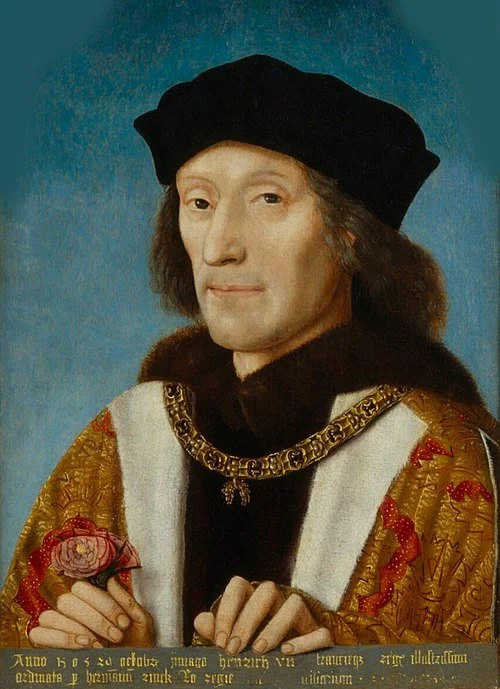
King Henry VII of England.

The destruction and weakening of the great noble houses was perhaps the most immediate and visible consequence of the wars. For generations, powerful magnates had exercised semi-autonomous authority in their regions, commanding private armies and maintaining vast networks of retainers. Yet the bitter rivalry between the House of York and the House of Lancaster led to a cycle of battles, executions, and attainders that steadily eroded the strength of these families. Prominent lineages were extinguished or reduced to shadows of their former selves, and the political landscape they had dominated was irrevocably altered. This was not merely a by-product of conflict; it became an opportunity seized upon by the new Tudor regime.   

Henry VII understood, perhaps more clearly than any of his predecessors, that the unchecked power of the nobility posed an existential threat to royal authority. His response was not to abolish the aristocracy, but to bind it more tightly to the Crown. Through financial instruments such as, he ensured that noble loyalty was not only expected but enforceable. The regulation of retaining—long a source of private military power—further curtailed the ability of nobles to act independently. Over time, this produced a more compliant aristocratic class, one whose influence was increasingly derived from royal favor rather than hereditary might. The transformation was subtle but profound: the nobility remained central to governance, yet it no longer stood as a rival power base.

This reconfiguration of noble power fed directly into the broader strengthening of central authority. Under Henry VII and his son, Henry VIII of England, the machinery of government became more efficient, more intrusive, and more firmly controlled from the center. The Crown expanded its administrative reach, relying on a growing cadre of administrators rather than feudal intermediaries. Institutions such as the Council Learned in the Law and the Court of Star Chamber were employed to enforce royal policy and discipline those who might challenge it. Justice, once unevenly administered through a patchwork of local jurisdictions, became more standardized as the authority of the monarchy extended into the provinces. In these developments, one can discern the early contours of a state that was no longer merely the personal domain of a king, but an increasingly structured entity.

The constitutional implications of the Wars of the Roses, while less immediately visible, were equally significant. The repeated deposition and replacement of monarchs during the conflict—most notably Henry VI of England and the death of Richard III of England—challenged traditional notions of divine and hereditary right. Although the ideology of kingship remained formally intact, the reality had been exposed: a king who could not command loyalty or maintain order might be removed. Legitimacy, therefore, became a more complex and negotiated concept, dependent not only on lineage but on political support and effective governance. Parliament played an increasingly important role in this process, ratifying changes of regime and providing a veneer of legality to acts of dispossession and succession. While it would be anachronistic to describe this as the birth of a constitutional monarchy, it nonetheless marked a step toward a more participatory political framework.

Beyond the structures of governance, the Wars of the Roses also left a lasting imprint on English culture and historical memory. The Tudor dynasty, keenly aware of its relatively tenuous claim to the throne, invested considerable effort in shaping the narrative of the conflict. By portraying the preceding era as one of chaos, disorder, and moral justified their own rule as a restoration of stability and justice. This interpretation found its most enduring expression in literature, particularly in the works of William Shakespeare. His play Richard III presents the last Yorkist king as a deformed and malevolent tyrant, a characterization that has profoundly influenced popular perceptions for centuries. Yet this portrayal is as much a product of Tudor propaganda as it is of historical fact.

Modern historians have increasingly sought to disentangle myth from reality, reassessing the Wars of the Roses through the careful analysis of contemporary sources. Far from depicting a nation in constant turmoil, recent scholarship suggests that much of England experienced periods of relative stability between outbreaks of conflict. Local governance often continued with remarkable continuity, and the impact of the wars on the general population may have been less severe than traditionally imagined. The conflict, in this light, appears less as a total collapse and more as a series of elite struggles, fought by and for a relatively small segment of society.

The reassessment of figures such as Richard III exemplifies this shift in perspective. Archaeological discoveries, including the identification of his remains in 2012, have provided new insight into his physical condition and reign, challenging long-held assumptions shaped by literary tradition. While he remains a controversial figure, he is now often viewed in a more nuanced light, as a capable, if ultimately unsuccessful, ruler operating within a deeply unstable environment. This willingness to revisit and revise historical narratives reflects broader trends within the discipline of history, where the emphasis has shifted toward complexity, context, and the critical evaluation of sources.

In considering the long-term legacy of the Wars of the Roses, it becomes clear that their significance extends far beyond the question of who wore the crown. They accelerated the decline of feudal structures, facilitated the rise of a more centralized monarchy, and contributed to the gradual evolution of England's institutions. At the same time, they demonstrate the power of narrative in shaping the understanding of the past. The wars have been remembered not only through chronicles and records, but through plays, legends, and national mythology, each layer adding to their enduring fascination.

As the final instalment in this series, the story of the Wars of the Roses resolves not with a simple conclusion, but with an invitation to reflection. The conflict did not merely end in 1485; it continued to shape the trajectory of English history for generations. In the hands of the Tudors, the lessons of civil war were transformed into a blueprint for stability, control, and consolidation. Yet the memory of those turbulent years, refracted through centuries of interpretation, is a reminder that history is never static. It is a dialogue between past and present, in which each generation seeks to understand not only what happened, but what it means.

In drawing this long and turbulent narrative to a close, the Wars of the Roses emerge not simply as a dynastic struggle resolved by the victory of Henry VII of England, but as a transformative period in which the very nature of English kingship and governance was redefined. The triumph at the Battle of Bosworth Field did not erase the divisions that had scarred the realm; rather, it marked the moment at which those divisions were brought under tighter control, harnessed, and gradually reshaped into a more durable political order. What followed was not the simple restoration of peace, but the careful construction of stability—an achievement as deliberate as it was fragile.

The collapse of overmighty noble power, the strengthening of central authority, and the increasing reliance on administrative governance together signaled the end of the medieval political landscape that had allowed such conflicts to flourish. Under the Tudors, the Crown ceased to be merely the apex of a feudal hierarchy and instead became part of a more integrated state. This shift did not occur overnight, nor was it free of resistance, but it fundamentally altered the balance between monarch and nobility, reducing the likelihood that private rivalries could again erupt into national conflict. In this sense, the wars achieved, through their destruction, the conditions necessary for a more stable future.

Equally significant was the subtle transformation in the concept of legitimacy. The repeated upheavals of the fifteenth century had demonstrated that kingship could no longer rely solely on hereditary right or divine sanction. The reigns of Henry VI of England and Richard III of England illustrated that authority depended increasingly on the ability to command loyalty, maintain order, and secure recognition from the populace, including Parliament. This evolving understanding did not yet constitute a constitutional monarchy in the modern sense, but it marked a significant step towards a system in which power was more contingent, negotiated, and institutionalized.

Yet if the structural consequences of the wars were profound, their legacy in memory and myth has proven equally enduring. The narratives shaped by Tudor chroniclers and immortalized by William Shakespeare ensured that the conflict would be remembered not merely as history, but as drama—populated by heroes, villains, and moral lessons. The enduring image of Richard III of England as a tyrant owes as much to this tradition as to the historical record, reminding us that the past is often filtered through the needs and perspectives of those who recount it. Modern scholarship, with its emphasis on evidence and context, has begun to peel back these layers, revealing a more complex and less sensational reality, yet the power of these older narratives remains deeply embedded in cultural consciousness.

Ultimately, the significance of the Wars of the Roses lies in their dual character as both destructive and creative forces. They brought immense suffering and instability, yet they also accelerated changes that might otherwise have taken generations to unfold. From the power of feudal magnate dominance to the rise of a more centralized monarchy with legitimacy to the gradual strengthening of institutional governance, the wars reshaped England in ways that extended far beyond the battlefield.

As this series concludes, what remains most striking is not simply how the conflict ended, but how it continued to resonate. The Tudors did not merely inherit a kingdom; they inherited the lessons of civil war, and from those lessons they forged and aided in prioritizing control, continuity, and caution. Yet the memory of those events preserved in chronicles, literature, and national myth—ensures that the Wars of the Roses remain more than a closed chapter. They endure as a reminder that history is not fixed, but continually reinterpreted, and that the meaning of the past is shaped as much by those who remember it as by those who lived it.


The site has been offering a wide variety of high-quality, free history content since 2012. If you’d like to say ‘thank you’ and help us with site running costs, please consider donating here.
Posted
AuthorHistory Is Now Magazine
CategoriesBlog Post

The long and violent struggle known as the Wars of the Roses did not end with a gradual fading of hostilities, nor with a negotiated peace between exhausted rivals. Instead, it concluded in a single, decisive moment of shock and finality on the 22nd of August 1485, at the Battle of Bosworth Field. Here, amid the marshy terrain and uncertain loyalties of Leicestershire, the fate of England was determined not only by arms, but by allegiance, timing, and the calculated risks of two very different men. The outcome would extinguish the Plantagenet dynasty and usher in the Tudor age, but the peace it promised would prove far more fragile than it first appeared.

Terry Bailey explains.

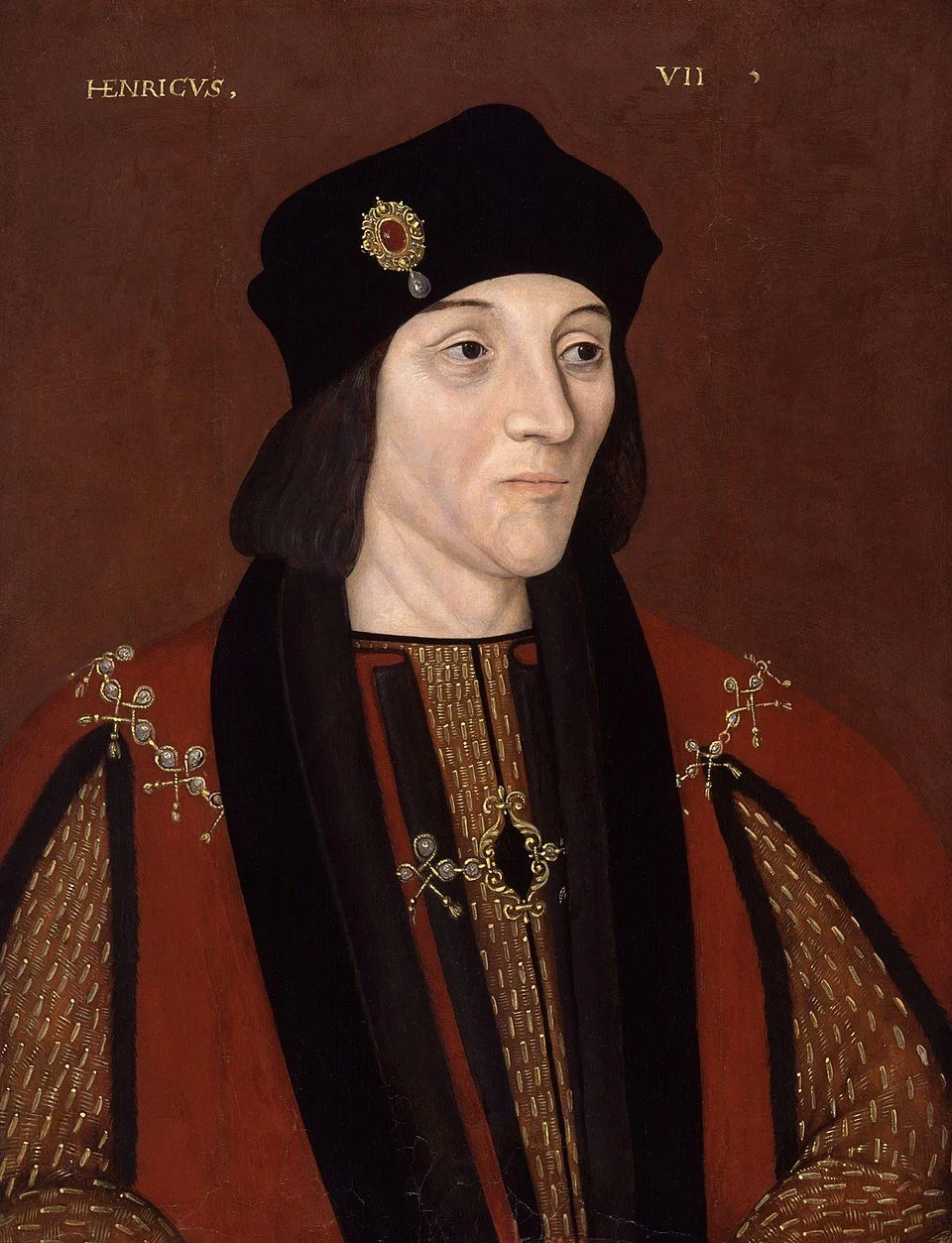
King Henry VII.

By the summer of 1485, the Yorkists' hold on England, though seemingly secure, was built upon uneasy foundations. Richard III had seized the throne in 1483 following the death of his brother, Edward IV, declaring Edward's sons illegitimate and assuming the crown himself. His reign, however, was immediately shadowed by controversy. The disappearance of the young princes in the Tower of London cast a long and damaging pall over his legitimacy, fueling rumors and alienating potential supporters. While Richard demonstrated administrative competence and military capability, he struggled to command the unqualified loyalty that his position required in such a volatile political climate.

Across the Channel, a claimant with a far weaker but symbolically potent claim was prepared to challenge him. Henry VII, then Henry Tudor, had spent much of his life in exile, primarily in Brittany and France. His claim to the throne came through his mother, Margaret Beaufort, a descendant of John of Gaunt through the Beaufort line—legitimized but originally born out of wedlock and barred from succession. In purely legal terms, Henry's right to rule was tenuous at best. Yet in the context of a kingdom exhausted by war and disillusioned with Yorkist leadership, his claim offered something more compelling: the possibility of change, and perhaps stability.

Henry's invasion in August 1485 was not the beginning of a vast campaign, but rather a calculated gamble. Landing in Wales, he gathered support as he advanced into England, drawing to his cause those disaffected with Richard's rule. His army, though smaller and less experienced than that of the king, was bolstered by a sense of purpose and by the expectation—never entirely certain—that powerful nobles might shift their allegiance at the decisive moment. Among these were the Stanley family, whose loyalties would prove critical.

The battlefield at Bosworth was not a grand stage prepared for a set-piece engagement, but a landscape shaped as much by uncertainty as by strategy. Richard III commanded the larger force and occupied a strong defensive position. Confident in his military experience, he sought to bring the matter to a swift conclusion. Henry, by contrast, relied heavily on his commanders, particularly the experienced John de Vere, Earl of Oxford, to manage the tactical realities of the engagement. The tension that morning was palpable, not merely because of the impending clash, but because of the unknown intentions of the Stanleys, whose forces remained conspicuously detached from the initial fighting.

As the battle unfolded, Richard seized the initiative in a move that has since become legendary. Spotting Henry on the field, he launched a direct cavalry charge aimed at killing his rival and ending the contest in one decisive stroke. It was a bold and characteristically aggressive maneuver, reflecting both Richard's confidence and the precariousness of his position. For a brief and electrifying moment, success seemed within his grasp. Yet warfare in this period was rarely governed by courage alone. At the critical juncture, the Stanleys intervened—not in support of their king, but against him. Their forces closed in, surrounding Richard and cutting off his retreat.

What followed was brutal and final. Richard III was unhorsed and killed in the thick of the fighting, becoming the last English monarch to die on the battlefield. With his death, organized resistance collapsed, and the Yorkist cause effectively disintegrated. According to tradition, his crown was recovered from the field and placed upon Henry's head, a symbolic act that transformed a contested claimant into a king by right of conquest. Yet victory on the battlefield was only the beginning of Henry's challenge. His claim to the throne, while now backed by force, required careful reinforcement. Conscious of the need for legitimacy, Henry moved swiftly to consolidate his position. He dated the start of his reign to the day before Bosworth, thereby technically rendering those who fought against him guilty of treason. More importantly, he fulfilled a key promise that had helped secure support for his invasion: his marriage to Elizabeth of York. As the daughter of Edward IV, Elizabeth represented the Yorkist line, and their union symbolized the reconciliation of the rival houses.

From this marriage emerged one of the most enduring symbols in English history: the Tudor rose, combining the red of Lancaster and the white of York. It was more than mere heraldry; it was a carefully constructed message of unity and renewal. Henry VII understood the power of symbolism in shaping perception, and he deployed it effectively to present his reign as the culmination of peace rather than the continuation of conflict. Despite these efforts, the years following Bosworth were far from tranquil. The underlying tensions that had fueled decades of civil war did not simply vanish with the death of Richard III. Yorkist sympathies persisted, and they soon found expression in a series of challenges to Tudor authority. The first major threat came in the form of Lambert Simnel, a boy presented as the Earl of Warwick, who attracted significant support both within England and abroad. This rebellion culminated in the Battle of Stoke Field, where Henry's forces secured a decisive victory, effectively ending large-scale Yorkist resistance.

A more prolonged challenge emerged in the figure of Perkin Warbeck, who claimed to be one of the lost princes. Supported at various times by foreign courts, Warbeck represented not merely a military threat, but a symbolic one, reviving the unresolved questions surrounding the legitimacy of Richard III and, by extension, Henry VII. Henry's response to these threats was measured and pragmatic. He combined firm military action with diplomatic efforts to isolate his opponents, while also employing an increasingly sophisticated network of intelligence and surveillance to detect and neutralize plots.


Central to Henry's success was his determination to curb the power of the nobility, whose private armies and shifting loyalties had been a defining feature of the Wars of the Roses. Through legal and financial mechanisms, he sought to enforce loyalty and limit the capacity of magnates to act independently of the crown. At the same time, he worked to restore the financial stability of the monarchy, rebuilding royal revenues and reducing dependence on Parliament. This careful consolidation of power marked a significant step toward a more centralized and controlled system of governance. And yet, for all his achievements, Henry VII's reign retained an undercurrent of caution, even suspicion. The memory of civil war lingered, shaping both his policies and his outlook. Trust was a rare commodity in a kingdom that had seen allegiances shift with deadly consequences, and Henry governed accordingly, favoring stability over grandeur and security over risk.

The Battle of Bosworth Field thus stands not merely as the end of a conflict, but as a moment of profound transformation. It marked the close of the medieval era of feudal dynastic struggle and the beginning of a new phase in English history, one characterized by stronger central authority and the gradual emergence of the modern state. The fall of the Plantagenets and the rise of the Tudors reshaped the political landscape, setting the stage for the sweeping changes of the sixteenth century.

Bosworth was both an ending and a beginning. It brought to a close the bloody contest between Lancaster and York, but it also revealed how fragile the resulting peace would be. Henry VII's triumph was not simply a matter of victory in battle; it was the foundation of a dynasty that would endure, adapt, and ultimately transform England. Yet that foundation, laid in the uncertainty of war and secured through careful strategy, would always carry the imprint of the conflict from which it emerged.

In the final reckoning, the Battle of Bosworth Field must be understood not as a neat conclusion to the Wars of the Roses, but as a decisive rupture that forced England onto an entirely new trajectory. The death of Richard III did more than end a reign; it extinguished the last vestiges of Plantagenet rule and closed a chapter of English history defined by feudal loyalties, dynastic fragmentation, and the persistent fragility of kingship. In his place, Henry VII emerged not as the obvious heir to a settled crown, but as a pragmatic survivor who recognized that victory in battle alone could never secure a throne so long contested.

Henry's achievement, therefore, was not merely in winning Bosworth, but in what followed: the careful, deliberate construction of legitimacy in a kingdom still haunted by division. His marriage to Elizabeth of York, the symbolic unification of Lancaster and York, and his systematic suppression of rebellion were all part of a broader effort to transform conquest into continuity. Yet the very need for such measures underscores a central truth of the post-Bosworth world—peace was not inherited, but manufactured, and always under threat. The pretenders, conspiracies, and lingering Yorkist sympathies that defined the early Tudor years reveal how close England remained to renewed instability, even as the outward symbols of unity took hold.

What ultimately distinguishes this moment in history is the shift it represents in the nature of English monarchy. The lessons of the preceding decades were not lost on Henry VII. Where earlier kings had relied on personal loyalty and martial prowess, Henry cultivated control—over finances, over nobility, and over the mechanisms of governance itself. In doing so, he laid the groundwork for a more centralized state, one less vulnerable to the centrifugal forces that had torn the realm apart. The crown, under Tudor rule, would become not merely the prize of noble contention, but the focal point of an increasingly structured and enduring authority.

And yet, Bosworth's legacy is inseparable from the violence that birthed it. The Tudor dynasty, for all its future grandeur, was founded upon uncertainty, opportunism, and the brutal calculus of survival. Its early stability was hard-won and carefully maintained, always mindful of the past that threatened to resurface. In this sense, Bosworth was not a clean break from history, but a moment in which the old world gave way reluctantly to the new, its shadows lingering long after the war had fallen silent.

Thus, Bosworth stands as both culmination and commencement: the final act of a dynastic struggle that had defined a generation, and the opening scene of a new order that would redefine England itself. From the blood-soaked ground of Leicestershire emerged not just a king, but a dynasty whose influence would extend far beyond the immediate aftermath of civil war. The Tudors would go on to shape the political, religious, and cultural identity of the nation, but their story—like that of Henry VII himself—began in uncertainty, forged in conflict, and secured only through vigilance, calculation, and an unyielding determination to ensure that the chaos of the past would never again so easily return.


The site has been offering a wide variety of high-quality, free history content since 2012. If you’d like to say ‘thank you’ and help us with site running costs,please consider donating here.

Of all the love stories throughout time, one that is rarely mentioned is that of England’s King Henry VII and his Queen, Elizabeth of York. Here, C. M. Schmidlkofer looks at their marriage, considers whether it was true love, and what happened when one of the couple died.

Elizabeth of York.

Elizabeth of York.

The union of King Henry VII and Elizabeth of York in 1486 coincided with the end of the War of the Roses, a series of civil wars between the House of Lancaster and the House of York, rival branches of the royal House of Plantagenet fighting for the English throne.

Henry Tudor won the crown and Elizabeth’s hand in marriage, bringing the two factions together and establishing a peaceful realm in the land.


Arranged

While it sounds romantic, marriages at the time were rarely the result of romantic love. They were vehicles for political and familial alliances, cemented further with the resulting children. 

Henry and Elizabeth’s marriage was arranged by their mothers, Margaret Beaufort and Elizabeth Woodville, for the sole purpose of uniting the Lancasters and Yorks.

And while Henry and Elizabeth’s marriage may have started in the usual way, it is thought the two fell in love over time. 

Elizabeth had been raised to be a dutiful wife and evidence suggests in that she was successful. Admirers cited her beauty, fertility and devotion as the making of a good queen.

Historians cite evidence of a loving, joyful marriage between them. It is reported they showered one another with gifts throughout their union. Elizabeth earned Henry’s love with her loyalty and support and he responded with acts of kindness and concern.

Kings of the day did not typically confer with their queens about matters of state, yet there appears to be evidence Henry gave Elizabeth the power to petition him on behalf of her servants, merchants and others to even resolve issues independently on occasion on matters of law.

When Elizabeth’s brother-in-law, William Courtenay, was charged with treason in 1502 and imprisoned in the Tower, she took to her charge his young children to raise shortly before the arrest. Historians suggest that Henry had come to trust his wife enough to alert her of his intentions regarding Courtenay, showing how confident he was in her loyalty to share a secret of the highest level.

Historians cite an example of their love and trust for each other when their eldest son, Arthur, died at the age of 15 the same year.

Overwrought with emotion over the death, the two fell to each other for comfort, with Elizabeth reminding Henry they were still blessed with a son and two daughters and were still young enough to have more children. And he supported her when, afterwards, she succumbed to grief.


Death

Henry was devastated following Elizabeth’s death, only a year after the birth of a daughter, who also died a short time later. He was reportedly inconsolable, securing himself away for a time, unwilling to accept the solace of comforters.

In what is considered a display of his love for Elizabeth, Henry spent a considerable sum on her funeral. Records show that he spent approximately $4,225, the equivalent of $184,494 today, for opulent processions and services. He spent $845 for Arthur’s final expenses.

Henry VII attempted remarriage several times, searching for a wife that would strengthen England’s political and financial standing.

One potential wife was his own deceased son’s widow, Spanish royal Catherine of Aragon, which caused much concern as she was slated to become the bride of Henry VIII, Henry’s second son, when he came of age.

And while this looks like another political move, Henry VII is thought to have had mercenary motives as well as lustful ones. He wanted to keep Catherine’s dowry in his control and there was speculation he was smitten by her beauty and personality. He also wanted another son, and the young widow could provide that for him.

There aren’t many details of this attraction and even fewer concerning Catherine’s reaction to Henry VII’s interest. Historical novels suggest the King danced and flirted with the teenage girl to the dismay of his advisors, who tried to talk him out of marrying the teenager.

His negotiations for a marriage contract with Catherine’s parents, Queen of Castile Isabella I and King Ferdinand II of Aragon, never materialized as they objected to the union.

Unwilling to return Catherine’s dowry to Ferdinand, King Henry VII moved forward with the marriage of Catherine to Henry VIII in 1509 while he sought other prospects for his own remarriage.

Queen Isabella suggested King Henry VII marry her niece, Joanna of Aragon (Dowager Queen of Naples), but a satisfactory agreement did not materialize.

And finally, Margaret, Archduchess of Austria, declined Henry’s offer of marriage. He spent his remaining years an unmarried man, passing away in 1509, his son Henry VIII becoming King of England, with Catherine of Aragon at his side as Queen.


What do you think Henry VII and Elizabeth? Let us know below.

Now read more from the author here on “Five Amazing Things About King Henry VIII’s ‘Fixer’ - Thomas Cromwell”.

Posted
AuthorHistory Is Now Magazine
CategoriesBlog Post

How familiar are you with the Tudors? In this article, Jennifer Johnstone introduces us to some of the key events and people in the period including bloody religious change, kings and queens, and King Henry VIII’s six wives.


Everyone is familiar with the Tudors. Or at least, most people know about Henry VIII, and his six wives: Catherine of Aragon, Anne Boleyn, Jane Seymour, Anne of Cleves, Catherine Howard, and finally Catherine Parr, alongside another one of England’s longest serving monarchs: Elizabeth I. The first Tudor royal was King Henry VII (1485-1509), then his son, Henry VIII (1509-1547), then to the boy King Edward VI (1553), briefly Lady Jane Grey sat on the throne in 1553, to be ursurped by Mary I, sometimes referred to as ‘Bloody Mary’ (1553-1558), and finally, the last of the Tudor monarchs was Elizabeth I (1558-1603). In the television program The Tudors, Catherine of Aragon describes Anne Boleyn as ‘the scandal of Christendom’; however, it seems like an accurate description of the Tudors themselves, as they divided a country religiously, broke with Rome, and reformed England in a way that changed the country forever.

King Henry VIII and Anne Boleyn

King Henry VIII and Anne Boleyn

Family divisions

The Tudors did not only divide the country of England religiously, between Catholic and Protestant, but they were divisive amongst themselves too. They were a family of intense division.

One of the divisions in the Tudor court came from the contentious relationship Mary I had with Anne Boleyn. It is said that they hated each other, and even tried to kill one another. The Imperial Ambassador of the time, Eustace Chapuys, claimed that Anne tried to poison Mary. But there is a lac k of evidence to suggest that Chapuys’ claim is true. Chapuys wasn’t an impartial figure in the Tudor court; he is said to have supported Lady Mary and her mother Catherine of Aragon. But it is also claimed that Anne said to her brother George that, “she would consider putting Mary to death if the King ever left her as Regent while he was away in France.” Perhaps there is some truth to the claim that Anne thought that it would have been easier on her if Mary was out of the equation, but to accuse her of murder without strong evidence, doesn’t give us an accurate picture of what Anne really thought of Mary.

So, what did Mary think of Anne? Well, Mary seems to have resented the new Queen. And that she even rejoiced when Anne did not and could not produce a son for Henry. Mary seemed to blame Anne for her parents’ divorce, and the ill treatment by her father towards her. It’s possible that Anne could have been partly to blame for Henry’s mistreatment towards Mary, but Henry stripped Mary of being a princess of his own accord; she was in favor one minute and banished the next minute from court. Henry also had the notion that a son was more important to the Tudor’s future; seeing Mary as inferior in this way must have affected her psychologically too. Indeed, Mary later became a bitter, resentful, and brutal Queen.


Henry VII

The divisions which were rife throughout the Tudor period can be seen from the dawn of the Tudor period as Henry VII came to power in a divided country. The country was at civil war when Henry VII defeated King Richard III in battle. The civil war was called the 'The War of the Roses', a battle between two families, the White Rose of York and the Red Rose of Lancaster (the Tudor Rose), hence the name 'Roses'.

Henry VII is know for his ruthless taxes on the populace. With the money taken from these taxes, Henry VII was able to leave a fortune to his son Henry VIII. Henry VII also reformed laws, and the powers of the King. All told, although Henry VII came to power with a bang, nothing terribly noteworthy happened in his reign, hence why some regard Henry VII as an unmemorable ruler. But, we do not have that problem with his son.


Henry VIII

Henry VIII succeeded his father to the throne on April 21, 1509, and his coronation took place on June 24, 1509. He is well known for forming the Church of England at the expense of the Catholic Church. This was partly because the Pope would not grant Henry an annulment on his first marriage, to enable him to marry again. The establishment of his own church gave Henry the chance to marry a total of six times. Interestingly, his marriage with Anne of Cleaves lasted only six months, but he remained friends with Anne for the duration of their lives. Catherine Parr had understandable reservations about becoming Henry's Queen - who of us would want to marry a King who easily tired of his wives, and was prepared to chop off their heads? They say the only one that Henry really loved was Jane Seymour. Perhaps this was because she gave him the son that he desperately wanted.

But Henry seemingly had several other sons, albeit ‘bastard’ (illegitimate) ones. They were Henry FitzRoy, Thomas Stukley, and Richard Edwards. Considering that Henry VIII had many affairs, and the social stigma that surrounded 'bastard' children, there were very likely more children of Henry's too. Of his three sons, only one was recognized by Henry VIII. The rest were not. In short though, Henry VIII can be seen as a self-serving King, particularly during the Reformation.


The Reformation

The Reformation brought scandal to Christendom across Europe. But was the English Reformation about political and religious rule for Henry? Or was it just about Henry VIII seeking to remarry?

The answer is a mixture of both.

The Lutheran Reformation, which began in 1517, was focused on challenging clerical power and educating the public about the bible, including encouraging them to read the bible in English. Another factor were the resented taxes imposed by the Catholic Church on the people of England. The Catholic Church had a lot more power over countries in those days; Cardinals were the politicians of their day. Cardinal Wolsey would be a perfect example; he had a lot of power in Henry VIII’s day.

Usually in history it's a collection of elements that spur these political breaks, so it would be naïve of us to think that the break with Rome was just an issue of Henry wanting to remarry.


Anne Boleyn

Anne Boleyn is often seen as one of the main driving forces of the English Reformation; this is indeed true. Her faith in Protestantism was strong. She adhered to the Lutheran doctrine, a point that one of Anne's Boleyn's biographers argues. In her book on Anne Boleyn Joanna Denny argues that Anne was a passionate reformer. She writes: “Her views were evangelical, many would say Lutheran. She read the bible daily, and believed that everyone should be able to read the bible in a language they understand.” Therefore, it can be seen that Anne, as well as Henry, were both in favor of bringing the Reformation to England. However, they were not alone; there were plenty of powerful figures in the Tudor court that supported the English Reformation, such as Thomas Boleyn and Thomas Cromwell.

So, a country that Henry VII united, was divided again by the Reformation, into two main religious ‘ideologies’: Catholicism and Protestantism. After Henry's VIII’s reign, Mary I burnt Protestants at the stake, while after her Elizabeth I burnt Catholics at the stake.

But to end, let us consider Henry VIII’s own words:

''Alas, how can the poor souls live in concord when you preachers sow amongst them your sermons of debate and discord... here will see these divisions extinct, and these enormities corrected.''


You can find out more about the Tudors as part of our English Civil War blog post series. Read the first article in the series by clicking here.