At the start of the Civil War, the 1806 Articles of War was the only official document governing how the US military governed itself during conflicts. Based in large part on the British articles, it mainly stipulated the characterization and response to drunkenness, insubordination, desertion, etc. in other words, internal management. The 1806 Articles of War were revised with the Lieber Code (1863), to legally allow the Union Army to combat Confederate guerrillas and enemy civilians. The Lieber Code became the military law that governed the wartime conduct of the Union Army by defining and describing command responsibility for war crimes and crimes against humanity; and the military responsibilities of the Union soldier fighting against the Confederate States of America.
Lloyd W Klein explains.
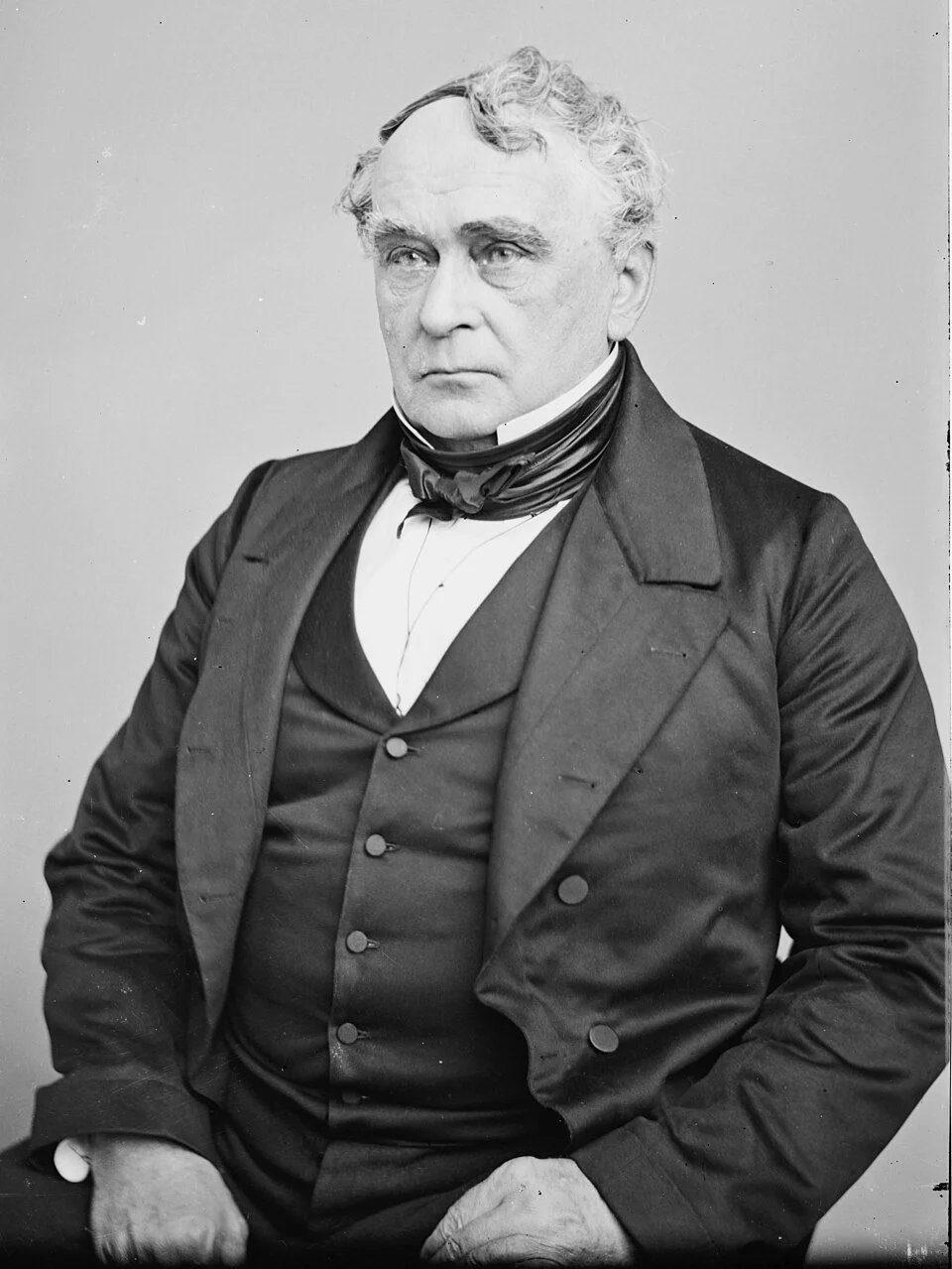
Francis Lieber.
On April 24, 1863, U.S. President Abraham Lincoln issued “General Orders No. 100: Instructions for the Government of the Armies of the United States in the Field,” commonly known as the “Lieber Code” after its main author Francis (Franz) Lieber. The Lieber Code set out rules of conduct during hostilities for Union soldiers throughout the U.S. Civil War. Even today, it remains the basis of most regulations of the laws of war for the United States and is referred to in the foreword to the Department of Defense Laws of War Manual. The Lieber Code inspired other countries to adopt similar rules for their military and was used as a template for international efforts in the late 19th century to codify the laws and customs of war.
Lieber started with the problems raised by the US Army presence as an invading army on enemy soil that hadn’t been encountered by the US in the 3 previous wars. The Lieber Code was the first US attempt to codify the laws of war. Although they were binding only on the forces of the United States, they correspond to a great extent to the laws and customs of war existing at that time. There are 157 articles, and can be found here: https://ihl-databases.icrc.org/en/ihl-treaties/liebercode-1863
Although made as a sincere attempt to make warfare more civilized, it failed to do so materially in the Civil War. This was a significant lesson in history which needed to be learned in practice. This paper looks at specific articles of the Lieber Code and identifies why it failed to succeed in its task.
Specific Codes of War
1. Reprisals Against Civilians and Prisoners
Lieber Code (Article 27, 28, 59): Permitted reprisals against civilians and even prisoners under certain conditions—such as when the enemy engaged in unlawful warfare or mistreated POWs.
Geneva Conventions (1949): Strictly prohibit reprisals against protected persons (civilians, POWs, medical personnel).
Example: Article 13 of Geneva III (POWs) and Article 33 of Geneva IV (civilians) forbid all reprisals against those groups.
2. Destruction of Civilian Property as Hard War
Lieber Code (Articles 14, 15, 44, 50): Permitted the widespread destruction of civilian property, including homes, food stores, and infrastructure, if justified by military necessity.
Geneva Conventions (Additional Protocol I, Article 52): Prohibit the indiscriminate destruction of civilian property and infrastructure unless there is a direct military advantage.
Example: Sherman’s March—burning crops, homes, and public buildings—was lawful under the Lieber Code but would likely be considered disproportionate or indiscriminate today.
3. Use of Starvation as a Military Strategy
Lieber Code (Article 17): Acknowledged that starving the enemy, including civilians in fortified places, could be a lawful strategy. Article 17 provides that it is lawful to starve civilians:
‘War is not carried on by arms alone. It is lawful to starve the hostile belligerent, armed or unarmed, so that it leads to the speedier subjection of the enemy.’
This is no longer legal in warfare.
The code basically built in a loophole: that none of its principles applied if by breaking them, a war’s end would be expedited.
Geneva Conventions (Protocol I, Article 54): Explicitly forbid starvation of civilians as a method of warfare.
Modern precedent: The use of siege warfare to starve civilians in Syria and elsewhere has been condemned as a war crime under international law.
4. Execution of Irregular Combatants Without Trial
Lieber Code (Articles 82–85): Allowed summary execution of guerrillas, spies, and other irregulars (e.g., Franc-tireurs) without due process.
Geneva Conventions: Require fair trial guarantees even for irregular combatants or suspected spies.
Example: Geneva Convention III, Article 84, ensures POWs cannot be sentenced without proper judicial process.
5. Permissibility of Occupation Requisitions Without Compensation
Lieber Code (Article 52): Allowed occupying forces to requisition supplies from civilians without compensation, depending on circumstances.
Geneva Conventions (Article 53, Geneva IV): Allow requisitions only under strict limitations, and generally require compensation.
One of the more contentious issues addressed in the Lieber Code was the treatment of fugitive and freed slaves that entered the Union territory. Lieber took the view that international law did not distinguish between people based on color (Art. 58) and that the law of nature and nations has never acknowledged slavery (art. 42). He therefore included provisions that held that fugitive slaves that escaped to the North became free (Arts. 42, 43) and that all soldiers no matter their skin color must be awarded POW status (Art.57).
Finally, in modern warfare, were a commander to order soldiers to enter a home to steal valuables and they instead murdered the man and raped the women, the commander as well as the soldiers would be breaking the rules; but under the Lieber Code, the commander would not be considered to have done anything illegal.
https://blogs.loc.gov/law/2018/04/the-lieber-code-the-first-modern-codification-of-the-laws-of-war/
The chapter on “military necessity” is a well-known part of the Lieber Code which one author calls its “greatest theoretical contribution to the modern law of war.” The Lieber Code allows the use of military force which is justified by “military necessity,” defined as “measures which are indispensable for securing the ends of the war, and which are lawful according to the modern law and usages of war.” (Art. 14).
This loophole no longer exists for the most obvious reason that it is ensures that no rule of law would apply. The appropriate balance between military necessity and humane behavior remains controversial. Lieber was specific that mlitary necessity is limited by the principle of humanity.
The Lieber Code therefore states in article 16 that:
“Military necessity does not admit of cruelty—that is, the infliction of suffering for the sake of suffering or for revenge, nor of maiming or wounding except in fight, nor of torture to extort confessions. It does not admit of the use of poison in any way, nor of the wanton devastation of a district. It admits of deception, but disclaims acts of perfidy; and, in general, military necessity does not include any act of hostility which makes the return to peace unnecessarily difficult.”
Application to Sherman’s March
“ We are not only fighting hostile armies, but a hostile people, and must make old and young, rich and poor, feel the hard hand of war.” – William T Sherman
The Union army cut a swath of devastation approximately 60 miles wide and 300 miles long from Atlanta to Savannah. The severity of the destruction varied by location and depended on the resistance encountered, but overall, it was devastating. The troops dismantled railroad tracks, heating and twisting them to make them unusable and irreparable. Telegraph lines and bridges were also destroyed to cripple Confederate communication and transportation. Soldiers confiscated livestock, burned crops, and destroyed mills to deprive the Confederacy of essential supplies.

Sherman's march to the sea. By F. O. C. Darley.
Bringing the “hard hand of war” to civilians — especially as practiced by Union forces in campaigns like Sherman’s March — sits at the uneasy intersection of morality, military necessity, and the evolving laws of war. The Lieber Code (General Orders No. 100, issued April 1863) provided a legal and ethical framework for Union conduct during the Civil War. It did permit certain harsh measures against civilians under the doctrine of military necessity, but also imposed limits and obligations to avoid cruelty for its own sake.
The Lieber Code recognized that war sometimes requires harsh treatment, including against civilians, if they support or aid the enemy. Key sections include:
Article 14: “Military necessity… consists in the necessity of those measures which are indispensable for securing the ends of the war.”
Article 15: Military necessity does not admit of cruelty, torture, or wanton devastation.
Article 17: It is lawful to starve the hostile belligerent, armed forces or civilians, to reduce them into submission — but only as a measure of necessity.
Article 44: Destruction of property is lawful if demanded by the necessities of war.
Sherman argued his actions were not cruel for cruelty’s sake, but necessary to shorten the war and reduce total bloodshed. He avoided mass killings and tried to maintain discipline, though looting and violence did occur.
Arguments for moral justification:
It was a lesser evil: harsh tactics avoided longer, bloodier battles.
It targeted infrastructure and morale, not mass murder.
It followed legal principles of military necessity as codified in the Lieber Code.
Arguments against:
Civilians, especially women, children, and the elderly, bore undue suffering.
The line between necessity and punishment blurred.
In practice, looting and sporadic personal violence violated the spirit, if not always the letter, of the Code.
The Lieber Code allowed the application of the hard hand of war to civilians under strict conditions of military necessity. Sherman’s actions were arguably within its bounds, though the morality remains debatable. The Code tried to humanize war within the brutal logic of total conflict — but in practice, it offered a legal cover for actions that tested the limits of ethical warfare.
The March created severe food shortages for both civilians and the Confederate army. Many homes, barns, and businesses were burned, though some private homes were spared, especially if their occupants did not resist. Public buildings, factories, and Confederate government facilities were often deliberately targeted. Although the march inflicted severe hardship on the civilian population through widespread destruction, it was not intended to be, nor was it officially conducted as, a campaign of deliberate personal violence against civilians. While civilians undoubtedly suffered as their homes, livelihoods, and communities were devastated by the march, the intent was to break the Confederacy’s ability to wage war rather than to deliberately harm the civilian population.
The extent of the damage was severe, and arguably, the South never fully recovered from its effects. The march inflicted an estimated $100 million (equivalent to billions today) in damage. Although Savannah was largely spared destruction when it surrendered without a fight, cities like Atlanta, Milledgeville, and Griswoldville suffered heavy damage. Thousands of enslaved people fled plantations to follow Sherman’s army, further disrupting the Southern economy and labor force.
While the campaign inflicted significant damage, especially to infrastructure and Confederate military resources, some myths have overstated the extent of civilian suffering and total devastation. While Atlanta was heavily damaged, Savannah was largely spared because it surrendered without a fight. Many towns along the march suffered property destruction, but not all were burned to the ground. There is no evidence of mass killings of civilians. While foraging was often aggressive and left many families struggling, Union soldiers were under orders to avoid unnecessary harm to noncombatants. While some private homes were burned, most destruction focused on railroads, factories, mills, and farms that supported the Confederate war effort. Some homes were looted or destroyed if resistance was encountered, but not all were systematically targeted.
In 1864, the convention that dictated the rules of war was The Lieber Code (1863): A set of military regulations issued by the U.S. during the Civil War, which influenced later international laws. Sherman’s March was within the law set by code, but it went right up to the line, thanks to certain exceptions and in some cases, beyond.
Let’s look at a few of its provisions and see what happened on the March.
Article 15
– Military necessity allows destruction of enemy forces and materials, but not cruelty for its own sake.
Sherman’s view: Destroying infrastructure, supplies, and morale was a legitimate strategy to shorten the war. He believed “hard war” would reduce bloodshed in the long run.
Technically adherent—Sherman could argue that all actions were militarily necessary. But looting and personal attacks on women, children, and the elderly can’t be defended by this clause.
Article 17
Sherman’s March can be defended under Article 17 of the Lieber Code as a harsh but lawful application of military necessity. However, it tests the limits of that doctrine
Article 17 of the Lieber Code does not explicitly allow the deliberate starvation of civilians. However, it does create legal and moral space for actions that may incidentally cause civilian suffering—if those actions are deemed necessary for military success.
“War is not carried on by arms alone. It is lawful to starve the hostile belligerent, armed or unarmed, so that it leads to the speedier subjection of the enemy.”
Therefore, by saying the idea was to hasten the end of the war, legally Sherman could say it was military necessity to starve women and children and the elderly. A great example of how Sherman went right up to the line of legality, but did not cross it.
Article 22
– The unarmed citizen is to be spared in person, property, and honor as much as possible consistent with military necessity.
Reality on the ground: Civilians were subjected to:Home invasions, looting, threats
Destruction of food, tools, personal items
Occasional physical violence and
unprosecuted sexual assault
Technically compliant only if military necessity is broadly interpreted. In practice, this principle was often undermined by lack of discipline, particularly among foraging parties (“bummers”).
Article 31
– A victorious army may appropriate supplies but must distinguish between military and private property
Sherman’s orders:
Special Field Orders No. 120 instructed foraging but prohibited personal pillaging and trespass.
Enforcement was inconsistent, and in practice, private homes and valuables were often looted.
Violated in practice, though Sherman issued technically legal orders. He at times turned a blind eye to violations, perhaps often, prioritizing momentum and morale. If foragers drove off an old lady’s cows, for example, this is not covered under the Lieber Code, unless that old lady was a military threat or assisting the war effort, or generally to hasten the end of the war. This is how Sherman could say he was working under the Lieber Code.
Article 44
– All wanton violence against persons, especially women and children, is prohibited.
No widespread directive or sanction for such violence from Sherman, but:
Documented instances of abuse, harassment, and some killings of civilians.
Rape likely occurred, though not prosecuted.
Not directly ordered, but tolerated through weak enforcement.
Article 51
– Military commanders must try to restore public order and protect persons and property in occupied areas.
Sherman’s army often left chaos in its wake—most notably the burning of Columbia, SC, where drunkenness, looting, and fire caused mass civilian displacement.
Technically breached—Sherman and his officers failed to control their troops in several instances.
One of the Lieber Code’s most crucial provisions is Article 22, which declares the importance of “the distinction between the private individual belonging to a hostile country and the hostile country itself.” Article 22 puts forward “the principle…. that the unarmed citizen is to be spared in person, property, and honor as much as the exigencies of war will admit.”
Key provisions of the Code on civilian property include:
Protection of Civilians: The code emphasizes the protection of civilian persons and property from military operations.
Prohibition of Destruction: It prohibits the destruction of civilian property unless absolutely necessary for military operations.
Respect for Private Property: The code instructs military personnel to respect private property and avoid unnecessary harm.
Articles 37, 38, 46 & 47.cover this area as well.
It’s anyone’s subjective interpretation as to whether or not what Sherman ordered, versus what was often carried out, fits within these precepts. Either way, it’s a very close call.
Lieber himself was uncertain how to apply the principles. Military necessity, Lieber wrote, “allows of all destruction of property, and obstruction of the ways and channels of traffic, travel, or communication, and of all withholding of sustenance or means of life from the enemy; [and] of the appropriation of whatever an enemy’s country affords necessary for the subsistence and safety of the army.” Rather than constrain hard war, such language helped to make it possible.
https://encyclopediavirginia.org/entries/hard-war-in-virginia-during-the-civil-war/
Examples of personal injury and attacks: There were documented instances of personal violence against noncombatants, especially theft, property destruction, intimidation, and some physical abuse. While not officially sanctioned, these acts occurred frequently enough to be a recognized part of the civilian experience of the march. They highlight the blurred line between “hard war” and civilian victimization and are critical to understanding the real human impact of Sherman’s campaign. These accounts show theft, intimidation, physical abuse, and psychological terror, though—as with all wartime narratives—some must be read with attention to context, bias, and verification.
What Is the Function of Rules of War?
Whether creating rules or laws to govern war is t one of history’s most painful and persistent tensions: the desire for moral restraint versus the brutal realities of war. Are the “rules” or “laws” of war phony? No, they’re not phony—but they are imperfect and often inconsistently applied. The laws of war, such as those codified in the Lieber Code (1863), the Hague Conventions (1899, 1907), and the Geneva Conventions (especially after WWII), are real legal instruments. They’re backed by treaties, military doctrine, and in some cases, courts (like the International Criminal Court).
These laws serve several purposes:
Limit unnecessary suffering, especially of civilians and prisoners.
Maintain some moral legitimacy—for both domestic and international audiences.
Prevent escalation into unbounded barbarism (e.g., genocide, torture as routine policy).
Set standards for holding individuals accountable (think of the Nuremberg Trials or modern war crimes prosecutions).
However: Enforcement is uneven, often dependent on power dynamics. Victors rarely face the same scrutiny as the losers. States violate them regularly, sometimes justifying actions as “military necessity.” Non-state actors may ignore them entirely. So yes, there is hypocrisy—but that doesn’t mean the rules are fake. They are aspirational boundaries in an inherently chaotic and destructive endeavor.
Is winning all that matters? Militarily, winning ends the war. But how you win shapes the peace—and your legacy. If “winning” alone were the only standard:
Atrocities would become normalized.
Reprisals would spiral, making wars bloodier and longer.
The legitimacy of power would corrode, both domestically and abroad.
History is full of cautionary tales: the legitimacy of power depends on how its used. Overly severe punishment of the losers leads to long-lasting enmity . For example:
· Sherman’s March was brutally effective, yet carefully (if controversially) calibrated under the laws of war at the time. It was one of the events leading to the Lost Cause.
· Our treatment of Native Americans especially as illustrated at Sand Creek was abominable: immoral and illegal. Our relations with our aboriginal brothers remain tense over a century later.
· The terms of the WW1 peace led almost directly to WW2.
· Nazi Germany won many early battles, but their brutality turned most of the world against them.
· The US offered Germany the Marshall Plan after WW2 while the Russian raped their way through the country. How has that turned out?
· The My Lai Massacre during Vietnam might have had no strategic benefit but inflicted lasting moral and political damage on the U.S. As did napalming villages randomly.
Ethics in war isn’t about being gentle—it’s about staying human. Even amidst destruction, maintaining rules is an act of defiance against the abyss. Its a false binary to offer either winning or being humane. A civilized nation tries to do both. How you win determines who you become and whether your victory can endure the peace that follows.
Summary
The Lieber Code was written to provide a moral framework to guide the conduct of modern war. In that sense, it was a humanitarian step forward and became the basis of modern rules of war set under the Geneva Conventions. However, General Sherman used a loophole to get around its application in the March to the Sea. It is arguable that this loophole was expressly inserted for this purpose.
The site has been offering a wide variety of high-quality, free history content since 2012. If you’d like to say ‘thank you’ and help us with site running costs, please consider donating here.