Here, Jeb Smith provides his take on a a book about immigration to America. He looks at Brought Forth on This Continent: Abraham Lincoln and American Immigration by Harold Holzer.
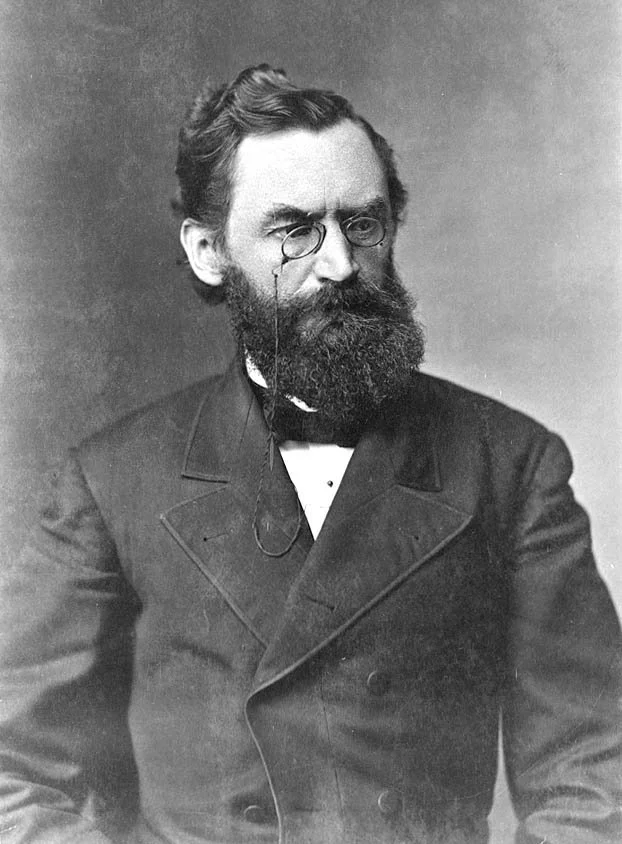
Carl Schurz was the first German born US Senator and later he was the US Secretary of the Interior.
Harold Holzer is considered one of the top Lincoln scholars, a winner of many awards, including the Lincoln Prize, the Lincoln Medal of Honor, the National Humanities Medal, the Barondess/Lincoln Award, and the Lincoln Group of New York’s Richard Nelson Current Award of Achievement. From 2010 to 2016 he served as chairman of the Lincoln Bicentennial Foundation. He is a lover, great admirer, and fan of the 16th president. He has authored, edited or co-authored over 40 books on Lincoln, of which the latest is Brought Forth on This Continent: Abraham Lincoln and American Immigration, glowingly endorsed by McPherson, Foner, and the usual suspects. In this book, Holzer’s focus is on Lincoln, immigration, and its influence on politics and the military.
Holzer writes of the massive influx of immigrants from Europe in the decades leading to the Civil War “forever upending the demography, culture, and voting patterns of the nation, especially in the teeming urban centers.”[1] These groups caused “overwhelming change” and “redefined” what it is to be American.[2] Nine out of ten immigrants lived in the North! And without their votes and military effort, the North would likely not have won the war, nor would Lincoln have been elected, as he won with only 39% of the vote. Holzer wrote, “In total, half a million of the two million white men who served in the Union armed forces were born overseas.”[3]
Veterans of revolutions
Many of their leaders were veterans of the socialist, communist and democratic revolutions of 1848 in Europe. These foreign revolutionaries formed German units and named them after Lincoln. Lincoln “trusted they would fight to sustain democracy in America as courageously as they once had rebelled against monarchical oppression in Europe.”[4]
Holzer says Lincoln’s views on immigration “evolved,” like his views on slavery and race, as he began to endorse immigration, something he previously, as a Whig, was against; though he seems to have desired immigration but refrained from saying so publicly while a Whig, and was one of the first in his party to push for immigration. The Whigs and later Republicans often despised Catholic immigrants, most notably because they unanimously voted Democrat.
Lincoln seems to have used immigrants in something of the way the South used slaves, encouraging them to migrate to the U.S. to help the war effort and also on the field of battle to take bullets and save others. For these purposes, he sought to use federal funds to promote and relocate immigrants to areas useful to the war effort and to provide cheaper labor for his industrial allies. He used humans as tools for his own gain.
However, as Holzer admits, Lincoln never contemplated immigration from anywhere but Europe, never desiring Latin Americans, blacks, or Asians to come here. Holzer points out the irony of Lincoln supporting white immigrants, but at the same time attempting to deport blacks out of the country, and removing Native Americans from Minnesota to make room for white immigrants. Further he did not include “Mexican Greasers”[5] in his vision of America. What Lincoln really wanted in anti-slavery western territories was an “outlet for free white people everywhere.”[6] Yet this does not stop this top Lincoln scholar from repeatedly describing Lincoln as a fighter for equality for all!
In support of immigration
Receiving support as he did from Northern industrialists, Lincoln supported massive immigration to provide cheap labor for industry. Especially during the war, the draft was taking people from positions the North needed occupied so as to maintain its war effort; thus, immigrants filled the gaps left by soldiers. Lincoln pushed for and approved the first federal policy that encouraged immigration.
While it seems Lincoln always was personally for immigration, keeping it private for political reasons due to Whig policy, he changed his public stance on immigration for the same reason he changed his stance on other issues; political advantage. When socialist and democratic immigrants arrived, for political purposes and seeking to centralize power he advocated for immigration policies that encouraged them. The same way modern Democrats would switch if it were white conservative Christians pouring over the borders of America today.
As Holzer mentions, unlike the earlier decades of Irish, German, and Swedish immigration that were for economic reasons, or the potato famine, or religious freedom, the 48’ers were politically motivated. He wrote that the “suppressed 1848 democratic revolutions on the continent motivated thousands of liberals to flee oppression… the exodus was largely political.”[7] These immigrants began a revolution in America, starting newspapers, becoming politically active, and pushing for government education and more.
America received more immigrants in the late 1840s and 1850s than it had in its entire history before then. And a large segment of these immigrants came from failed socialist, communist, and democratic revolutions in Europe. The failed revolutions sent these politically motivated ideologues to attempt the revolution elsewhere, and they brought their radical progressive ideas with them to America. And so, naturally, sided with the centralizing powers of the North.
In 1852, with America very much under the spell of the recently-arrived Hungarian revolutionary leader Lajos Kossuth, a committee of prominent Springfield citizens including Lincoln met to formalize views on the failed Hungarian and other revolts. The first clause of the agreed resolution drafted by Lincoln, stated “That it is the right of any people, sufficiently numerous for national independence, to throw off, to revolutionize, their existing form of government, and to establish such other in its stead as they may choose.” A stance, Holzer points out, he later would reject during the Southern states’ secession. Perhaps because while he endorsed a liberal democratic revolution, he despised a libertarian, decentralized, aristocratic one, like the Confederacy!
Lincoln worked with and helped fund German immigrants in publishing Republican propaganda newspapers in Illinois. These German immigrants and socialists were among the most enthusiastic and dedicated supporters of Lincoln’s 1860 campaign, helping flip various states Republican, like Pennsylvania, Minnesota, Iowa, Ohio, Indiana, and Wisconsin. Famed Republican abolitionist Horace Greeley credited German revolutionary Carl Schurz for Lincoln’s presidential election more than any other individual for his speaking and campaigning.
The influence of their radical agenda was immense; one prominent Republican complained of the “complete Dutchification (Germanization) of the Republican party.” Unlike Southerners, who saw themselves as citizens of their state, these German nationalists took the idea of a single nation with them and were now “American citizens.” And nationalism was above politics. Further, men like Schurz helped revise and provide feedback for Lincoln’s nationalistic inaugural address that caused a panic in the decentralized South.
Cause of victory?
Prominent Republicans credited the Germans and Scandinavians for Lincoln’s victory. Rewarding their efforts, Lincoln placed many of his German campaigners into governmental positions, especially foreign diplomatic positions.
Holzer said Lincoln, ever the politician, was “addicted to the newspaper.” Politics was his life, it was his interest and passion. He placed national party victory over local self-governance, and political victory above the local desires of the people in his party. It was national-level victory and party success he desired, and thought above various local distinctions, even within the party. He criticized Massachusetts Republicans for passing the state law mentioned previously since it could harm the party nationally, saying that “Massachusetts Republicans should have looked beyond their noses, and then they could not have failed to see that tilting against foreigners would ruin us in the whole Northwest.”[8]
Some information revealed that Lincoln admirers might find uncomfortable is that he was known for both his racist and sexist jokes. Interestingly, in 1859 Lincoln referred to the state of Massachusetts, which had passed a law he disapproved of, as “A sovereign and independent State.”[9] During the Civil War, Federal General Fremont abolished slavery in the area under his military command. Lincoln rescinded Fremont’s order, and further removed and replaced the general for his progressive action, upsetting many German immigrant abolitionists who turned against the president for it. Lincoln worked with the well-known brilliant but extremely racist scientist Louis Agassiz to found the National Academy of Sciences.[10] Also, Lincoln stated he would “suffer death” before interfering or allowing others to interfere with slavery in the existing slave states. Lincoln’s many equivocal statements and actions concerning black people and slavery contrast sharply with the welcome and support he showed for the influx of European whites during his lifetime. The latter is of course far more the subject of Harold Holzer’s book than is the former.
Jeb Smith is an author and speaker whose books include Defending Dixie's Land: What Every American Should Know About The South And The Civil War written under the pen name Isaac C. Bishop, Missing Monarchy: Correcting Misconceptions About The Middle Ages, Medieval Kingship, Democracy, And Liberty and he also authored Defending the Middle Ages: Little Known Truths About the Crusades, Inquisitions, Medieval Women, and More. Smith has written over 120 articles found in several publications.
[1] (Holzer 2)
[2] (Holzer 3)
[3] (Holzer 204)
[4] (Holzer 204)
[5] (Holzer 116)
[6] (Holzer 105)
[7] (Holzer 56)
[8] (Holzer 112)
[9] (Holzer 105)
[10] (Holzer 240, 8)