The Supreme Court’s decision in Brown v. Board of Education on May 17, 1954, is often treated as a clear dividing line in American civil rights history. Yet for many professionals working inside the civil rights infrastructure in the mid-century, the ruling raised as many questions as it resolved. Legal desegregation did not immediately translate into equitable schooling, housing access, or employment opportunities.
William Miller Barbour, a social worker and National Urban League administrator, was among those who began to articulate this gap in real time. Reflecting on the Brown decision, he emphasized that law could dismantle formal segregation, but it could not by itself construct integrated social life. That second task, he argued, required a different framework entirely. His career across Philadelphia, Denver, and Los Angeles shows how civil rights work operated not only through litigation and protest, but through administrative practice, municipal policy, and institutional reform.
Eric Schubert & Abigail Sholes explain.
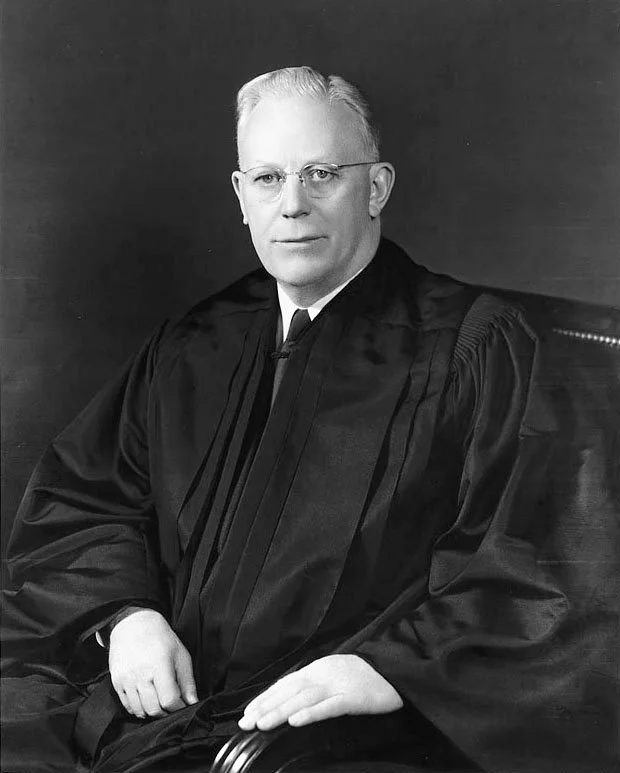
Chief justice Earl Warren, author of the Supreme Court's opinion in Brown v. Board of Education. Source: Public domain, Harris & King photography, available here.
Formative Experience in a Segregated Nation
Barbour’s early life unfolded within the social geography of early twentieth-century racial inequality. Born in 1908 in Philadelphia and raised in working-class circumstances shaped by migration and domestic labor, he came of age in a society where African American mobility was constrained less by formal slavery than by segregated labor markets and housing systems.
Like many families during the Great Migration era, his household moved through regions of Pennsylvania and Virginia shaped by limited economic opportunity and racial stratification. These conditions formed the backdrop to his later interest in how institutions—rather than individuals alone—produce inequality. Rather than viewing this period as a traditional biographical origin story, it is more useful to understand it as the structural environment that shaped his later professional focus: the relationship between environment, opportunity, and social outcome.
Social Work and the Problem of Urban Youth
Barbour entered the field of social work during a period when American cities were undergoing rapid demographic and economic change. After studying at Elizabethtown College and the University of Pennsylvania, he worked in Philadelphia programs focused on juvenile rehabilitation in the 1940s. His work with youth populations in North Philadelphia reflected a broader shift in mid-century social thought: away from moral explanations of delinquency and toward environmental and institutional interpretations. Gang activity, in his view, was not simply a product of individual behavior but of disrupted civic structures, limited employment pathways, and segregated urban space. These early professional experiences shaped his belief that social intervention had to extend beyond individual rehabilitation to include community-level redesign.
Denver and the Institutional Turn in Civil Rights Work
A major transition in Barbour’s career occurred in 1947, when he assumed leadership roles within the National Urban League in Denver while also teaching sociology and social work at the University of Denver. In Denver, he worked alongside municipal leaders attempting to modernize city governance and address racial inequality in housing and employment. This environment pushed him further into policy-oriented civil rights work, where the focus was less on casework and more on systems.
During this period, Barbour developed one of his most important analytical distinctions: the separation between desegregation as legal removal of barriers and integration as a continuing social process. In his formulation, eliminating formal discrimination was only the first stage. The deeper challenge involved restructuring access to housing, employment networks, and institutional participation. This distinction would become central to his later writing and public speaking.
West Coast Civil Rights Work and National Urban League Leadership
In 1952, Barbour became director of the National Urban League’s Western Field Office in Los Angeles, placing him at the center of postwar migration, industrial labor tension, and rapid urban expansion. On the West Coast, racial inequality often operated through less formal but still powerful mechanisms: restrictive housing practices, discriminatory hiring, and uneven access to public accommodations. Barbour’s research and reports documented these patterns across cities such as Los Angeles, Richmond, and San Francisco.
One of his studies examined labor and housing conditions in Richmond’s wartime industrial economy, highlighting the tensions that emerged as African American workers entered previously segregated or exclusionary labor markets. He observed that formal labor expansion did not automatically produce equitable workplace conditions. He also documented the realities of travel discrimination, noting that access to hotels and lodging often depended on informal negotiation rather than legal rights. Even in regions without codified Jim Crow laws, exclusion remained widespread through private enforcement and social convention.
Intellectual Framework: Integration as Process
By the mid-1950s, Barbour was increasingly focused on defining civil rights as a long-term structural process rather than a discrete legal achievement. He argued that desegregation addressed the removal of legal barriers, while integration required the construction of shared social institutions. This framework drew on broader traditions in democratic theory and human rights discourse. Barbour linked contemporary civil rights struggles to longer historical developments, including Enlightenment political thought, constitutional history, and international human rights principles emerging after World War II.
He also emphasized the role of economic conditions in shaping civil rights outcomes. Employment access, he argued, directly influenced housing stability and educational opportunity, creating a cycle in which economic inequality reinforced racial inequality unless directly addressed. In this sense, Barbour’s thinking anticipated later civil rights strategies that emphasized economic justice as central to racial equality.
Final Years and Legacy
Throughout the mid-1950s, Barbour continued to participate in national conferences on housing, social work, and race relations. He was active in public discussions that brought together policymakers, academics, and civil rights professionals attempting to translate Brown v. Board of Education into actionable reform. He remained engaged with National Urban League initiatives that connected civil rights advocacy to broader questions of urban development, labor policy, and institutional reform.
Barbour died unexpectedly on March 20, 1957, in Los Angeles at the age of 48. His passing marked the loss of a figure whose work had bridged the era between early twentieth-century racial uplift politics and the more expansive civil rights mobilizations that followed.
Conclusion: A Transitional Civil Rights Thinker
William Miller Barbour’s significance lies less in a single event or achievement than in his role as a transitional thinker within the civil rights ecosystem of the mid-twentieth century. His work illustrates how civil rights ideas were not only shaped in courts and protest movements but also in administrative offices, municipal commissions, and research studies. By distinguishing between desegregation and integration, and by consistently linking racial equality to economic structure, Barbour helped articulate a framework that would become increasingly central to later civil rights debates. His career reflects an era in which civil rights work was expanding beyond legal reform into the broader question of how equality is actually built in practice.
Let us know what you think of William Miller Barbour below.
Sources
Jean-Paul Benowitz, Eric Schubert, Abigail Sholes, and Ava Barton. “Addressing Dignity Deferred: Post Desegregation and the Process of Integration: The Life and Legacy of Race Relations Leader W. Miller Barbour (1908–1957), Elizabethtown College Class of 1932.” The Journal of Lancaster County History, forthcoming 2026.
The Voice, May 22, 1952, 1.
“W. Miller Barbour,” Find a Grave, memorial ID 287136093, https://www.findagrave.com/memorial/287136093/w.-miller-barbour
“Pennsylvania (State), Birth Certificates, 1906–1917, Series 11.89 (50 cartons), Records of the Pennsylvania Department of Health, Record Group 11”, Pennsylvania Historical and Museum Commission, Harrisburg, Pennsylvania.
Etonian, 1928–1932, Elizabethtown College Yearbook, Earl H. and Anita F. Hess Archives and Special Collections, Elizabethtown College, Elizabethtown, Pennsylvania.
Michael B. Katz and Thomas J. Sugrue, eds., W. E. B. Du Bois, Race, and the City: The Philadelphia Negro and Its Legacy (Philadelphia: University of Pennsylvania Press, 1998)
V.P. Franklin, “Operation Street Corner: The Wharton Centre and the Juvenile Gang Problem in Philadelphia, 1945–1958.
The Omaha Star, April 25, 1952, 1.
“Mayor’s Committee on Human Rights,” photograph, 1947, X-28752, Denver Public Library Digital Collections, accessed June 13, 2026, https://digital.denverlibrary.org/nodes/view/1100389
W. Miller Barbour, Michael L. Freed, and Helen L. Peterson, The Prospect for Freedom: Human Rights, What Can Be Done on the Local Level (Denver: World Affairs Institute, University of Denver, 1951).
Brayman, “W. Miller Barbour, Executive Secretary Urban League, Denver, Aids Social Work: Organization Carries Out Community Program,” The Etownian (Elizabethtown College), May 14, 1948
Kristin Jones, “The Thread That Ties Segregation to Gentrification,” The Colorado Trust, April 6, 2018, https://www.coloradotrust.org/content/story/thread-ties-segregation-gentrification/
"Liberty Calling" Scrapbook, 1947–1949, KLZ Radio Station Records, MS 3000, Hargrett Rare Book and Manuscript Library, University of Georgia Libraries, Athens, GA.
”UL Official Dies In LA,” New Pittsburgh Courier, March 30, 1957, 4
W. Miller Barbour, An Exploratory Study of Socio-Economic Problems Affecting the Negro-White Relationship in Richmond, California (Richmond, CA: United Community Defense Services, Inc. and the National Urban League, 1952).
W. Miller Barbour, “Where We Stand On Racial Desegregation: What Forces Are Aiding Racial Desegregation in the United States? What Forces Are Holding It Back?” Adult Leadership, April 1957, 4.
W. Miller Barbour, “Breaking the Barriers: Anti-Negro Prejudice Lessens in Western Hotels,” Frontier, November 1954
“W. Miller Barbour Stricken,” California Eagle, February 21, 1957, 1