If you were visiting Philadelphia in the mid-18th century — you may have lodged in, taken a meal in, or imbibed at the City Tavern. In fact — you may have done all three. Five years before the Coronavirus brought the worst US Pandemic in nearly one hundred years to the East Coast of America— I had the opportunity to experience a modern version of the City Tavern that once hosted John and Samuel Adams with that same colonial feel. The experience was every bit as incredible as the food.

Michael Thomas Leibrandt explains.
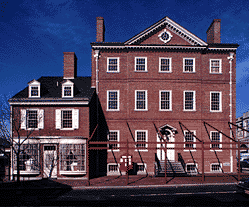
The City Tavern, part of Independence National Historic Park in Philadelphia, Pennsylvania (USA). Source: Public domain, http://www.nps.gov, available here.

By the time that the mid-1770s arrived in Philadelphia — the largest City in North America needed gathering places for both food and lodging. And although the Delaware Waterfront had a plethora of locations where those disembarking from ships could seek food, drink, and lodging like the Tun Tavern — at the corner of 2nd and Walnut — was another, perhaps Philadelphia’s more prominent Inn. The original City Tavern.

A few weeks back at the newest version of the City Tavern (built for the Bicentennial) — is opening a 1776-themed outdoor experience in the courtyard behind the building that will showcase both meals and beverages as well as an experience right from the 1700s. It’s known as the Garden at City Tavern and is just another way to get the feel of 1776 while in Philadelphia this summer. And while the current City Tavern is not the original version in Philadelphia — it sure feels like the 18th century experience.

Philadelphia’s original City Tavern was built just three years before the start of the American Revolution in 1773. By 1776 — the City Tavern was even visited by Founding Fathers. Benjamin Franklin loved the Dining Room while The Second President of the United States (John Adams) called it, “the most genteel tavern in America.”

In May of 1774 in response to the Boston Port Act —punishing colonists for the Boston Tea Party — over 150 Philadelphians assembled in the Gallery of the building. The year 1777 was big one for the City Tavern. The one year anniversary of America’s Independence was celebrated there, George Washington met Marquette De Lafayette there, and during the British Occupation of 1777? The upstairs lodging housed British Officers while the basement was a prison for American Patriots. In 1783 — friends of George Washington even gathered there before he returned to Mount Vernon.

Fifty years later in 1834 — the building was significantly damaged and was demolished in 1854 — at approximately the same decade that the last retaining walls of the President’s House at 6th and Market were torn down to build Independence Mall. A replacement structure was constructed prior to the 1976 Bicentennial. Six years ago — the City Tavern ceased operations — partially because of the loss of business from the Covid-19 Pandemic.

The Garden at City Tavern will be welcoming visiting tourists and residents alike for the next few months — between Thursdays and Sundays.


Enjoyed the piece?

Join thousands of history readers getting occasional updates on new blog posts, books, and video releases — plus a free history book to get you started.

Join History Is Now here


Michael Thomas Leibrandt lives and works in the Philadelphia Suburbs.
Posted
AuthorHistory Is Now Magazine

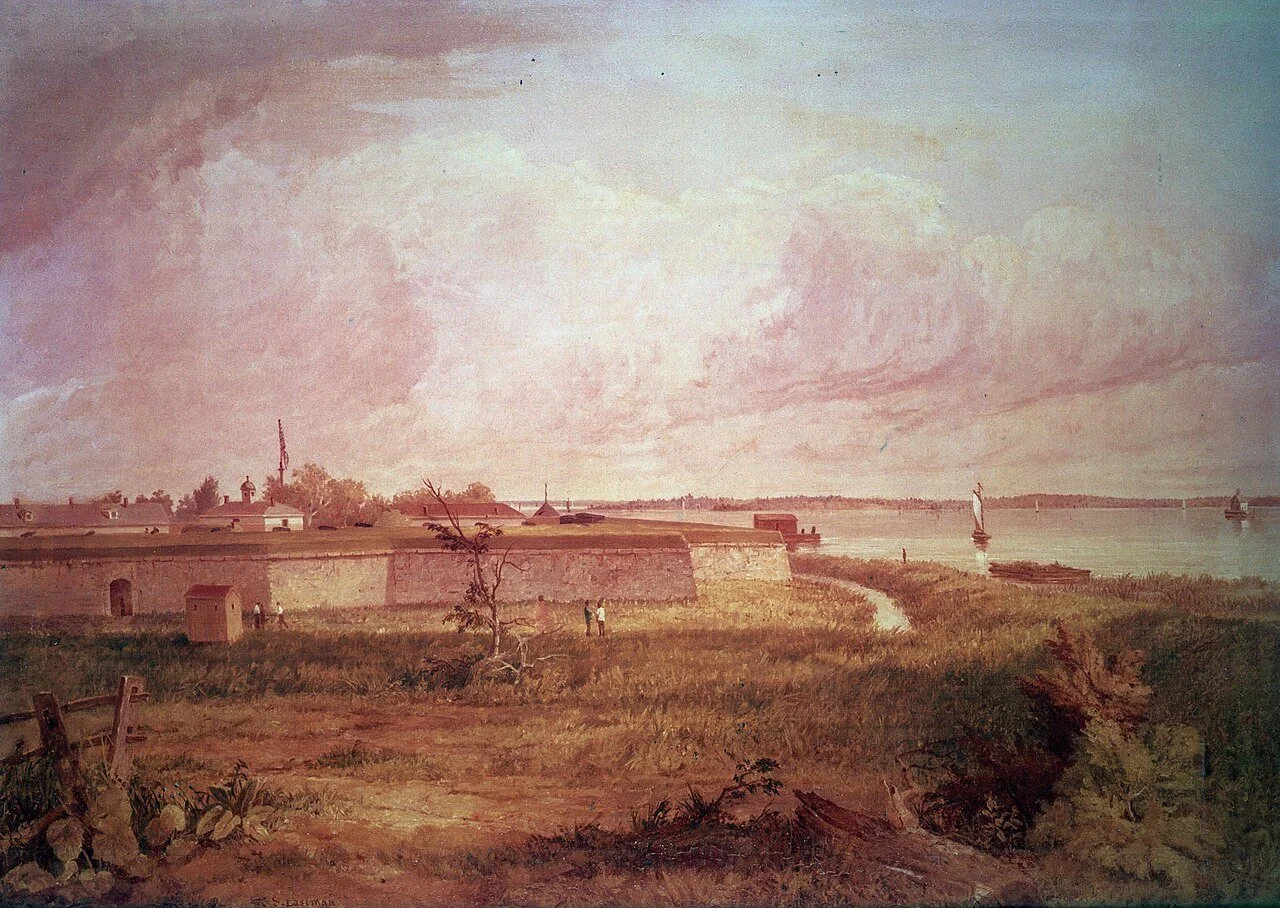
Keeping a watchful eye over Philadelphia for nearly 255 years — Fort Mifflin is much more than just a decaying structure overlooking the Delaware River. It’s the site of Philadelphia bravery during the American Revolution — and its faded white masonry walls still bear the battle scars of American Freedom from 1777 — just as the unearthed cell (Casemate #11) found in 2006 and believed to encapsulate both graffiti as well as a coin and wine bottle from the Civil War.

Michael Thomas Leibrandt explains.

Fort Mifflin by Seth Eastman. Source: Public domain, available here.

If you want to see the true measure of the humble beginnings of American democracy and resolve — visit Independence Hall. If you want to see military determination and heroism in the face of nearly insurmountable odds in order to defend the Delaware River— then visit Fort Mifflin. And that very heroism — may have saved General George Washington’s Continental Army.

First constructed on Deep Water Island in the Delaware River in 1771 — Fort Mifflin was originally named Fort Mud at the time of the American Revolution. The British — after defeating Washington’s Army at the Battle of Brandywine in 1777 — may have captured Philadelphia with hardly a shot fired. But at Fort Mifflin — they found an unyielding resistance.

Some four hundred American soldiers had entrenched in Fort Mifflin — hampering British efforts for control of the Delaware. From his headquarters in Philadelphia — General Howe ordered the British fleet up the Delaware River to supply his army in Philadelphia. The resistance of those brave four hundred Patriots from within the Fort was challenged by what is considered to be the largest cannonade in all of the American Revolution — culminating with a massive bombardment on November 10th of 1777. Under the cover of darkness each night — French Major Francois de Fleury oversaw repairs to the Fort.

With only ten cannon left to defend the Fort — Commanding officer Major Thayer and his men abandoned Mifflin on November 15th — famously setting the fort ablaze in the night sky with the American Flag still fluttering in the darkness. The result of the efforts of those Americans in Fort Mifflin who defended against the British — Washington’s Continental Army was able to make it to winter encampment at Valley Forge.

The British would hold the Fort until their retreat from Philadelphia in June 1778. After the Revolution — Fort Mud was actually rebuilt and in 1795 — it was renamed after Continental Army Officer and Pennsylvania Governor (Thomas) Mifflin. When repairs to Mifflin were finally complete in 1863 — it actually held Confederate prisoners — including a significant number from the Battle of Gettysburg from across the state. The Fort actually endured a prisoner rebellion in 1863 and an ultimately doomed tunnel escape in 1864 also by inmates. One prisoner was even executed there in 1864.

Fort Mifflin’s role was a bit different during the First and Second World Wars. Funds were allocated for the repair of Fort Mifflin and a railroad was constructed which would serve to connect Fort Mifflin to both of the Depots of the Army Corps of Engineers Depot and the Naval Ammunition.

The Army declared the site as a (national) historical monument in 1915 and finally decommissioned it in 1954. Threeyears ago — a replica cannon was stolen from Fort Mifflin’s 14-foot exterior wall. Ownership of Fort Mifflin was transferred to the city of Philadelphia in 1962.

Today — visitors can still see Fort Mifflin for themselves for nearly ten months of the year. Tours are available, events are scheduled regularly during certain months, and weekends even have a ceremonial cannon firing at Philadelphia’s aging Fort from a bygone era being celebrated around America this year. For Philadelphia — Fort Mifflin means a lot more than just that.


Michael Thomas Leibrandt lives and works in Abington Township, PA.

Posted
AuthorHistory Is Now Magazine
CategoriesBlog Post

Michael Leibrandt explains tell us about how Philadelphia is trying to save a Christmas tradition. 

The beginning of many great traditions started in Philadelphia — the City’s 1913 grand display outside of Independence Hall – saw a forty-five piece Regimental Band and an over sixty-foot Spruce Tree adorned with over 4,000 sparkling lights. It drew a crowd of over 20,000 people. Each year since , Philadelphia marks the Christmas season with the annual lighting of an outdoor tree in Center City.

Wanamaker's Christmas light show in December 2006. Source: Bruce Andersen, available here.

Now Philadelphia is trying to save another Christmas tradition — beginning in July. Last Friday was the first in what promises to be a series to raise $350,000 in funding intended to preserve the Christmas Light Show and the Dickens Village in the Wanamaker Building. Last Friday — officials in the City held a news conference to announce that the popular tradition is coming back for 2025 and that a fundraising campaign is underway called “Save the Light Show” with the intention of covering the expense of the Christmas costs tradition for (many) to see in the future.

Right there next to the great Holiday tradition of that (outdoor) Philadelphia Tree — is that of Christmas at Wanamakers. For almost seventy years — festive Philadelphia Holiday shoppers have been treated to the joyous experience of the (Holiday Light Show) against the backdrop of beautiful music from the Wanamaker Organ. You haven’t experienced Christmas in Philadelphia until you’ve heard the sweet sound of the organ and seen those colorful lights.

Last year in March 2025 — the latest retail business to occupy 1300 Market Street(Macy’s) shuttered its doors. The new owner of 1300 Market Street (TF Cornerstone) has vowed to preserve both — which are on the Philadelphia National Historic Registry. The more than 28,000 plus Pipe Organ was acquired by owner John Wanamaker from the 1904 St. Louis World’s Fair.

The year 1910 would see legendary Philadelphia businessman John Wanamaker complete his largest venture — when architect Daniel H. Burnham’s Florentine Style (Granite Walls) became a reality and the 12-story building dazed Philadelphia shoppers. The marvel of a brand new department store took two vital pieces of Philadelphia history that still remain today from the 1904 St. Louis World’s Fair. The (some 29,000) actual pipes of the iconic Organ, constructed in the (Grand Court) and what is still the largest pipe organ in the world to this day and the equally iconic bronze Wanamaker Eagle. 

It’s not certain what will be the ultimate fate of 1300 Market Street. And while that building’s future may be out of our control — it appears during the heat of the summer — that one of our city’s finest Holiday legacy’s is still safe.


Michael Thomas Leibrandt lives and works in Abington Township, PA.